Category: Business

The most important business news, explained in a young, easy to understand way. News that affects young career professionals.

  • Pakistan is making desperate efforts to revive IMF programme before deadline

    Pakistan is making desperate efforts to revive IMF programme before deadline

    Pakistan is facing a critical situation as it seeks to revive its stalled Extended Fund Facility (EFF) programme with the International Monetary Fund (IMF). The $6.5 billion programme is set to expire on June 30, and negotiations for the ninth review, due last November, have not been successful.

    Efforts to reach a Staff Level Agreement (SLA) with the IMF have been ongoing, but disagreements persist regarding the conditions set by the Fund. The SLA must be signed before Pakistan unveils its 2023-24 budget on June 9, or the current programme will fail.

    According to The News, two options are being considered. The first involves signing the SLA immediately, requesting approval from the IMF Executive Board for the next $1 billion tranche, and extending the EFF programme for a few months to complete the 10th and 11th reviews. The second option is to combine the 9th and 10th reviews, share budgetary figures with the IMF, and sign the SLA after the budget announcement. If approved by parliament, the IMF’s Executive Board could then grant an extension for the completion of the 11th Review by July or August 2023.

    However, finding a solution is proving challenging. Maintaining the status quo will not lead to any breakthroughs, and consensus must be reached between Pakistan and the IMF. Political uncertainty, inadequate economic management, and the inability to secure sufficient external financing have hindered progress.

    Without an IMF programme, Pakistan’s options are limited. The risk of default would increase, and reserves would remain weak. Although there are options available, such as striking the SLA in the next few days or combining reviews, they are becoming increasingly difficult. Life without the IMF would require seeking financing from other sources at higher costs.

    It is crucial for Pakistan to resolve its differences with the IMF and secure the continuation of the EFF programme. Failure to do so would have severe consequences for economic stability and future financing prospects.


  • Revolutionising air travel: Pakistan launches first-ever online ‘air taxi service’

    Revolutionising air travel: Pakistan launches first-ever online ‘air taxi service’

    Pakistan has achieved a significant milestone by introducing its groundbreaking online air taxi service, revolutionising air travel for its citizens. This innovative service offers individuals the utmost convenience in booking air travel according to their preferred time and destination.

    With just a few taps on a user-friendly mobile app, individuals can now reserve an air taxi from the comfort of their homes, mirroring the simplicity of booking a regular taxi.

    The official launch of the aerial air taxi service took place in Karachi, marking a momentous occasion. The lease agreement for the highly acclaimed DA 40 Diamond series aircraft was officially signed at the Civil Aviation office adjacent to Karachi Airport.

    Imran Aslam Khan, the Chief Operating Officer of Sky Wings Aviation, expressed his genuine excitement as the aircraft designated for aerial tours successfully arrived in Pakistan after a flawless test flight.

    Notably, this remarkable single-engine plane boasts a comfortable seating capacity of four passengers.

    Imran emphasised that the primary objective of this exceptional air taxi service is to provide emergency transportation from Karachi to remote areas in rural Sindh and Balochistan through captivating aerial tours.

    The German-manufactured aircraft demonstrates remarkable capabilities, with a maximum speed of 160 kilometers per hour and a flight range of 2,000 kilometers, making it an ideal choice for efficient air travel across the region.

    To further enhance the convenience for passengers, Imran revealed that the mobile app, which is set to launch soon, will empower citizens to effortlessly select their desired time and destination for air travel, putting the control in their hands.

    Significantly, the fare for this novel air taxi service will be significantly lower compared to typical charter services, which often begin at a staggering cost of Rs2.5 million for a trip from Karachi to various cities in Sindh and Balochistan. This affordability factor opens up endless possibilities for a wider range of individuals to experience the convenience and luxury of air travel.

    The initial phase of the air taxi service will commence with eight aircraft of varying capacities, with promising plans for expansion in the near future. Importantly, this remarkable service is not limited to political, religious, or business personalities.

  • Health activists urge govt to impose higher taxes on cigarettes for public welfare

    Health activists urge govt to impose higher taxes on cigarettes for public welfare

    Health activists and civil society organizations are calling on the government to impose higher taxes on cigarettes in the upcoming 2023-24 budget, signaling a potential increase in smoking costs for Pakistani consumers.

    Advocates argue that regular tax hikes on tobacco products, in line with the recommendations of the World Health Organization (WHO), are necessary to combat the detrimental effects of smoking in the country.

    Sanaullah Ghumman, representing Pakistan National Heart Association (PANAH), emphasised the importance of consistent taxation on cigarettes, urging the government to align with WHO guidelines. Ghumman’s plea reflects the growing concern over the devastating health consequences associated with tobacco consumption.

    Malik Imran, Country Head of the Campaign for Tobacco-Free Kids (CTFK), highlighted the impact of the government’s recent decision to raise the Federal Excise Duty (FED) on cigarettes in February 2023. This move generated an additional Rs11.3 billion in FED revenue for the fiscal year 2022-23, marking a 9.7 per cent increase from the previous year. Moreover, an extra 4.4 billion in VAT revenue was collected during the same period, representing an 11.5 per cent rise. These figures amount to a substantial boost of 15.7 billion, contributing 0.201 per cent to Pakistan’s struggling economy.

    Imran dismissed the tobacco industry’s claims of illicit trade as a diversion tactic to undermine the benefits of increased taxation. He emphasised that the economic gains resulting from higher prices indicate the viability of this approach, which aids in curbing smoking-related healthcare costs.

  • Strengthening economic ties: Pakistan expects substantial benefits from trade agreement with Russia

    Strengthening economic ties: Pakistan expects substantial benefits from trade agreement with Russia

    Pakistan and Russia have successfully concluded a bilateral trade agreement during a three-day economic conference in Kazan, Russia. The deal aims to streamline trade operations and reduce costs between the two nations, strengthening economic ties.

    The agreement includes provisions that benefit Pakistan’s economy. It facilitates the smooth movement of goods and offers Pakistani products a customs duty discount upon entering the Russian market. This tariff reduction presents an opportunity for Pakistani exporters to enhance their competitiveness and expand their presence in Russia.

    The protocol also establishes administrative cooperation and information exchange within the framework of the unified Tariff Preferences of the Eurasian Economic Union. This approach will promote efficient customs procedures and create a conducive business environment, bolstering trade relations between Pakistan and Russia.

    Pakistan’s Commerce Minister, Naveed Qamar, represented the country at the conference and engaged in discussions and negotiations. He met with Rustam Minnikhanov, the leader of Tatarstan, Russia, to strategize measures for enhancing trade and economic relations. The minister also networked with influential business figures, strengthening Pakistan’s outreach in the global business community.

    According to Dawn, the signing of this landmark protocol signifies a vital step forward in establishing the necessary legal framework for commercial relations between Pakistan and Russia. Minister Qamar expressed satisfaction with the improvement in trade and political relations between the two nations. Both countries have made substantial strides in enhancing their trade and political ties, particularly in the oil and gas trade sector.

    With the bilateral trade agreement in place, Pakistan stands to reap substantial economic benefits. The provisions, including customs duty discounts and streamlined procedures, offer new opportunities for Pakistani businesses to expand their market presence and capitalize on the growing demand in Russia. This agreement also paves the way for stronger political and diplomatic ties between Pakistan and Russia, fostering long-term economic growth and cooperation.

  • Life-saving medicines in Pakistan to become 14% more expensive

    Life-saving medicines in Pakistan to become 14% more expensive

    The Drug Regulatory Authority of Pakistan (DRAP) has announced an increase of up to 14 per cent in the prices of life-saving medicines, following approval from the federal government.

    According to ARY News, DRAP stated that life-saving drugs will experience a 14 per cent hike, while all other medicines will see a 20 per cent increase.

    The regulatory authority clarified that these price adjustments are considered a one-time dispensation, in line with the 70 per cent rise in the consumer price index (CPI). This increase will be regarded as the annual raise for the fiscal year 2023-24, with no further increments in the upcoming financial year.

    The DRAP’s Policy Board will evaluate the situation after three months, specifically in July 2023, and submit recommendations to the federal government for potential price reductions, should the Rupee appreciate in value.

    The Economic Advisory Committee had already endorsed the price hike, taking into account the escalating fuel prices and the devaluation of the Rupee, which have contributed to record-high inflation in recent months, impacting various sectors of the economy.

    Earlier reports indicated a 0.16 per cent year-on-year decrease in weekly inflation, as measured by the Sensitive Price Indicator (SPI), for the week ending on May 18. However, short-term inflation surged to an unprecedented 48.35 per cent for the period ending on May 4.

    The Pakistan Bureau of Statistics (PBS) released data indicating a combined index of 255.12, compared to 255.53 on May 11, 2023. In contrast, the index stood at 175.08 a year ago, on May 19, 2022.

  • Weekly inflation in Pakistan remains stubbornly high at 45.72%

    Weekly inflation in Pakistan remains stubbornly high at 45.72%

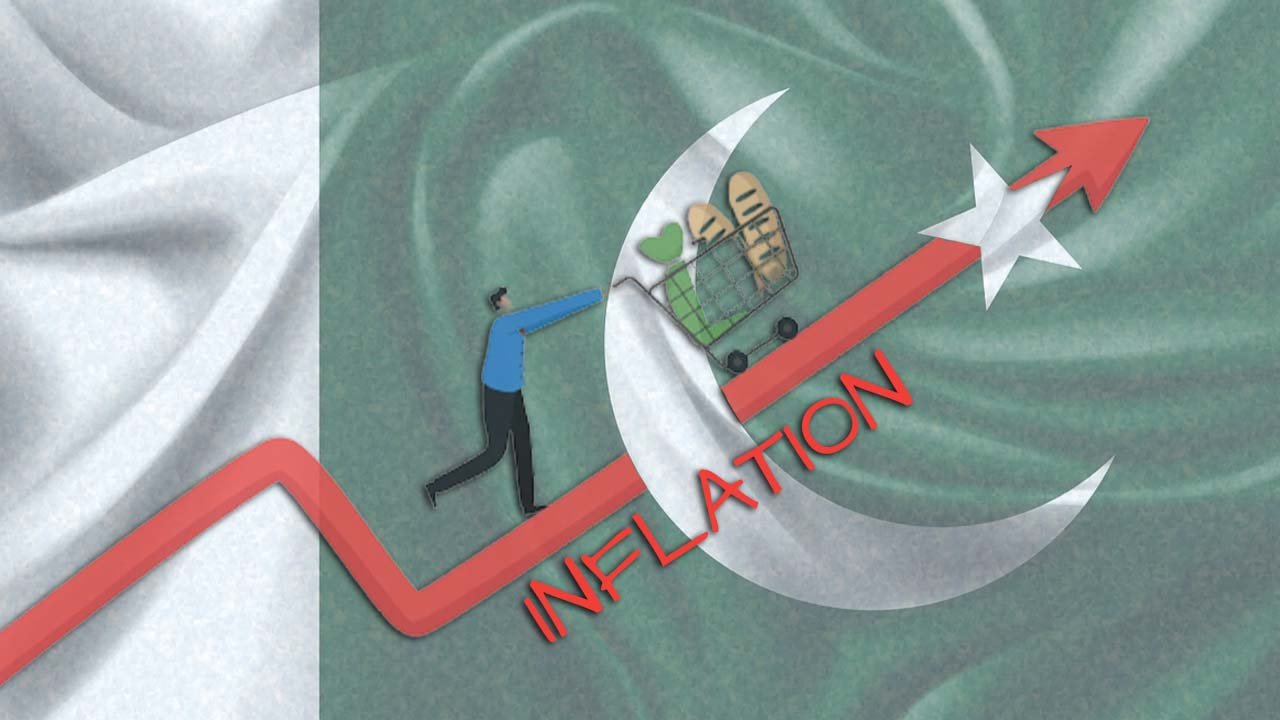
    Despite coming down marginally, weekly inflation remains above 45 per cent and stood at 45.72 per cent on a year-on-year (YoY) basis for the week ended on 18th May 2023, showed data released by the Pakistan Bureau of Statistics (PSB) on Friday.

    The Sensitive Price Indicator (SPI) based inflation for the week ended 11th May 2023, recorded a decrease of 0.16 per cent over the previous week due to a decrease in the prices of food and non-food items.

    The year-on-year trend posted an increase due to an increase in the prices of Cigarettes (138.50 per cent), Tea Lipton (114.93 per cent), Potatoes (114.69 per cent), Gas Charges for Q1 (108.38 per cent), Bananas (104.44 per cent), Gents Sponge Chappal (100.33 per cent), Wheat Flour (90.77 per cent), Rice Basmati Broken (86.30 per cent), Eggs (85.86 per cent), Rice Irri-6/9 (80.44 per cent), Petrol (79.85 per cent), Diesel (78.68 per cent), Pulse Moong (66.79 per cent), Bread (63.17 per cent), and Pulse Mash (57.06 per cent), while a decrease was observed in the prices of Tomatoes (38.30 per cent), Onions (30.18 per cent), and Chilies Powdered (6.48 per cent).

    A decrease was observed in the prices of food items: Onions (9.04 per cent), Garlic (1.76 per cent), Sugar (1.42 per cent), Wheat Flour (1.40 per cent), Vegetable Ghee 2.5kg (0.63 per cent), Mustard Oil (0.48 per cent), Pulse Masoor (0.40 per cent), Pulse Gram (0.12 per cent), and Vegetable Ghee 1kg (0.11 per cent); and non-food items: Diesel (10.38 per cent), Petrol (4.24 per cent), LPG (3.02 per cent), and Firewood (0.89 per cent).

    On the other hand, an increase was observed in the prices of Chicken (7.51 per cent), Tea Lipton (4.53 per cent), Gur (2.79 per cent), Eggs (2.29 per cent), Energy Saver (2.22 per cent), Tomatoes (2.11 per cent), Tea Prepared (1.09 per cent), and Curd (1.08 per cent).

    During the week, out of 51 items, prices of 23 (45.10 per cent) items increased, 13 (25.49 per cent) items decreased, and 15 (29.41 per cent) items remained stable.

  • Pakistan’s forex reserves decline to $4.31 billion, covering less than a month’s worth of imports

    Pakistan’s forex reserves decline to $4.31 billion, covering less than a month’s worth of imports

    The State Bank of Pakistan (SBP) has experienced a continuous decline in foreign exchange reserves for the third consecutive week. This decline is attributed to the country’s ongoing struggle to secure a deal with the International Monetary Fund (IMF).

    The central bank’s statement indicates that the reserves decreased by $72 million to reach $4.31 billion as of May 12, primarily due to external debt payments. This amount is sufficient for less than a month’s worth of imports.

    In contrast, commercial banks in Pakistan hold net foreign reserves amounting to $5.62 billion, which is $1.01 billion higher than the central bank’s reserves. Therefore, the country’s total liquid foreign reserves amount to $9.93 billion.

    Pakistan’s economy is currently facing significant challenges, exacerbated by financial difficulties and the delay in reaching an agreement with the IMF. Such an agreement is crucial as it would provide much-needed funding to mitigate the risk of default.

    Earlier, on May 11, the State Bank of Pakistan (SBP) witnessed a decline of $74 million in foreign exchange reserves within a week, resulting in reserves amounting to $4.38 billion. Additionally, commercial banks held net foreign reserves of $5.6 billion.

    Reports indicate that the IMF remains skeptical and is urging Islamabad to take further actions to unlock the loan program, despite assurances from friendly countries regarding external funds for Pakistan.

    Pakistan has been asked to present a repayment plan for a $3.7 billion loan to the IMF in June and demonstrate stronger support from friendly nations to fulfill its commitments.

  • Currency crisis alert: Pakistani rupee could drop to Rs350 against dollar without IMF assistance

    Currency crisis alert: Pakistani rupee could drop to Rs350 against dollar without IMF assistance

    The Pakistani rupee is poised to face a significant downfall, with expectations that it may plummet to as low as Rs350 against the US dollar. This alarming projection has raised concerns among stakeholders, as the weakening currency is anticipated to have far-reaching implications, particularly in terms of inflationary pressures that will disproportionately affect the lower and middle classes.

    According to Geo, the steep devaluation of the rupee, which has already lost approximately 20 per cent of its value this year, positions it among the worst-performing currencies worldwide.

    Experts, including economists Ankur Shukla and Abhishek Gupta, attribute this weakness to a range of factors. Capital flight from Pakistan is intensifying due to the growing apprehension that the International Monetary Fund (IMF) may not provide the much-needed bailout required to prevent a fiscal default in the upcoming fiscal year commencing in July.

    The delay in receiving aid, which has been stalled since November, is suspected to be linked to political unrest, further exacerbating the rupee’s decline. The country’s leadership has been plagued by instability since the removal of Imran Khan, Chairman of Pakistan Tehreek-e-Insaf (PTI), through a no-confidence motion vote in April last year.

    Khan’s recent arrest has heightened tensions between him, the government, and the military. Following his imprisonment, the rupee experienced a sharp drop to a record low of 299 per dollar, only to partially recover and stabilize at 285 after his release.

    Multiple experts are warning of an imminent massive drop in the rupee, with some analysts even foreseeing a further 20 per cent depreciation. The currency’s future trajectory heavily depends on the ongoing clashes between Khan and the government, as well as the IMF’s decision regarding financial assistance.

    Adil Ghaffar, CEO at Premier Financial Services Pvt in Karachi, concurs, stating that failure to secure the loan could lead to a slump in the rupee’s value to Rs350 per dollar in June. Market sentiment remains precarious, and economists such as Farooq Pasha highlight the persistent uncertainty surrounding the rupee’s path.

    In the near term, politics will continue to pose a key risk until the elections. The bond market has also been adversely affected, with bond investors growing increasingly nervous as the spread between Pakistan’s dollar bonds and US Treasuries reached a record high of over 35 per cent this month.

    With the looming prospect of the rupee’s significant decline, the economic landscape of Pakistan hangs in a precarious balance.

  • Majority of Pakistanis can’t make ends meet on current income, survey finds

    Majority of Pakistanis can’t make ends meet on current income, survey finds

    In a recent consumer-based study conducted by Pulse Consultant in Pakistan, concerning findings have emerged regarding the financial state of individuals across the country. The study, which encompassed 1,180+ respondents from the top 10 cities of Pakistan, aimed to understand the ability of individuals to meet their monthly expenses in relation to their current income. The results shed light on the economic challenges faced by a significant portion of the population.

    The study revealed that a staggering 60 per cent of respondents reported an inability to fulfill their monthly expenses with their existing income. This indicates a considerable strain on individuals’ finances, leading them to struggle to cover their essential needs. Among these respondents, both male and female participants voiced similar concerns, with 59 per cent of males and 68 per cent of females expressing difficulties in meeting their expenses.

    On the other hand, 40 per cent of the respondents claimed that their current income adequately covered their expenses. However, further analysis of this group revealed some noteworthy insights. Of those who reported their expenses were being met, only 28 per cent claimed to save money from their current income, while the remaining 72 per cent stated that they were unable to save any funds. Interestingly, female respondents seemed to face greater challenges in saving money, with 82 per cent of them reporting an inability to do so, compared to 71 per cent of their male counterparts.

    Among the 60 per cent of respondents who struggled to meet their expenses, several coping mechanisms emerged. For 37 per cent of them, borrowing money became a necessity to bridge the financial gap. Notably, a higher proportion of males (39 per cent) resorted to borrowing, compared to females (29 per cent).

    Additionally, 22 per cent of those facing financial difficulties reported engaging in additional part-time employment to supplement their income. This was more prevalent among males (39 per cent) who often bore the responsibility of supporting their families financially, compared to females (29 per cent).

    Moreover, 40 per cent of respondents stated that reducing expenditures became their only viable option. Nearly half of the women (46 per cent) reported resorting to this measure, while 38 per cent of men followed suit.

    The study’s findings paint a concerning picture of the financial landscape in Pakistan, with a significant portion of the population struggling to make ends meet. The inability to meet monthly expenses can lead to increased financial stress, limited access to basic necessities, and hindered economic growth for individuals and the nation as a whole.

    Addressing these challenges will require comprehensive efforts from both the government and private sector. Policymakers should focus on initiatives that promote economic growth, job creation, and income equality. Additionally, there is a need for financial literacy programs to empower individuals with the knowledge and skills necessary to manage their finances effectively and make informed decisions.

    Furthermore, it is crucial for employers to offer fair wages and employment opportunities that align with the needs of the population. By providing stable jobs and suitable remuneration, individuals can have a better chance of meeting their expenses and improving their overall financial well-being.

    Ultimately, the findings of this consumer-based study highlight the pressing need to address the financial struggles faced by a significant portion of the Pakistani population. Through concerted efforts and targeted interventions, it is possible to alleviate the burden of financial hardship and foster a more financially inclusive and prosperous society for all.

  • Pakistan reaffirms commitment to $6.5 billion IMF bailout, dismissing rumors of retraction

    Pakistan reaffirms commitment to $6.5 billion IMF bailout, dismissing rumors of retraction

    On Wednesday, Minister of State for Finance and Revenue, Dr Aisha Ghaus Pasha, dismissed rumours of Pakistan retracting from the anticipated $6.5 billion bailout programme with the International Monetary Fund (IMF).

    According to Geo, Pasha clarified that discussions were ongoing between the Federal Board of Revenue (FBR) and the Finance Division, emphasising that Pakistan remained engaged with the IMF. Speculation arose when reports suggested that Pakistan had taken a firm stance against the IMF and refused to share details of the upcoming budget.

    This led to concerns that the financially strained nation was reneging on the deal originally agreed upon by the Imran Khan-led Pakistan Tehreek-e-Insaf (PTI) government.

    Pasha expressed the government’s commitment to continuing the IMF programme, acknowledging the political sacrifices made by the coalition government to meet the Fund’s conditions. Negotiations with the IMF have been aimed at restarting the $6.5 billion bailout programme, which is crucial for Pakistan to avert default.

    During a meeting with journalists after the Senate Standing Committee on Finance, Pasha revealed that the coalition government would present its second budget in the first week of June, marking the second year since assuming power in April. The Finance Bill 2023-24 is scheduled to be presented in the National Assembly on June 9, while the Economic Survey 2022-23 will be released on June 8, according to sources.

    Assuring the public during the briefing, Pasha affirmed that the government would strive to alleviate the burden on the masses amidst these challenging times, as the budget figures were being finalized. However, she cautioned that the situation would remain difficult until the tax-to-GDP ratio reached double digits, emphasizing the necessity of expanding the tax base.

    The state minister disclosed the Ministry of Finance’s plan to transition from indirect taxes to direct taxes, stating that such a shift would reduce the burden on the general population. She reiterated the government’s intention to introduce direct taxes in the upcoming budget for the fiscal year 2023-24, expressing concern over the negative impact of tax concessions on the economy.

    Meanwhile, FBR Chairman Asim Ahmed briefed the committee on the capital value tax, disclosing that the revenue generated from this tax during the current financial year amounted to Rs9 billion.

    Addressing the concerns of senators regarding the implementation of capital valuation tax on domestic and foreign assets, Ahmed clarified that this measure aimed to include the wealthier individuals in the tax net. He also noted that the revenue board was registering new individuals with foreign assets while maintaining records of those already registered.