Category: Business

The most important business news, explained in a young, easy to understand way. News that affects young career professionals.

  • IMF demands approval for subsidies as Pakistan struggles to secure tranche

    IMF demands approval for subsidies as Pakistan struggles to secure tranche

    Pakistan has been negotiating an agreement with the International Monetary Fund (IMF) since January 2023. The IMF has specified that Pakistan must receive prior approval before providing any additional subsidies.

    Negotiations have hit a snag over a plan announced by Prime Minister Shehbaz Sharif in March to charge wealthy fuel consumers more to subsidise prices for the poor who have been severely impacted by inflation.

    Despite meeting almost all of the Fund’s conditions, the government is struggling to convince the lender to release the tranche. On a separate issue of securing confirmation on the external financing gap of $5 billion by June 2023, the Kingdom of Saudi Arabia and the United Arab Emirates have provided over $2 billion and $1 billion respectively.

    The formal agreements with these countries are expected to be signed soon. The Pakistani authorities are complaining that the IMF has placed prior actions before signing the staff-level agreement, which was not done in the past.

    According to The News, the IMF asks for confirmation from commercial banks before signing the agreement, while banks are asking for IMF’s board approval and the revival of the Fund program to refinance loans worth $2-3 billion.

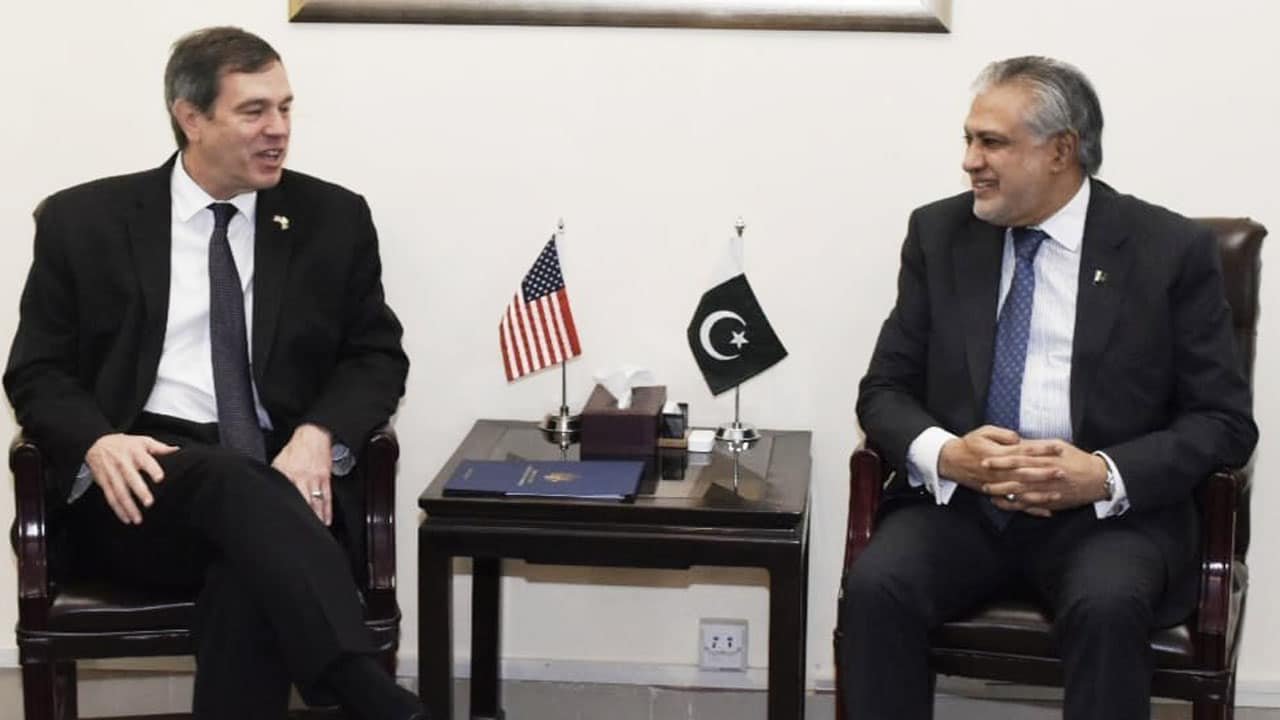
    Finance Minister Ishaq Dar has assured US diplomat Andrew Schofer that the government is committed to completing the ongoing IMF program.

  • Pakistan’s history of IMF bailouts: A look at 75 years of economic challenges

    Pakistan’s history of IMF bailouts: A look at 75 years of economic challenges

    Pakistan is currently facing yet another economic crisis, a recurring issue that has caused the country to repeatedly seek help from the International Monetary Fund (IMF) for financial assistance.

    Unfortunately, most of the previous 13 bailouts granted since the late 1980s were left unfinished, as Pakistan failed to implement any meaningful structural changes to rein in government spending or boost revenue.

    The country’s current government, led by Prime Minister Shehbaz Sharif, is currently in talks to revive its latest $6.5 billion loan programme as a result of the ongoing economic downturn, exacerbated by last year’s devastating floods and continued political instability. However, the implementation of the necessary belt-tightening measures may prove to be challenging, given the upcoming national elections planned for later this year.

    Pakistan and the IMF had agreed to a $6 billion bailout program in 2019, but disputes over monetary policies have prevented the release of over $1 billion. Furthermore, donors and lenders have demanded structural reforms before providing any further financial aid to Pakistan.

    Pakistan’s traditional partners have made it clear that their assistance is conditional upon the revival of the IMF program and the successful implementation of reforms, including the expansion of tax collection.

    Based on the prevailing Special Drawing Rights (SDR), also known as XDR, rates, the International Monetary Fund (IMF) has approved loans totaling $31.629 billion for Pakistan.

    It is worth noting, however, that not all of the approved funds have been disbursed, with only one out of 22 loans having been fully transferred to Pakistan. This highlights the complex political and economic dynamics that underlie IMF programs.

    Pakistan’s history of borrowing from the IMF

    Pakistan has a history of borrowing from the International Monetary Fund (IMF), which can be divided into four distinct periods. The early years of borrowing spanned from 1950 to 1988, followed by the Benazir and Nawaz Sharif era from 1988 to 1999. The third period was marked by the Musharraf and Zardari administrations from 2000 to 2013. The current period is led by Nawaz Sharif and Imran Khan.

    During these periods, each government worked with the IMF differently, especially in the past two decades. While the Benazir and Nawaz Sharif administrations alternated in seeking IMF programs in the 1990s, the Musharraf government, despite experiencing substantial foreign currency inflows, also had to turn to Washington for financial assistance.

    The Zardari administration, on the other hand, abandoned the largest-ever IMF program when it deemed it expedient to do so. This trend illustrates how Pakistan’s borrowing from the IMF has been characterised by inconsistency and shifting priorities.

    2013-2022

    Pakistan’s recent history of borrowing from the IMF has been marked by different governments seeking assistance in their own unique ways. While the Imran Khan government initially refused to seek assistance from the IMF, it eventually sought an Extended Fund Facility (EFF) loan worth SDR4.268 billion in July 2019. This was due to the country’s financial deterioration and instability, which had eroded the stability gains made since late 2016.

    Under Imran Khan’s government, the IMF disbursed a total of SDR3,159.5 million to Pakistan in four tranches. However, talks for the fourth tranche proved challenging and the government sought help from the US Assistant Secretary of State Donald Lu. Despite receiving SDR750 million in February 2022, then-Prime Minister Imran Khan announced a subsidy on petrol and diesel, effectively breaking the agreement with the IMF. As a result, the IMF suspended Pakistan’s $6 billion loan programme in March 2022.

    Negotiations for the revival of the fund facility did not commence until May, when Shehbaz Sharif of the PML-N took over the government. Talks on reviving the fund facility were concluded in late June, but only after the government took some harsh decisions, including withdrawing tax relief for salaried individuals. The next tranche will only be released after the IMF Executive Board takes up the combined 7th and 8th reviews.

    2000-2013

    During Pervez Musharraf’s government, Pakistan received significant foreign aid in the form of military and civil assistance, resulting in a low reliance on IMF loans for financial support. However, Pakistan did receive two IMF loans in the first two years of Musharraf’s regime, totaling SDR520 million. The first loan was a stand-by arrangement of SDR465 million, of which SDR150 million were disbursed, and the second was an extended credit facility of SDR1.033 billion, of which only SDR315 million were disbursed. Pakistan did not require IMF assistance from 2001 to 2008, as foreign aid prevented a balance of payment crisis.

    However, the aid failed to boost Pakistan’s forex reserves, which experienced a sharp decline between 2006 and 2008. In 2008, the Pakistan Peoples Party government negotiated with the IMF for the largest-ever loan of SDR7.235 billion, also the largest stand-by arrangement. Only SDR5.2 billion were disbursed between 2008 and 2010 in three tranches. Afterward, the PPP government did not complete the program as it received funds under the Kerry-Lugar program until 2013, when the United States ceased funding. The PPP government was unable to implement tough reforms demanded by the IMF due to impending elections.

    1989-1999

    During the 1990s, Benazir Bhutto and Nawaz Sharif sought eight bailouts from the IMF due to the consequences of the Soviet-Afghan war and political instability in Pakistan. In 1988, Bhutto signed up for two IMF packages, totaling SDR655 million. The IMF made two payments of SDR122.4 million and SDR189.5 million in 1991 and 1992. In 1993, Nawaz Sharif negotiated a loan of SDR265.4 million, with the IMF paying SDR88 million that year.

    Bhutto’s government signed three IMF programs of SDR379 million, SDR606 million, and SDR562 million between 1994 and 1995, with lower disbursements of SDR123 million, SDR133 million, and SDR107 million before being removed in 1996. Sharif then negotiated two loans in 1997 of SDR682.4 million and SDR454.9 million, respectively, with SDR250 million disbursed before his government was toppled in 1999. Bhutto negotiated a total of five programs of SDR2.2 billion, receiving SDR676.26 million, while Sharif signed up for three programs of SDR1.4 billion, with Pakistan receiving only SDR608 million. The instability of the government prevented the implementation of IMF reforms, which often led to increased tariffs and taxes, causing a negative perception of the IMF in the country.

    1958-1988

    The Zia-ul-Haq government received the largest amount of foreign aid from the International Monetary Fund in Pakistan’s history, surpassing the sum of all seven previous programs approved since 1958. In 1980, the IMF granted SDR1.268 billion to the government, followed by another program of SDR919 million in 1981. The Zia-ul-Haq administration received SDR1.079 billion out of the total SDR2.187 billion approved by the IMF.

    Before that, Zulfikar Ali Bhutto signed four loan programs with the IMF between 1972 and 1977 for a total of SDR330 million, of which SDR314 million was withdrawn. In 1958, Ayub Khan initiated Pakistan’s first loan from the IMF, seeking only SDR25 million, and in 1968 and 1969, two more programs of SDR37.5 million and SDR75 million were approved, respectively. The Ayub government received SDR112 million of the total SDR137.5 million approved.

    Pakistan has received a total of SDR23.656 billion in IMF-approved programs, of which SDR14.189 billion was disbursed. Pakistan was offered three long-term Extended Credit Facilities, five medium-term Extended Fund Facilities, at least 12 short-term Standby Arrangement loans, and one Structural Adjustment Facility over 63 years.

    This news story was created by compiling information from various news platforms as well as the IMF website.
  • US expresses confidence in Pakistan’s economic policies and offers support for bilateral relations

    US expresses confidence in Pakistan’s economic policies and offers support for bilateral relations

    On Wednesday, Finance Minister Senator Ishaq Dar reaffirmed the federal government’s commitment to the International Monetary Fund (IMF) programme during a meeting with US Embassy Charge’d Affaires Andrew Schofer at the Finance Division.

    Dar informed Schofer about the ongoing programme and assured him that the government was dedicated to completing it. Schofer expressed his confidence in Pakistan’s economic policies and programs and offered his support to strengthen economic and trade relations between the two nations.

    The finance minister also discussed the current economic challenges and policy decisions taken by the government to stabilize and promote sustainable and inclusive growth. Both parties exchanged their views on the notable bilateral relations between the US and Pakistan.

    Dar thanked the US Charge’d Affaires and reiterated the government’s desire to expand bilateral trade and investment ties. The meeting followed a report published by The News that stated the IMF and Pakistani authorities were holding each other responsible for the delay in reviving the stalled programme.

    It is still uncertain how Pakistan will proceed to accomplish the current IMF programme, which expires on June 30, 2023.

  • SSGC, SNGPL customers face load shedding and low gas pressure

    SSGC, SNGPL customers face load shedding and low gas pressure

    Many households in Pakistan served by the Sui Southern Gas Company (SSGC) and Sui Northern Gas Pipelines (SNGPL) are experiencing low gas pressure or no gas supply in the month of May. SSGC customers are facing seven to eight hours of load shedding, from 10 pm to 5-6 am, while SNGPL residential consumers are encountering a similar situation.

    The SSGC is facing a gas shortfall of 265 mmcfd as its demand is 1,165 mmcfd, but its supply is only 900 mmcfd, including 90 mmcfd of RLNG. The Sui Northern system has also lost 85 mmcfd gas for 12 days due to annual maintenance.

    A spokesperson from SSGC stated that the gas load shedding is being done for seven to eight hours to maintain the gas line pack so that the gas supply can be provided for 16-17 hours. Balochistan is receiving only 109 mmcfd of gas. The Sui Northern system’s situation is also vulnerable due to the suspension of supply from the Nashpa plant for 12 days.

    An official from Sui Northern stated that the gas companies are only providing gas for cooking times as per their agreement with residential consumers and not for 24 hours. However, the gas companies used to supply gas for 24 hours, which was not agreed upon by the domestic consumers.

    According to The News, the Punjab power sector is receiving 605 mmcfd RLNG, while the fertiliser sector is receiving 88 mmcfd. The power sector’s RLNG consumption has reduced to 605 mmcfd due to low temperatures. The government is receiving 900 mmcfd gas, but it has a purchasing capacity of 1,200 mmcfd. Pakistan is receiving RLNG of nine cargoes on long-term agreements, eight from Qatar and one from ENI.

    Despite the decline in RLNG prices to $12-13 per barrel in the international market, Pakistan LNG Limited (PLL) is reportedly unable to purchase spot cargoes due to a dollar liquidity crisis.

  • Future of Jobs Report: 83 million jobs to be eliminated globally by 2027

    Future of Jobs Report: 83 million jobs to be eliminated globally by 2027

    The World Economic Forum (WEF) has published its Future of Jobs Report 2023, which examines how global trends and technologies may impact the job market, including in Pakistan. The report predicts that artificial intelligence (AI) and big data will be vital for companies’ skills strategies worldwide. The report also warns that 83 million jobs may disappear in the next five years across the world, with some jobs becoming obsolete.

    The report indicates that 23 per cent of jobs are expected to change by 2027, with 69 million new jobs created and 83 million eliminated. The green transition and localisation of supply chains are expected to generate a net increase in jobs. Cognitive skills, such as analytical and creative thinking, will be the most crucial skills for workers in the next five years, with companies focusing on AI and big data in particular.

    The study provides a comprehensive evaluation of Pakistan’s performance related to the Future of Jobs in 2023 and predicts how the job market will unfold in the next 5-7 years. Pakistan has the most negative outlook globally, with a lower skill stability than the global average. The report identifies several global trends and technologies that will affect Pakistan’s job market, such as digital platforms and apps, big-data analytics, and education and workforce development technologies. These trends and technologies will play a crucial role in creating new employment opportunities and driving industry transformation.

    WEF’s report suggests that while reskilling and upskilling towards green skills is growing, it is not keeping pace with climate targets. The working-age population in Pakistan is 85.78 million, indicating a vast pool of potential talent. The country’s labor force participation rate is 57 per cent, with 55 per cent of the workforce in vulnerable employment. However, the unemployment rate remains relatively low at 5 per cent. It also highlights that 82 per cent of companies plan to adopt education and workforce development technologies in the next five years.

    Mishal Pakistan, the Country Partner Institute of the Center for New Economy and Societies Platform, World Economic Forum, has announced plans to develop a comprehensive report on the Future of Jobs for Pakistan in the third quarter of 2023.

    Amir Jahangir, Chief Executive Officer of Mishal Pakistan, believes that by strengthening the education system, investing in vocational and technical training, and fostering a culture of innovation, Pakistan can better equip its population to excel in the global job market. Saadia Zahidi, Managing Director of the World Economic Forum, emphasises that investing in education, reskilling, and social support structures will ensure individuals are at the heart of the future of work.

  • US could default by next month unless debt ceiling is raised

    US could default by next month unless debt ceiling is raised

    Janet Yellen, the United States Treasury Secretary, has written to Republican House Speaker Kevin McCarthy, warning that the federal government may exceed its spending limit by June 1 if Congress does not raise the debt ceiling. Yellen’s letter, which was published on Monday, noted that available data suggests that the government will no longer be able to cover its expenses in early June if Congress does not raise the limit before then.

    Yellen emphasised the importance of Congress taking action to increase or suspend the debt limit as soon as possible, to ensure that the government can continue to make its payments. While Yellen’s letter indicates the US could enter default as early as June 1, she also noted that it is impossible to predict the exact date when Treasury will be unable to pay the government’s bills.

    The potential for a default has raised concerns among experts about its possible impact on the US economy. It could lead to a fall in the US credit rating, resulting in higher interest rates and a possible recession. The process of raising the US spending limits is typically routine, but it has become increasingly contentious in recent years. Republicans in Congress are pushing for steep cuts to social programs in exchange for their support to raise the debt ceiling this year. In contrast, the Biden administration has called for an increase to the debt ceiling without conditions, stating that debates over various programs can be hashed out during negotiations on the yearly budget.

    Last week, the Republican-led House of Representatives passed a bill that agreed to raise the debt ceiling by $1.5 trillion in exchange for $4.5 trillion in spending cuts for programs like healthcare for low-income communities, renewable energy and transportation. The bill is considered dead on arrival in the Democrat-controlled US Senate, and Biden has stated that he would veto it. However, its passage in the House is considered a victory for McCarthy, who has since called for Democrats to approve the bill and avoid a default.

    Democrats have called for a “clean” debt limit increase without haggling or addendums. Virginia Senator Mark Warner tweeted on Monday that the US has about a month until it defaults on paying its debt and emphasised that this is not new spending, but about paying bills already incurred. On May 9, US President Joe Biden reportedly called for a meeting with Democratic and Republican leaders to discuss spending and the debt limit. The Congressional Budget Office has also stated that it sees an increased risk of the government running out of funds by early June due to tax receipts that were lower than expected.

  • Pakistan’s IMF bailout programme revival delayed: blame game between Pakistani authorities and IMF

    Pakistan’s IMF bailout programme revival delayed: blame game between Pakistani authorities and IMF

    Pakistani authorities and the International Monetary Fund (IMF) are blaming each other for the delay in reviving the IMF bailout programme. The IMF approved a $6.5 billion bailout package for Pakistan in 2019, of which $1.1 billion is still outstanding.

    However, issues related to fiscal policy adjustments have delayed the release of the funds since November. The delay has raised concerns as Pakistan has less than a month’s worth of foreign exchange reserves and needs the IMF package to avert defaulting on external payment obligations.

    With the expiry of the existing IMF programme on June 30, 2023, Pakistan’s options for reviving the IMF programme are shrinking with every passing day.

    While Pakistani authorities argue that the IMF is playing politics, IMF sources say they are still waiting for confirmation on the remaining $2 billion from the World Bank and Asian Infrastructure Investment Bank, as well as seeking commercial loans from banks.

    According to Geo, Dr Khaqan Najeeb, former adviser Ministry of Finance, has called for short-term measures, such as funding from friendly countries, the revival of the IMF programme, clarity on programme completion dates, and work on the budget for 2023-24 to be undertaken to avoid Pakistan being near the brink of default.

  • China’s $57.7 billion railway project aims to boost Pakistan’s economy

    China’s $57.7 billion railway project aims to boost Pakistan’s economy

    A study conducted by scientists from China Railway First Survey and Design Institute Group has estimated the cost of a proposed China-Pakistan railway project to be $57.7 billion. The railway will connect Gwadar Port with Xinjiang’s Kashgar, and is expected to have strategic significance, potentially reshaping trade and geopolitics. The project will improve connectivity among the countries along the ancient Silk Road trade routes and is part of a plan to reduce dependence on Western-dominated routes.

    The study urges the Chinese government and financial institutions to provide strong support for the project, including increasing coordination and collaboration among relevant domestic departments and striving for the injection of support funds. Pakistan’s economy is expected to receive a much-needed boost from the infrastructure and will easily trade with China. The researchers said the project is expected to create more jobs, boost infrastructure investment, and increase trade.

    However, the study notes that Pakistan’s GDP last year was just six times the estimated cost of the project, making sufficient financing difficult. Pakistan is mainly relying on Chinese enterprises for investment and construction, as it is unable to provide sufficient financial and material support.

    Moreover, the security issues in Pakistan pose a risk to Chinese workers and investments, which may hinder the railway project. Despite these challenges, the study emphasizes the strategic significance of the railway project and urges strong support and policy guarantees for its construction.

  • Pakistan fails to meet Hajj quota due to rising inflation and dollar shortage

    Pakistan fails to meet Hajj quota due to rising inflation and dollar shortage

    On Wednesday, sources within the Ministry of Religious Affairs reported that the government has decided to return Pakistan’s quota of Hajj pilgrimage to Saudi Arabia due to a shortfall of applications caused by rising inflation.

    This year marked the first time a quota for Hajj pilgrimage was available in the country, but the shortage of dollars and rising inflation prevented Pakistanis from applying for Hajj.

    The final decision to return the Hajj quota will be made by the federal cabinet. The authorities considered giving the official Hajj quota to private operators after a few applications turned out for the government scheme. However, this option would lead to private operators collecting dollars from the open market, causing unnecessary demand for foreign currency.

    Pakistan had been demanding an increase in the Hajj quota, allowing 179,210 pilgrims to 202,000 or 201,000 pilgrims. This year, the country received its complete quota of 179,000 pilgrims after many years but couldn’t utilize it entirely. It’s worth noting that the cost of government-sponsored Hajj is around Rs1.2 million.

    Due to an acute shortage of the greenback amid the collapsing economy, the Ministry of Religious Affairs and Interfaith Harmony decided to allocate a 50% special quota in the Government Hajj Scheme-2023 for pilgrims who will pay in US dollars. However, a quota of 89,605 Hajj pilgrims was set under the government scheme, falling short of 9,000 applicants.

    The government received 72,869 applicants under the regular scheme and only 8,000 under the sponsorship scheme. Moreover, 28,679 additional applications were received under the official regular scheme against the quota of 44,190. Additional applicants are being sent for Hajj pilgrimage without a lucky draw.

    The sources indicated that a total of $235 million is required for the government scheme, some of which will be provided by the sponsorship scheme and the rest by the government.

  • Toyota Indus Motor Company sees 142% increase in quarterly profit despite low demand

    Toyota Indus Motor Company sees 142% increase in quarterly profit despite low demand

    Indus Motor Company (IMC) announced a 37 per cent decrease in its profit-after-tax (PAT) for the third quarter of financial year 2022-23, with earnings of Rs3.216 billion compared to Rs5.118 billion in the same period last year.

    Despite this, the automaker saw an increase in its quarterly PAT by 142 per cent, which was attributed to an improvement in gross margins, resulting in an operating profit after two consecutive quarterly operating losses. The company also declared an interim cash dividend of Rs24.4 per share, in addition to the previously paid interim cash dividend of Rs18.4 per share.

    Muhammad Abrar, an investment analyst at Arif Habib Limited, explained that IMC was able to offset the impact of currency devaluation by raising the prices of its cars significantly. The automaker’s operating expenses were also curtailed. While revenue decreased by 29 per cent due to lower units sold, IMC’s gross profit was Rs3.05 billion during 3QFY23, compared to Rs5.23 billion in the same period last year.

    Pakistan’s auto sector has been struggling due to the government’s decision to curb imports and restrict issuance of Letters of Credit (LC), higher finance cost, and massive increases in car prices. Despite this, IMC’s gross margins improved to 6.3 per cent on a QoQ basis, which was unexpected, according to Abrar.

    According to Brecorder, the company’s earnings per share (EPS) stood at Rs40.92, compared to Rs65.11. IMC’s board of directors met to review the company’s financial and operational performance in the first nine months ended March 31, 2023. While higher profits are expected in the upcoming quarter due to the increase in car prices and the reduction of operating expenses, the country’s auto industry reported a 66 per cent decrease in car sales compared to March 2022.

    Last week, Pak Suzuki Motor Company Limited also reported its highest-ever quarterly loss of Rs12.9 billion in the first three months of 2023 due to decreased sales and high finance costs.