Category: Business

The most important business news, explained in a young, easy to understand way. News that affects young career professionals.

  • Punjab govt imposes ‘complete ban’ on departmental iftar parties due to economic situation

    Punjab govt imposes ‘complete ban’ on departmental iftar parties due to economic situation

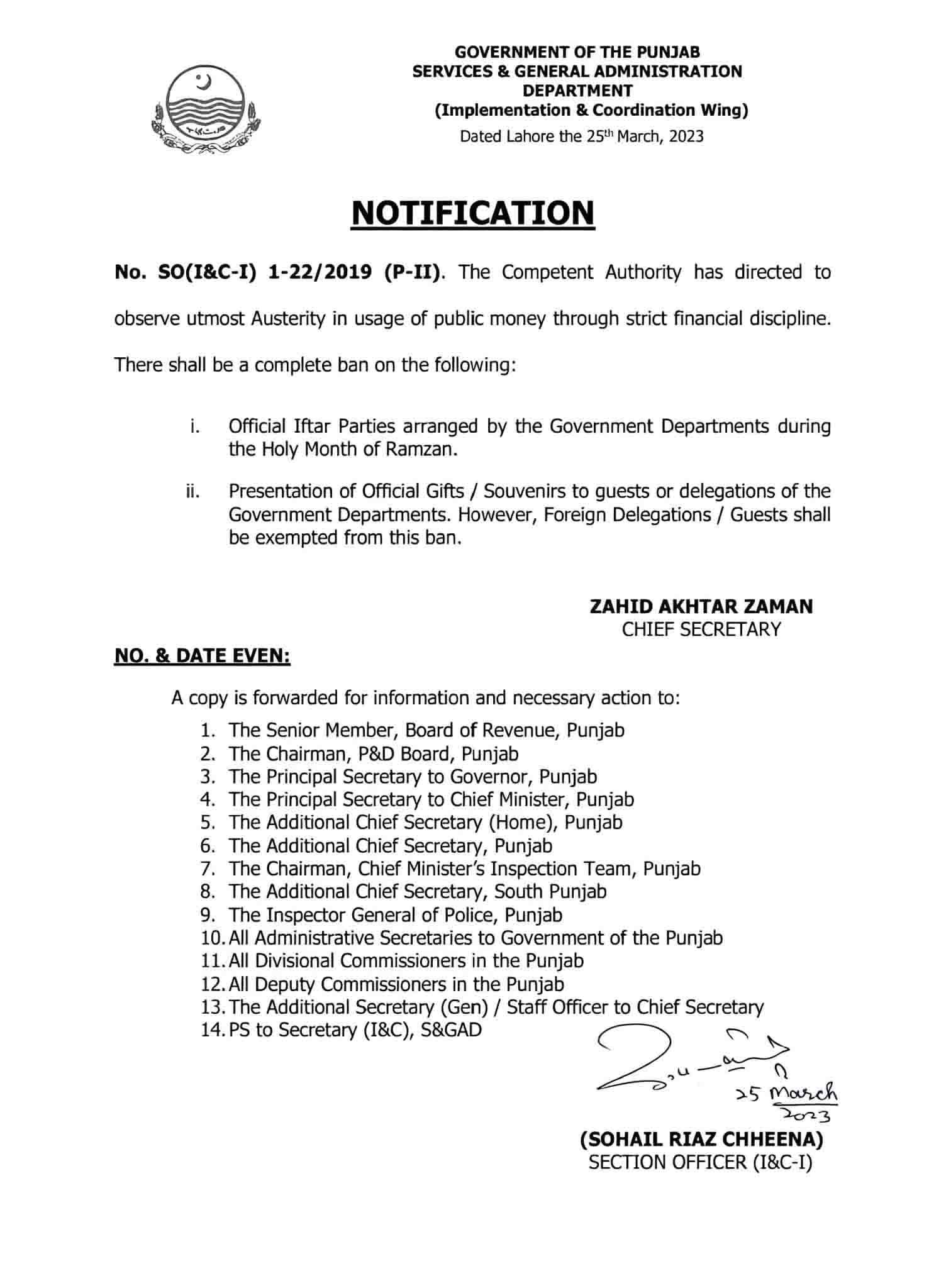
    The Services and General Administration Department (S&GAD) of Punjab has recently released a notification that prohibits government departments from organising Iftar parties.

    According to The News, the reason behind this move is the economic crisis faced by the country, and therefore, the government has advised against giving expensive gifts to departmental delegations during Ramzan. The notification, however, exempts diplomats and foreign guests from these bans.

    The notification highlights the significance of simplicity during the holy month and emphasizes the government’s commitment to celebrate it simply. It is essential to recognise Pakistan’s current economic circumstances and avoid hosting costly Iftar celebrations that might put a strain on the country’s financial resources.

    As a result, all government offices have been advised to follow these guidelines and avoid preparing lavish presents for local delegates. The administration acknowledges the importance of observing Ramzan in a more simple and conscientious manner that is consistent with the country’s economic position.
    This move by the Punjab government demonstrates a responsible and prudent approach towards managing the country’s resources during these challenging times. By promoting modest celebrations during Ramzan, the government aims to set an example for citizens and encourage them to prioritise their spending wisely.

    Furthermore, exempting foreign guests and diplomats from the ban ensures that Pakistan’s image remains positive while still taking necessary measures to address economic challenges.
  • Unchecked overcharging: Shopkeepers set their own rates for essential items during Ramzan

    At the start of Ramzan, prices of essential food items have witnessed an uncontrolled surge, with little intervention from the authorities concerned. Shopkeepers are selling essential food items at their desired rates instead of selling at government-announced rates.

    A recent survey of markets in Peshawar reveals an alarming increase in prices of food items, which have continued to soar with each passing day in this holy month.

    A vendor reported that the price of live chicken has surged to Rs350 per kg, while rice prices have increased by Rs70 per kg, reaching Rs335 per kg. Split chickpeas (chana dal) are now selling at Rs220 to Rs260 per kg, and the cost of beans has gone up by Rs60 per kg, with rates jumping from Rs281 to Rs339 per kg. According to a shopkeeper, the cost of spices has surged from Rs150 to Rs200 per kg and now stands at Rs600 per kg in the city.

    Oil and ghee prices have also skyrocketed by Rs62 per kg. Vegetables and fruits have become unaffordable for many, with garlic being sold at Rs360 and ginseng at Rs620 per kg. Peas cost Rs200, Arvi Rs180, Zucchini Rs170, green capsicum Rs150, and tomato Rs120 per kg.

    Fruits have also witnessed an upward trend in prices, with sweet oranges priced at Rs440 per dozen, oranges at Rs400 per dozen, banana at Rs300 per dozen, pomegranate Rs400, Iranian apple at Rs340 per kg, Kohati guava at Rs350, and strawberry costing Rs280 per kg.

    The meat market has also been hit hard by price hikes, with beef now selling at Rs800 to Rs1,000 per kg from its previous price of Rs700 per kg before Ramzan, while mutton prices have increased from Rs1,400 to Rs1,600 per kg and now stand at Rs1,800 per kg.

    Many shopkeepers have been charging prices of their own choosing, as district administration officials have not been able to check rates due to heavy rain and mud-stranded water. Butchers in the local market have expressed their dissatisfaction with the rates issued by the district administration, and have not faced any fines or raids from officials.

  • Ishaq Dar assures govt is taking all possible measures to overcome economic challenges

    Ishaq Dar assures govt is taking all possible measures to overcome economic challenges

    The Finance Minister of Pakistan, Ishaq Dar, has stated that the federal government is working diligently to steer the country out of its current economic challenges and towards sustainable growth.

    Speaking at an Iftar dinner hosted by the Islamabad Chamber of Commerce and Industry (ICCI) in honor of foreign diplomats, Dar urged friendly countries to fulfill their commitments to Pakistan to pave the way for a deal with the International Monetary Fund (IMF) and the revival of the economy.

    Dar highlighted that Pakistan was expected to become the world’s 18th-strongest economy in 2016 but is now facing serious economic challenges. He reassured attendees that Pakistan would not default and that the government is doing everything in its power to overcome the difficulties.

    The President of ICC, Ahsan Zafar Bakhtawari, called on the government to ensure consistency in economic policies to boost investor confidence. He encouraged diplomats to invest in Pakistan, emphasizing the country’s large market with over 220 million consumers and opportunities in various sectors of its economy.

    Bakhtawari expressed hope that a deal with the IMF would soon be concluded and urged the government to work towards ending the country’s reliance on foreign loans and becoming self-sufficient. He assured attendees that the business community would fully support the government in achieving this goal.

    According to APP, the Iftar dinner was attended by diplomats from various countries, including Turkmenistan, Kazakhstan, Azerbaijan, Kyrgyzstan, Turkey, Indonesia, Syria, Saudi Arabia, Australia, Malaysia, Poland, Sri Lanka, Nepal, and the Republic of Turkish Northern Cyprus, who commended the ICCI for hosting the event.

  • Low salary, high inflation: FBR officer seeks PM’s permission to engage in corruption

    A Grade 17 officer of the Inland Revenue Service (IRS) in Pakistan’s Federal Board of Revenue (FBR) has allegedly written a letter to Prime Minister Shehbaz Sharif requesting permission to start engaging in corrupt activities from April 1.

    The officer claims that he has faced difficulties in meeting his expenses due to his low salary and the current high inflation in the country. In the letter, the officer says that he has been working with the FBR for the last four years and has never committed a single rupee of corruption, despite earning below the table money on several occasions.

    However, he now feels left with no option but to look for illicit means to make ends meet, and seeks permission from the Prime Minister to engage in corruption. The officer also shared his salary, which is Rs122,922, and his general expenses, which amount to Rs110,500, not including petty expenses as a husband and father.

    https://twitter.com/amudasar333/status/1639548814255169537?ref_src=twsrc%5Etfw%7Ctwcamp%5Etweetembed%7Ctwterm%5E1639548814255169537%7Ctwgr%5E24bc7e0b5d5e7bde95c41afae6c181dd528bc39c%7Ctwcon%5Es1_&ref_url=https%3A%2F%2Fen.dailypakistan.com.pk%2F25-Mar-2023%2Fpakistani-public-officer-seeks-permission-to-start-corruption-in-letter-to-pm

    He promises not to cause huge losses to the national exchequer and take the minimum possible, as he is not a habitual corrupt person but has been forced by the circumstances and consequent disregard from his own Prime Minister.

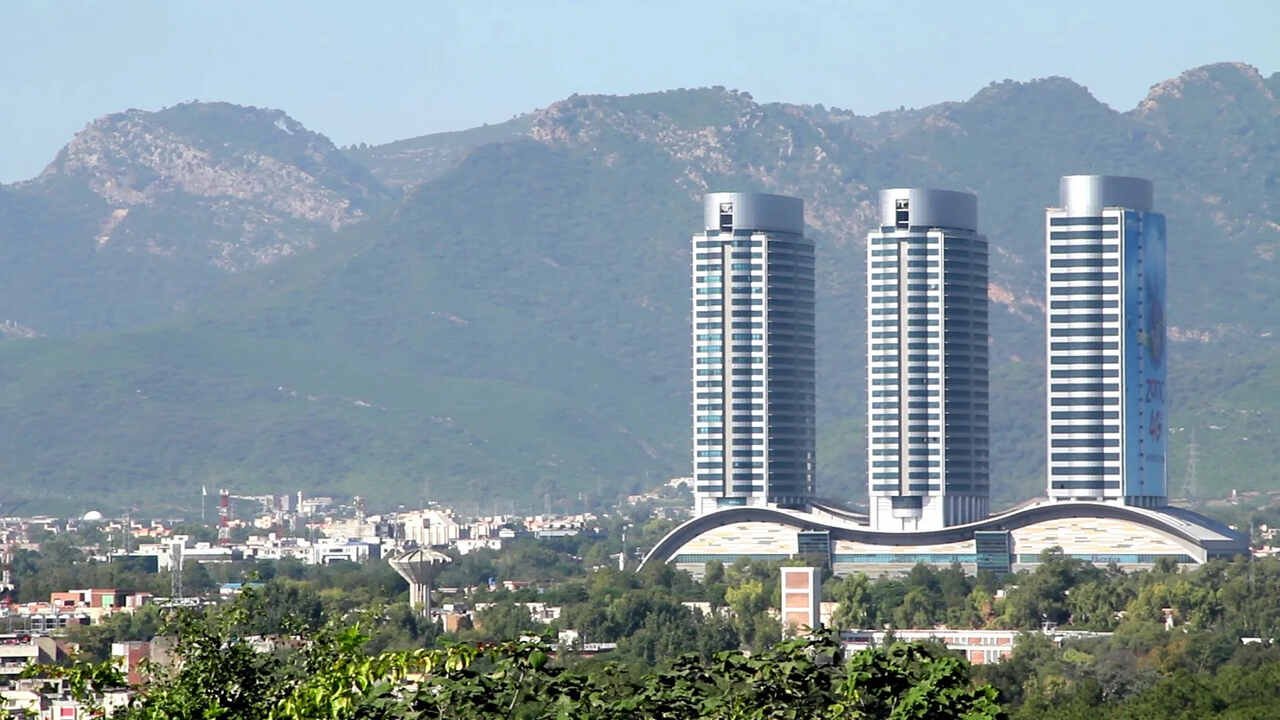
  • CDA directs evacuation of Islamabad high-rise buildings affected by earthquake

    CDA directs evacuation of Islamabad high-rise buildings affected by earthquake

    The Capital Development Authority (CDA) has instructed the owners of high-rise buildings affected by a recent earthquake to evacuate their buildings until they receive a fitness certificate from certified firms.

    The Building Control Agency of the CDA has identified minor cracks in 10 high-rise buildings in Islamabad due to the recent earthquake of high intensity. Following the directives of the CDA Chairman, the Building Control Agency conducted a survey of 90 high-rise buildings and found that the structure of 80 buildings was safe, while minor cracks were found in 10 buildings.

    The owners of the affected buildings have been directed to repair their buildings or obtain a fitness certificate from a firm certified by the Pakistan Engineering Council (PEC) regarding the strength of their structure and submit it to the CDA. In addition, a third-party attestation will also be required.

    Meanwhile, the CDA Chairman has directed the management of private housing societies to conduct a survey of buildings on their premises and submit a report to the CDA’s Building Control Agency within three days.

    The residents of the apartments in the affected buildings have also requested alternate accommodation during the period of repair. They have stated that during the month of Ramadan, it would be difficult for them to move along with furniture.

  • Seasonal demand: Gold price increases by Rs5,600 to Rs207,500 per tola

    Seasonal demand: Gold price increases by Rs5,600 to Rs207,500 per tola

    On Friday, gold prices in Pakistan experienced a significant increase due to seasonal demand and the rush to purchase the precious metal during Ramadan and the upcoming wedding season.

    According to data from the All-Pakistan Sarafa Gems and Jewellers Association (APSGJA), the price of 24-carat gold surged by Rs5,600 per tola and Rs4,801 per 10 grammes to settle at Rs207,500 and Rs177,898, respectively.

    In recent sessions, the price of gold had decreased due to a decline in international prices and the appreciation of the Pakistani rupee against the US dollar. However, the bullion sparkled once again on Friday as local markets reopened following a day off for Pakistan Day.

    The price of gold in Pakistan is strongly influenced by the rupee-dollar parity since almost all of the country’s gold demand is met through imports, with traders following international prices to set rates. The metal is imported by jewelers against the US dollar and UAE dirham before its price is converted into rupees.

    The APSGJA also noted that the price of gold in Pakistan was Rs12,000 per tola cheaper than in the Dubai market, indicating that the Pakistani gold market was currently less expensive than the global market.

    Meanwhile, in the international market, gold prices continued to rise on Friday, buoyed by a drop in Treasury yields after the US Federal Reserve hinted at a possible end to its monetary tightening cycle. The per-ounce price settled at $1,997 after a significant increase of $58.

    The longer-term prospects for gold remain positive due to expectations of a pause in US interest rate hikes. In addition, silver prices in the domestic market rose by Rs20 per tola and Rs17.15 per 10 grammes, settling at Rs2,220 per tola and Rs1,903.29 per 10 grammes, respectively.

  • China approves rollover of $2 billion SAFE deposits for Pakistan

    China approves rollover of $2 billion SAFE deposits for Pakistan

    China has given approval for the rollover of $2 billion State Administration of Foreign Exchange (SAFE) deposits for a year. Pakistan’s Finance Minister, Ishaq Dar, confirmed, stating that the rollover was a requirement of the International Monetary Fund (IMF).

    The IMF had requested the rollover of Chinese SAFE deposits to fulfill external financing needs and move towards a staff-level agreement. The agreement involves filling nine tables under the Memorandum of Economic and Financial Policies (MEFP), including a table related to the Net International Reserves (NIR) as an indicative target.

    This target cannot be met without incorporating the external financing needs of the program period until the end of June 2023. The IMF has asked Pakistan to bridge the gap of $6 billion to ensure its credibility and avoid default. This condition was put forth largely because representatives of Gulf countries on the Executive Board had made commitments before the approval of the seventh and eighth reviews for providing financial assistance to Islamabad in various forms.

    Now, the IMF is seeking the support of Saudi Arabia, the UAE, and Qatar to help Pakistan’s struggling economy. The Fund has warned Islamabad that its credibility would be at stake if the staff-level agreement is finalised, and Pakistan fails to materialize its commitment from the bilateral partners, which could lead to default.

    The IMF is investigating why Pakistan’s bilateral partners are not fulfilling their earlier commitments. China is the only country that has come forward to rescue Islamabad by fulfilling its commitments on the re-financing of its commercial loans as well as the rollover of its SAFE deposits.

  • Toyota IMC announces shutdown of production plant once again due to parts shortage

    Toyota IMC announces shutdown of production plant once again due to parts shortage

    Indus Motor Company Limited (INDU), the company known for assembling and selling Toyota-brand vehicles in Pakistan, has announced the temporary shutdown of its production plant from March 24 to March 27 due to raw material and component shortages.

    In a notice to the Pakistan Stock Exchange (PSX), Indus Motor cited difficulties in opening Letters of Credit (LCs) for raw materials by banks, which have caused a disruption in the supply chain of the company and its vendors.

    As a result, the company is unable to continue its production activities due to insufficient inventory levels. This is the second time this year that Indus Motor has announced the shutdown of its plant, with the first being from February 1 to February 14 due to an inventory shortage.

    The CEO of Indus Motor, Ali Asghar Jamali, had previously acknowledged the challenges facing the local auto industry, including the restrictions on Completely Knocked Down (CKD) kits, which have resulted in manufacturers operating at only 40-45 per cent of their capacity.

    The auto industry in Pakistan is heavily reliant on imports and has been affected by the State Bank of Pakistan’s (SBP) restrictions on the opening of LCs, following a sharp depreciation of the rupee.

    The SBP has imposed restrictions on imports due to the country’s low foreign exchange reserves, which has resulted in operational hindrances for many industries, including the auto sector.

    Although the SBP withdrew import restrictions in January, many industries are still struggling due to the dollar shortage.

  • Mobile phone imports in Pakistan drop by nearly 70%

    Mobile phone imports in Pakistan drop by nearly 70%

    According to the Pakistan Bureau of Statistics (PBS), Pakistan’s import of mobile phones has decreased by 68.29 per cent during the first eight months of the current fiscal year (2022-23) compared to the same period last year.

    The value of mobile phones imported from July to February (2022-23) was US $447.855 million, whereas it was US $1412.445 million in the corresponding period of the previous year.

    In February 2023, the import of mobile phones decreased by 76.73 per cent compared to February 2022. The imports for February 2023 were valued at US $33.054 million, whereas the exports for February 2022 were US $142.033 million.

    Furthermore, the data shows that the import of mobile phones witnessed a month-on-month decline of 36.39 per cent during February 2023, as compared to January 2023, with imports valued at US $51.960 million.

  • Pakistan likely to receive economic assistance from friendly countries soon, says Minister Ahsan Iqbal

    Pakistan likely to receive economic assistance from friendly countries soon, says Minister Ahsan Iqbal

    On Tuesday, Minister for Planning and Development Ahsan Iqbal announced that Pakistan is likely to receive confirmation of economic assistance from friendly countries in the coming days. This confirmation is the last condition of the International Monetary Fund (IMF) and will be followed by a staff-level deal with the Fund.

    According to Iqbal, Pakistan has fulfilled nearly all conditions previously agreed upon with the IMF by the previous government. Currently, the Fund is requesting confirmation from the friendly countries providing assistance to Pakistan. Once received, the IMF deal will come on track.

    During the US-Pakistan Diaspora and Private Sector for Flood Recovery and Rehabilitation Conference, three Memoranda of Understanding (MoUs) were signed with a Pakistan-based US company and US-Pakistani diaspora entities, mobilizing $78 million. The conference was organized by the US Agency for International Development (USAID).

    When questioned about the IMF’s objection to the fuel subsidy announced by the government for the poor segment of society, Iqbal clarified that this was an internal adjustment within the fuel price and no new subsidy was being announced. He expressed hope that the IMF would have no objection to the government’s move.

    Iqbal urged the US-Pakistan Diaspora to support the government’s efforts in recovering and rehabilitating millions of flood-affected people. He appreciated the United States’ pledge of $200 million for flood relief efforts but emphasized that Pakistan needs much more for the complete rehabilitation of millions of people affected by floods.

    In his remarks, United States Ambassador Donald Blome highlighted the contributions of the US-Pakistani diaspora and private sector in building back better for flood-affected communities in Pakistan. He reaffirmed the US government’s commitment to supporting flood relief and recovery efforts, disaster resilience, and food security.

    The conference continued the momentum built at the previous conferences in Islamabad where USAID signed six MoUs mobilizing $75 million. The discussions held in those conferences led to additional contributions and investments to help populations and areas affected by floods. More than 200 participants attended the Building Back Better Conference, including members of the US-Pakistani diaspora, prominent local business leaders, US business representatives, and Pakistani officials. They discussed ways to help the flood-affected population and communities.

    Ambassador Blome emphasized the longstanding US-Pakistan partnership in advancing Pakistan’s economic growth and social and humanitarian causes. He highlighted the need to strengthen climate resilience through the US-Pakistan “Green Alliance” framework and expressed the United States’ commitment to helping the US-Pakistani diaspora and Pakistan-based private companies find opportunities to pursue energy transformation and foster economic growth and development outcomes.