Category: Business

The most important business news, explained in a young, easy to understand way. News that affects young career professionals.

  • Talibans unveil first Afghani ‘supercar’ with Toyota Corolla Altis 1.8 engine

    Talibans unveil first Afghani ‘supercar’ with Toyota Corolla Altis 1.8 engine

    Even though Afghanistan has recently made headlines for its restrictions on women, its people have now come up with something that is putting it on the map for the right reasons: a homegrown supercar called the Mada 9.

    The five-year design and development process for the sporty-looking Mada 9 prototype sports car was overseen by 30 engineers from the manufacturer ENTOP and Kabul’s Afghanistan Technical Vocational Institute (ATVI).

    The car is mostly always stationary in social media videos that are making the rounds, and ENTOP hasn’t provided any performance information at all, so it’s unclear what it can do on the road.

    Given that the Mada 9 team claims their engine is that of a very underwhelming Toyota Corolla, it is unlikely to compete with brands like Bugatti and McLaren.

    It features the same engine that Toyota employed in the Corolla Altis 1.8 (2005–2011; E140), which is likewise quite well-liked in Pakistan. The stock 1ZZ-FE is capable of producing up to 171 Newton metres (Nm) of torque and 132 horsepower (hp).

    It can produce more than 170 hp thanks to the factory-installed supercharger from Toyota.

    A spokesman for the Taliban Zabihullah Mujahid proudly shared pictures of the car on social media and said that the nation as a whole was “honoured” by its construction.

    The news of the supercar was well received in Afghanistan, and many quickly shared pictures of it on social media, claiming it was evidence of the country’s prowess in science and technology.

    However, many more users brought up the fact that the supercar was introduced as Afghanistan battled one of the worst humanitarian crises in the world and that the Taliban had revoked the rights of the nation’s women to study and work.


  • SBP instructs banks to inform customers in advance about downtime of digital banking services

    SBP instructs banks to inform customers in advance about downtime of digital banking services

    The use of banking apps and sites for carrying out day-to-day transactions has considerably increased. However, it has been noted that in cases of service outages, customers are not properly informed in a timely manner, due to which they face issues with transactions.

    Now, in order to ensure that customers are informed about service disruptions due to any scheduled or unforeseen activity, the State Bank of Pakistan (SBP) has issued fresh instructions to facilitate the customers of the financial institutions.

    According to the most recent instructions, banks must now notify customers and the SBP of any planned activity that may result in service disruptions.

    Financial institutions are required to inform customers at least two days in advance through SMS alerts, social media platforms, and in-app notifications, while SBP will be notified at least one week in advance for any maintenance activity.

    SBP, as part of its oversight responsibility, will regularly monitor the availability of digital channels itself.

    Monthly cumulative downtimes must be reported to SBP. The central banks shall be apprised of the actions taken by the relevant bank to avoid inconvenience in the future if the unforeseen outage exceeds three hours each quarter.

  • World Bank cuts Pakistan’s GDP growth forecast from 4% to 2%

    World Bank cuts Pakistan’s GDP growth forecast from 4% to 2%

    Due to the unstable economy and floods, the World Bank predicted that Pakistan’s economic growth would drop by half, falling by 4 per cent to 2 per cent, during the current fiscal year.

    According to the Bank’s latest report, “Global Economic Prospects,” Pakistan is experiencing growing economic woes, especially those caused by the recent flooding as well as ongoing policy and political uncertainties.

    “Pakistan faces mounting economic difficulties and Sri Lanka remains in crisis. In all regions, improvements in living standards over the half-decade to 2024 are expected to be slower than from 2010-19,” the World Bank stated in Global Economic Prospects released on Tuesday.

    Pakistan’s currency declined by 14 per cent between June and December, and its national risk premium climbed by 15 per cent over this same time frame due to the nation’s low foreign exchange reserves and rising sovereign risk.

    It went on to say that growth is anticipated to pick up to 3.2 per cent in the fiscal year 2023–24 (FY24), still under previous forecasts, as the country implements policy measures to stabilise macroeconomic conditions, inflationary pressures subside, and reconstruction after the floods gets underway.

    According to the analysis, Pakistan’s recent floods are thought to have cost the country damage equal to 4.8 per cent of GDP.

  • OGRA approves 74% hike in sui gas prices amid economic crisis

    OGRA approves 74% hike in sui gas prices amid economic crisis

    The Oil and Gas Regulatory Authority (Ogra) has approved an increase in the price of natural gas of up to 74 per cent at a time when the country’s people are struggling to make ends meet owing to rising inflation.

    According to specifics, the Sui Southern Gas Company (SSGC) and the Sui Northern Gas Pipelines Ltd. (SNGPL) would each be permitted to raise gas rates by up to 74.42 per cent and 67.75 per cent, respectively.

    Ogra’s decision will be implemented after the approval of the federal government. If the federal government does not approve it within 40 days, the decision will be implemented automatically.

    The oil and gas regulator has okayed increases of Rs406.28 and Rs469.28 per million British thermal units (mmBtu) for SNGPL and SSGC, respectively.

    OGRA further said that the average gas price for SNGPL would reach Rs952.17 per unit from the current price of Rs545.89 per mmBtu, while that of SSGCL would reach Rs1,161 per unit from the current Rs692.63 per mmBtu.

    LPG price hike

    Earlier, the prices of liquefied petroleum gas (LPG) were increased by Rs5 per kg without a notification from OGRA.

    The LPG price has now jumped to Rs260 per kg from Rs255 after an increase of Rs5. Meanwhile, the prices of domestic and commercial cylinders increased by Rs60 and Rs230, respectively.

    The gas is available for Rs270 per kilogramme in Murree, while its price exceeds Rs300 per kilogramme in Gilgit-Baltistan and Skardu.

  • Diamond Industries suspends manufacturing operations due to unavailability of raw materials

    Diamond Industries suspends manufacturing operations due to unavailability of raw materials

    A major manufacturer of foam products in Pakistan, Diamond Industries Limited has announced to suspend its manufacturing operations from today owing to a shortage of imported raw material.

    The company informed the Pakistan Stock Exchange about the closure in a notice.

    “Due to adverse economic conditions in the country and non-availability of imported raw material, the company has suspended its manufacturing operations for a short term with effect from Tuesday, January 10, 2023, till further notice subject to the availability of imported raw material in the country,” read the notice.

    The announcement follows several companies announcing reductions in production or shutdowns of operations due to slow sales and low inventory.

    It is worth noting that Diamond Industries has been known for selling foam products in the country for more than three decades.

    Experts believe that the situation of industrial sector does not seem to improve soon.

  • Donors pledge more than $10 billion for Pakistan flood recovery at Geneva conference

    Donors pledge more than $10 billion for Pakistan flood recovery at Geneva conference

    Pakistan has secured over $10.5 billion in pledges from international creditors at the one-day International Conference on Climate Resilient Pakistan in Geneva, which will help the cash-strapped country recover from last year’s devastating floods.

    By the end of the first plenary session, Pakistan had received pledges totaling $8.57 billion, and in the second session, it had secured more than $2 billion.

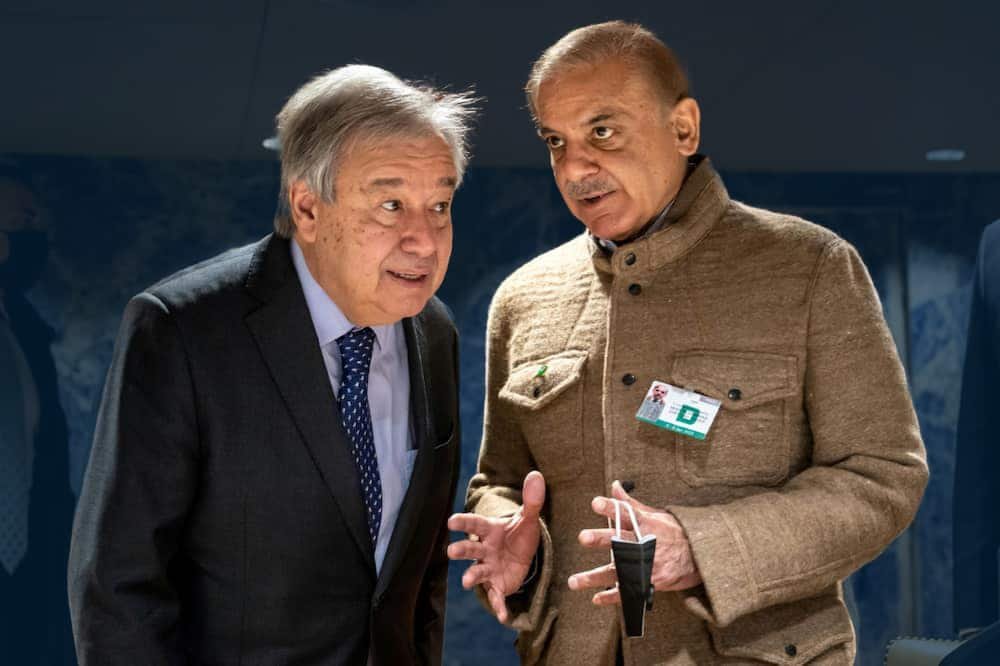
    UN Secretary-General Antonio Guterres urged the international community to help Pakistan build climate-resilient infrastructure and to grant access to the knowledge and resources needed to survive future catastrophes.

    The delegations recalled their support for the emergency relief operations during the conference and reaffirmed their commitment to Pakistan’s people in support of a strong recovery, rehabilitation, and reconstruction.

    All donations pledged at the Geneva conference

    • Islamic Development Bank: $4.2 billion
    • World Bank: $2 billion
    • Asian Development Bank: $1.5 billion
    • Asian Infrastructure Investment Bank: $1 billion
    • Saudi Arabia: $1 billion
    • France: $384 million
    • China: $100 million
    • United States: $100 million
    • EU: $93 million
    • Germany: $88 million
    • Japan: $77 million
    • United Kingdom: $10 million
    • Azerbaijan: $2 million

    The attendees voiced their solidarity and pledged financial support for the ongoing humanitarian activities as well as the achievement of the goals and key areas. The meeting was co-hosted by Pakistan and the UN.

    The World Bank has pledged $2 billion, the Asian Infrastructure Investment Bank has pledged $1 billion, and the Islamic Development Bank Group has pledged $4.2 billion over three years.

    Furthermore, Asian Development Bank has pledged $1.5 billion, while the European Union has offered $93 million, Germany has pledged $88 million, China has pledged $100 million, Japan has pledged $77 million, and so on. The French government has committed $345 million, and the United States Agency for International Development has offered $100 million.

    Saudi Arabia has also committed $1 billion to assist Pakistan in reconstruction efforts.

  • Saudi Arabia mulls increasing investments in Pakistan to $10 billion

    Saudi Arabia mulls increasing investments in Pakistan to $10 billion

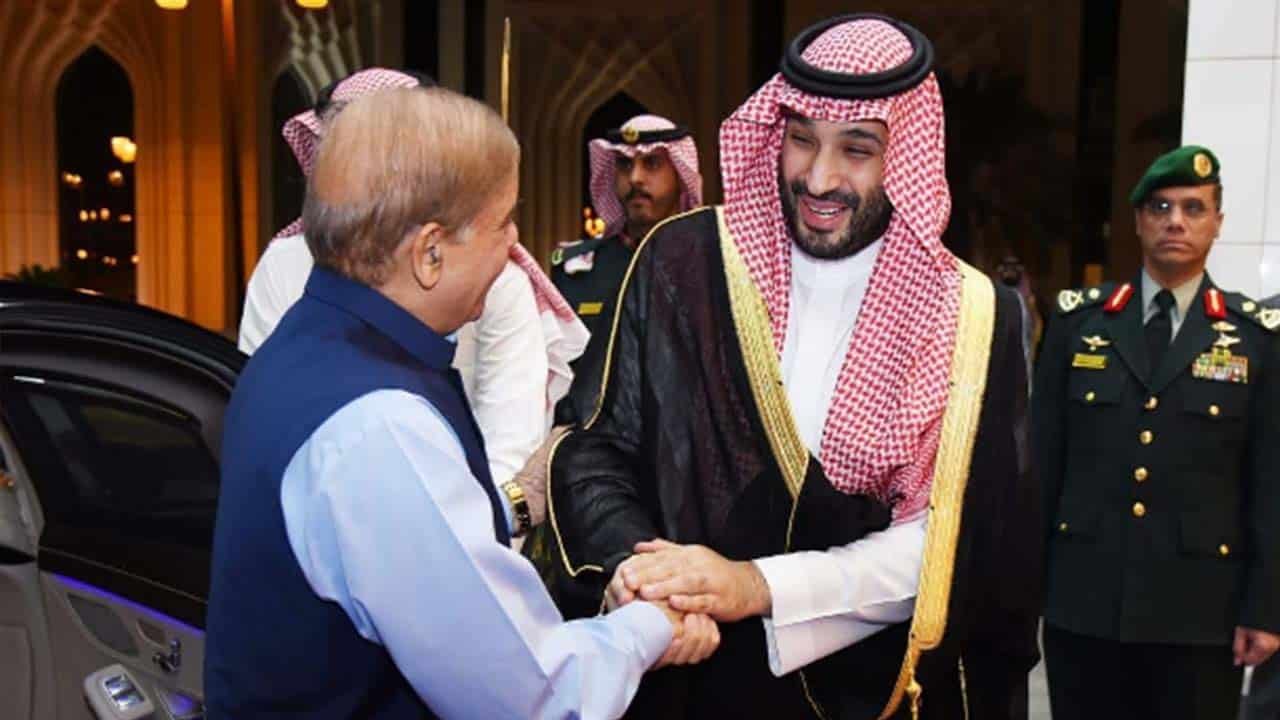
    Saudi Crown Prince Mohammed Bin Salman has directed the Saudi Development Fund (SDF) to study increasing the deposit amount in the State of Bank of Pakistan (SBP) to $5 billion.

    “His Royal Highness Prince Mohammed bin Salman bin Abdulaziz Al Saud, Crown Prince and Prime Minister, has directed to study augmenting the Kingdom of Saudi Arabia’s investments in the sisterly Islamic Republic of Pakistan which have previously been announced on August 25, 2022, to reach $10 billion,” it said.

    “The crown prince also directed the Saudi Development Fund to study increasing the amount of the deposit provided by the Kingdom of Saudi Arabia in favour of the Central Bank of Pakistan which have previously been extended on December 2, 2022, to hit a $5 billion ceiling,” according to Saudi Press Agency.

    The move, according to SPA, confirmed Saudi Arabia’s commitment to assist Pakistan’s economy and its sisterly people.

    The development was reached within the framework of the ongoing dialogue between Prime Minister Shehbaz Sharif and Prince Salman.

    The announcement made today comes the day after Prince Salman and Chief of Army Staff General Asim Munir met in Madina to discuss ways to strengthen bilateral ties between the two nations. Munir was on a week-long official visit to Saudi Arabia and the United Arab Emirates.

    The SBP and SFD entered into a contract in 2021 for the SBP to receive $3 billion, which would be deposited in the central bank’s account to increase its foreign exchange reserves.

    The SFD subsequently acknowledged the rollover of a $3 billion deposit for an additional year in September of last year. The deposit was supposed to maturity on December 5 but Saudi Arabia extended its term on December 2.

    Saudi Arabia had previously committed to restart its financial assistance to Pakistan in the final week of October 2021, providing $1.2 billion in oil deliveries on a deferred payment plan and around $3 billion in safe deposit boxes.

    The accord was made the same month when former prime minister Imran Khan visited Saudi Arabia.

  • Flour price may increase to Rs200 per kilogramme soon

    Flour price may increase to Rs200 per kilogramme soon

    The pirce of “chakki” flour in Rawalpindi and Islamabad has soared to Rs170 per kilogramme due to the country’s escalating inflation.

    The price of “chakki atta” (chakki flour), which was formerly sold at Rs150 per kilogramme, has suddenly increased to Rs170 per kilogramme. The new pricing is applicable as of Sunday, according to the price list published by the Rawalpindi Islamabad Chakki Atta Association and displayed at chakkis.

    Unfortunately, the administrations of the twin cities have not made any announcements. Nazakat Shah, president of the association, and Ali Raza, general secretary, have both signed the price list.

    According to The News, chakki owners in Rawalpindi claim that the association informed them that the price of flour may rise to Rs200 per kilogramme in the near future.

    An owner claimed that he only received 10 bags of wheat, each weighing 50 kilogrammes, with condolences from wholesalers that they would have to restrict the product and that things would only get harder as time goes on.

    The price of rice has also increased by Rs50 per kilogramme in less than a week, in a similar manner. The best rice can be found for between Rs340 and Rs380 per kilogramme.

  • Pakistani banks start charging dollar transactions at open market rates

    Pakistani banks start charging dollar transactions at open market rates

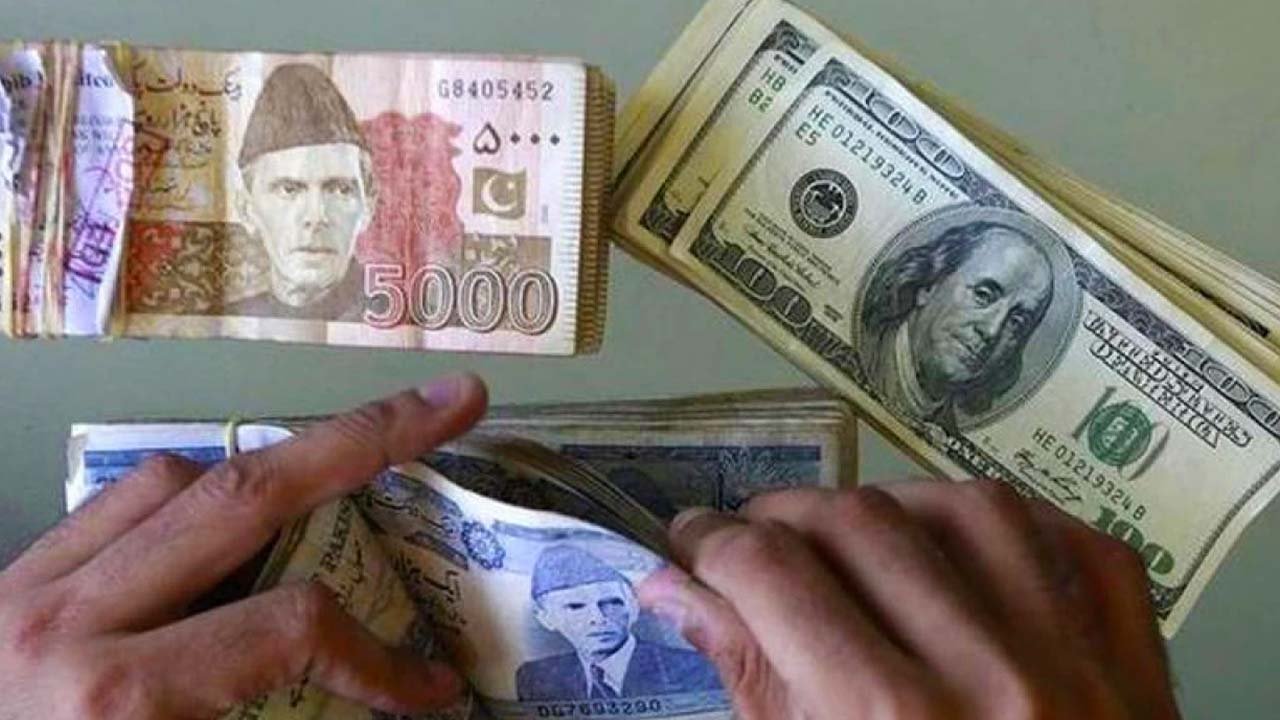
    Pakistani banks have announced that they will settle debit and credit card transactions made with foreign retailers and websites at the open market exchange rate for the US dollar.

    The conversion rate for the transactions would be calculated by the open market rate in place at the time, which might not match the rate listed on the foreign merchant’s website.

    Customers were advised by the banks in a statement that they could only settle debit or credit card purchases with foreign retailers or websites by buying dollars on the open market. As a result, the conversion rate for these transactions will be determined by the current open market rate.

    The statement, according to bankers, was made in response to several client concerns over the increased exchange rate.

    On Friday, the Pakistani rupee lost Rs0.02 to the US dollar in the interbank market, continuing its downward trajectory.

    The State Bank of Pakistan (SBP) reported that the exchange rate of the local currency for the dollar was Rs227.12. Which shows a 0.01 per cent decline from the close of Rs227.12 on Thursday.

    According to SBP, the Pakistani rupee is valued at Rs227–228 against the dollar. However, in the open market, the greenback is priced above Rs250 and goes as high as Rs275.

  • IMF team to visit Pakistan in 2-3 days to finalise ninth review

    IMF team to visit Pakistan in 2-3 days to finalise ninth review

    A delegation from the International Monetary Fund (IMF) will visit Pakistan in two to three days to “undertake and complete” the key ninth review, according to Prime Minister (PM) Shehbaz Sharif.

    PM Shehbaz said that he spoke to IMF Managing Director Kristalina Georgieva and stressed that Pakistan will complete the IMF bailout programme.

    “I told her to ease the terms of the deal because I cannot burden the common man any further. We have imposed taxes on the rich strata of the society. I requested her to send a delegation for the ninth review and she replied that a team will visit Pakistan in 2-3 days.”

    “After inquiring about Pakistan’s relations with China and Saudi Arabia, she also told me that China had urged IMF to support Pakistan,” he said.

    The IMF programme is currently stalled, with experts suggesting that the government is reluctant to implement some of the lender’s conditions over their effect on political capital in a year when elections are scheduled to take place.

    PM Shehbaz said that Pakistan was trying to mend its ties with friendly countries as well. “We should appreciate friendly countries for supporting Pakistan over the past few years but the previous government slapped allegations of corruption on Chinese firms and jeopardised the China-Pakistan Economic Corridor (CPEC).”

    He stated that the former leadership “had angered friendly nations”, adding that the contribution of Saudi Arabia, UAE and China to Pakistan’s economy is priceless.

    Pakistan needs the IMF programme to restart due to its declining rupee, shrinking reserves, and worse macroeconomic indices.

    The State Bank of Pakistan’s (SBP) foreign exchange holdings dropped by another $245 million on Thursday, down to a critically low level of $5.58 billion. Since April 2014, SBP-held reserves have never been this low.

    At the same time, the government has also been unable in obtaining crucial support from allies.

    The challenge has left Pakistani authorities scurrying to set up foreign exchange amid increased concerns over the country’s capacity to pay its debts and fund imports.

    Additionally, there are market rumours that Pakistan could possibly default, but the Pakistani government is still confident that Saudi Arabia would provide essential assistance for the country’s foreign exchange reserves.