Category: Business

The most important business news, explained in a young, easy to understand way. News that affects young career professionals.

  • 8 prominent banks under investigation for involvement in exchange rate manipulation: SBP

    8 prominent banks under investigation for involvement in exchange rate manipulation: SBP

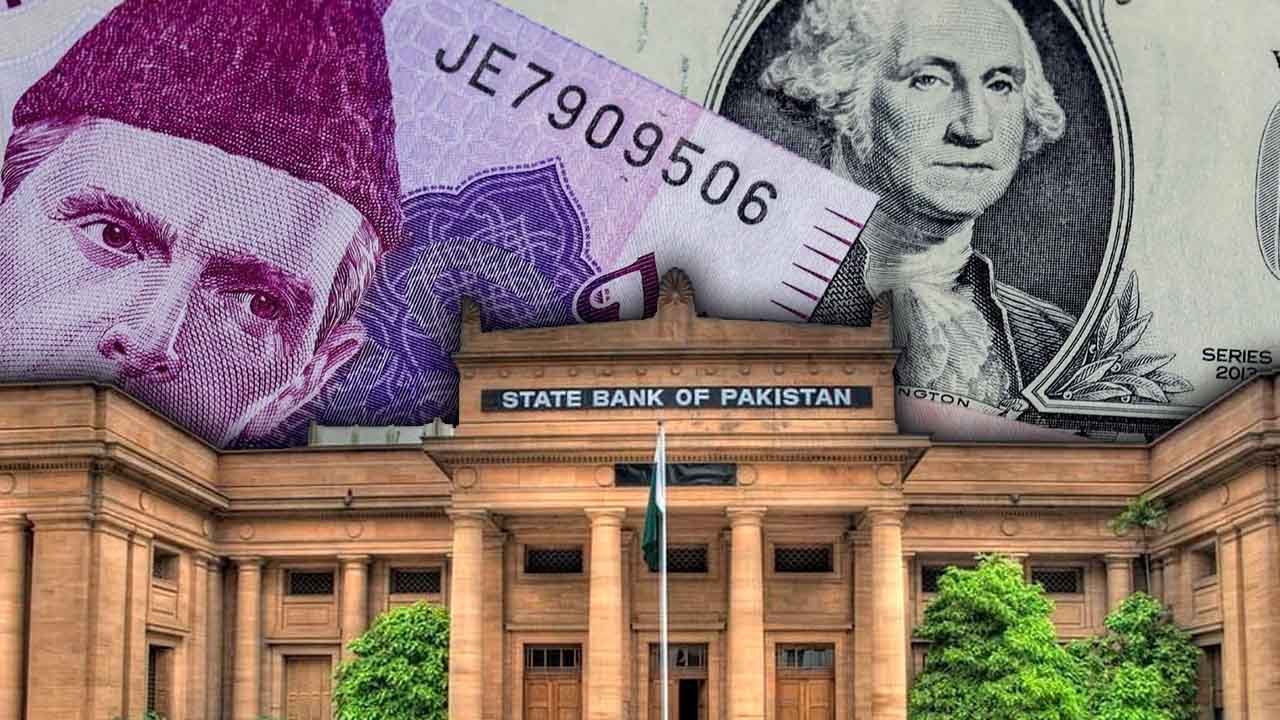
    On Tuesday, Jameel Ahmad, the governor of the State Bank of Pakistan (SBP), told the National Assembly’s Standing Committee on Finance and Revenue that inquiries had been initiated against eight banks for their alleged involvement in exchange rate manipulation.

    According to Ahmad, the first part of the investigation focused on Bank Al Habib, Habib Bank Limited (HBL), National Bank of Pakistan (NBP), Meezan Bank Limited, United Bank Limited (UBL), Allied Bank Limited (ABL), and Standard Chartered. The name of eighth bank was not disclosed.

    He told the tribunal that ABL, NBP, and Standard Chartered had each received show-cause warnings. The governor continued by saying that in the following stage, the other banks will be looked into.

    The committee’s chairman, MNA Qaiser Ahmad Sheikh, gave SBP instructions to take the proper action against all banks and exchange firms implicated in the manipulation of the currency rate during today’s meeting.

    According to a news release from the National Assembly Secretariat, he requested that the central bank assess the severity of the violations by both parties and take the necessary action to ensure that nobody “has the audacity to play with the economy of the country.”

    According to Dawn, the committee believed that the banks made enormous profits during the recent volatility in the exchange rate and the differential between the interbank rate and the rate provided by exchange providers.

    Ahmad has told the committee that after the investigation is complete, anyone who violated the rules will be punished.

    Members of the Committee, the Secretary of Finance, the Chairman of the FBR, the Governor of the State Bank, and other senior executives from the relevant agencies attended the meeting of the Committee.

    Prior to this, Dawn claimed that banks had quadrupled their purchases of US money and were using credit cards to move it outside as the government struggled to stop dollar withdrawals.

    In a media interview the next week, Finance Minister Ishaq Dar declared that manipulating the exchange rate would not be permitted.

    Dar stated that the rupee is now not in the proper position and added that he was aware of some speculators who were playing this game and advised them to quit right away.
  • Pakistani rupee maintains winning streak against dollar for 8th consecutive session

    Pakistani rupee maintains winning streak against dollar for 8th consecutive session

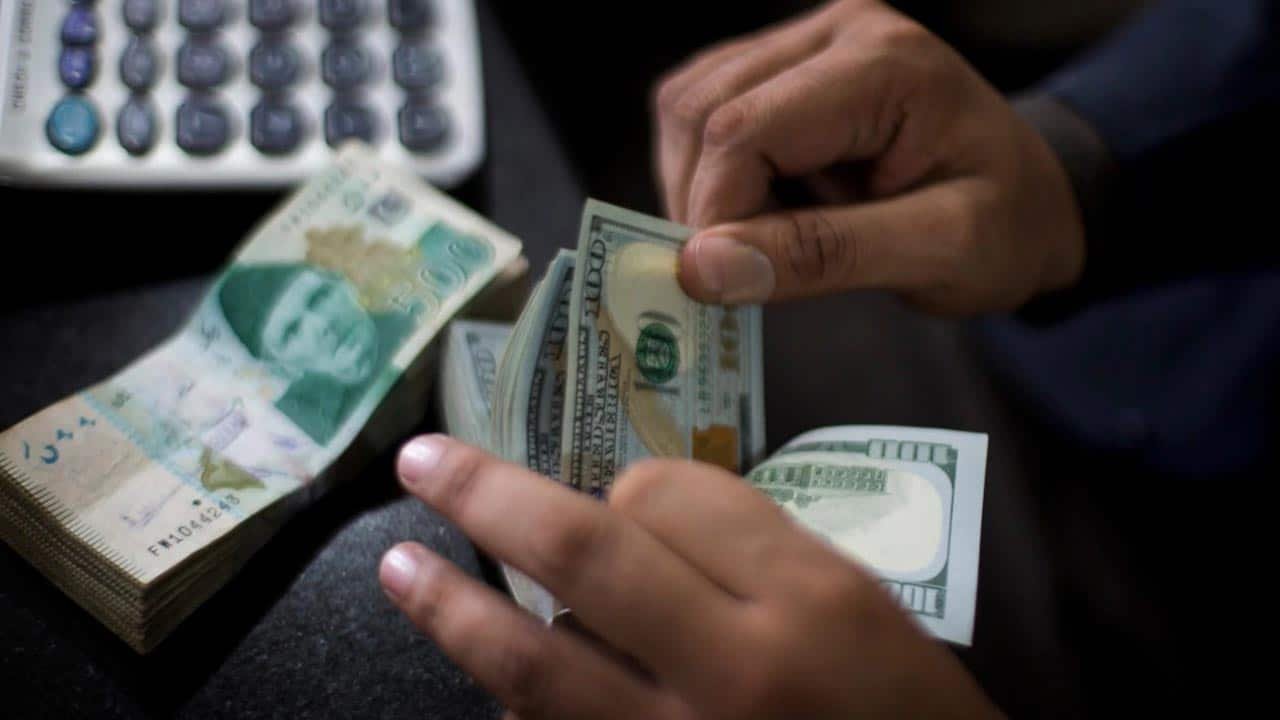
    On Tuesday, the Pakistani rupee (PKR) gained against the US dollar for the eighth session in a row, finishing more than 0.7 per cent stronger.

    According to the State Bank of Pakistan (SBP), the rupee strengthened by Rs1.55, or 0.73 per cent, to close at Rs225.64. The rupee has gained a total of Rs14.06, or 6.23 per cent, over the last eight trading sessions.

    For the seventh consecutive session, the Pakistani rupee appreciated versus the US dollar on Monday, finishing at Rs227.29 after gaining Rs1.16 (or 0.51 per cent) in the inter-bank market.

    Ishaq Dar’s return, who is renowned for supporting a strong rupee, and the reduction in speculation activity, according to analysts, are to blame for the currency’s recent increase.

    On Monday, the country’s newly appointed finance minister even predicted that the rupee may increase to less than Rs200 versus the dollar.

    In an interview, he claimed that the rupee’s actual worth is less than Rs200 (against dollar), and that it will fall to Rs200 soon.

    He continued by saying that because speculation had caused the present rate to rise, the rupee would be supported by policies.

    Experts claim that the dollar’s international strength has decreased, which is reflected in the currency market. Still, it would be very difficult to drive the rupee below Rs200, even if the speculative aspect is taken out of the equation.

    Despite the UN’s $816 million request, Pakistan has only received between $100 and $150 million in flood aid.

    The dollar index, which compares the value of the dollar to six other currencies, including the pound and the euro, remained roughly unchanged at Rs111.55, not far from the low set on Monday of Rs111.46, which was last seen on September 23.

    Oil prices, a major factor in defining currency parity, increased on Tuesday as optimism over OPEC+’s potential Wednesday agreement to significantly reduce crude output outweighed worries about the state of the world economy.

  • Fears of an energy crisis increase as Pakistan fails to clinch an LNG deal

    Fears of an energy crisis increase as Pakistan fails to clinch an LNG deal

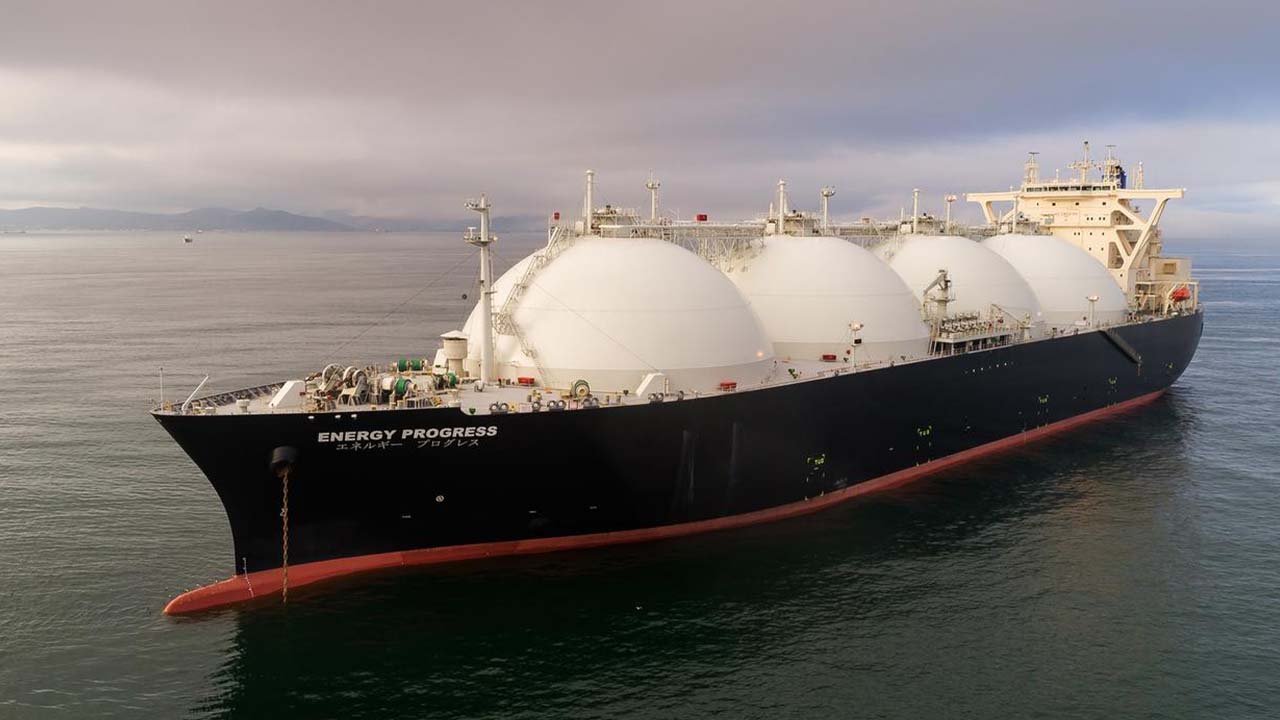
    A tender for the acquisition of liquefied natural gas (LNG) that expired on Monday did not receive a single bid from any overseas suppliers, according to Pakistan LNG Limited (PLL), a wholly-owned subsidiary of Government Holdings Private Limited (GHPL).

    PLL originally issued an invitation for bids in August for 72 LNG cargoes to be delivered over a six-year term from foreign suppliers.

    According to PLL, bids were requested from reputable organisations to convey cargo on a Delivered Ex-Ship basis (DES) at Port Qasim, Karachi, and suppliers had until September 14 to submit their offers.

    “Bid documents shall be available from 10 August 2022 to 13 September 2022,” it said.

    Failure of an LNG contract in Pakistan contributes to the energy crisis

    The Pakistani procurement, which had an expiration date of October 3, saw no suppliers participate, according to PLL bid documents.

    According to the documents, the corporation was looking for one shipment each month for the six-year period.

    PLL was required by the Pakistani government to carry out the business of importing, buying, storing, supplying, distributing, transporting, transmitting, processing, measuring, metering, and selling natural gas, LNG, and re-gasified LNG. Each cargo was to have a volumetric quantity of 140,000m3, it added.

    For the timeframe of July through September, PLL sought worldwide suppliers to submit proposals for 10 LNG cargoes.

    By July 7, suppliers were invited to submit their bids. Each cargo was required to have a volumetric quantity of 140,000m3, according to PLL documentation.

    Bloomberg, citing traders with knowledge of the situation, said that the state-owned LNG purchaser did not receive any bids in a $1 billion LNG purchase tender at the time. The article at the time stated that “it highlights both the scope of the worldwide fuel shortage as well as the unwillingness of suppliers to sell to a country in the depths of an economic crisis.”

    The Russia-Ukraine conflict has caused supply chains to be disrupted globally, which has driven up the cost of key commodities like LNG.

    Pakistan, on the other hand, is experiencing a fuel scarcity, especially in the electricity sector. The most recent development is anticipated to worsen the energy situation, particularly during the winter when there will be an increase in heating demand that would affect both families and companies.

  • Reduction in POL prices without IMF approval is a ‘reckless’ decision, says Miftah Ismail

    Reduction in POL prices without IMF approval is a ‘reckless’ decision, says Miftah Ismail

    Pakistan’s former finance minister Miftah Ismail has called the coalition government’s decision to maintain the petroleum development levy (PDL) this month unchanged “reckless”.

    However, he maintained that what the earlier PTI administration did to the nation was “unforgivable.”

    Shaukat Tarin, the leader of the PTI and a former finance minister, had tweeted about the PMLN’s -alleged doublespeak, to which Ismail responded.

    “We were blamed for violating IMF conditions. According to Miftah sahib, they did not wait to get clearance from MD IMF before announcing the fuel prices. Clear doublespeak,” he tweeted.

    https://twitter.com/shaukat_tarin/status/1576568757056512000?ref_src=twsrc%5Etfw%7Ctwcamp%5Etweetembed%7Ctwterm%5E1576568757056512000%7Ctwgr%5E5e775af4ab091b03900a542aeb8050d970a7d429%7Ctwcon%5Es1_&ref_url=https%3A%2F%2Fwww.dawn.com%2Fnews%2F1713254

    Ismail replied that the PTI administration had in fact broken the terms of the IMF deal.

    “You agreed to increase sales tax to 17 per cent but reduced it to zero. You agreed to raise petrol levy every month by Rs4 to Rs30 but brought it to zero. You agreed to not give amnesty but gave one anyway,” he said, in reference to the previous administration’s decision to temporarily freeze fuel prices.

    Ismail argued that the subsidy was “unfounded and unsustainable” and that the PTI nearly put the nation into bankruptcy. He continued by saying that, while serving as finance minister, he had visited the IMF and prevented the nation’s default.

    “Not increasing PDL this month without IMF approval is reckless, but what PTI did with our economy was unforgivable,” he insisted.

    Ismail brought up the fact that his administration had not sought IMF approval before freezing the petroleum charge for the second time in two days.

    Ismail claimed that when Ahad Cheema, the establishment adviser to Prime Minister Shehbaz Sharif, requested him to contact the IMF managing director if gasoline prices could be held for three months, “I said that I would die but not ask this.” Ismail was speaking at an event in Karachi on Saturday.

    “In any case … I asked the MD if we could freeze the tax for three months. The answer did not arrive and the government unilaterally did it. So may God have mercy.”

    On Tuesday, September 27, Ismail resigned from his position as finance minister to make room for Ishaq Dar. Three days later, on Friday, the administration decided to lower petrol costs (Sept 30).

    Petrol costs now cost Rs224.80 per litre, down from Rs237.43 previously. This reduction in price amounts to Rs12.63. High-speed diesel (HSD) is now available at Rs12.13 less per litre, at Rs235.30 instead of Rs247.43. Kerosene’s cost per litre dropped from Rs202.02 to Rs191.83 by Rs10.19. Light diesel oil (LDO) was reduced in price from Rs197.28 to Rs186.50 per litre by Rs10.78.

    By lowering the petroleum development fee on gasoline by Rs5 per litre to Rs32.42, the government lost money. On HSD, the price was raised to Rs12.58 by an additional Rs5 per litre.

    According to DAWN, the government currently charges Rs12.58 per litre PDL for HSD, Rs15 for kerosene, Rs10 for LDO, and Rs30 for High Octane Blending Component. Additionally, the cost of gasoline and HSD includes a Rs22 per litre customs fee.

  • Here’s how Pakistan’s inflation is impacting consumer buying pattern

    Here’s how Pakistan’s inflation is impacting consumer buying pattern

    In Pakistan, the real value of income has been undermined by inflation, while high interest rates have raised the cost of borrowing.

    Record inflation rates have dominated news for the past year, coupled with supply chain problems, material shortages, elevated fuel prices, and vegetable prices that increased by 500 per cent in September.

    According to a poll by Pulse Consultant, which was conducted in August 2022, 78 per cent of Pakistanis think that their country’s economy is going on the wrong path. Inflation has affected 66 per cent of people hard, and 12 per cent of people say their expenses aren’t keeping up.

    Pulse Consultant asked an open-ended question in a nationwide computer-assisted telephonic study in which more than 1,600 people across the country responded and revealed how they are dealing with the current wave of inflation.

    The following are the areas where customers lowered their spending:

    • Reduced Grocery Purchasing – 24 per cent
    • Avoid Going Out – 18 per cent
    • Stop Unnecessary Shopping – 16 per cent
    • Reduced Fast Food – 10 per cent
    • Reduced Overall Expenses -9 per cent
    • Save Petrol – 7 per cent
    • Reduced Children Expenses – 5 per cent
    • Avoid Beauty Parlor / Salon – 3 per cent
    • Save Electricity – 3 per cent
    • Avoid Family Gatherings – 3 per cent
    • Reduced Meat Consumption – 2 per cent

    In Pakistan, CPI inflation increased to 27.3 per cent in August 2022 from 12.1 per cent in January 2022. There are a number of causes for the sudden rise in inflation, despite the fact that core inflation (excluding oil and food costs) is at 18 per cent. The incidence of imported inflation has increased as a result of the rupee’s depreciation. From April through August 2022, the rupee’s value against the US dollar decreased by around 23 per cent.

    Pakistani currency is presently strengthening as a result of the restoration of the IMF package following its derailment last winter. Additionally, even though the oil bill still accounts for around 26–30 per cent of all imports, import reduction has improved the current account situation. The administration has promised to pass along any decrease in oil prices to the public.

    The lag effect of the significant budget deficit experienced in the previous year is one of the other primary causes of the high level of inflation. In contrast to the 4.2 per cent agreed upon with the IMF, the budget deficit during the FY ending on June 30, 2022, reached as high as Rs6,900 billion, or about 9 per cent of GDP.

    In addition, $20 billion in debt, as opposed to $53 billion between 2008 and 2018, was committed over the past four years. As a result, more money is being spent in pursuit of fewer commodities.

    The challenges of recession and skyrocketing inflation are pretty much universal. Despite having low inflation rates, China and Japan’s economies are expected to slow down. Inflation is being fueled by earlier Covid and current high oil, gas, and commodity costs in the wake of the Ukraine war, which is slowing growth.

  • Pakistan seeks rollover of SAFE deposits worth $2 billion from China in March 2023

    Pakistan seeks rollover of SAFE deposits worth $2 billion from China in March 2023

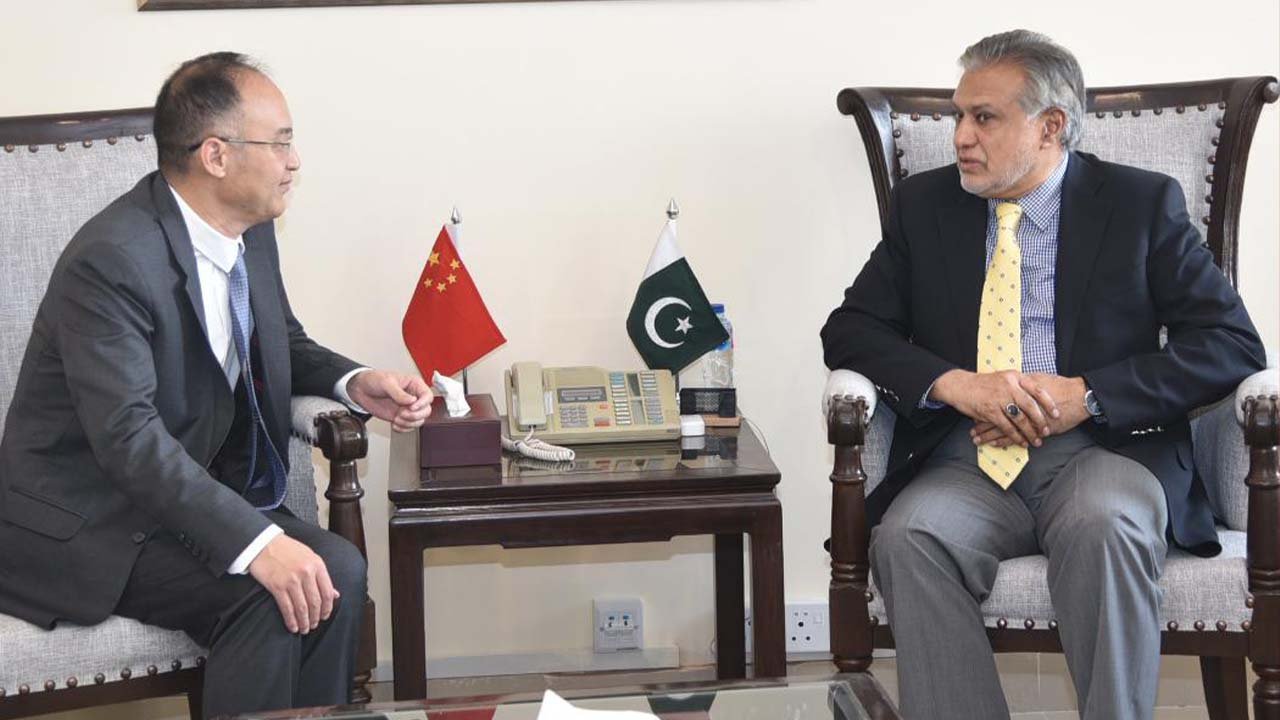
    Pakistan seeks the rollover of $2 billion in State Administration of Foreign Exchange (SAFE) China deposits in March 2023. Federal Minister for Finance and Revenue Ishaq Dar, received a visit from Nong Rong, the People’s Republic of China’s ambassador, at the Finance Division.

    According to APP, Dar emphasised the long-standing friendship and kinship ties between Pakistan and China.

    The finance minister also thanked the Chinese leadership for their assistance in refinancing a syndicate facility worth RMB 15 billion ($2.24 billion) for Pakistan. He also asked the ambassador to help facilitate the rollover of $2 billion in SAFE China deposits in March 2023.

    Dar informed the ambassador of the costs to the overall economy as well as the harm done to Pakistan’s infrastructure, agriculture, lives, and property by the severe floods. He expressed gratitude to the Chinese government for providing the government and people of Pakistan with unwavering support during this difficult time.

    In reference to the CPEC, the finance minister stated that the economic corridor will be crucial in advancing Pakistan’s economy and fortifying bilateral ties between the two nations. He further pledged his unwavering support for the aid in realising the success of CPEC.

    The minister received Nong Rong’s congratulations on taking up his new duties. The envoy underlined China’s continuous support for Pakistan and emphasised how China is a rock for the Pakistani people in this time of need.

    “Since the devastating floods occurred in Pakistan, among all countries, China has announced over 644 million RMB (around 90 million dollars), the biggest amount of assistance to Pakistan,” said Nong Rong, in a tweet.

  • Weekly inflation increases 0.94% as food prices rise

    Weekly inflation increases 0.94% as food prices rise

    Owing to an increase in the prices of food items, the Sensitive Price Indicator (SPI)-based weekly inflation for the week ending September 29 increased by 0.94 per cent.

    The items which saw an increase in prices include onions (47.77 per cent), tomatoes (30.29 per cent), tea Lipton (2.50 per cent), bread (1.74 per cent) and non-food item, washing soap (1.13 per cent), according to the Pakistan Bureau of Statistics (PBS).

    Moreover, the year-on-year trend recorded an increase of 30.62 per cent, mainly due to a surge in prices of tomatoes (224.20 per cent), onions (139.03 per cent), diesel (105.12 per cent), petrol (91.87 per cent), pulse gram (74.56 per cent, masoor (72.42 per cent), mustard oil (64.53 per cent), washing soap (63.33 per cent), cooking oil 5 litre (61.78 per cent), vegetable ghee 2.5 kg (58.37 per cent), maash (57.36 per cent), vegetable ghee 1kg (55.89 per cent), gents sponge chappal (52.21 per cent), and moong (47.96 per cent), while decrease observed in the prices of electricity for q1 (45.61 per cent), chillies powder (42.73 per cent), sugar (18.27 per cent), and gur (1.92 per cent).

    According to the most recent PBS data issued on Friday, the SPI for the week under review in the aforementioned category was recorded at 205.13 points as opposed to 203.21 points observed in the previous week.

  • Petrol price may go down by Rs7.24 to Rs230.19 per liter

    According to industry projections, the ex-depot cost of petrol has declined by Rs7.24 per litre to Rs230.19 per litre for the upcoming fortnight from the current price of Rs237.43 per litre, as reported by The News.

    Considering recent reports, this might lead to a fall in the price of petrol by Rs7.24 per litre and diesel by Rs16.61 per litre in Pakistan at the upcoming fortnightly review if the government does not raise taxes to offset the effects of the declining worldwide market.

    Expected new prices

    In comparison to the present price of Rs247.43 per litre, the ex-depot price of diesel has fallen by Rs16.61 to Rs230.82 per litre for the upcoming two weeks.

    In comparison to the current fortnight, the ex-depot price of light diesel decreased by Rs10.87 to Rs186.41 per litre.

    Kerosene’s ex-depot price fell from Rs197.28 per litre to Rs187.82 per litre, a decrease of Rs14.20.

    The oil sector bases its prices on the current taxes levied by the government. Petroleum goods are exempt from general sales tax (GST), which is charged at a rate of Rs37.42 for petrol and Rs7.58 for diesel per litre.

    There has been a considerable decline in international oil prices, but it is unclear if the government would pass the impact through to the public or offset it by increasing taxes.

  • Rs75 commemorative banknote is now officially available

    Rs75 commemorative banknote is now officially available

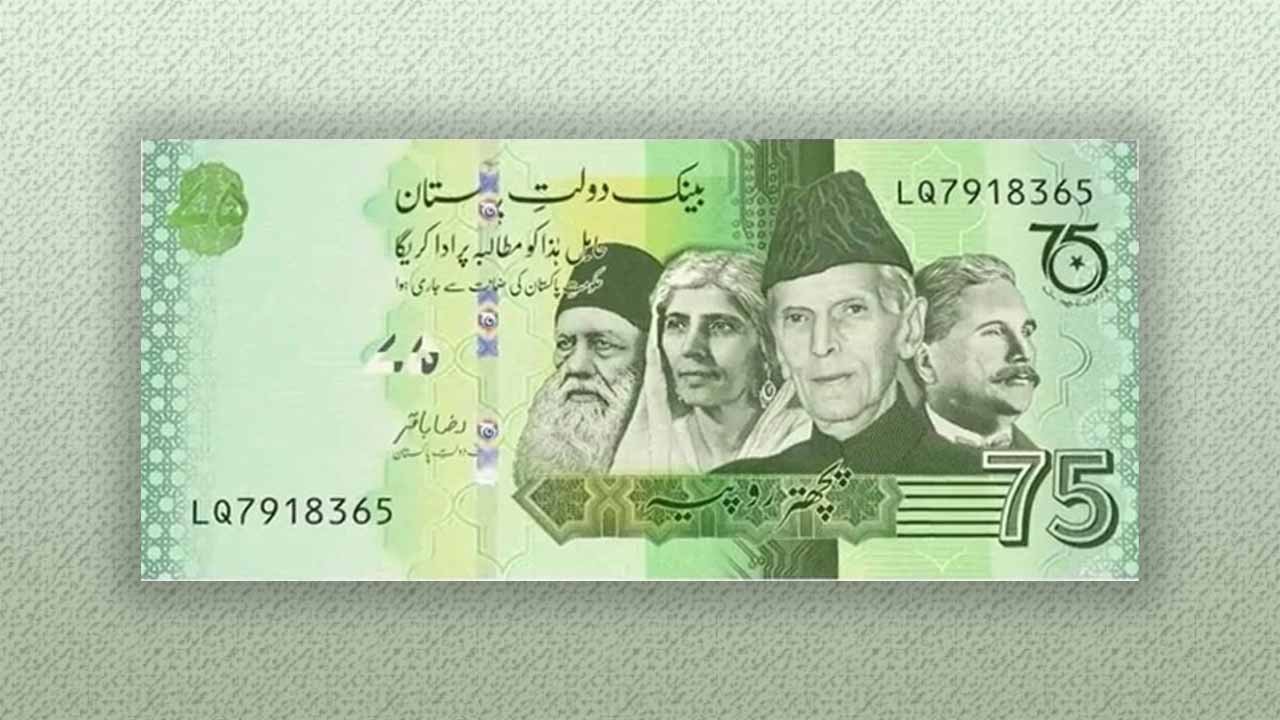
    The commemorative banknote of Rs75 is available for the general public from September 30 (today), which was released by the State Bank of Pakistan (SBP) on August 14th to mark Pakistan’s 75th Independence Day.

    At a ceremony held at the SBP offices in Karachi on August 14, 2022, the design of this commemorative banknote was presented.

    The SBP announced in a statement that starting on September 30, the general public can get the commemorative Rs75 banknote from SBP BSC offices and commercial banks’ branches.

    As a result, the Quaid-e-Azam Muhammad Ali Jinnah, Allama Sir Muhammad Iqbal, Mohtarma Fatima Jinnah, and Sir Syed Ahmed Khan are shown on the banknote’s obverse, according to the statement.

    According to SBP, the reverse of the banknote emphasises the nation’s commitment to combating climate change and its effects on Pakistan. This issue has become even more urgent in light of the unprecedented loss brought on by the recent torrential rains and flooding that affected large portions of Pakistan, according to SBP.

    The portraits of the national animals Markhor and Deodar on the reverse also draw attention to the threat of extinction and the necessity of protecting these species.

  • Pakistanis to face gas shortage in winter once again

    Pakistanis to face gas shortage in winter once again

    The government has warned of an impending gas crisis in the nation due to a dramatic reduction in gas supplies and a gradually growing imbalance between demand and supply.

    With each passing year, Pakistan’s gas reserves are declining by roughly 10 per cent annually in past years, according to DAWN.

    Officials from the Public Accounts Committee (PAC) gathered to discuss the Petroleum Division’s annual report for 2019–20.

    We cannot purchase the gas, according to Petroleum Secretary Ali Raza Bhatti, who spoke to PAC about the state of the market. Since the start of the war in Ukraine, gas prices have risen everywhere. Gas prices had increased by about 4% at the time.

    According to Bhatti, Pakistan is considering purchasing gas from other nations as the prime minister just visited Qatar and held a private meeting where a request for extra cargoes was on the agenda.

    Nevertheless, the government is currently thinking about importing gas from friendly nations. Previously, the nation got its gas from Qatar, but now it wants to get supplies from other friendly countries to make up for the deficit.

    According to him, domestic consumers use the majority of the gas in Pakistan’s system, which is extensively subsidised by the government.

    Qatar is the most dependable provider, it should be noted. According to the petroleum secretary, Qatar has continued to provide Pakistan with LNG at a rate of $15 per million British thermal units (mmBtu), down from the $60 per mmBtu it was previously charging from other nations, despite the market’s rising demand.

    Sui Northern was also asked to provide information on defaulters in the Gas Infrastructure Development System by the PAC, which was led by Noor Alam Khan.

    The committee instructed gas firms to take payment from late payers within seven days, and the government to cut off the defaulters’ connections right away.