Category: Business

The most important business news, explained in a young, easy to understand way. News that affects young career professionals.

  • Pakistan to import vegetables from neighbouring countries to overcome shortage

    Pakistan to import vegetables from neighbouring countries to overcome shortage

    After devastating floods ravaged the nation, Pakistani officials made the decision to import onions and tomatoes from Iran and Afghanistan due to the rising prices and imminent food crisis.

    The production and supply of vegetables and other crops has been impacted by the recent torrential rains and flooding.

    At a meeting presided over by Commerce Minister Naveed Qamar, the Ministry of Commerce made the announcement. The minister also examined the country’s supply of tomatoes and onions.

    To address the nationwide demand for these crops, the session voted to facilitate the import of onions and tomatoes from Afghanistan and Iran.

    According to The News, the panellists predicted that there will be a tomato and onion shortage in the nation within the next three months. They also stated that because recent flooding has harmed crops, a shortage and price increase are anticipated.

    The News reports that the importation of tomatoes and onions will help to uplift their availability and maintain their pricing.

    The Ministry of Commerce would collaborate with the FBR and the Ministry of National Food Security, it was decided at the meeting. The session also resolved to request reductions in taxes and charges from the federal cabinet’s Economic Coordination Committee for imported tomatoes and onions.

    Earlier, Qamar had emphasised the importance of taking quick action to make tomatoes and onions available to consumers and to stabilise the skyrocketing costs of these commodities. Due to a lack of supply in the market as a result of recent floods, the price of onions and tomatoes has reached Rs 300 per kg.

  • Here’s a list of the top 10 richest people of the world

    According to the latest list by Forbes, these are the world’s richest people who have made it to the top 10.

    Elon Musk

    Elon Musk, who is in the news because of his battle with Twitter, has a net worth of $263.4 billion.

    SpaceX is valued at almost $100 billion and Tesla is the world’s most important automaker.

    Bernard Arnault and Family

    Europe’s richest man who earned a $100 billion fortune last year, the chairman and CEO of LVMH, Bernard Arnault, is second on the list with a net worth of $167.7 billion. The family owns more than 70 brands.

    Jeff Bezos

    Jeff Bezos is the founder and CEO of Amazon and has a net worth of $162.7 billion. Even though he transferred much of his wealth to his wife after their divorce, the e-commerce giant remains the third richest.

    Gautam Adani and family

    India’s Gautam Adani has diversified Adani Group into multiple sectors, including aerospace, logistics, and energy. At $142.7 billion, he is now the fourth richest person in the world.

    Bill Gates

    Bill Gates has a net worth of $113.4 billion.

    Larry Ellison

    With a net worth of $108.5 billion, Larry Ellison — the founder of software firm Oracle — stands at the sixth position. Ellison has also been on Tesla’s board after he bought three million shares in 2018, reported Business Insider. Almost all of the Hawaiian island Lanai belongs to Ellison.

    Larry Page

    Google’s co-founder Larry Page has a net worth of over $100 billion. Among other interesting projects, he is funding “Flying Car”.

    Sergey Brin

    Sergey Brin is the co-founder and board member of Alphabet. He also co-founded Google. He has a total net worth of $97.0 billion.

    Mukesh Ambani

    Mukesh Ambani with a total net worth of $94.2 billion is at the 10 position in the world. He owns Reliance Industries and has been the richest person in Asia.

  • Flood-related losses may exceed $10 billion: Ahsan Iqbal

    Flood-related losses may exceed $10 billion: Ahsan Iqbal

    Planning Minister Ahsan Iqbal said that the initial economic losses caused by the floods in Pakistan cost at least $10 billion.

    The estimated cost was disclosed by Planning Minister on Monday, saying that Pakistan needed help from the rest of the world to deal with the consequences of climate change.

    Unexpected monsoon rains have caused historic flash floods that have destroyed bridges, crops, infrastructure, and highways, killing over 1,000 people and affecting more than 33 million. “I think it is going to be huge. So far, (a) very early, preliminary estimate is that it is big, it is higher than $10 billion,” Iqbal said.

    The minister estimated that the 200-million-person South Asian country, which will be facing an acute food scarcity, may take five years to reconstruct and recover.

     Along with significant damage to the rice fields, he claimed that 45 per cent of the cotton harvests had been washed away. “I think it is going to be huge. So far, (a) very early, preliminary estimate is that it is big, it is higher than $10 billion,” Iqbal said.

    According to Reuters, the Pakistani military said in a statement on Tuesday that rescue operations were still in progress and that foreign aid, including seven military aircraft from Turkey and three from the United Arab Emirates, was beginning to reach the nation.

    More aid will be sent to Pakistan as a result, which will assist it in overcoming its current condition.

    More than 300 stranded persons had been airlifted away, more than 23 metric tonnes of relief supplies had been provided, and more than 50 medical camps had been set up, with more than 33,000 patients receiving treatment, according to the statement.

    Moreover, China will send two aircraft on Tuesday (today) carrying 3,000 tents and Japan will send tarpaulins and shelters, in addition to the announcements of financial support from the UK, Canada, Australia, and Azerbaijan.

    As the cash-strapped nation struggles with political and economic unrest made worse by the historic floods, the International Monetary Fund (IMF) threw it another lifeline on Monday by releasing $1.17 billion in bailout funding.

    “Pakistan is in dire need and the damages are here and we will be in this a very long time,” Iqbal said. “It’s not months but years we are talking about.”

  • Vegetable prices soar amid low supply due to floods

    Vegetable prices soar amid low supply due to floods

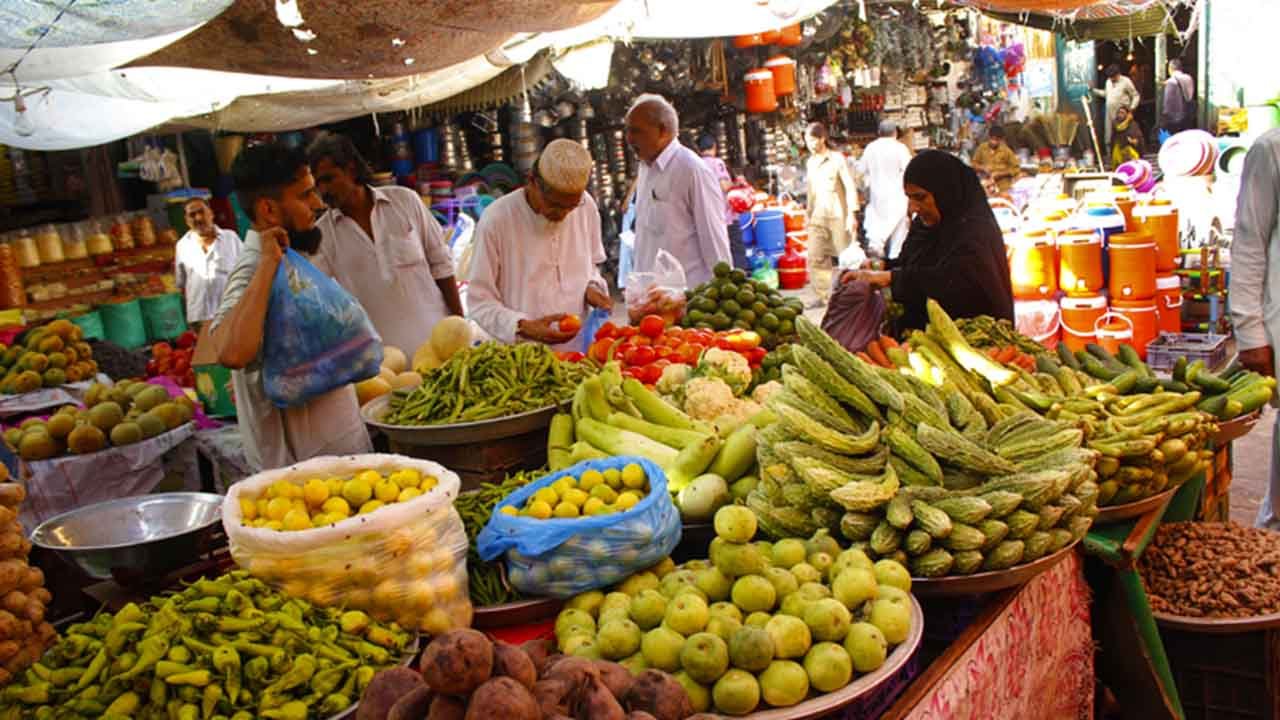
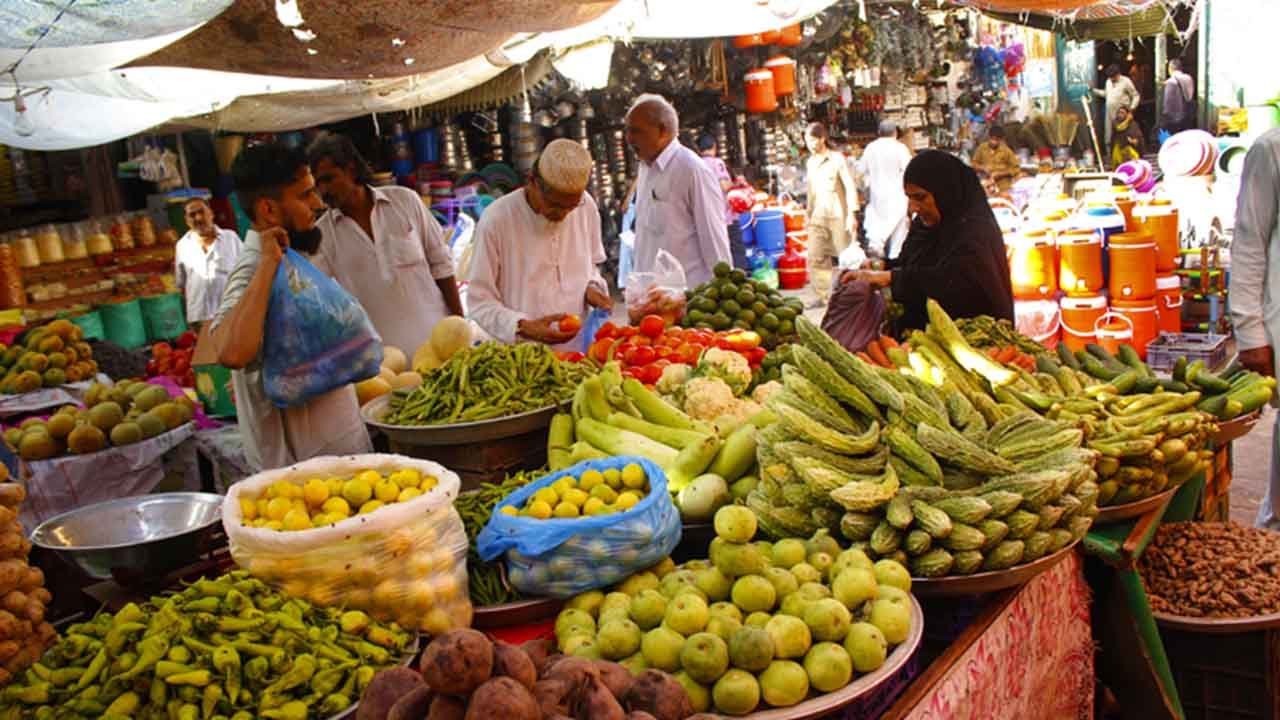
    Extreme flooding has hampered the supply of perishable items from agricultural areas, driving up the prices of onions and tomatoes in city markets.

    While tomatoes cost Rs400-450 per kilogramme (kg), onions cost Rs350-400 per kg. Onion prices rose by Rs75 per kg week over week in the official rate list, while tomato prices rose by Rs234 per kg.

    The supply chain is hampered by road blockages and transportation restrictions in flood-affected areas, according to The News.

    Onion A-grade cost Rs75 more per kg, was fixed at Rs180-190, and was sold for Rs350-400 per kg. Onion B-grade cost Rs160-167 per kg, was sold for Rs235-250 per kg, and onion C-grade was priced at Rs180-200 per kg.

    Tomato A-grade price increased by Rs234 per kg, maintained at Rs320-330 per kg, sold for Rs400-450 per kg, followed by B-grade price increase to Rs290-300 per kg, C-grade price increase to Rs240-250 per kg, and B&C price increase to Rs350 per kg.

    Chinese carrot prices increased by Rs11 per kg, from Rs80 to Rs85 per kg to Rs120 to Rs160 per kg for sale. Fenugreek (Methi) remained constant at Rs250-260 per kg and was sold for Rs400 per kg.

    This week, the price of chicken also climbed by Rs20 per kg, from Rs240 per kg to Rs280–300 per kg, and the price of chicken meat by Rs30 per kg, from Rs362/kg to Rs380–650/kg.

    Cucumber Farm increased its price by Rs50 per kg, fixed at Rs120-125 per kg, sold at Rs150 per kg, and locally sold cucumbers were sold for Rs200 per kg.

    Brinjal price increased by Rs5 per kg, from Rs86 to Rs90 per kg, and was sold for Rs120 to Rs140 per kg.

    Price of bitter gourd rose by Rs10 per kg, fixed at Rs160-165 per kg, and sold at Rs200 per kg.

    Local lemon prices increased by Rs20 per kg, from Rs235-245 per kg to Rs280-320 per kg when sold. Pumpkin remained at Rs60–63 per kg, sold for Rs80–100 per kg, and pumpkin long was sold for Rs140–150 per kg.

  • Pak Suzuki extends plant closure due to low inventory

    Pak Suzuki extends plant closure due to low inventory

    The State Bank of Pakistan (SBP) has imposed import restrictions that have negatively impacted the clearance of import consignments, which has in turn affected the inventory levels, according to Pak Suzuki Motor Company (PSMC), which announced on Monday that the shutdown of its auto production plant has been further extended from August 29 to August 31.

    The SBP has instituted a procedure for prior permission for imports within the HS code 8703 category (including CKDs), according to a notice given to the Pakistan Stock Exchange (PSX) by PSMC on May 20, 2022, according to pkrevenue.

    According to PSMC, these restrictions had a negative influence on the import consignment’s clearance, which in turn had an impact on inventory levels.

    PSMC said that it is experiencing a scarcity of inventory. As a result, the company’s management has decided to further extend the auto plant’s shutdown time from August 29, 2022, to August 31, 2022.

    As a result of a decline in inventory levels, PSMC informed the PSX earlier this week that it will halt production of automobiles from August 22 through August 26, 2022.

    However, PSMC stated on both occasions that its motorcycle plant will continue to operate.

    Due to Pakistan’s auto industry’s reliance on imports and the SBP’s limits on Letters of Credit opening as a result of the persistent rupee devaluation, the country is currently experiencing an exchange rate crisis.

    In order to prevent delays in car delivery and future price increases, the manufacturers requested the central bank’s involvement back in July for opening LCs for the import of CKD kits.

    PSMC stated earlier this month that it would lower the pricing of its cars by between Rs75,000 and Rs199,000, citing the strengthening of the rupee versus the US currency. Due to the weakening of the rupee, prices had already climbed significantly in early August.

  • IMF Executive Board meeting to discuss revival of loan plan today

    IMF Executive Board meeting to discuss revival of loan plan today

    The International Monetary Fund (IMF) executive board will meet on Monday (today) to discuss the bailout plan for Pakistan.

    The 8th and 9th tranches, totaling over $1.2 billion, are anticipated to be disbursed with board approval.

    According to Geo, Pakistan also requested that the Extended Fund Facility (EFF) be increased from $6 billion to $7 billion and that the term be extended from September 2022 to June 2023.

    If the contract is approved by the board, the IMF will give Pakistan an initial payment of roughly $1.2 billion and could give up to $4 billion during the remaining months of the current fiscal year, which started on July 1.

    The board gave its approval for the transfer of $1.386 billion to Pakistan under the RFI in April 2020 to help with the economic effects of the Covid-19 shock.

    Additionally, according to The Wall Street Journal, Pakistan has secured at least $37 billion in foreign loans and investments in recent weeks, saving it from a financial catastrophe similar to that of Sri Lanka.

    The restart of the programme will greatly benefit the government led by Prime Minister Shehbaz Sharif as it will assist prevent what would be the second default in Asia this year after Sri Lanka.

    Bloomberg estimates that Pakistan would have to pay at least $3 billion in debt payment during the first half of the fiscal year 2023.

    The State Bank of Pakistan anticipates that foreign exchange reserves would increase to around $16 billion this fiscal year from $7.8 billion, thanks to the IMF loan opening the door for additional funding.

  • FBR establishes new section to investigate corrupt tax officials

    In order to ensure the prompt resolution of all disciplinary cases and inquiries against tax employees engaged in corruption and dishonest activities in field formations, the Federal Board of Revenue (FBR) established a new Section on Friday called “Discipline/Inquiries.”

    A new Section with the nomenclature “Discipline/Inquiries” is hereby created in the Admn/HR Wing, FBR (HQ), Islamabad with immediate effect in order to ensure proper follow-up of all disciplinary cases/inquiries of officers (BS-16 and above) of FBR (HQ) and IR field formations with a view to ensuring timely disposal of such cases, according to an office order issued by the FBR on Friday.

    According to Brecoder, a secretary or second secretary who works for the specified Section will be in charge and reporting to the Chief (HRM-IR), FBR.

    The FBR has also been ordered by Prime Minister Shehbaz Sharif to fully abide by the guidelines of the Civil Servants (Efficiency and Discipline) Rules, 2020 when taking disciplinary action and conducting investigations against dishonest tax officers.

    The FBR chairman has directed the Revenue Division/FBR to rigorously adhere to the following instructions in all disciplinary processes and inquiries launched against the officers, in accordance with the directives of the prime minister:

    The Civil Servants (Efficiency & Discipline) Rules, 2020, Rule 10 read with Rule 12 shall govern how the chosen inquiry officer would conduct the inquiry processes. The same must be finished within sixty (60) days of the date the inquiry order was issued, or within any further time the authority may provide.

    All Directors General, Chief Commissioners, Chief Collectors, Commissioners, and Collectors of FBR shall keep the relevant case record in safe custody while forwarding the recommendation to begin disciplinary proceedings against any officer(s) or official in order to ensure safe custody of the record in an inquiry.

    In accordance with the guidelines outlined in Rule 8 of the Civil Servants (Efficiency and Discipline) Rules, 2020, all heads of field offices shall also see to it that pertinent records of the case and other related documents are timely provided to the inquiry officer or the inquiry committee, as the case may be, through the designated departmental representative (DR). This must be done within seven days of the date of the inquiry order.

  • Jhagra responds after Miftah accuses KP govt of jeopardising IMF deal

    Jhagra responds after Miftah accuses KP govt of jeopardising IMF deal

    After Finance Minister Miftah Ismail accused the KP government of plotting to derail the IMF deal in a late-night press conference, KP Finance Minister Taimur Khan Jhagra stated that the province is currently dealing with a flood scenario that takes precedence over everything else.

    In a previous letter to Miftah, Jhagra connected the payment of the Rs100 billion in alleged liabilities with the clearance of the provincial cash surplus for this fiscal year, which is a requirement of Pakistan’s agreement with the International Monetary Fund (IMF).

    This occurs just three days prior to the revival of IMF’s multibillion dollar credit programme. The K-P government has already agreed through a memorandum of understanding (MoU) to achieve the Rs117 billion cash surplus that is required by the IMF arrangement. Ismail is a co-signatory of the Letter of Intent (LoI) that was recently sent to the IMF in order to revive the programme.

    “Please note that in these conditions [floods], and without the resolution of the issues highlighted previously, for the province of Khyber Pakhtunkhwa to actually leave a surplus will be next to impossible,” Jhagra wrote in the communique sent to Miftah on Friday.

    Miftah Ismail’s call, according to Jhagra, was “interesting,” and the two will now meet on Monday to resolve their issues. However, the provincial finance minister stated it was “sad” that in Pakistan, one needed to “shout to be heard.”

    Jhagra confirmed in a series of tweets that he had actually addressed a letter to the federal finance minister and not the IMF. The provincial minister sent a letter that included images as well.

    Jhagra went on to say that despite raising the same issues with Miftah at their meeting on July 5, they decided to return the IMF MoU to Islamabad within 24 hours with the approval of the chief minister of KP.

    Jhagra added that the KP administration would never back down from advocating for a strong federation or from bringing up its concerns at the centre.

    At a late-night press conference, Miftah called the letter “deplorable.” He labelled the letter as a “conspiracy to derail the IMF programme and sink the rupee.”

    He questioned whether PTI Chairman Imran Khan, who was seeking to obliterate Pakistan and its economy out of a desire for power, had any set parameters.

  • PM orders discos to suspend staff leaves and work nonstop to correct electricity bills

    PM orders discos to suspend staff leaves and work nonstop to correct electricity bills

    The staff of power distribution companies (DISCOs) must work nonstop to correct the electricity bills of consumers using less than 200 units per month, following a directive from Prime Minister (PM) Shehbaz Sharif.

    He gave the order for all staff members’ leaves to be ended, the bills should be corrected right away, and a report should be given to him. In order to deposit electricity bills in the upcoming days, he continued, the banks should be instructed to stay open.

    PM Shehbaz gave the orders while presiding over a high-level meeting to address the issues facing electricity consumers.

    Furthermore, a high-level committee was formed by the prime minister to address the issues of power users.

    The gathering was informed that efforts are being made to ensure the adoption of the relief package for power consumers that the prime minister had announced. According to him, bill adjustments are being made as part of the relief for 16.6 million consumers related to the change in fuel prices.

    The relief measures must be put into effect right away, according to directives issued by the prime minister.

  • Bykea expands to car-hailing service

    Bykea expands to car-hailing service

    The bike taxi and logistics company BYKEA has recently launched its car-hailing service. The service has only been made available by Bykea in Karachi and Islamabad so far, but it will likely be expanded in the coming months.

    The launch of the new service was confirmed by the company through a social media post.
    “Hum ho gaye hain 2 se 4,” tweeted BYKEA’s official account.

    https://twitter.com/bykeapk/status/1563111486989299712?ref_src=twsrc%5Etfw%7Ctwcamp%5Etweetembed%7Ctwterm%5E1563111486989299712%7Ctwgr%5E14b12e65edff4173732ad6b26f8eaa4238d042c0%7Ctwcon%5Es1_&ref_url=https%3A%2F%2Fthecurrent.pk%2F%3Fp%3D194223

    Earlier this month, the company hinted that it will start offering a car-hailing service. However, it did not publicly announce its plans or inform its regular users. A tweet from its official account suggested that the company is launching a car-hailing service.