Category: Business

The most important business news, explained in a young, easy to understand way. News that affects young career professionals.

  • Pak Suzuki records 62 per cent increase in sales

    Pak Suzuki records 62 per cent increase in sales

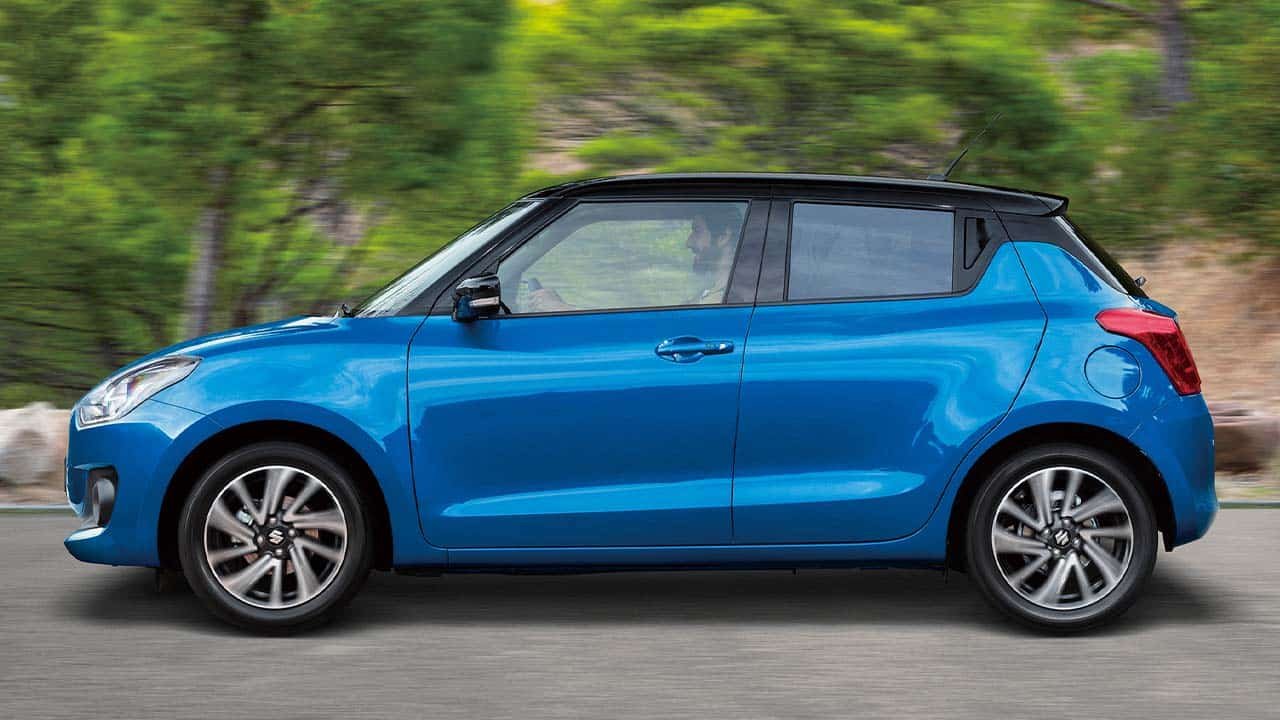
    Following the launch of multiple new models in the local auto market, the demand for cars has increased significantly since COVID-19.

    According to a Business Recorder report, volumetric sales in the auto industry have increased significantly Year Over Year (YOY) through the eleventh month of the fiscal year 2022 (11MFY2022).

    According to the data, around 270,000 auto sales were made in the 11MFY2022. It also notes that Kia, Changan, and other new automakers’ sales are not included in these numbers. When their sales are taken into consideration, the total rises to almost 300,000 units.

    With over 130,000 units sold and YoY growth of 62 percent, Pak Suzuki Motor Company (PSMC) continues to be in the lead. With almost 60,000 units sold and a YoY growth rate of 59 per cent, Toyota comes in second. Honda ranks third with over 30,000 units sold and YoY growth of 37 per cent.

    Despite the fact that sales have been steady over the previous year, they are projected to start declining in the second quarter (Q2) of FY2023. The automakers also forecast a drop in sales of up to 25 per cent, citing escalating shipping, gasoline, and raw material costs as well as the consequent pricing hikes.

    Conversely, many experts predict that pre-booked orders would help sales stay robust through Q1 FY2023. It would be fascinating to observe how the sales perform in Q3 FY2023 or Q4 FY2023, according to experts, as that is when the rise in automobile and gasoline prices will really start to have an impact on demand.
  • Pakistani rupee fell by 34 per cent in FY 2021-22: Report

    Pakistani rupee fell by 34 per cent in FY 2021-22: Report

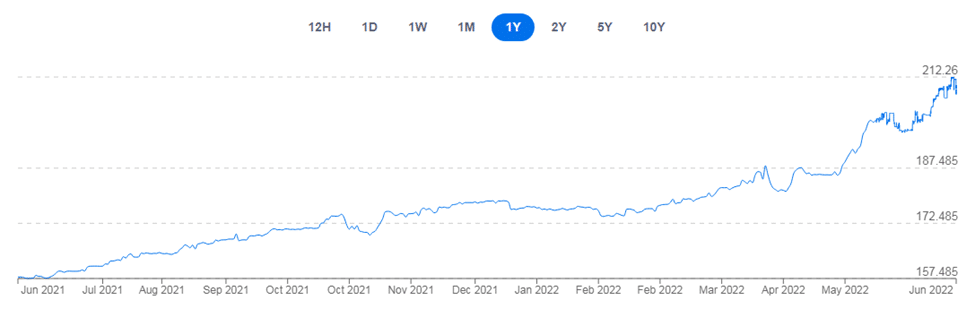
    Pakistan’s fiscal year starts on July 1st and ends on June 30th. The rupee to US dollar exchange rate was Rs158.06 at the beginning of fiscal year 2021-2022, and it reached an all-time high of Rs212.103 in the inter-bank market on June 21, 2022. This represents a depreciation of more than 34 per cent in less than a year.

    The graph below demonstrates how the PKR to USD exchange rate varied over time:

    During the fiscal year 2020-2021, the local currency plunged 17.47 per cent from Rs158.062 to Rs184.159 in 9 months, from July 1, 2022 to April 11, 2022, under the PTI regime. Since PDM took over, the rupee has lost nearly 14.31 per cent of its value in just three months.

    The table below compares PKR to dollar values over time, as well as the government in power at the time:

      PKR to Dollar Government
    July 2021 158.062 PTI
    August 2021 162.571 PTI
    September 2021 166.872 PTI
    October 2021 170.997 PTI
    November 2021 170.92 PTI
    December 2021 176.042 PTI
    January 2022 176.214 PTI
    February 2022 176.736 PTI
    March 2022 177.573 PTI
    April 2022 184.159 PTI and PDM
    May 2022 185.794 PDM
    June 2022 197.744 PDM
    June 23 2022 207.516 PDM

    Dollar demand remains strong in the market, pushing the greenback’s value higher against the rupee. The local currency is likely to remain volatile until the IMF agrees to disburse the next tranche of loans to Pakistan.

  • UK inflation reaches 40-year high as food and energy prices jump

    UK inflation reaches 40-year high as food and energy prices jump

    British consumer price inflation hit a new 40-year high of 9.1 per cent last month, the highest rate among the Group of Seven nations and highlighting the severity of the cost-of-living crisis. Rising food prices were a significant factor in this uptick.

    The reading, which increased from 9.0 per cent in April, was in line with the consensus of economists surveyed by Reuters. May’s inflation was the highest since March 1982, according to historical data from the Office for National Statistics, and it’s likely to get worse.

    “Rising inflation is putting further pressure on policymakers to ease the burden on households, while complicating the Bank of England’s task,” Yael Selfin, chief economist at KPMG UK, said.

    Prior to reaching a peak of just above 11 per cent in October, when regulated household energy bills are scheduled to rise once more, the Bank of England predicted last week that inflation would likely remain above 9 per cent over the upcoming months.

    Finance Minister Rishi Sunak responded to the information by saying that the British government is doing everything it can to stop a rise in prices.

    Food and non-alcoholic goods saw the largest annual price increase since March 2009 in May, rising 8.7 per cent, making this sector the main driver of annual inflation in that month.

    The ONS reported that overall consumer prices increased by 0.7 per cent in monthly terms in May, slightly higher than the 0.6 per cent consensus.

    In May, Britain had a higher headline inflation rate than the US, France, Germany, and Italy. Although Japan and Canada have not yet provided data on consumer prices for May, neither is probably going to come close.

  • Sony, Honda form joint venture to build electric cars together

    Sony, Honda form joint venture to build electric cars together

    Sony and Honda have formally signed a joint venture agreement to form an electric vehicle (EV) manufacturing company. The new business is named “Sony Honda Mobility Inc.,” with Sony taking precedence over the proven automaker.

    Honda executive Yasuhide Mizuno has been named chairman and CEO, and Sony executive vice president Izumi Kawanishi has been named president and COO.

    As previously stated, the partnership will make use of “Honda’s cutting-edge environmental and safety technologies, mobility development capabilities, vehicle body manufacturing technology, and after-sales service management experience,” as well as Sony will contribute “imaging, sensing, telecommunications, network, and entertainment technologies” in the meantime.

    Honda is lagging behind competitors in EV progression, with the Honda E as its only electric vehicle, but it has recently accelerated its plans. It announced a partnership with GM earlier this year to co-develop a series of affordable electric vehicles based on a global architecture and GM’s Ultium battery technology. Honda and Acura SUVs are expected to be available in North America by 2024.

    Honda also announced last year that by 2040, it will have converted its entire vehicle lineup to electric and fuel-cell vehicles. It will invest $40 billion and launch 30 new electric vehicles by 2030 as part of this plan.

    Meanwhile, Sony has unveiled not one, but two self-designed electric vehicles, the Vision-S EV and Vision-S 02 electric SUV. It’s unclear how Sony Honda Mobility fits into all of these plans, but we should find out more information soon.

  • Gold surges to Rs147,250 per tola in local market

    Gold surges to Rs147,250 per tola in local market

    On Monday, gold prices in the local market rose by Rs1,450 per tola to a new all-time high, pushed up by the Pakistani currency’s continued depreciation against the US dollar.

    Despite no change in gold rates in the international market, gold rates in the local market increased to Rs147,250 per tola, according to data released by the All Sindh Saraf Jewelers Association. Similarly, the price of a gramme of gold increased by Rs1,243 to Rs126,243.

    However, gold prices on the international market remained unchanged at $1,840 per ounce.

    The price of silver per tola remained unchanged at Rs1,560. The price of a gramme of silver also remained unchanged at Rs1,337.44. When compared to rates in the Dubai gold market, local jewellers said prices in the local market remained below Rs3,000 per tola.

    Pakistani rupee dips to new lows

    Experts predict that the Pakistan rupee will continue to fall against the US dollar and other major currencies owing to concerns regarding the IMF’s $6 billion program’s restoration, the country’s expanding current account deficit, and dwindling foreign exchange reserves.

    The PKR which lost 32.5 per cent of its value in the current financial year 2021-22 is forecasted to remain under stress as the dollar is in high demand in the market due to economic crises.

    The central bank appears helpless to stem the rupee’s speculative fall, as demand for the US dollar continues to rise due to quarter-end payment strain.

  • Number of railway passengers increases after hike in bus fares

    Number of railway passengers increases after hike in bus fares

    The number of train passengers has enhanced as the cost of travelling by bus or private vehicle has elevated owing to skyrocketing fuel costs.

    Despite a slight increase in railway fares, a spokesperson for Pakistan Railways said that there was no comparison between train fares and bus or other forms of road transportation.

    According to AFP, Pakistan Railways had to jack up ticket prices by 10 per cent on some trains, but train travel was still affordable and convenient.

    On the other hand, due to an increase in petroleum prices throughout the country, bus fares have soared in the last month.

    Sardar Nasir, a passenger at the Lahore railway station, told this scribe that taking a bus with his family was too expensive, so he decided to take the train to Rawalpindi instead.

    Another passenger on the Allama Iqbal Express train to Bahawalpur with her family, explained that the pricing for Bahawalpur by bus was nearly doubled, so she chose to commute by train.

    The booking receptionist at the Faisalabad train station validated that train ticket sales had surged following the increase in petroleum product prices.

  • Pakistani rupee remains volatile as US dollar surpasses Rs211

    Pakistani rupee remains volatile as US dollar surpasses Rs211

    On Monday, the Pakistani rupee dropped sharply to a record low of over Rs211 against the US dollar in the interbank market, indicating that the currency remains highly volatile.

    The rupee’s latest devaluation against the US dollar is the result of panic buying by traders in response to reports that some financial institutions were out of foreign currency.

    According to the State Bank of Pakistan (SBP), the US dollar was available at Rs211.21 at 11:03 AM and had closed at Rs208.75 on Friday.

    It is worth noting that the Pakistani rupee has fallen for the seventh working day in a row, losing nearly Rs6, or more than 3 per cent, to date.

    Experts predict that the Pakistan rupee will continue to fall against the US dollar and other major currencies owing to concerns regarding the IMF’s $6 billion program’s restoration, the country’s expanding current account deficit, and dwindling foreign exchange reserves.

    The PKR which lost 32.5 per cent of its value in the current financial year 2021-22 is forecasted to remain under stress as the dollar is in high demand in the market due to economic crises.

    SBP appears helpless to stem the rupee’s speculative fall, as demand for the US dollar continues to rise due to quarter-end payment strain.

    Monetary specialists attribute the depreciation of the local currency to a widening trade deficit, political instability, and a drop in foreign direct investment. The currency expert believes that the positive news from the Financial Action Task Force (FATF) will help attract foreign investment, increasing the availability of the dollar.

    Traders expect the rupee to settle in a range of 195-200 per dollar until the end of the current fiscal year 2021-22 if the IMF deal is finalised.

    According to data compiled by Ismail Iqbal Securities, Pakistan’s currency has depreciated by 14.57 per cent against the dollar this year, making it one of the worst performers in the world.

    The worst-performing currency was the Sri Lankan rupee, which fell 43.9 per cent, followed by the Laotian Kip, which fell 24 per cent, the Turkish Lira, which fell 23.18 per cent, and the Ghana Cedi, which fell 22.33 per cent, according to the data.

  • DG Khan Cement to export 50,000 tonnes of cement to the United States

    DG Khan Cement to export 50,000 tonnes of cement to the United States

    Following long and complex certification processes, D.G. Khan Cement Company Limited (DGKCL), one of Pakistan’s largest cement producers, is set to export 50,000 tonnes of the building material to the sophisticated US market.

    This is a positive development for Pakistan, which is struggling to boost exports in the face of a burgeoning trade deficit that has steered the rupee to historic depths. The process took almost ten months for the renowned industrial group to complete the necessary certifications for delivering cement to US markets after winning the contract. TXDOT, LDOT, NCDOT, and SCDOT are among the certifications available.

    According to Brecorder, the company’s CFO, Inayat Ullah Niazi, stated that a ship was currently loading cement at a port in Karachi for delivery to Houston.

    It was not easy for the company to meet the contract for a monthly supply of 100,000 tonnes of cement to Texas. In August of last year, DG Khan Cement signed a contract with a US company for the year 2021.

    Since the United States lacks cement production, it imports it from Mexico, Canada, and Turkey.

    Finally. a Pakistani cement supplier has entered the US market for the first time, as demand for the construction material has risen dramatically, with buyers looking for other options in the wake of President Joe Biden’s $6 trillion infrastructure package.

    All of the mega infrastructure in the United States, including roads, bridges, and other structures, would be rebuilt as they were nearly a century ago under the announced package.

    Pakistan exported 4.971 million tonnes cement in the first 11 months of the current fiscal year (July-May), a negative growth of 43.32 per cent, according to export data. Cement exports to Afghanistan were only 813,493 tonnes during this time, a negative 65.04 per cent increase.

    With only 1.478 million tonnes exported, exports to other countries experienced negative growth of 27.2 per cent.

    As per industry insiders, after DG Khan Cement began discovering the US market for cement exports, other larger players began the certification process for their goods.

    According to the latest figures released by the Pakistan Bureau of Statistics (PBS), the country’s exports declined by 10.22 per cent on a monthly basis in May 2022, falling to $2.6 billion from $2.897 billion in April 2022.

    D.G. Khan Cement, one of Pakistan’s largest cement producers, earned Rs4.1 billion in the nine-month period ending March 31, 2022, a 26 per cent increase in profit. In the same period of 2020-21, the company made Rs3.25 billion in profits.

    It is worth noting that the business also received orders for cement export to the Philippines back in 2020.

    With a nearly 50 per cent (Rs300 per bag) increase in the last 12 months, more price increases would be required to offset the coal cost impact.

  • Punjab’s ePay system collects over Rs90 billion tax revenue through 17 million transactions

    Punjab’s ePay system collects over Rs90 billion tax revenue through 17 million transactions

    Since its launch in October 2019, e-Pay Punjab, an online payment solution developed by the Punjab Information Technology Board (PITB) and the Punjab Finance Department, has collected over Rs90 billion in tax revenue through 17 million transactions.

    As per details released by the PITB on Friday, e-Pay Punjab has collected a total of Rs57 billion in sales tax, Rs11.5 billion in token tax, Rs9 billion in property tax, Rs4 billion in traffic challans, and Rs440 million in vehicle transfers.

    It’s worth noting that e-Pay Punjab now accepts online payments for 23 taxes and levies from ten different departments. Its 1-Link network integration with the State Bank of Pakistan (SBP) and all scheduled banks makes it a secure and dependable payment channel.

    The e-Pay Punjab application, which has over 1 million downloads, generates a unique PSID number that is accepted by banks across Pakistan through their various channels, including Internet and Mobile Banking, ATMs, and physical branch visits.

    It is also a secure, smart, and fast online payment option for the annual Token Tax. Vehicle owners can use e-Pay Punjab to pay their Token Tax from the comfort of their own homes.

    The app’s primary objective is to make it convenient for the government to gather revenue in the form of taxes through a simple solution. With Pakistan’s first digital tax aggregator, the app demonstrates how Pakistan and its government are rapidly integrating financial technology (fintech) into their processes.