Category: Business

The most important business news, explained in a young, easy to understand way. News that affects young career professionals.

  • Coming budget 22-23 will improve Pakistan’s IT sector

    Coming budget 22-23 will improve Pakistan’s IT sector

    Prime Minister (PM) Shehbaz Sharif emphasised the importance of drafting an economic strategy during the day-long Pre-Budget Business Conference on Tuesday, stating that all stakeholders should work together to develop a framework for attaining economic growth.

    During his speech, the PM stressed the importance of financial management in order to boost exports and agricultural yields. The meeting was attended by senior economists, industrialists and was organised by the government to explore avenues of consensus-based economic initiatives, according to APP.

    “All of us will have to move collectively. The government will need guidance from stakeholders and experts. The government will form a taskforce on agriculture and exports for formulating comprehensive plans,” he said.

    PM Shehbaz stated that his government had about 15 months to implement short and medium-term economic initiatives.

    He was disappointed that Pakistan was lagging behind other countries, despite the fact that the rest of the world had excelled by following their development plans. He claimed that Pakistan was endowed with talented individuals capable of replicating India’s success in the IT sector.

    PM Shehbaz announced that he had assigned Minister of Information Technology Aminul Haque the objective of increasing IT exports to $15 billion in the next two years. “We cannot progress until we set ambitious targets,” he stressed.

    Syed Amin Ul Haque pledged on Tuesday to increase information technology exports to $5 billion by the end of 2023.

    For the coming fiscal year, several IT and telecommunications programmes have been proposed in this regard.

    According to sources, these projects include 31 existing and two new ones, for which the Pakistani government would give Rs4,438.696 million and foreign aid will provide Rs1,042 million.

    Budget allocation for IT sector

    Reportedly, an amount of Rs100 million is proposed for IT professional certification through the Pakistan Software Export Board, while Rs80 million is planned for Crime Analytics and Smart Policing. In Azad Jammu and Kashmir and Gilgit-Baltistan, Rs50 million has been suggested for demand-driven industry, while Rs179 million has been earmarked for the building of a data centre to provide cloud-based services.

    PM Shehbaz warned that development plans could not be implemented unless political stability was achieved. The premier also stressed the importance of concentrating on exports and developing the agricultural sector.

    He went on to claim that he was aiming to ‘fix’ friendly country relations that had deteriorated during the previous administration’s tenure. “I have invited China, Japan, Turkey, and other countries to invest in Pakistan,” he said. He invited the corporate community to join him in this endeavour.

    Meanwhile, Finance Minister Miftah Ismail stated that the government will require $41 billion in the next 12 months and that he is ‘confident’ that this can be achieved.

    The Shehbaz Sharif government, he added, has re-engaged with the International Monetary Fund (IMF). “We spoke with them and are extremely optimistic that we will reach an agreement with the IMF soon. That is something we are extremely certain about”.

    Moreover, he explained that the present coalition administration had made difficult measures to help the economy stabilise. “It is difficult for any prime minister to authorise a fuel price hike of twice the amount we have, but we were losing Rs84 per litre on diesel and Rs69 per litre on petrol”.

  • Pakistan’s GDP projected to climb by 5-6 per cent in FY 22-23

    Pakistan’s GDP projected to climb by 5-6 per cent in FY 22-23

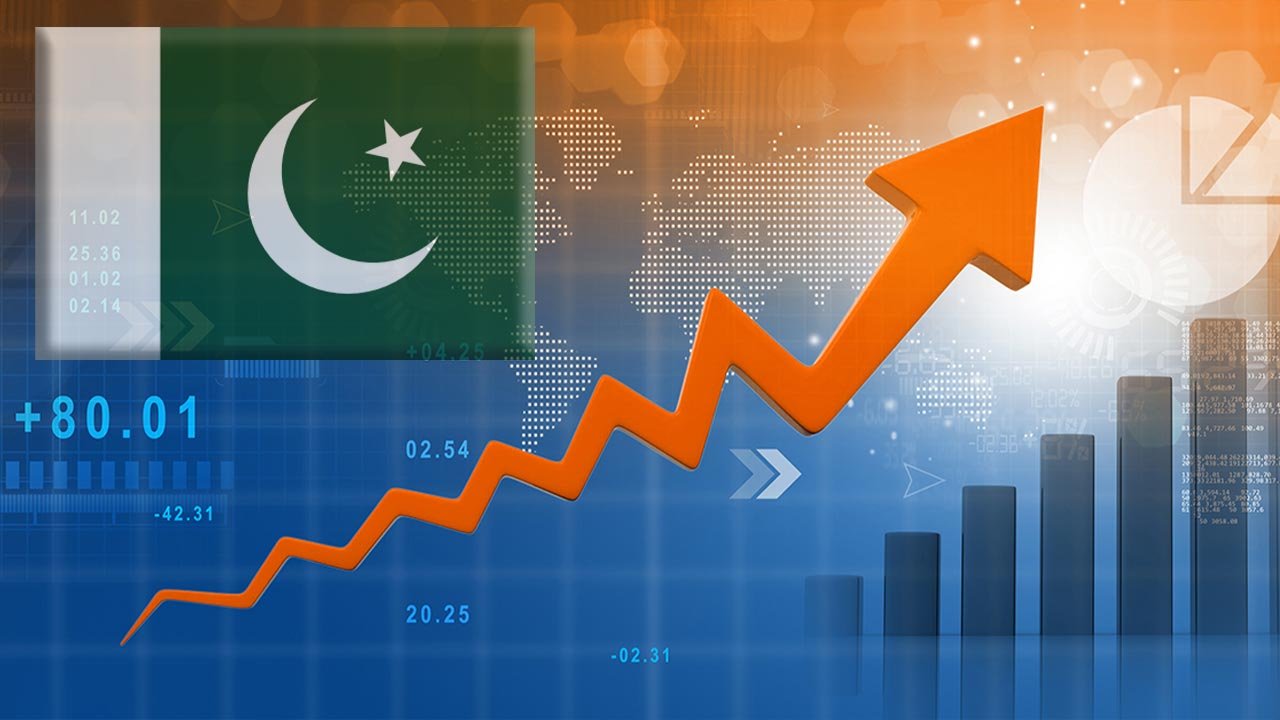
    Finance Minister Miftah Ismail forecasted that Pakistan’s GDP would expand by 5 per cent to 6 per cent, and that the government would keep inflation under control, while speaking at the pre-budget conference on Tuesday, June 7.

    The Finance minister expressed his ‘high confidence’ in the agreement with the International Monetary Fund (IMF) and revealed that the government had developed a progressive fiscal budget with a deficit of less than 5 per cent, according to Express News.

    “We had to make difficult decisions; it’s difficult for any prime minister to authorise such a hike in petrol costs, but we were losing money.” “Every month, we lost more than 120 billion rupees,” the minister said.

    According to him, the PTI administration signed an IMF agreement that mandated the reduction of fuel subsidies.

    Miftah claimed the administration has re-engaged with China, Saudi Arabia, and the United Arab Emirates (UAE), among other countries, as part of the present government’s successful negotiations.

    “Following a meeting between Foreign Minister Bilawal Bhutto and Chinese Prime Minister [Li Keqiang], China decided to re-roll their $2.4 billion programme. China has lowered its borrowing rate from 2.5 per cent to 1.5 per cent, saving the country money “Miftah said, “Roughly $23 million”.

    He went on to say that the Saudis had agreed to increase Pakistan’s “oil line” and offer the country with a $100 million revolving credit.

    According to Miftah, the current government inherited a country with the world’s third highest inflation rate, 20 million people living in poverty, and widespread unemployment.

    He went on to say that the country’s debt payments had increased tremendously as a result of the amount of loans taken on by the PTI government.

    Pakistan’s economic paradigm, according to the minister, is inherently faulty. “We enrich the wealthy,” he remarked.

    The finance minister also spoke about one-time Rs2,000 assistance for 14 million families. The amount will be distributed in June at a cost of Rs28 billion to the government.

    Aside from the 7.3 million BISP recipients, the package also covers 6.7 million households with poverty levels of less than 37.

    According to Miftah, the country’s industry and consumers are heavily reliant on imports, causing the current account to be in deficit. He went on to say that Pakistan’s economy focuses on import substitution rather than export development, a paradigm that has been replicated in a number of developing countries.

    Aside from textiles, Pakistan has no big exports because the agriculture sector is failing to remain productive.

  • Gold gains Rs2,800, reaching Rs142,000 per tola

    Gold gains Rs2,800, reaching Rs142,000 per tola

    Keeping in view the rates maintained by the All Sindh Sarafa Jewelers Association, the price of gold per tola jumped Rs2,800 in the local market on Monday, bringing it to Rs142,000.

    Today, at 4 pm, the precious yellow metal was trading at $1,854 per ounce on the international market.

    Pakistan, as a price-taker, follows the trend in the world market for gold and other precious metals. Gold and other precious metals, such as silver, are priced in ounces around the world.

    Chairman of the Pakistan Gems Jewelry Traders and Exporters Association (PGJTEA), Akhtar Tesori, said the gold jewellery market has suffered as gold prices have risen in the country.

    According to him, the country’s commodities prices have reached new highs in recent years due to devaluation of the local currency against the green back and increases in the price of international gold.

  • What to expect from the upcoming budget 2022-23

    What to expect from the upcoming budget 2022-23

    Pakistan is escalating efforts in order to revive the stalled loan from International Monetary Fund (IMF) programme, as the prerequisites are steadily being completed.

    The revival of the bailout will provide much-needed relief in order to keep Pakistan’s economy afloat and avoid default as Pakistani currency has plummeted 9 per cent in the last month, recording the poorest performance among Asian currencies.

    According to Geo, the key policy rate was recently raised by 150 basis points to 13.75 per cent, while the price of fuel has now risen by Rs60 a litre in less than a month and is being sold at from Rs209 to Rs212 (depending on the area).

    In an interview with a private channel, the finance minister discussed the government’s decision to raise petroleum product pricing, saying that despite the difficult decision, the government is still losing money on gasoline and diesel.

    These moves are highly affecting the masses, but they are essential as the IMF programme is crucial to fix the country’s economy. Also, petroleum prices are projected to continue to rise along with power tariff.

    Increase in income tax

    An increase in income tax is a major policy recommendation from the international lender in the approaching budget for the fiscal year 2022-23.

    All suggestions are expected to enhance Pakistan’s tax income.

    The IMF issued the following rules for Personal Income Tax (PIT) in its February conditions:

    1. Lower the number of tax bands.
    2. Cut tax credits and allowances (excluding disabled and old persons, as well as Zakat receipts).
    3. Implement special tax processes for very small taxpayers.
    4. Increase the number of people who pay taxes. As the change maintains the present PIT threshold, low-income households will be safeguarded (almost three times income per capita).

    If these policy recommendations for the forthcoming budget are enacted, the tax system will be simplified and the income tax regime will be more progressive.

    These recommendations are anticipated to increase the country’s tax revenue. It will also make the system more progressive, as people with higher incomes will be required to pay more.

    Salaried class

    The burden on the salaried class, which is already heavily under pressure, may be increased. It will make working less appealing because a large portion of the wage will be devoted to direct personal income tax.

    The IMF proposed taxing the upper-middle class and wealthy individuals with monthly incomes ranging from Rs104,000 to Rs1 million at a uniform rate of 30 per cent.

    The idea demonstrates inequality in taxation, and if approved, it might leave the majority of salaried workers worse off in the face of double-digit inflation.

    On the other hand, Federal Minister for Finance and Revenues Miftah Ismail categorically stated last month that the government would not add to the burden on the salaried class and pensioners in the coming budget. 

    According to sources, the maximum rate of 30 to 35 per cent for salaried and business class individuals earning Rs20 million per year could be increased.

    Special tax proposal for small taxpayers

    Imposing a tax on small taxpayers can overcome the long-term structural problems and correct internal and external imbalances. Our tax-to-GDP ratio has remained below 11 per cent, which is lower than regional standards.

    Two-thirds of our overall taxation is made up of indirect taxation. This level of indirect taxation is not only excessive, but it also makes the system less progressive.

    Currently, a labourer pays the same amount of GST as the country’s richest man.

    Agriculturalists and real estate barons are the most important import consumers. As a result, the lack of taxation in agricultural and real estate contributes to the underlying imbalances in the external sector.

    Low-income households

    Low-income households are expected to be protected from policy interventions after the government publishes the upcoming budget, as the Personal Income Tax (PIT) threshold of three times per capita income would stay in place.

    Genuine taxpayers can also decrease their tax payments by clever investments under the Income Tax Ordinance 2001, taking into account all of the foregoing.

    In the fiscal year 2022-23, policymakers must aim to increase the tax net and the tax-to-GDP ratio as there is no chance for the country to progress without it.

    Pakistan must pay $21 billion in foreign debt payments by next year, according to the Finance Minister, while the current account deficit is $10-12 billion.

    He said, “We will also try to tilt away from the wealthy elite towards to low incoming masses, I will impose more taxes on the wealthy, but no taxes will be levied on the salaried class”.

    The wealthy and capable must prepare to pay their fair share of taxes, or the country will soon be back on the IMF’s doorstep.

  • Plan under consideration to increase govt officials’ salaries by 5 to 15 per cent

    Plan under consideration to increase govt officials’ salaries by 5 to 15 per cent

    In an attempt to lessen the impact of inflation, the government is considering raising salaries by 5 to 15 per cent in the upcoming fiscal year’s budget, according to The News, following the Pay and Pension Commission’s inability to submit a report ahead of the next budget, which led to the prime minister’s decision to grant another extension.

    The deadline for submitting the Commission’s recommendation is being extended to June 30, 2022, as per a statement released by the Finance Division.

    According to top official sources, the former PTI-led government gave a 15 per cent allowance to officials in grades 1 to 19, effective March 1, 2022.

    The new Shehbaz Sharif-led administration, on the other hand, pledged a 10 per cent rise in the pension and a 25,000-per-month minimum wage.

    A Finance Ministry official stated that in the future budget, pay for grades 1 to 19 may be boosted by another 5-10 per cent as an adhoc allowance. Employees in grades 20 to 22 could see a pay raise of 10 per cent to 15 per cent.

    In addition, due to increased inflationary pressures, the government may boost pensions by 5-10 per cent. The Regulation Wing of the Ministry of Finance has completed its internal work in this regard. It was also resolved to form a Pay and Pension Commission, which would make recommendations.

    The commission was established by the PTI-led government in April 2020, and its chairman was former Secretary of Finance Abdul Wajid Rana. He resigned, however, and former bureaucrat Nargis Sethi was named Chairperson of the Pay and Pension Commission. She later quit as well.

    The Pay and Pension Commission was then chaired by Zafar Ahmed Khan, who was chosen by the government. So far, the commission has requested two extensions but has yet to present its recommendations.

    The text box was included in the Pay and Pension Commission’s terms of reference, which included studying the adequacy of the existing basic pay scale system and evaluating the current salaries of government employees.

    Read more: Petrol quota for ministers, govt officials in Sindh lowered by 40 per cent

    It also includes making recommendations for streamlining existing classification from BPS 1-22, studying the separation of existing basic pay scales for dedicated departments, occupations/cadres, reviewing special scales such as management grades, management position scales (MP Scales), special professional pay scales (SPPS); project pay scales, and proposing measures for uniformity and improvement, reviewing admissible regular allowances, special incentives, and all other supplementary pay scales.

    The panel was tasked with identifying current shortcomings in the Pension Scheme and making recommendations for a corrective revision along with ensuring the current model’s long-term viability and recommending a system with clear timelines that is more efficient and sustainable given the available resources.  

  • Samsung is getting out of LCD business by the next month

    Samsung is getting out of LCD business by the next month

    Samsung Display has decided to cut its LCD production unexpectedly by July 2022. The stoppage was originally planned for December, but it can now take place as soon as the end of this month.

    According to insiders, Samsung’s competition has been quite harsh, and the company wanted to avoid further losses.

    Keeping in view previous Display Supply Chain Consultants (DSCC) reports, the price of LCD panels is only 36.6 per cent of what it was in 2014, when production was at its peak. BOE, a Chinese display manufacturer, and AU Optronics, a Taiwanese company, are also offering lower prices to customers.

    Samsung had planned to exit the LCD business in 2020, but lockdowns caused by the COVID-19 pandemic increased demand for home entertainment on low-cost devices like affordable TVs and smartphones. As a result, Samsung was forced to postpone this significant step.

    Samsung officials have yet to respond to a request for comment, but we expect to learn more about the shutdown’s financial implications in July when the tech giant releases its Q2 earnings report.

    As per the Korea Times, people’s interest in LCDs has waned, while they are increasingly drawn to display technologies such as Quantum Dot and OLED.

    A US market research firm also revealed the LCD panel price index has fallen dramatically since late 2021 and is now down 60 per cent year on year.

    Moreover, in recent years, smartphones have also shifted from LCD displays to OLED displays.

  • Petrol quota for ministers, govt officials in Sindh lowered by 40 per cent

    Petrol quota for ministers, govt officials in Sindh lowered by 40 per cent

    Sindh Chief Minister (CM) Murad Ali Shah lowered the petrol allotment of ministers and government officials by 40 per cent this week as part of his moderation campaign following another spike in petroleum prices.

    Keeping in view a substantial spike in POL prices within the last few days, the decision was made to limit spending and decrease the strain on the national kitty.

    “The rise in petrol price should not be a burden on the exchequer,” Sindh CM Murad Ali Shah said, increasing the treasury’s load entails intensifying the burden on individuals.

    To meet the International Monetary Fund’s (IMF) conditions, the government has unleashed another big gasoline bomb on the country after another hike of Rs30. In less than a month, the price of petrol has risen by Rs60 to Rs209.86.

    The latest petrol price hike came just hours after the National Electric Power Regulatory Authority (NEPRA) approved a power tariff hike of Rs7.91 per unit.

    The price hike sparked riots in Karachi, with protesters wrecking a petrol pump and torching tyres on University Road. Despite expressing their dissatisfaction with the situation, the general public has requested that the government tightens its belt instead of putting the weight on the populace.

    Senator Mustafa Nawaz Khokar, a top PPP lawmaker, also shared this attitude, suggesting a 50 per cent wage cut for politicians, generals, judges, and senior bureaucrats.

    “Why should common folk shoulder the failures of the political, military and judicial elite? This joke has to end”.

    If the average citizen is compelled to narrow his belt, Khokar believes that politicians, generals, judges, and top bureaucrats’ income should be halved and all amenities, including free utilities, should be removed.

    The administration warned on June 2 that it would raise fuel prices by Rs30 for the second time in ten days, as an attempt to obtain the remaining funds from IMF.

  • Microsoft reduces profit estimation due to market volatility

    Microsoft reduces profit estimation due to market volatility

    Microsoft slashed its fourth-quarter profitability and earnings projections on June 2, becoming the latest U.S. corporation to notify of the impact of a stronger dollar.

    An aggressive Federal Reserve and increased geopolitical tensions have driven the dollar up 14 per cent against a basket of currencies in the last year, forcing companies like Coca-Cola Co and Procter & Gamble to lower their expectations for the rest of the year.

    A stronger dollar generally consumes the earnings of multinational corporations that have extensive global operations and convert foreign currencies into dollars. Microsoft has lowered its sales forecast for all three segments, which include Windows products, cloud services, and personal computing.

    Corporate hedging activity has increased as more businesses seek to protect their revenues from the impact of market volatility in the face of rising inflation. It’s indeed common for businesses to preserve themself from unusual currency transitions, however, the intensity comes after years of low forex fluctuation when market volatility had little impact on income.

    Revenue for the quarter is expected to be between $51.94 billion and $52.74 billion, down from a previous range of $52.40 billion to $53.20 billion. Microsoft reduced its profit forecast from $2.28 to $2.35 per share to between $2.24 and $2.32 per share.

    Considering Refinitiv data, analysts expect earnings per share of $2.33 on revenue of $52.87 billion. In April, the company forecasted double-digit revenue growth for the next fiscal year, owing to increased demand for its office software and cloud services as economies reopen and businesses shift to a hybrid model that allows employees to work from both the office and from home.

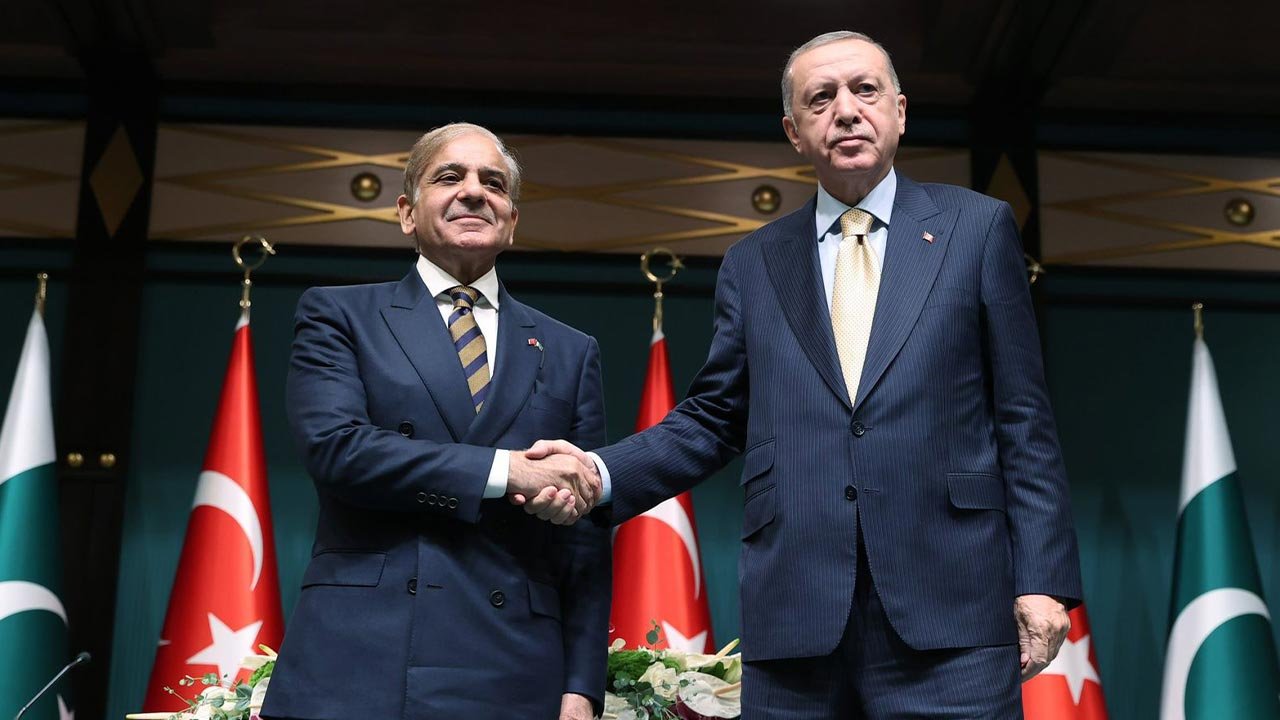
  • ‘Beloved brother’ Shehbaz in Turkey, trade to be expanded from $1bn to $5bn

    ‘Beloved brother’ Shehbaz in Turkey, trade to be expanded from $1bn to $5bn

    Prime Minister (PM) Shehbaz Sharif’s formal visit to Turkey, according to Turkish Foreign Minister Mevlut Cavusoglu, will bring bilateral ties a “new dimension”.

    After a meeting in Ankara, he made the remarks, “On the 75th anniversary of our diplomatic ties, we hosted my beloved brother Shehbaz Sharif, Prime Minister of the Islamic Republic of Pakistan. We are prepared to further develop Türkiye-Pakistan relations in light of the two nations’ shared history, friendship, and potential,” Cavusoglu stated on Twitter.

    PM Shehbaz arrived in Istanbul on Tuesday for a three-day official visit, his first since becoming the PM of Pakistan in April.

    According to a Foreign Ministry statement, the premier stressed the significance of growing bilateral trade volume to $5 billion over the next three years.

    “The Prime Minister noted that the bilateral relations were exceptionally warm as the people of the two countries shared special bonds that dated back centuries,” the ministry said in a statement.

    He also emphasised the two countries’ shared interests on a number of regional and international issues, according to the report.

    He said Islamabad aimed to strengthen bilateral trade and cultural ties with Ankara in his address to the Turkey-Pakistan Business Council on Tuesday evening.

  • Honda 125S will now be sold for nearly Rs200,000

    Honda 125S will now be sold for nearly Rs200,000

    Several factors, including burgeoning raw material costs, continuous depreciation of the local currency, and greater freight rates, have forced the Pakistani two-wheeler industry to announce regular price hikes in 2022, putting motorcycles in a price range that is difficult to afford for a remarkable portion of the populace.

    Atlas Honda recently announced a price increase for their motorcycles in the range of Rs3,600-9,000, with the new rates taking effect from June 1, 2022.

    United, Metro, and Road Prince, among other Chinese motorbike manufacturers, have also hiked their two-wheeler prices.

    New prices

    The price of the Honda CD 70 has increased by Rs3,600, to Rs106,500. Similarly, following a Rs4,000 increase, the CD70 Dream model is now available for Rs113,500.

    Following a Rs5,000 price hike, the Pridor variant will now be available for Rs144,900.

    The CG125 and CG125S have had their prices increased by Rs5,000 to Rs168,500 and Rs198,500, respectively.

    The price of the Honda CB125F has been hiked by Rs9,000 from Rs244,900 to Rs253,900.

    The price of the CB150F has been increased to Rs308,900, while the CB150F (red, black) will be available at Rs312,900 starting June 1.

    Since March 2022, Atlas Honda has increased the price of its motorcycles every month.

    The two-wheel market isn’t the only one seeing price increases; car costs have grown by up to 55 percent in the current fiscal year.

    As per industry experts, the increase in motorbike and automobile prices is primarily due to an increase in foreign raw material prices and an increase in freight costs following Covid-19.

    The automobile industry, particularly due to auto-grade steel and plastic resins, is significantly reliant on imports.

    Furthermore, the sector has a low level of localisation, with the majority of parts being imported. As a result, the rupee’s depreciation has an impact on automobile and motorcycle prices.