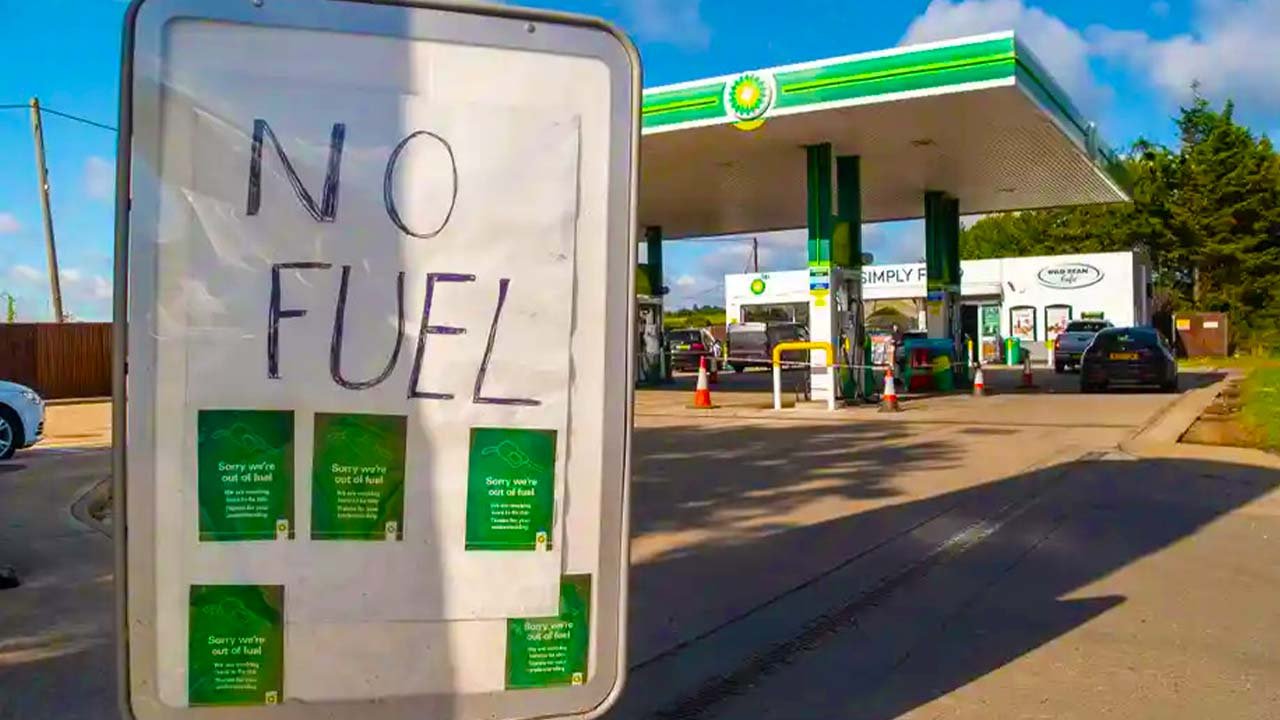
As the country suffers its greatest economic crisis in more than 70 years, Sri Lanka’s new Prime Minister (PM) declared that the country is headed to its last day of petrol stock.
PM Ranil Wickremesinghe said the country urgently needed $75 million in foreign currency to pay for crucial imports in a televised address. In order to pay government salaries, he claims the central bank will have to print money.
Sri Lankan Airlines, which is owned by the government, may be privatised, according to PM Wickremesinghe.
The pandemic, soaring energy prices, and populist tax cuts have all wreaked havoc on the island nation’s economy. Medicines, fuel, and other essentials were in low supply due to a chronic shortage of foreign cash and rising inflation.
1. The next couple of months will be the most difficult ones of our lives. I have no desire to hide the truth and to lie to the public. Although these facts are unpleasant and terrifying, this is the true situation. #SriLankaEconomicCrisis
Auto rickshaws, the city’s most popular mode of transportation, and other vehicles have been queuing at gas stations in Colombo.
The country has enough petrol for one day at the time. Mr Wickremesinghe, who was appointed Prime Minister last week, cautioned that the next few months will be the hardest of our lives.
He noted that shipments of petrol and diesel using an Indian credit line could provide fuel supplies in the coming days.
Mr Wickremesinghe stated that the nation’s central bank will have to print money to assist the government in meeting its salary bill and other obligations.
The PM stated that he is forced to allow the printing of money against his will in order to pay state employees and purchase vital products and services. However, the nation must keep in mind that printing money causes the local currency to depreciate.
As part of his efforts to stabilise the country’s finances, he advocated selling out Sri Lankan Airlines. In the fiscal year ended March 2021, the airline lost 45 billion rupees ($129.5 million; £105 million).
Cryptocurrencies continued their steady decline on May 16, surrendering the gains made over the weekend as regulators loomed.
European authorities have reinforced their warnings about the vulnerabilities of cryptocurrencies. Bitcoin slumped 5 per cent to roughly $29,700 in Asian trade on Monday, falling alongside markets amid concerns about burgeoning inflation and borrowing costs.
As the catastrophic collapse of TerraUSD, a so-called stablecoin, has roiled crypto markets already plunging amid widespread selling of risky assets, the world’s largest cryptocurrency has lost almost a fifth of its value so far this month.
Stablecoins are vulnerable to investor runs, according to the US Federal Reserve, because they are underpinned by commodities that could depreciate or become worthless in adverse economic conditions.
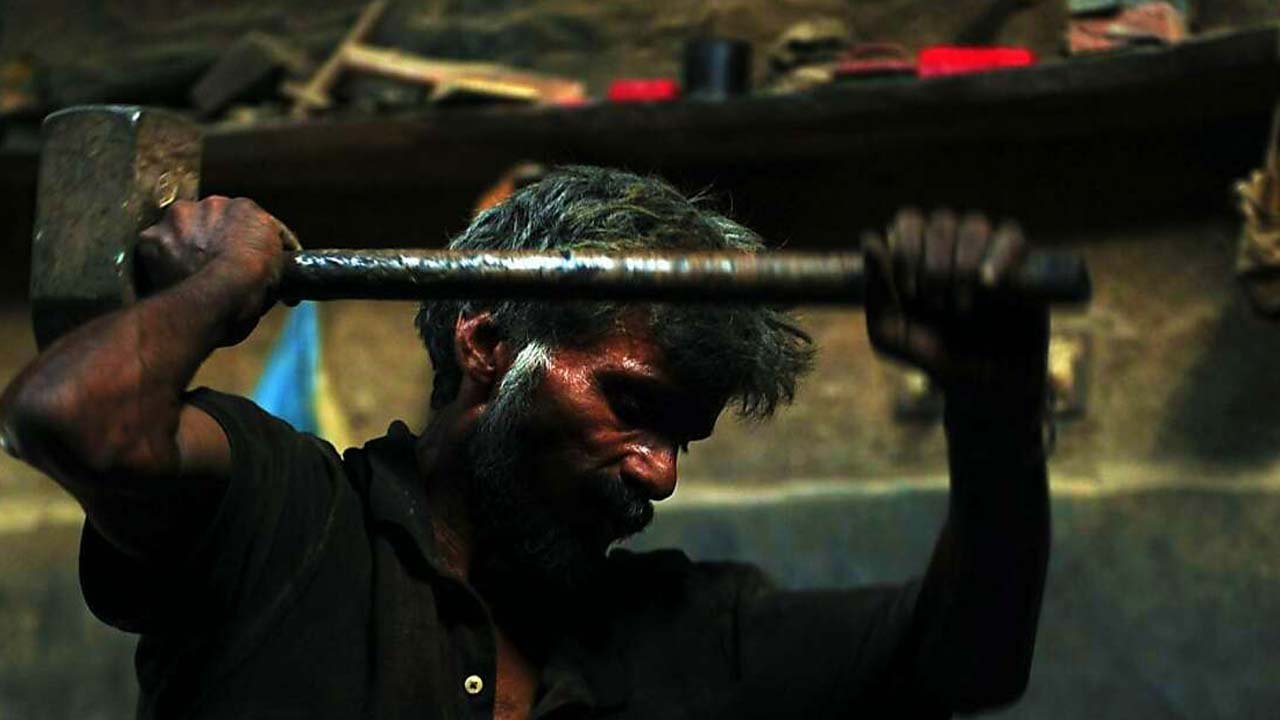
On May 15, the provincial president of the Muttahida Labour Federation (MLF) in Peshawar, Muhammad Iqbal stated that the current price hikes had made life difficult for poor workers but the government had remained silent.
He remarked that the provincial and federal governments should enhance monthly wages and the Employees’ Old-Age Benefit Institution pension in relation to the country’s current price hikes and inflation, speaking during a protest gathering staged in honour of May Day here at Shobra Chowk.
The leader was of the view that workers had played a critical part in the country’s progress, but that each subsequent government had crushed them under one excuse or another. He claimed that the government and investors had teamed up to close down industrial units in the province as part of a well-planned plot.
Like the majority of automakers in Pakistan, Hyundai Nishat has joined the price hike bandwagon by raising the price of its sedan offerings; the Elantra GLS, Sonata 2.0, and Sonata 2.5 variants, due to increased shipping costs and continuous depreciation of the local currency.
The premium category sedan, Hyundai Sonata 2.0 witnessed an increase of Rs140,000 in its earlier rate of Rs6,859,000. After the price hike, the car costs Rs6,999,000. Hyundai Sonata’s top trim will now be sold at Rs7,849,000 after a price increase of Rs100,000 in its previous price of Rs7,749,000.
Hyundai Elantra GLS after getting a price of Rs150,000 will be offered at Rs4,949,000, the exact model was previously sold at Rs4,799,000.
Almost every local or imported sedan is now out of reach of the masses as the auto industry has been massively affected by the ongoing devaluation of the Pakistani currency against the US dollar, increased freight charges along with the premium culture (own trend) in the country.
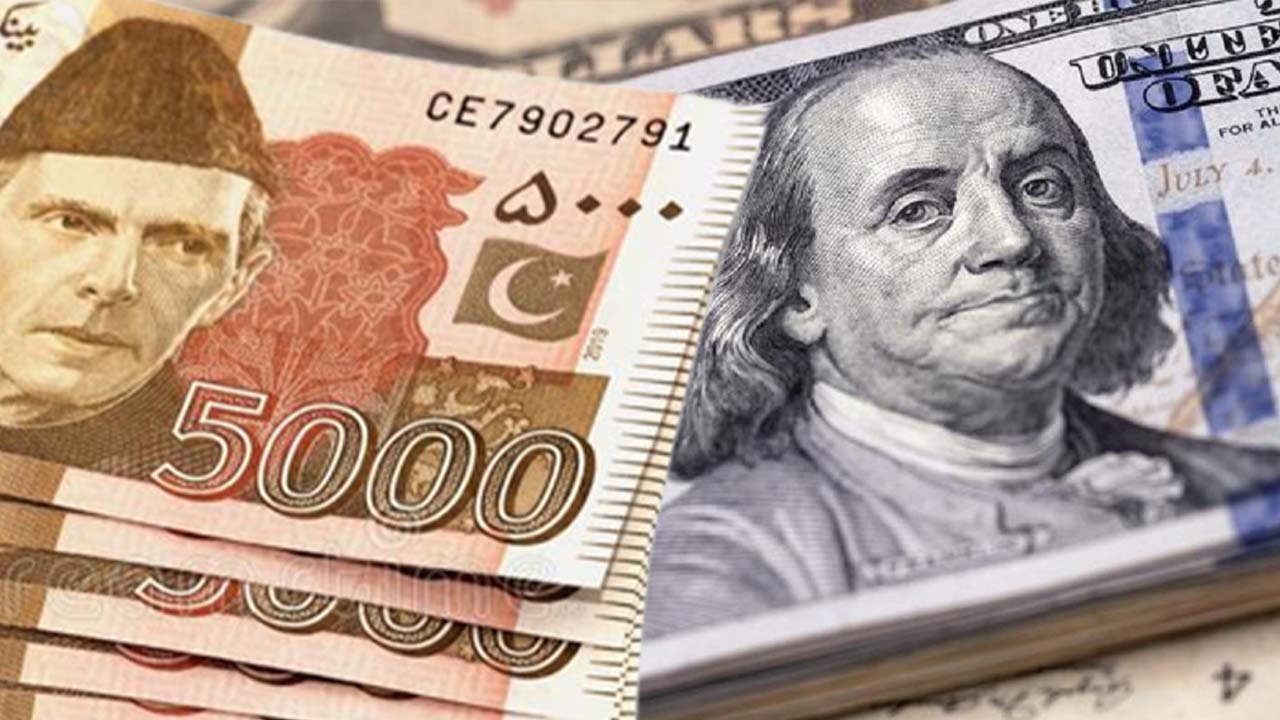
During the trading session on Monday, the Pakistani rupee (PKR) maintained its declining trend, touching Rs194, its worst rate versus the US dollar. At the interbank, the greenback strengthened by Rs1.47 during the trading hours.
The General Secretary of the Exchange Companies Association of Pakistan, Zafar Paracha said that the greenback climbed by Rs11.07 since the new government took government, while debt has increased by Rs1,400 billion due to the disparity.
Pakistani currency lost 3.1 per cent of its value against the US dollar in the previous week in the interbank market, with Pakistan’s currency hitting new record lows to end the week at Rs192.53, its worst closing in history.
The local currency fell in value across the board as concerns about the economy, declining foreign currency reserves, and worsening trade imbalance intensified. Concerns over the International Monetary Fund (IMF) programme have also caused fear and speculation in the market.
Pakistan Bureau of Statistics (PBS) reported that Pakistan’s textile group exports in July-April 2021-2022 reached a new high of $15.981 billion, up from $12.688 billion in the same period last year, a 25.96 per cent rise.
Exports of the textile group climbed by 7.01 per cent month over month to $1.739 billion in April 2022, compared to $1.625 billion in March 2022. Textile group exports increased by 30.50 per cent year over year in April 2022, compared to $1.332 billion in April 2021.
Cotton yarn exports increased by 22.11 per cent from July to April 2021-22 to $1.006 billion, compared to $823.952 million in the same period the previous year, and declined by 4.95 per cent in April 2022 to $97.655 million, compared to $102.736 million in the same month the previous year.
The country’s overall exports from July to April 2021-22 were $26.247 billion, up from $20.905 billion in the same time last year, a 25.55 per cent rise. Pakistan’s exports in the last month (April 2022) were $2.897 billion, up 4.32 per cent from $2.777 billion in March 2022 and up 30.61 per cent from $2.218 billion in April 2021.
Major export goods
Knitwear: Rs90,096 million
Readymade garments: Rs64,669 million
Bed wear: Rs51,398 million
Cotton cloth: Rs38,763 million
Towels: Rs19,974 million
Cotton yarn: Rs18,016 million
Made-up articles: Rs15,277 million (excluding towels and bedwear)
A programme financed by the United States (US) Embassy and introduced by the Indus Entrepreneurs (TIE) Islamabad, sent nine Pakistani women entrepreneurs to the US this week.
The Accelerator Programme for Women Entrepreneurs is a one-of-a-kind training programme and competition that offers women-owned Pakistani start-ups exposure to American business tools, coaching, and mentorship.
450 women-owned companies responded enthusiastically to the programme. The top 12 start-ups were chosen for a 15-week Founders Institute Acceleration Programme after a comprehensive round of mentoring sessions and pitching contests.
Nine women entrepreneurs were chosen from among the 12 start-ups for an in-person acceleration exchange. Women entrepreneurs will have the opportunity to attend important conferences and visit the offices of big corporations like as Microsoft, Amazon, Facebook, Twitter, and PayPal during their tour.
They’ll also stop by 9 Mile Labs, Kiwi Tech, Angel Pad, and Alchemist, all of which are situated in the United States. Throughout the eight-week programme, the participants will have many networking opportunities and will pitch to selected US-based investors on both the east and west coasts.
Minister for Information Technology and Telecommunication Syed Amin-Ul-Haque said that this initiative offers Pakistani women entrepreneurs connectivity to global startups and foreign investors, speaking at a ceremony organised by the TIE Islamabad chapter before the departure of the Pakistani women entrepreneurs to the United States.
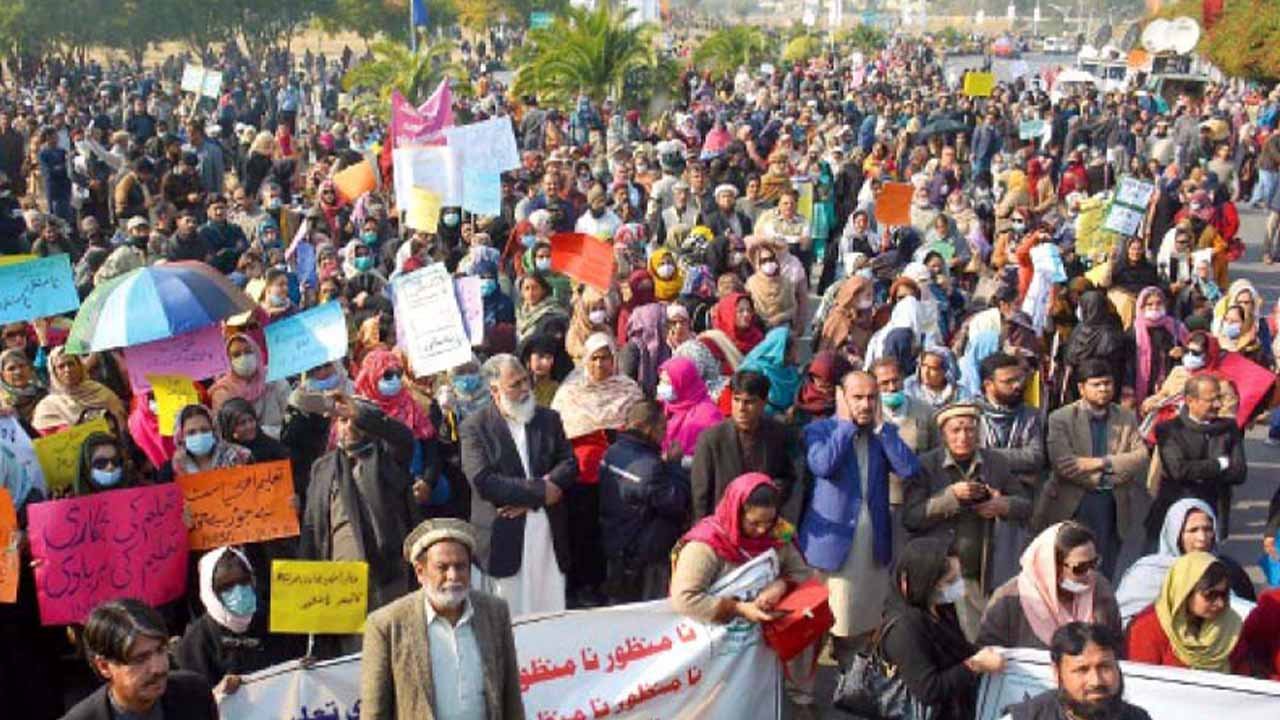
Federal government employees have warned to hold another sit-in in the federal capital if their demands for salary increments and promotions are not met by May 23.
They voiced the statement during a rally in front of Parliament House organised by the All-Government Employees Grand Alliance (AGEGA), where a significant number of teachers showed up, responding to the Federal Government College Teachers Association’s call (FGCTA).
Dr Nazir Ahmed Bhutta, the FGCTA’s General Secretary, urged the government to fulfill its promise made last year in February.
As per the agreement, all perks or allowances should be combined with basic salaries, employees should be given timely promotion and raise, including pay and pension adjustments should be implemented to minimise wage discrepancy.
Professor Tahir Bhatti, president of the FGCTA (local unit of H-9 College), demanded the return of the Saturday weekly off for government employees who, he claimed, couldn’t afford to work six days a week due to a large increase in fuel prices in recent months.
To preserve electricity, he believes the government should proclaim Saturday as a holiday.
Professor Farhan Azam, senior vice-president of the FGCTA, noted that the remuneration of employees in different departments differed significantly, causing resentment among lesser-paid staff of the same grade. He proposed that professionals of the same status should have the same pay and privileges.
Rehman Bajwa, AGEGA’s chief coordinator, cautioned that if the employees’ demands were not met by May 23, they would take to the streets after speaking with their management.
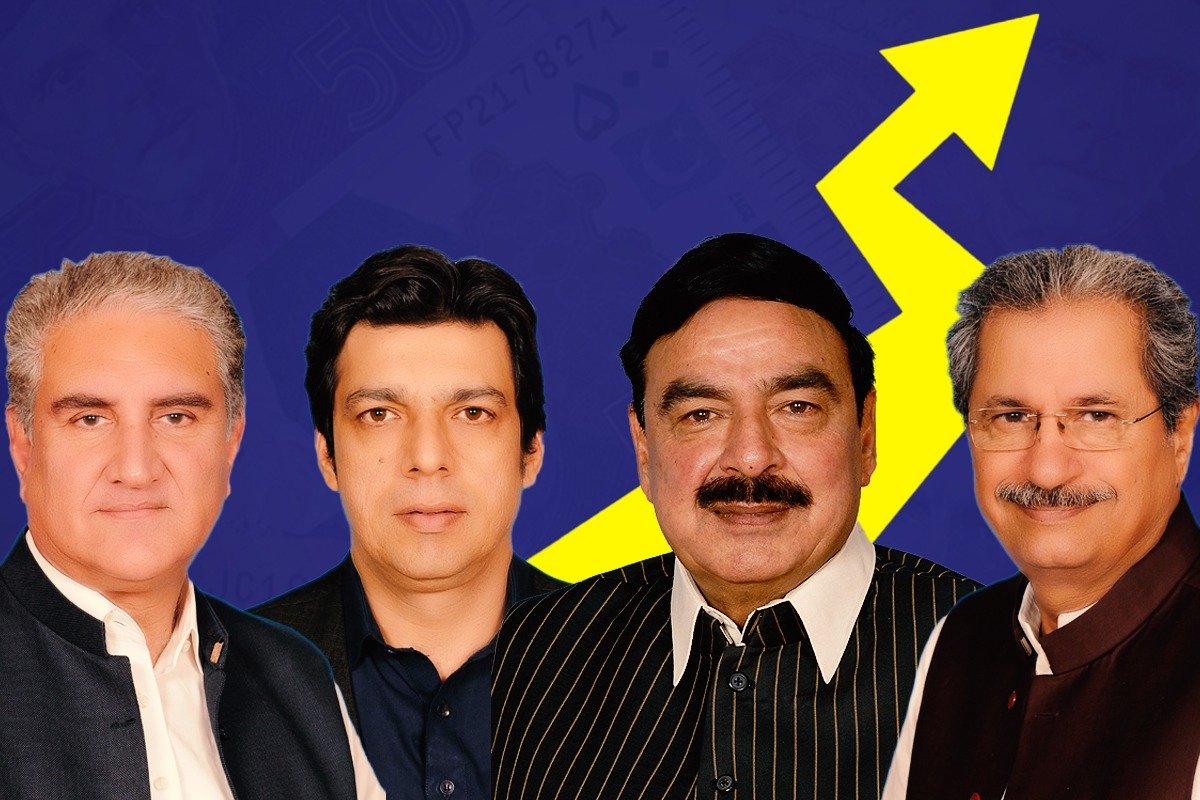
Official documents revealed that several members of Pakistan Tehreek-e-federal Insaf’s cabinet enjoyed gains in their fortunes during their term in parliament and as ministers, despite being elected on pledges of fighting corruption.
According toSAMAA TV, Shah Mehmood Qureshi and Sheikh Rasheed Ahmad, Omar Ayub Khan, Azam Khan Swati, Khusro Bakhtiar, Faisal Vawda, Shafqat Mehmood, Fehmida Mirza, Zubaida Jalal, Mahboob Sultan, and Tariq Cheema are among the listed former ministers.
Since select ministers received notices to explain their excessive wealth, the majority blamed weak wealth and asset declaration regulations, which did not contribute to increases in the valuation of assets overtime or the amalgamation of entities.
An inquiry into assets spontaneously declared before the Election Commission of Pakistan (ECP) and Pakistan’s tax authorities — primarily the Federal Board of Revenue (FBR) — by cabinet members who worked under former Prime Minister Imran Khan disclosed that plenty of of them saw a tremendous upsurge in their riches, with growth proportions primarily in the triple digits.
As per the official record, the ECP sent notices to at least six former ministers while they were still in government in 2019 and 2020, requesting them to clarify their wealth-related issues.
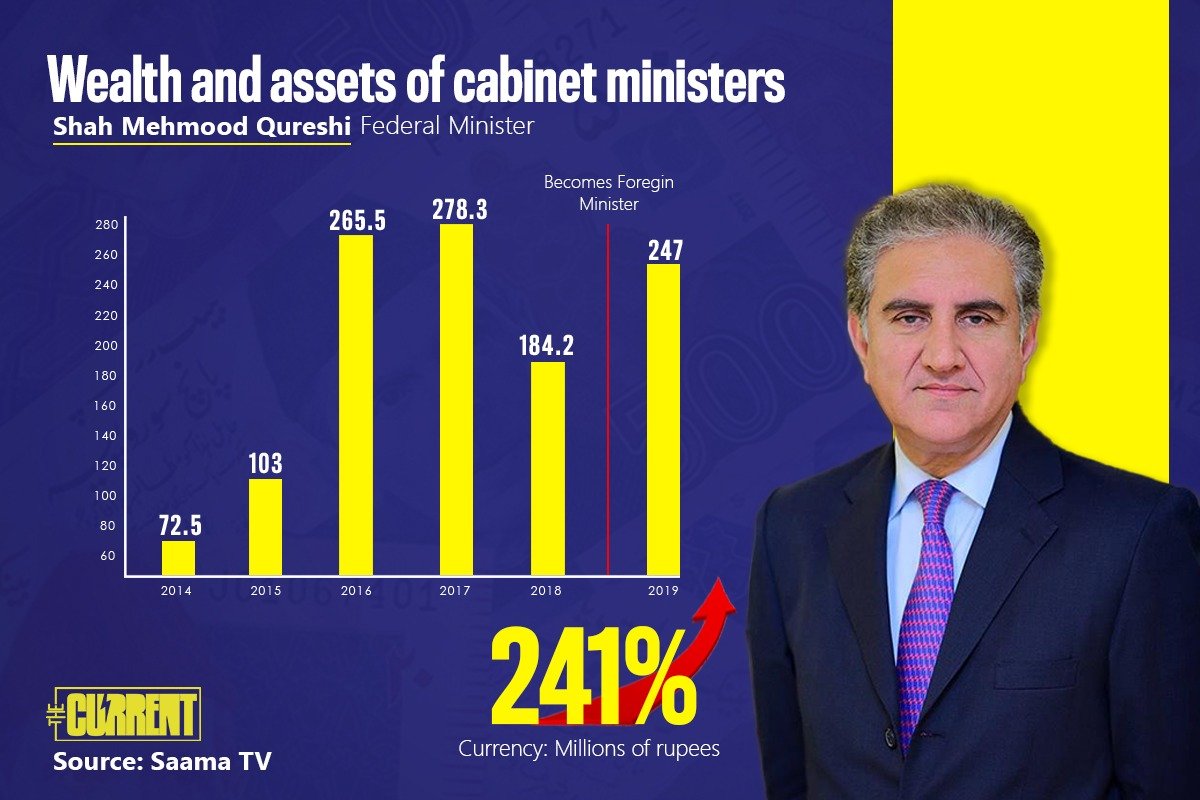
From 2014 to 2019, former foreign minister Shah Mahmood Qureshi, who has been a staple of the parliament for more than a decade and served twice in the federal cabinet in two different governments, had a 241 per cent growth in his wealth.
He and his wife held assets worth only Rs72.5 million in 2014, according to asset declarations he submitted to the ECP and the FBR. In the following three years, his assets nearly quadrupled, reaching Rs278.3 million, a 283.86 per cent increase over his wealth in 2014. Qureshi’s fortune dropped dramatically to Rs184.2 million in 2018, the year he returned to the Treasury benches, albeit with a new party, the PTI. However, while in power, it soon increased to Rs247.1 million in 2019, a rise of 240.82 per cent since 2014.
When questioned, Qureshi recounted how the worth of his assets had evolved over the years.
“The reason for the increase in assets was that during 2015-16, my wife received her share from the sale of property situated in Lahore, which had been gifted by her mother, and shares from sale proceeds of inherited property worth Rs169.6 million and Rs22.6 million,” he claimed. In October 2017, duplicates of sale deeds were handed to the ECP, according to the former minister.
“The ECP raised this observation too,” he said regarding the increase in his wealth, adding, “I and my dependent family members are all filers with the FBR”.
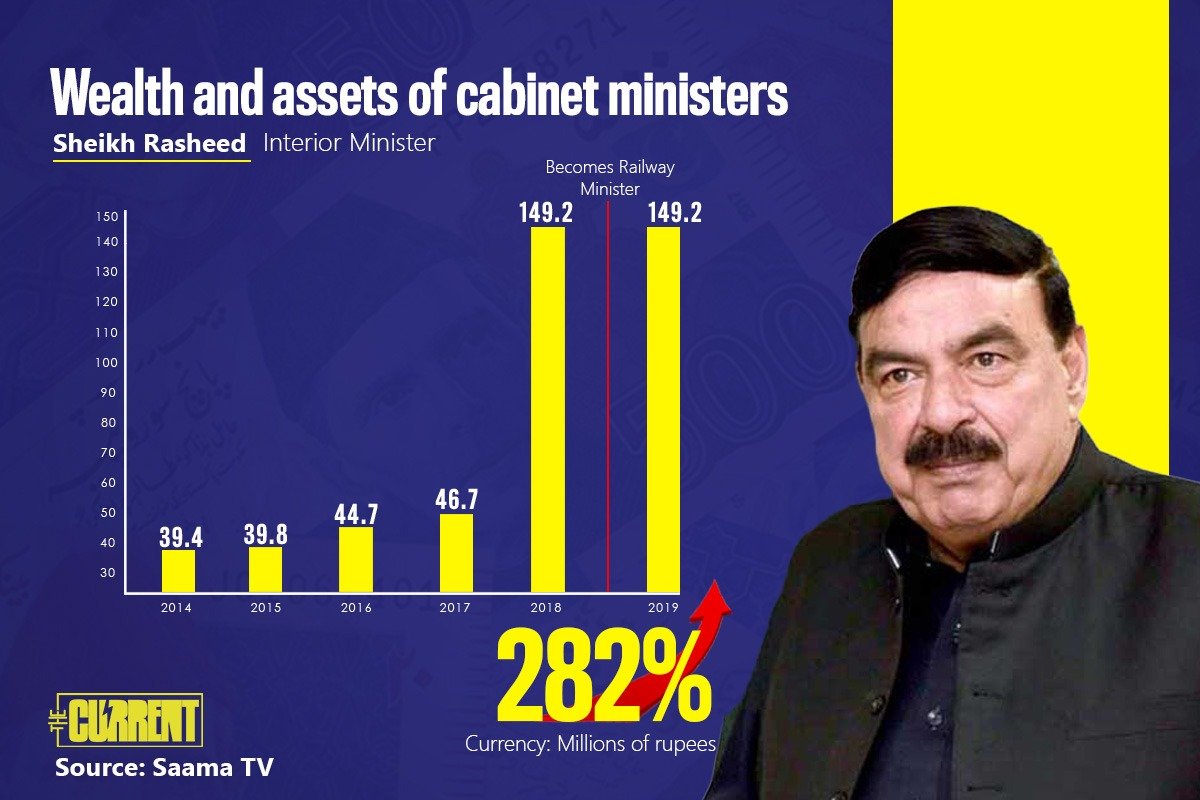
Sheikh Rashid, the former interior minister, watched his fortune increase by nearly 278.68 per cent between 2014 and 2019.
The financial disclosures for 2014 revealed that he only had Rs39.4 million in assets. Earnings climbed by Rs0.4 million to Rs39.8 million. His holdings steadily expanded over the next two years, reaching Rs44.7 million in 2016 and Rs46.7 million in 2017.
Conversely, in 2018, the time he was elected to power, his assets boosted by Rs100 million to Rs149.2 million. In 2019, there was no movement in reported assets. After inquired why his assets had suddenly changed, Rashid said that the discrepancy was due to an advance payment he had obtained for reselling a portion of land in 2018.
“I received Rs100 million as advance after making a deal of land to be sold last year, [2021],” he said, adding, “There is no such increase in my assets”. The former interior minister stated that the rise in his declarations submitted with the FBR and the ECP had been properly disclosed.
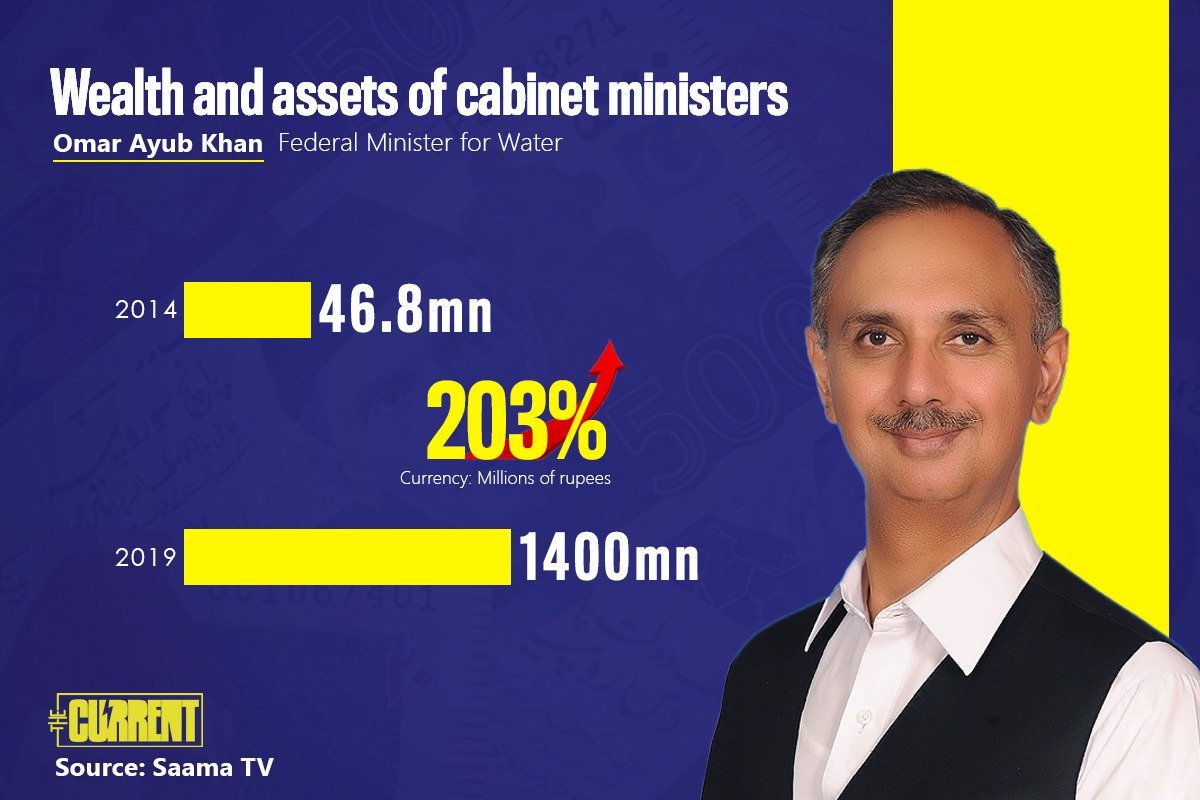
Between 2014 and 2019, the fortune of former federal minister of water Omar Ayub and his wife jumped by 203 per cent.
As per Ayub’s filings to the ECP and FBR in 2014, he and his wife held assets worth Rs461.8 million. This comprised Rs132 million in assets held by his wife and Rs329 million in assets owned by the minister. This value had risen to Rs1.4 billion by 2019. Surprisingly, while his wife’s holdings increased slightly to Rs201 million, Ayub’s assets increased to Rs1.2 billion. Each has debts worth only Rs26.3 million, according to the disclosures.
As a result, the ECP expressed concerns about Ayub’s and his family’s unexpected surge in wealth.
“It was explained to the ECP in 2019 that it [increase in wealth] is because of group formation having no cash involvement,” Ayub said, confirming that the top poll body had issued him a notice on this subject. Ayub claimed that he owned shares in Nova Synpac Ltd. and NovaGene Pharmaceuticals Ltd., which increased in value by approximately Rs1.071 billion.
“My assets have decreased (excluding this group formation) since I took an oath as a minister because I resigned from my group,” he claimed, adding that the increase was due to the consolidation of all of his businesses under the group.
“This cannot be reflected in a declaration, which is always a reflection of statements submitted to the FBR and there cannot be any difference [between them] otherwise it would have been challenged there,” he explained.
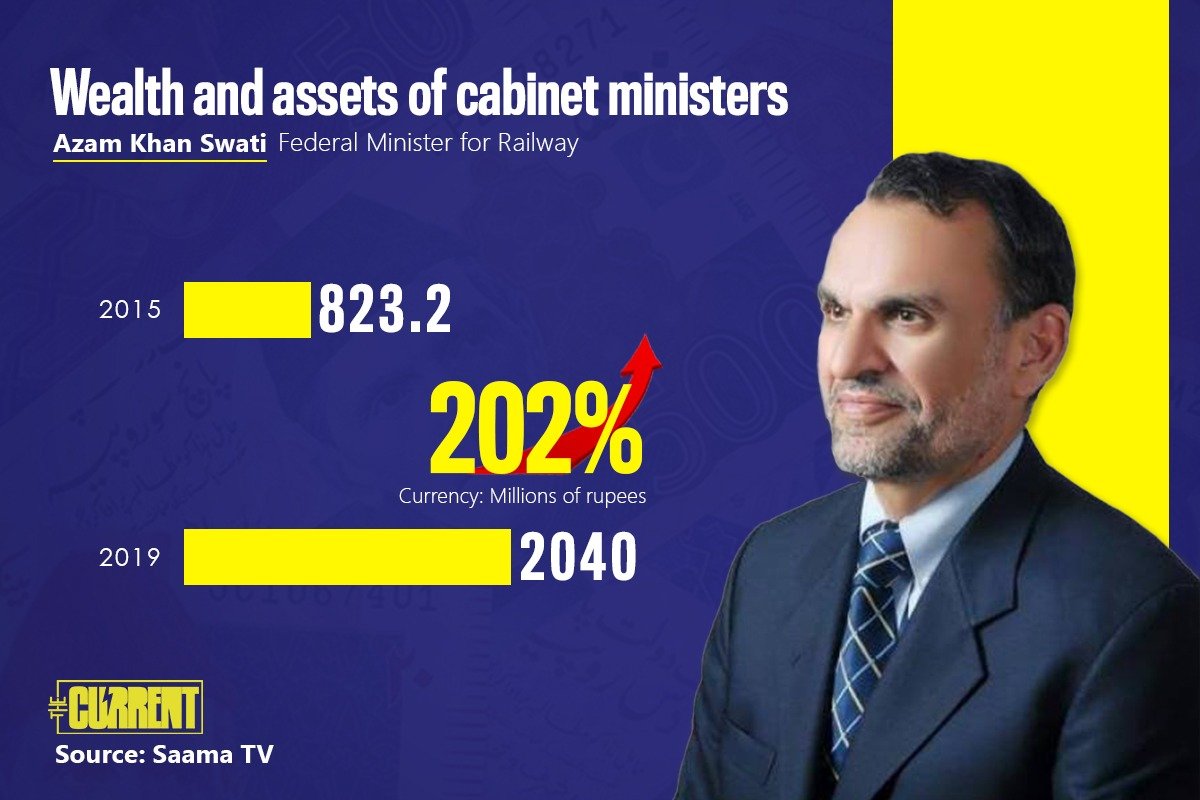
Azam Swati, the former federal railways minister, saw his fortune grow by 202 per cent from Rs823.2 million in 2015 to about Rs2.04 billion in 2019. He reported that his liabilities increased from Rs417 million in 2015 to Rs811 million in 2019.
“[Your] figures are wrong due to incomplete information being furnished before ECP by members and cabinet members owing to faulty legal requirements mentioned in ECP Act 2017,” he explained.
He further said that his situation was slightly unusual. “In Pakistan, I have no income and no business.” I am confident that our FBR wealth statement [filed] will be compared to ECP in 2019 [asset declarations],” he remarked, worried that the statistics may contain a few errors.
“ECP has no efficiency and capability to audit assets and liabilities,” he disclosed, adding, “We were making mistakes filing combined [wife and husband together]”.
“Now we have corrected the mistake and filed separately because the wife is not dependent,” Swati told SAMAA TV.
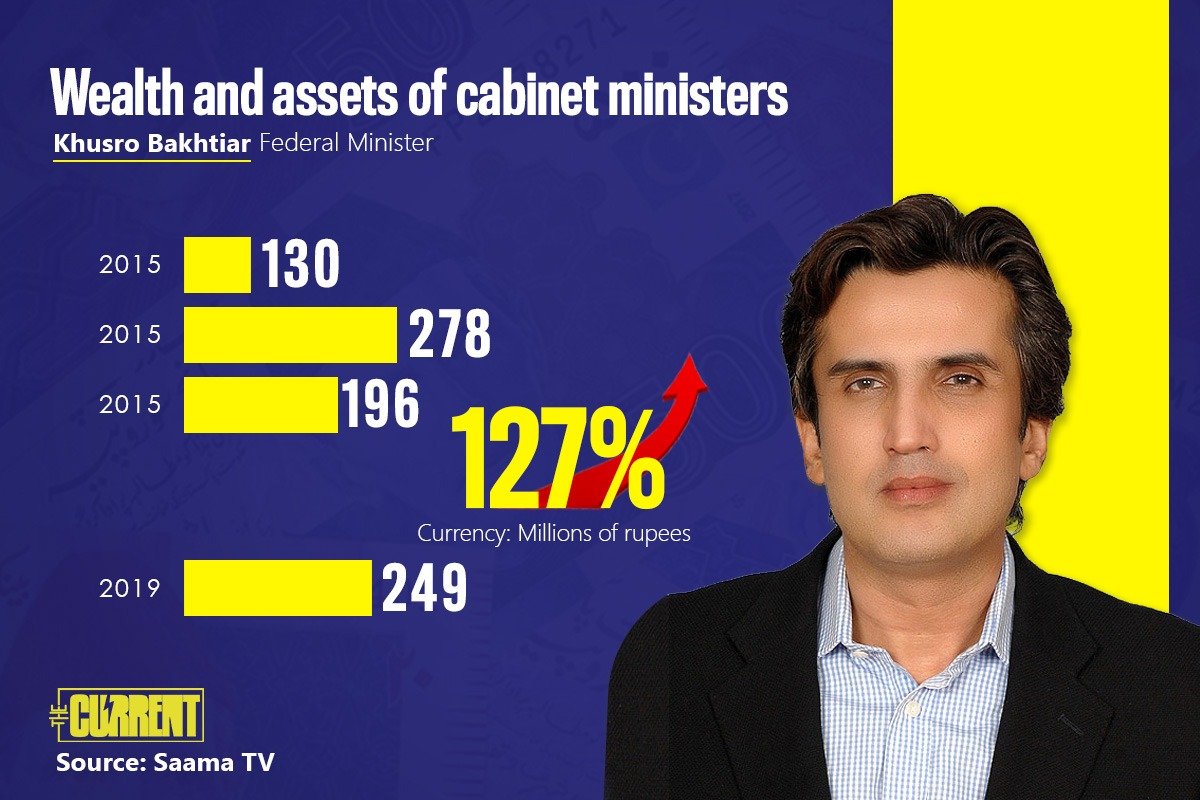
Khusro Bakhtiar, the former federal commerce minister, saw his fortune rise by 127.8% from Rs109.3 million in 2013 to Rs249 million in 2019. In 2014, he had assets of Rs130 million, which more than doubled to Rs278 million in 2015, shrank to just Rs196 million in 2016, and then surged again in the next three years.
“Increase in assets were mainly comprised of [various] sources during the year 2014 to 2019,” he told SAMAA TV, detailing that these sources included savings from agricultural income, proceeds from the sale of land worth Rs40 million, other sources which contributed Rs20 million.
Bakhtiar also claimed that he actually paid Rs27.5 million in agricultural taxes from 2017 to 2020, and that he owed Rs60 million in 2016.
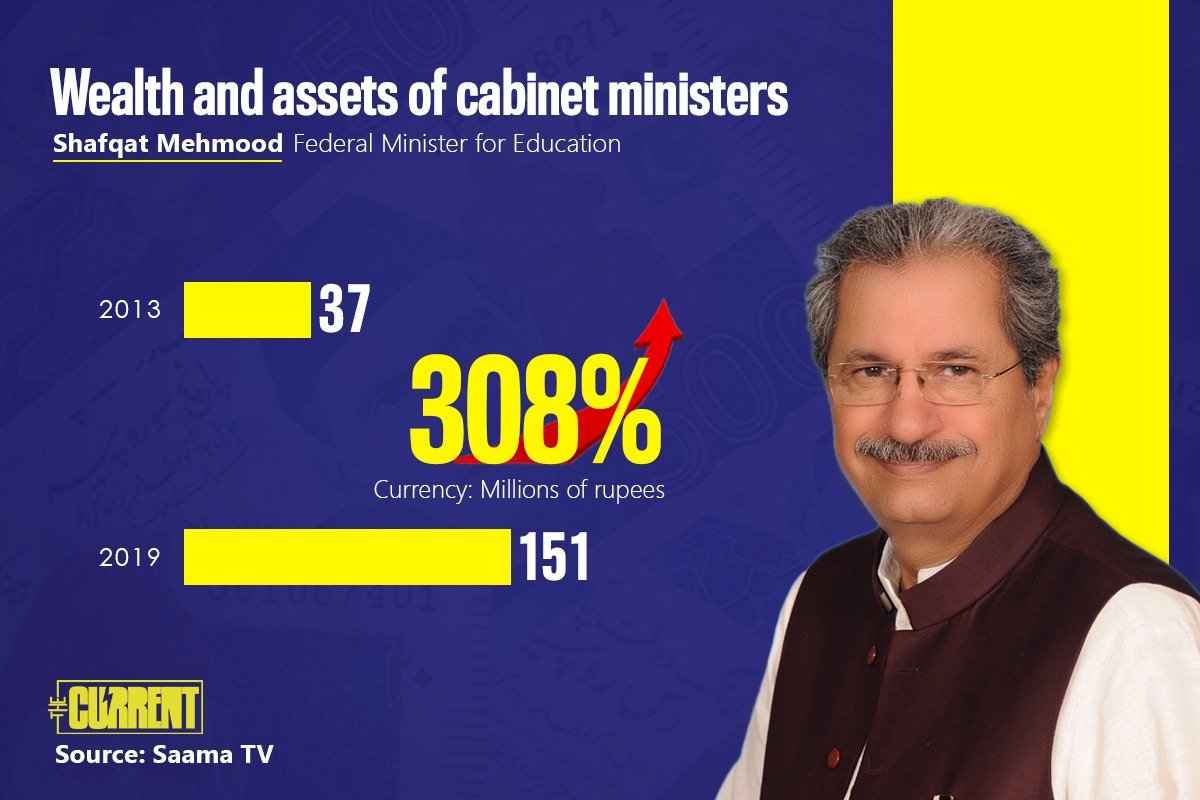
Former federal minister for education Shafqat Mahmood and his family had a 308 per cent growth in asset valuation between 2013 and 2019, making them one of the most successful federal ministers in terms of percentage increases. According to Mehmood’s filings, his and his family’s assets were valued at just Rs37 million in 2013, but had grown to Rs151 million by 2019.
“My assets have not changed since 2013 onwards,” Mehmood asserted, explaining “The change that you see is the cost re-evaluation from purchase price to market price”. The ex-minister further said that he has 360 kanals of hereditary land, a few more plots, and automobiles that he never assessed.
“There will, of course, be some variation regarding bank accounts. There will also be a slight difference in detail offered to FBR and ECP with regards to bank accounts,” he maintained. He went on to say that in his previous disclosure, he had combined the amounts in all of his bank accounts to present a single total.
“My wife is a distinct taxpayer because she works, but I have included her assets as well”, he explained.
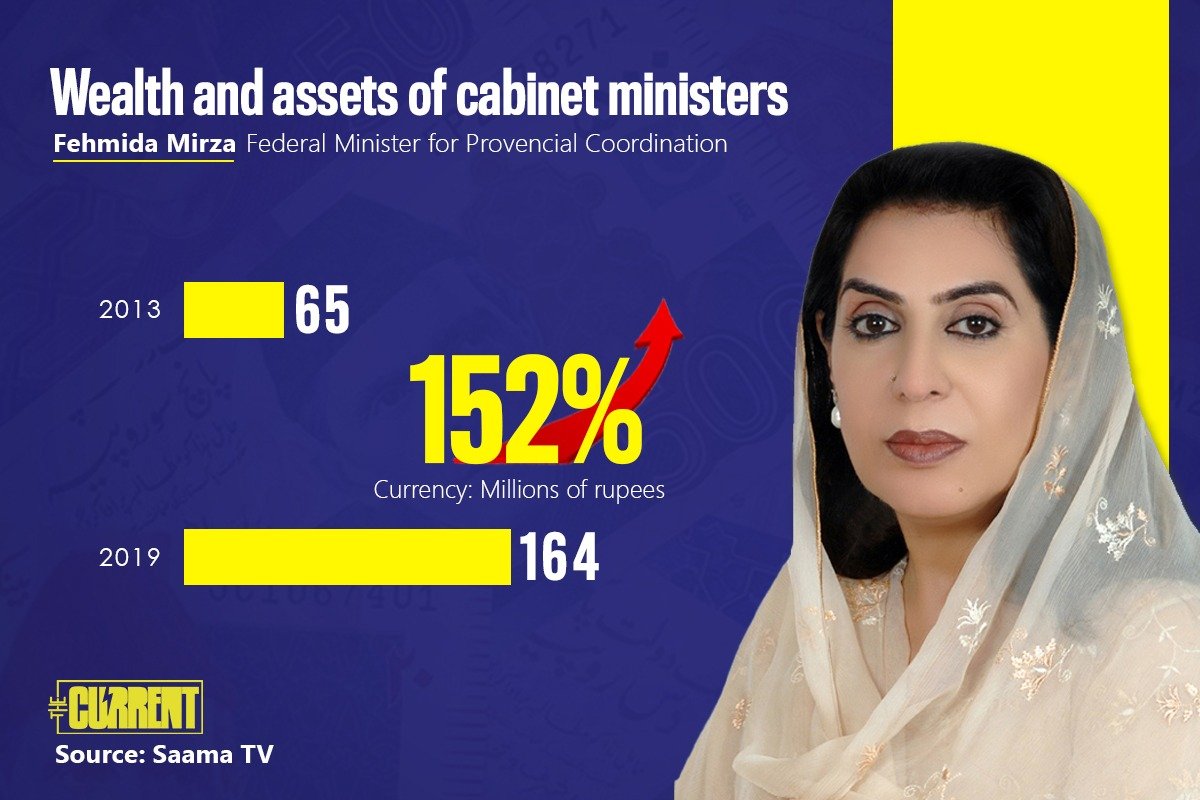
Fehmida Mirza, the former federal minister for interprovincial coordination, had a similar scenario, with her net worth rising from Rs65 million in 2013 to Rs164 million in 2019.
“I did not see any rise in my assets and wealth at all,” she told SAMAA TV. She did, although, reveal that she had sold some property in Pakistan in order to purchase a home in the United Kingdom.
“This new increase in my assets has already been declared with the FBR and the ECP,” she stated.
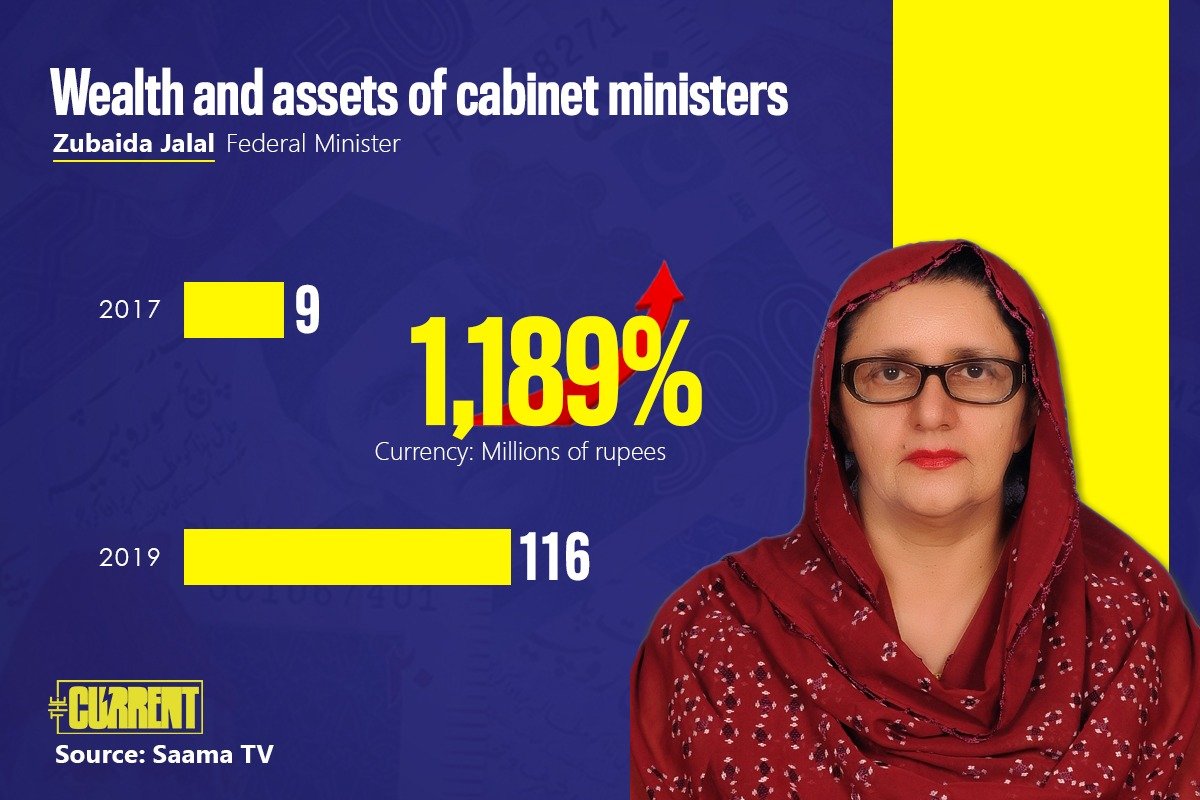
Contrary to the PTI’s cabinet’s millionaire members, one of the “weakest” members of the federal cabinet, former federal minister Zubaida Jalal and her husband, had a 1,189 per cent growth in their fortune in a short period of time. Their riches increased from Rs9 million to Rs116 million in 2019.
Jalal, on the other hand, described the quick spike in wealth as the outcome of changes in declaration requirements.
“There is no big difference in my assets’ declaration” she asserted while speaking to SAMAA TV. The value of immovable assets was not mentioned in data provided in past elections, she said, noting that the ECP declaration requirements changed over time.
“[We are] required to mention values of assets in the asset declaration for this time,” she stated. She explained that the variations in asset values were attributable to market forces working on enterprises.
“Ups and downs will keep happening [in mining operations and business],” she said, as she reminded that her husband owns the National Coal Mining Company since the 1960s.
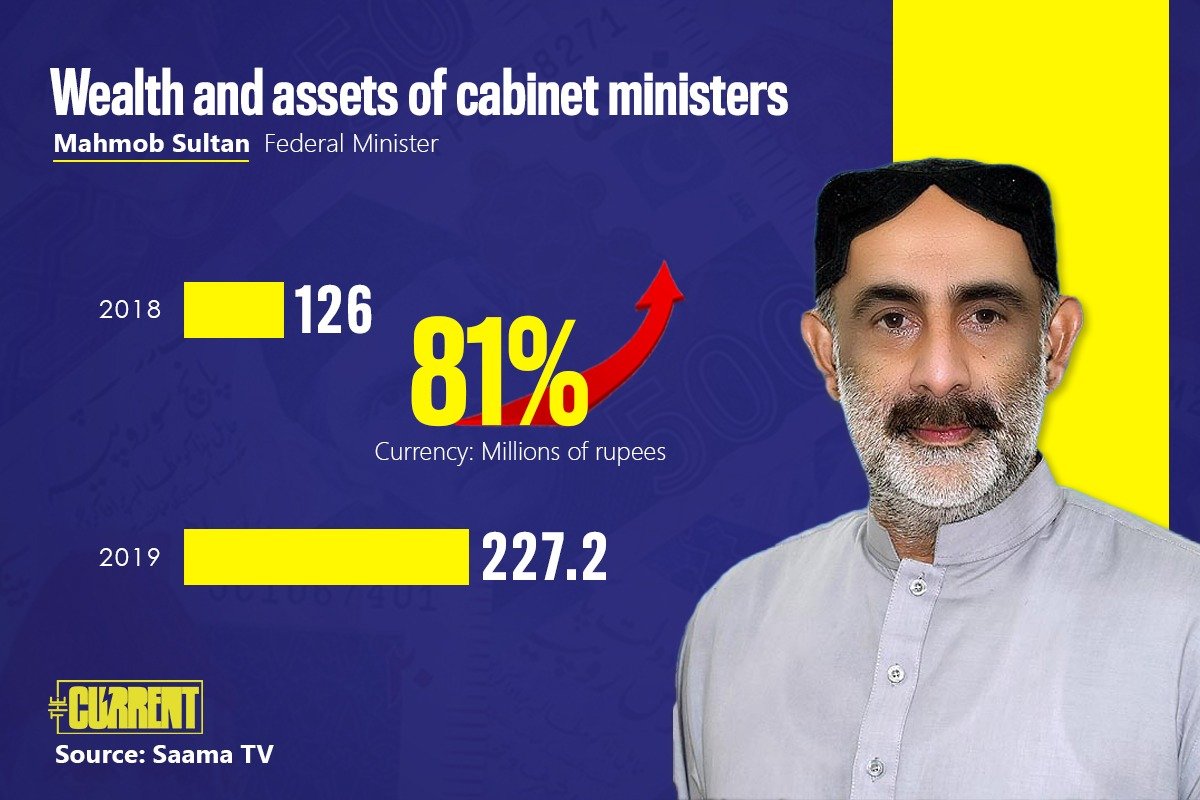
Former state minister Mahboob Sultan was one among the ministers who saw only double-digit asset growth. Only 81 per cent of his assets increased from Rs126 million in 2018 to Rs227.2 million in 2019. It’s worth noting, however, that his growth of nearly Rs100 million occurred while he was in the cabinet of ministers.
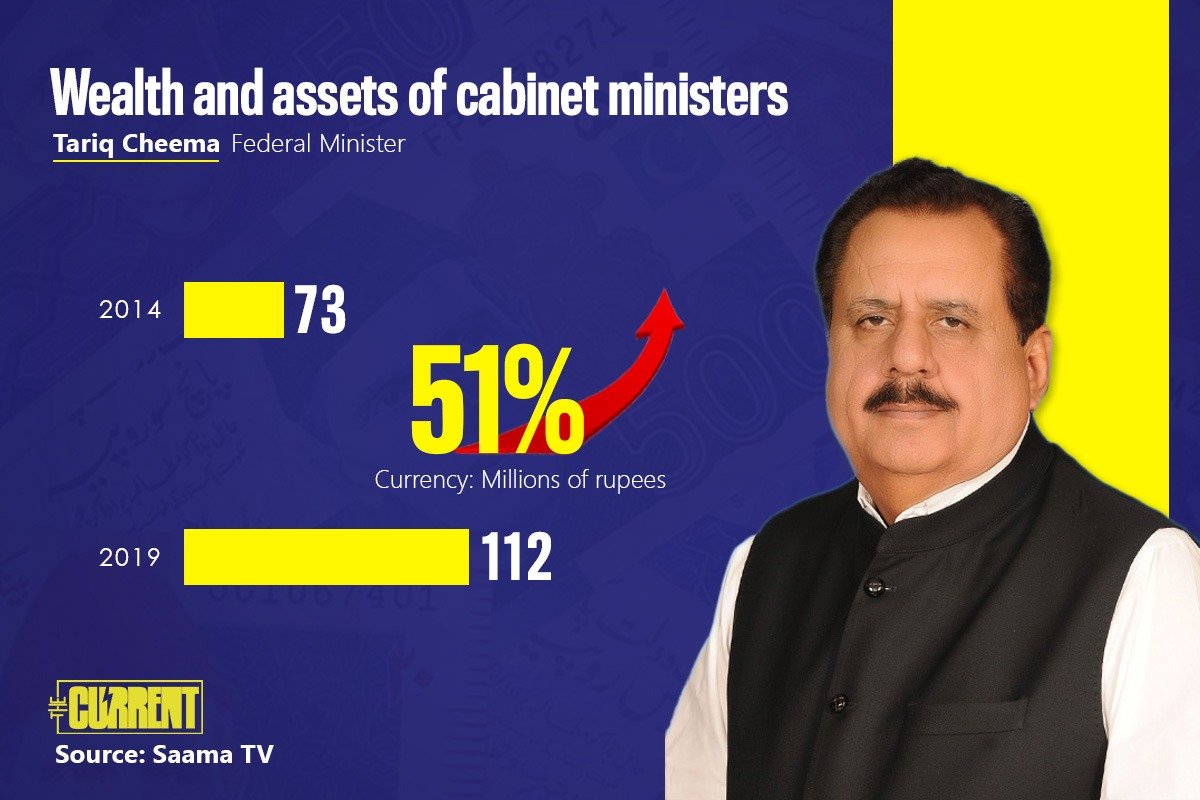
Tariq Cheema, the former federal minister for housing and infrastructure, showed the smallest growth in his wealth, going from Rs73 million in 2014 to Rs112 million in 2019. He did not, however, assess the value of his inherited assets and report them to the electoral or tax authorities.
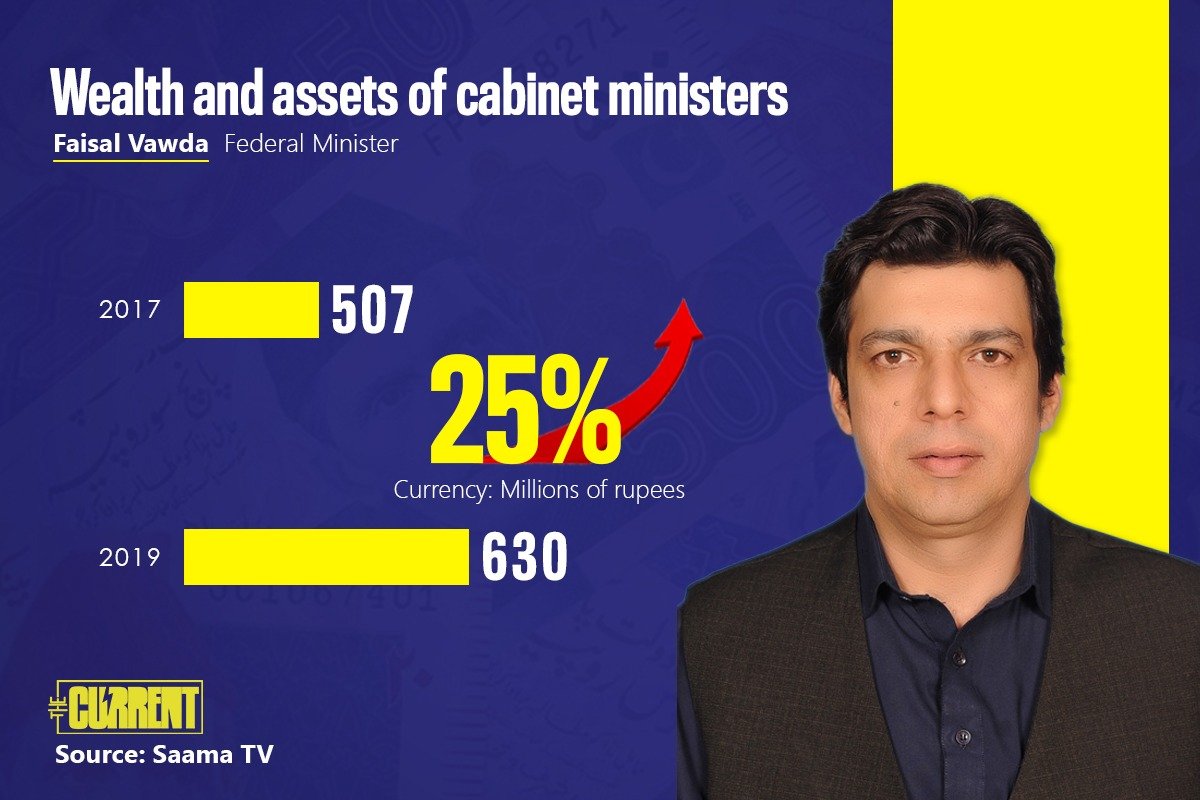
Former federal minister Faisal Vawda and his family witnessed their fortune increase by 25 per cent from Rs507 million in 2017 to Rs630 million in 2019. He was among the most controversial cabinet ministers who were eventually dismissed by the ECP.
Despite multiple requests from SAMAA TV, neither Sultan, Cheema, Vawda, nor an ECP official have commented on inquiries regarding their wealth.
Following the collapse of TerraUSD, a so-called stablecoin, resonated across markets, cryptocurrencies suffered significant losses on Friday, with bitcoin trapped below $30,000 and on track for a record losing streak.
Concerns about high inflation and rising interest rates have prompted widespread dumping of hazardous investments, including crypto assets.
However, sentiment is particularly shaky, as tokens that were intended to be tethered to the dollar have failed.
Bitcoin, the most valuable cryptocurrency by market capitalization, attempted a recovery early in the Asian session, rising 2 per cent to $29,500, a recovery from a 16-month low of roughly $25,400 on Thursday.
It is still trading well below week-ago levels of around $40,000 and is on track for a record sixth consecutive weekly loss unless weekend activity improves.
“I don’t believe the worst is gone,” Scottie Siu, investment director at Axion Global Asset Management, a Hong Kong-based firm that manages a crypto index fund, said. “I believe there will be further decline in the days ahead”.
“I believe what we need to see is a significant drop in open interest, so that speculators are forced out, and then the market will stabilise”.
This week, TerraUSD (USDT) lost its 1:1 peg to the dollar, as its method for maintaining stability, which relied on another virtual token, failed under selling pressure.