Category: Business

The most important business news, explained in a young, easy to understand way. News that affects young career professionals.

  • JPMorgan warns of temporary PKR depreciation despite strong economic conditions

    JPMorgan warns of temporary PKR depreciation despite strong economic conditions

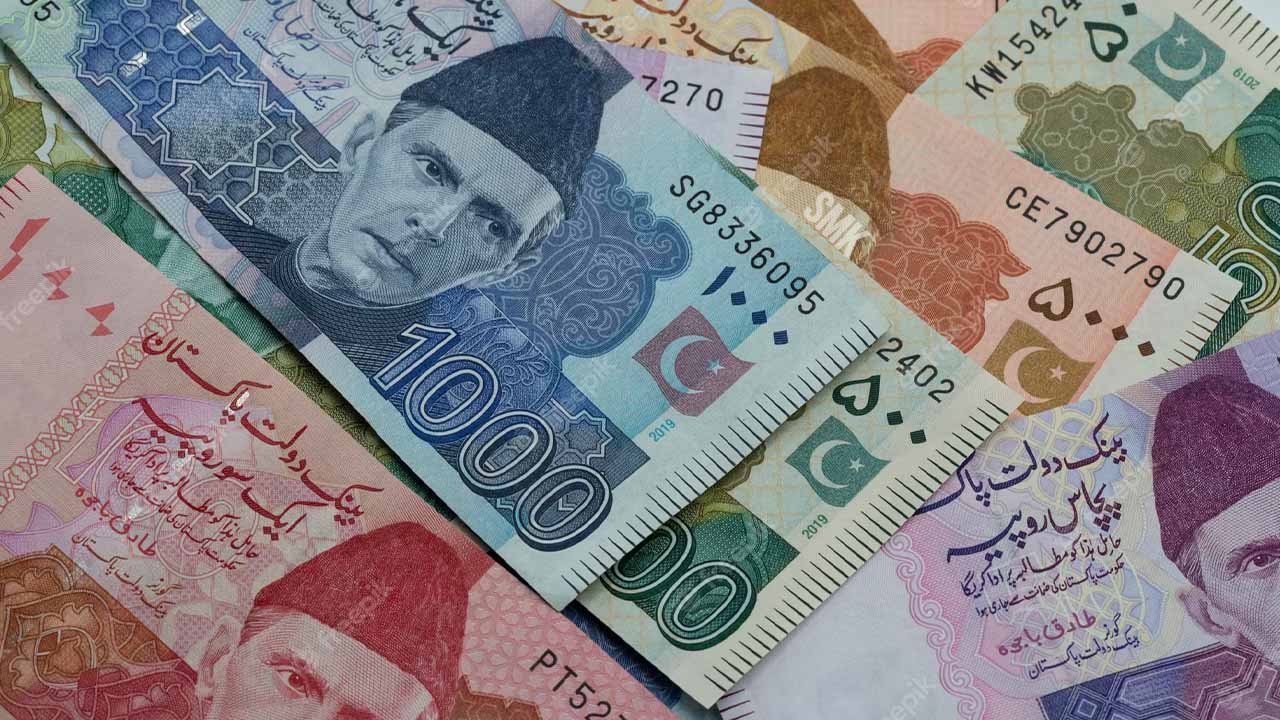
    Despite a robust Balance of Payments (BoP) position, Pakistan may experience a depreciation of the Pakistani rupee (PKR) in the near term due to the finalisation of outstanding dividend payments, according to a recent report from JPMorgan analysts.

    The report suggests that while the PKR is not perceived as overly expensive, analysts are anticipating more favourable foreign exchange (FX) entry points.

    They also noted that although the International Monetary Fund (IMF) has declared the removal of all FX restrictions, there could still be informal barriers affecting the repatriation of dividends.

    Should these informal restrictions be fully addressed at the commencement of the Extended Fund Facility (EFF), it might lead to a moderate increase in the USD/PKR exchange rate over the coming months. However, analysts expect any such increase to be short-lived due to positive BoP conditions.

    The current environment is seen as a promising opportunity for bullish trades in T-bills and bonds, especially with the anticipated large-scale interest rate cuts by the State Bank of Pakistan (SBP).

    Since the beginning of the year, the PKR’s Nominal Effective Exchange Rate (NEER) has strengthened, reflecting improvements in the BoP, such as higher export revenues, stable remittance flows, and a gradual return of financial inflows.

    Although some concerns persist over foreign currency restrictions that might have artificially dampened FX volatility, the IMF’s latest report from May confirms the removal of remaining FX controls as of late January. This has resulted in a stable PKR with no significant premium in the informal or parallel market.

    Moreover, the import bill has increased only gradually, indicating limited pent-up demand. While the Real Effective Exchange Rate (REER) shows signs of potential overvaluation, it remains far from historical extremes and is expected to adjust downwards as inflation moderates.

    Overall, JPMorgan believes that any negative FX adjustments are likely to be minor, provided there is no significant worsening of the current account balance.
  • ADB approves $400 million loan to rebuild Sindh’s flood-damaged homes, infrastructure

    ADB approves $400 million loan to rebuild Sindh’s flood-damaged homes, infrastructure

    The Asian Development Bank (ADB) has granted Pakistan a $400 million concessional loan to aid in the reconstruction of homes and infrastructure in Sindh province, heavily impacted by the 2022 floods.

    The funds will be used for the Sindh Emergency Housing Reconstruction Project, which aims to repair flood-damaged houses and community facilities while boosting livelihood recovery and enhancing resilience to climate change.

    The project is part of ADB’s broader response to Pakistan’s flood crisis and contributes to the bank’s pledge of $1.5 billion in aid from 2023 to 2025. Yevgeniy Zhukov, ADB’s Director General for Central and West Asia, emphasised that the initiative will help rebuild homes and restore essential services in Sindh, the province most affected by the floods. The disaster impacted 33 million people and caused extensive damage nationwide.

    Sindh sustained about 83% of the total housing damage from the floods, with roughly 2.1 million homes either destroyed or severely damaged. Two years later, many survivors are still living in inadequate temporary shelters lacking basic services like water, sanitation, and electricity.

    The ADB’s project will support the reconstruction of 250,000 homes with designs that are resilient to multiple hazards and environmentally friendly. Additionally, it will fund the construction of community infrastructure such as drinking water and sanitation facilities, covered drainage, and renewable energy solutions for 100,000 households in approximately 1,000 flood-affected villages.

    The project also includes conditional cash grants for livestock, agriculture, small businesses, and e-commerce. A $500,000 technical assistance grant will be provided to support the government’s capabilities in procurement, compliance, and management.

    Srinivas Sampath, ADB’s Director for Water and Urban Development, noted that the project not only aims to rebuild Pakistan effectively but also to promote community-driven climate resilience and disaster risk management strategies, better preparing the country for future hazards.

  • SBP expected to lower interest rates on Monday as inflation stabilises

    SBP expected to lower interest rates on Monday as inflation stabilises

    The State Bank of Pakistan (SBP) is anticipated to reduce its key interest rate once more during its upcoming policy meeting on Monday.

    This will be the first meeting following the recent staff-level agreement with the International Monetary Fund (IMF) and the announcement of a new state budget, according to analysts.

    Earlier this month, Pakistan and the IMF reached an agreement on a 37-month loan programme. The deal has introduced stringent measures, including increased taxes on agricultural incomes and higher electricity prices, which have sparked concerns among lower and middle-income citizens already struggling with inflation and the potential for increased taxes.

    In June, the SBP lowered its key interest rate by 150 basis points, reducing it from a historic high of 22 per cent. This marked the central bank’s first rate cut in nearly four years, aimed at stimulating economic growth amid a significant decrease in retail inflation. Inflation had dropped to 12.6 per cent in June, down from 38 per cent in May 2023.

    Out of 14 analysts surveyed, only one predicted that the SBP would maintain the current rate of 20.5 per cent. The majority forecast a rate cut, with seven analysts expecting a reduction of 100 basis points, five anticipating a 150 basis points cut, and one predicting a 200 basis points decrease.

    Mustafa Pasha, Chief Investment Officer at Lakson Investments, noted that the anticipated inflationary surge following the budget has not occurred. The central bank had previously cautioned about potential inflationary pressures from the budget, citing insufficient progress on structural reforms to expand the tax base.

    To compensate, the government set a demanding tax revenue target of Rs13 trillion ($47 billion) for the current fiscal year, representing a nearly 40 per cent increase from the previous year, and aims to reduce the fiscal deficit to 5.9 per cent of GDP from 7.4 per cent in the previous year to secure essential IMF funding.

    Pasha added that the clarity on the IMF programme, currency market stability, and steady foreign inflows into domestic debt and equities provide “ample comfort to the SBP to continue easing the policy rate in July and beyond.”

  • Honda Atlas plans to launch hybrid cars as market competition intensifies

    Honda Atlas plans to launch hybrid cars as market competition intensifies

    Honda Atlas Cars Limited (HCAR) has announced plans to enter Pakistan’s hybrid vehicle market, potentially with the HR-V model, as it faces growing competition from rivals like Corolla Cross and Haval. This development was revealed during a briefing on the company’s financial results.

    HCAR disclosed that it intends to invest Rs5 billion in establishing a hybrid vehicle manufacturing plant. However, the company did not provide a specific timeline for this initiative. A similar announcement was made in July of the previous year, but details regarding the vehicle model or its launch date remain undisclosed.

    Analysts have expressed caution regarding the potential success of the new hybrid vehicle. JS Research analyst Wadee Zaman noted that the success of the model will hinge on its features and pricing.

    The company reported that, despite no issues with opening letters of credit, subdued demand and economic challenges have led to a decline in revenues. HCAR also shared localisation levels for its models: Civic at over 60 per cent, City at 73 per cent, and both BR-V and HR-V at less than 50 per cent.

    According to Topline Securities, HCAR benefited from a tax adjustment due to its history of minimum tax payments, which lowered its effective tax rate from 86.9 per cent to 15.2 per cent for FY23-24. Sohail also noted that about 10-15 per cent of the company’s imports come from Japan, with the remainder from Thailand, leading to minor gains from currency devaluation.

    According to Business Recorder, HCAR is also exploring opportunities in spare parts and CPU part exports. The company highlighted that the auto sector has faced significant challenges this year, including a 2 per cent increase in the policy rate, which rose to 22 per cent by March 2024. This contributed to a 45 per cent decline in the overall passenger car market.

    Looking ahead, HCAR anticipates a potential recovery in the industry during MY25, with improvements expected in the lower car segment and hybrids as the policy rate decreases. The sector is projected to regain a reasonable size within two years.

    For the current year, HCAR recorded earnings of Rs1.42 per share, a 40 per cent increase year-on-year but an 85 per cent decrease quarter-on-quarter. Gross margins fell from 8.4 per cent to 6.5 per cent. The company’s management has assured that margins will remain competitive.

  • FBR’s 25% sales tax to further inflate prices of already expensive smartphones

    FBR’s 25% sales tax to further inflate prices of already expensive smartphones

    In a move that is set to impact the cost of mobile phones in Pakistan, the Federal Board of Revenue (FBR) has announced a new 25 per cent sales tax on the import of Completely Built Up (CBU) mobile phones valued at over $500.

    This change, detailed in the updated Sales Tax Act, 1990 and Federal Excise Act 2005, was issued on Wednesday and will remain in effect until June 30, 2025.

    Under the revised legislation, mobile phones imported in CBU condition, with a value exceeding $500, will incur a 25 per cent sales tax. In contrast, phones valued at $500 or less will attract an 18 per cent sales tax.

    Locally manufactured mobile phones in CBU condition, as well as those imported in CKD/SKD condition, will also be subject to an 18 per cent tax, regardless of their value.

    This significant tax hike is likely to make high-end and mid-range smartphones even more expensive for Pakistani consumers. Devices from premium brands such as Apple and Samsung, which typically exceed the $500 threshold, are expected to see substantial price increases.

    This is likely to further widen the gap between affordable and premium smartphones, potentially putting them out of reach for many buyers.

    The new tax regime could also exacerbate existing market issues. Currently, some local retailers are exploiting perceived stock shortages and increased taxes to inflate prices, particularly in cities like Islamabad, Lahore, and Faisalabad. This trend could intensify as the new sales tax further drives up costs.

    Compounding the issue, the FBR’s crackdown on illegal Gevey (JV) and IMEI-patched phones has not quelled the market for unofficial devices. The increasing prices of legal phones may drive consumers towards these unapproved alternatives, which are not officially PTA-approved.

    The updated Sales Tax Act has also introduced a new definition of “tax fraud,” targeting deliberate understatement of tax liabilities or overstating entitlements to tax credits and refunds.

    To tackle such issues, the FBR has established a Tax Fraud Investigation Wing-Inland Revenue, equipped with various units, including Fraud Intelligence and Analysis, Fraud Investigation, and Digital Forensics.

    Overall, while the new tax measures aim to streamline revenue collection, they may place further financial strain on consumers and potentially inflame existing market challenges.

  • Want to calculate how much tax you’re paying on your salary?

    Want to calculate how much tax you’re paying on your salary?

    In a move that shocked the salaried class, the government imposed a hefty income tax on the earnings of us poor souls on June 12.

    The budget 2024-25 documents show the new income tax slabs for the salaried class, which have already been applied since July 1 of this year.

    However, it will not matter to the salaried class earning up to 6 lakh rupees per year as the tax on this bracket is zero.

    But if you want to know how much tax you’ll be paying on your income, Dawn’s tax calculator can tell you how much tax will be deducted from your salary. You just need to enter your salary in it, and the (scary) details will be in front of you.

    Click on the calculator to calculate your tax ↓

  • IMF’s fiscal strategy for Pakistan criticised for overlooking debt restructuring

    IMF’s fiscal strategy for Pakistan criticised for overlooking debt restructuring

    The International Monetary Fund (IMF)’s current fiscal strategy for Pakistan, which focuses on strict fiscal consolidation—entailing reduced spending and increased revenue—has come under significant scrutiny.

    Critics, including Murtaza Syed, a former deputy governor of the State Bank of Pakistan and ex-IMF official, question the approach due to its lack of emphasis on debt restructuring.

    In his article “Debt Will Tear Us Apart (Again)”, Syed highlights the IMF’s omission of debt sustainability in recent discussions.

     Despite Pakistan securing a staff-level agreement with the IMF for the 24th time, this absence is surprising given the IMF’s near-declaration of Pakistan’s debt as unsustainable in May. Syed suggests that both Pakistan and the IMF might be shying away from a transparent evaluation of the debt burden.

    Syed warns that the current “extend and pretend” strategy could lead to severe repercussions. He argues that it will impose harsh austerity measures on a population already burdened by stagnant income, a historic cost of living crisis, and political instability.

    This approach may result in deeper losses for creditors and further damage the IMF’s reputation.

    The article provides stark figures illustrating Pakistan’s debt crisis. The country owes an average of $19 billion in principal repayments annually, which exceeds half of its export revenues.

    Additionally, Pakistan will require at least $6 billion per year to cover its current account deficit, bringing its total external financing needs to around $25 billion annually until 2029.

    Moreover, the government will need to allocate an average of 6.5 per cent of GDP for interest payments on existing debt over the next five years.

    Syed criticises the IMF’s optimistic forecasts for Pakistan’s economic variables, noting that previous predictions have often been unrealistic. He argues that fiscal consolidations, particularly in a weak global environment, tend to fail in making debt more sustainable.

    In his conclusion, Syed calls for a shift from harsh fiscal measures to a more balanced approach that includes debt restructuring, to reduce financial pressures and support economic development.

  • SBP to introduce digital currency in Pakistan with technical support from IMF, World Bank

    SBP to introduce digital currency in Pakistan with technical support from IMF, World Bank

    In a media briefing held today in Karachi, Deputy Governor of the State Bank of Pakistan (SBP), Salimullah, announced that the central bank is currently evaluating the introduction of a digital currency.

    This project is being pursued with technical support from the World Bank, in collaboration with the International Monetary Fund (IMF).

    Salimullah highlighted that efforts are underway to link Pakistan with 60 countries, including those in the Middle East, to enhance remittance flows.

    Looking ahead, the governor revealed that the Raast payment system will be integrated with the Arab Monetary Fund’s cross-border payment platform, Buna, by next year.

    Buna facilitates secure, cost-effective, and transparent transactions for financial institutions and central banks across the Arab region and beyond, enabling payments in both Arab and major international currencies.

    The integration with Buna is expected to provide 60 million Pakistanis living abroad with the capability to transfer funds instantly and at minimal costs, significantly boosting economic and financial connectivity.

  • Gold price rebounds by Rs1,000 to Rs251,000 per tola

    Gold price rebounds by Rs1,000 to Rs251,000 per tola

    Gold prices in Pakistan saw an increase on Monday, with 24-karat gold being sold at Rs251,000 per tola, marking a rise of Rs1,000.

    According to the Karachi Sarafa Association, the price of 24-karat gold also increased by Rs857, reaching Rs215,192 per 10 grammes.

    The price of 22-karat gold followed suit, with a notable increase to Rs197,260 per 10 grammes.

    Conversely, silver prices in the domestic market remained unchanged. The price of 24-karat silver held steady at Rs2,920 per tola and Rs2,503 per 10 grammes.

    On the international front, spot gold traded near $2,407 an ounce, reflecting a decrease of $4.5, or 0.19 per cent, from the previous session.

  • K-Electric seeks NEPRA approval for Rs5.45 per unit tariff hike following petrol price surge

    K-Electric seeks NEPRA approval for Rs5.45 per unit tariff hike following petrol price surge

    Karachi’s power provider, K-Electric, has submitted a request to the National Electric Power Regulatory Authority (NEPRA) seeking approval for a Rs5.45 per unit increase in electricity tariffs under the Fuel Cost Adjustment (FCA) mechanism for May and June.

    If NEPRA approves this request, it will significantly intensify the financial burden on consumers already struggling with high inflation and declining incomes. Citing rising fuel costs, K-Electric has requested a tariff increase of Rs2.53 per unit for May and Rs2.92 per unit for June.

    This proposed hike, if sanctioned during NEPRA’s hearing on 30th July, would impose an additional Rs10 billion burden on consumers.

    This request follows the government’s recent decision to raise the base tariff for domestic consumers by up to Rs48.84 per unit, coupled with increases in the petroleum levy and new taxes on agricultural income.

    According to a Power Division notification, the hike in electricity prices will also affect Karachi consumers. However, those consuming up to 200 units per month will be exempt from the increase for three months.

    NEPRA recently approved the federal government’s application to raise electricity tariffs for domestic, commercial, general services, bulk, and agricultural consumers.

    On 5th July, NEPRA had sanctioned an Rs3.3287 per unit increase in electricity prices for May 2024 due to the monthly FCA, although this did not apply to K-Electric consumers.

    Additionally, the federal cabinet has approved increases in the base tariff by Rs8.04 for commercial consumers, Rs6.62 for agricultural consumers, Rs6.96 for general services, and Rs5.96 for bulk consumers.

    As a result, the base tariff has risen to Rs46.83 per unit for agricultural consumers and Rs61.03 per unit for general services. Bulk consumers will now pay Rs59.96 per unit following an increase of Rs5.51 per unit. The base tariff for industrial consumers remains unchanged.