Category: Business

The most important business news, explained in a young, easy to understand way. News that affects young career professionals.

  • Motorway police introduces anti-sleep device for drivers

    In a bid to curb traffic accidents, the National Highways and Motorway Police has introduced an alarm-like device to keep drivers from falling asleep at the steering wheel, and claims that it will significantly reduce the rate of accidents on the motorway.

    The device is designed to be worn on their ears and has sensors that set off an alarm if and when a driver’s head tilts forward due to drowsiness. The alarm is a loud beep that sounds off near the ears of the driver. As reported by a motorway policeman who demonstrated the use of the device in a video, it actually costs Rs. 750 but will be made available for public use at Rs. 300 with the help of an unnamed donor.

    The policeman also informed the media that the department will introduce the device in coordination with the traders associations and local administrations. He added that roadside stalls will be placed in each area to sell the device to the public. The motorway police department affirmed that most of the accidents on the motorway are caused by drivers who fall asleep while driving, because of which hundreds of citizens lose their lives on a regular basis. It added that the new devices can be worn by both drivers and passengers to prevent such catastrophes.

  • Creditors reschedule loans worth Rs272bn

    Creditors reschedule loans worth Rs272bn

    Pakistan has secured a $1.7 billion (Rs272 billion) debt relief agreement to help offset the financial headwinds sparked by the coronavirus pandemic, officials have said.

    The deal, following months of negotiations with creditors, will provide a moratorium on debt payments for large swathes of the current fiscal year and help ease the cash-strapped country’s massive financial obligations.

    “The Government of Pakistan has successfully negotiated and concluded rescheduling agreements with 19 bilateral creditors, including members of the Paris club,” the Ministry of Economic Affairs said.

    The ministry described the deal as ‘timely’ that will help save the ‘lives and livelihoods of millions’. Pakistan’s economy was already on life support before officials began shuttering large segments of the economy in the spring as a range of lockdown measures were rolled out to fight the spread of the coronavirus.

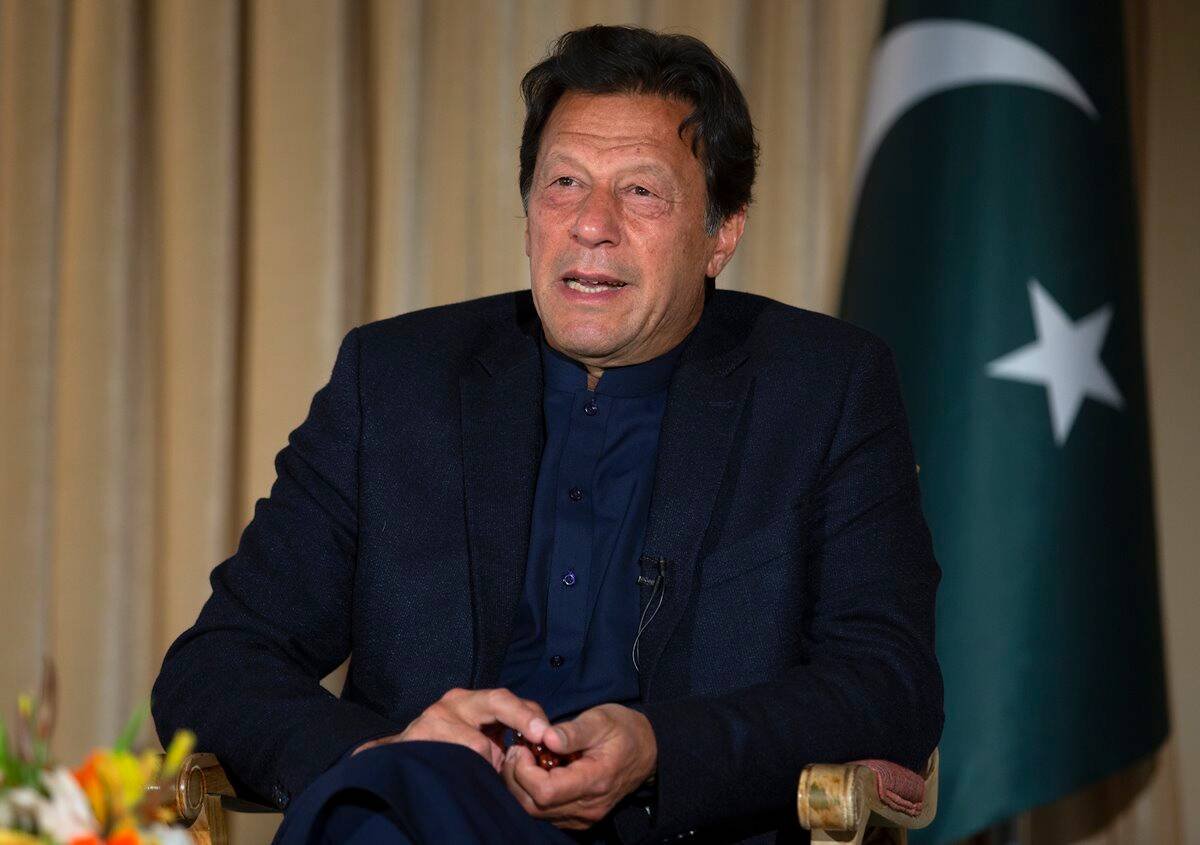
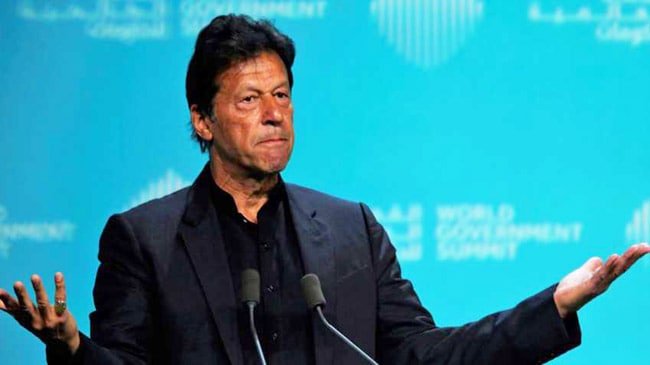
    Prime Minister Imran Khan has repeatedly called for debt forgiveness from international donors as tax revenues cratered, inflation soared, the currency was devalued, and fiscal deficits widened.

    In June, Pakistan was named as one of a handful of countries to secure a moratorium on debt repayments from the Paris Club in an effort to ease the economic impact of the coronavirus crisis. 

  • Naya Pakistan: PM appoints former Silicon Valley, IBM executive as special tech zones chief

    Naya Pakistan: PM appoints former Silicon Valley, IBM executive as special tech zones chief

    Prime Minister (PM) Imran Khan has appointed Amer Ahmed Hashmi as chairperson for the Special Technology Zones Authority (STZA).

    According to the ordinance passed on Dec 2 for the establishment of Special Technology Zones Authority, the new authority will focus on the growth of scientific and technological ecosystem in the country, primarily by fostering the development of technology zones and high-tech industrial parks, thereby contributing to the acceleration of the evolution of the national system of innovation.

    Headquartered in Islamabad, the federal body will help promote the global competitiveness of the domestic technology sector, as well as provide institutional and legislative support to attract foreign direct investments in the high-tech sector.

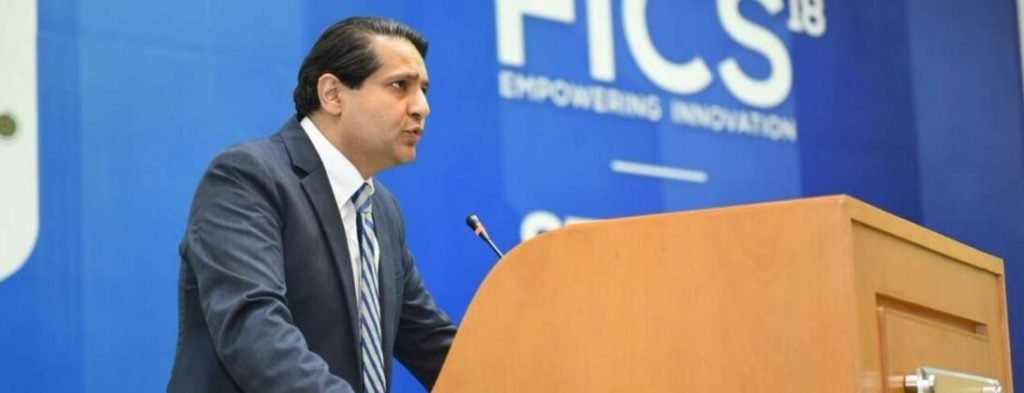
    Amer Ahmed Hashmi

    The prime minister would serve as the president of the Board of Governors of the STZ Authority.

    As a global strategist, IT executive, and entrepreneur, Amer Hashmi possesses diverse global experience in organisational leadership with companies like IBM and MCI Systemhouse. He was the founding CEO of Si3 – Pakistan’s pioneering technology outsourcing firm that helped stimulate IT systems integration in public and private organizations in Pakistan. His work has been featured in Forbes Asia, Businessweek & Financial Times UK.

    Hashmi spent the last 10 years building a knowledge ecosystem in his capacity as advisor and chief strategy officer at National University of Sciences & Technology (NUST).

    He was also the chairman of executive committee of NUST Science & Technology Park and founding president of the Global Think Tank Network (GTTN).

    Hashmi is a graduate of York University, Toronto, and has been trained in several technical and specialised programmes, including executive leadership on ‘Innovation for Economic Development’ from Harvard’s Kennedy School of government.

  • Vehicle prices to finally come down in Pakistan?

    Vehicle prices to finally come down in Pakistan?

    Federal Minister for Science and Technology Fawad Chaudhry has said that car prices in Pakistan will be reduced in the coming days.

    Speaking to Geo News on Wednesday, Fawad said that the prices of cars in Pakistan have increased immensely over the past few years. However, the Economic Coordination Committee (ECC) has approved the Electric Vehicle Policy — which will end the monopoly of car manufacturers in the country.

    The minister maintained that the Electric Vehicle Policy is crucial for urban cities like Lahore and Karachi, as over 35% of air pollution in these cities is caused by emission of smoke from vehicles.

    Speaking about other initiatives taken by the government, the minister said that three major mobile phone companies would soon start operations in Pakistan and that the ECC has also approved the mobile manufacturing policy, he added.

    He said that these are great achievements accomplished during the “Made in Pakistan campaign”, and in near future, the country will be manufacturing its own vehicles and mobile phones.

  • Sixth consecutive month: Remittances remain over $2 billion

    Sixth consecutive month: Remittances remain over $2 billion

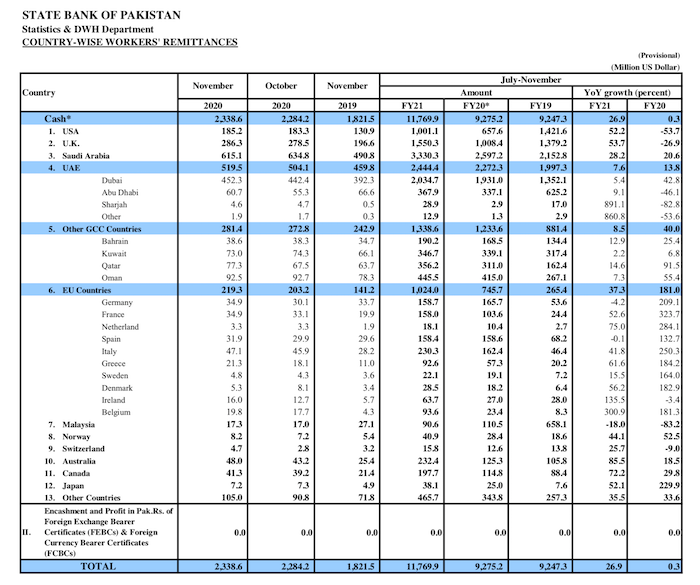
    Pakistan has maintained a strong momentum in workers’ remittance for the sixth consecutive month in November with over $2 billion, the State Bank of Pakistan (SBP) has reported.

    Workers’ remittance increased 28.4% year-on-year in November 2020, pushing the cumulative flows to $11.8 billion during the July-November FY21 with a rise of 26.9% compared to same period last year.

    “This significant growth reflects continued government and SBP efforts to formalise remittances under Pakistan Remittances Initiative (PRI), growing use of digital channels amid limited international travel, orderly exchange market conditions and improved global economic activity,” said the central bank.

    The top four countries that contributed to the highest inflows are Saudi Arabia ($3.3 billion), United Arab Emirates ($2.4 billion), United Kingdom ($1.6 billion) and the United States ($1 billion).

  • Rise in mobile phones import by 63%: PTA

    The country has witnessed a 63% increase in the import of mobile devices via legal channels for the year 2018-19, according to Pakistan Telecommunication Authority (PTA).

    Since the implementation of the Device Identification Registration and Blocking System (DIRBS), around 17.2 million devices were imported in 2018 while 28.02 million were imported in 2019.

    This year Pakistan has imported around 32.83 million devices so far, as per PTA’s press release.

    PTA implemented DIRBS System in December 2018, with the aim to curtail counterfeit mobile phone usage, discourage mobile phone theft and protect consumer interest. Through DIRBS, PTA has identified and blocked 24.3 Million fake replica mobile devices and 657,645 IMEIs that were duplicated.

    The implementation of DIRBS has also been the catalyst for local mobile devices manufacturing, leading to the establishment of 29 local assembly facilities. Since 2019, over 20 million devices have produced in these facilities.

    Moreover, the Federal Board of Revenue (FBR) has collected a total of Rs90 billion in customs duties on formal imports during January 2010-November 2020. This is Rs68 billion more custom duties as compared to custom duties collected in 2018. i.e. Rs22 billion.

    DIRBS has enabled FBR to collect Rs9bn revenue under the individual category from January 2019 to Dec 3, 2020. The PTA said it was an untapped area and no revenue was being collected in this category before the implementation of DIRBS.

  • FBR sees rise in income tax collection

    FBR sees rise in income tax collection

    The Federal Board of Revenue (FBR) has received a record number of returns this year, along with the highest ever amount of income tax at the time of filing.

    According to a statement issued by the FBR on Wednesday, “A total of nearly 1.8 million returns have been filed together with an amount of about Rs22 billion. Last year, around this time, 1.73 million returns were filed while about Rs13.5 billion were deposited as income tax.”

    FBR said it had opted not to extend the last date to file income tax returns beyond December 8, 2020 to restore the credibility and predictability of the final date and promote tax discipline, which worked. However, to ensure that no hardship was faced by taxpayers, a number of special measures were adopted.

    These included liberal acceptance of requests for extension in filing date as available under the law; provision to file requests manually besides the online facility; enabling tax practitioners/advisors to file a single request for multiple clients; and enabling the chief commissioners to set up special desks for collection of manual request and sorting their jurisdiction at their level.

    The above measures have encouraged a large number of taxpayers to file extension requests, the statement read. It is estimated that at least 300,000 taxpayers have made use of this facility, thus taking the number of potential returns to 2.1 million, which is 21pc higher compared to last year until this date.

    It is further clarified that the process of filing is continuing unabated. A comparison with the returns of last year at the close of the deadline, which was 30 June 2020, would be meaningful when the number of additional returns to be filed until 30 June 2021 is available.

    The FBR commended the determination of taxpayers, and the support it received from members of tax bars from all over the country, who have made such record setting returns and income tax payments possible. The results establish that the decision not to allow general extension in the last date, would go a long way toward re-establishing much needed trust and credibility of the tax system.

  • ‘Wapistani’: A new programme for Pakistanis wishing to return to the country

    ‘Wapistani’: A new programme for Pakistanis wishing to return to the country

    The Indus Valley Capital has announced the launch of a dedicated programme for returning Pakistani, known as Wapistani, at 021Disrupt 2020, an online conference by Nest I/O.

    This announcement was made by Aatif Awan, the Founder & Managing Partner at the Indus Valley Capital.

    Indus Valley Capital is an early stage venture capital fund investing in Pakistani startups. This fund has a well-established network that is deployed to help early stage startups build products that can be scaled to hundreds of millions.

    Awan explained that the Wapistani programme aims to make the move to Pakistan easier for Pakistanis who are returning to the country.

    Indus Valley Capital plans to bring back 200 Wapistanis within the next 2 years through this programme.

    Wapistani will help returning Pakistani in three main areas:

    1- Career: This program will help returning Pakistanis in making the right career decisions through personalized intros and connections with top startups looking for senior or specialized talent.

    2- Concierge: There will be dedicated resources to help returning Pakistanis with important life choices related to housing, children’s schooling and medical care.

    3- Community: This programme will build a network of Wapistanis, who are moving back to the country at the same time.

    Indus Valley Capital is targeting people in tech, who plan on moving back in the next 6 months.

  • Two Pakistani companies make it to Forbes Asia’s ‘Best Under A Billion’ 2020 list

    Two Pakistani companies make it to Forbes Asia’s ‘Best Under A Billion’ 2020 list

    Two Pakistani companies have made it to this year’s Forbes Asia’s 200 Best Under A Billion 2020 list.

    The Forbes list recognises 200 small and medium-sized companies which have performed the best in the Asia-Pacific region. The criteria for the companies is to have sales below the $1 billion mark.

    Systems Limited Pakistan and Feroze1888 Mills Ltd made it to the annual list. Adviser to the prime minister on Commerce and Investment Abdul Razak Dawood appreciated and congratulated the companies for making it to the coveted list.

    He praised the companies and expressed confidence that the achievement of these firms would “provide impetus to others to achieve similar laurels.”

    Founded in 1977, Systems Limited Pakistan has the distinction of being the country’s first software technology company, according to a statement on its website.

  • Govt claims to save $237m in LNG deal

    The Petroleum Division (PD) on Thursday said the government had procured 41 spot liquefied natural gas (LNG) cargoes, during the last 27 months, on average of below 12 percent Brent that helped save $237 million.

    The PD shared these details in a press statement after some media reports alleged mismanagement in the spot buying, terming them “based on false assumptions and incomplete facts”, reported APP.

    The PD said the first query, in the media reports, pertained to the LNG procurement to run both terminals in full capacity and import of six cargoes in December.

    “It must be understood that the two terminals together have operated on 65 percent or less capacity in nine months out of last 27 months. Another factor which must not be ignored is that the previous government had signed long-term contracts for 800mmcfd (million cubic feet per day) for supply of LNG.” Unless this was sold first, it said, buying more was not possible, even if it was available at cheap rate.

    The previous government also signed 1,200mmcfd of terminal capacity on a ‘take or pay’ basis which resulted in $527,000 per day payment, regardless of the level of use of these terminals.

    “The current government purchased 41 spot LNG cargoes on much less average for the whole year than term slope of 13.37 percent Brent, which enabled us to save $237 million in last 27 months,” it added.

    “Also, once you award a cargo, which has a fixed delivery date, it is near impossible to move it, especially in winter peak. Hence, if you do partial ordering of spot cargoes, you may not be able to slot more cargoes later, because that results in change of delivery date of all cargoes.”

    Secondly, the PD said, it was being asked why the government invited tenders for December in November. “This is factually incorrect. Pakistan LNG Ltd. placed tender notice for six LNG spot cargoes for use of December on October 02, 2020.”

    Third question, it said, was related to forward purchasing in summer for winter delivery when global market prices were down due to less demand in summer.

    “It must be understood that spot cargoes are generally for ready delivery (i.e. within 30-60 days). While you can do forward buying (i.e. order today for delivery many months later), the pricing for such purchases is done on a forward curve for Brent and swap spreads for slope.”

    So, if spot cargoes were available in July for 10 percent of the Brent, “resulting in say $4/mmbtu delivered price, an order placed in July for delivery in December does not get priced at $4/mmbtu.”

    The sellers would use forward projections of the Brent in December and “Swaps spreads for slope in December, resulting in a much higher price for delivery in December.”

    It said, “An expectation that we can get ready price of summer for delayed delivery in winter, assumes that the sellers are so naive, and we as buyers are so smart, that we can take advantage of them. This simply shows lack of understanding of how forward market works.”

    “As an example, the JKM swaps on Oct 02, 2020 for December delivery were $5.5/mmbtu. The same JKM swaps for December delivery in mid August were $5.4/mmbtu, a bare 10 cent difference. So even if the December tender were issued in mid August, the price would have been effectively the same.”

    Fourth question, the PD said, was based on comparison between Pakistan and India on spot purchasing of LNG claiming that India saved billions of rupees by placing orders for November three weeks before Pakistan.

    “Again this is factually incorrect. Pakistan placed tender for November delivery on Sept 09 and Sept 15 with the PPRA compliant mandatory 30 days. India placed a one day tender on Sept 29 and awarded on Sept 30. The price of this one cargo was $0.98/mmbtu less, as reported by Bloomberg, than the November average of Pakistan. Many major suppliers like Vitol and Trafigura have bought December cargoes at prices higher than Pakistan as reported by Bloomberg. Are they all incompetent? Single cargoes cannot be compared because they depend on the day of award and conditions of tender.”

    For example, the PD said, Pakistan LNG Limited (PLL) required 21 days credit period and 10 percent of performance guarantee on LNG supplies. “Also our port cargoes are 400 percent higher. India does not have these conditions. An example of the reverse situation was PLL spot cargo of July 27, 2020 at price of $2.2 but Reliance, India awarded a cargo only three days later on July 30, at $2.7, a full 20 percent higher.”

    Unfortunately, the PD said, some media persons claimed that the spot buying this year had caused Rs122 billion loss to the exchequer.

    “The total of all cargoes bought in 2020 on spot was $353 million, or Rs 57 billion, with an average just below 12 percent. So, it is illogical to say that when money spent is Rs57 billion, somehow a loss of Rs122 billion has been created.” Even if compared to contract deliveries, the spot purchases, including higher December numbers, the Petroleum Division said, it was still cheaper.

    “The public discourse needs to move to planning and implementation on legal reforms to declare LNG as gas, from the deliberate distortion created by the last government declaring it petrol,” the PD statement concluded.