Category: Business

The most important business news, explained in a young, easy to understand way. News that affects young career professionals.

  • Funds worth Rs3 trillion misused in Naya Pakistan’s power division

    Funds worth Rs3 trillion misused in Naya Pakistan’s power division

    The Auditor General of Pakistan (AGP) has unearthed misappropriation of public funds worth around Rs3 trillion in the power division during the first year of the Pakistan Tehreek-e-Insaf (PTI) government.

    According to reports, the AGP has found huge irregularities, mismanagement, misappropriation and embezzlement, which it has highlighted in its report for the audit year 2019-20 that has been laid before the National Assembly after a delay of almost eight months.

    The AGP has also put question marks over sustainability of the power sector under the current state of affairs, governance shortcomings and weak financial and administrative controls.

    In particular, the country’s top auditor highlighted a total of 318 cases in the accounts of the power division and its associated entities in which Rs2.965tr worth of public funds had been misused. In its key findings, the AGP said 64 varied irregularities of more than Rs107 billion pertained to the procurement of electrical equipment, civil and electrical works, consultancy services and contractual mismanagement, Dawn reported.

    The AGP also highlighted recoveries of more than Rs2.5 trillion and pointed out 108 other cases of violation of internal rules and regulations of the audited entities involving Rs64 billion. In another 50 cases, violations of regulatory laws and regulations involving Rs184 billion were unearthed while a loss of more than Rs4 billion was reported due to fraud, embezzlement, misappropriation and theft in 21 cases.

    In four cases, irregularities of Rs1.2 billion were reported on account of the management of accounts with commercial banks and Rs263 million worth of 21 cases were highlighted pertaining to human resource regularities.

    On top of these major findings, the AGP also expressed dissatisfaction over the performance of power distribution companies (DISCOS) in reducing transmission and distribution (T&D) losses. It said the DISCOS suffered Rs240 billion losses on account of 18.3pc (at the rate of Rs13.06 per 1pc loss) T&D losses in FY2017-18, which increased to Rs276bn in 2018-19 on account of 17.7pc T&D loss at the rate of Rs15.18 per 1pc loss. This meant that even though a minor reduction of 0.6pc was achieved in technical loss that year, it was overturned by the tariff increase.

    Moreover, since the regulator had built the cost of 15.8pc losses to consumer tariff, the DISCOS still suffered losses worth Rs72 billion in these two years even after recovering the cost of such high losses from consumers.

    The audit noted that accounting of material was not being done by the field staff as per procedure and hence opportunities rose for leakage and loss. Many reports mentioned maintenance and monitoring of feeders which were not populated, resulting in poor management of feeder losses.

    Internal controls in the important areas of cash reconciliation and revenue collection were also found unsatisfactory and fraud in payment of pension in the DISCOS of Peshawar and Lahore and revenue fraud in the Islamabad Electric Supply Company (IESCO) were also highlighted. “Despite having an internal audit (in the power division), recurrence of frequent irregularities made its effectiveness questionable”, the AGP said.

    The Discos billed 93,887 million units to consumers in FY2018-19 worth Rs1.342tr and a recovery of Rs1.061tr was made, indicating a recovery rate of 79.06pc. The shortfall resulted in less receipt of recoveries by the DISCOS. “Revenue shortfall in the DISCOS showed managerial inefficiencies and policy bottlenecks constraining CPPA (Central Power Purchasing Agency) to pay-off its energy procurement liabilities”.

    The audit noted an improvement of one per cent in the revenue recovery in the previous fiscal 2017-18 but expressed concern that a recovery shortfall of 21pc posed significant operational challenges for the DISCOS, besides highlighting that total receivables from running and dead defaulters amounted to Rs572 billion in June 2019, which added to the financial crunch in the power sector.”
  • FBR surpasses target, collects over Rs1tr

    FBR surpasses target, collects over Rs1tr

    The Federal Board of Revenue (FBR) has collected more than Rs1,000 billion in revenue during the first quarter (July-Sept) of the current fiscal year (FY2020-21).

    According to media reports, the tax department has collected Rs1,002 billion during the period under review, against the target of Rs970 billion.

    The tax department had collected Rs593bn during the first two months of FY21, while collection in September stood at Rs408bn, as against the target of Rs418 billion.

    The revenue collection during the quarter increased due to the resumption of economic activities post-COVID lockdowns. The department has also increased its crackdown on defaulters and tax evaders.

    On Wednesday, the FBR’s Directorate of Intelligence and Investigation-Inland Revenue (Lahore) raided the business premises of a shoe manufacturing unit under Section 38 and 40 of the Sales Tax Act, 1990.

    The unit was engaged in manufacturing activities, making taxable supplies of footwear etc while consuming huge amounts of raw materials and electricity. However, the unit had been deliberately filed “nil” sales tax returns since July 2015 to avoid payment of due sales tax.

    During the search, important records were impounded which is under scrutiny while further investigation in this regard is underway. The directorate intends to intensify such operations to detect tax fraud and stop huge revenue leakage being caused to the national exchequer.

  • FBR to regulate jewellers, accountants, real estate agents to curb money laundering

    FBR to regulate jewellers, accountants, real estate agents to curb money laundering

    The Federal Board of Revenue (FBR) will regulate and monitor businesses of jewellers, accountants, and real estate agents, and they will be asked to maintain records of their customers to check money laundering transactions.

    The FBR has issued Anti Money Laundering and Countering Financing of Terrorism Regulations for the Designated Non-Financial Businesses and Professions (DNFBRs) 2020.

    The government on Tuesday declared FBR as the AMU/CFT Regulatory Authority.” Every DNFBP shall be registered with the Board. The DNFBP shall provide any information or documentation that may be required by the Board for the purposes of registration or keeping the DNFBP registration up to date, including but not limited to criminal records of the senior management and beneficial owners.

    The record to be maintained and furnished by the Accountants, Real Estate Agents and Jewelers under these rules and as required by AML Act shall be subject to inspection by FBR, as laid down in section 6A(2)(f) of AML Act, who may be assisted by other law enforcement agencies.

    Any violation of any provision of these regulations shall be subject to sanctions issued under the AML Act, FBR added.

  • Affordable SUV gifted to Imran Khan by ex-Malaysian PM to be launched in Pakistan market

    Affordable SUV gifted to Imran Khan by ex-Malaysian PM to be launched in Pakistan market

    Malaysian auto giant Proton has collaborated with Al-Haj — the makers of FAW automobiles in Pakistan — to launch its crossover SUV X70 by December along with a sedan named Saga.

    According to reports, the said cars, that are actually Chinese manufacturer Geely’s vehicles directly imported and licensed by Proton for the Malaysian market, will be offered in completely built-up (CBU) form in Pakistan.

    The company will start assembling the cars locally in the year 2021.

    X70 is powered by a 1.8 liter turbocharged 4-cylinder petrol engine that makes 182 horsepower, 285 newton/meters of torque, and comes mated to a 6-speed automatic or a 7-speed DCT gearbox. The vehicle will be available in both Front-Wheel Drive and All-Wheel-Drive forms.

    The car is loaded with features such as an air purifier system, rear air vents, automatic dual-zone climate control, steering wheel switches, tilt, and telescopic adjustment, advanced gauge cluster with an LCD information screen, central door locking with auto-lock, a push-start button and a myriad of other modern features. Given that the X70 is a compact crossover SUV, it will go up against the Kia Sportage and the Hyundai Tucson.

    The X70, back in December 2019, was gifted to Prime Minister (PM) Imran Khan by former Malaysian PM Mahathir Mohamad.

    The other car, Saga, is a compact sedan that has recently entered its 4th generation. Saga features a 1.3 liter naturally aspirated 4-cylinder petrol engine that makes 94 horsepower, 120 newton/meters of torque and is mated to a 5-speed manual or a 4-speed CVT automatic transmission.

    The vehicles will be launched at a relatively lower price for success in the Pakistani market.

  • E-commerce can create two million jobs and boost GDP up to $40 billion in Pakistan

    E-commerce can create two million jobs and boost GDP up to $40 billion in Pakistan

    E-commerce in Pakistan has the potential to create two million jobs and it can boost the country’s Gross Domestic Product (GDP) up to the level of $40 billion in the next couple of years.

    President of Rawalpindi Chamber of Commerce and Industry (RCCI) Saboor Malik, stated that transformation is required in the Information, Communications, and Technology sectors to uplift the digital economy of Pakistan.

    Saboor Malik has urged the government of Pakistan to adopt new dimensions of the economy as the digital platforms have been rapidly growing around the world and countries like Pakistan are still far behind in this race.

    More than 66 per cent of payments for e-shopping are being made as Cash on Delivery (COD) which does not reflect the true sense of digital platform.

    The Federal cabinet has already approved the E-commerce policy for promoting the digital culture and paperless trade to help enhance the trade volume.

    RCCI President remarked that Pakistan has huge participation in the global mobile market, with over 160 million mobile phone subscribers and around 150 million internet users.

    He suggested that the government must overhaul the whole banking infrastructure and encourage businesses, retailers, petrol pumps, PIA, Railways ticketing, superstores, schools and colleges to introduce payment gateways and banks should offer credit cards to businessmen.

  • Federal govt has decided to close Monal restaurant, says Zartaj Gul

    Federal govt has decided to close Monal restaurant, says Zartaj Gul

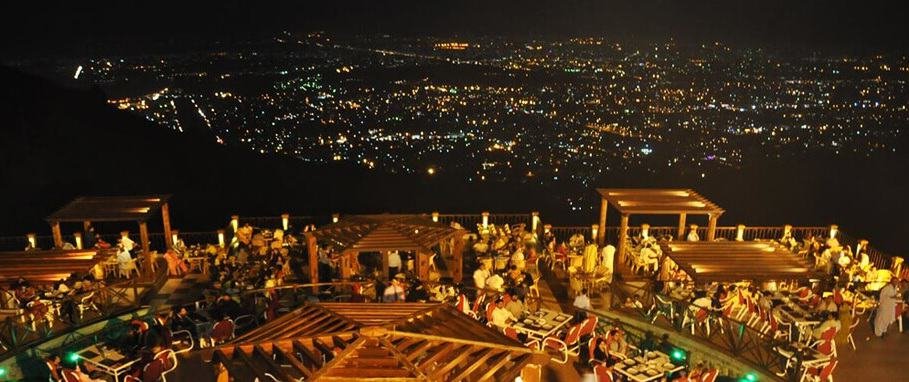
    According to the Minister of Climate Change Zartaj Gul, The federal government has decided to shut down Monal restaurant, situated in Margalla hills of Islamabad.

    “According to the environmental laws, construction and business activities in forests and national parks are prohibited. The government will not only oppose construction but will also demolish the existing infrastructure to restore their biodiversity,” says Zartaj Gul.

    She lamented that businesses in national parks are earning in millions but aren’t directing enough funds under Corporate Social Responsibility (CSR) agreement for the preservation and restoration.

    Businesses operating in the national parks try to expand illegally whenever they find an opportunity to do so. For instance, earlier in May, Islamabad’s District Administration sealed the Monal restaurant after its management started chopping down trees surrounding in an attempt to expand secretly.

    Gul said that “the Federal government has focused on preserving the 15 national parks across Pakistan along with completing the 10 Billion Tree Tsunami project to increase the forest cover in Pakistan.”

    She added that Pakistan Tehreek e Insaf (PTI) government’s 10 Billion Tree Tsunami project has received global recognition.

    So far, 322.4 million trees have been planted under the project that has helped in increasing Pakistan’s total forest cover from 4% to 6% in the last 2 years.

  • Federal cabinet allows export of N-95, surgical masks

    Federal cabinet allows export of N-95, surgical masks

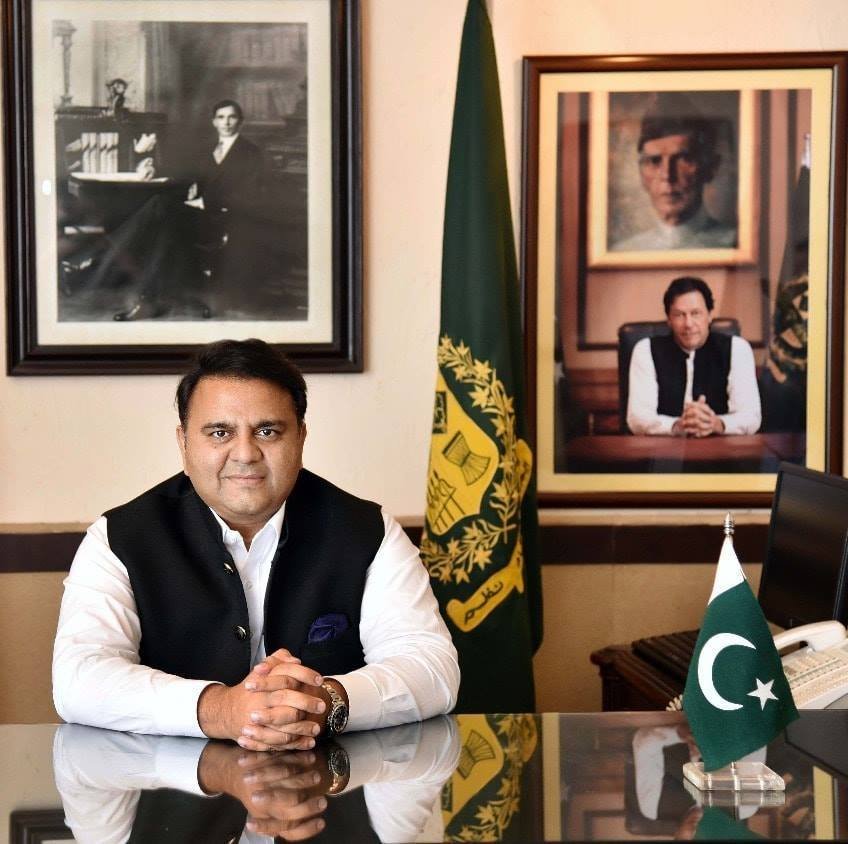
    The federal government has allowed the export of N-95 and surgical masks, said Federal Minister for Science and Technology Fawad Chaudhry.

    The federal minister tweeted to announce the development and said that these were the only last two items under the personal protective equipment (PPE) that was not allowed to be exported by the federal cabinet.

    “It would take a few days to get the notification out, but in the meantime please prepare to go full speed ahead &fulfill your orders,” said Abdul Razak Dawood.”

    Abdul Razak Dawood

    He further said that the federal government has done its part and exporters will benefit from the decision to capture a good share of the world market amid the COVID-19 crisis.

    :

  • Government to reopen tourism after eid

    Government to reopen tourism after eid

    The National Tourism Coordination Board (NTCB) will submit a proposal for the reopening of tourism to the National Command and Operation Centre (NCOC) after Eidul Azha holidays.

    According to media reports, a consultative meeting in this regard was held with all provincial and regional governments to discuss the appropriate time.

    Adviser to Punjab Chief Minister (CM) on Tourism Asif Mehmood, Pakistan Tourism Development Corporation (PTDC) Managing Director Syed Intikhab Alam and NTCB and PTDC board member Aftabur Rehman Rana were among those present on the occasion.

    The participants discussed various options on reopening but collectively agreed that any decision on this matter should be taken by the NCOC after monitoring and evaluating the pandemic situation.

    Matters regarding safety and preparedness were discussed and the regional governments informed the NTCB chairman that tourism-related guidelines for operators, hotels, restaurants and tourist places were ready to operate.

    The officials on both sides believed that the time was right for the tourism sector to restart as the COVID-19 curve had started flattening across the country.

    The provincial and regional heads of tourism were told that necessary preparations and awareness should be undertaken so that opening of controlled tourism under standard operating procedures (SOPs) could be made possible after the final decision of NCOC.

    Special Assistant to Prime Minister (SAPM) Sayed Zulfi Abbas Bukhari appreciated the support extended by the Khyber Pakhtunkhwa (KP) government to tourism businesses in terms of renewal of licences and registration fees.

    He urged other provincial governments to consider similar support initiatives for tourism businesses that had suffered during the prevailing situation.

  • VISA, NayaPay Partner to revolutionise digital payment system in Pakistan

    VISA, NayaPay Partner to revolutionise digital payment system in Pakistan

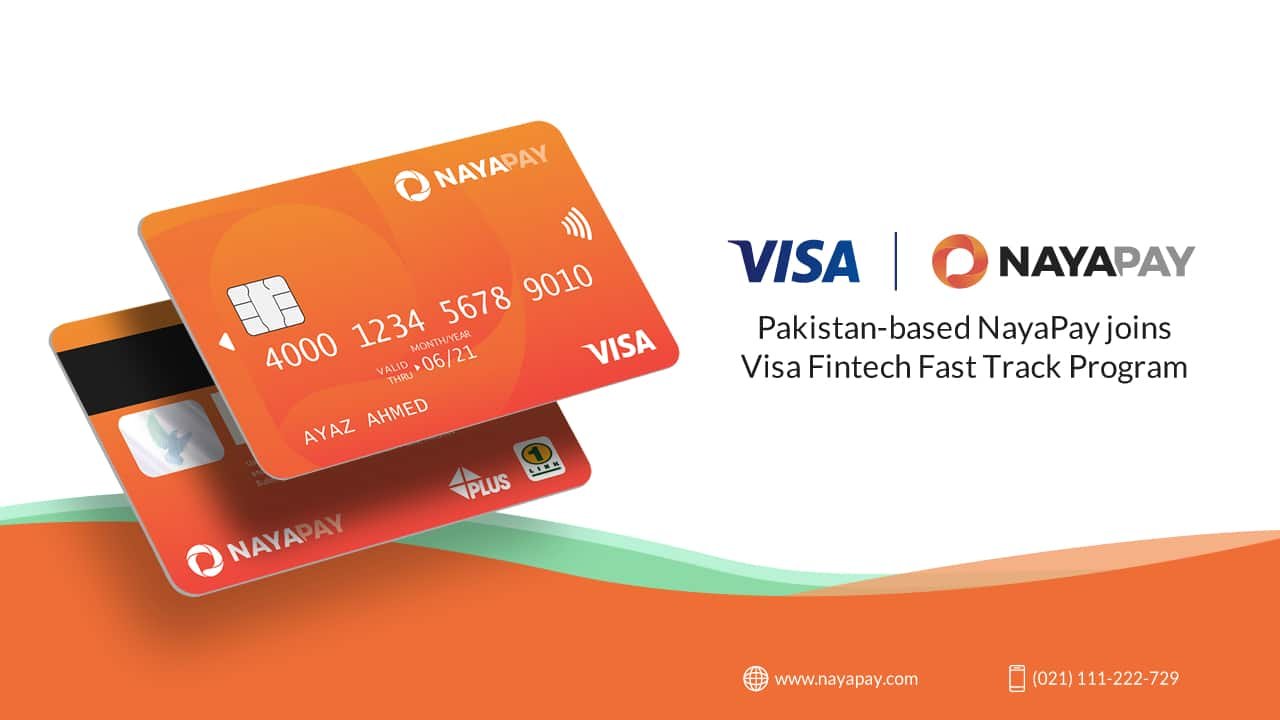
    NayaPay, an Electronic Money Institution (EMI), has collaborated with Visa, a leading global payment solution. Now they have access to Visa’s growing partner and global payments network, technology, and resources to accelerate innovation in digital payments in Pakistan.

    NayaPay will enable users to open electronic (E)-Money accounts within a few minutes and make hassle-free digital payments to each other and to businesses.

    NayaPay consumers and merchants can use their NayaPay Visa debit card to perform online and in-store transactions with millions of retailers worldwide as well as withdraw cash conveniently at any ATM location.

    NayaPay customers can also scan Visa merchant QR codes to make payments directly through their app.

    NayaPay will also facilitate cross-border money transfers for freelancers and other Pakistan-based businesses working with international clients, and households receiving remittances from their families abroad.

    Users will be able to accept funds instantly and directly into their NayaPay wallets from over a billion Visa cards across the globe.

    Danish Lakhani, CEO NayaPay, said: “We are delighted to have found a partner in Visa that shares our goals of making financial services simpler, more convenient and accessible to Pakistani users – the needs of whom have been overlooked for far too long. Over the past few months, we have been integrating Visa’s offerings to reinforce our issuing and acquiring capabilities and to deliver on our promise of becoming a part of citizens’ daily lives.”

    “We are committed to helping fintech achieve their potential – enabling big ideas to flourish and supporting them through the reach, scale, and security of the Visa network,” said Kamil Khan, Country Manager, Pakistan, Visa.

    “By joining Visa’s Fintech Fast Track program, exciting fintech like NayaPay gain unprecedented access to Visa experts, technology, and resources,” said Otto Williams, Vice President, Strategic Partnerships, Fintech and Ventures, CEMEA at Visa.

  • Pakistan’s IT exports surge to $1.2 billion in FY2019-20

    Pakistan’s Information Technology (IT) and IT-enabled Services (ITeS) export remittances have surged by 23.71% ($1.230 billion) in financial year (FY) 2019-2020.

    The numbers were revealed in a performance report released by the Pakistan Software Export Board (PSEB) on Friday.

    According to FY2018-2019, the remittances were $994.848 million and they have now increased to $1.230 billion in FY2019-2020

    Mr Syed Aminul Haq, Federal Minister for IT & Telecommunications (MOIT), said that they have targeted and is working towards increasing these export numbers up to $5 billion in the next three years.

    He further said that under the vision of Digital Pakistan, we should promote and support all IT-related projects and connect Pakistan to the digital world.

    The ministry’s spokesperson also mentioned that 6,000 Pakistan-based IT companies were providing IT products and services to people in over 100 countries.

    Pakistani IT companies have been providing products and services to some of the world’s largest companies. The country has been ranked as the third most popular country for freelancing in the world.

    “The Information and Communications Technology industry of our country has seen high achievements in the past few years. Pakistan is surely heading in the right direction in terms of achieving that $5 billion revenue goal for the industry by the year 2024,” said the spokesperson.