The price of gold in Pakistan saw a significant rise on Friday, with 24-karat gold now selling at Rs241,500 per tola, marking an increase of Rs800 per tola.
This adjustment is notable as the price has been maintained Rs1,500 below its actual cost due to a reduction in purchasing power.
The Karachi Sarafa Association reported that the price of 24-karat gold per 10 grammes has increased by Rs686, bringing it to Rs207,047. Similarly, 22-karat gold saw a price hike, reaching Rs189,793 per 10 grammes.
In contrast, silver prices remained steady in the domestic market. The price of 24-karat silver continued to be Rs2,750 per tola and Rs2,358 per 10 grammes.
On the international stage, spot gold was trading near $2,331 an ounce, reflecting a rise of $28.7 or 1.25 per cent from the previous session. This upward trend in the global market has influenced the local pricing dynamics in Pakistan.
The ongoing fluctuation in gold prices is closely monitored by investors and market participants, as it reflects broader economic conditions and purchasing power within the country.
The government is expected to reduce petrol price by an additional Rs9 per liter for the latter half of June 2024, offering some relief to the public amidst soaring inflation.
This anticipated reduction marks the fourth consecutive decrease, accumulating to a total relief of over Rs34 per litre.
In tandem with the petrol price cut, the government is also likely to lower the price of high-speed diesel (HSD) by approximately Rs5 per liter, reflecting the downturn in international market prices.
It is important to highlight that one more session remains before the final pricing update, which means that the exact figures will depend on fluctuations in global markets and the prevailing exchange rate.
The new prices will be officially announced at midnight on 15th June 2024 and will be effective for the subsequent 15 days.
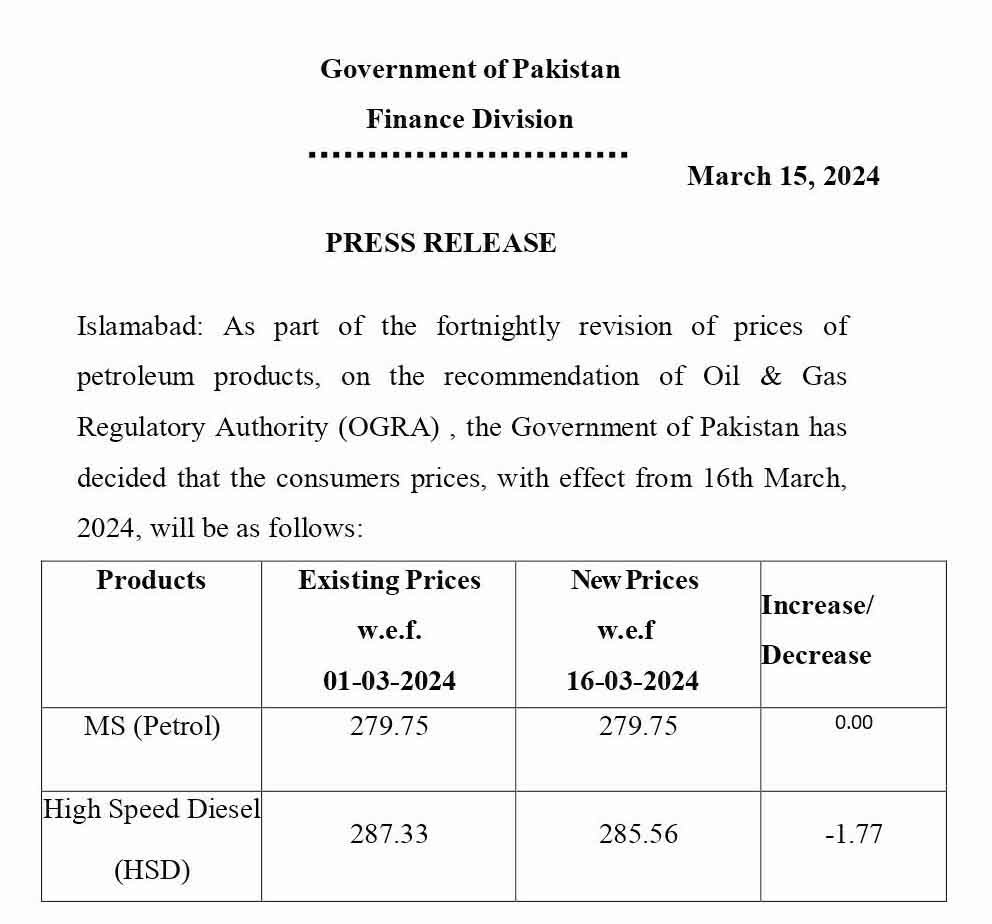
In the most recent fortnightly adjustment, the government had reduced petrol and HSD prices for the third consecutive time by Rs4.74 and Rs3.86 respectively, bringing their prices to Rs268.36 and Rs270.22 per liter.
This series of price reductions aims to provide some economic respite to consumers amid a challenging economic environment.
Pakistan’s benchmark stock index (PSX), the KSE-100, experienced an unprecedented surge on Thursday, marking its most significant gain in a year.
This rally follows the government’s announcement of the 2024-25 budget, which alleviated concerns regarding potential increases in capital gains and dividend taxes.
The KSE-100 index soared by 3,410.7 points, or 4.7 per cent, reaching 76,208 points. This increase represents the largest single-day jump in point terms.
In the index’s history and the highest percentage rise since the International Monetary Fund (IMF) bailout package was introduced last year.
Investor sentiment remained overwhelmingly positive throughout the trading session. The index hit an intraday high of 76,338.15 points, an increase of 3,540.72 points, and a low of 73,329.80 points, still up by 532.37 points.
By the end of the day, the total volume traded on the KSE-100 index was 344.98 million shares.
Out of the 100 companies listed on the index, 87 saw their shares close higher, nine experienced declines, and four remained unchanged.
The government’s decision to set the capital gains tax at a flat rate of 15 per cent for filers on the sale of securities acquired on or after July 1, 2024, was a significant factor contributing to the market’s positive performance.
For non-filers, capital gains will be taxed at normal rates, with a minimum rate of 15 per cent and a maximum rate of 45 per cent.
This decisive move by the government has been well-received by investors, bringing clarity and stability to the market and fostering an environment of confidence and growth.
The Finance Bill 2024 has ushered in a significant overhaul of income tax slabs affecting salaried individuals, resulting in a marked increase in taxation across various income brackets.
The revised slabs, delineated in the amended bill, indicate substantial alterations compared to the previous structure.
Outlined below are the revised income tax slabs juxtaposed with their previous counterparts:
Taxable Income
Tax per cent
Taxable Income (yearly)
≤600,000
0
less than 600,000
600,001-1,200,000
5 per cent of amount exceeding Rs600,000
600,001-1,200,000
1,200,001-2,200,000
Rs30,000 + 15 per cent of amount exceeding Rs1,200,000
1,200,001-2,400,000
2,200,001-3,200,000
Rs180,000 + 25 per cent of amount exceeding Rs2,200,000
2,400,001-3,600,000
3,200,001-4,100,000
Rs430,000 + 30 per cent of amount exceeding Rs3,200,000
3,600,001-6,000,000
>4,100,000
Rs700,000 + 35 per cent of amount exceeding Rs4,100,000
>6,000,000
While the income tax exemption for the initial slab, encompassing annual salaries up to Rs600,000, remains unaltered, adjustments have been made to other income brackets. Notably, the maximum income tax slab has been notably reduced from Rs6 million to Rs4.1 million.
Under the revised regime, individuals earning below Rs600,000 annually (equivalent to Rs50,000 per month) will continue to be exempt from income tax. However, for those falling within the range of Rs600,001 to Rs1,200,000 per year (Rs50,000 to Rs100,000 per month), the tax rate has been increased to 5 per cent from the previous 2.5 per cent on the amount exceeding Rs600,000.
Moreover, individuals earning between Rs1,200,001 to Rs2,200,000 annually (equivalent to Rs100,000 to Rs183,333 per month) will now be subject to a tax of Rs30,000 plus 15 per cent of the amount exceeding Rs1.2 million.
For those earning within the bracket of Rs2,200,001 to Rs3,200,000 per year (Rs183,333 to Rs266,667 per month), the revised tax stands at Rs180,000 plus 25 per cent of the amount exceeding Rs2.2 million.
Likewise, individuals earning between Rs3,200,001 to Rs4,100,000 annually (Rs266,667 to Rs341,667 per month) will face a tax liability of Rs430,000 plus 30 per cent of the amount exceeding Rs3.2 million.
Finally, for individuals with annual earnings surpassing Rs4,100,000 (more than Rs341,667 per month), the revised tax obligation stands at Rs700,000 plus 35 per cent of the amount exceeding Rs4.1 million.
These revisions underscore a significant shift in the taxation landscape, potentially impacting the financial planning and obligations of salaried individuals across the board.
Prepare for a pinch in your pocket as the cost of imported mobile phones is set to rise in Pakistan.
The Finance Bill 2024 has introduced a hefty 25 per cent sales tax on smartphone imports, along with IMEI registration, as part of the 2024-25 budget.
This tax applies to phones valued above PKR 139,312 ($500), which includes most high-end and premium models.
Popular flagships like the Samsung Galaxy S series and upcoming iPhones such as the iPhone 15 and iPhone 14 are among those affected. With their prices already soaring above Rs139,000, this tax increase will hit consumers hard.
But there’s a twist: the 25 per cent tax only applies to fully assembled phones priced above $500. Phones in various stages of assembly, as well as locally manufactured ones, will still be taxed at 18 per cent, regardless of their value.
For phones priced below $500, a flat 18 per cent tax rate will be applied, whether they’re fully assembled, partially assembled, or not assembled at all.
This move is expected to boost government revenue by around Rs33 billion. So, brace yourselves for higher phone bills in the near future.
In a pivotal and politically charged moment, Finance Minister Muhammad Aurangzeb presented his inaugural federal budget for the fiscal year 2024-25 on Wednesday, as Pakistan endeavors to secure a crucial long-term bailout from the International Monetary Fund (IMF).
Addressing the National Assembly, Aurangzeb underscored the government’s economic strides amidst significant financial and political hurdles over the past year. “The government’s progress on the economic front has been notable,” he affirmed in his opening statements.
The government has proposed a raise in the minimum wage from the current Rs32,000 to Rs36,000 in a bid to mitigate the inflationary pressure on citizens. According to the finance minister, the purchasing power of the populace has been impacted by rising inflation, prompting proactive measures to tackle the issue.
A prominent feature of the budget announcement was the federal cabinet’s endorsement of substantial salary increments for government employees. Those in Grades 1 to 16 will witness a 25 per cent salary hike, while employees in Grades 17 to 22 will experience a 20 per cent raise. Moreover, pensions for retired employees will see a 22 per cent increase.
Reflecting on the nation’s recent economic tribulations, Aurangzeb reminisced about a period when Pakistan’s economy was in dire straits. “The State Bank’s reserves were sufficient for less than two weeks of imports, the rupee depreciated by 40 per cent, economic progress was stagnant, and inflation was propelling more people below the poverty line rapidly,” he recalled. “Emerging from this situation seemed nearly insurmountable.”
The finance ministeralso lauded the previous government for securing a short-term standby agreement with the IMF, attributing it to bringing economic stability and averting uncertainty during a critical phase when the preceding IMF programmed was concluding, and negotiations for a new one were uncertain.
As Pakistan confronts these economic challenges, the newly unveiled budget along with the associated salary and pension increments are perceived as indispensable measures to stabilize the economy and fulfill IMF expectations, thereby laying the groundwork for future growth and stability.
Federal Minister for Finance and Revenue, Senator Muhammad Aurangzeb, announced significant strides in Pakistan’s economic landscape despite numerous challenges.
Addressing a press conference at the launch of the Economic Survey of Pakistan 2023-24, the minister highlighted a 30 per cent increase in revenue collection, a reduced current account deficit, lower inflation rates, and a stabilised currency.
Senator Aurangzeb emphasised the remarkable economic turnaround from a previously precarious situation marked by a 0.2 per cent GDP contraction, a 29 per cent rupee depreciation, and dwindling foreign exchange reserves that had dropped to merely two weeks’ worth of import cover.
He acknowledged the difficulties faced by the large-scale manufacturing sector, primarily due to high-interest rates and energy issues, but noted that the agriculture sector had provided a much-needed boost with bumper crops.
“The agriculture, dairy, and livestock sectors are poised to remain key drivers of growth in the coming years,” Aurangzeb stated.
Reflecting on the economic journey of the current fiscal year, Aurangzeb credited Prime Minister Shehbaz Sharif’s leadership and the pivotal decision to engage with the International Monetary Fund (IMF). The signing of a nine-month Standby Agreement with the IMF, he said, was crucial for the country’s progress and economic stability.
“The decision to approach the IMF has been fruitful, restoring confidence in Pakistan’s economy,” Aurangzeb noted. He underscored the successful conclusion of the IMF’s Stand-By Arrangement (SBA) as evidence of Pakistan’s commitment to economic discipline, which had been acknowledged by the IMF.
Looking ahead, Aurangzeb mentioned ongoing productive and constructive dialogues with the IMF, focusing on Pakistan’s reform agenda. “This is Pakistan’s program, supported and funded by the IMF,” he said, detailing areas such as tax revenue enhancement, energy sector improvements, power sector reforms, and the privatisation of state-owned enterprises.
The minister highlighted the dramatic reduction in the Current Account Deficit (CAD) from an estimated $6 billion to just $200 million. He also noted that Pakistan had experienced a current account surplus for three consecutive months, with remittances reaching $3.2 billion in May.
He attributed the currency’s stabilisation and the decrease in inflation to a series of administrative measures by the caretaker government, including crackdowns on illegal financial activities like Hundi-Hawala, smuggling, and regulating transit trade to Afghanistan.
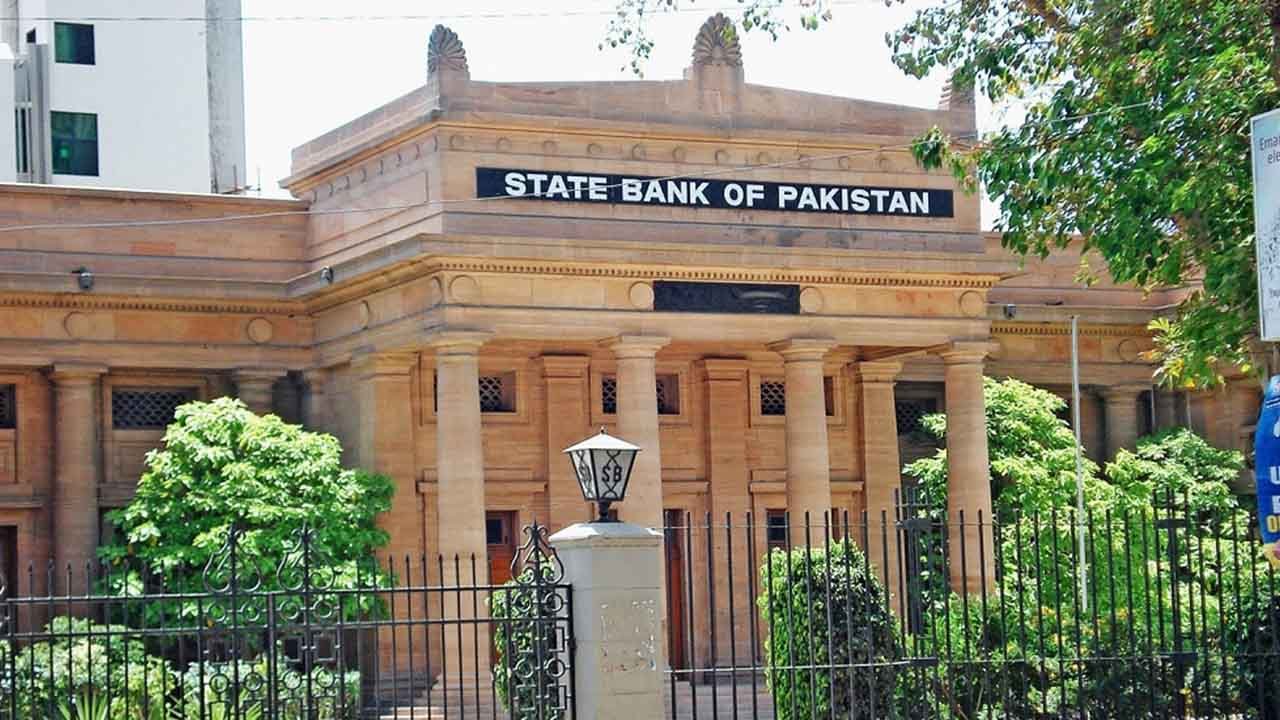
Additionally, interventions by the State Bank of Pakistan had curbed market speculation, further contributing to the currency’s stability.
Senator Aurangzeb concluded on an optimistic note, expressing confidence in the ongoing positive dialogue with the IMF and reaffirming the government’s commitment to achieving Pakistan’s economic goals.
The overall Business Confidence Index (BCI) in Pakistan rose to 54.6 in May 2024, according to the 48th wave of the Business Confidence Survey conducted by the State Bank of Pakistan (SBP) and the Institute of Business Administration (IBA).
This increase was driven by improvements in both the Industry and Services sectors, with the Industry BCI rising by 2.2 points to 52.1 and the Services BCI by 0.7 points to 55.4.
The headline index, “Overall Business Confidence,” consists of the Current Business Confidence Index (CBCI) and the Expected Business Confidence Index (EBCI). The CBCI, reflecting economic conditions over the past six months, increased by 1.1 points to 51.2 in May 2024.
Specifically, the Industry CBCI climbed by 2.8 points to 48.3, while the Services CBCI edged up by 0.5 points to 52.1, indicating more positive and neutral views and fewer negative perceptions.
Looking ahead, the EBCI saw a 1.1-point increase to 58, driven by rises in both sectors. The Industry EBCI grew by 1.6 points to 55.9, and the Services EBCI by 0.9 points to 58.7, with a corresponding shift towards more positive and neutral expectations.
However, the Purchasing Managers Index (PMI) fell by 0.6 points to 49.3, continuing to stay below the positive zone last seen in June 2022. Four of the five PMI components decreased: total orders by 1.5 points, business activities by 1.0 point, supplier delivery times by 0.6 points, and employment by 0.3 points. Only the quantity of raw material purchases slightly improved by 0.1 points.
On inflation, expectations significantly dropped by 10.1 points to 56.0, with the Industry and Services sectors both showing decreases of 10.2 and 9.8 points, respectively.
Employment trends were mixed. The Current Employment Index rose by 1.1 points to 51.2, primarily due to a 1.6-point increase in the Services sector, despite a slight 0.3-point decrease in the Industry sector.
Conversely, the Expected Employment Index fell by 0.8 points to 55.1, driven by a 1.0-point decline in the Services sector, while the Industry sector showed a marginal increase of 0.1 points.
Additionally, the Average Current Capacity Utilization (ACCU) in the Manufacturing sector within the Industry sector increased by 4.1 per cent to 67.7 per cent in May 2024.
The State Bank of Pakistan (SBP) has reduced its key policy rate by 150 basis points to 20.5 per cent, marking the first rate cut in nearly four years.
The move, announced on Monday, aligns with market analysts’ expectations and comes just ahead of the country’s annual budget for 2024-25.
Since June 2023, the central bank had maintained borrowing costs at a record 22 per cent. The Monetary Policy Committee (MPC) highlighted that while the significant decline in inflation since February was generally anticipated, the inflation figures for May were better than expected.
The MPC also observed that underlying inflationary pressures are easing due to the tight monetary policy stance and fiscal consolidation efforts.
This trend is evident from the continued moderation in core inflation and the improvement in inflation expectations among both consumers and businesses, according to recent surveys.
Despite acknowledging some upside risks to the near-term inflation outlook, particularly from upcoming budgetary measures and uncertainties regarding future energy prices, the MPC remains confident that the cumulative impact of previous monetary tightening will help keep inflationary pressures in check.
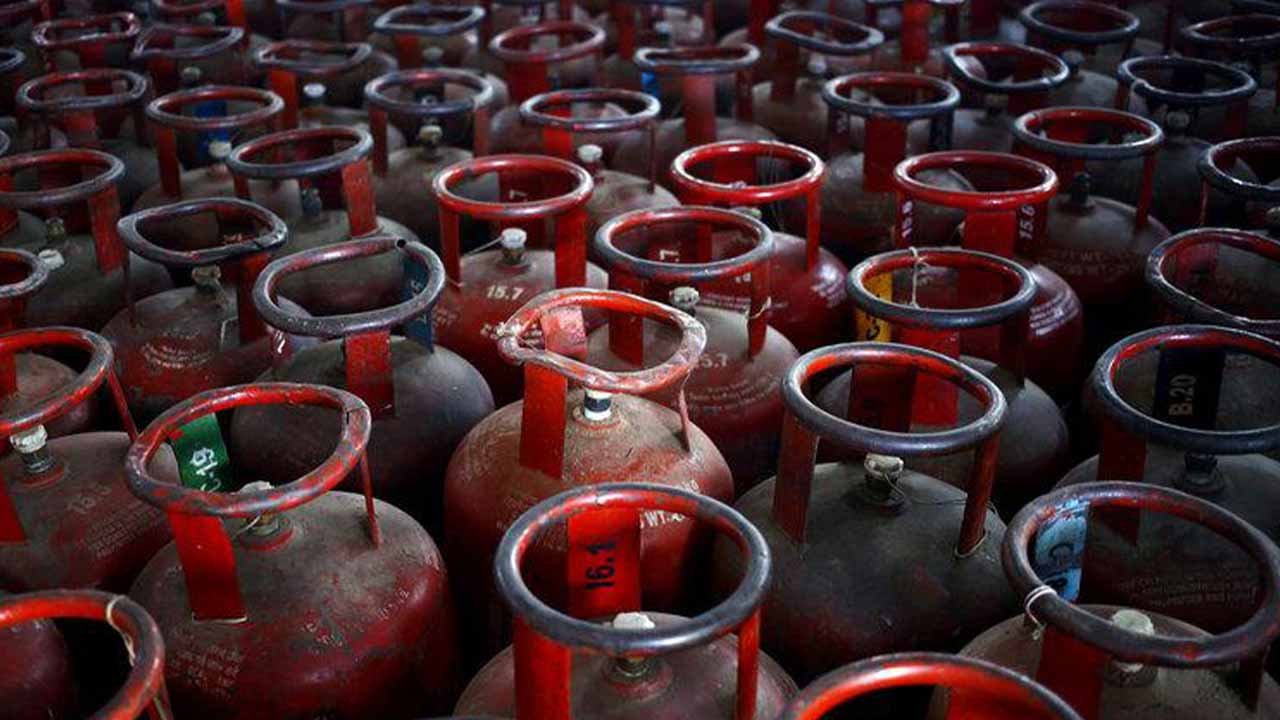
The Oil and Gas Regulatory Authority (OGRA) has announced a reduction in the price of Liquefied Petroleum Gas (LPG), providing relief to consumers who depend on LPG.
According to a recent notification, LPG prices have been cut by Rs3.87, bringing the cost down to Rs234 per kilogramme. This new rate is effective immediately.
This development follows a significant cost reduction in production by the Oil and Gas Development Company (OGDCL), attributed to the arrival of three ships carrying imported LPG.
The increased supply has enabled OGDCL to lower production costs, subsequently leading to the reduced consumer prices.
In a related development, the prices of petrol and diesel in Pakistan are also anticipated to drop from June 1. According to sources, petrol prices are expected to decrease by Rs5 per litre, while diesel prices may see a reduction of Rs4 per litre.
The Ministry of Finance will announce the new rates after consulting with the Prime Minister.
The OGRA summary proposing the price reductions will be submitted to the Petroleum Division by May 31st, sources added.
This move is part of a broader strategy to alleviate the financial burden on the public by ensuring affordable fuel prices amidst fluctuating global oil markets.