Category: Business

The most important business news, explained in a young, easy to understand way. News that affects young career professionals.

  • Pakistani rupee closes October at Rs277.85 against US dollar

    Pakistani rupee closes October at Rs277.85 against US dollar

    The Pakistani rupee (PKR) weakened by 5.77 paisa, or 0.02 per cent, against the US dollar (USD) in Thursday’s interbank market, closing at Rs277.85 per USD.

    This was a slight drop from Wednesday’s close of Rs277.79.

    In the open market, exchange companies quoted the dollar at Rs276.84 for buying and Rs278.72 for selling.

    During the day, the local unit touched a high of Rs277.90 and a low of Rs277.80 against the greenback.

    It is worth noting that since the start of the fiscal year, the PKR has appreciated by 49.12 paisa, or 0.18 per cent, against the US dollar. For the calendar year, it has strengthened by Rs4.01, or 1.44 per cent.

    PKR’s performance against other foreign currencies

    Currency Thursday’s rate Wednesday’s rate Change
    US Dollar (USD) Rs277.85 Rs277.79 5.77 paisa (-0.02%)
    British Pound (GBP) Rs361.02 Rs361.34 31.39 paisa (+0.09%)
    Japanese Yen (JPY) Rs1.8260 Rs1.8126 1.34 paisa (-0.74%)
    Saudi Riyal (SAR) Rs73.98 Rs73.97 1.34 paisa (-0.02%)
    UAE Dirham (AED) Rs75.65 Rs75.63 1.57 paisa (-0.02%)
    Euro (EUR) Rs301.69 Rs300.72 96.55 paisa (-0.32%)
    Chinese Yuan (CNY) Rs39.03 Rs38.99 3.68 paisa (-0.09%)
    Swiss Franc (CHF) Rs321.12 Rs320.24 88.10 paisa (-0.28%)
    Exchange rates

    Against the British Pound, the PKR gained 31.39 paisa, or 0.09 per cent, closing at Rs361.02, up from Rs361.34 the previous day.

    Against the Japanese Yen, the PKR dropped 1.34 paisa, or 0.74 per cent, ending the session at Rs1.8260, down from Rs1.8126.

    The rupee also weakened by 1.34 paisa, or 0.02 per cent, against the Saudi Riyal, closing at Rs73.98, and by 1.57 paisa, or 0.02 per cent, against the UAE Dirham, finishing at Rs75.65.

    Against the Euro, the PKR decreased by 96.55 paisa, or 0.32 per cent, closing at Rs301.69, down from Rs300.72.

    The rupee lost 3.68 paisa, or 0.09 per cent, against the Chinese Yuan, finishing at Rs39.03.

    The local currency also declined by 88.10 paisa, or 0.28 per cent, against the Swiss Franc, closing at Rs321.12.

    PKR’s closing on Wednesday

    A day earlier, on Wednesday, the rupee had weakened by 5 paisa, or 0.02 per cent, against the US dollar settling at Rs277.79.

    It fell by 94 paisa, or 0.26 per cent, against the British Pound, closing at Rs361.34.

    The rupee gained 38.59 paisa, or 0.12 per cent, against the Swiss Franc, ending at Rs320.24.

    Against the Japanese Yen, the rupee strengthened slightly, closing at Rs1.8126.

    The PKR dropped by 1.33 paisa, or 0.02 per cent, against the Saudi Riyal, closing at Rs73.97, and fell by 1.36 paisa, or 0.02 per cent, against the UAE Dirham, closing at Rs75.63.

    Against the Euro, the rupee dropped by 48.46 paisa, or 0.16 per cent, closing at Rs300.72.

    The PKR also depreciated by 9.60 paisa, or 0.25 per cent, against the Chinese Yuan, closing at Rs38.99.

  • Gold price increases by Rs2,900 per tola to new record

    Gold price increases by Rs2,900 per tola to new record

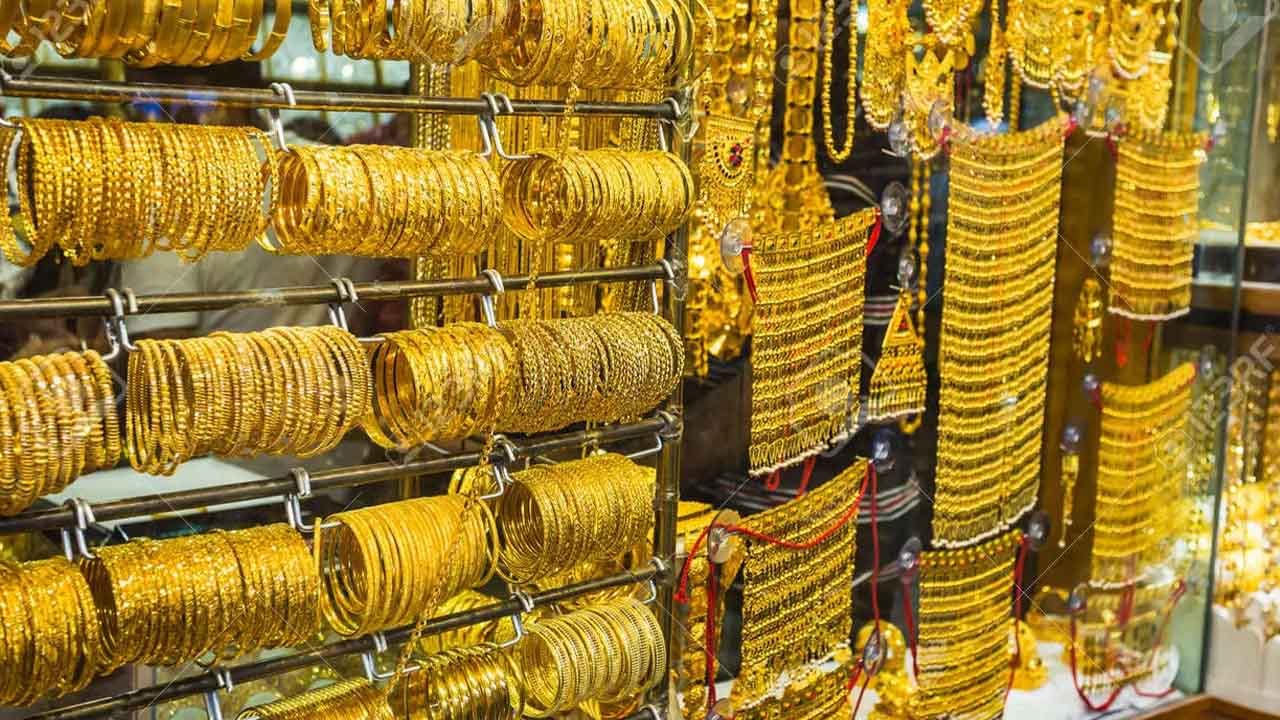
    On Wednesday, gold price rose by a massive Rs2,900 per tola in the local market, reaching Rs287,900.

    The latest rate marks the highest gold price ever recorded in the history of Pakistan.

    Today’s gold price is also Rs2,500 higher than the previous record high, which was observed last week when the All-Pakistan Gems and Jewellers Sarafa Association (APGJSA) quoted gold at Rs285,400 per tola.

    Additionally, the price of ten grammes of gold has also risen in the local market, with APGJSA reporting it at Rs246,828 after a single-day jump of Rs2,486. The price of one gramme of gold in the country now stands at Rs24,682.8.

    Previously, the rate of one gramme of gold in the local market was Rs22,196.

    This increase was not only observed in Pakistan, as international gold prices also saw a rise. The APGJSA reported that on Wednesday October 30 the price of gold rose by $29 internationally, reaching $2,784.

    Meanwhile, silver prices in the country remained stable once again, with the price per tola recorded at Rs3,350.

  • Vegetable shortage crisis: Export surge could spell trouble for farmers

    Vegetable shortage crisis: Export surge could spell trouble for farmers

    Businessmen involved in the agricultural sector managed to boost vegetable exports by 11.5 per cent in the first quarter of the fiscal year.

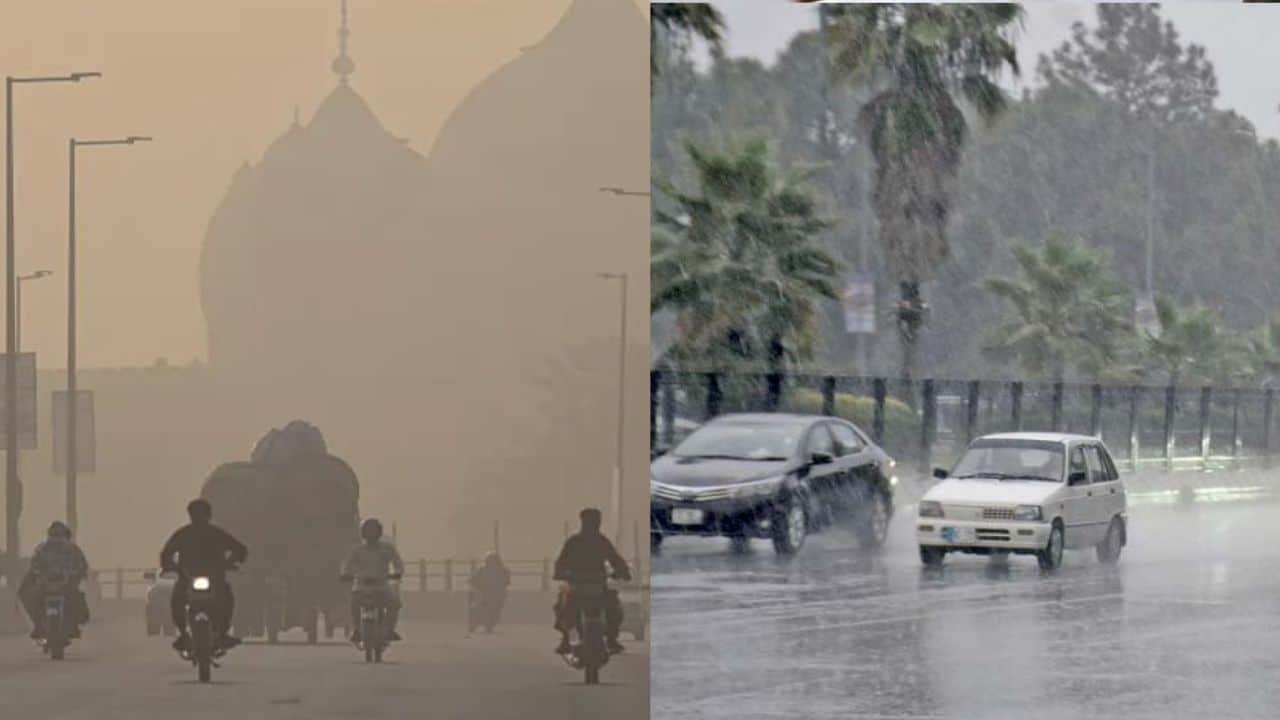
    This comes at a time when seasonal rains have left vegetable fields devastated nationwide – especially in Sindh.

    The consequence of mass exports and heavy rainfalls has caused major shortages in the local economy. As a result, retail stores and street vendors have resorted to relying on Iranian and Afghani vegetables to keep customers from returning empty-handed.

    With the decrease in vegetable supply, the prices have risen, which is not just true for the local economy but also for international markets where a 26 per cent rise in price has been recorded. The result of this inflation, while beneficial to farmers, is likely to negatively impact retailers.

    The increase in prices will put retailers in a dilemma regarding their profit margins. They must either absorb these higher prices while decreasing their profit margins or protect them by increasing prices.

    Either way, retailers are expected to suffer.

    However, farmers will probably not be celebrating the extra exports worth $71 million for long. This is because Pakistani exporters have been exporting produce imported from across the border. The result could be loss in sales as international buyers purchase vegetables from Pakistan for their incredible taste.

    The same taste can’t be found in imported vegetables. Which might leave international buyers disappointed with the drop in quality. Moreover, it does not make sense for international buyers to purchase the same goods for a marked up price when they can get the same product directly from the source.

    Farmers are also growing worried over a potential loss in sales of their products in local markets. This is largely true because if prices of local produce continue to skyrocket, consumers may incline towards purchasing Iranian onions that come with attractive price tags. And with agricultural yields expected to take months to recover, farmers are losing our valuable market share to imported products.

    What’s most concerning for farmers is the influx of Afghani produce. This is largely because Afghanistan is facing numerous sanctions, and farmers there are willing to sell their produce at figuratively “dirt cheap” prices. If local markets get flooded by these products, Pakistani farmers may lose out.

    Farmers, especially those growing onions and tomatoes, will hope for an improvement in their yield levels. This will allow them to capitalize on the higher international and domestic prices.

    Will Pakistan farmers be able to achieve this feat? Only time can tell.

  • Pakistan eyes over $12 billion in Riyadh investments

    Pakistan eyes over $12 billion in Riyadh investments

    Business owners in Pakistan have their eyes set on the Riyadh meetings as developments in the Future Investment Initiative (FII) are underway.

    Prime Minister Shahbaz Sharif and the delegation from Islamabad is expected to bring back upwards of $12 billion in investments.

    Premier will be meeting the Crown Prince Muhammad bin Salman along with other high-ranking officials in an attempt to secure Saudi investments.

    Earlier this month, prior to the Shanghai Cooperation Organization (SCO) summit, a major Saudi delegation invested nearly $2 billion dollars into the country. With the Saudis expected to continue bankrolling investments in Pakistan, business owners are preparing to celebrate.

    This is due to the fact that Saudi investments will allow Pakistani businesses to expand their operations significantly. Businesses are already doing well, as can be seen with the Pakistan stock exchange (PSX) closing over 91000 points today.

    With international investments pouring in from Riyadh, investor confidence is projected to increase and further contribute to the growth of businesses in the economy.

    Riyal-fueled growth is likely to scale up the scope for projects of businesses, which will result in new employment posts. Once the hiring process by businesses ends, the situation of unemployment is likely to improve in the economy.

    Currently, the unemployment rate sits at an uneasy 5.5%, which translates into around 4.5 million people who are out of work. With more people working and with an increase of money flowing in the economy, businesses are likely to see an increase in the demand for their goods.

    The bulk of the Saudi investment will be made towards the petroleum refinery sector.

    If Pakistan is to develop a more extensive network of refineries, it could be able to greatly benefit from future oil discoveries.

    This is because Pakistan would have the necessary infrastructure to purify its own crude oil and not have to rely on foreign powers for petroleum imports. If oil is to be discovered and the refineries manage to reach the necessary capacity with Saudi investments, an annual saving of around $16.91 billion could be seen – as that is the current annual value of petroleum imports.

    The result of this could be appreciation of the PKR with fewer imports as the Pakistani rupee will be buying up fewer commodities in international markets, resulting in a reduction in its supply.

    This will spell great news as businesses that rely on processing imported goods to produce final goods will be able to import goods cheaply with strengthened rupee.

    Currently, the textile sector is involved in the importation of dyes and pigments to produce final products. However, these imports could be made cheaper if Saudi investments fund the construction of refineries.

    Economic collaboration between Saudi Arabia and Pakistan will be extremely beneficial to the latter.

    Will Islamabad’s delegation manage to snag billions in investments? Or will they return home empty-handed? Time shall tell.

  • ADB approves loan to help Pakistan deal with climate change

    ADB approves loan to help Pakistan deal with climate change

    The Asian Development Bank (ADB) has approved a $500 million policy-based loan to help Pakistan tackle climate change and improve disaster risk reduction and resilience.

    “The Climate and Disaster Resilience Enhancement Program (CDREP) will strengthen Pakistan’s institutional capacity for planning, preparedness, and response; increase inclusive investment in disaster risk reduction and climate resilience; and support the scale-up of disaster risk financing using a risk-layered approach,” ADB said.

    Besides funding for CDERP, the bank also approved a $1 million technical assistance grant for Pakistan to support the implementation of the programme.

    The ADB highlighted that Pakistan is one of the most vulnerable countries in Asia and the Pacific to climate change and natural disasters, with annual disaster-related losses averaging over $2 billion.

    “This program builds on ADB’s longstanding work in Pakistan to understand and reduce climate and disaster risks and support effective disaster response,” said ADB Director General Yevgeniy Zhukov.

    “We are proud to support an integrated and comprehensive approach to climate and disaster risk management, including a portfolio of disaster risk financing instruments for timely and adequate funding for disaster response.”

    The CDREP helps improve disaster risk mapping and modelling to guide investment and development decisions. It also boosts coordination for disaster monitoring and response.

    “It supports enhanced planning and prioritization of gender-sensitive and resilient public investments, including integrated flood risk management and nature-based solutions,” ADB said.

    It also helps raise climate finance from public and private sources, including the launch of a domestic green sukuk.

    “A key innovation of the program is the use of ADB’s Contingent Disaster Financing option for the first time in the Central and West Asia region. This will provide quick disbursing budget support in the event of a disaster,” the lender said.

    Furthermore, the programme will establish a solidarity fund to encourage the adoption of risk transfer solutions, such as agricultural insurance. It will also provide shock-responsive social protection to deliver cash assistance during disasters.

  • Can trade with India guide Pakistan out of the darkness?

    Can trade with India guide Pakistan out of the darkness?

    Independent power producers and business owners in the pharmaceutical industry worriedly watched the developments of the World Bank meetings on Sunday. This is because, during the IMF and World Bank meetings, Finance Minister Muhammad Aurangzeb stressed the importance of trade links with India.

    Pakistan is a net importer of power and pharmaceutical products, which ensures that businesses operating in these fields face little local competition. But if Islamabad lifts the red tape on trade with New Delhi, the Wagha-Attari border is bound to see major truck movement. This is because India is a net exporter of power and pharmaceuticals – which Pakistan could buy.

    If trade is to open up, importers in Pakistan might become inclined to purchase medicines from India as opposed to the United States – which is extremely far away compared to India. This is likely to reduce shipping times from 44 days down to under a day in optimal conditions. Due to reduced travel times and costs, there might be an increase in the import value of pharmaceutical products – a figure that stood at $1.38 billion in 2022.

    The Pakistani pharmaceutical industry saw a 15.3 per cent growth in 2023, with more growth projected for the near future. However, if trade restrictions are reduced, the current growth levels of the pharmaceutical sector could take a serious hit. This will be due to the world-class quality of the medicines of the well-established Indian pharmaceutical industry.

    Fewer restrictions on trade with India are likely to spell bad news for local pharmaceutical companies as the introduction of extra competition flooding the market with low-price medicine will reduce both growth rates and profit margins.

    Additionally, with Pakistan importing over $13 million in electricity in 2023, the possibility of importing Indian electricity is an attractive one. This is because India could offer more competitive rates on their electricity than our current trading partner, Iran.

    Moreover, if India is to sign power deals with Pakistan at beneficial rates, independent power producers might sense danger, too. This is due to the fact that earlier this month, five of them were let go as Islamabad terminated their contracts.

    However, if trade is to open up, it will significantly contribute towards a welfare increase for citizens. This is because consumers will have a wider variety of goods to choose from in addition to lower prices.

    Local businesses, however, will also have to reduce their prices accordingly if they want to ensure that a steady stream of customers purchase their products.

    A few local industries might be able to capitalize on normalizing trade relations with India. These could be the sports and cement industries. With Indian cement exports falling over 65 per cent from 2015-2022 to meet domestic demand, Pakistan’s cement industry could step in and capitalize on Indian demand.

    Most importantly, on a macro level, the normalization of trade and restoration of Pak-India relations will likely result in a great deal of prosperity for Pakistan. This is because the economic binding and strengthening of trade links between the two nations will reduce the political tensions – and the resources that are expended on said tensions.

    With Aurangzeb’s mindset on achieving economic prosperity, the main question on everyone’s minds is whether this plan will ever come to fruition. The answer can only be found with time.

  • Exchange rates: Rupee closes at Rs277.68 against US dollar

    Exchange rates: Rupee closes at Rs277.68 against US dollar

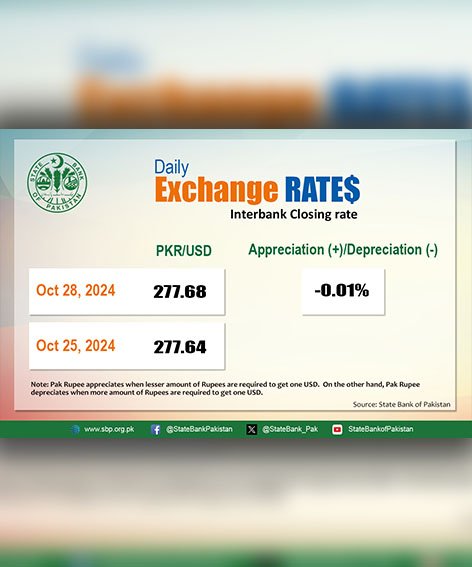
    The Pakistani rupee (PKR) recorded a marginal decline against the US dollar, depreciating 0.01 per cent in the interbank market on Monday.

    According to the State Bank of Pakistan (SBP), PKR wrapped up first trading day of the week at Rs277.68 after experiencing a loss of four paisa versus the greenback.

    SBP exchange rate: USD to PKR

    During the current fiscal year, Pakistani currency has gone up by 66 paisa or 0.24 per cent against the dollar. While it has appreciated more than Rs4 or 1.51 per cent so far this calendar year.

    During the previous week, PKR weakened marginally as it depreciated three paisa or 0.01 per cent against the US dollar.

    The dollar index has climbed 3.6 per cent to 104.49 during October, its sharpest monthly rise in more than two years.

    In the open market, local money exchangers quoted the American currency at Rs278.62 for selling and Rs276.75 for buying.

    As compared to other foreign currencies, the home unit remained largely stable despite minor fluctuations.

    Currency Change (Paisa) Change (%) Today’s rate (PKR) Last close (PKR)
    Euro 62.43 0.21 per cent 299.97 300.59
    Japanese Yen 1.64 0.90 per cent 1.8105 1.8269
    British Pound 14.39 0.04 per cent 360.06 360.20
    Chinese Yuan 2.85 0.07 per cent 38.95 38.98
    Saudi Riyal 1.82 0.02 per cent 73.94 73.96
    UAE Dirham 1.07 0.01 per cent 75.60 75.61
    Swiss Franc 36.12 0.11 per cent 320.00 320.36
    Exchange rates

    Against the Pound, PKR appreciated 14.39 paisa or 0.04 per cent and closed at Rs360.06.

    PKR increased 62.43 paisa or 0.21 per cent against the Euro, closing at Rs299.97.

    The local unit was reported 36.12 paisa or 0.11 per cent up against Swiss franc to end the session at Rs320.

    Pakistani currency fell by 1.07 paisa or 0.01 per cent against the UAE Dirham to close at Rs75.60.

    PKR’s value against the Japanese Yen rose 1.64 paisa or 0.90 per cent to close the day at Rs1.8105.

    The local unit increased 2.85 paisa or 0.07 per cent against Chinese Yuan to close at Rs38.95.

    The local currency shed 1.82 paisa or 0.02 per cent against Saudi Riyal to Rs73.94.

  • Textile manufacturers unhappy as government policy threatens 18 billion dollar export sector

    Textile manufacturers unhappy as government policy threatens 18 billion dollar export sector

    Textile exporters expressed great displeasure over the government’s decision to stop the supply of natural gas to their power plants. Islamabad’s decision puts the USD 18 billion textile export industry at risk by leaving it to function on the national power grid.

    While the motivations are not entirely clear, experts believe that by cutting the gas supply to these independent power plants, the government is trying to increase its power supply revenues. This is because these power producers operate outside of the national grid, which makes it a tough activity to tax and regulate.

    For business owners in the textile sector, reverting to the national grid is a huge setback. This is due to the unreliability of the distribution companies that are infamous for power outages and fluctuations. While fluctuations might not be an alarming issue in residential areas, for the textile industry, they can render expensive machinery useless.

    This is primarily the reason why many textile manufacturers banded together to set up these independent power plants, as they were a stable source of power. However, with the government’s metaphorical axe coming down on these power plants, textile business owners will have no choice but to comply.

    Moreover, as per the Pakistan Textile Exporters Association (PTEA), the national grid will result in higher production costs due to transmission and distribution losses – inefficiencies the grid is known for.

    For exporters, this spells bad news as a rise in production costs will result in a loss in the competitive edge that Pakistan’s textiles have in international markets. This is because Pakistani textiles will not be as attractive to competitors due to the higher price tag when compared to other countries offering the same product for less.

    With Pakistani textile company Keywin Trading Ltd and other local players signing USD 40 million worth of agreements with Chinese firms at TEXPO 2024 (Textile Expo), the decision to cut gas supply to independent power plants comes at a bad time.

    This is primarily because, aside from switching to the costlier national grid, textile manufacturers have no real alternative to turn to anymore. Exporters who lose out on international contracts due to higher prices might have to shut their factories down and lay off thousands of workers.

    Is the crusade against these power plants even worth it if it means that the textile sector gets caught in the crossfire? Before anyone jumps to answer this question, perhaps it is best to note that the textile sector is singlehandedly responsible for 60% of the country’s exports.

  • BYD Seal EV launched in Pakistan with starting price of Rs14.79 million

    BYD Seal EV launched in Pakistan with starting price of Rs14.79 million

    BYD, a leading electric vehicle (EV) company, has introduced its new models, the Seal and Atto 3, in Pakistan, according to PakWheels.

    In Pakistan, the BYD Seal’s Dynamic model is priced at Rs14.79 million (ex-showroom), while the BYD Atto 3 Advance model is available at Rs8.9 million.

    The BYD Seal comes with a powerful 82.56 kWh battery, providing an impressive range of up to 650 km. The car also uses BYD’s signature Blade Battery, which powers the four-wheel-drive version to go from 0 to 100 km/h in just 5.9 seconds.

    For added convenience, the Seal’s high-speed charging allows it to go from 30 per cent to 80 per cent charge in about 30 minutes. The performance variant of the Seal can accelerate from 0 to 100 km/h in just 3.8 seconds, according to BYD’s official website.

    The BYD Atto 3 comes with a 49.92 kWh battery and has a range of 410 km. It can accelerate from 0 to 100 km/h in 7.9 seconds and also includes the Blade Battery, allowing it to charge from 30 per cent to 80 per cent in half an hour.

    Last year, BYD sold over 412,000 units of the Yuan Plus EV – known as the Atto 3 in global markets – with around 100,000 of these being exported. This means the Atto 3 made up 42 per cent of BYD’s total car exports last year.

  • Bullish trend persists: PSX closes just under 90,000 points amid strong investor confidence

    Bullish trend persists: PSX closes just under 90,000 points amid strong investor confidence

    Traders on the floor of the Pakistan Stock Exchange (PSX) rode on a wave of joy today as they witnessed the market break yet another record.

    During day trading, the KSE-100 index crossed the 90,000 mark for the first time ever, and it stayed that way until the trading day was about to close.

    At the end of the trading day, however, KSE-100, the benchmark of the PSX that includes the top 100 companies, settled at a respectable 89,993.96 points. This is a huge leap of 1,047.98 points, which translates into a 1.16 per cent increase from when the market opened.

    The ALLSHR (All Share) Index, which tracks the performance of all companies listed on the PSX, did really well, too. ALLSHR gained 495.83 points throughout the day, which is 0.86 per cent from the time it opened, to close at an impressive 57,461.53 points.

    While all indexes were in the green, the KSE-30 index, which focuses on the top 30 companies listed on the exchange, performed the best by closing at a remarkable 28,395.15 points. KSE-30 had gone up by 352.45 points at closing time, which is a massive 1.24 per cent increase in the index value.

    The driving factor behind this bullish trend is a rise in investor confidence. Investors in the market are making large gains due to the hot streak PSX has been for a while now.

    This enthusiasm has attracted foreign investors, as the percentage of all shares held by foreign investors jumped from 14.49 per cent at the start of the month to 15.22 per cent currently.

    It’s a great time for the market and a great opportunity for those looking to invest in Pakistan’s financial future. Can the bullish trend continue? It certainly is possible, but only time will tell.