Category: Business

The most important business news, explained in a young, easy to understand way. News that affects young career professionals.

  • Chinese loan negotiations may give Pakistani businesses a reality check

    Chinese loan negotiations may give Pakistani businesses a reality check

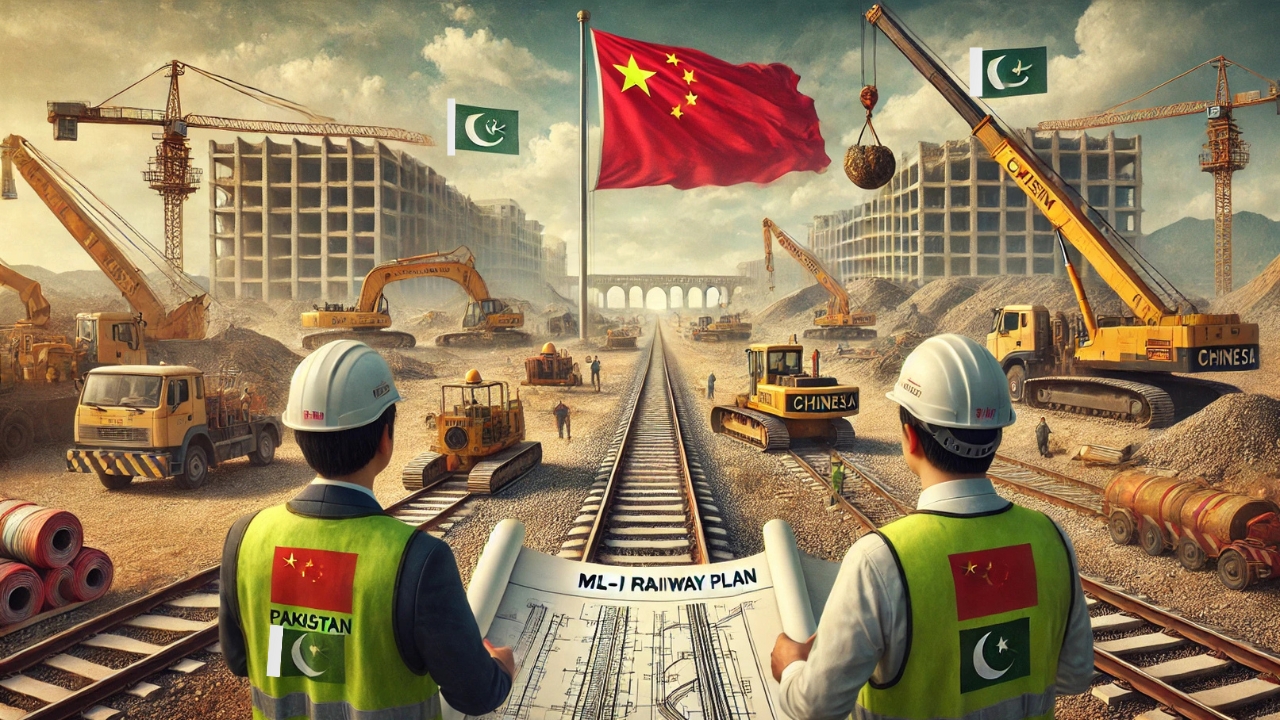
    As Pakistan and Chinese officials discuss the terms of the loan for the ML-I railway project, local businesses grow worried. While there are many supposed benefits on the surface of the loan deal, there are many ominous conditions that may soon reveal themselves. 

    As for the benefits, the construction of the Karachi-Hyderabad segment of ML-I will help reduce transport times and fuel costs for businesses in the long run. As a result, businesses will be able to reduce the costs of their goods and services, resulting in greater demand for these products. This is likely to increase the profit margins of many businesses, especially those transporting goods around Karachi and Hyderabad.

    Hyderabad, known for its export of textiles and agricultural produce, will benefit from the construction of the railway, which will allow goods to flow freely to the port city of Karachi. This will allow for exporters to guarantee shorter delivery times to international buyers along with lower costs thanks to the railway.

    However, local construction companies should not be delighted as they may not even get the contracts to work on the railway to begin with. Historically, Chinese loans often come with clauses to employ Chinese companies or the contract is already pre-awarded to a Chinese firm.

    So, while on paper, the influx of a billion dollars looks great, the reality of the matter is that the loan only employs Chinese firms that bring in its nationals to work on the projects. While these Chinese employees may spend part of their earnings here in Pakistan, the majority of the proceeds of projects are repatriated back to China. 

    Moreover, the materials to be utilised are also often sourced from China. As a result, Pakistani businesses do not benefit meaningfully from these loans. An example of such loans can be seen primarily in Africa and Eastern Europe, which rely on Chinese loans.

    Moreover, Chinese officials are trying to get Pakistan to sign the loan agreement at an interest rate of 2.3 per cent, while the Pakistani side is making huge efforts for the interest rate to be 1 per cent. If Chinese loan conditions are agreed upon, the government will have to foot higher interest payments on the loan – A loan where their own companies and businesses are not the primary beneficiaries.

    While Pakistan relies on loans to finance the majority of its large-scale projects, it might not sound like a great deal to secure them at unfavourable terms. However, the loan deal will most probably be secured by Pakistan regardless. Will this be a gift to the economy or a curse? Time shall tell.
  • Honey producers secure a sweet export deal to Malaysia

    Honey producers secure a sweet export deal to Malaysia

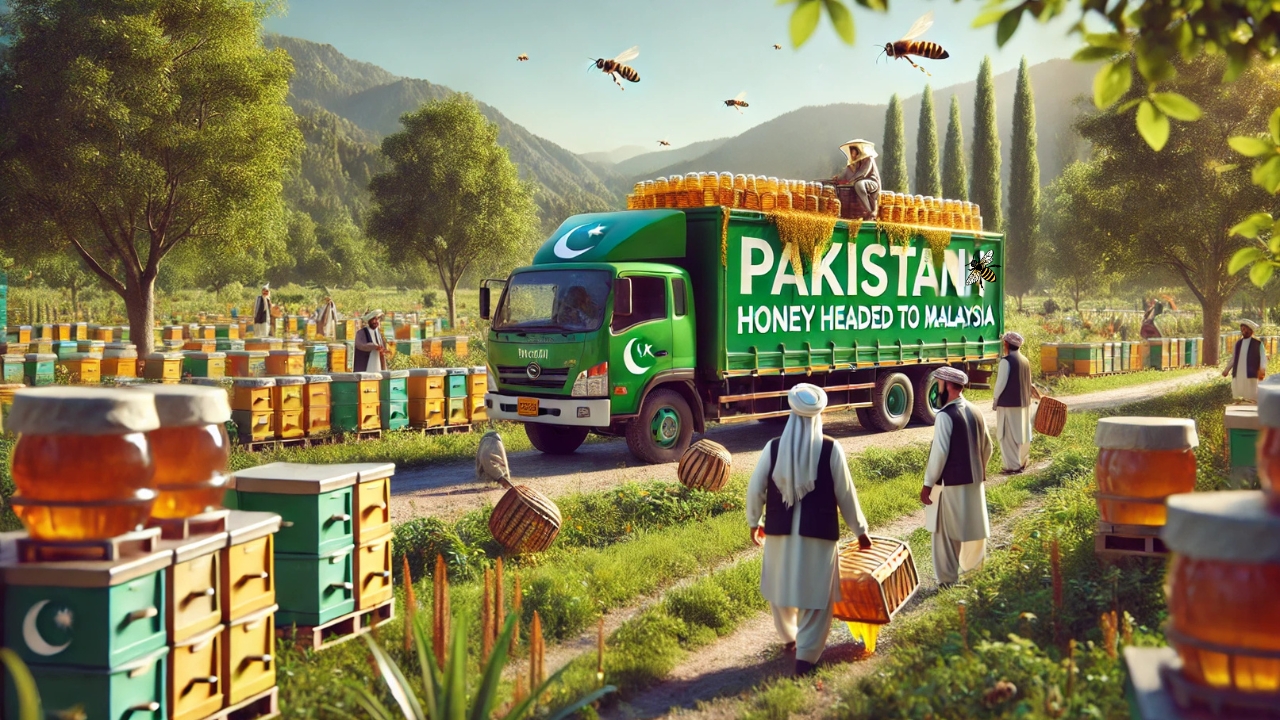
    Producers of honey rejoiced as an export deal saw the first shipment of Pakistani honey heading for Malaysian shores. This sweet deal is expected to open up new destinations for Pakistan’s honey. Any further developments will help Khyber Pakhtunkhwa (KP) the most, as the industry is primarily focused on the province.

    This deal was negotiated and supported by the Pakistani High Commission in Kuala Lumpur, which has made it the second of its kind in recent history. The first one was negotiated by the Pakistani High Commission in Kenya to support tractor sales in East Africa. These activities by the High Commission are a reflection of Commerce Minister Jam Kamal, who has been advocating for the export of commodities such as cotton, sugar, tractors and, most recently, honey.

    As it stands, Pakistan ranks 34th in the export of honey, a position hardly anyone could envy. 

    Historically, Pakistan’s honey has always been destined to be shelved in stores that are primarily located in the Middle East. This expansion into a new market spells great news for the 60,000 honey farms that call KPK home as they expect to boost export levels.

    The value of all traded honey in 2022 sat at $2.69 billion, with China leading the export race at $254.2 million. If Pakistan’s producers manage to secure additional deals, they can expect to scale up the scope of their operations, as there will be a large inflow of foreign reserves.

    These foreign reserves will be critical for businesses involved in the production of honey. This is because the majority of these honey-producing farms are located in rural areas where income tends to be generally low. However, the same jar of honey can fetch a better price in foreign markets, which is especially beneficial to businesses located in economically depressed areas of the country.

    The signing of export deals by foreign importers and Pakistani honey businesses will undoubtedly create employment opportunities, as the increased demand for honey will incentivise farms to scale up production by hiring labour.

    This is especially beneficial for KP, where the farms are predominantly located. This could help reduce the unemployment rate in the province, which rests at an uneasy 8.8 per cent.

    The export to Malaysia is also a great safety net for honey producers in Pakistan because if the Middle East decides to cut back on honey imports, the effect will not be as pronounced. This is just another example of why diversification of trade is always beneficial.

    Transport businesses are also eyeing the deal as a positive step.

    If this batch of exports garners more international customers, the local transport sector could see more activity in the coming months. Likewise, businesses lining the route from KP to Karachi port.

  • Prime Minister Shehbaz Sharif secures $3 billion investment package in Qatar visit

    Prime Minister Shehbaz Sharif secures $3 billion investment package in Qatar visit

    Prime Minister Shehbaz Sharif returned to Islamabad but was not empty-handed. In addition to a $600 million investment package from Saudi Arabia, Mr Sharif also managed to get Qatar to pledge three billion dollars across various sectors in Pakistan.

    This investment from Qatar is vastly different from the ones received by Saudi Arabia. This is largely due to the fact that the Saudi investment plans were focused primarily on the upgrade and construction of refineries in Pakistan. However, Doha’s vision is to hold a more diverse set of investments.

    This is likely to spell great news for Pakistani businesses, especially those involved in the provision of airport services, renewable energy and hospitality. The inflow of Qatari Riyals will benefit businesses as these foreign funds will allow for the expansion of the scope of current projects.

    Lawmakers in Islamabad have been especially successful in attracting foreign direct investments (FDI) in the past few months. In the first quarter of FY 24-25 alone, FDI had jumped up by 48 per cent. With the Qatari deal secured, experts predict the FDI levels will continue to stay at a respectable level in the second quarter.

    Qatar’s investment in Pakistan’s economy and, ultimately, businesses shows the great level of faith they have in the economy. The government has been making great efforts to made great strides to revive the economy, as all economic indicators seem to be moving in a positive direction.

    As per the IMF’s (International Monetary Fund) forecasts, the annual inflation rate is expected to sit at around 9.5 per cent – a stark improvement from the 30.77 per cent rate recorded in 2023. Moreover, the government has gained significant credibility with international investors and lenders, having a fiscal surplus for the first time in 24 years. These statistics have undoubtedly made Pakistan a better destination for investments than last year and investors have taken note of this too.

    As such, Qatari investors might consider Mr Sharif’s request in the meetings where he urged them to invest in businesses in Pakistan. The resulting collaboration will likely continue Riyal bankrolling business projects in Pakistan. Moreover, Qatar’s confidence in Pakistan is likely to be shared by other international investors.

    Qatar’s latest investment pledge adds to the long line of investments that Islamabad has managed to garner. Can Pakistan, backed by foreign investments, finally claw out and recover from the economic quagmire that it found itself in last year? Time shall tell.

  • Dollar falls to 152 against rupee on Google

    Dollar falls to 152 against rupee on Google

    The United States (US) Dollar on Friday evening took a dive against the Pakistani rupee on the Google currency converter, leaving traders perplexed.

    As per the details, the USD crashed to Rs152.62 from Rs277.50 earlier in the evening. While no statements were issued by Google or Morningstar Inc that provides the search giant with data for its currency converter, it was probably an erroneous entry that was fixed moments after the glitch was first noticed.

    It is pertinent to note that the glitch wasn’t the first of its kind as on June 7, 2023, a similar case was observed when the value of the rupee dropped sharply only for it to turn out as a simple data entry error.

    Such errors have also occurred back in 2022 and 2018, leaving many confused. Had this been true, there would be great economic and business implications.

    However, there has been no change in the economy to suggest a rise in value of the rupee of this magnitude.

    One of the few entities that could have been responsible behind such a large rise in the value of the rupee is the State Bank of Pakistan (SBP). While it does hold the power to artificially increase the value of the rupee by buying it up using foreign reserves, there is no evidence to support such a large activity.

    Instead, the SBP actually reported its foreign exchange reserves to have grown by $116 million to $11.15 billion on October 25.

    While such a rise is a dream for many businesses and citizens alike in Pakistan, the lack of evidence that suggests such a change in the value of the rupee makes it exactly that: a dream.

  • PIA auction fails: Sole bid rejected by government for being too low

    PIA auction fails: Sole bid rejected by government for being too low

    Spectators watched as the televised auction of the flag carrier, Pakistan International Airlines (PIA), failed horribly. The government seemed interested in selling PIA for the right price but did not approve the sale when the sole bid was off by 88.2 per cent of the original value.

    The reason for only one bid is the government’s condition for the purchasing entity to inject over half a billion dollars into PIA to modernise the fleet. Five business owners out of the six companies selected for the auction process decided to opt out due to this additional investment that they would have to finance after the purchase of PIA itself.

    The government was expecting to receive a total of $305 million but managed to get only a reality check. In hindsight, the goal of privatising the national carrier to companies via auction was a bad idea.

    If lawmakers in Islamabad aim to make the sale, it will have to explore other avenues.

    The auction process could be expanded to include more local businesses and international players, too. As it stands, this seems viable as Saudi Arabia, UAE, and Qatar have all expressed great interest in purchasing PIA in the recent past.

    Additionally, these investors in the Gulf also have the financial capability to undertake the massive $700 million fleet modernisation plan once they acquire PIA. This would be a good way for Pakistan to secure FDI (Foreign direct investment) inflows of over one billion dollars.

    Alternatively, the government could opt for a simple solution. This could be issuing more shares to be traded on the PSX (Pakistan Stock Exchange). However, this will spell bad news for investors who already have their money parked in the publicly traded PIA holding company. This is because the value of their shares will be reduced due to the dilution of ownership that will occur post-share issuance.

    In simple words, the creation of new shares will cause investors to lose out due to more overall shares being traded on the PSX. This is especially true if we consider the fact that Islamabad is currently interested in selling around 60 per cent of PIA.

    In this approach, shareholders, in collaboration with the government, could use the funds raised by the sale of shares to modernise the fleet without extensive international investments.

    However, as it stands, PIA is a loss-making institution.

    With last year’s loss of 75 billion rupees, PIA’s liabilities grew to a staggering 825 billion rupees. If the government retains a majority of the share while raising capital by issuing shares, investors could actually lose out instead. This is because civil servants can simply not run a company with the same efficiency businessmen can.

    If investors believe that the government will not commit to running PIA as a profit-maximising business rather than the national carrier, they may not put their money into it to begin with.

    The question remains: Which entity will purchase PIA from the government? The answer, while currently uncertain, will be sought by suits in Islamabad’s boardrooms.

  • Can African imports of Pakistani tractors save the ‘sinking industry’?

    Can African imports of Pakistani tractors save the ‘sinking industry’?

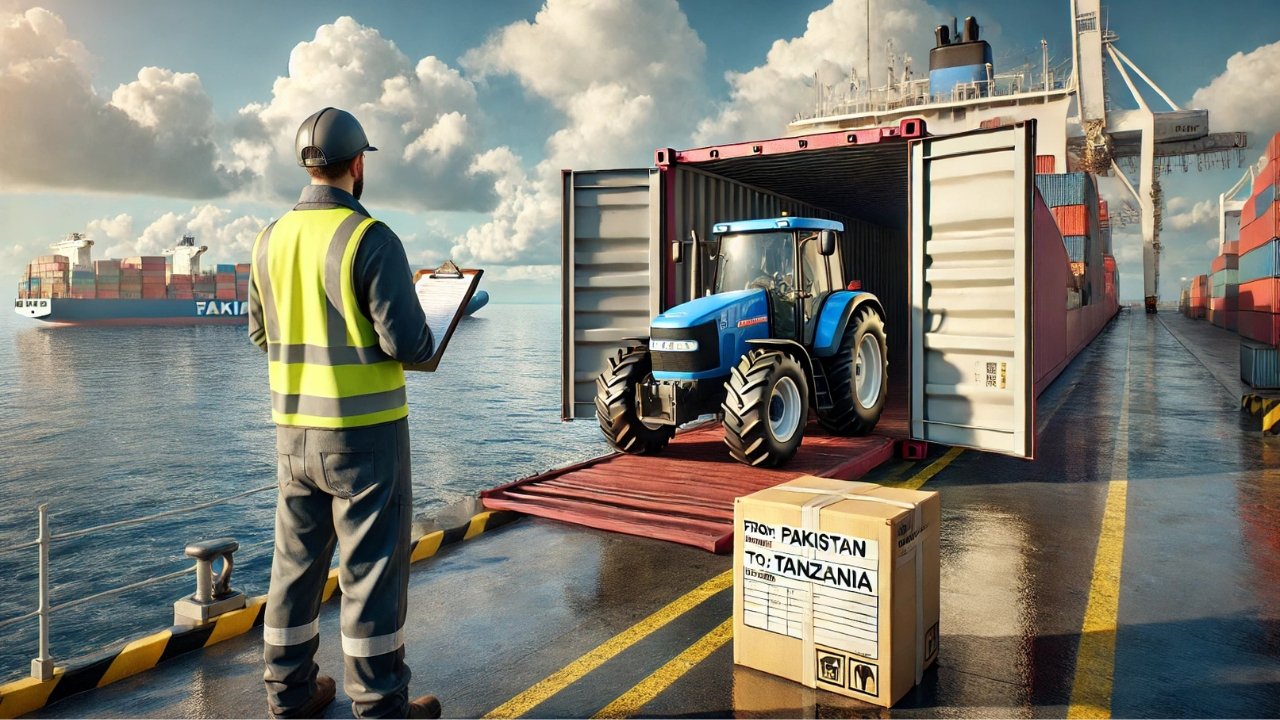
    Farmers and tractor producers watched on as officials in Pakistan’s high commission in Kenya facilitated the export of Pakistani tractors. These tractors are headed to their new home in Tanzania: Masai Trekta Company Ltd’s tractor depot.

    The export deal marks a significant moment for ATS (ATS tractors), which does not operate on the same scale as other tractor giants in the industry, such as Millat and Ghazi tractors, which have a 70 per cent and 29 per cent market share, respectively. Aside from ATS, other tractor manufacturers are likely to benefit too.

    This is because the tractor manufacturing industry has seen a great decline in the recent past, with some plants even shutting down across the country. The situation was so serious that even the Minister for Industry and Production, Rana Tanveer, referred to it as “the sinking tractor manufacturing industry”.

    However, experts predict the demand for tractors will increase, not just from Tanzania but also from other neighbouring African countries. This spells great news for tractor manufacturers as they will be able to increase their profit levels due to the increased sales volumes.

    Additionally, the sale of tractors will also open up further export avenues for Pakistani businesses. This could include – but is not limited to – the export of tractor spare parts by the 400 companies that produce them. Currently, 90 per cent of all parts used in local tractors are sourced internally, which means that Pakistan is capable of providing international customers with service parts for their tractors.

    If these tractors experience problems abroad, Pakistani tractor technicians and mechanics will be paid to fix them. This is bound to create additional skilled labour jobs in Pakistan.

    Moreover, tractor manufacturing plants that were previously shut down are expected to reopen and operate closer to full capacity. The result will be an increase in the hiring of unskilled employees at these plants. This is expected to ease the current unemployment rate, which stands at 5.5 per cent.

    While tractor manufacturers are expected to benefit, the same can’t be said for business owners in the agricultural sector. The fact of the matter is that a rise in international demand for Pakistani tractors will hurt agricultural landowners and farmers in Pakistan. This is because the price of tractors will rise alongside the demand. As a consequence, Pakistani farmers are expected to suffer as the higher price tags will make it tougher to purchase them.

    Lawmakers in Islamabad are undoubtedly elated, though, as tractor exports will help bring in valuable foreign reserves for the cash-strapped country. The export deal is likely to be a cause of relief as just last month alone, the trade deficit rose by 20.4 per cent to an alarming deficit of $1.78 billion.

    While further exports are not guaranteed, experts speculate that new export deals are on the horizon. Only time will tell if tractor exports can save the “sinking industry”.

  • Pakistani rupee closes October at Rs277.85 against US dollar

    Pakistani rupee closes October at Rs277.85 against US dollar

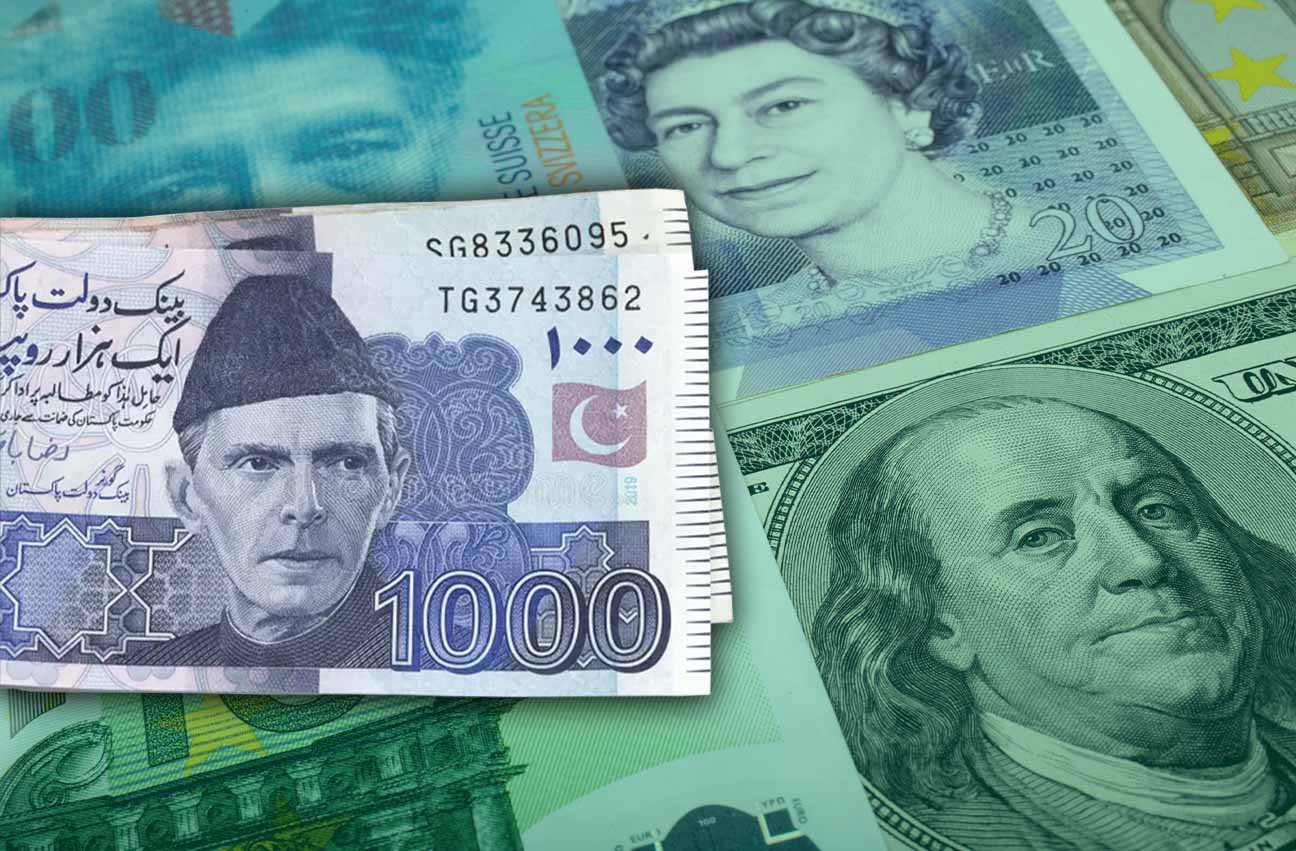
    The Pakistani rupee (PKR) weakened by 5.77 paisa, or 0.02 per cent, against the US dollar (USD) in Thursday’s interbank market, closing at Rs277.85 per USD.

    This was a slight drop from Wednesday’s close of Rs277.79.

    In the open market, exchange companies quoted the dollar at Rs276.84 for buying and Rs278.72 for selling.

    During the day, the local unit touched a high of Rs277.90 and a low of Rs277.80 against the greenback.

    It is worth noting that since the start of the fiscal year, the PKR has appreciated by 49.12 paisa, or 0.18 per cent, against the US dollar. For the calendar year, it has strengthened by Rs4.01, or 1.44 per cent.

    PKR’s performance against other foreign currencies

    Currency Thursday’s rate Wednesday’s rate Change
    US Dollar (USD) Rs277.85 Rs277.79 5.77 paisa (-0.02%)
    British Pound (GBP) Rs361.02 Rs361.34 31.39 paisa (+0.09%)
    Japanese Yen (JPY) Rs1.8260 Rs1.8126 1.34 paisa (-0.74%)
    Saudi Riyal (SAR) Rs73.98 Rs73.97 1.34 paisa (-0.02%)
    UAE Dirham (AED) Rs75.65 Rs75.63 1.57 paisa (-0.02%)
    Euro (EUR) Rs301.69 Rs300.72 96.55 paisa (-0.32%)
    Chinese Yuan (CNY) Rs39.03 Rs38.99 3.68 paisa (-0.09%)
    Swiss Franc (CHF) Rs321.12 Rs320.24 88.10 paisa (-0.28%)
    Exchange rates

    Against the British Pound, the PKR gained 31.39 paisa, or 0.09 per cent, closing at Rs361.02, up from Rs361.34 the previous day.

    Against the Japanese Yen, the PKR dropped 1.34 paisa, or 0.74 per cent, ending the session at Rs1.8260, down from Rs1.8126.

    The rupee also weakened by 1.34 paisa, or 0.02 per cent, against the Saudi Riyal, closing at Rs73.98, and by 1.57 paisa, or 0.02 per cent, against the UAE Dirham, finishing at Rs75.65.

    Against the Euro, the PKR decreased by 96.55 paisa, or 0.32 per cent, closing at Rs301.69, down from Rs300.72.

    The rupee lost 3.68 paisa, or 0.09 per cent, against the Chinese Yuan, finishing at Rs39.03.

    The local currency also declined by 88.10 paisa, or 0.28 per cent, against the Swiss Franc, closing at Rs321.12.

    PKR’s closing on Wednesday

    A day earlier, on Wednesday, the rupee had weakened by 5 paisa, or 0.02 per cent, against the US dollar settling at Rs277.79.

    It fell by 94 paisa, or 0.26 per cent, against the British Pound, closing at Rs361.34.

    The rupee gained 38.59 paisa, or 0.12 per cent, against the Swiss Franc, ending at Rs320.24.

    Against the Japanese Yen, the rupee strengthened slightly, closing at Rs1.8126.

    The PKR dropped by 1.33 paisa, or 0.02 per cent, against the Saudi Riyal, closing at Rs73.97, and fell by 1.36 paisa, or 0.02 per cent, against the UAE Dirham, closing at Rs75.63.

    Against the Euro, the rupee dropped by 48.46 paisa, or 0.16 per cent, closing at Rs300.72.

    The PKR also depreciated by 9.60 paisa, or 0.25 per cent, against the Chinese Yuan, closing at Rs38.99.

  • Gold price increases by Rs2,900 per tola to new record

    Gold price increases by Rs2,900 per tola to new record

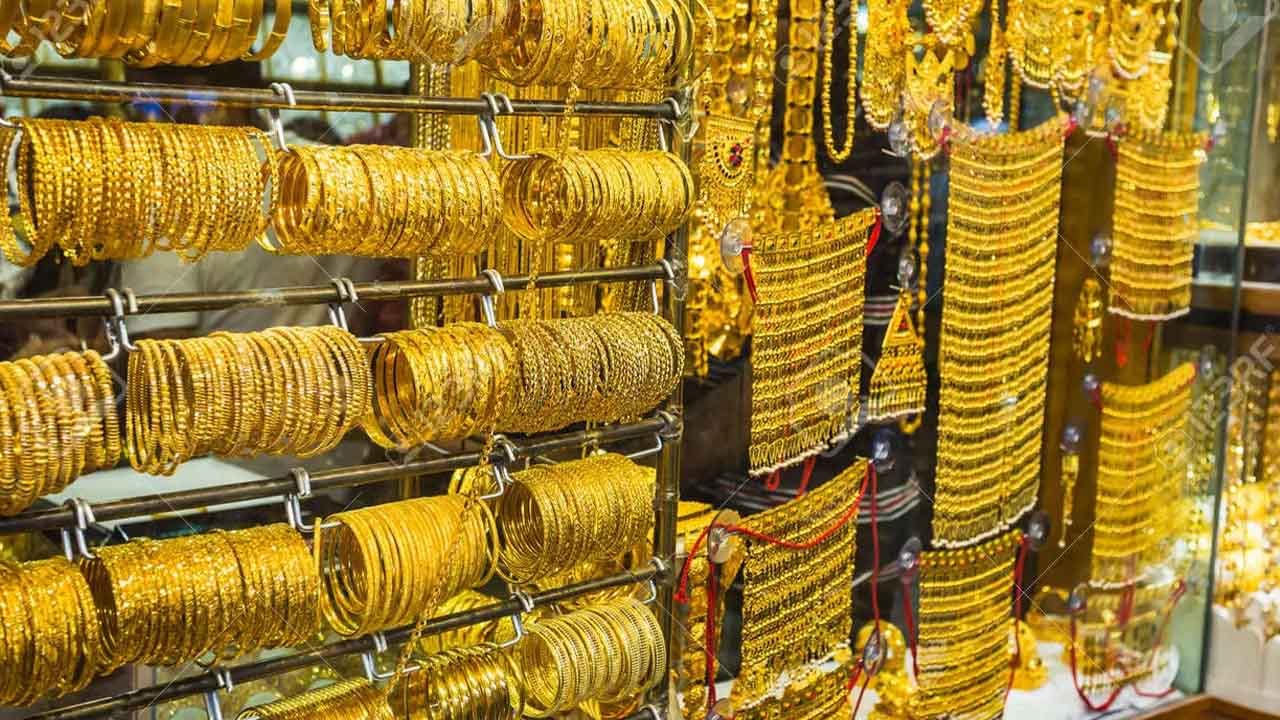
    On Wednesday, gold price rose by a massive Rs2,900 per tola in the local market, reaching Rs287,900.

    The latest rate marks the highest gold price ever recorded in the history of Pakistan.

    Today’s gold price is also Rs2,500 higher than the previous record high, which was observed last week when the All-Pakistan Gems and Jewellers Sarafa Association (APGJSA) quoted gold at Rs285,400 per tola.

    Additionally, the price of ten grammes of gold has also risen in the local market, with APGJSA reporting it at Rs246,828 after a single-day jump of Rs2,486. The price of one gramme of gold in the country now stands at Rs24,682.8.

    Previously, the rate of one gramme of gold in the local market was Rs22,196.

    This increase was not only observed in Pakistan, as international gold prices also saw a rise. The APGJSA reported that on Wednesday October 30 the price of gold rose by $29 internationally, reaching $2,784.

    Meanwhile, silver prices in the country remained stable once again, with the price per tola recorded at Rs3,350.

  • Vegetable shortage crisis: Export surge could spell trouble for farmers

    Vegetable shortage crisis: Export surge could spell trouble for farmers

    Businessmen involved in the agricultural sector managed to boost vegetable exports by 11.5 per cent in the first quarter of the fiscal year.

    This comes at a time when seasonal rains have left vegetable fields devastated nationwide – especially in Sindh.

    The consequence of mass exports and heavy rainfalls has caused major shortages in the local economy. As a result, retail stores and street vendors have resorted to relying on Iranian and Afghani vegetables to keep customers from returning empty-handed.

    With the decrease in vegetable supply, the prices have risen, which is not just true for the local economy but also for international markets where a 26 per cent rise in price has been recorded. The result of this inflation, while beneficial to farmers, is likely to negatively impact retailers.

    The increase in prices will put retailers in a dilemma regarding their profit margins. They must either absorb these higher prices while decreasing their profit margins or protect them by increasing prices.

    Either way, retailers are expected to suffer.

    However, farmers will probably not be celebrating the extra exports worth $71 million for long. This is because Pakistani exporters have been exporting produce imported from across the border. The result could be loss in sales as international buyers purchase vegetables from Pakistan for their incredible taste.

    The same taste can’t be found in imported vegetables. Which might leave international buyers disappointed with the drop in quality. Moreover, it does not make sense for international buyers to purchase the same goods for a marked up price when they can get the same product directly from the source.

    Farmers are also growing worried over a potential loss in sales of their products in local markets. This is largely true because if prices of local produce continue to skyrocket, consumers may incline towards purchasing Iranian onions that come with attractive price tags. And with agricultural yields expected to take months to recover, farmers are losing our valuable market share to imported products.

    What’s most concerning for farmers is the influx of Afghani produce. This is largely because Afghanistan is facing numerous sanctions, and farmers there are willing to sell their produce at figuratively “dirt cheap” prices. If local markets get flooded by these products, Pakistani farmers may lose out.

    Farmers, especially those growing onions and tomatoes, will hope for an improvement in their yield levels. This will allow them to capitalize on the higher international and domestic prices.

    Will Pakistan farmers be able to achieve this feat? Only time can tell.

  • Pakistan eyes over $12 billion in Riyadh investments

    Pakistan eyes over $12 billion in Riyadh investments

    Business owners in Pakistan have their eyes set on the Riyadh meetings as developments in the Future Investment Initiative (FII) are underway.

    Prime Minister Shahbaz Sharif and the delegation from Islamabad is expected to bring back upwards of $12 billion in investments.

    Premier will be meeting the Crown Prince Muhammad bin Salman along with other high-ranking officials in an attempt to secure Saudi investments.

    Earlier this month, prior to the Shanghai Cooperation Organization (SCO) summit, a major Saudi delegation invested nearly $2 billion dollars into the country. With the Saudis expected to continue bankrolling investments in Pakistan, business owners are preparing to celebrate.

    This is due to the fact that Saudi investments will allow Pakistani businesses to expand their operations significantly. Businesses are already doing well, as can be seen with the Pakistan stock exchange (PSX) closing over 91000 points today.

    With international investments pouring in from Riyadh, investor confidence is projected to increase and further contribute to the growth of businesses in the economy.

    Riyal-fueled growth is likely to scale up the scope for projects of businesses, which will result in new employment posts. Once the hiring process by businesses ends, the situation of unemployment is likely to improve in the economy.

    Currently, the unemployment rate sits at an uneasy 5.5%, which translates into around 4.5 million people who are out of work. With more people working and with an increase of money flowing in the economy, businesses are likely to see an increase in the demand for their goods.

    The bulk of the Saudi investment will be made towards the petroleum refinery sector.

    If Pakistan is to develop a more extensive network of refineries, it could be able to greatly benefit from future oil discoveries.

    This is because Pakistan would have the necessary infrastructure to purify its own crude oil and not have to rely on foreign powers for petroleum imports. If oil is to be discovered and the refineries manage to reach the necessary capacity with Saudi investments, an annual saving of around $16.91 billion could be seen – as that is the current annual value of petroleum imports.

    The result of this could be appreciation of the PKR with fewer imports as the Pakistani rupee will be buying up fewer commodities in international markets, resulting in a reduction in its supply.

    This will spell great news as businesses that rely on processing imported goods to produce final goods will be able to import goods cheaply with strengthened rupee.

    Currently, the textile sector is involved in the importation of dyes and pigments to produce final products. However, these imports could be made cheaper if Saudi investments fund the construction of refineries.

    Economic collaboration between Saudi Arabia and Pakistan will be extremely beneficial to the latter.

    Will Islamabad’s delegation manage to snag billions in investments? Or will they return home empty-handed? Time shall tell.