Category: Business

The most important business news, explained in a young, easy to understand way. News that affects young career professionals.

  • IMF team set to visit Pakistan to discuss new programme before budget finalisation

    IMF team set to visit Pakistan to discuss new programme before budget finalisation

    An International Monetary Fund (IMF) mission is set to visit Pakistan in May to discuss a potential new financial programme, the IMF announced on Sunday.

    This visit comes as the Pakistani government begins crafting its annual budget for the next financial year with the aim of stabilising the economy and implementing necessary reforms.

    The announcement follows the completion of a short-term $3 billion programme last month, which helped Pakistan avoid a sovereign default.

    Prime Minister Shehbaz Sharif’s government is now seeking a more comprehensive and longer-term agreement with the IMF to ensure sustained economic recovery and growth.

    “A mission is expected to visit Pakistan in May to discuss the FY25 budget, policies, and reforms under a potential new programme for the welfare of all Pakistanis,” the IMF stated in an email response to Reuters.

    However, the exact dates of the visit and the specifics of the programme were not disclosed.

    Pakistan’s fiscal year runs from July to June, and the budget for fiscal year 2025 must be presented before June 30.

    The IMF emphasised the importance of accelerating reforms, stating that the size and duration of the new programme would be determined by the reform package and the country’s balance of payments needs.

    Pakistan’s economy, which is valued at around $350 billion, has shown signs of stabilisation following the last IMF programme, with inflation decreasing from a record high of 38 per cent in May 2023 to about 17 per cent in April 2024.

    However, the country still faces significant fiscal challenges and a high deficit, and growth has stagnated due to strict import controls.

    The current growth rate is expected to be around 2 per cent this year, a slight improvement from the negative growth rate experienced last year.

    In a recent interview with Reuters, Finance Minister Muhammad Aurangzeb expressed optimism about reaching an agreement on a new IMF programme in May. Pakistan is expected to seek at least $6 billion in additional financing from the IMF, including funding under the Resilience and Sustainability Trust.

    The forthcoming IMF visit is crucial for Pakistan as it prepares its budget and seeks to implement reforms to strengthen the economy.

    The discussions are likely to focus on fiscal discipline, economic growth, and the welfare of all Pakistanis, with an emphasis on achieving long-term stability and sustainability.

  • CDWP gives go-ahead to 10 development projects valued at Rs115 billion

    CDWP gives go-ahead to 10 development projects valued at Rs115 billion

    In a key meeting held on Friday, the Central Development Working Party (CDWP) approved a total of 10 development projects, with an overall cost of Rs115.458 billion.

    Out of these, eight projects totaling Rs17.297 billion were given the green light by the CDWP forum, while two projects, valued at Rs98.161 billion, were recommended to the Executive Committee of the National Economic Council (ECNEC) for final approval.

    Deputy Chairman Planning Commission Mohammad Jehanzeb Khan chaired the meeting, attended by Secretary Planning Awais Manzur, Planning Commission members, Additional Secretary Planning, and representatives from federal ministries and provincial governments.

    The meeting’s agenda covered a range of sectors, including agriculture and food, energy, governance, health, higher education, physical planning and housing, science and technology, transport and communication, and water resources.

    A notable project from the agriculture and food sector, the “Sindh Livestock and Aquaculture Development Project,” valued at Rs38.36 billion, was recommended to ECNEC for final approval.

    This World Bank-assisted project aims to improve competitiveness, inclusivity, climate resilience, and sustainability in Sindh’s livestock and aquaculture sectors.

    Another significant project from the energy sector, the “765/500/220/132kV Islamabad West Substation,” worth Rs59.801 billion, was also referred to ECNEC for final approval.

    This World Bank-backed initiative is part of the National Transmission and Modernization Project Phase-I and aims to address increasing power demands in the Islamabad region through a new substation and related transmission lines.

    The governance sector saw approval for the “Modernization and Upgradation of Pakistan Mint Phase-II” project, costing Rs2.48 billion, as well as the “Federal Project Management Unit (FPMU) Post-Flood 2022 Reconstruction Program” project, valued at Rs2.38 billion.

    In the physical planning and housing sector, five projects were discussed, including the “Smart Environmental Sanitation System and Landfill Project” in Gwadar, worth Rs3.277 billion, and the “Construction of Audit House, Lahore,” valued at Rs1,528.931 million. Both projects received approval from the CDWP forum.

    A project related to science and technology, the “Establishment of Regional Nuclear Safety Inspectorate at Lahore,” costing Rs515 million, was also approved by the CDWP. This project aims to enhance nuclear safety and oversight in the region.

    The approval of these projects underscores the government’s commitment to advancing critical infrastructure, promoting sustainable development, and addressing energy needs, among other priorities. The recommendations to ECNEC signal the importance of these projects for the country’s growth and development.

  • Competition Commission approves Scheme of Arrangement for PIA’s privatisation

    Competition Commission approves Scheme of Arrangement for PIA’s privatisation

    The Competition Commission of Pakistan (CCP) has approved the Scheme of Arrangement (SoA) for the privatisation process of Pakistan International Airlines Corporation Limited (PIACL).

    This marks a crucial step towards restructuring the national airline and facilitating a smoother transition during the privatisation process.

    The approval paves the way for the Securities and Exchange Commission of Pakistan (SECP) to give its final nod, leading to the formalisation of the transfer of PIACL’s non-core assets and liabilities to a newly established entity, PIA Holding Company Limited.

    This separation is designed to create a debt-light PIACL, allowing for greater focus on core airline operations and enhancing its appeal to investors.

    The privatisation of PIACL has attracted considerable interest from both domestic and international investors, with major airlines and business conglomerates submitting their expressions of interest.

    The Privatisation Commission (PC) has extended the deadline for submitting the Statement of Qualification (SOQ) until May 17, 2024, accommodating requests from potential bidders.

    The Privatisation Commission’s extension aims to ensure a competitive and transparent bidding process, fostering a fair environment for all parties. This development is seen as a significant step towards achieving a successful outcome in the privatisation of PIACL, with the ultimate goal of revitalising the national airline and improving its financial health.

    Stakeholders and industry experts are closely monitoring the process, with hopes that the privatisation will bring much-needed efficiency and innovation to Pakistan’s aviation sector. They

    he finalisation of the Scheme of Arrangement and the subsequent privatisation process will be critical in determining the future trajectory of Pakistan International Airlines.

  • Petroleum sales in Pakistan drop to six-month low

    Petroleum sales in Pakistan drop to six-month low

    The sale of total petroleum products in Pakistan fell to 1.1 million tonnes in April 2024, a 6 per cent decrease compared to 1.17 million tonnes in the same month last year.

    According to data released by brokerage house Topline Securities, this is the lowest level recorded in the past six months, reflecting a trend influenced by reduced demand for petrol and furnace oil (FO).

    Despite the overall decline, high-speed diesel (HSD) sales showed a modest improvement, rising by 2 per cent year-on-year, reaching 0.469 million tonnes in April.

    Meanwhile, the sale of MS (petrol) dropped by 9 per cent, totaling 0.53 million tonnes, and FO sales saw a dramatic 59 per cent decrease, settling at 0.03 million tonnes.

    Topline Securities attributed this sharp decline in FO sales to a reduction in power generation from FO-based power plants.

    Month-on-month, petroleum offtake declined by 4 per cent compared to 1.15 million tonnes in March 2024. FO experienced the most significant drop, decreasing by 33 per cent month-on-month in April.

    Looking at the broader picture, the first ten months of fiscal year 2024 saw total petroleum sales drop by 11 per cent year-on-year, totaling 12.443 million tonnes.

    Product-wise data indicate a downturn in all categories, with MS, HSD, and FO offtake settling at 5.83 million tonnes, 5.05 million tonnes, and 0.869 million tonnes, respectively. This represents a decrease of 6 per cent for MS, 4 per cent for HSD, and 53 per cent for FO.

    In terms of individual company performance, Pakistan State Oil (PSO) experienced a 3 per cent decline in offtake year-on-year in April 2024, with a 7 per cent drop in MS sales and a 4 per cent decrease in HSD. FO sales for PSO also fell by 22 per cent.

    However, despite these decreases, PSO’s market share improved from 49 per cent in April 2023 to 51 per cent in April 2024.

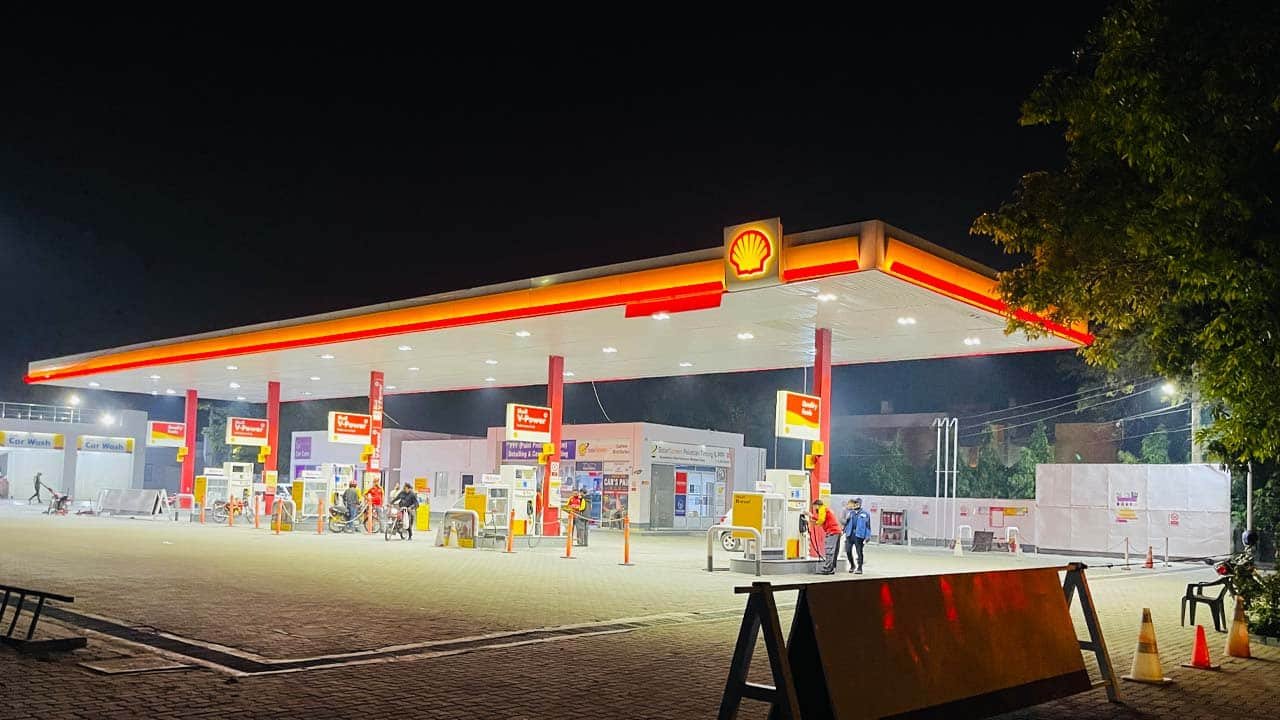
    Shell Pakistan Limited (SHEL) recorded a 7 per cent year-on-year decline in sales, with reductions across all product categories.

    Hascol Petroleum Limited (HASCOL) saw a significant 23 per cent year-on-year drop in sales, primarily due to a 42 per cent reduction in MS sales.

    Attock Petroleum Limited (APL) also witnessed an 18 per cent decline in sales compared to April 2023.

  • Pak Suzuki cuts Swift prices by up to Rs710,000

    Pak Suzuki cuts Swift prices by up to Rs710,000

    Pak Suzuki Motor Company has recently announced a significant reduction in prices for its Swift variants, marking what the company terms a “limited time offer.” The decision comes amidst considerations of prevailing market dynamics.

    According to the official announcement released by the company, effective May 1, 2024, the promotional retail sales prices for Suzuki Swift have been revised.

    Notably, this adjustment aims to make the Swift models more accessible to consumers.

    Under the new pricing scheme, the Swift GL MT is now priced at Rs4,336,000, reflecting a notable decrease of Rs85,000 from its previous rate of Rs4,421,000.

    Similarly, the Swift GL CVT is set to be available at Rs4,560,000, marking a substantial decline of Rs159,000 from its former price of Rs4,719,000.

    The most significant price reduction is observed in the Swift GLX CVT variant, which has seen a substantial drop from Rs5,429,000 to Rs4,719,000, translating to a decrease of Rs710,000.

    Importantly, the revised retail prices include Federal Excise Duty (FED) and Sales Tax, while they exclude Advance Income Tax, as outlined in the official notice.

    This move by Pak Suzuki Motor Company underscores its commitment to adapt to market conditions and provide value to customers through competitive pricing strategies.

  • US Federal Reserve holds interest rates steady for sixth consecutive meeting

    US Federal Reserve holds interest rates steady for sixth consecutive meeting

    The US Federal Reserve has once again left interest rates unchanged, maintaining its current rate at 5.25 per cent to 5.5 per cent.

    This marks the sixth consecutive meeting where the central bank has opted to hold steady, reflecting a cautious approach amid persistent inflation concerns.

    In a statement released by the Federal Open Market Committee (FOMC) on Wednesday, the central bank acknowledged that while inflation has eased over the past year, it remains elevated.

    “In recent months, there has been a lack of further progress towards the Committee’s 2 per cent inflation objective,” the FOMC noted.

    The Committee indicated that it does not plan to reduce the target range until it has greater confidence that inflation is consistently trending towards the 2 per cent goal.

    This stance has kept interest rates at a 23-year high since July last year, suggesting the Federal Reserve’s focus on managing inflation risks.

    The decision to leave rates unchanged aligned with market expectations, which had largely anticipated a rate pause.

    In a related development, the Federal Reserve announced that it would slow its pace of quantitative tightening starting June 1.

    The Fed will reduce the cap on Treasury securities rolling off its balance sheet to $25 billion per month, down from the previous cap of $60 billion. However, the pace of runoff for mortgage-backed securities will remain at $35 billion per month.

    The FOMC’s decision did not significantly alter market expectations for the trajectory of interest rates in 2024.

    The market remains divided on whether a rate cut will occur by September, with about 50/50 odds. As of now, only one rate cut is fully priced in for the entire year.

    It’s worth noting that at the beginning of 2024, the market had priced in an 80 per cent chance of a rate cut starting in March, with a total of six cuts projected throughout the year.

    This shift in expectations underscores the uncertainty surrounding the Federal Reserve’s future policy decisions as it navigates the ongoing challenges of inflation and economic stability.

  • April was Bitcoin’s worst month since late 2022 as investors took profits

    April was Bitcoin’s worst month since late 2022 as investors took profits

    Bitcoin experienced a significant downturn for the third day in a row on Wednesday, capping off its worst monthly performance in April since late 2022.

    This downward trend comes as investors shifted their focus away from cryptocurrencies in anticipation of the Federal Reserve’s upcoming interest rate decision.

    The world’s most traded cryptocurrency fell nearly 16 per cent throughout April as investors cashed in their gains from a recent rally.

    Bitcoin had reached record highs, topping $70,000, but the recent slide has taken the price to $57,055, a 4.7 per cent drop and its lowest point since late February.

    Ether, the second-largest cryptocurrency by market cap, also saw a decline, falling 3.6 per cent to $2,857, its weakest level since February.

    The sharp downturn has pushed bitcoin into bear market territory, with its current price sitting 22 per cent below its March peak of $73,803.

    Despite this, Bitcoin has still achieved a 35 per cent increase so far in 2024 and has doubled its value compared to the same time last year.

    This surge in value was largely driven by significant investments in newly launched exchange-traded funds (ETFs) at the beginning of the year.

    According to Matteo Greco, a research analyst at Fineqia, the recent decline in bitcoin’s price is due to profit-taking by investors who entered the market during the downturns of 2022 and 2023.

    Additionally, ETF investors, who saw their shares appreciate significantly in early 2024, also contributed to the sell-off as they locked in profits.

    Looking at the broader economic landscape, the Federal Reserve is not expected to change interest rates later this week.

    However, a growing consensus among investors suggests that the central bank may refrain from cutting rates altogether in 2024.

    This uncertainty has cast a shadow over interest rate-sensitive assets, including cryptocurrencies, emerging market stocks, bonds, and even commodities. Investors are adjusting their portfolios accordingly.

    The 10 largest U.S. spot bitcoin ETFs have seen their biggest weekly outflow since their inception earlier this year, highlighting the impact of shifting investor sentiment on the cryptocurrency market.

    As the market reacts to both macroeconomic factors and investor behavior, the coming days will be crucial in determining whether this downtrend continues or stabilizes.

  • Mobile SIMs of over 500,000 tax evaders to be blocked under FBR directive

    Mobile SIMs of over 500,000 tax evaders to be blocked under FBR directive

    The Federal Board of Revenue (FBR) has identified 506,671 individuals who have not filed their income tax returns for the 2023 tax year and issued an order to block their mobile phone SIM cards.

    This directive, known as Income Tax General Order No. 01 of 2024, was released on Tuesday, mandating the Pakistan Telecommunication Authority (PTA) and all telecom operators to comply immediately.

    According to the FBR, these non-filers are required to file their income tax returns under the Income Tax Ordinance of 2001. The list of those affected is available on the FBR’s website. Those listed can check to confirm whether their mobile phone service will be disrupted.

    Under Section 114B of the Income Tax Ordinance, the FBR has the authority to take such measures to enforce compliance with tax regulations.

    The PTA and telecom operators must block the SIM cards of the individuals named in the order, and the SIM cards will remain deactivated until the FBR or the respective Commissioner of Inland Revenue restores them.

    The FBR has set a deadline of May 15, 2024, for telecom operators to report their compliance with the order. Failure to meet this deadline could result in further regulatory action.

    The FBR is taking this step to ensure that all those required to file income tax returns do so promptly, contributing to the country’s revenue base.

  • Gold prices fall for third consecutive session, dropping by Rs2,000 per tola

    Gold prices fall for third consecutive session, dropping by Rs2,000 per tola

    Gold prices in Pakistan continued their downward trend for the third consecutive session on Tuesday, mirroring the decline in international markets.

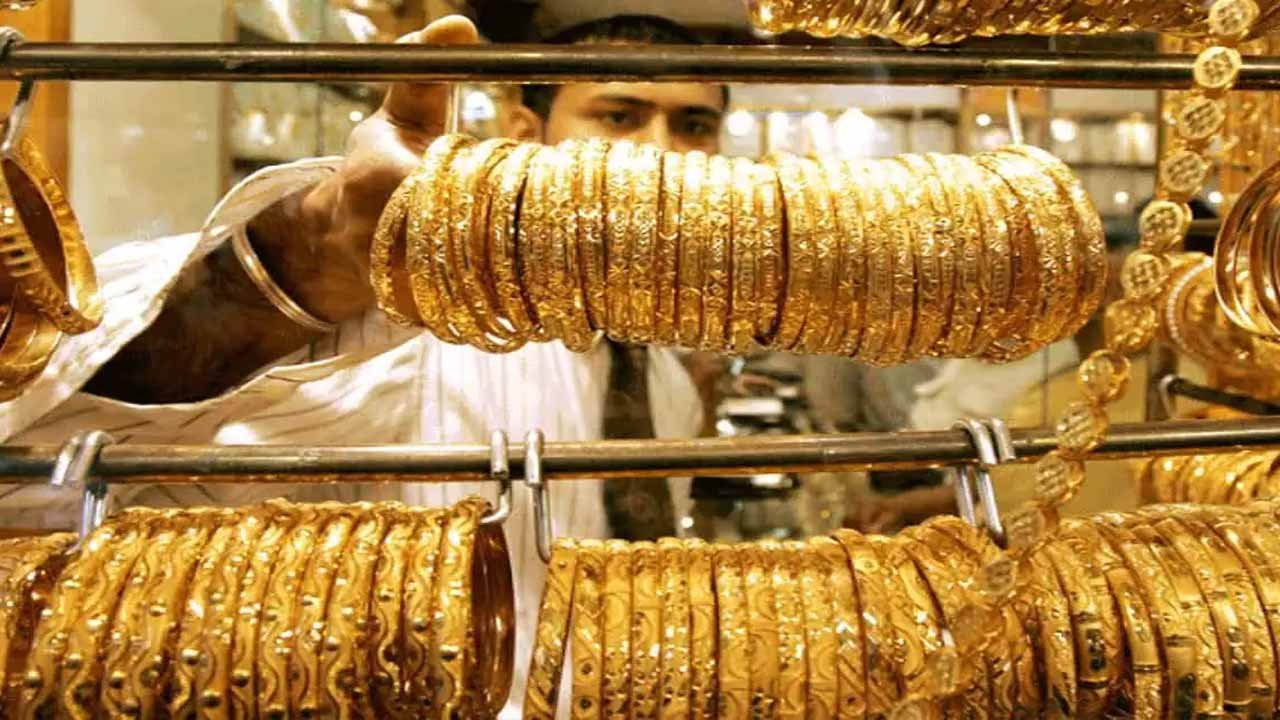
    The price per tola of gold fell by Rs2,000 to settle at Rs241,900, according to data released by the All Pakistan Gems and Jewellers Sarafa Association (APGJSA).

    In the local market, the cost of 10 grammes of gold decreased by Rs1,715, bringing the price to Rs207,390. This marks a notable reduction compared to the previous day’s loss of Rs500 per tola.

    The drop in local gold prices corresponds with a fall in the international market.

    According to the APGJSA, the global price of gold reached $2,316 per ounce, which includes a premium of $20, after a single-day decrease of $19.

    Silver prices also saw a decline, with a reduction of Rs20, bringing the price down to Rs2,630 per tola.

    Over the past three sessions, gold prices in Pakistan have fallen by Rs3,100 per tola, a significant correction from the record high of Rs252,200 per tola earlier this month.

    This continued downward trend suggests a possible easing of demand or adjustments in the international gold market.

  • Pakistan receives final installment of IMF’s $3 billion SBA

    Pakistan receives final installment of IMF’s $3 billion SBA

    Pakistan has received the final tranche of $1.1 billion from the International Monetary Fund (IMF) as part of its $3 billion Stand-By Arrangement (SBA), the State Bank of Pakistan (SBP) announced on Tuesday.

    The disbursement follows the IMF’s successful completion of its final review of Pakistan’s economic reform programme supported by the 9-month SBA.

    The SBP said in its statement that the Special Drawing Rights (SDR) of 828 million, equivalent to approximately $1.1 billion, had been received on April 29, 2024, and would be reflected in the central bank’s foreign exchange reserves for the week ending May 3, 2024.

    As of April 19, the central bank’s foreign exchange reserves stood at $7.981 billion.

    Prime Minister Shehbaz Sharif welcomed the latest disbursement, stating that it would contribute to greater economic stability in Pakistan.

    He highlighted that the SBA was critical in preventing the country from defaulting on its external liabilities. 

    Pakistan’s government is now focused on securing a larger and longer Extended Fund Facility (EFF) to achieve sustained macroeconomic stability.

    The prime minister has already signalled his intention to pursue another IMF programme to ensure the continuity of economic growth and fiscal discipline.

    On Sunday, Prime Minister Shehbaz Sharif met with IMF Managing Director Kristalina Georgieva on the sidelines of the World Economic Forum Special Meeting in Saudi Arabia.

    During the meeting, the prime minister reiterated his government’s commitment to implementing structural reforms, maintaining strict fiscal discipline, and following prudent policies that would support macroeconomic stability and sustainable economic growth.

    Pakistan is seeking additional support to maintain the economic gains made during the current SBA and to continue its positive economic growth trajectory.