Category: Business

The most important business news, explained in a young, easy to understand way. News that affects young career professionals.

  • Gold price soars to Rs223,900 per tola following notable surge

    Gold price soars to Rs223,900 per tola following notable surge

    In a significant turn of events, gold prices experienced a notable surge in Pakistan on Tuesday, aligning with the upward trend in the international market.

    The precious metal, often referred to as “yellow gold,” witnessed a price hike of Rs2,700 per tola, reaching a new valuation of Rs223,900.

    According to the latest data released by the All Pakistan Gems and Jewellers Sarafa Association (APGJSA), the 10-gramme gold bar was traded at Rs191,958, reflecting an increase of Rs2,315.

    This comes on the heels of a substantial jump of Rs3,500 per tola recorded on Saturday.

    Internationally, the gold rate demonstrated a robust performance, closing at $2,135 per ounce with a $20 premium on Tuesday. This marked a noteworthy uptick of $29 in the global market, as reported by APGJSA.

    In contrast, silver rates remained stable at Rs2,600 per tola during the same period.

    Shifting focus to the currency market, the Pakistani rupee experienced a slight dip against the US dollar, depreciating by 0.02 per cent in the inter-bank market on Tuesday.

    The closing exchange rate, according to the State Bank of Pakistan (SBP), stood at 279.31, indicating a marginal loss of Re0.05 against the greenback.

    This follows a similar trend observed on Monday, when the rupee settled at 279.26 against the US dollar.

  • Apple’s iPhone sales decline by 24% in China, while Huawei’s sales surge

    Apple’s iPhone sales decline by 24% in China, while Huawei’s sales surge

    In the first six weeks of 2024, Apple experienced a significant downturn in iPhone sales in China, facing a 24 per cent year-on-year decrease, according to a report by research firm Counterpoint.

    The decline was attributed to heightened competition from local rivals, notably Huawei, which witnessed a remarkable 64 per cent increase in unit sales during the same period.

    Apple, once holding the second position in the Chinese smartphone market in 2023 with a 19 per cent market share, now finds itself in fourth place with a reduced share of 15.7 per cent.

    On the other hand, Huawei climbed to second place, expanding its market share from 9.4 per cent to 16.5 per cent year-over-year.

    Counterpoint’s senior analyst, Mengmeng Zhang, explained the dynamics, stating that Apple faced formidable competition from a resurgent Huawei at the high end while also encountering pricing pressures from domestic brands like OPPO, Vivo, and Xiaomi in the middle segment.

    To counteract the decline, Apple initiated measures such as subsidising certain iPhone models by up to 1,300 yuan ($180.68) through flagship stores on Tmall, Alibaba’s major marketplace platform.

    Earlier, the company had offered discounts of up to 500 yuan on its official sites.

    Huawei’s resurgence in premium smartphone sales was attributed to the successful release of its Mate 60 series in August.

    Overcoming years of challenges posed by US restrictions on key component exports, Huawei managed to reclaim its position in the market.

    Additionally, Honour, the smartphone brand that separated from Huawei in 2020, witnessed a 2 per cent increase in unit sales, making it the only other top-five brand to experience growth in the first six weeks of the year.

    Contrastingly, Chinese brands Vivo, Xiaomi, and Oppo faced declines of 15 per cent, 7 per cent, and 29 per cent, respectively, highlighting the fiercely competitive landscape in the Chinese smartphone market.

    Overall, the report indicates a 7 per cent shrinkage in the country’s smartphone market during this period.

  • Over Rs6.4 billion allocated for Ramzan subsidies: Essential items to be available at reduced rates

    Over Rs6.4 billion allocated for Ramzan subsidies: Essential items to be available at reduced rates

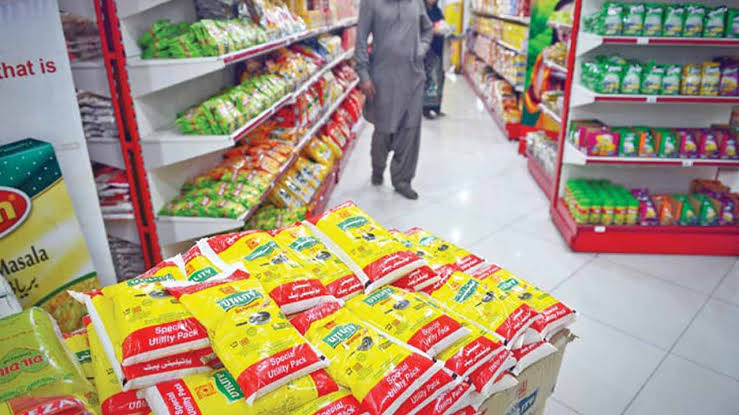
    The government has earmarked Rs6.484 billion to provide essential food items at subsidised rates through the Utility Stores Corporation (USC) during the holy month of Ramzan.

    A substantial portion of the allocation, Rs3.474 billion, will go towards subsidising flour, followed by Rs1.610 billion for sugar and Rs1.4 billion for ghee.

    Additionally, subsidies of Rs25 million for channa daal, Rs12 million for masoor daal, Rs37.50 million for white gramme, and Rs62.5 million for basmati rice are planned. Further, Rs20 million and Rs62.5 million are allocated for Sehlla rice and broken rice, respectively.

    The implementation of the Ramzan relief package is set to commence on March 4th.

    Further breakdown reveals Rs200 million for cooking oil, Rs20 million for washed moong daal, Rs6.25 million for washed maash daal, Rs100 million for chakki baisen, Rs50 million for dates, Rs22.50 million for carbonated drinks (1,500 ml), Rs30 million for squash and syrup (800 ml), Rs150 million for black tea, Rs15 million for UHT milk, and Rs50 million for spices.

    Moreover, an allocation of Rs145 million is designated for an awareness campaign through electronic and print media regarding the Ramzan Package, set to kick off on March 4th, 2024.

    The Economic Coordination Committee (ECC) has greenlit the Ministry of Industries and Production’s proposal for a Rs7.492 billion Ramzan Relief Package. This package aims to provide 19 essential items at subsidised rates through the USC.

    In response to IMF restrictions on untargeted subsidies, the government has opted to provide subsidies exclusively to beneficiaries registered under the PMT-40 of the Benazir Income Support Programme (BISP) for the fiscal year 2023–24.

  • Pak Suzuki hikes prices, Cultus AGS now priced above Rs4.5 million

    Pak Suzuki hikes prices, Cultus AGS now priced above Rs4.5 million

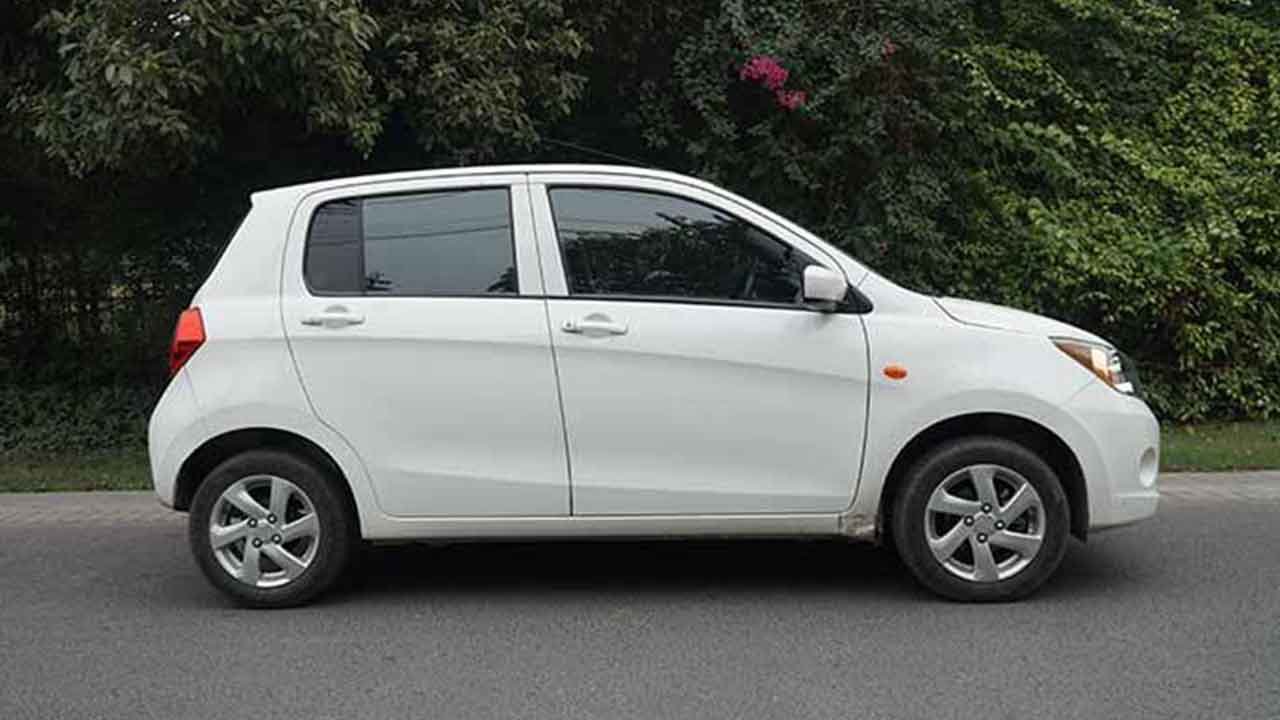
    In response to inflationary pressures and rising overhead costs, Pak Suzuki has announced a significant hike in car prices, impacting models across the range.

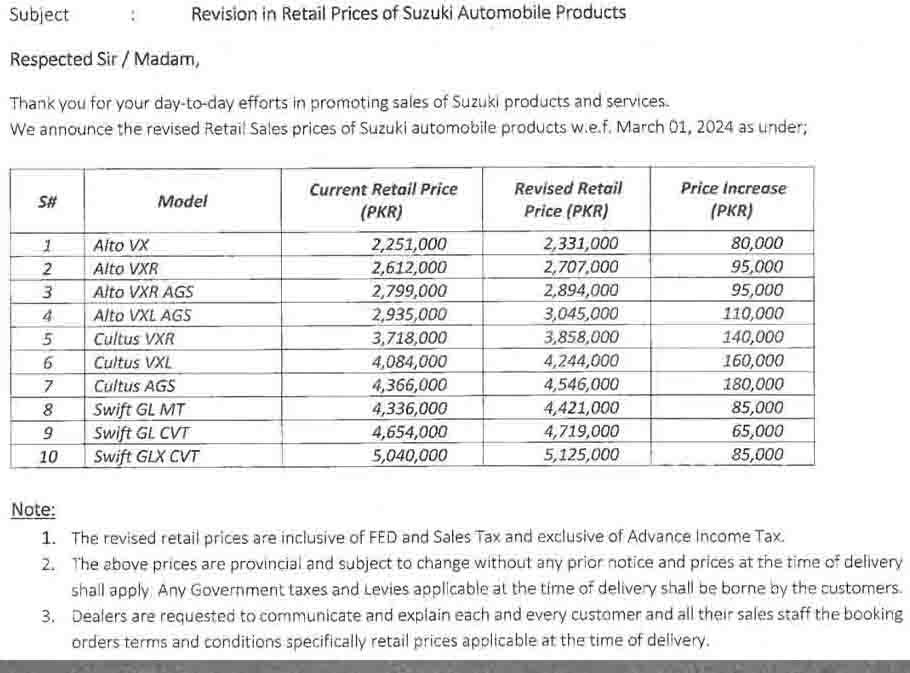
    The adjustments, ranging from Rs80,000 to Rs180,000, are set to take effect on March 1, 2024.

    Shafiq Ahmed Shaikh, Head of Corporate Affairs at Pak Suzuki, explained the rationale behind the decision, citing factors such as inflation, increased overhead expenses, higher international raw material and accessory costs, and elevated shipment and freight charges.

    The latest adjustments mean that the top-of-the-line model, Alto VXL AGS, will now be available at Rs3.045 million, reflecting a price increase of Rs110,000.

    However, the most significant surge is observed in the Cultus AGS, with its new price set at Rs4.546 million, following an increase of Rs180,000.

    This move by Pak Suzuki aims to navigate the challenges posed by the current economic landscape, ensuring the sustainability of operations amid various cost escalations.

    Customers will experience the impact of these changes as they come into effect, marking a new pricing structure for Suzuki vehicles in Pakistan.

    Here are the new prices for all Suzuki cars:

  • OGRA announces ‘reduction’ of Rs0.81 per kg in LPG price

    OGRA announces ‘reduction’ of Rs0.81 per kg in LPG price

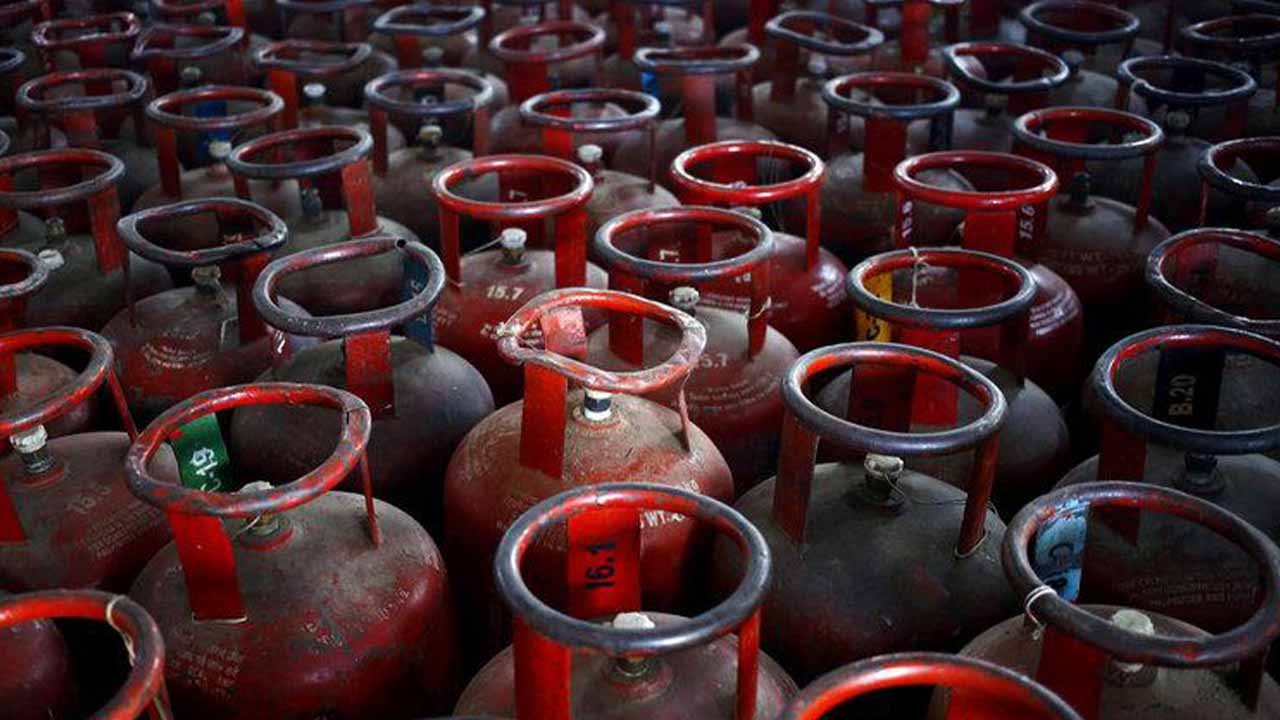
    The Oil and Gas Regulatory Authority (OGRA) has implemented a modest reduction in the price of Liquefied Petroleum Gas (LPG) by Rs0.81 per kg, effective from March 01, 2024.

    The previous consumer price for LPG stood at approximately Rs257.59 per kg. With the latest adjustment, consumers can now avail themselves of LPG at the revised rate of Rs216.79 per kg, indicating a notable decrease.

    For consumers relying on an 11.8 kg LPG cylinder, the cost has been adjusted to Rs3,030.12. This represents a decrease of Rs9.51 per cylinder from the previous price of Rs3,039.63, providing some relief to households and businesses alike.

    The move by OGRA to reduce LPG prices aims to alleviate the financial burden on consumers amid fluctuating economic conditions.

    This adjustment reflects the Authority’s commitment to ensuring fair pricing and accessibility of essential commodities for the public.

    Consumers are encouraged to verify and adopt the new rates, as OGRA continues its efforts to maintain transparency and affordability in the energy sector.

  • Petrol price increased by Rs4.13 to Rs279.75 per litre

    Petrol price increased by Rs4.13 to Rs279.75 per litre

    The outgoing caretaker government announced on Thursday an increase in the price of petrol by Rs4.13 per litre while maintaining the current price of diesel.

    According to a notification from the Finance Division, the new price of petrol will be Rs279.75 per litre and will remain in effect for the upcoming fortnight.

    This marks the third consecutive hike by the interim government, and it is expected to be the last under their administration, as an elected prime minister is set to take office by the end of this week.

    The recent surge in petrol prices was anticipated, given the rise in global oil prices amid a recovery in demand and persistent tensions in the Middle East.

    The caretaker government had previously increased the price of petrol by Rs2.73 per litre and high-speed diesel (HSD) by Rs8.37 per litre in the last review.

  • Pakistan Customs officials foil attempt to smuggle PKR 1.5 crore in gold and cash

    Pakistan Customs officials foil attempt to smuggle PKR 1.5 crore in gold and cash

    Customs officials made a significant seizure of gold and cash at Jinnah International Airport in Karachi on Tuesday. 

    Acting on a tip-off, the officials intercepted a passenger scheduled to depart for Hong Kong on Thai Airways flight TG-342, suspected of carrying a substantial amount of undeclared valuables.

    Following the tip-off, Customs personnel conducted a thorough search of the passenger’s belongings, uncovering over $40,000 (PKR 11 million) in assorted foreign currencies, along with 21 tolas of gold coins and jewelry. 

    The combined value of the confiscated items is estimated to be approximately $56,000 (PKR 15 million).

    The detained passenger failed to declare the cash and gold, a requirement for amounts exceeding $10,000 (PKR 2.78 million), when leaving Pakistan, leading to allegations of money laundering and smuggling. An FIR has been filed, and the investigation is ongoing.

  • What a month!

    What a month!

    While February flew by quite quickly in comparison to January (which felt like it lasted a century), looking back at the month, it feels like the general elections that took place on February 8 happened ages ago… Time can really mind-boggling like that.

    But, hold up! It has been one hell of a month in Pakistan’s politics for sure! Despite the polls, our federal government is yet to be formed; tensions between political parties aren’t cooling down; and as for our country’s future, it remains as unpredictable and worrisome as always.

    Let’s see how long this drama lasts until we are introduced to a new ‘twist’!

    POLITICS

    The results of February 8 polls were surprising for many after PTI-affiliated candidates won the most number of National Assembly seats compared to other political parties. The PML-N as a party had the highest number of seats but not enough to form the government. In fact, no party had enough numbers to form a government at the Centre.

    The PPP for its part tried to engage the PTI leadership for the formation of a coalition government but as expected, PTI founder Imran Khan declined their offer. After a lot of back and forth, the PML-N and the PPP finally decided to form a coalition government but the PPP has decided not to be part of the cabinet. As per this formula, Shehbaz Sharif will be their joint candidate for the Prime Minister while Asif Zardari will be the president.

    The PML-N formed the government in Punjab; the country’s largest province has its first female Chief Minister, Maryam Nawaz. The PPP has formed a government in Sindh and Murad Ali Shah is the CM, again. Yesterday, the newly elected members of the Balochistan Assembly and Khyber Pakhtunkhwa Assembly were also sworn in. KP will have a PTI government with Ali Amin Gandapur as its CM candidate while Balochistan will have a coalition government between the PPP and PML-N. 

    Today, the National Assembly’s maiden session of the legislative will begin at 10am and the newly-elected MNAs will be sworn in. After the PTI-affiliated independent candidates joined the Sunni Ittehad Council (SIC), there has been a lot of debate whether they will get reserved seats or not.

    Yesterday, the Election Commission of Pakistan (ECP) reserved its verdict on the petitions filed by the SIC seeking the allocation of women and minority seats. Some have predicted that the SIC with PTI-affiliated independents may not get these seats while others are hopeful of a positive outcome. 

    Unfortunately, allegations of rigging in the elections have been made by several political parties and candidates, which has certainly raised doubts about the legitimacy of the 2024 elections results. These allegations must be addressed by the ECP at the earliest. Political uncertainty will not end anytime soon due to these allegations. Let’s hope we see an end to this uncertainty in the coming months. 

    BUSINESS

    by Sadaan Khan

    In the tumultuous start of February 2024, Pakistan grappled with economic challenges that profoundly impacted its citizens. 

    The month commenced with a considerable blow to the already burdened masses as the government increased petrol prices by Rs13.55 per litre, reaching Rs272.89 per litre. Simultaneously, diesel prices rose by Rs2.75, escalating to Rs278.96 per litre.

    The following day added to the predicament with an increase in Liquefied Petroleum Gas (LPG) prices. The Oil and Gas Regulatory Authority (OGRA) raised the price by Rs1.17 per kg, setting the consumer price for February at Rs257.59 per kg.

    The common populace bore the brunt of inflation, particularly in Rawalpindi and Islamabad, where fruit and vegetable prices surged by 28 per cent in the initial two weeks of February 2024.

    Amidst these economic struggles, the State Bank of Pakistan (SBP) reported a decrease of $172.5 million (2.1 per cent WoW) in foreign exchange reserves during the week ending February 02, 2024. This decline was attributed to debt repayments, as indicated by the central bank.

    Unfortunately, Pakistan witnessed an increase in external debt and liabilities, reaching $131.159 billion at the end of 1HFY24, marking a 1.09 per cent QoQ rise. On a yearly basis, this amounted to a 1.99 per cent YoY increase.

    As the government aimed to raise Rs2.845 trillion in the next three months through auctions, it faced challenges as OGRA approved gas price hikes for Sui Southern Gas Company Limited (SSGC) and Sui Northern Gas Pipelines Limited (SNGPL) by 5 per cent and 36 per cent, respectively, for FY24.

    The Economic Coordination Committee (ECC) approved Rs10 billion for the Digital Information Infrastructure Initiative, focusing on enhancing cyber threat identification capabilities. 

    To provide relief during Ramzan, the ECC approved the Ramzan Relief Package-2024, allocating Rs7.49 billion for targeted beneficiaries of BISP.

    On February 15, in response to global oil price trends, the government raised petrol and high-speed diesel (HSD) prices by Rs2.73 and Rs8.37 per litre, respectively, for the remaining days of the month.

    Despite the government accumulating additional debt, there was a glimmer of positivity with a 4.29 per cent MoM increase in total textile exports to $1.37 billion in January 2024.
    On the fiscal front, the Federal Board of Revenue (FBR) reported substantial growth of almost 30 per cent in tax revenue, collecting Rs5.15 trillion from July 2023 to mid-February 2024, compared to Rs3.97 trillion in the corresponding period last fiscal year.

    Furthermore, the US dollar remained relatively stable against the Pakistani rupee, with no major changes reported in the interbank rates. The Pakistani rupee exhibited minor fluctuations, being reported a few paisas up and some down.

    As February concludes, Pakistan faces a delicate economic landscape with challenges and glimpses of hope, underscoring the need for strategic measures to navigate through these complexities.

    LIFESTYLE

    by Urwa Khurshid

    February was quite a month. There were moments of bewilderment and complete shock along with the ones that were oddly satisfying. It started off with the election hustle that seemed to last a fortnight until we acclimatised to live in that dust because we learned that it would not settle. 

    The election campaigns over social media were a delight and the results of the elections were a surprise. It was predicted before the elections that people have lost interest in the process and the turnout would be low but the enthusiasm we got to witness on February 8 was a satisfying surprise indeed. However, internet blockade continues to spoil the fun and leaves a question mark over the condition of democracy in the country.

    That being said, nationally this month brought to light many instances of crime, illiteracy and intolerance. The wife of a famous anchor of a leading news channel Ashfaque Ishaq Satti came forward about the violence she had to endure at the hands of her husband. It was appalling to see how a public personality could be the proponent of a heinous crime. Yet there was a section of society criticising the woman for speaking out.

    Just like that when The Current published a feature about the legal and religious interpretation of the conviction on Marital Rape, so many flooded the comment section to school that this does not exist. 

    Another case of intolerance has been the Ichhra mob case where seemingly religious men decided to halt and heckle a woman for wearing a dress that had Arabic written on it without verifying that it was not a Qur’anic script. The incident made waves both nationally and internationally but the way a woman ASP rescued her from that charged crowd showed us how a woman in power can handle things rather bravely and responsibly. 

    It can be agreed that all of this stems from the kind of upbringing one has had. In this regard, the most shocking incident has been from Karachi where a boy living with his uncle’s family and divorced mother killed his seven-year-old cousin by slitting his throat only because he used to complain to his father about this elder cousin. An American parenting vlogger was sentenced for abusing her children. The bottom line in all of this is a simple fact that surely humans are complex but as a society we have to ensure that we are raising them right.

    SPORTS

    By Waseem Sarwar

    In the mid of February, the Pakistan Super League (PSL) started, which is the most enjoyable event for Pakistani fans. Six different teams from the country participate in this event but this month was not good for Lahore fans as Lahore Qalandars are almost out of this tournament due to bad performance in the event.

    Babar Azam became the fastest batter to complete 10,000 runs in T20 in just 271 innings. Pakistan’s star batsman Babar Azam scored a century after a long time in a match against Islamabad United on February 26.

    The Pakistan Cricket Board (PCB) terminated the central contract of fast bowler Haris Rauf due to his refusal to be included in Pakistan’s Test squad for the 2023-24 tour of Australia. Australia won the Under-19 world cup this month. A tragic news this month: Marathon’s world record holder athlete Kelvin Kaptam died in a car accident.

    Pakistan’s Hamza Saeed won the gold medal in the 33rd Fajr Open Taekwondo Championship in Tehran. 

    India’s star cricketer Virat Kohli and wife Anushka Sharma announced that they welcomed their second child, a baby boy, on February 15. Pakistan’s right-arm fast bowler Hassan Ali — who is married to an Indian girl — also became a father for the second time.

    ENTERTAINMENT

    By Kainat Alvi

    The entertainment world has been full of interesting events taking place this month. First off, the wedding of Jannat Mirza’s sister, Sehar Mirza, made headlines as the rukhsati was held without the groom.

    And guess who was spotted together? None other than famous actor Ahsan Khan and Indian actress Sonam Bajwa! They teamed up for a clothing brand’s photoshoot.

    Yumna Zaidi delighted her fans once again by performing at a wedding, dancing to the viral song ‘Teri Baaton Main Aisa Uljha Jiya’. She always knows how to steal the show!

    There’s also been a lot of buzz surrounding the film ‘Taxali Gate’.  Fans are raving about it on social media, with many saying it’s Abu Aleeha’s best work yet. Definitely one to watch!

    Looking for something heartwarming? ‘Ishq Murshid’ is the perfect show for you. Follow Shahmeer as he embarks on a scheme to capture Shibra’s heart, which involves disguising himself as a poor man and starting anew. And let’s not forget the beautiful dance performance at actress Arisha Razi Khan’s wedding with her husband. It was a sight to behold!

    Wrapping up the month on a high note, the Pakistani short movie ‘Jamun ka Darakht’ won the award for Best Social Justice Short Film at the Cannes World Film Festival.

    And also get ready to amp up your Ramzan with a lineup of exciting and comedic dramas that promise to keep you entertained throughout the holy month! From heartfelt stories to hilarious antics, here’s what to watch: Dil Pe Dastak, Tere Mere Sapne,Chand Nagar Drama, Babu Ki Dulahni,Goll Chakar.

    With these exciting dramas on your watchlist, Ramzan is set to be filled with laughter, joy, and memorable moments for the whole family!

    FOREIGN NEWS

    Starting with the Israeli genocide in Gaza, the death toll has hit 30,000 while more than 70,000 people have been injured by the end of February as the Israeli attacks throughout the strip remained relentless as ever, but the international community is still mum about it.Palestine also reached out to the UN’s top court — International Court of Justice (ICJ) — where Palestinian foreign minister Riyad Al-Maliki asserted that his people were enduring “colonialism and apartheid” under the Israelis, and called for an immediate and unconditional ceasing of the occupation.

    But pro-ceasefire voices always fall on deaf ears and the authority to stop the Israeli barbarity remains with the powerful who have failed to make it possible to-date. For the fourth time since October 7, the US vetoed a draft UN Security Council resolution calling for an immediate ceasefire.

    On the other hand, US President Joe Biden, while he enjoyed an ice-cream, casually stated that he hoped a ceasefire in Gaza could start by the beginning of March, adding that Israel was ready to halt operations during the Muslim month of Ramzan as part of any deal.

    As for the tensions in the Middle East, Yemen’s Houthis reported the first civilian death in US and British air strikes in one of the rounds of joint raids which have been at odds with the West with their support of Palestine.

    February also marked the second anniversary of the Ukraine-Russia war but this month, all eyes were on Russian President Vladimir Putin after his incarcerated political opponent, Alexei Navalny, died in prison — and his wife accused Putin for his demise. 

    Additionally, there have been protests by farmers worldwide, from India to Europe, separately, for their rights and to register their rebellion with the sitting governments against soaring fuel, and fertiliser costs, lower prices of their produce, and restrictive regulations. The protests shed light on the very pertinent issues faced by the primary food-producing sector of countries owning big agricultural markets.

  • Govt expected to increase petrol price by Rs3.5 for first half of March

    Govt expected to increase petrol price by Rs3.5 for first half of March

    In a possible move that could impact consumers, the government is considering a hike in petrol prices by Rs3.5 per litre for the initial half of March 2024.

    As of the latest estimates until February 27, 2024, the ex-refinery price of petroleum has seen a noticeable rise, reaching Rs195.75 per litre. This reflects an increase of approximately Rs3.58 compared to the preceding fortnight’s price of Rs192.17 per litre.

    Contrary to petrol, there might be no significant adjustment in the price of high-speed diesel (HSD), with the government likely to maintain the current rate due to marginal changes in its pricing structure.

    The national currency has experienced a modest appreciation against the USD since the previous fortnight’s decision, settling at a weighted average rate of approximately PKR 279.37 per USD.

    It is crucial to highlight that, with two more sessions pending before the next pricing update, the final prices will be subject to global market fluctuations and exchange rate variations.

    The official announcement revealing the new prices is scheduled for midnight on February 29, 2024. If approved, these adjustments will remain effective for the first half of March. 

  • Nepra approves Rs7.056 per unit hike for power consumers

    Nepra approves Rs7.056 per unit hike for power consumers

    In a setback for the already burdened public grappling with inflation, the National Electric Power Regulatory Authority (Nepra) has greenlit a fuel cost adjustment, paving the way for a Rs7.0562 per unit increase in tariffs for March 2024.

    This decision grants state-run power distribution companies the authority to impose additional charges, projecting a staggering financial burden of around Rs56 billion on consumers.

    This figure could potentially soar to nearly Rs66 billion, taking into account the 18 per cent general sales tax (GST).

    It’s important to note that this tariff adjustment is applicable across all consumer categories, except for electric vehicle charging stations (EVCS) and lifeline consumers.

    The Central Power Purchasing Agency (CPPA), representing the distribution companies, had initially sought Rs7.13 per unit in its petition.

    Earlier this month, The News highlighted the plea from ex-Wapda distribution companies (XWDiscos) seeking Nepra’s approval for the Rs7.13 per unit increase.

    This was attributed to a significant drop in hydropower production and systemic constraints, such as the incapacity of the high-voltage direct current (HVDC) transmission line to efficiently transport economically viable power from southern producers to the north.

    Amidst these developments, commentators express concern over the substantial surge in fuel costs, reaching Rs14.6206/kWh for January 2024.

    In response, Nepra has taken decisive action, initiating an investigation under Section 27-A of the NEPRA Act to uncover the reasons behind this significant fuel cost, as claimed by CPPA-G for January 2024.