Category: Business

The most important business news, explained in a young, easy to understand way. News that affects young career professionals.

  • Supply-demand gap worsens: Lahore grapples with gas scarcity during key hours

    Supply-demand gap worsens: Lahore grapples with gas scarcity during key hours

    The metropolitan areas of Punjab, including Lahore, are grappling with a shortage of gas following a decline in temperatures, as confirmed by sources within the Sui Northern Gas Company.

    Residents across the majority of Punjab, notably in Lahore, are experiencing gas shortages during essential daily periods—breakfast, lunch, and dinner—due to an escalating disparity between demand and supply exacerbated by colder weather.

    With a demand for gas at 2100 million cubic feet and a supply of approximately 1200 million cubic feet, the gap has intensified the challenges faced by consumers in the region. 

    Notably, earlier this week, the SNGC imposed additional fixed charges on consumers’ November bills with the caretaker government’s approval.

    According to SNGC officials, protected consumers utilising 0.9 hectometers of gas will incur a monthly fixed charge of Rs400. 

    Non-protected users with consumption up to 1.5 hectometers will face an extra charge of Rs1,000 in their bills.

    Surprisingly, even consumers with zero gas usage are obligated to pay a fixed monthly charge of Rs400, as outlined by the recent adjustments in billing practices.

  • Weekly inflation in Pakistan remains above 40% for sixth consecutive week

    Weekly inflation in Pakistan remains above 40% for sixth consecutive week

    In the week concluding on December 21, weekly inflation exhibited a marginal easing but persisted above 40 per cent for the sixth consecutive week. 

    Official data released for this week highlighted heightened consumer costs for eggs, firewood, and pulses. 

    The Pakistan Bureau of Statistics (PBS) revealed a 0.51 per cent decline in the Sensitive Price Indicator (SPI) from the previous week, attributed to lower prices of potatoes, petrol, diesel, tomatoes, and sugar.

    Despite this reduction, the SPI inflation rate remained notably high at 43.16 per cent, surpassing last year’s figure of 42.68 per cent for the same week. 

    This elevated inflation has adversely impacted the purchasing power of consumers, particularly those in lower and middle-income brackets. 

    The decline in SPI was driven by significant drops in the prices of potatoes (13.17 per cent), petrol (4.97 per cent), diesel (4.68 per cent), tomatoes (3.45 per cent), sugar (1.16 per cent), and other essential items.

    Conversely, considerable increases were observed in the prices of eggs (10.4 per cent), firewood (1.23 per cent), onions (1.19 per cent), and various pulses. 

    Out of the 51 essential items in the SPI, 35.29 per cent experienced price increases, 17.65 per cent saw decreases, and 47.06 per cent remained stable during the week.

    ConsumeRsin the lowest income bracket, earning up to Rs17,732 per month, faced a substantial SPI inflation rate of 35.13 per cent. 

    Meanwhile, the higher-income group, spending more than Rs44,175 per month, encountered an even higher SPI inflation rate of 40.93 per cent. 

    The middle quintile, ranging from Rs22,889 to Rs29,517, experienced a weekly inflation rate of 46.46 per cent.

    Various consumer goods displayed a mix of price increases, decreases, and stability, as indicated by the latest PBS data. 

    Notably, the price of a dozen eggs rose by 10.42 per cent, reaching Rs388.7, while firewood’s 40kg bundle increased by 1.23 per cent, totaling Rs1146. 

    Onion prices rose by 1.2 per cent, and various pulses witnessed increases.

    In contrast, potato prices per kilogramme dropped significantly by 13.17 per cent, reaching Rs76.8/kg, and petrol recorded a decrease of 4.97 per cent per litre, settling at Rs268.41. Hi-Speed Diesel also saw a decline of 4.68 per cent, reaching Rs277.29 per litre. 

    Tomatoes and refined sugar experienced decreases of 3.45 per cent and 1.16 per cent, respectively.

    Several essential commodities, including bread, beef, mutton, and various household items, maintained stable prices during the week with no significant fluctuations.

  • Gold prices in Pakistan see weekend dip, reflecting global trend

    Gold prices in Pakistan see weekend dip, reflecting global trend

    On Saturday, gold prices in Pakistan experienced a decline, aligning with the global trend.

    The cost of one tola of gold in domestic market dropped by Rs500, settling at Rs219,300. 

    Similarly, the 10-gramme gold rate decreased by Rs429, reaching Rs188,014, as reported by the All Pakistan Gems and Jewellers Sarafa Association (APGJSA).

    Contrastingly, the previous day witnessed a surge in gold prices by Rs1,800, concluding at Rs219,800 per tola in Pakistan. 

    The international gold rate, despite a $2 decrease, stood at $2,072 per ounce, maintaining a $20 premium, as indicated by APGJSA.

    In the midst of these fluctuations, silver rates remained unchanged at Rs2,650 per tola.

  • Pakistani rupee closes week strong at Rs282.53 against US dollar

    Pakistani rupee closes week strong at Rs282.53 against US dollar

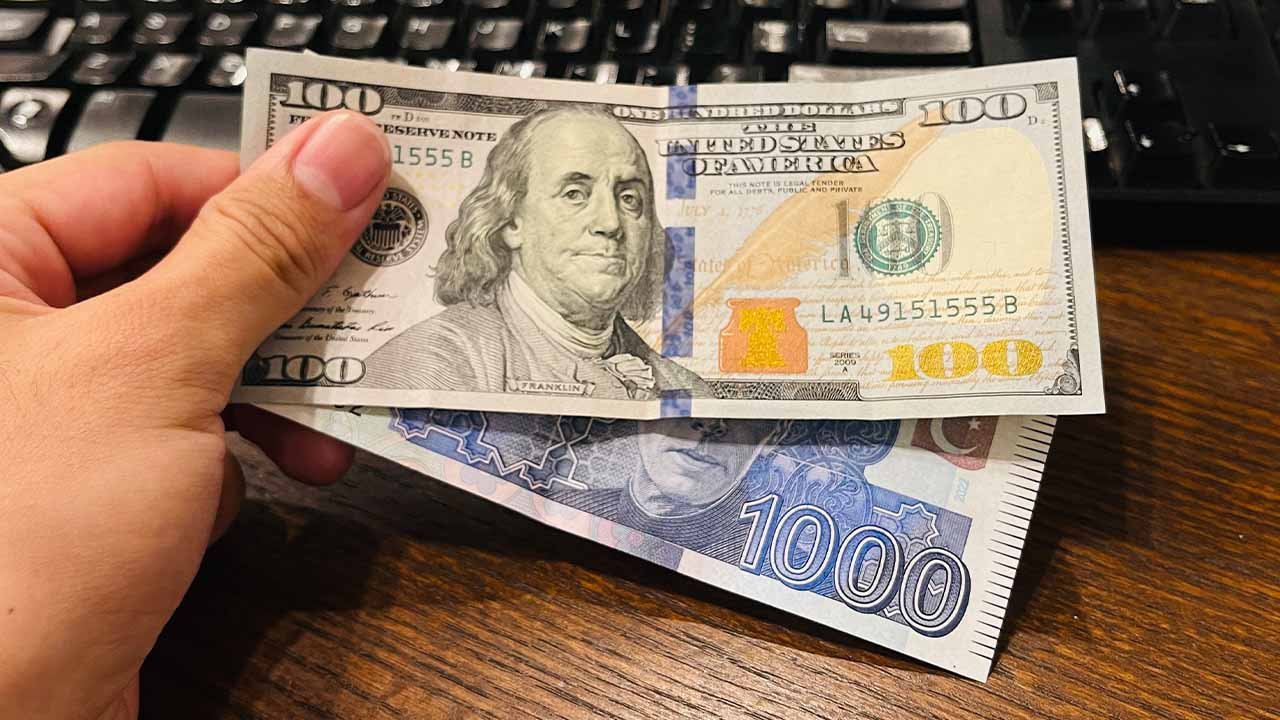
    In a trend marking its ninth consecutive session, the Pakistani rupee (PKR) demonstrated resilience against the US dollar (USD) by registering a 0.09 per cent appreciation in the inter-bank market on Friday.

    Closing the week at Rs282.53, the currency saw an increase of Rs0.26, according to the State Bank of Pakistan (SBP).

    This positive momentum follows a marginal gain on Thursday, settling at Rs282.79 against the US dollar.

    Simultaneously, the foreign exchange reserves held by the State Bank of Pakistan experienced a decline, falling below the $7 billion mark.

    A notable decrease of $136 million, attributed to debt repayments during the week ending December 15, 2023, brought the reserves to $6.904 billion.

    On the international front, the US dollar found itself near a more than four-month low on Friday, anticipating a key US inflation gauge reading scheduled for later in the day.

    This data is expected to provide clarity on the Federal Reserve’s room to manoeuvre in terms of interest rate cuts in the coming year.

    Early Asia trade witnessed the greenback hitting a five-month trough against the New Zealand dollar and a three-week low against the euro.

    This decline resumed after a sudden risk-aversion episode in New York hours on Wednesday triggered a sell-off in US stocks, leading to a rise in the dollar.

    Against a basket of currencies, the greenback hovered around 101.76, remaining close to the previous session’s more than four-month low of 101.72.

     The dollar index seemed poised for a weekly loss of about 0.8 per cent, extending the previous week’s 1.3 per cent decline.

    The Federal Reserve’s decision to leave the door open to potential rate cuts in the next year, as indicated in its last policy meeting for 2023, contributed to the ongoing downward pressure on the US dollar.

    This market movement has implications for various currency pairs, including the Pakistani rupee to US dollar exchange rate, which continues to be of interest to investors tracking global economic trends.

  • Gold price hits Rs219,800 per tola after an increase of Rs1,800

    Gold price hits Rs219,800 per tola after an increase of Rs1,800

    In a notable uptrend, domestic gold prices in Pakistan experienced significant gains on Friday, with the price of 24-karat gold rising by Rs1,800 per tola and concluding the session at Rs219,800.

    According to the Karachi Sarafa Association, the closing price for 10 grammes of 24-karat gold in today’s session was Rs188,443, marking an increase of Rs1,543.

    Similarly, the price for 10 grammes of 22-karat gold reached Rs172,740, showing a gain of Rs1,415.

    Contrastingly, the price of silver remained steady in the local market, with 24-karat silver and 10-gramme 24-karat silver settling at Rs2,650 and Rs2,271.94, respectively.

    The continuous surge in international gold prices is a driving force behind the upward trajectory of gold prices in the domestic market.

    Currently, international spot gold is trading at $2,055.91, indicating a 0.48 per cent increase compared to the previous session’s closing.

    Furthermore, international gold is set for its second consecutive weekly gain, influenced by the weakening dollar and US Treasury yields.

    The recent statement from the US Federal Reserve, outlining a cumulative rate cut of 75 basis points in 2024, is putting sustained pressure on the dollar and Treasury yields, contributing to further gains for the precious metal.

    In addition to the impact of international price fluctuations, the domestic gold market is also susceptible to changes in the interbank exchange rate of the local currency.

    The intricate interplay between global and domestic factors continues to shape the dynamics of the gold market in Pakistan.

  • Gold price in Pakistan dips to Rs218,000 per tola

    Gold price in Pakistan dips to Rs218,000 per tola

    In a reversal of its recent upward trend, the price of gold in Pakistan saw a decline on Thursday, with the value of 24-karat gold dropping by Rs500 per tola and settling at Rs218,000.

    According to the Karachi Sarafa Association, the closing price for 10-gramme 24-karat gold in today’s session was recorded at Rs186,900, indicating a loss of Rs428.

    Additionally, the price of 10-gramme 22-karat gold stood at Rs171,325.

    Meanwhile, silver prices remained unchanged in the domestic market, with 24-karat silver and 10-gramme 24-karat silver concluding at Rs2,650 and Rs2,271.94, respectively.

    This decline in gold prices follows three consecutive sessions of steady increases, aligning with the continuous uptick in international gold prices.

    However, today’s downturn is attributed to a drop in global gold prices and the relative strengthening of the Pakistani rupee (PKR).

    The international spot gold market experienced a decrease of approximately $8.5 in the previous session, driven by a rebound in the U.S. dollar.

    Presently, spot gold is trading at $2,037.14, marking a 0.25% increase for the day as the dollar faces renewed pressure.

    Despite the gains observed today, they are not substantial enough to offset yesterday’s decline, resulting in an overall loss for the local bullion market.

    The market remains sensitive to fluctuations in both international gold prices and the strength of the Pakistani rupee.

  • PKR records eighth consecutive gain, closes at Rs282.79 vs dollar

    PKR records eighth consecutive gain, closes at Rs282.79 vs dollar

    In a notable financial trend, the Pakistani rupee (PKR) sustained its positive trajectory against the US dollar (USD) for the eighth consecutive session, witnessing a 0.04 per cent appreciation in the interbank market on Thursday.

    According to the State Bank of Pakistan (SBP), the rupee concluded at Rs282.79 after experiencing a rise of Re0.11.

    The preceding day saw a slight uptick in the PKR’s value, settling at Rs282.9 against the US dollar. 

    A significant development unfolded as the government successfully secured a historic amount of Rs397 billion ($1.4 billion) in Wednesday’s local currency bond auction. 

    This achievement surpassed expectations, marking the highest borrowing in years within a single auction, showcasing sustained market interest even as December draws to a close.

    The substantial participation of investors underscores their confidence in long-term bonds, fueled by the anticipation of an early 2024 rate cut. 

    The government strategically opted for long-term borrowing in response, effectively mitigating rollover risks and minimisingreliance on short-term funding in the future.

    On the global front, the US dollar regained strength on Thursday, prompted by a sudden end to a robust rally for US stocks, compelling investors to seek safety. 

    In the final hour of equities trade on Wall Street, heavy selling induced a ripple of risk aversion through markets, lifting the previously under-pressure greenback from lows.

    As of early Asia trade on Thursday, the dollar index, which is down 1 per cent for the year so far, remained steady at 102.37. 

    In a comparison with major currencies, the Pakistani currency strengthened by 69.15 paisa against the Euro, concluding at Rs309.57 as opposed to the previous rate of Rs310.26. 

    The British Pound saw a reduction in value of 79.58 paisa, settling at Rs357.41 in comparison to the previous day’s Rs358.21.

    However, PKR experienced a slight decline of 0.38 paisa against the Japanese yen, closing at Rs1.974 as compared to the previous day’s rate of Rs1.97. 

    The Saudi Riyal concluded at Rs75.38, registering a decrease of 1.15 paisa from its value of Rs75.39 a day ago. 

    Similarly, the UAE Dirham witnessed a decrease in value of 2.81 paisa, shifting from Rs77.027 the previous day to Rs76.999.

    Meanwhile, oil prices, a crucial indicator of currency parity, experienced a decline on Thursday due to concerns over low demand following an unexpected US crude inventory build, outweighing apprehensions about global trade disruptions linked to tensions in the Middle East. 

    Brent crude futures dropped by 3 cents to $79.67 a barrel, while US West Texas Intermediate crude stood at $74.16 a barrel, reflecting a 6-cent decrease.

  • Gold price surges to Rs218,500 per tola amid global uptick

    Gold price surges to Rs218,500 per tola amid global uptick

    In the latest update on the precious metals market, the cost of gold in Pakistan has witnessed a consistent upward trend for the third consecutive week, culminating in a settling price of Rs218,500 per tola on Wednesday.

    According to data released by the All-Pakistan Gems and Jewellers Association (APGJA), the rate of 24-karat gold experienced a notable surge, increasing by Rs900 per tola, reaching the current benchmark of Rs218,500.

    Simultaneously, the price for 10 grammes saw a rise of Rs771, now standing at Rs187,328.

    This surge in gold prices is a continuation of the trend observed earlier in the week, when prices increased by Rs400 twice.. This cumulative rise over the week amounts to Rs1,700 per tola, following a similar trend from the previous week when the precious metal’s price escalated by Rs1,200 per tola.

    Internationally, spot gold exhibited a modest 0.1 percent increase, reaching $2,042.10 per ounce as of 0729 GMT.

    Concurrently, US gold futures recorded a 0.2 percent uptick, settling at $2,055.90.

    These global market dynamics further contribute to the evolving landscape of gold prices, adding nuances to the economic outlook both domestically and abroad.

  • 7th consecutive gain: Pakistani rupee closes at Rs282.9 against US dollar

    7th consecutive gain: Pakistani rupee closes at Rs282.9 against US dollar

    In a persistent surge, the Pakistani rupee (PKR) continued its upward trend against the US dollar (USD) for the seventh consecutive session, appreciating by 0.04 per cent in the inter-bank market on Wednesday.

    According to the State Bank of Pakistan (SBP), the PKR concluded at Rs282.9, marking an increase of Rs0.11.

    In the open market scenario, the PKR experienced a decline of 25 paisa for both buying and selling against the USD, settling at Rs281.50 and Rs284.50, respectively.

    Conversely, against the Euro, the PKR maintained stability for both buying and selling, closing at Rs307.00 and Rs310.00, respectively.

    Against the UAE dirham, the PKR held steady for both buying and selling, concluding at Rs77.30 and Rs78.00, respectively.

    In comparison, against the Saudi Riyal, the PKR saw a gain of 10 paisa for both buying and selling, closing at Rs75.20 and Rs75.90, respectively.

    This positive trend follows Tuesday’s marginal gain, where the rupee settled at Rs283.01 against the US dollar.

    The dollar index, which experienced a slight dip on Tuesday, maintaining a mostly flat position at 102.20, had previously reached a four-month low of 101.76 last week.

    In the backdrop of global trade concerns and heightened geopolitical tensions in the Middle East, with Yemen’s Iran-aligned Houthi forces conducting attacks on ships in the Red Sea, oil prices surged past $80 a barrel on Wednesday.

    Brent crude futures observed an 89-cent increase, or 1.1 per cent, reaching $80.12 a barrel by 1101 GMT, while US West Texas Intermediate crude climbed 93 cents, or 1.3 per cent, to $74.87 a barrel.