Category: Business

The most important business news, explained in a young, easy to understand way. News that affects young career professionals.

  • 24 karat gold price drops by Rs3,000 per tola 

    24 karat gold price drops by Rs3,000 per tola 

    On Saturday, the price of 24 karat gold per tola experienced a decrease of Rs3,000, reaching Rs215,600 as compared to its previous value of Rs218,600 on the last trading day. 

    Similarly, the cost of 10 grammes of 24 karat gold saw a decline of Rs2,572, settling at Rs184,842 from its earlier rate of Rs187,414. 

    The price of 10 grammes of 22-karat gold also decreased, falling to Rs169,439 from Rs171,786, according to the All Sindh Sarafa Jewellers Association. 

    Meanwhile, the prices of silver remained unchanged, with per tola and ten grammes priced at Rs. 2,600 and Rs2,229.08, respectively. 

    In the international market, the cost of gold experienced a drop of $26, reaching $2,024 from its previous value of $2,050, as reported by the Association. 

  • State Bank of Pakistan to announce monetary policy decision on December 12

    State Bank of Pakistan to announce monetary policy decision on December 12

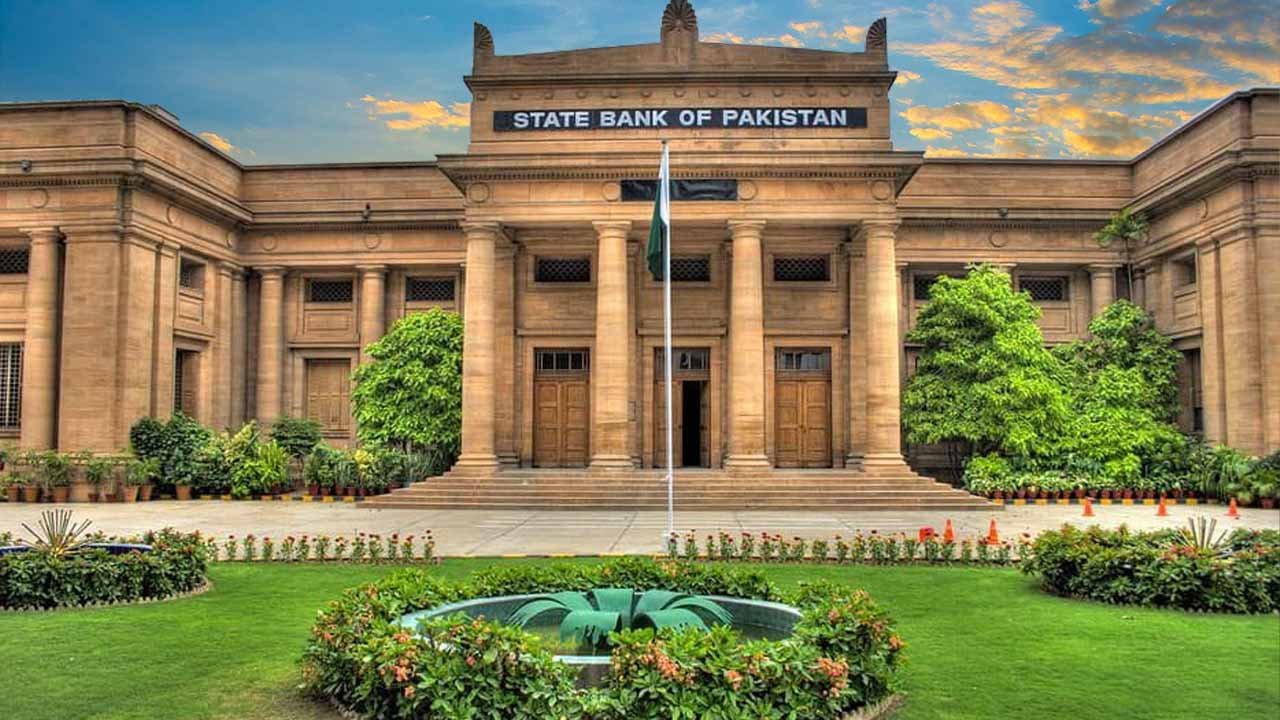
    The State Bank of Pakistan (SBP) is set to unveil its monetary policy on Tuesday, December 12. A statement released by the central bank on Friday informed that the Monetary Policy Committee (MPC) of SBP will convene in Karachi on December 12 to deliberate on monetary policy. 

    Subsequently, the central bank will issue the official monetary policy statement. In its preceding meeting on October 30, the MPC judiciously opted to uphold the policy rate at 22%, citing global market volatility. 

    The committee underscored the imperative of persisting with a stringent monetary policy stance to mitigate inflation.

    PKR ends another week in green

    The Pakistani currency is experiencing an upward trend against the US dollar for the past several sessions, concluding the week in positive territory on Friday. 

    According to the SBP, the Pakistani rupee gained 0.09 per cent, closing at Rs283.87 against the US dollar.

  • IMF board’s January meeting to shape future disbursements for Pakistan

    IMF board’s January meeting to shape future disbursements for Pakistan

    The International Monetary Fund’s (IMF) Executive Board is scheduled to convene on January 11 to endorse the Staff-Level Agreement (SLA) with Pakistan, marking the inaugural review of the $3 billion Stand-By Arrangement (SBA).

    In June, the IMF Executive Board granted approval for a crucial nine-month arrangement with Pakistan, aimed at supporting its economic stabilisation programme.

    This approval facilitated an immediate disbursement of $1.2 billion, with the remaining funds to be disbursed over the programme’s timeline, contingent upon two quarterly evaluations.

    Following negotiations between IMF staff and Pakistani authorities on November 15 in Islamabad, the SLA was successfully reached, paving the way for Pakistan to access SDR 528 million (approximately $700 million).

    This latest disbursement brings the cumulative total under the nine-month $3 billion SBA to nearly $1.9 billion.

    While the initial plan had tentatively slated the IMF Board meeting for December 7 to approve the initial tranche, the confirmed date is now set for January 11.

  • Overseas workers’ remittances to Pakistan dip to $2.3 billion

    Overseas workers’ remittances to Pakistan dip to $2.3 billion

    In November 2023, overseas workers sent a total of $2.3 billion in remittances to Pakistan, reflecting an 8.6 per cent decrease from the $2.5 billion recorded in October 2023, as per data released by the State Bank of Pakistan (SBP). 

    However, on a yearly basis, there was a 3.6 per cent increase in the monthly inflow compared to the same month in the previous year.

    Remittances are a crucial element in supporting Pakistan’s external accounts and play a vital role in boosting the country’s economic activity while also supplementing the disposable incomes of households dependent on remittances.

    The recent rise in remittances was attributed to an improved exchange rate following a crackdown against currency smugglers and hoarders. 

    This crackdown resulted in a reduction of the rate gap between the open and interbank markets. However, despite this positive trend, remittances have observed a decline on a monthly basis again this November.

    In the first five months of the fiscal year 2024, remittances amounting to $11 billion have been recorded, in contrast to $12.3 billion in the same period of the previous year.

    Breaking down the remittances, it was noted that overseas Pakistanis in Saudi Arabia sent the highest amount in November 2023, totaling $540.3 million. 

    This amount represented a 12.5 per cent monthly decline but was 5.5 per cent higher than the remittances in the same month of the previous year. 

    Remittances from the United Arab Emirates (UAE) also declined on a monthly basis by 13.6 per cent, from $473.9 million in October to $409.4 million in November. 

    However, there was a yearly improvement of 7.6 per cent. Remittances from the United Kingdom increased by 3.5 per cent to $341.7 million compared to October 2023.

    Conversely, remittances from the European Union declined by nearly 10 per cent on a monthly basis, amounting to $268.3 million in November 2023. Overseas Pakistanis in the US sent $261.5 million in November 2023, experiencing a month-on-month decrease of 7.7 per cent.

  • Pakistan Stock Exchange surges 2.33% to reach 66,223.63 points

    Pakistan Stock Exchange surges 2.33% to reach 66,223.63 points

    The Pakistan Stock Exchange (PSX) maintained its upward trajectory, with the benchmark KSE-100 index reaching a new pinnacle on Friday. 

    At the close, the index concluded at 66,223.63, marking a noteworthy increase of 1,505.56 points, or 2.33 per cent.

    While surpassing the 66,000 level earlier in the day, a temporary slowdown occurred in the second half due to profit-taking. 

    Nevertheless, bullish activity returned during the final hour, propelling the benchmark index to an intra-day peak of 66,273.73.

    The market displayed widespread buying across key sectors such as cement, chemicals, commercial banks, fertiliser, oil and gas exploration companies, OMCs, and power generation and distribution sectors. 

    Thursday’s trading session had already seen a positive trend, with the KSE-100 settling at 64,718.08, reflecting a gain of 800.35 points, or 1.25 per cent.

    This continued momentum is attributed to enhanced economic indicators following the recent agreement between Pakistan and the International Monetary Fund (IMF) authorities on the first review of the Stand-By Agreement (SBA) last month.

  • State Bank of Pakistan’s forex reserves decline to $7.02 billion amidst debt repayments 

    State Bank of Pakistan’s forex reserves decline to $7.02 billion amidst debt repayments 

    During the week ending December 1, 2023, the State Bank of Pakistan (SBP) witnessed a decline of $237 million in its foreign exchange reserves, bringing the total to $7,020.2 million. This reduction is attributed to debt repayments.  

    As of the same date, the country’s overall liquid foreign reserves amounted to $12.1 billion. Commercial banks held net foreign reserves totaling $5.08 billion. 

    Notably, the central bank’s reserves received a boost in July of the current year when Pakistan secured the initial tranche of approximately $1.2 billion from the International Monetary Fund (IMF).  

    This was part of a newly approved $3 billion stand-by arrangement (SBA). Additionally, inflows were received from Saudi Arabia and the UAE. 

    Despite these positive developments, the SBP’s reserves have been under pressure due to ongoing debt repayments, increased import payments following eased restrictions, and a lack of new inflows. 

    In a significant development, the IMF announced last month that a staff-level agreement (SLA) had been reached between its team and Pakistani authorities regarding the first review of the SBA.  

    However, the approval of the IMF Executive Board is required for this agreement to take effect. 

    Upon approval, approximately $700 million (SDR 528 million) will become available, bringing the total disbursements under the programme to almost $1.9 billion. 

    Addressing the media after the SLA with the IMF, Caretaker Finance Minister Dr Shamshad Akhtar expressed confidence that external financing would not be a concern.  

    The government anticipates inflows in December 2023, which are expected to contribute to an increase in foreign exchange reserves. 

  • IMF praises Pakistan’s economic progress and stability efforts 

    IMF praises Pakistan’s economic progress and stability efforts 

    The Executive Director at the International Monetary Fund (IMF), Bahador Bijani, acknowledged a positive trend in the economic landscape of Pakistan, highlighting the effective measures taken by the authorities. 

    The statement was made during an event hosted by Masood Khan, Pakistan’s Ambassador to the US, bringing together representatives from key international financial institutions (IFIs) such as the IMF, International Finance Corporation (IFC), World Bank, and Multilateral Investment Guarantee Agency (MIGA) at Pakistan House. 

    Expressing optimism, Bijani highlighted Pakistan’s significance regionally and globally, asserting that the nation merits enhanced prospects.  

    This observation coincides with Pakistan’s current status under a caretaker government while participating in an ongoing IMF programme. 

    Nathan Porter, IMF Mission Chief to Pakistan, addressed the assembly of over 40 IFI representatives, expressing contentment with the recently concluded staff-level agreement.  

    Porter praised the interim government’s actions and policies, underscoring their dedication to steering the country towards stability. He expressed the hope that this foundation would enable the pursuit of reforms for a more robust, prosperous, and inclusive Pakistan. 

    Porter further commended the State Bank of Pakistan (SBP) for its cooperative efforts and policies aimed at ensuring fiscal stability in the country.  

    Athanasios Arvanitis, Deputy Director of the Middle East and Central Asia Department at the IMF expressed optimism that the upcoming elections in February would bring about the necessary reforms for Pakistan’s progress. 

    Syed Ali Abbas, Advisor Mission Chief UK, European Department at the IMF, echoed similar sentiments, anticipating a more enduring approach following the successful completion of the electoral process. 

    Ambassador Masood Khan underscored the transformative impact of Pakistan’s economic digitization, emphasising the emergence of new opportunities for the youth and professionals in steering the nation towards a promising future. 

    Khan asserted that Pakistan, as a nation of talented individuals, has the potential for significant accomplishments.  

    The statement aligns with earlier commendations from Kristalina Georgieva, Managing Director of the IMF, who lauded the Pakistani government for its adept handling of economic stability and timely implementation of reforms earlier this month. 

  • IMF proposes solutions for streamlining Pakistan’s budget through digitisation 

    IMF proposes solutions for streamlining Pakistan’s budget through digitisation 

    The Caretaker Minister for Finance recently presided over the inaugural meeting with the International Monetary Fund (IMF) Technical Assistance Mission, focusing on the digitisation of the budgetary process.  

    The mission, led by Fazeer Rahim and Sybi Hida, senior economists from the Public Financial Management Division, along with IMF Resident Representative in Pakistan, Esther Pérez Ruiz, discussed strategies for enhancing the efficiency of the budget-making process through digitisation. 

    During the meeting, the minister highlighted the importance of tailoring the IMF’s recommendations to the specific needs of the ministry.  

    The goal is to streamline and improve the effectiveness of budgetary procedures through the integration of digital technologies. 

    The Technical Assistance Mission is committed to providing practical and implementable solutions tailored to the ministry’s requirements.  

    This collaborative effort seeks to modernise and optimise the budgetary framework, aligning it with contemporary digital practices. 

    In related developments, discussions have surfaced regarding Pakistan’s pursuit of another loan package from the IMF upon the completion of the ongoing standby agreement.  

    The caretaker government has initiated consultations for the forthcoming IMF programme, and sources indicate that talks with the IMF are likely to commence in the current month.  

    Finance ministry officials have clarified that the elected government will carry forward the measures initiated by the caretaker government.  

    It is anticipated that the newly elected government will be responsible for finalising and signing the IMF programme, assuming governance responsibilities. 

  • Toyota IMC unveils locally-made Toyota Corolla Cross Hybrid in Pakistan

    Toyota IMC unveils locally-made Toyota Corolla Cross Hybrid in Pakistan

    Indus Motor Company (IMC) celebrated the launch of the 4th generation Toyota Corolla Cross Hybrid Electric Vehicle (HEV) at its manufacturing facility in Karachi.

    This marks a significant achievement for IMC, emphasising the ‘Made in Pakistan’ initiative and showcasing the strong bond between Japan and Pakistan. Notable figures present at the ceremony included Federal Secretary Asad Rehman Gilani, Toyota’s top leadership and the Japanese Ambassador to Pakistan, Mitsuhiro Wada. 

    Yoshiyuki Takai, expressing optimism about the Corolla Cross HEV’s reception in Pakistan, highlighted the environmental benefits of increased hybrid vehicle adoption.

    Gilani, on behalf of the government, congratulated IMC and reiterated the commitment to support hybrid and electric technologies, aligning with the Auto Policy 2021–26. IMC’s CEO, Ali Asghar Jamali, emphasised the company’s dedication to sustainability, revealing an investment exceeding $100 million in manufacturing the first locally produced HEV.

    The Corolla Cross HEV boasts a smooth and efficient 1800-cc engine with hybrid and gasoline options. Jamali also outlined IMC’s contribution to the local automobile sector, encompassing a comprehensive value chain, part manufacturers, authorised dealerships, and a substantial workforce of over 450,000 people.

  • SNGPL proposes 137.62% hike in gas tariff amidst financial challenges

    SNGPL proposes 137.62% hike in gas tariff amidst financial challenges

    Sui Northern Gas Pipelines Limited (SNGPL) has proposed a substantial 137.62 per cent increase in gas tariffs per Metric Million British Thermal Unit (MMBtu), aiming for implementation in June 2023. 

    This tariff adjustment, seeking Rs1,715 per MMBtu, is intended to address the company’s financial shortfall of Rs181.51 billion projected for the fiscal year 2023–24. 

    The plea to the Oil and Gas Regulatory Authority (OGRA) emphasises the necessity of fixing the gas price at Rs2,961.98 per MMBtu.

    Currently priced at Rs1,246.49 per MMBtu, SNGPL proposes a hike of Rs1,209.14 per MMBtu in arrears, with an additional Rs56.48 per MMBtu attributed to rupee devaluation. OGRA is scheduled to review SNGPL’s plea on December 11.

    In a related context, the caretaker government, led by Finance Minister Dr Shamshad Akhtar, has announced plans to increase gas prices in Pakistan starting in January 2024. 

    Dr Akhtar highlighted that this decision aligns with Pakistan’s commitment to the International Monetary Fund (IMF), aiming for a comprehensive review of power tariffs. 

    The government’s broader economic strategy involves reducing debts, prioritising development initiatives, and implementing governance reforms within government enterprises.

    Upon reaching a staff-level agreement with the IMF, Pakistan anticipates receiving approximately 70 million US dollars, contributing to a total assistance amount of about $1.9 billion under the IMF programme. 

    Dr Akhtar emphasised the need to address the circular debt in the power and gas sectors, which currently exceeds 4 per cent of the Gross National Product (GNP). 

    Immediate measures have been initiated to mitigate this challenge, including adjustments to electricity and gas rates. 

    Dr Akhtar underscored the importance of a market-based exchange rate policy and the augmentation of foreign exchange reserves as key priorities for economic stability.