Category: Business

The most important business news, explained in a young, easy to understand way. News that affects young career professionals.

  • Pakistan forms new body led my three-star military general to expand tax base

    Pakistan forms new body led my three-star military general to expand tax base

    The government has established a new committee, led by a three-star military general, to oversee data integration efforts aimed at expanding the tax base.

    This move precedes the imminent arrival of a technical mission from the International Monetary Fund (IMF), tasked with assessing Pakistan’s tax system.

    Lieutenant General Muhammad Munir Afsar Chairman of the National Database and Registration Authority (NADRA), will head the technical committee, as notified by the Federal Board of Revenue (FBR).

    The newly formed committee will devise proposals for data integration to expand the tax base and formulate an IT infrastructure transformation plan.

    The eight-member committee, consisting of three senior FBR members, has been tasked with crafting a comprehensive plan for data integration. Their primary objective is to significantly increase the number of income tax return filers, aiming to elevate last year’s count of 4.9 million to 6.5 million within the next eight months, as outlined in an official notification.

    As reported by Express Tribune, Pakistan has shared an FBR restructuring plan with the IMF, outlining the integration of 145 entities into the FBR network to expand the tax base. However, the Prime Minister has withheld approval, instructing further refinement to address ambiguities and contradictions in the proposed restructuring plan.

    This strategic initiative aligns with the impending visit of an IMF technical mission to Pakistan, scheduled to commence next week.

    The mission will conduct a thorough review of the country’s tax laws and FBR’s administrative structure, ultimately delivering recommendations within two months. These suggestions may serve as a foundation for the upcoming IMF program.
  • CDA to receive 30 Chinese electric buses for Islamabad in January 

    CDA to receive 30 Chinese electric buses for Islamabad in January 

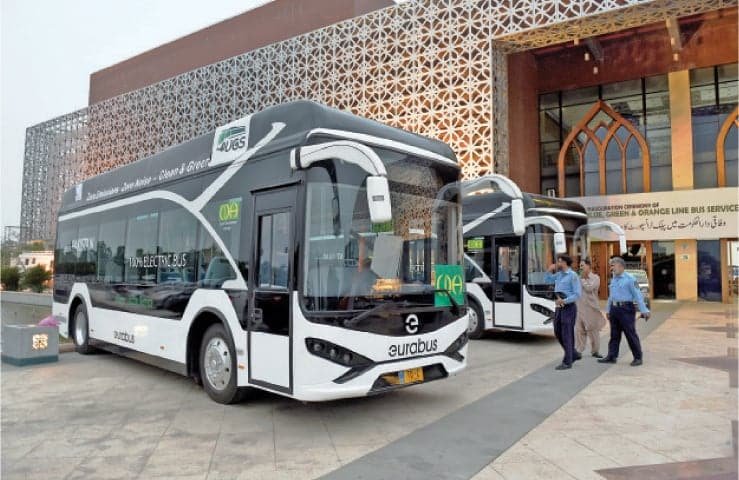
    The Capital Development Authority (CDA) has initiated a transformative move by securing 160 electric buses from China.

    The procurement plan involves the delivery of 30 buses in January, followed by two additional fleets arriving in February and March.

    CDA Chairman Anwarul Haq on Friday chaired a meeting to receive an update on the import of buses, as per sources from Dawn. The chairman directed the concerned wing to expedite the process, ensuring the timely arrival of all buses.

    Commencing in January, the first batch of 30 electric buses is set to play on 13 new routes across the capital city. This strategic deployment is a step towards enhancing sustainable and eco-friendly public transportation.

    The National Radio and Telecommunication Corporation (NRTC) has been entrusted with the pivotal role of managing the operation of the buses on the designated 13 routes.

    Under this arrangement, the CDA will be providing financial support to the NRTC, with a reimbursement ranging from Rs306 to Rs331 for every kilometre covered by the electric buses.

    To streamline the operation of these buses, the CDA is planning the construction of a dedicated depot at Zero Point, situated along the Srinagar Highway towards the H-8 side.

    The planning wing of the CDA has already designated a specific piece of land for the construction of this essential facility.

  • Pakistan to receive $1.5 billion from international lenders following IMF approval

    Pakistan to receive $1.5 billion from international lenders following IMF approval

    Pakistan is poised to secure funds amounting to $1.5 billion from global lenders, contingent on the approval of the loan tranche under the $3 billion Stand-By Arrangement (SBA) by the International Monetary Fund (IMF), as highlighted by Dr Shamshad Akhtar, the caretaker finance minister, in a recent interview with a local news channel.

    It’s noteworthy that the IMF granted preliminary approval on November 15, 2023, for the disbursement of the upcoming loan tranche within the programme.

    Upon receiving approval, Pakistan will gain access to SDR 528 million, equivalent to approximately $700 million. This will contribute to the cumulative disbursements under the program reaching almost $1.9 billion.

    The agreement underscores the authorities’ commitment to advancing planned fiscal consolidation, expediting cost-reducing reforms in the energy sector, completing the transition to a market-determined exchange rate, and pursuing reforms in state-owned enterprises and governance.

    These measures aim to attract investment, support job creation, and simultaneously enhance social assistance.

    Nathan Porter remarked, “Anchored by the stabilization policies under the SBA, a nascent recovery is underway, supported by international partners and indications of improved confidence.”

    He added that the steadfast execution of the FY24 budget, ongoing adjustments of energy prices, and renewed inflows into the foreign exchange (FX) market have alleviated fiscal and external pressures.

  • SBP data reveals 23.5% YoY decline in auto loans

    SBP data reveals 23.5% YoY decline in auto loans

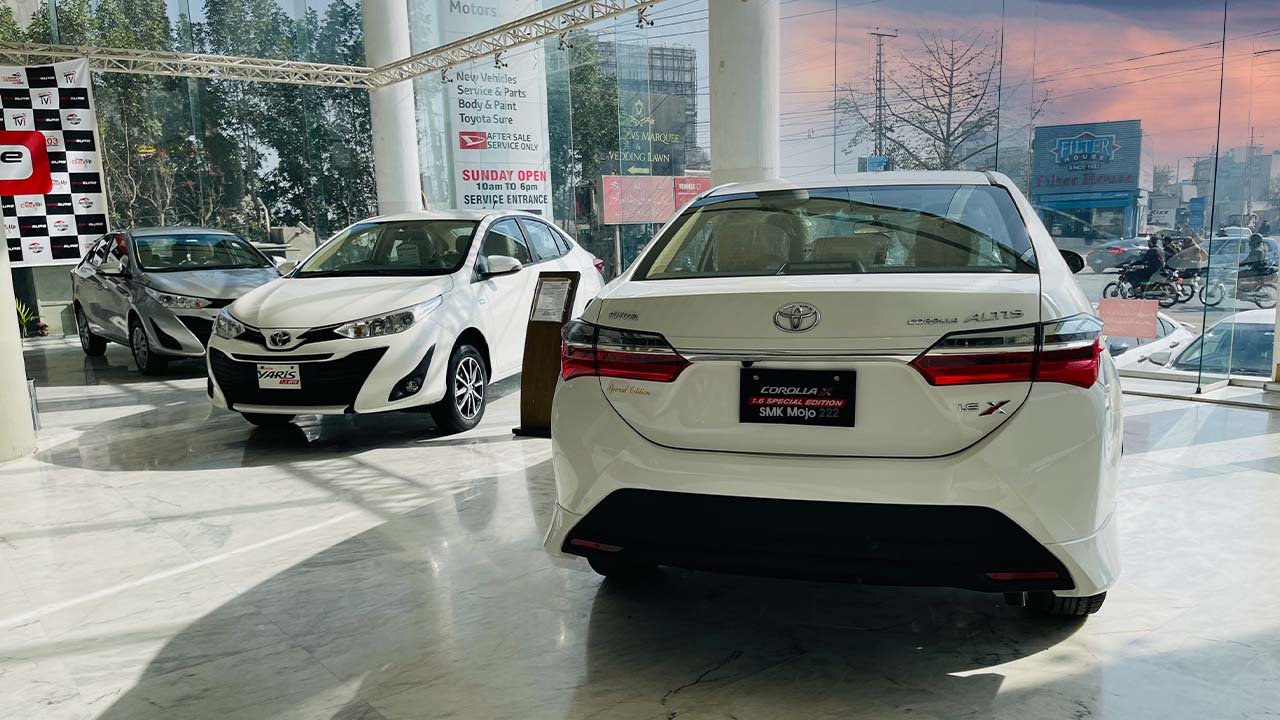
    In October, auto loans faced a decline for the 16th consecutive month due to high interest rates and inflation, as per data released by the State Bank of Pakistan (SBP).

    According to the SBP, auto loans witnessed a year-on-year drop of 23.5 per cent, amounting to Rs264 billion, and a month-on-month decrease of 3 per cent, down from Rs272 billion in September.

    While auto loans had peaked at Rs368 billion in June 2022, a subsequent decrease of Rs104 billion, or 28 per cent, occurred. This decline followed the SBP’s implementation of tighter monetary policies to address inflation and external imbalances.

    Financial analysts attribute this trend to the SBP’s measures, including elevated interest rates and the rupee’s significant depreciation against the dollar.

    These factors have led to increased costs in car financing and higher car prices, rendering them unaffordable for many consumers. The surge in inflation has further diminished consumer purchasing power.

    An analyst stated, “The auto sector bears the brunt of high interest rates and currency devaluation, rendering car financing and prices prohibitively expensive.”

    Despite recent price reductions by some car manufacturers, the anticipated boost in demand has not materialized. Consumers continue to grapple with high inflation and limited disposable income.

    Data from the Pakistan Automotive Manufacturers Association (PAMA) reveals a 44 per cent decline in car sales, totaling 27,163 units in the first four months of the current fiscal year, commencing in July.

    The SBP has aggressively increased its policy rate by a cumulative 15 percentage points to 22 per cent since September 2021, marking one of the world’s highest rates.

    Speculation suggests that the SBP will initiate a monetary policy easing in the first half of 2024, anticipating a relief in inflationary pressures and an improvement in foreign inflows to enhance the country’s external position.

    SBP data indicates a 0.8 per cent decrease in bank loans to the private sector, amounting to Rs8.10 trillion in October.

    Consumer loans, including an 8 per cent drop to Rs829 billion, witnessed personal loans declining by 4 per cent to Rs246 billion and housing loans falling by 2.7 per cent to Rs207 billion.

    Analysts predict an upswing in credit to the private sector in the coming months, as decreasing interest rates, fiscal consolidation, reducing crowding out, and improved foreign inflows are expected to alleviate liquidity constraints.

  • PSX hits historic high: KSE-100 index surpasses 59,000 mark for the first time

    PSX hits historic high: KSE-100 index surpasses 59,000 mark for the first time

    The Pakistan Stock Exchange (PSX) extended its impressive performance, achieving a historic milestone as the benchmark KSE-100 Index surpassed the 59,000 mark for the first time ever on Friday.

    At the close of the session, the benchmark index concluded at 59,086.35, registering a gain of 186.51 points, or 0.32 per cent. This marks its highest closing level to date.

    Earlier in the day, the KSE-100 index reached an intra-day peak of 59,502.28. However, profit-taking activities in the second half of the trading session led to a partial retreat from these gains.

    The trading session commenced with widespread buying, particularly in key sectors such as automobile assemblers, cement, chemicals, commercial banks, oil and gas exploration companies, OMCs, and technology and communication, all contributing to a positive market trend.

    In the preceding session on Thursday, bulls maintained control of the bourse, with the benchmark index settling at 58,899.84, marking a substantial increase of 701.08 points, or 1.20 per cent.

    The bullish momentum in the stock market follows the recent staff-level agreement between Pakistani authorities and the International Monetary Fund (IMF) on the first review under the nine-month $3 billion Stand-By Arrangement (SBA).

    Market experts anticipate increased inflows in the coming weeks due to this agreement. However, data released on Thursday revealed a decrease of $217 million in foreign exchange reserves held by the State Bank of Pakistan (SBP) on a weekly basis, reaching $7.2 billion as of November 17.

  • BYD, global electric vehicle leader, explores investment in Pakistan’s EV sector

    BYD, global electric vehicle leader, explores investment in Pakistan’s EV sector

    BYD, the prominent Chinese automotive conglomerate renowned as the world’s foremost electric vehicle (EV) manufacturer, engaged in discussions regarding the potential of Pakistan’s EV sector.

    This revelation surfaced through a modified series of posts released by the Board of Investment (BoI) on Thursday. Initial posts hinted at BYD’s enthusiastic interest in investing in Pakistan’s EV sector, but these posts have since been removed.

    The development follows a meeting between a delegation from BYD Company China, featuring Cai Xiao Xu, Head of the Dealer Division (South Asia), Lei Jian, Country Head (Pakistan), and Sohail Rajput, Secretary at BoI.

    In a statement shared on X, formerly Twitter, the Fortune 500 company and global EV manufacturing leader BYD Company highlighted its substantial presence in key industries, including automobiles, rail transit, new energy, and electronics.

    The ongoing exploratory visit to Pakistan by the BYD delegation, facilitated by BoI, includes pivotal discussions with potential local partners.

    Secretary BOI, during the meeting, warmly welcomed the company’s interest, underscoring the significance of EVs in Pakistan.

    He reassured the BYD delegation of the Government of Pakistan’s steadfast commitment to facilitating foreign investors.

    BYD, recognised as the world’s largest EV manufacturer, produces a diverse range of vehicles, including battery-electric and hybrid cars, buses, and trucks, as well as battery-powered bicycles, forklifts, solar panels, and rechargeable batteries.

    In the previous month, Dr Gohar Ejaz, the Caretaker Minister for Commerce and Industries, disclosed that BYD is actively considering investment opportunities in Pakistan.

    During this period, the caretaker minister briefed the BYD delegation on government policies and the Special Investment Facilitation Council (SIFC), offering unequivocal support for their new ventures.

    This move aligns with Pakistan’s strategic goal to expand its presence in the renewable energy sector, curtail its energy import expenditure, and fulfil climate change objectives.

    Caretaker Prime Minister Anwaar-ul-Haq Kakar has separately extended an invitation to Chinese businesses to invest in Pakistan’s solar parks.

  • SBP reports second consecutive weekly decline in forex reserves

    SBP reports second consecutive weekly decline in forex reserves

    During the week ending on November 17, 2023, the State Bank of Pakistan (SBP) experienced a decline of $217 million in its foreign exchange reserves, settling at $7,180.0 million, as revealed by data released on Thursday.

    The total liquid foreign reserves for the country amounted to $12.3 billion, with commercial banks holding net foreign reserves of $5.1 billion.

    The central bank attributed this reduction in reserves to debt repayments. In a statement, the SBP explained, “During the week ended on November 17, 2023, the SBP’s reserves decreased by US$ 217 million to US$ 7,180.0 million due to debt repayments.”

    This marks the second consecutive week of a decline in the dollar stockpile, following a $115 million decrease in the previous week.

    It’s noteworthy that in July of this year, the central bank’s reserves received a significant boost as Pakistan received the initial tranche of approximately $1.2 billion from the International Monetary Fund (IMF).

    This followed the approval of a new $3 billion stand-by arrangement (SBA). Additional inflows were received from Saudi Arabia and the UAE.

    However, the SBP’s reserves have been facing pressures due to ongoing debt repayments, increased import payments following the relaxation of restrictions, and a lack of fresh inflows.

    In a positive development, the IMF announced last week that its staff and Pakistani authorities had reached an agreement on the first review of the SBA.
    The staff-level agreement is pending approval by the IMF Executive Board.

    The IMF stated, “The IMF team has reached a staff-level agreement (SLA) with the Pakistani authorities on the first review of their stabilisation programme supported by the IMF’s US$3 billion (SDR2,250 million) SBA.”

    Upon approval, approximately US$700 million (SDR 528 million) will become available, bringing the total disbursements under the programme to nearly US$1.9 billion.

    Caretaker Finance Minister Dr Shamshad Akhtar, speaking to the media after the SLA with the IMF, expressed confidence that external financing would not be an issue, anticipating increased inflows in December 2023, which would contribute to boosting the foreign exchange reserves.

  • IMF recommends gas price hike, subsidy cuts for Pakistan

    IMF recommends gas price hike, subsidy cuts for Pakistan

    The International Monetary Fund (IMF) has reportedly urged Pakistan to address the growing concerns surrounding the power sector’s circular debt, which now stands at 4 per cent of the gross domestic product (GDP).

    Despite initial targets for debt reduction not being met, the IMF has not yet made a final decision on its recommendations.

    Sources suggest that the IMF is advocating for an additional hike in gas prices and a reduction in energy sector subsidies, aligning with its persistent calls for such measures.

    It’s noteworthy that no official decision has been reached on these proposals. Simultaneously, Pakistan and the IMF have collaborated on a comprehensive privatisation plan, focusing on state-owned entities (SOEs) that have incurred significant losses.

    This strategic move aims to address the financial challenges faced by these institutions. The Central Monitoring Unit will meticulously evaluate the extent of losses, with findings submitted to the IMF.

    A crucial aspect of the privatization plan involves transferring control of power distribution companies to the private sector. This shift is expected to mitigate losses and improve efficiency in the power sector, aligning with the IMF’s overarching demand for comprehensive reforms in the energy sector.

  • NEPRA greenlights Rs1.52 per unit hike in power tariff for Karachi residents

    The National Electric Power Regulatory Authority (NEPRA) has granted approval for an increase in the electricity tariff by Rs1.52 per unit for consumers of K-Electric.

    In accordance with the directive from the Economic Coordination Committee (ECC) in June 2023, NEPRA has issued a notification officially declaring a rise of Rs1.52 per unit in electricity charges, according to a press release.

    These adjustments will be reflected in the monthly electricity bills spanning from December 2023 to November 2024.

    A spokesperson for K-Electric clarified that NEPRA’s notification aligns with a previous ECC decision related to charges from the preceding tenure.

    In a statement, the spokesperson mentioned, “The prolonged duration in finalising KE’s tariff has contributed to the current circumstances, resulting in lower charges from Karachi compared to other regions in the country. Operating within the regulated framework of Pakistan’s power sector, KE, like other DISCOS, adheres to decisions made by the government of Pakistan and NEPRA concerning power tariffs.”

    It is noteworthy that lifeline consumers are exempted from the recent increase in charges, providing relief to this specific consumer group, the statement added.

    In a previous development this month, the Economic Coordination Committee (ECC) made a decision regarding the uniform quarterly tariff adjustments for K-Electric consumers, approving a hike of Rs1.72 per unit.

    The decision entails that the tariff rationalization guidelines previously issued to the National Electric Power Regulatory Authority (NEPRA) shall be applicable to the consumption of July, August, and September 2023, to be recovered from K-Electric consumers in December 2023, January 2024, and February 2024, respectively.

    Subsequent to this decision, the electricity tariff for K-Electric consumers will experience an increase of Rs1.72 per unit.

    Sources indicate that there will be a hike of Rs1.25 per unit in terms of quarterly adjustment from January to March 2023, while Rs0.47 per unit will be increased in terms of quarterly adjustment from October to December 2023.

    These measures are taken to ensure uniform electricity tariffs across the country, as per sources familiar with the matter.

  • Emirates suspends flights to Israel for an indefinite period

    Emirates suspends flights to Israel for an indefinite period

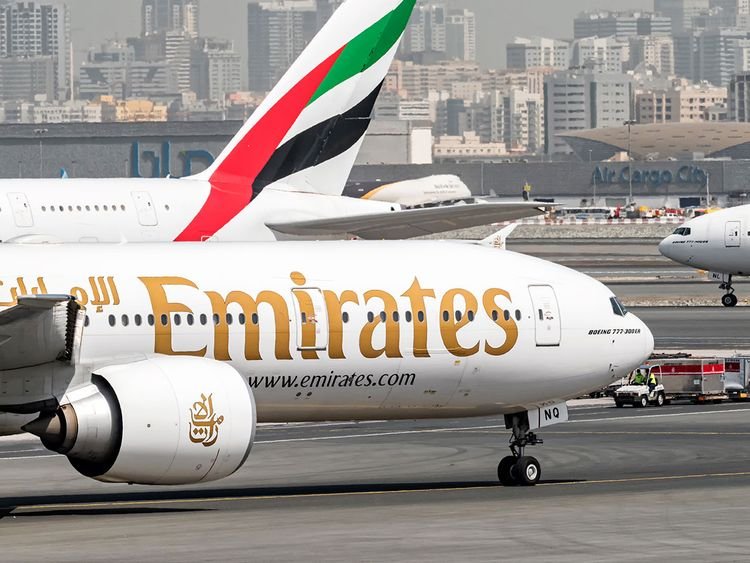
    Emirates announced the suspension of flights to and from Tel Aviv until further notice on Wednesday, citing concerns related to the ongoing Israel-Hamas conflict. This marks the first instance of Emirates indefinitely halting operations to Tel Aviv.

    An Emirates spokesperson while talking to Gulf News stated, “We are closely monitoring the situation in Israel and are in close contact with the relevant authorities. Customers with onward connections to Tel Aviv on Emirates flights will not be accepted for travel at their point of origin until further notice.”

    The airline initially cancelled its Tel Aviv flights on October 12 due to safety concerns amidst the conflict, subsequently extending the suspension multiple times, with the latest extension lasting until November 30.

    In June 2022, the inaugural Emirates flight departed from Dubai International Airport to Tel Aviv, carrying 335 passengers. This milestone marked the initiation of a daily service connecting the two cities, a development spurred by the signing of the Abraham Accords.

    Separately, in a welcoming development, Israel and Hamas have brokered a four-day truce through the mediation of Qatar. As part of this agreement, 50 women and children held in Gaza will be released in exchange for 150 Palestinian women and children currently detained in Israeli jails.