Category: Business

The most important business news, explained in a young, easy to understand way. News that affects young career professionals.

  • Anti-power theft measures lead to Rs46 billion in recoveries

    Anti-power theft measures lead to Rs46 billion in recoveries

    The government’s unyielding efforts against power theft have produced significant results, surpassing Rs46 billion in recoveries, as announced by Rashid Langrial, Secretary Power Division, Government of Pakistan, in a statement on X (formerly Twitter).

    It’s noteworthy that the anti-power theft campaign commenced on September 7, and the reported outcomes cover the period up to October 31.

    Langrial highlighted the government’s commitment, stating that they have undertaken unprecedented measures, including reshuffling, suspending, prosecuting, and even arresting their own staff.

    Approximately 470 individuals per day have been detained, marking a substantial increase in the rate of apprehension.

    The Secretary highlighted the government’s determination to eliminate external influences, thanks to the unwavering support of the Prime Minister, the Minister-in-Charge, and other segments of state power.

    While revealing the results for the initial two months (53 days), Langrial underscored the importance of placing the figures in context.

    The estimated annual losses across the national grid for the current year stand at Rs589 billion. Notably, around Rs199 billion of these losses are attributed to ex-FATA, Baluchistan tube wells, and AJK.

    However, Langrial clarified that these specific areas are not the primary focus of the campaign due to their unique circumstances. AJK, for instance, handles its own bills but disputes payments on contractual grounds.

    Ex-FATA, exempted from metres due to a policy of appeasement post-integration, and Baluchistan tube wells face enforcement challenges, among other factors.

    Langrial disclosed that efforts are concentrated on the remaining problem space of Rs390 billion, of which Rs46 billion has been recovered in 53 days, averaging Rs867 million per day.
    He cautiously acknowledged that maintaining

    the same level of state support and field effort is crucial for resolving 80 per cent of the problem space, albeit with some uncertainty.

  • Pakistan’s stock market surges above 56,500 for the first time in history

    Pakistan’s stock market surges above 56,500 for the first time in history

    The bullish momentum persisted in the Pakistan stock market today, propelling the key stock gauge to an unprecedented level above 56,000 for the first time in history.

    By the session’s close, the index had reached a historic high of 56,523.58, marking an impressive surge of 1,132.21 points, or 2.04 per cent day-on-day. Notably, the KSE-100 index had experienced a notable gain of 2,268.33 points, or 4.27 per cent, in the preceding week.

    Throughout the day, the index remained in positive territory, achieving an intraday high of 56,583.59 (+1,192.22) and a low of 55,644.68 (+253.31) points. The KSE-100 Index witnessed a total volume of 300.341 million shares traded.

    The prevailing positive sentiment is attributed to the recent PIB auction on November 8, which exhibited a substantial decline in yields.

    This decline may indicate market expectations of an earlier-than-anticipated reduction in interest rates.

    Additionally, investors are anticipating a higher weighting for Pakistan in the upcoming review by global index provider Morgan Stanley Capital International (MSCI), scheduled for tomorrow.

    In today’s session, out of the 100 index companies, 57 closed higher, 23 closed lower, 1 remained unchanged, and 19 were untraded.

    The strength of the KSE-100 index was supported by sectors such as power generation and distribution, fertiliser, commercial banks, cement, and automobile assembly.

    Contributing positively to the index were companies like HUBC, EFERT, MTL, BAHL, and MCB, accumulating significant points.

    On the other hand, the KSE-100 Index faced a downturn primarily due to the refinery sector, Inv. Banks/Inv. Cos./Securities Cos., Transport, Leather & Tanneries, and Automobile Parts & Accessories.

    Companies exerting downward pressure on the index included MEBL, UPFL, KEL, OGDC, and NATF. The intricate dynamics of today’s market underscore the varied performances across different sectors and companies within the KSE-100 Index.

  • Bank deposits in Pakistan hit all-time high, showing 17.80% increase in a day 

    Bank deposits in Pakistan hit all-time high, showing 17.80% increase in a day 

    In a statement released on Friday, the State Bank of Pakistan (SBP) announced that the country’s bank deposits had reached an all-time high.  

    On October 23, there was a notable increase of 17.80 per cent, amounting to Rs3,986 billion, compared to the figures on October 22. 

    According to the central bank, the total banking deposits for October 2023 reached a historic level of Rs26,000.398 billion. 

    Rupee expected to fall further 

    In other news, a Tresmark report suggests that the Pakistani rupee is anticipated to face pressure against the US dollar in the ongoing week until the completion of the International Monetary Fund’s (IMF) initial review of the country’s $3 billion loan programme.  

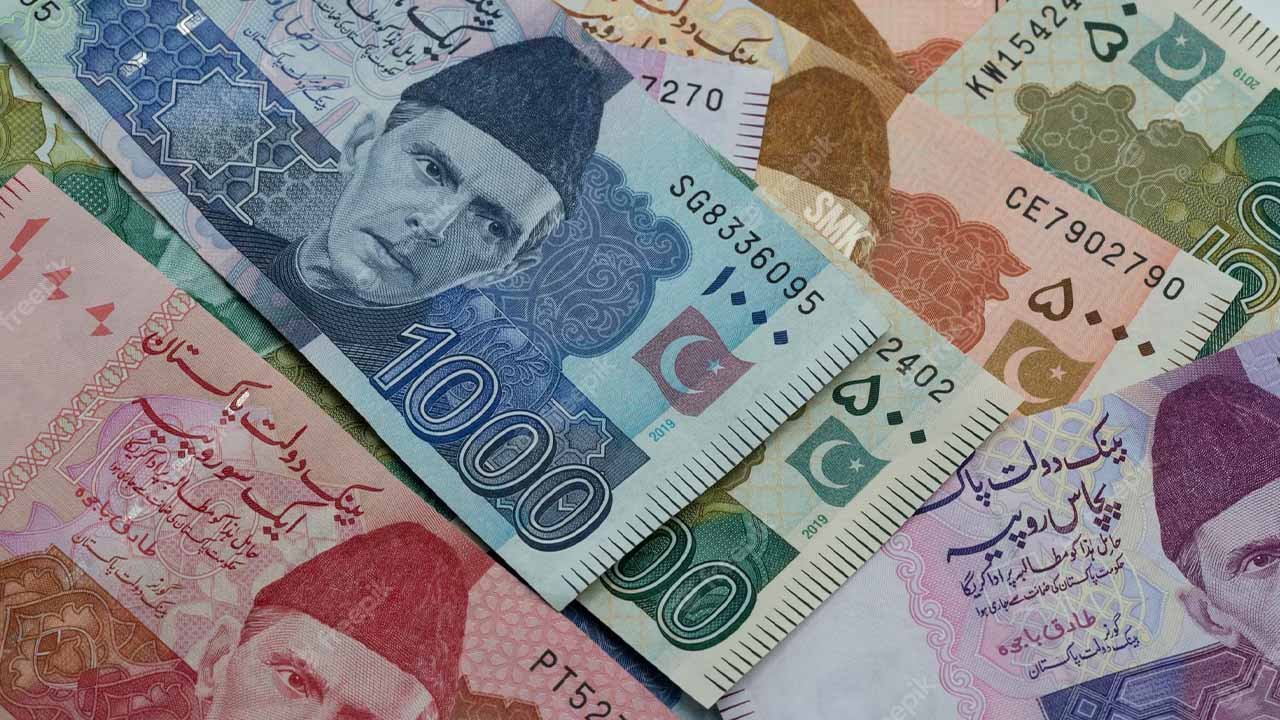
    The local currency experienced a depreciation of Rs2 or 0.60 per cent against the US dollar during the week, concluding at Rs287.03 on Friday.  

    It’s worth noting that the foreign exchange market was closed on Thursday due to a public holiday. 

    The IMF’s evaluation of Pakistan’s bailout package began on November 2, with expectations for the review to conclude by December 15. 

  • Agricultural boom: Pakistan’s farm exports surge by more than 70%

    Agricultural boom: Pakistan’s farm exports surge by more than 70%

    In October 2023, Pakistan experienced a notable surge in exports, marking a 13.5 per cent increase to reach $2.7 billion, as reported by the Pakistan Business Forum (PBF).  

    Simultaneously, the trade deficit saw a 4.5 per cent reduction during the same period, indicating positive economic developments. 

    Chaudhry Ahmad Jawad, the Vice President of PBF, highlighted the remarkable 73 per cent growth in the agriculture sector for October.  

    Notably, exports of rice and sesame seeds played a pivotal role in this expansion, showcasing a diversification of the country’s export portfolio and underscoring the robustness of the agricultural industry. 

    Jawad emphasised the imperative for Pakistan to boost its service exports, particularly in information and communication technology (ICT), to address the balance of payment deficit.  

    Drawing a comparison with India, he noted India’s remarkable achievement in ICT exports surpassing $140 billion in fiscal year 2022–23, contrasting with Pakistan’s stagnant growth at $2.6 billion in fiscal year 2021–22.  

    The key differentiator, as Jawad pointed out, is the focus on technology and engineering in India over the years, leading to a skilled labour pool. 

    While acknowledging the challenges in the short to medium term, Jawad expressed optimism about Pakistan’s potential for growth in the ICT sector. He suggested addressing the skills gap by offering crash courses to enhance the capabilities of IT graduates. 

    Jawad further underscored concerns raised by IT companies in Pakistan, stating that despite an abundance of talent, the technology sector faces difficulties due to a lack of demand and challenges in remitting money outside Pakistan.  

    He called for government intervention to tackle these issues, pointing to the State Bank of Pakistan’s efforts in 2020 and emphasising the need for ongoing attention to restore confidence. 

    Finally, a PBF official commended the caretaker IT minister’s goal of increasing ICT exports to $10 billion and bringing renowned payment gateways like PayPal and Stripe to Pakistan.  

    However, he raised concerns about existing limitations on exporters’ remittances, urging the finance division to address this critical issue. 

  • Tariff hike of Rs1.72 per unit approved for K-Electric consumers 

    Tariff hike of Rs1.72 per unit approved for K-Electric consumers 

    The Economic Coordination Committee (ECC) has granted approval for quarterly tariff adjustments of Rs1.72 per unit for K-Electric, alongside government guarantees of Rs100 billion for Pakistan State Oil (PSO) and a Rs20 billion credit facility for Punjab’s Green Cooperative Initiative. 

    The ECC session, presided over by Federal Minister for Finance Dr Shamshad Akhtar and attended by other federal ministers and senior officials, addressed various summaries submitted by ministries such as Interior, Maritime Affairs, Energy (Power Division), Energy (Petroleum Division), Poverty Alleviation and Social Safety, and Defence. 

    The decision to adjust the tariff for K-Electric was reached after careful consideration of a summary presented by the Ministry of Energy regarding “Uniform Quarterly Tariff Adjustments for K-Electric Consumers on a par with XWDISCOs 2nd and 3rd Quarterly FY 2023.” 

    Following in-depth discussions, the ECC concluded that the tariff rationalisation through adjustments for K-Electric, aligning with the uniform Quarterly Tariff Adjustment (QTA) guidelines already issued to NEPRA, will be applicable to the consumption of July, August, and September 2023.  

    According to The News, these adjustments are set to be recovered from K-Electric consumers in December 2023, January 2024, and February 2024, respectively. 

  • Here’s why KIA Pakistan is teasing ‘Yasir and Alvin’ 

    Here’s why KIA Pakistan is teasing ‘Yasir and Alvin’ 

    KIA Motors Pakistan recently stirred curiosity on social media by mentioning “Yasir and Alvin” in a post, leaving some oblivious while surprising others.  

    Clarifying the mystery, KIA Lucky Motor Corporation is hinting at the introduction of a sedan resembling the Toyota Yaris and Changan Alsvin.  

    This serves as a clear indication of the automaker’s intent to enter this segment. The upcoming car is expected to match the size of the Toyota Yaris and Changan Alsvin, eliminating the possibility of it being an entirely different model.  

    This move suggests that, for the time being, the Corolla and Civic segments remain unthreatened by a new entrant.  

    While the brand has not disclosed the car’s details or its name, it is apparent that a new vehicle is on the verge of being launched. 

    Considering the current economic challenges in Pakistan, with soaring car prices, launching a new vehicle seems like a risky decision.  

    The nation is already grappling with high petrol costs and escalating inflation, making the timing of this introduction noteworthy. 

  • Gold price increases to Rs213,100 per tola

    Gold price increases to Rs213,100 per tola

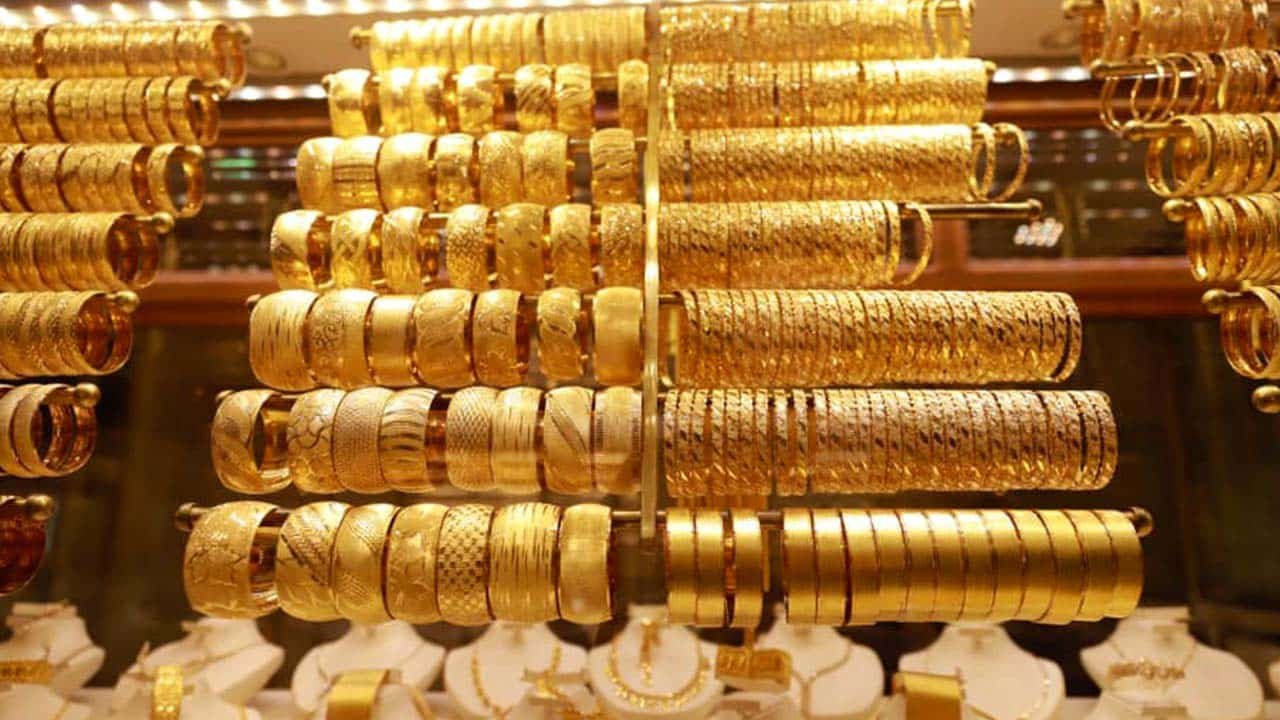
    The gold price in Pakistan witnessed an increase on Friday, with the cost of 24-karat gold rising by Rs1,300 per tola, settling at Rs213,100 in today’s session.

    The Karachi Sarafa Association reported that the closing price for 10 grammes of 24-karat gold was Rs 182,698, indicating a loss of Rs1,114.
    Meanwhile, 10 grammes of 22-karat gold saw an increase, reaching Rs166,452, up by Rs1,022.

    In contrast, the silver prices remained unchanged in the domestic market, with 24-karat silver and 10 grammes of 24-karat silver closing at Rs2,580 and Rs2,211.93, respectively.

    It is noteworthy that domestic gold prices are influenced by fluctuations in international prices and changes in the local currency’s interbank exchange rate.

    Despite intraday gains, the Pakistani rupee (PKR) is facing its fourteenth consecutive loss against the USD.

    The depreciation of PKR against the USD leads to an increase in the value of PKR-denominated gold since gold is denominated in US dollars.

    On the global front, international gold prices experienced a decline, marking the second consecutive week of losses. International spot gold is currently trading at $1,954.29, down by 0.20 per cent for the day.

  • Global market impact: Gold price in Pakistan drops by Rs2,400 per tola

    Global market impact: Gold price in Pakistan drops by Rs2,400 per tola

    On Thursday, gold prices in Pakistan experienced a decline, mirroring the global market trend.

    The value of the yellow metal reached Rs211,800 per tola, marking a decrease of Rs2,400. 

    The 10-gram gold was traded at Rs181,584, reflecting a Rs2,058 drop, as reported by the All Pakistan Gems and Jewellers Sarafa Association (APGJSA). 

    In the preceding session, gold prices had risen by Rs200, settling at Rs214,200 per tola.

    The international gold rate, accompanied by a $20 premium, was established at $1,968 on Thursday, indicating a $20 reduction in the global market, according to APGJSA. 

    In the midst of these changes, silver rates remained steady at Rs2,580 per tola in Pakistan.

  • IMF pressures Pakistan for tax reforms, calls for intensified recovery efforts

    IMF pressures Pakistan for tax reforms, calls for intensified recovery efforts

    The International Monetary Fund (IMF) is urging Pakistan to intensify efforts towards tax recovery. 

    Specifically, the IMF calls for increased income tax collection from retailers and the real estate sector, alongside a heightened focus on agriculture income. 

    The IMF emphasises collaborative actions between the federal government and provinces to enhance tax recovery, considering the imposition of a fixed tax on retailers in case of collection shortfalls after December. 

    Additionally, the IMF recommends consultations with provinces for taxing agriculture and real estate. Proposals for tax policy amendments and addressing taxation flaws have been extended to the Federal Board of Revenue (FBR) by the IMF mission, emphasising effective taxation policies and enforcement in sectors with insufficient tax recovery. 

    The FBR has presented a revenue projection report to the IMF team for the current fiscal year, with the IMF expected to respond by Saturday. During the discussions, the FBR briefed the IMF on the task force dedicated to tax policy and administration. 

    As part of an agreement with the IMF, Pakistan commits to sharing data on tax evaders through collaboration with the FBR, banks, and NADRA, aiming to enhance overall tax collection. 

    This agreement was reportedly reached during policy review talks, facilitating the release of a $700 million loan tranche under the Standby Agreement (SBA).