Category: Business

The most important business news, explained in a young, easy to understand way. News that affects young career professionals.

  • PSX bounces back from early losses, ends in green with 30-point gain

    PSX bounces back from early losses, ends in green with 30-point gain

    The Pakistan Stock Exchange (PSX) had a rough start on Friday, with the KSE-100 Index dropping by 0.79 per cent in early trading.

    By the end of the day, the index managed to recover marginally and closing almost flat at 85,483.40 points. The gain PSX witnessed was just 30.18 points, or 0.04 per cent.
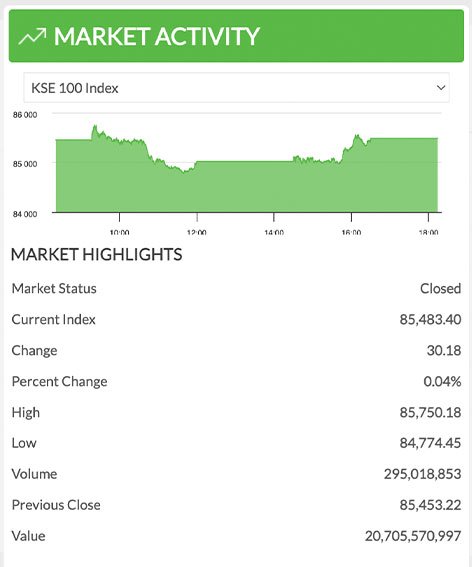
    PSX closing (October 11, 2024)

    During trading hours, the index swung up and down within a range of 975 points. KSE-100 reached a high of 85,750 points and dipped to a low of 84,774 points. A total of 295 million shares were traded within the PSX.

    Top gainers Change (%) Top decliners Change (%)
    ATLH +10.00% KOSM -11.84%
    PTC +8.13% HUBC -5.17%
    PIOC +7.50% YOUW -4.75%
    PSO +5.16% ABL -3.39%
    ATRL +3.88% LUCK -3.28%
    Contributors

    Out of the 100 listed companies, 46 witnessed gains, 50 ended red, and 4 stayed same. The top gainers of Friday were companies including ATLH (+10.00 per cent), PTC (+8.13 per cent), PIOC (+7.50 per cent), PSO (+5.16 per cent), and ATRL (+3.88 per cent).

    On the losing side, the biggest decliners were KOSM (-11.84 per cent), HUBC (-5.17 per cent), YOUW (-4.75 per cent), ABL (-3.39 per cent), and LUCK (-3.28 per cent).

    In terms of influencing overall index, PSO had the biggest positive impact, adding 68.72 points to the index, followed by FFC, EFERT, PIOC, and lastly UBL.

    Secondly, HUBC dragged the index down the most, bringing it down by 181.94 points, with LUCK, HBL, TRG, and SRVI also contributing to the drop.

    Overall, 560.74 million shares were traded across the stock market, up from 503.75 million on Thursday The total value of shares traded was recoeded Rs26.12 billion, which was Rs1.79 billion less than the last session.

  • World Bank raises Pakistan’s GDP growth forecast to 2.8% for FY25

    World Bank raises Pakistan’s GDP growth forecast to 2.8% for FY25

    The World Bank has projected that Pakistan’s economic activity will keep getting better with GDP growth to hit 2.8 per cent in FY25, slightly up from the previous projection of 2.3 per cent.

    These insights were mentioned in a report named Pakistan Development Update: The Dynamics of Power Sector Distribution Reforms.

    The report mentions several positive factors for Pakistan’s economy, including the removal of import restrictions, easing of domestic supply chain disruptions, and falling inflation ratings.

    Also, business confidence is likely to improve with upgrades in Pakistan’s credit rating and lesser political uncertainty.

    Pakistan’s agriculture sector is also projected to grow at average rate of 2.4 per cent during FY25–26. The World Bank said that the absence of import controls will enhance the availability of farm inputs, which will support recovery in agricultural sector over the medium term.

    The report also predicts that growth in agriculture and industry will benefit the services sector, which is projected to grow by an average of 3.2 per cent during FY25–26.

    This growth will be led by key sub-sectors including wholesale and retail trade, along wit transport and storage, which are expected to recover with the revival of imports and surging demand.

    Output growth is forecasted to drop to 3.2 per cent in FY26 due to stricter macroeconomic policies, high inflation, and lingering policy uncertainties.

    On the inflation front, the World Bank expects consumer price inflation around 11.1 per cent in FY25, slowing further to 9 per cent in FY26, driven by lower commodity prices, tight macroeconomic policies, and high base effects.

    Still, inflation is expected to remain high in the short term due to increasing energy prices, an increase in money supply through open market operations (OMOs), and new tax measures as a part of ongoing fiscal consolidation efforts.

    Externally, Pakistan’s current account deficit is also expected to remain low at 0.6 per cent of GDP in FY25, inching up slightly to 0.7 per cent in FY26, as local demand improves and import restrictions remain lifted.

  • Beyond the surface: Analysing SBP’s 30-month foreign reserves high

    Beyond the surface: Analysing SBP’s 30-month foreign reserves high

    Pakistan’s foreign currency reserves have risen to $15.98 billion, of which $5.28 billion are held by commercial banks and $10.7 billion by the State Bank of Pakistan (SBP). This is the highest level of reserves in 30 months achieved via the inflow of the IMF loan: A sign of short-term stability.

    Pakistan’s economic woes seem to be coming to a close with the upcoming Shanghai Cooperation Organization (SCO) summit in Islamabad, which begins October 16-17.

    Foreign investments, including possible multi-billion dollar settlements from Saudi Arabia in the Reko Diq mining operation and loans for the ML-1 railway project, are expected to come to Pakistan. These funds are expected to immediately give relief to the economy but will also alter the value of the PKR.

    It is possible that the foreign investment funds will increase the value of the PKR. This happens because when foreign funds arrive, they have to be converted into PKR before they are to be invested in local projects. As a result, the demand for PKR shoots up and the value of the PKR goes up. However, this appreciation is usually short-lived. Once the foreign funded projects are completed, the PKR tends to lose value again.

    This historical pattern is linked to Pakistan’s huge trade deficit, which was $24.09 billion for just the fiscal year 2023-24 alone. This is due to Pakistan importing much more than it exports.

    The imports that exceed exports are responsible for the outflow of foreign reserves which causes the PKR to depreciate.

    Historically, to prevent the PKR from depreciating too much, the SBP has come in and started selling off foreign currency reserves to support the value of the PKR when it starts to depreciate. However, the sale of reserves is not a viable option to stabilize the PKR value in the long term as Pakistan runs a persistent trade deficit.

    The more PKR the SBP buys, to artificially increase the value of the PKR, the more it depletes its reserves. Without any rise in the inflow of foreign currency from exports, this practice of artificially propping up the PKR is not sustainable.

    The recent rise in reserves and the temporary boost from the SCO summit may give a sense of stability, but they don’t address the core underlying economic problems. Structural changes in exports and imports will help the rupee to remain under pressure unless the trade deficit is curbed.

    While the SBP interventions may provide immediate relief, they only treat the symptoms, not the cause. To achieve true economic stability, the government needs to enforce reforms. Reducing the trade deficit by increasing exports to build sustainable foreign reserves is the need of the hour for Pakistan.

    While the 30 month foreign reserves high is a reprieve for the state bank, it’s just that: A reprieve. The real question, though, is whether Pakistan will be able to grow when world leaders leave Islamabad after the conclusion of the SCO.

  • Finance Minister Aurangzeb promises economic reforms in meeting with ADB

    Finance Minister Aurangzeb promises economic reforms in meeting with ADB

    Federal Minister for Finance and Revenue Senator Muhammad Aurangzeb has reaffirmed the government’s commitment to implementing its reform agenda and meeting structural benchmarks to lend permanence to macroeconomic stability, promote inclusive, sustainable growth and end Pakistan’s reliance on external borrowing.

    He made it clear that the only way this goal could be successfully achieved was by changing the “DNA of the economy” by moving it from away its usual boom-and-bust cycles and leading it to a sustained export-led growth encouraging investment and FDI flows into export-oriented sectors and getting access back to the international capital market.

    He made this observation during a meeting with a high-level delegation from the Asian Development Bank that called on the Minister at Finance Division today.

    The visiting delegation was led by Donald Bobiash, Executive Director of Asian Development Bank and Mr Shigeo Shimizu, Executive Director Asian Development Bank while Yong Ye, Country Director Asian Development Bank and other senior officers from the ADB and Finance Division were also present.

    Senator Muhammad Auragzeb welcomed the delegation and shared with them a roundup of ongoing structural reforms and the resultant growth trajectory and improvement in key economic indicators.

    He particularly highlighted an efficient management of twin deficits backed by buoyant remittances and healthy exports, a steep fall in inflation from a 38 per cent high of last year to a 44-month low of 6.9 per cent in September last, and reduction in the policy rate by 450 bps with expectations of more cuts in coming months.

  • CPEC energy debt reprofiling: Economic relief at a billion-dollar price tag

    Pakistanis look on with weary eyes as lawmakers in Islamabad plan to celebrate a possible extension of a $15.4 billion loan. The debt reprofiling for energy-based projects attached to the China–Pakistan Economic Corridor (CPEC) will increase the debt amount by approximately eight per cent, which is huge given that it amounts to $1.22 billion.

    What exactly is debt reprofiling in this context?

    Simply put, Pakistan will get five more years to pay back the loan – all the while, interest will keep racking up on the principal loan amount.

    The repayments of this additional sum exceeding one billion dollars will come from taxpayer funds at the end of the day as Pakistan seeks to climb out of the quagmire of the circular debt problem it finds itself in.

    Since the government has planned not to pay this amount by incurring further debt, this reprofiling will translate into higher tariffs on electric bills – an ugly sight Pakistanis are all too familiar with.

    The hike in tariffs is bound to accelerate the existing trend of installing solar panels on residential properties in urban centres. According to a survey by Gallup Pakistan, over 15 per cent of households have some sort of solar panel system installed. This makes sense as it’s a great return on investment, at just PKR 1.5 million for a decent sized plant.

    With prices for a single solar panel listed under PKR 16 thousand, it is possible that the business community linked with solar panels will see astronomical profits once the tariffs are increased.

    However, this can prove disastrous for the FBR and the Chinese power companies operating in Pakistan under the CPEC project. This will be because revenues may decline when people resort to using grid electricity for their electricity.

    Rumours are circulating that in the wake of the extension of the loan, lawmakers might introduce taxes on green meters linked to home-based solar systems. This will be done in an attempt to expand the energy sector tax net once again – as many have found respite in solar power.

    The rumour, however, maybe just that: A rumour.

    This is because Chief Minister Punjab Maryam Nawaz favours a transition towards sustainability, as proven by her scheme to equip 50,000 households with solar power systems.

    Introducing taxes on solar panels will set her sustainability goals back.

    The arrival of the Prime Minister of China Li Qiang, ahead of the high profile SCO (Shanghai Cooperation Organization) meetings will indeed provide relief to the economy. But can the same be said for citizens when the debt burden gets passed off to the taxpayers? Time will tell.

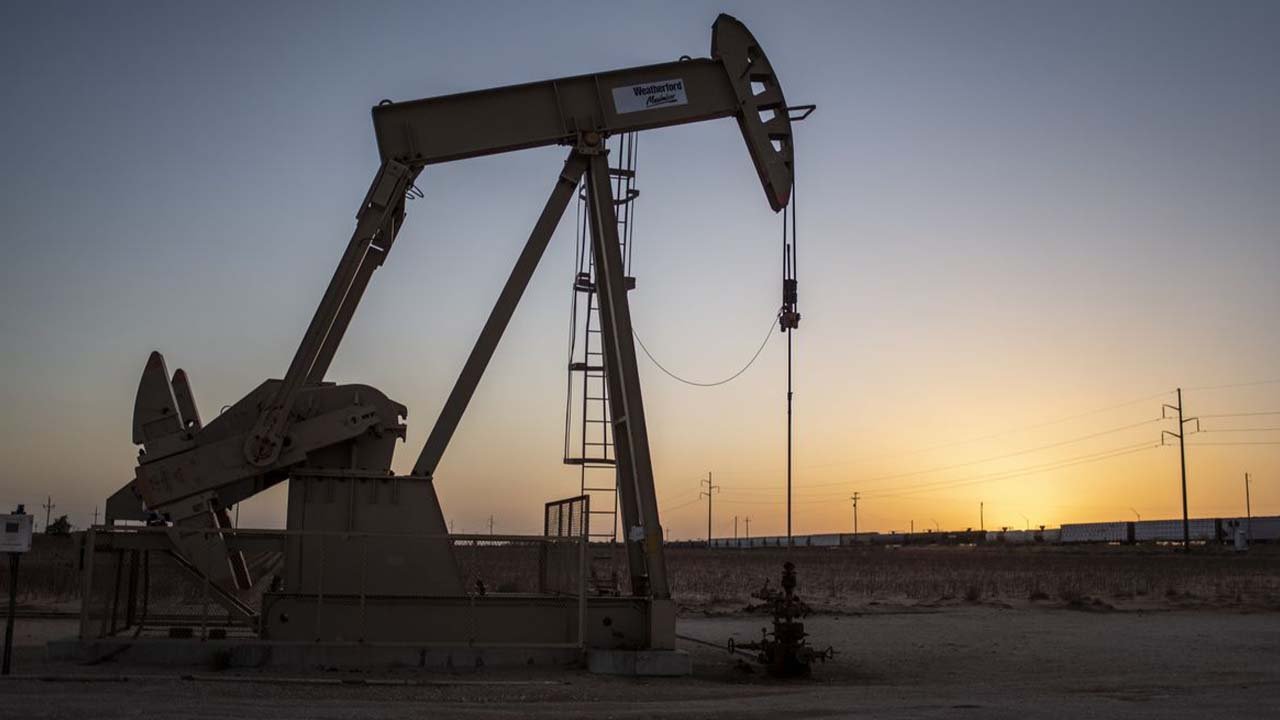
  • Global oil prices drop more than 3% as fears of supply disruptions ease

    Global oil prices drop more than 3% as fears of supply disruptions ease

    Global oil prices dropped more than 3 per cent as the surge driven by increasing geopolitical tensions paused, with the market anticipating a response from Israel against Iran.

    Tamas Varga, an analyst at oil broker PVM, remarked in a Tuesday report, “Oil can only continue to rise for so long based on perceptions rather than actual disruptions in supply.”

    Following Iran’s launch of approximately 180 ballistic missiles at Israel last week, oil prices had climbed nearly 13 per cent by Monday’s close, sparking concerns that Israel could retaliate by targeting Iran’s oil sector.

    President Joe Biden has openly advised Israel against targeting Iran’s oil infrastructure. According to officials speaking to The New York Times, Israel is anticipated to prioritise strikes on military and intelligence sites in Iran.

    Similarly, The Jerusalem Post has reported that Israel’s efforts will likely concentrate on these military and intelligence facilities.

    Israeli Defense Minister Yoav Gallant is set to meet with US Secretary of Defense Lloyd Austin at the Pentagon on Wednesday to discuss ongoing security developments in the Middle East, as stated by press secretary Maj. Gen. Pat Ryder during a briefing on Monday.

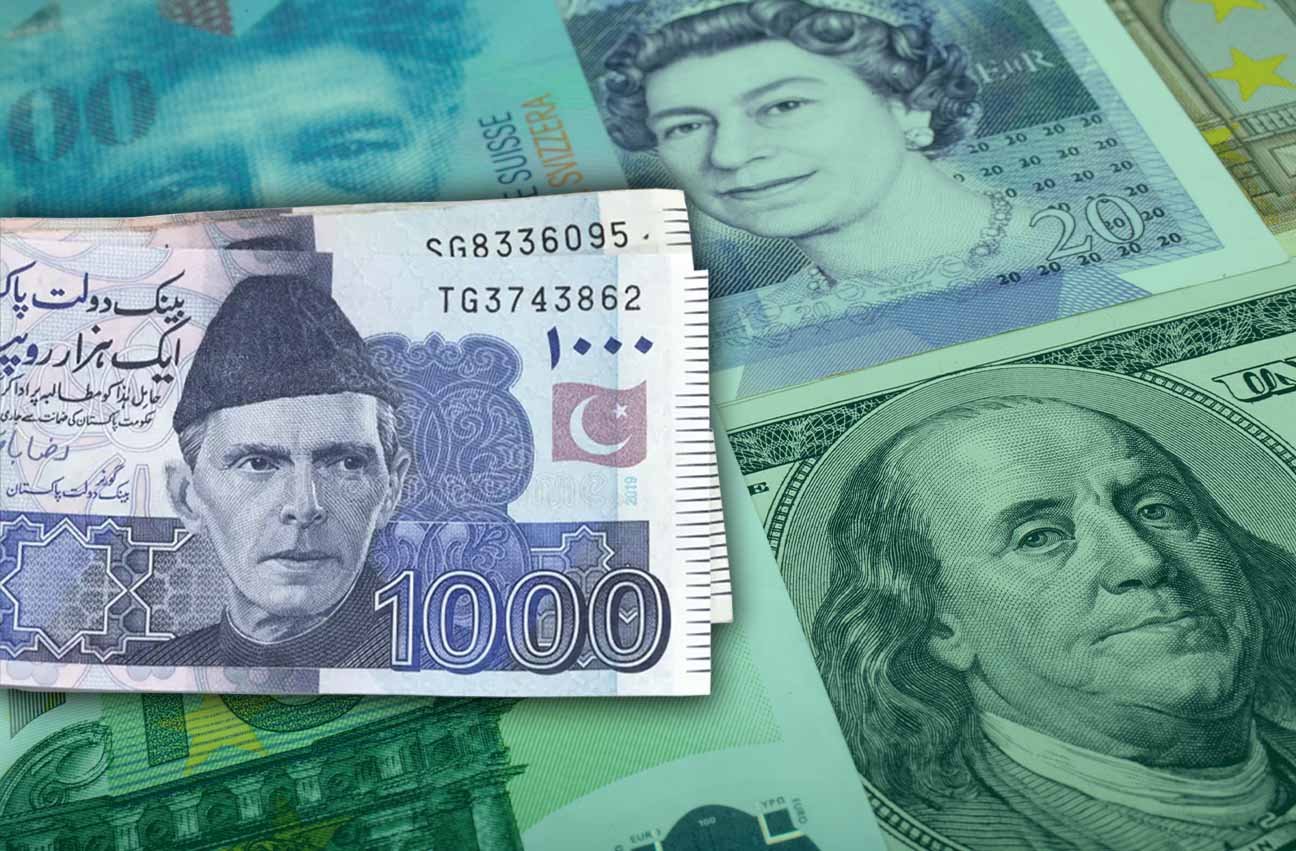
  • Exchange rates: PKR drops over two paisa against US dollar

    Exchange rates: PKR drops over two paisa against US dollar

    The Pakistani rupee (PKR), on second trading day of the week, dropped by 2.78 paisa against the US dollar (USD) in Tuesday’s interbank session to settle the trade at Rs277.67 against the greenback.

    Today’s closing takes PKR 0.01 per cent higher compared to Monday’s closing rate of Rs277.64.

    PKR, during the trading session, saw an intraday high of Rs277.80 and a low of Rs277.70 per dollar.

    Exchange companies were buying the American dollar for Rs278.3 and selling it at Rs279.69.

    It is worth mentioning that, in the current financial year, Pakistani currency has gained against the US dollar about 67.11 paisa or 0.24 per cent. The current calendar year has witnessed rupee rise by Rs4.19 or 1.51 per cent.

    Here’s a comparison of the closing rates for today and those from the previous session:

    Exchange rates for today

    As compared to other foreign currencies, PKR lost 72.47 paisa against the Euro, closing at Rs305.2 compared to the Monday’s rate of Rs304.48.

    The British Pound became cheaper by 40.78 paisa closing at Rs363.48 compared to Rs363.89 from a day ago.

    The Swiss franc saw a gain of Rs1.43, closing at Rs325.12 compared to 323.69 from the previous session.

    Against the Japanese Yen, PKR lost 0.8 paisa, closing at Rs1.8807.

    The UAE Dirham increased by 1.17 paisa from Rs75.6 a day ago to Rs75.59.

    The Chinese Yuan lost 17.39 paisa, closing at Rs39.38.

    Lastly, the Saudi Riyal closed at Rs73.94 with a gain of 2.51 paisa from its value of Rs73.92 a day ago.

  • Samsung issues rare apology for poor results in tech ‘crisis’

    Samsung issues rare apology for poor results in tech ‘crisis’

    Samsung Electronics issued a rare apology and acknowledged on Tuesday it was facing a “crisis” over its technological competitiveness, reflected in a disappointing profit guidance, despite a global AI boom.

    Samsung said it expected third-quarter profits to rise to 9.1 trillion won ($6.8 billion), up 274.5 per cent from a year earlier, falling short of market expectations as the company struggles to leverage robust demand for the chips used in artificial intelligence servers.

    “Today, we, the management of Samsung Electronics, would like to first say sorry to you,” Samsung said in a statement signed by Jun Young-hyun, the vice chairman of its device solutions division.

    It said “concerns have arisen about our fundamental technological competitiveness and the future of the company” because of the results.

    “Our management will take the lead in overcoming the crisis […] We will make the serious situation we are currently facing an opportunity for a resurgence.”

    The results are up around three-fold from the same period last year but down nearly 13pc from the previous quarter.

    The rare apology came about a week after the tech giant said it intended to reduce staff in some of its operations in Asia, describing the move as “routine workforce adjustments”.

    Bloomberg reported that the layoffs could affect about 10pc of the workforce in those markets, while other reports claimed the planned move could affect up to 30pc of overseas employees at some operations.

    Samsung has been lagging behind South Korea’s SK hynix when it comes to high bandwidth memory (HBM) chips used in AI chipsets, which could be one of the biggest causes of the profit estimate released on Tuesday, said Kim Dae-jong at Sejong University in Seoul.

    “Given the circumstances, it appears that Samsung has also lost a significant number of (HBM-related) employees to SK hynix,” Kim told AFP.

    The company was facing a “grave situation”, he said.

    Shares in Samsung fell 1.31pc in afternoon trading in Seoul, with its stock down almost 30pc over the past six months.

    ‘Expected decline’

    The Samsung statement said management would “quickly assess and make any necessary adjustments to our workplace culture”.

    The firm is the flagship subsidiary of South Korean giant Samsung Group, by far the largest of the family-controlled conglomerates known as “chaebol” that dominate business in Asia’s fourth-largest economy.

    Jene Park, a senior analyst at Counterpoint Research, said there had been “an expected decline” in Samsung’s memory sector, with delays in supply of the newest chips and general reductions in memory demand.

    Even so, a sharp profit or sales decline was unlikely in the near future, he said. “Samsung plays a significant role in the global supply chain,” Park said.

    The company’s estimate for its sales for the third quarter was seen increasing 17.2pc on-year to 79 trillion won.

    Samsung is expected to release its final earnings report at the end of this month.

  • PSX Soars to New Heights: A Historic Milestone

    PSX Soars to New Heights: A Historic Milestone

    The trading floor of the PSX (Pakistan Stock Exchange) buzzed with joy as the market shattered its all-time high today. KSE-100, the main benchmark of the stock market, closed at 84910 points, reporting a 1.62% rise in the index since trading began in the morning.

    Each index on the PSX remained in the green, with the OGTI (Oil and Gas Tradable) index posting astronomical gains at an appreciation of 4.81% of the entire index in just one day.

    The All Shares Index, which measures the performance of all the companies listed on the stock exchange, also received a boost of 968 points or 1.79%.

    In addition, Pakistan’s KSE-30, which reflects the stock value of the thirty largest companies operating in the country, stood higher by 487 points and ended the market session with an overall appreciation of the index at 1.79%.

    With growing investor confidence and the market sitting at the cusp of passing the 85,000-point mark, it seems inevitable that the wave of bullish investor sentiments will help to break a new record.

    The rise in investor confidence was a welcome surprise following the disturbances caused by PTI protests and growing terror concerns following the attack against Chinese workers. If the sentiments remain bullish, then investors are expected to record massive gains.

  • Pak-Cheen dosti Zindabad? Billions in investment hang in the balance

    Shockwaves from the blast that claimed the lives of two Chinese engineers, in Karachi last night were felt by political leaders and investors alike in Beijing.

    With just a week remaining for the Chinese Prime minister’s official tour of Pakistan on October 14th, lawmakers in Islamabad scramble to protect economic ties with China to ensure the continuous flow of Yuan into CPEC projects. The initial budget that was allocated towards CPEC-related projects was $62 billion, of which $35 billion in investments remain – A sum Pakistan can’t afford to lose.

    However, the damage has already been done. China strongly condemned the lethal attack on its civilians and urged its citizens to remain cautious, noting that local security measures should be strengthened.

    This has hurt the confidence of already weary Chinese investors looking to invest in Pakistan as they now explore safer destinations for their investments. Somewhere, Chinese workers can safely work.

    China has remained the largest single foreign direct investor in the Pakistani economy, amounting to $568 million in FY 2024 alone. In fact, China is responsible for 30% of all foreign investments in Pakistan. 

    With Pakistan struggling to attract foreign direct investment and with the recent attack, it can be safely said Pakistan is not moving in the right direction.

    It is in the interests of the local business community to see increased collaboration with international investors. Lapses in security need to be remedied to ensure that Pakistan stops biting the metaphorical hand that feeds it.