Category: Business

The most important business news, explained in a young, easy to understand way. News that affects young career professionals.

  • Here are the latest prices of all Honda cars in Pakistan after reduction

    Here are the latest prices of all Honda cars in Pakistan after reduction

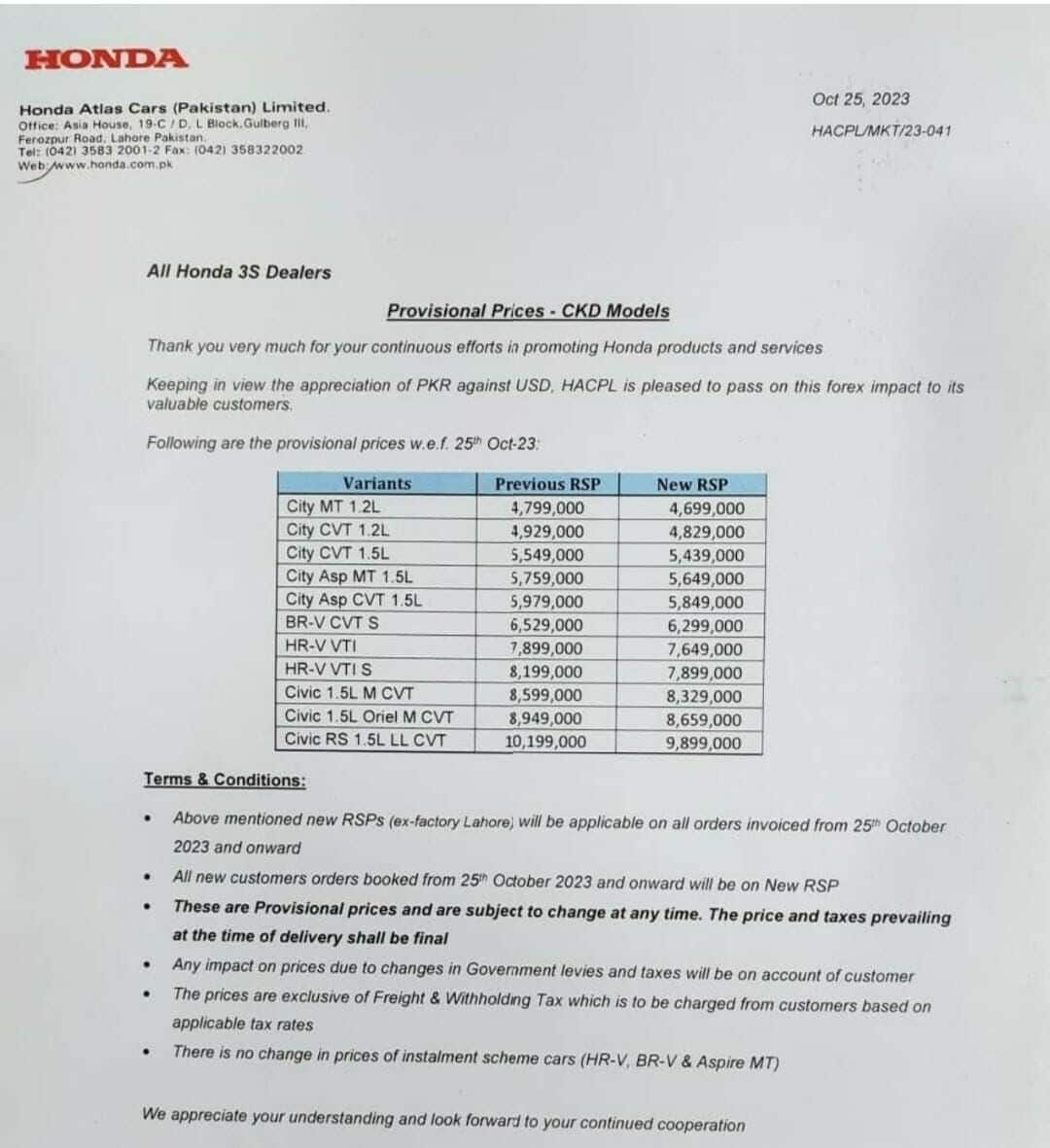
    In a move similar to what Toyota did earlier, Honda Atlas Cars (Pakistan) Limited announced on Wednesday that it is reducing the prices of its vehicles, especially the popular Honda City lineup.

    This decision was made due to the significant strengthening of the Pakistani rupee (PKR) against the US dollar.

    Through an official circular, Honda Pakistan disclosed the updated ex-factory prices for all its car models, reflecting reductions of up to PKR 300,000.

    This substantial price drop is expected to make Honda vehicles more affordable for a broader consumer base.

    After these adjustments, the price of the most budget-friendly Honda car in Pakistan, the City MT 1.2L, now stands at Rs4.699 million following a reduction of Rs100,000.

    Moreover, the top variant, the Aspire CVT 1.5L, is now available for Rs5.849 million after a cut of Rs130,000.

    The most significant price changes have been applied to the popular Honda City lineup, generating excitement among potential buyers.

    Here are the new prices for all Honda cars:
  • IMF team to visit Pakistan next week for crucial $3 billion SBA assessment

    IMF team to visit Pakistan next week for crucial $3 billion SBA assessment

    A delegation from the International Monetary Fund (IMF) is scheduled to visit Pakistan on November 2 to initiate discussions pertaining to the inaugural assessment of the nation’s ongoing $3 billion standby arrangement (SBA). 

    Pakistan is currently navigating a complex journey towards economic recovery, operating under an interim government. 

    This endeavour follows an IMF loan programme sanctioned in July, which was instrumental in averting a potential sovereign debt default. As part of this programme, Pakistan received an initial disbursement of $1.2 billion from the IMF in July.

    Esther Perez Ruiz, the IMF’s resident representative in Pakistan, has disclosed that a delegation led by Mr Nathan Porter from the International Monetary Fund will embark on a mission to Pakistan commencing on November 2, with the primary objective being the evaluation of the current Stand-By Arrangement.

    Additionally, the finance ministry has exerted significant efforts to maintain the budget deficit within the predefined limits agreed upon with the IMF. They issued warnings to the provinces, urging them to curtail their expenditures. Recent provisional estimates indicate that both Punjab and Sindh have made notable strides in this direction.

    However, a notable challenge in the quest to contain the overall fiscal deficit lies in the escalating debt servicing requirements. These obligations are projected to surpass Rs8.3 trillion and reach Rs8.5 trillion for the current fiscal year 2023–24. This surge is attributed to the central bank’s heightened policy rate, a departure from the initial target of Rs7.3 trillion.

  • Bilateral trade talks: Pakistan and US aim to boost economic cooperation

    Bilateral trade talks: Pakistan and US aim to boost economic cooperation

    On Tuesday, Pakistan and the United States (US) reached a consensus to foster close collaboration in various facets of bilateral trade and investment, with the primary objective of amplifying economic cooperation between the two nations.

    Dr Gohar Ejaz, Minister for Commerce and Industries, and Ambassador Katherine Tai, the US Trade Representative, convened a virtual meeting to assess the progress achieved subsequent to the 9th Pakistan-United States Trade and Investment Framework Agreement (TIFA) Council meeting held earlier in the year.

    Ambassador Tai underscored the significance of Pakistan as a pivotal trading partner for the US, recognising the enduring engagement between both countries as an encouraging sign.

    Minister Ejaz apprised Ambassador Tai of the government’s endeavours to enhance the business environment. He proposed the consideration of duty-free access for textile and garment exports to the US, given that Pakistan imports a substantial portion of its cotton from the United States.

    Furthermore, Minister Gohar Ejaz recommended exploring opportunities for joint ventures in textile and industrial manufacturing to enhance bilateral trade.

    The interim minister emphasised that the US serves as a prime destination for IT and ITeS exports from Pakistan, suggesting that both nations can reap mutual benefits from the immense potential in the field of information technology.

  • IMF-backed gas price hike in Pakistan aims to tackle rising circular debt

    IMF-backed gas price hike in Pakistan aims to tackle rising circular debt

    The Economic Coordination Committee (ECC) recently made a decision to raise gas prices, a move that financial experts at Topline Securities, a brokerage firm, believe is a crucial step in Pakistan’s efforts to reach an agreement with the International Monetary Fund (IMF). This agreement is set for review in November.

    The decision to increase gas prices is seen as a necessity due to the alarming escalation of gas circular debt, which has now reached a staggering Rs2.1 trillion.

    Unfortunately, this debt is increasing at a rate of Rs350–400 billion annually, as stated by the Energy Minister.

    The IMF has consistently advocated for reducing circular debt by raising gas tariffs, as it places a substantial burden on Pakistan’s fiscal accounts. We anticipate that this, in conjunction with the rationalisation of power tariffs, will pave the way for Pakistan to secure a staff-level agreement during the November review.

    Notably, the ECC approved the proposed tariff schedule submitted by the Ministry of Energy, which will come into effect on November 1, 2023, instead of the initially proposed date of October 1, 2023.

    According to the approved schedule, there will be an increase of up to 173 per cent for non-protected domestic consumers, 136 per cent for commercial consumers, 86 per cent for export, and 117 per cent for non-export industries.

    Looking ahead, Pakistani authorities are gearing up for discussions with the IMF during the upcoming review of the $3 billion loan programme scheduled for November.

    Analysts predict that the rise in gas tariffs will help to minimise the disparity in gas tariffs for Sui Southern Gas Company (SSGC) and Sui Northern Gas Company Limited (SNGPL), resulting in a positive impact on their cash flow.

    The combined revenues of both Sui companies, which totaled around Rs1.6 trillion, are expected to experience significant improvement following this gas price hike as the tariff differential narrows.

    Furthermore, the increase in gas prices will have a positive impact on exploration companies like the Oil & Gas Development Company (OGDC) and Pakistan Petroleum (PPL) as it aids in reducing gas circular debt.

  • Toyota car prices reduced by up to Rs1.3 million in Pakistan

    Toyota car prices reduced by up to Rs1.3 million in Pakistan

    Indus Motor Company, the leading assembler of Toyota-brand vehicles in Pakistan, has made a significant move to benefit its customers. 

    In a recent announcement sent to its dealers on Tuesday, the company revealed a substantial reduction in car prices, effective October 24. This decision was prompted by the recent strengthening of the Pakistani rupee against the US dollar.

    Following this development, the basic Yaris model 1.3MT LO is now more affordable, with a price decrease of Rs100,000, or 2.2 per cent, bringing its new price to Rs4.399 million. 

    Similarly, the top variant, 1.5 CVT Aero, will now be available at Rs5.849 million after a reduction of Rs120,000. 

    The Toyota Corolla’s variant prices have been reduced between Rs200,000 and Rs250,000. Furthermore, Toyota’s pickup Revotrucks are now more budget-friendly, with price reductions ranging from Rs450,000 to Rs790,000.

    One of the most notable changes is seen in the Fortuner G4x2 Petrol STD, which will now be priced at Rs14.499 million after a substantial reduction of Rs1.31 million, or 8.3 per cent.

    This price adjustment follows the footsteps of other major players in the industry, including MG Motors and Lucky Motor Corporation (LMC), both of which have also announced price reductions for their vehicles.

    The automobile sector in Pakistan has faced challenges recently, mainly due to fluctuating exchange rates and restrictions on imports. 

    The rupee experienced a significant depreciation against the dollar, reaching a record low of Rs307.1 on September 5. 

    However, it has since recovered, stabilising around the Rs279–280 level. This positive trend aligns with the efforts of the caretaker government, which took measures against smugglers and hoarders, contributing to the currency’s recovery.

    Apart from currency fluctuations, the auto sector was affected by previous government policies, including import restrictions aimed at preserving foreign exchange reserves. 

    Additionally, higher finance costs and a considerable rise in car prices led to a decrease in consumer demand. In the first quarter of FY24, car sales in Pakistan plummeted to 20,983 units, marking a 40 per cent decline compared to the same period the previous year.

    Here are the latest prices of all Toyota cars in Pakistan:

    Car Model Variant Old Price (Rs.) New Price (Rs.) Price Reduction (Rs.)
    Yaris 1.3 MT LO 4,499,000 4,399,000 100,000
      1.3 CVT LO 4,789,000 4,689,000 100,000
      1.3 MT Hi 4,759,000 4,659,000 100,000
      1.3 CVT Hi 4,999,000 4,899,000 100,000
      1.3 CVT Aero 5,199,000 5,099,000 100,000
      1.5 MT 5,429,000 5,309,000 120,000
      1.5 CVT 5,769,000 5,649,000 120,000
      1.5 CVT Aero 5,969,000 5,849,000 120,000
    Corolla 1.6 MT 6,169,000 5,969,000 200,000
      1.6 CVT 6,769,000 6,559,000 210,000
      1.6 CVT SR 7,429,000 7,189,000 240,000
      1.8 CVT 7,119,000 6,889,000 230,000
      1.8 CVT SR 7,759,000 7,509,000 250,000
      1.8 CVT SR BLK 7,799,000 7,549,000 250,000
    Hilux Revo E 11,439,000 11,039,000 400,000
      G 12,409,000 11,959,000 450,000
      G 13,019,000 12,549,000 470,000
      V AT 2.8 14,389,000 13,849,000 540,000
      V AT Rocco 15,179,000 14,419,000 760,000
      GR S 16,149,000 15,359,000 790,000
    Fortuner 2.7 G Petrol 15,809,000 14,499,000 1,310,000
      2.7 V Petrol 18,099,000 16,999,000 1,100,000
      2.8 Sigma 5 Diesel 19,079,000 17,999,000 1,080,000
      Legender Diesel 20,129,000 18,999,000 1,130,000
      GRS 21,089,000 19,899,000 1,190,000
  • Govt approves massive gas tariff hike, raising concerns of growing financial hardship

    Govt approves massive gas tariff hike, raising concerns of growing financial hardship

    The government’s recent decision to approve a substantial increase in gas tariffs, set to take effect from November 1, 2023, has significant implications for the public and the country’s economic situation. 

    This decision was made during a meeting of the Economic Coordination Committee (ECC) of the Cabinet, led by Finance Minister Dr Shamshad Akhtar. The gas tariff increase, reaching up to 193 per cent, will have a profound impact on the already inflation-weary masses.

    This decision comes in anticipation of an impending review by the International Monetary Fund (IMF), scheduled for later in the month, which had urged Pakistan to address the escalating circular debt in the energy sector.

    The approved plan involves various changes to gas tariffs. For protected consumers, the fixed monthly charges will increase from Rs10 to Rs400, while non-protected consumers will witness a rise from Rs460 to Rs1,000, with higher slabs potentially reaching up to Rs2,000. 

    Additionally, the government has raised local gas tariffs for different consumer groups, with non-protected domestic consumers facing a 173 per cent increase, commercial users a 136.4 per cent hike, exports an 86.4 per cent increase, and non-export industries a 117 per cent tariff rise. 

    Exporters will experience an 86 per cent tariff increase, effective November 1, 2023. It’s worth noting that the tariff hike was initially proposed to begin on October 1, 2023, but it has now been scheduled for implementation in November 2023.

    The meeting also addressed other significant issues. The Ministry of Industries and Production presented a proposal to meet urea requirements for the Rabi season 2023–24, which was approved by the ECC. The committee also emphasised the need for uninterrupted gas supply to the fertiliser industry and urged provinces to play a more proactive role in sharing the importation cost.

    Additionally, the ECC reviewed a summary from the Earthquake Reconstruction and Rehabilitation Authority (ERRA), which sought approval for a Technical supplementary grant of Rs484 million. 

    This grant aims to cover pay and allowances for 415 contract and project employees from July 2023 onwards. The ECC directed the Ministry of Planning, Development, and Special Initiatives to identify sources for financing ERRA employees’ salaries.

    Lastly, the ECC approved a summary from the Ministry of Finance regarding the establishment of the National Credit Guarantee Company Limited. 

    This company will play a crucial role in supporting credit enhancement for Small and Medium Enterprises (SMEs), contributing to the development of these businesses.

    In summary, the government’s decision to increase gas tariffs significantly will impact various consumer groups and is a response to economic challenges, especially the circular debt issue. 

    The ECC meeting covered multiple important topics, including measures to address urea requirements, financial support for earthquake reconstruction, and initiatives to boost SMEs through the National Credit Guarantee Company.

  • PIA receives assurances of govt support during privatisation 

    PIA receives assurances of govt support during privatisation 

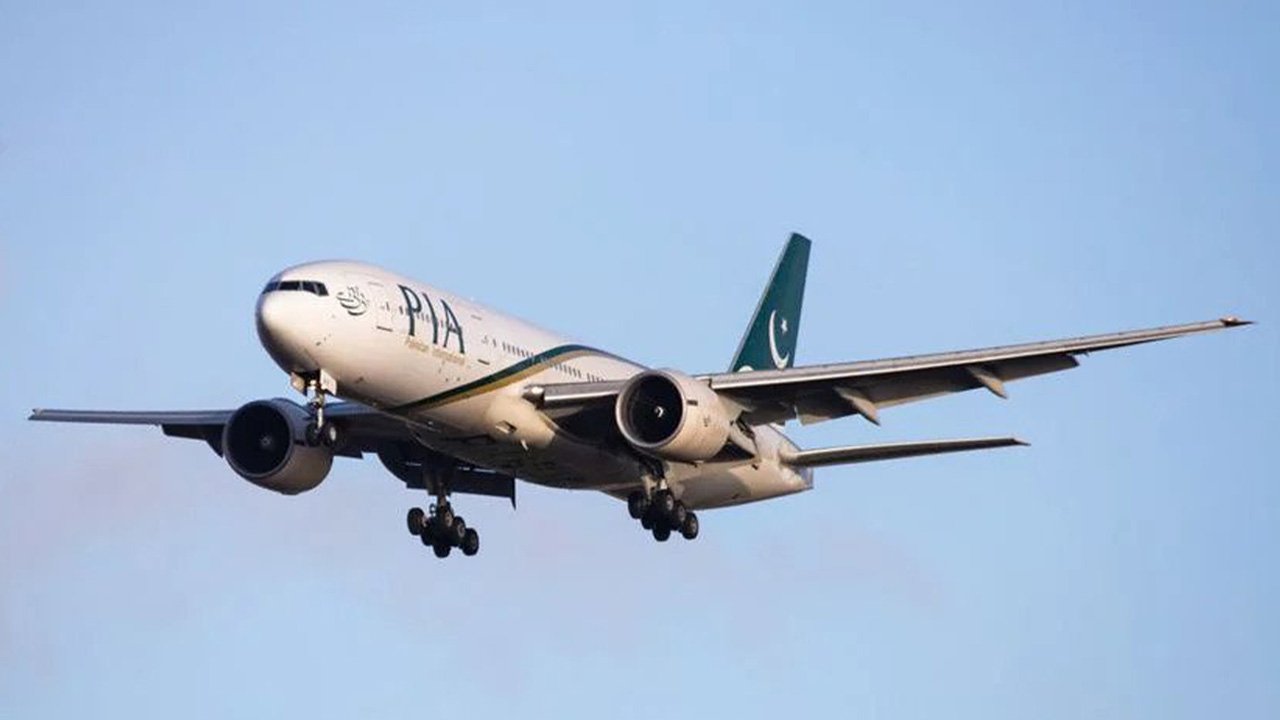
    Following a dire fuel crisis that significantly impacted Pakistan International Airlines (PIA) flight operations, the interim Prime Minister, Anwaar-ul-Haq Kakar, took decisive action on Monday.  

    He instructed the relevant authorities to expedite the privatisation process of the nation’s flag carrier. 

    Over recent weeks, PIA’s flight schedule has faced severe disruption, with numerous cancellations attributed to fuel shortages, exacerbated by the airline’s precarious financial situation.  

    Notably, on the preceding day, Pakistan State Oil (PSO) curtailed its fuel supply to PIA, resulting in the cancellation of 26 flights originating from various cities, including Karachi, Lahore, Islamabad, Quetta, Bahawalpur, Multan, Gwadar, and others. 

    Chairing a comprehensive review meeting concerning PIA’s financial challenges, Prime Minister Kakar highlighted the urgency of finalising the privatisation process within the stipulated timeframe. He further insisted on the submission of regular compliance reports on this matter. 

    The Prime Minister assured that the government remains committed to supporting PIA until the privatisation process is successfully completed. He said that state-owned enterprises (SOEs) facing financial losses will be privatised to safeguard the national treasury. 

    During this meeting, the Prime Minister received a detailed briefing on PIA’s current financial status. 

    In August 2023, the Cabinet Committee on Privatisation (CCoP) approved the inclusion of PIA in the active list of entities slated for privatisation following parliamentary amendments.  

    Additionally, the CCoP consented to engage a financial advisor for the transaction concerning PIA’s Roosevelt Hotel in New York. 

    According to credible sources, a significant transformation occurred when PIA transitioned from a corporation to a public limited company registered under the Companies Ordinance, 1984.  

    This transition commenced in 2016 through a joint parliamentary session that resulted in the enactment of the PIAC (Conversion) Act, 2016.  

    This legislation gave rise to Pakistan International Airlines Corporation Limited (PIACL), a public limited company.  

    Notably, a substantial amendment was introduced, known as the ‘Explanation’ in Sub-section 4 of Section 4, which restricted the federal government from relinquishing management control in the airline business of PIACL while maintaining a minimum ownership stake of 51% in the entity. 

  • Winter chills and rising bills: Govt may hike gas tariff by up to 200%

    Winter chills and rising bills: Govt may hike gas tariff by up to 200%

    The interim government is in the process of preparing a significant gas tariff increase proposal, set to be presented to the Economic Coordination Committee (ECC) tomorrow. 

    According to ARY News, the Petroleum Division will lay out a plan for a 200 per cent hike in gas tariffs for various consumer categories, with domestic consumers facing a 172 per cent increase in anticipation of the upcoming winter season.

    The proposal encompasses a broad spectrum of changes, including a 200 per cent price hike for different consumer categories and a staggering 3,900 per cent surge in monthly fixed charges for protected consumers, soaring from Rs10 to Rs400.

     For non-protected consumers, the plan suggests an increment of Rs100 for those using 0.25 cubic metres per month, Rs300 per mmBtu for those using 0.60 cubic metres, and up to Rs1,900 per mmBtu for consumers utilising 300 cubic metres per month.

    Export units may see their rates rise from Rs950 to Rs2,050 per mmBtu, while non-export units might face an increase from Rs1,400 to Rs2,600 per mmBtu. The CNG sector could experience a hike of Rs2,595 per mmBtu.

    For other industries, the suggested rates are Rs2,900 per mmBtu for the cement sector and Rs4,400 per mmBtu for the CNG sector. However, the current rates for power generation units and tandoors are expected to remain unchanged.

    Sources indicate that the caretaker finance minister has called for an ECC session at 4:00 pm on Monday, proposing the implementation of these gas tariff adjustments starting on October 1. 

    Earlier, there were reports from within the finance ministry that the International Monetary Fund (IMF) had urged Pakistan to promptly increase gas tariffs by 100 per cent to address the losses and circular debt in the country’s gas sector.

    The IMF, during a virtual meeting with Pakistan’s finance ministry officials, expressed concerns over the failure to raise gas tariffs on July 1, emphasising that this was a violation of their standby agreement. 

    The IMF further advised the recovery of a Rs46 billion loss incurred by gas companies from July to September. It should be noted that caretaker Finance Minister Dr Shamshad Akhtar is currently in China.

  • Pakistan Stock Exchange surpasses 50,500 points after more than six years

    Pakistan Stock Exchange surpasses 50,500 points after more than six years

    On Friday, the KSE-100 benchmark index of the Pakistan Stock Exchange surpassed the 50,500-point mark, a level last witnessed in May 2017 when it reached 50,592 points. 

    The Karachi Stock Exchange (KSE-100) index has advanced by 207 points and is presently at 50,572 points.

    Yesterday marked a significant milestone for the Pakistan Stock Exchange as its benchmark KSE-100 index crossed the 50,000-point threshold, an achievement that experts have noted took six years to accomplish. 

    During intraday trading, the benchmark Karachi Stock Exchange (KSE) 100 Index surged by 600 points, settling at 50,025 points, a level not seen since June 7, 2017.

    Concurrently, the Pakistani rupee exhibited a recovery against the US dollar in the interbank market on Thursday. After experiencing a Rs1 gain against the PKR in interbank trading on Wednesday, the US dollar depreciated by Rs1.96 in early Thursday afternoon trading. 

    As of the latest data, the Pakistani rupee has gained Rs1.96 against the US dollar, now trading at Rs278.30 in the interbank market, according to forex dealers. 

    In the open market, banks are selling the greenback to importers at Rs278.80, while the US currency has also experienced a Rs1 loss against the local currency.

  • Knitwear tops the list: Pakistan’s exports surge by 25.54%

    In the fiscal year 2023–24, Pakistan’s exports, denominated in rupees, experienced a notable 25.54 per cent increase during the first quarter (Q1) compared to the previous year, as per the Pakistan Bureau of Statistics (PBS).

    Between July and September 2023, exports amounted to Rs2,013,533 million, marking a 25.54 per cent boost from the same period in the previous year, according to PBS’s provisional data.

    Looking at year-on-year figures, September 2023’s exports surged by 31.27 per cent, totaling Rs737,295 million, compared to Rs561,643 million in September 2022.

    On a month-to-month basis, exports grew by 6.06 per cent, reaching Rs737,295 million in August 2023.

    Key export categories in August 2023 included knitwear (Rs103,029 million), readymade garments (Rs74,608 million), bed wear (Rs69,234 million), cotton cloth (Rs51,891 million), oil seeds, nuts, and kernels (Rs46,571 million), cotton yarn (Rs33,815 million), rice and others (Rs32,324 million), towels (Rs25,116 million), rice basmati (Rs19,008 million), and miscellaneous articles, excluding towels and bed wear (Rs16,922 million).

    On the other hand, imports during July to September 2023 (FY2023-24) totaled Rs3,560,763 million, showing a decrease of 2.45 per cent compared to the same period in the previous year.

    In a year-on-year comparison, imports into Pakistan during September 2023 amounted to Rs1,189,167 million, a 2.52 per cent decline from September 2022.

    Month-on-month data indicated a 10.62 per cent increase in imports in September 2023 compared to August 2023.

    Key imported commodities in September 2023 included petroleum products (Rs162,087 million), petroleum crude (Rs146,179 million), liquefied natural gas (Rs75,331 million), palm oil (Rs61,388 million), plastic materials (Rs49,628 million), electric machinery and apparatus (Rs44,699 million), iron and steel (Rs44,191 million), mobile phones (Rs37,093 million), iron and steel scrap (Rs27,299 million), and pulses/leguminous vegetables (Rs22,208 million).