Category: Business

The most important business news, explained in a young, easy to understand way. News that affects young career professionals.

  • PM Kakar calls for reduction in prices of essential items and services after petrol price cut 

    PM Kakar calls for reduction in prices of essential items and services after petrol price cut 

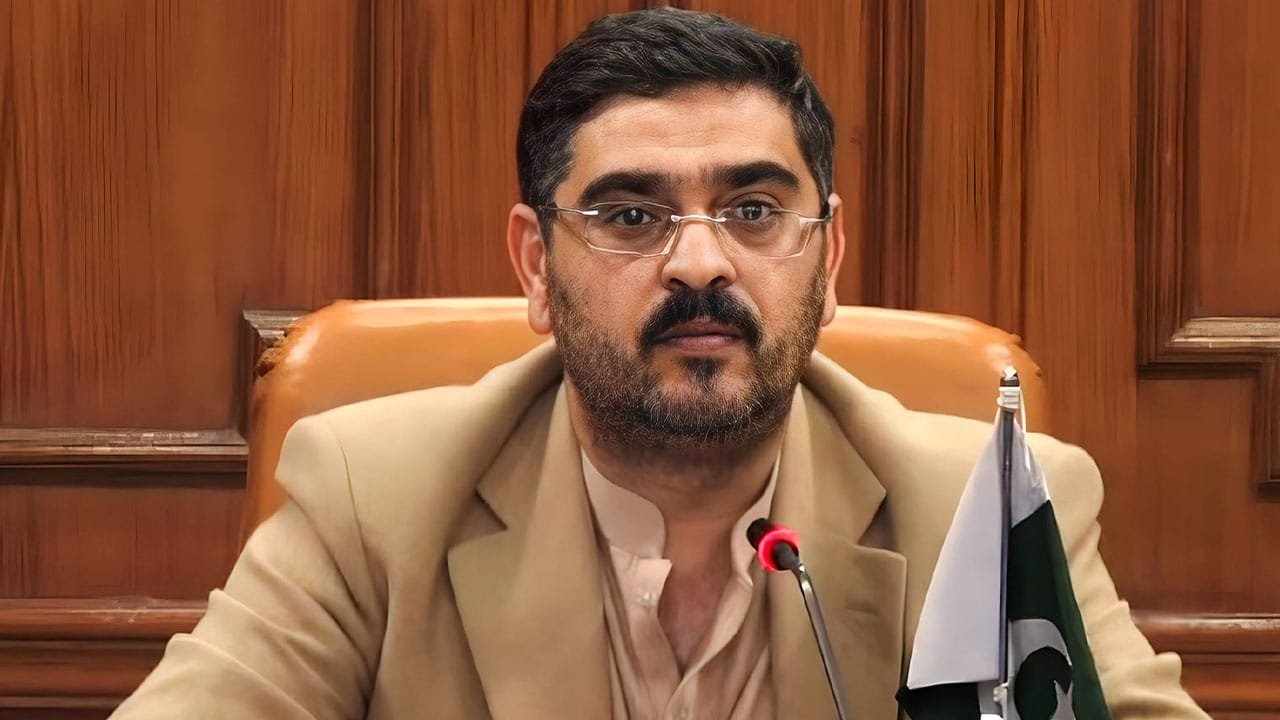
    On Monday, Caretaker Prime Minister (PM) Anwaar ul Haq Kakar called upon the chief ministers to take decisive action in lowering the prices of essential goods and services in response to a significant reduction in fuel costs. 

    In a momentous development, the government has implemented a substantial reduction of Rs40 in the price of petrol. 

    Prime Minister Anwaar ul Haq Kakar issued clear directives at both the federal and provincial levels, urging the implementation of a stringent price control mechanism. 

    PM Kakar stressed that all endeavours must be focused on ensuring that the benefits of reduced petroleum prices are passed on to the citizens of Pakistan. 

    The prime minister emphasised the unwavering enforcement of his directives. 

    Prior to this decision, the cost of petrol had seen a remarkable reduction of Rs40 per litre in Pakistan. 

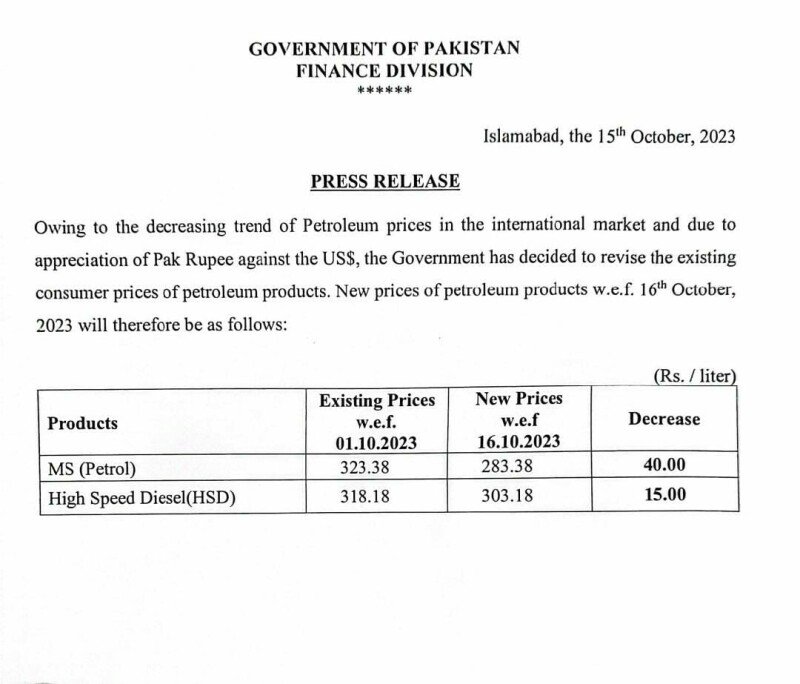
    As per a notification issued by the Oil and Gas Regulatory Authority, the price of petrol now stands at Rs283.38 per litre, reflecting a reduction of Rs40 per litre

    Meanwhile, the price of high-speed diesel (HSD) has been lowered by Rs15 per litre to reach Rs303.18, while kerosene oil prices have witnessed a reduction of Rs22.43 per litre, now standing at Rs214.85. 

  • Major ANF operation uncovers online drug trafficking ring, resulting in 11 arrests 

    Major ANF operation uncovers online drug trafficking ring, resulting in 11 arrests 

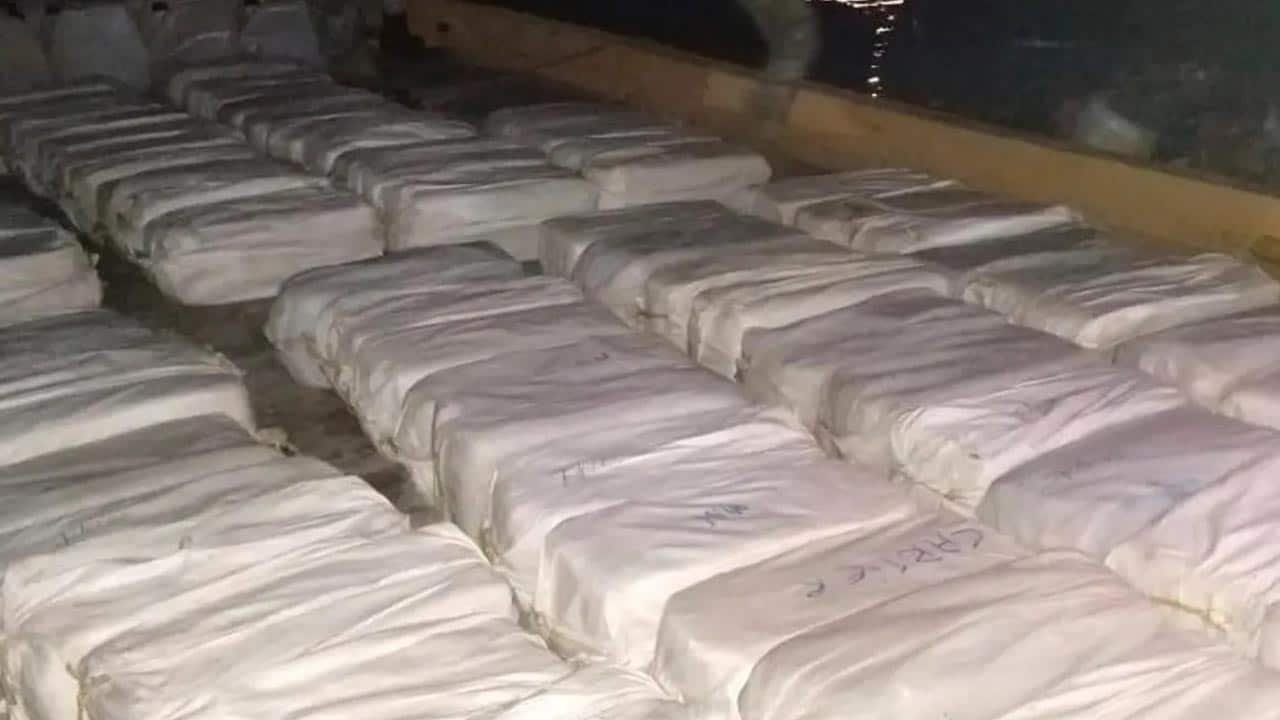
    In a significant revelation, drug trafficking operations conducted through online shopping platforms have come to light, resulting in the apprehension of 11 individuals in various cities across Pakistan. The Anti-Narcotics Force (ANF) has been at the forefront of this enforcement effort. 

    According to the official spokesperson for the ANF, ongoing investigations have unearthed additional suspects connected to this illicit network, all of whom hail from different regions within the four provinces of Pakistan. 

    During the course of these operations, the ANF has successfully seized 33 parcels, containing a total of 53.7 kilogrammes of hashish, 1.6 kilogrammes of ice, and 1.2 kilogrammes of opium, dealing a severe blow to the illegal drug trade. 

    Reports of drug trafficking through online shopping platforms had been circulating for several months prior to these recent arrests.  

    The ANF’s spokesperson disclosed that a well-organised group had been exploiting registered companies on these platforms as a front for their drug smuggling activities. 

    Furthermore, the spokesperson emphasised that the ongoing investigation has revealed the existence of a far-reaching network of this criminal group, spreading its tentacles across the entire country.  

    As the investigation continues, concerns have been raised that employees of major e-commerce platforms may also be involved in this heinous act.  

    The full extent of their involvement remains under scrutiny as authorities work diligently to dismantle this dangerous network. 

  • Petrol price in Pakistan slashed by Rs40 to Rs283.38 per litre

    Petrol price in Pakistan slashed by Rs40 to Rs283.38 per litre

    In a move to ease the burden on masses dealing with high inflation, the caretaker government has decided to lower the cost of petrol by Rs40 per litre and high-speed diesel (HSD) by Rs15 for the next two weeks. 

    The new per litre rates are set at Rs283.38 for petrol and Rs303.18 for diesel. 

    This change comes as a response to fluctuations in international fuel prices and an improved exchange rate, leading the government to adjust consumer prices for petroleum products. 

    For the second time in a row, the interim government is taking steps to lower petroleum prices, following three consecutive bi-weekly increases.

    In the previous adjustment, petrol saw a reduction of Rs8 per litre, while high-speed diesel decreased by Rs11 per litre.

    Between August 15 and September 15, the prices of petrol and high-speed diesel had surged by Rs58.43 and Rs55.83 per litre, reaching historic highs at retail of Rs331-333 per litre.

    Earlier this week, it was anticipated that the prices of HSD and petrol would dip below Rs300 per litre in the upcoming review, thanks to a significant decline in global oil rates and the strengthening of the rupee.

  • Saudi Aramco considers investing in Shell’s $200 million Pakistani assets

    Saudi Aramco considers investing in Shell’s $200 million Pakistani assets

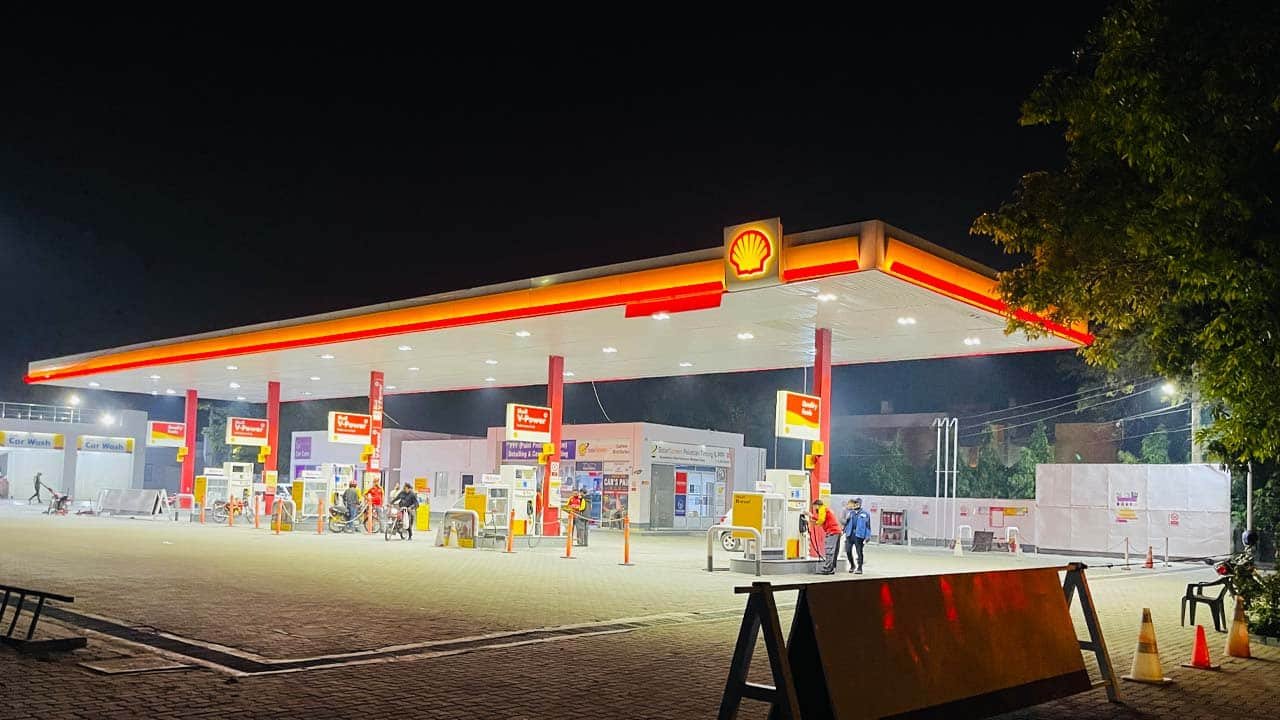
    Saudi Aramco is actively contemplating the possibility of acquiring Shell’s holdings in Pakistan, marking a potential historic foray into the South Asian nation, according to Bloomberg.

    The Saudi oil company is evaluating Shell’s assets in the region, notably Shell Pakistan Ltd., a Karachi-listed entity with a market value of $123 million. The collective value of Shell’s Pakistani assets is estimated to hover around $200 million, according to insiders.

    Shell boasts a rich legacy of over seven decades in Pakistan, with a network of more than 600 fuel stations. The company has not only been a prominent fuel supplier but has also been engaged in the lubricant business.

    It’s crucial to note that this expression of interest from Saudi Aramco doesn’t guarantee an outright acquisition. Other potential suitors might emerge on the horizon.

    Responding to inquiries, a Shell representative acknowledged strong interest from both local and international buyers but refrained from divulging specific details. The representative emphasised that any sale would follow a structured sales process, including the execution of binding agreements and the requisite regulatory approvals.

    In a significant announcement made in June, Shell disclosed its intention to exit the Pakistani market, with plans to divest its 77.4 per cent stake in Shell Pakistan and its 26 per cent ownership in Pak-Arab Pipeline Co., a state-supported cross-country pipeline network. This strategic move aligns with Shell’s broader divestment strategy, led by CEO Wael Sawan, aimed at enhancing shareholder returns by shedding underperforming assets.

    Shell’s withdrawal represents a challenge for Pakistan, which is grappling with economic instability, exemplified by a depreciating currency over the past year. Pakistan has witnessed the departure of several multinational corporations in recent years, including fuel retailer Puma Energy in 2021 and the shutdown of trucking startup Trella in April.

    Meanwhile, Saudi Arabia, under the guidance of Crown Prince Mohammed bin Salman, has expressed a commitment to bolster its involvement and investments in Pakistan. The Saudi Fund for Development is exploring the possibility of increasing its deposit with the State Bank of Pakistan from $3 billion to $5 billion, as well as a plan to elevate Saudi investments in Pakistan to $10 billion.

    Furthermore, Aramco has entered into discussions with the Pakistani government regarding a substantial $10 billion refinery project, as confirmed by the country’s energy minister, Muhammad Ali, earlier this month. These developments reflect the growing engagement and economic ties between Saudi Arabia and Pakistan.

  • Gold price surges by Rs4,900 in a single day, reaches Rs202,000 per tola 

    Gold price surges by Rs4,900 in a single day, reaches Rs202,000 per tola 

    The price of gold in Pakistan has experienced a significant surge following an increase in the global market.  

    According to the All-Pakistan Sarafa Gems and Jewellers Association (APSGJA), the cost of 24-carat gold has risen by Rs4,900, reaching Rs202,000 per tola.  

    Meanwhile, the price of 10-gramme gold has also seen a substantial increase, going up by Rs4,201 to settle at Rs173,182. 

    In the international market, the price of gold saw a notable uptick, with a $46 increase, bringing it to $1,938 per ounce.  

    Concurrently, the US dollar (USD) weakened by Rs5.07 against the Pakistani rupee in the interbank market over the course of this week’s trading. In interbank trading, the USD declined from Rs282.69 to Rs277.62 this week. 

    Furthermore, the American currency witnessed a decrease of Rs4.50 in the open market at the end of the week, closing at Rs277, down from Rs281.50. 

  • Pakistani rupee appreciates by Rs5.07 against US dollar in five days 

    Pakistani rupee appreciates by Rs5.07 against US dollar in five days 

    The Pakistani rupee (PKR) showed a notable increase in value against the US dollar (USD), appreciating by 5.07 PKR in five days to reach a closing rate of 277.62 PKR per USD on Friday. This stands in contrast to the previous week’s closing rate of 282.69 PKR per USD.

    In today’s interbank trading session, the local currency exhibited a gain of 96 paisa. It reached an intraday high (bid) of 278.5 PKR and a low (ask) of 287.55 PKR.

    In the open market, exchange companies adjusted their rates, with the rupee strengthening by 1 PKR. These companies quoted the dollar at 274 PKR for buying and 277 PKR for selling, as opposed to the prior rates of 275 PKR for buying and 278 PKR for selling.

    This increase in the value of the rupee can be attributed to several factors. Notably, there has been a concerted effort, backed by the military, to curtail illegal outflows of US dollars from the country.

    Additionally, the government has implemented various measures aimed at bolstering the local currency.

    Addressing concerns related to Afghan transit trade, Pakistan’s Ministry of Commerce recently took a significant step by imposing a ban on 212 items that were previously imported into Afghanistan through Pakistan under the Afghan transit trade agreement.

    This move, enacted through a Statutory Regulatory Order (SRO) issued on October 3, was executed in accordance with the authority granted by the Imports and Exports (Control) Act of 1950.

    Furthermore, the Federal Board of Revenue (FBR) has imposed a 10% processing fee on five key categories of Afghan transit commercial goods imported into Afghanistan via Pakistan.

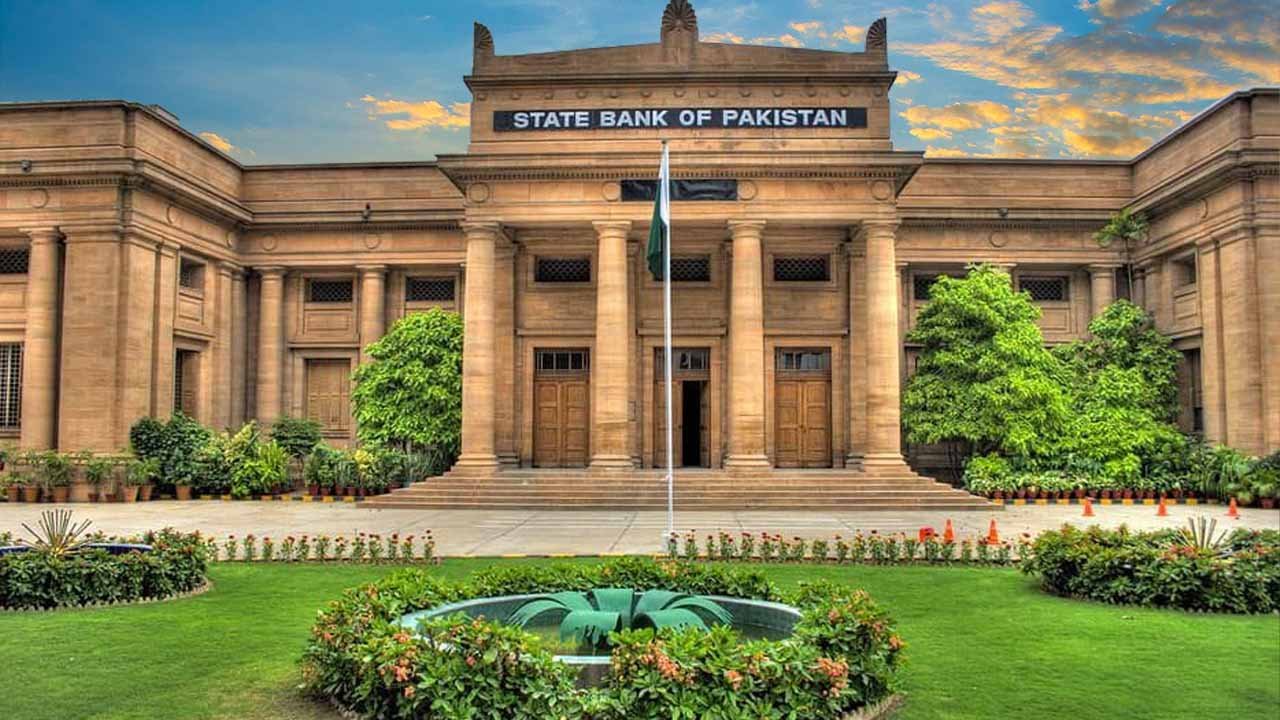
    In parallel, the State Bank of Pakistan has introduced recent reforms aimed at consolidating and redefining various types of exchange companies into a single category. These changes come with well-defined mandates and higher capital requirements, ultimately contributing to a more transparent financial landscape.

  • Eggs and tomatoes lead weekly price hikes in latest SPI inflation report 

    Eggs and tomatoes lead weekly price hikes in latest SPI inflation report 

    The latest data from the Pakistan Bureau of Statistics (PBS) reveals that, for the week ending on October 12, the Sensitive Price Indicator (SPI) reflected a notable weekly inflation uptick of 0.30 per cent.

    During this period, the SPI for this particular category surged to 282.86 points, marking a distinct rise from the preceding week’s 282.00 points.  

    Among the 51 items tracked, the price dynamics exhibited a balanced distribution, with 17 items experiencing upward price movements, 17 witnessing price declines, and 17 remaining stable throughout the week. 

    Some of the commodities that observed a decline in prices encompassed sugar (4.47 per cent), pulse gramme (2.75 per cent), bananas (2.47 per cent), pulse moong (2.44 per cent), gur (1.93 per cent), chicken (1.69 per cent), rice irri-6/9 (1.46 per cent), and pulse masoor (1.26 per cent). 

    Conversely, there was a noticeable surge in the prices of several items during the same week, including tomatoes (6.28 per cent), eggs (3.48 per cent), salt powdered (2.75 per cent), cooked beef (1.06 per cent), garlic (1.04 per cent), tea prepared (0.73 per cent), beef (0.39 per cent), potatoes (0.35 per cent), electricity charges for Q1 (8.59 per cent), energy server (0.55 per cent), shirting (0.47 per cent), and LPG (0.31 per cent). 

    For a broader perspective, when evaluating these price changes on a year-on-year basis, it becomes evident that certain commodities have shown significant variations.  

    For instance, tomatoes witnessed a substantial year-on-year decline of 43.53 per cent, while onions experienced a decrease of 16.67 per cent.  

    Furthermore, pulse gramme recorded a drop of 4.01 per cent, and mustard oil saw a more modest decline of 1.19 per cent. These statistics provide valuable insights into the evolving economic landscape and the relative stability of various consumer goods. 

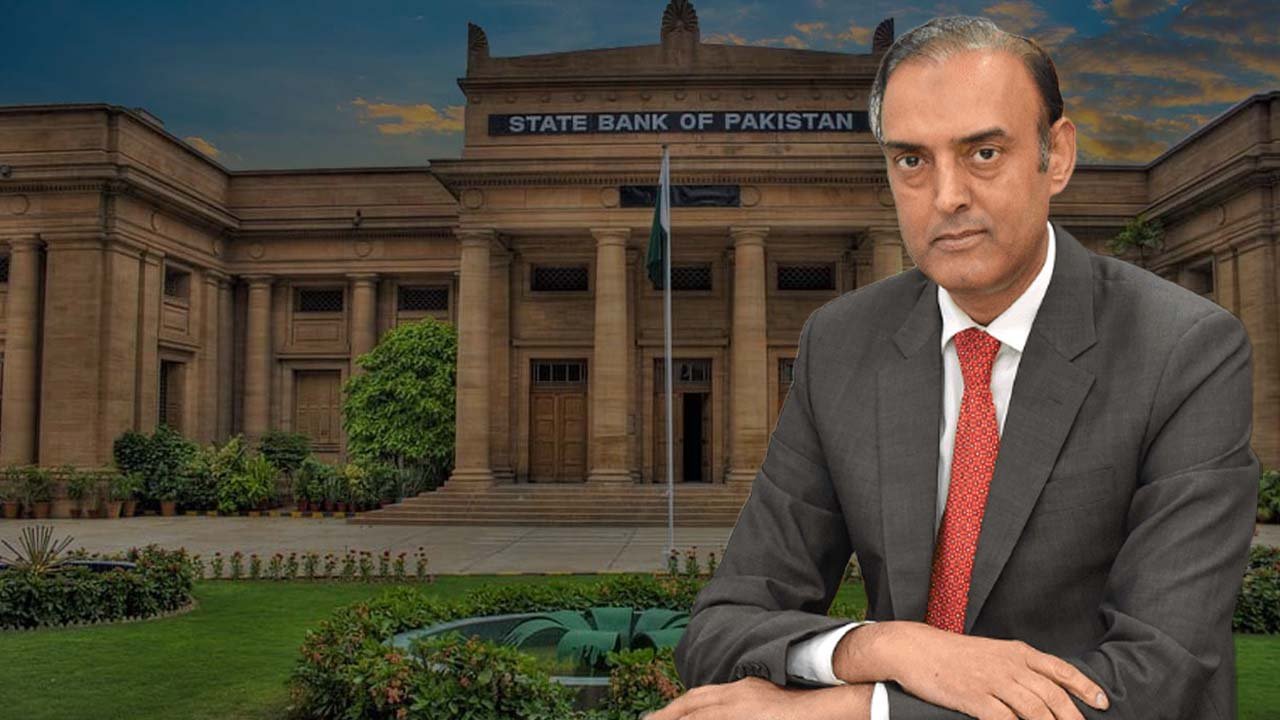
  • SBP Governor confirms Pakistan’s strong position to achieve IMF targets 

    SBP Governor confirms Pakistan’s strong position to achieve IMF targets 

    The Governor of the State Bank of Pakistan (SBP), Jameel Ahmad, provided a reassuring update to investors on Friday, affirming that the nation is well-positioned to meet the International Monetary Fund’s (IMF) end-September targets for net international reserves and net domestic assets. 

    Ahmad said that Pakistan is “very comfortably” placed to meet IMF targets. 

    This declaration was made by Governor SBP during a meeting with prominent international investors held on the sidelines of the IMF-World Bank gatherings in Marrakech, Morocco.  

    The meeting was organised by prominent global banks such as Barclays, JP Morgan, Standard Bank, and Jefferies. 

    According to an official press release from the central bank, investors were apprised of recent macroeconomic developments, the government’s response to prevailing challenges, and the economic outlook of Pakistan and were provided with the opportunity to seek clarification on these matters. 

    Governor Ahmad informed investors that the current policy framework is strategically oriented towards achieving stability by addressing prevailing macroeconomic imbalances. 

    He highlighted that the SBP had taken early measures to tighten monetary policy in response to escalating global inflation. 

    Nevertheless, certain domestic obstacles, such as the 2022 floods, had complicated the SBP’s efforts to combat inflation. 

    The governor noted that these stabilisation measures have begun to yield positive outcomes. Inflation, after reaching a peak of 38.0 per cent in May 2023, decreased to 31.4 per cent in September 2023 and is anticipated to continue on a downward trajectory in the coming months. 

    Furthermore, Pakistan’s external account has exhibited substantial improvements, with foreign exchange reserves being steadily replenished. 

    Governor Ahmad expressed confidence that inflation would significantly decrease in the latter half of the fiscal year. 

    He emphasised that the stand-by arrangement with the IMF is anticipated to provide essential support for ongoing economic stabilisation efforts. 

    In addition, he reported that foreign exchange reserves have improved considerably, marked by an increase from a low of $3.1 billion in January 2023 to $7.6 billion at the end of September 2023. 

    This reserve enhancement was largely bolstered by non-debt-creating inflows amid favourable market conditions. 

    According to Geo, the Governor further revealed that the SBP has successfully met the forward book target of $4.2 billion for end-September 2023, as agreed with the IMF, with a substantial surplus. 

    Likewise, the SBP is confidently poised to fulfil other end-September IMF targets, including net international reserves (NIR) and net domestic assets (NDA). 

    Concluding his statement to investors, Governor Ahmad conveyed that Pakistan is diligently addressing long-standing structural deficiencies.  

    He expressed optimism that, with the support of both multilateral and bilateral partners, the nation is on course to achieve sustainable and inclusive economic growth in the medium term. 
  • Pakistan’s foreign exchange reserves increase by $31 million, reaching $7.64 billion

    Pakistan’s foreign exchange reserves increase by $31 million, reaching $7.64 billion

    The State Bank of Pakistan (SBP) reported an increase of $31 million in its foreign exchange reserves on a weekly basis, reaching a total of $7.64 billion as of October 6, according to data released on Thursday.

    The overall liquid foreign reserves of the country amounted to $13.03 billion, with commercial banks holding net foreign reserves of $5.39 billion.

    The central bank did not provide a specific explanation for the increase in reserves.

    In its report, the SBP stated, “During the week ending on October 6, 2023, the SBP’s reserves rose by $31 million, reaching $7,646.7 million.”

    Notably, the previous week witnessed a decrease of $21 million in Pakistan’s central bank reserves.

    In July of this year, the SBP’s reserves received a significant boost when Pakistan received the first tranche of approximately $1.2 billion from the International Monetary Fund (IMF) after the approval of a new $3-billion stand-by arrangement. Additionally, inflows from Saudi Arabia and the UAE contributed to the growth of reserves.

    However, it’s worth mentioning that the central bank’s reserves have been under pressure due to ongoing debt repayments, an increase in import expenditures following the relaxation of restrictions, and a lack of fresh inflows.

  • Pakistan exports first batch of Changan Oshan X7 SUVs to Kenya and Tanzania

    Pakistan exports first batch of Changan Oshan X7 SUVs to Kenya and Tanzania

    Pakistan has made a significant foray into the global automobile market, marking a historic moment as it exported a batch of 14 SUV vehicles to Kenya and Tanzania, as reported by ARY News on Thursday.

    In a landmark achievement, Pakistan, through the collaboration of Master Changan Motors, a joint venture between Pakistan and China, has officially joined the league of car-exporting nations. This endeavour has solidified their position as the first automotive company to send SUV vehicles to foreign shores.

    The occasion was celebrated with a ceremonial event held in Karachi, commemorating the milestone of becoming the inaugural Pakistani-Chinese auto entity to export vehicles to two overseas destinations. Notably, the ceremony was attended by the Federal Secretary of Industries and Production, Asad Rehman.

    Rehnan also revealed the government’s intent to urge auto manufacturers to revise their car prices, especially in light of the notable depreciation of the US dollar (USD). He underlined the efforts in this direction by mentioning a recent newspaper advertisement released by an auto company, signaling its commitment to reducing vehicle prices.

    The export of the Oshan X7 SUV is a significant milestone for Pakistan as it ventures into the global automobile market, and this achievement carries even greater importance given the challenging economic conditions the country is currently facing.

    In a groundbreaking move, Pakistan’s collaborative effort with a Chinese automotive company, Master Changan Motors, marked their entry into the league of car exporters. They proudly achieved this milestone by sending the initial consignment of 14 SUV vehicles to Kenya and Tanzania.

    A special ceremony was organised in Karachi to celebrate the occasion, as it signified the first instance of a Pakistani-Chinese automotive company venturing into foreign vehicle exports.

    The Federal Secretary of Industries and Production, Asad Rehman was also present at the ceremony.

    During the ceremony, Asad Rehman conveyed the government’s intention to encourage auto companies to lower their car prices, given the significant decline in the value of the US dollar (USD).

    He also mentioned that an automotive firm had recently placed a newspaper advertisement advocating price reductions.

    Master Changan Motors, the Pakistan-Chinese automotive collaboration, proudly shipped its SUV model, the Oshan X7, to Kenya.

    This achievement is a notable milestone for Pakistan, considering the challenging economic circumstances it faces.