Category: Business

The most important business news, explained in a young, easy to understand way. News that affects young career professionals.

  • Pakistan Stock Exchange crosses 47,000-mark after five weeks

    Pakistan Stock Exchange crosses 47,000-mark after five weeks

    The Pakistan Stock Exchange (PSX) enjoyed a favourable trading session on Wednesday, with its key KSE-100 Index surging above the 47,000 level for the first time in five weeks. This uptrend was primarily driven by the robust performance of the banking sector.

    Throughout the trading session, the KSE-100 Index remained firmly in positive territory, ultimately settling at 47,079.83. This represented a notable gain of 323.03 points, or 0.69 per cent. The last instance the benchmark index closed above the 47,000 mark was on August 28.

    In a post-market report, Ismail Securities, a prominent brokerage house, attributed the positive momentum in the equity market to increased liquidity, particularly within the banking sector.

    On the preceding day, Tuesday, the KSE-100 Index managed to eke out a 0.28 per cent gain in a session characterised by a relatively narrow trading range.

    Shares of 342 companies were traded, with 172 witnessing an increase, 134 recording a decline, and 36 remaining unchanged.

    Topline Securities, another respected brokerage house, envisions the KSE-100 Index approaching the 50,000 level in a potential “pre-election rally.” They expressed their belief that the Pakistani market could experience an 8–10 per cent surge in the lead-up to the elections, assuming a smooth election process and the approval of the IMF tranche in November, stating this in an earlier note.

    Simultaneously, the Pakistani rupee continued its strengthening trend against the US dollar, registering a 0.37 per cent gain in the interbank market on Wednesday. According to the State Bank of Pakistan, the rupee settled at 284.68 after an increase of Rs1.04, marking the 20th consecutive appreciation against the greenback.

    Trading activity also saw an uptick, with the all-share index volume rising to 330.2 million shares from Tuesday’s 213.2 million. The value of traded shares also increased, reaching Rs7.3 billion compared to Rs6.1 billion in the previous session.

  • Pakistan’s economy to recover, but challenges remain: World Bank

    Pakistan’s economy to recover, but challenges remain: World Bank

    Pakistan’s economic outlook, as per the World Bank’s ‘Pakistan Development Update,’ is challenging. The report projects a gradual recovery in real GDP growth, expecting it to reach 1.7 per cent in FY24 and 2.4 per cent in FY25. However, it warns that this recovery is contingent on implementing IMF measures, securing external financing, and maintaining fiscal discipline.

    The report highlights the dire poverty situation in Pakistan, with an estimated 39.4 per cent of the population living below the Lower-Middle Income Country poverty threshold in FY23, compared to 34.2 per cent in FY22. Factors contributing to this include economic slowdown, floods in 2022, import restrictions, political uncertainty, rising global commodity prices, and reduced investor confidence.

    The fiscal deficit remains a concern. While some easing of import restrictions may widen the current account deficit, a weaker currency and higher domestic energy prices could sustain inflation. The report emphasizes the importance of comprehensive fiscal reforms, including reducing tax exemptions, broadening the tax base, improving public expenditure quality, reforming the energy sector, and managing public debt more effectively.

    The World Bank stresses that addressing these challenges is crucial for long-term recovery and recommends strengthening institutions and systems to achieve fiscal and debt sustainability. The report echoes concerns about external shocks, political instability, and debt servicing challenges, underlining the need for prudent economic management and reforms.

    The Asian Development Bank (ADB) predicts a modest GDP growth recovery to 1.9 per cent in FY24, following a contraction of 0.3 per cent in FY23, with persistent price pressures. Overall, Pakistan faces a complex economic landscape that demands immediate attention to fiscal reform, poverty alleviation, and resilience to external shocks.

  • ‘Unfair treatment at work’ pushes global job dissatisfaction to 3-year high, posing $8.8 trillion economic risk

    ‘Unfair treatment at work’ pushes global job dissatisfaction to 3-year high, posing $8.8 trillion economic risk

    According to recent research conducted by BambooHR, the job satisfaction of workers has seen a consistent decline since 2020, with a significant drop this year. 

    This analysis, based on data from nearly 60,000 employees at over 1,600 companies worldwide between January 2020 and June 2023, reveals a prevailing sense of resignation and apathy among employees rather than extreme highs or lows. Many employees seem to acknowledge that morale is deteriorating.

    While companies have made efforts to address work-life balance by offering extended time off and remote work options, the source of employee dissatisfaction extends beyond when or where they work. 

    Research indicates that the primary driver of job dissatisfaction is unfair treatment at work, including inconsistent compensation, insufficient support from colleagues and supervisors, and unreasonable workloads.

    Srikumar Rao, author of “Happiness at Work,” emphasizes that a common complaint is the loss of control, a feeling exacerbated by the pandemic’s unpredictability. Factors such as inflation, widespread layoffs, and uncertainty regarding return-to-office policies contribute to a deep sense of unease in workplaces, as highlighted by Jenn Lim, CEO of Delivering Happiness, an organizational consultancy.

    In early 2023, a Harris Poll/Fast Company survey of over 1,000 adults found that approximately three-quarters of them felt anxious about the economy, and almost half expressed concerns about maintaining a healthy work-life balance. 

    Another significant factor in employee unhappiness is the perceived lack of meaning in their roles. Emily Liou, a career happiness coach and former recruiter, notes that people’s career aspirations have shifted, with a greater emphasis on feeling connected to their work and being excited about their roles.

    Recent Gallup research reveals that remote employees, in particular, feel disconnected from their organisations’ mission and purpose. This lack of shared purpose can negatively impact employee happiness and performance. 

    Psychologist Adam Grant emphasises that employees who find their work meaningful not only experience greater happiness but are also more productive and have better chances of receiving raises and promotions.

    Prioritising employee engagement and satisfaction is not only crucial for mental health in the workplace but also essential for a company’s bottom line. Engaged employees contribute to higher profits, lower turnover, and reduced absenteeism, as indicated by Gallup. In contrast, employee disengagement results in substantial global economic losses.

    However, there is hope for employers. According to Jenn Lim, motivating unhappy employees can be as simple as creating an environment of belonging, active listening, and understanding. 

    Even small efforts, such as having meaningful conversations or regular check-ins with employees, can make a significant difference in improving workplace satisfaction and overall productivity.

  • Karachi currency mafia suspected of hiding over $50 million in homes

    Karachi currency mafia suspected of hiding over $50 million in homes

    Amidst the ongoing nationwide efforts to combat currency smuggling, primarily involving US dollars, reliable sources have disclosed that over $50 million has been discreetly stored away by a network associated with illicit currency dealings in homes scattered across Karachi.

    These credible sources indicate that security agencies have meticulously compiled records from various banks and currency exchange establishments. They have meticulously assembled a comprehensive inventory of individuals engaged in the buying and selling of US dollars and other foreign currencies.

    It has come to light that individuals of considerable influence who acquired US dollars as a form of “investment” have yet to settle debts totaling more than $50 million.

    The individuals affiliated with this illicit currency network are predominantly situated in Karachi’s older districts, including Lyari, Kharadar, Mithadar, Clifton, Saddar, Bath Island, and DHA neighbourhoods.

    The authorities have already initiated targeted operations to search the residences of those involved in amassing substantial amounts of money, according to these sources.

    According to Geo News, these revelations follow a statement earlier in the day by Caretaker Interior Minister Sarfraz Bugti, who reiterated the government’s unwavering commitment to combating dollar and currency smuggling. He noted that 168 first-information reports (FIRs) had been filed against individuals involved in the unlawful trade of dollars.

    Addressing a press conference in Islamabad, Bugti asserted that the state will take firm action against hawala, hundi, and other illicit activities.

    It is important to note that the caretaker government granted authority to the Federal Investigation Agency (FIA) last month to combat the smuggling of sugar and US dollars within the country.

    Subsequent to this government approval, the agency has been empowered to take necessary actions at all entry and exit points related to foreign currencies.

    As a result of the ongoing nationwide crackdown against hoarding and smuggling of foreign currencies, the value of the US dollar has depreciated by more than Rs18.

  • Pakistan to deport 1.1 million illegal foreign residents in security move

    Pakistan to deport 1.1 million illegal foreign residents in security move

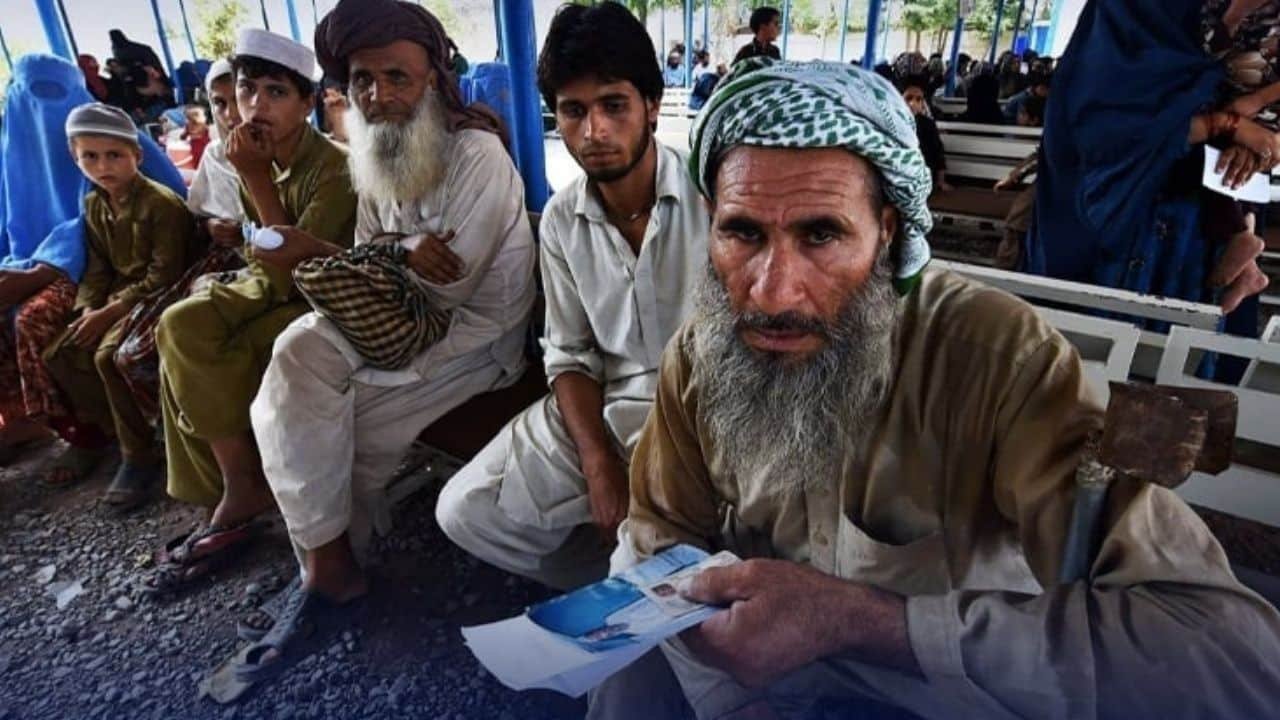
    Due to security concerns, the caretaker government led by Prime Minister Anwaar-ul-Haq Kakar announced on Monday its intention to repatriate 1.1 million foreign nationals who are currently residing in Pakistan without legal authorisation.

    The government’s plan involves a multi-phase approach. In the initial phase, those individuals who are residing in Pakistan unlawfully, colloquially referred to as “aliens,” will be subject to eviction, as will individuals who fail to renew their visas.

    Subsequent phases will target individuals with Afghan citizenship who possess proof of residence cards. The decision to take action against illegally residing Afghan citizens was made due to concerns that this group is linked to activities such as funding, facilitating, and smuggling terrorists. Additionally, a significant number of Afghan nationals have not renewed their proof of residence in Pakistan, further raising security concerns.

    A source familiar with the situation emphasised that illegally residing foreigners pose a significant security risk to Pakistan. The Ministry of Interior has collaborated with relevant stakeholders and the Afghan government to formulate a comprehensive plan for implementation.

    In parallel, the ministry has issued directives to identify and compile records of Afghans living in Pakistan without proper permits. Plans are being developed to facilitate their transportation back to the Afghan border. Authorities are also expediting the processing of applications related to the registration of Afghan nationals.

    Last week, it was reported that the government would soon announce a one-month deadline for all illegal foreign immigrants, including Afghans, to voluntarily leave the country or face legal consequences. Following this deadline, law enforcement agencies will conduct a nationwide crackdown to identify and deport illegal immigrants, the majority of whom are believed to be Afghan nationals.

    At the highest level, the government is committed to preventing Pakistan from becoming a sanctuary for illegal immigrants, many of whom are engaged in criminal activities and smuggling operations. Notably, some illegal Afghan immigrants have already been apprehended for engaging in illicit dollar trading, negatively impacting the country’s economy.

    Additionally, a considerable number of illegal foreign nationals are involved in various businesses across major cities, including the federal capital. The increase in street crime in Islamabad has been associated with the influx of illegal Afghan nationals.

    According to The News, it is estimated that approximately 1.1 million Afghan refugees are residing in Pakistan without legal authorization. Since the return of the Afghan Taliban to Afghanistan in August 2021, around 400,000 Afghans have entered Pakistan illegally, with an additional 700,000 identified as residing in the country without legal permission.

  • FBR exceeds revenue target by Rs63 billion for first three months of current fiscal year 

    FBR exceeds revenue target by Rs63 billion for first three months of current fiscal year 

    In the initial quarter of the ongoing fiscal year, the Federal Board of Revenue (FBR) successfully amassed a total of Rs2,041 billion, significantly surpassing the stipulated target of Rs1,978 billion by an impressive margin of Rs63 billion. 

    Furthermore, the FBR exhibited commendable dedication and diligence in pursuit of its revenue goals for the month of September 2023. Despite setting a target of Rs794 billion, the FBR managed to accumulate a noteworthy sum of Rs834 billion, as opposed to the Rs688 billion collected during the corresponding period in 2022. 

    Additionally, the FBR issued refunds totaling Rs37 billion, a notable increase compared to the Rs18 billion issued in September 2022. 

    Nonetheless, it is important to note a considerable reduction in import activities during September 2023, with taxes collected at the import stage amounting to Rs254 billion, down from the previous month’s figure of Rs299 billion. According to ARY News, this deficit of Rs45 billion was effectively compensated for through the collection of domestic taxes, particularly direct taxes. 

  • Petrol price reduced by Rs8 to Rs323.38 per litre for two weeks

    Petrol price reduced by Rs8 to Rs323.38 per litre for two weeks

    In a noteworthy development aimed at alleviating concerns over inflation, the interim government has decided to implement a reduction in the prices of petroleum products for the upcoming two weeks.  

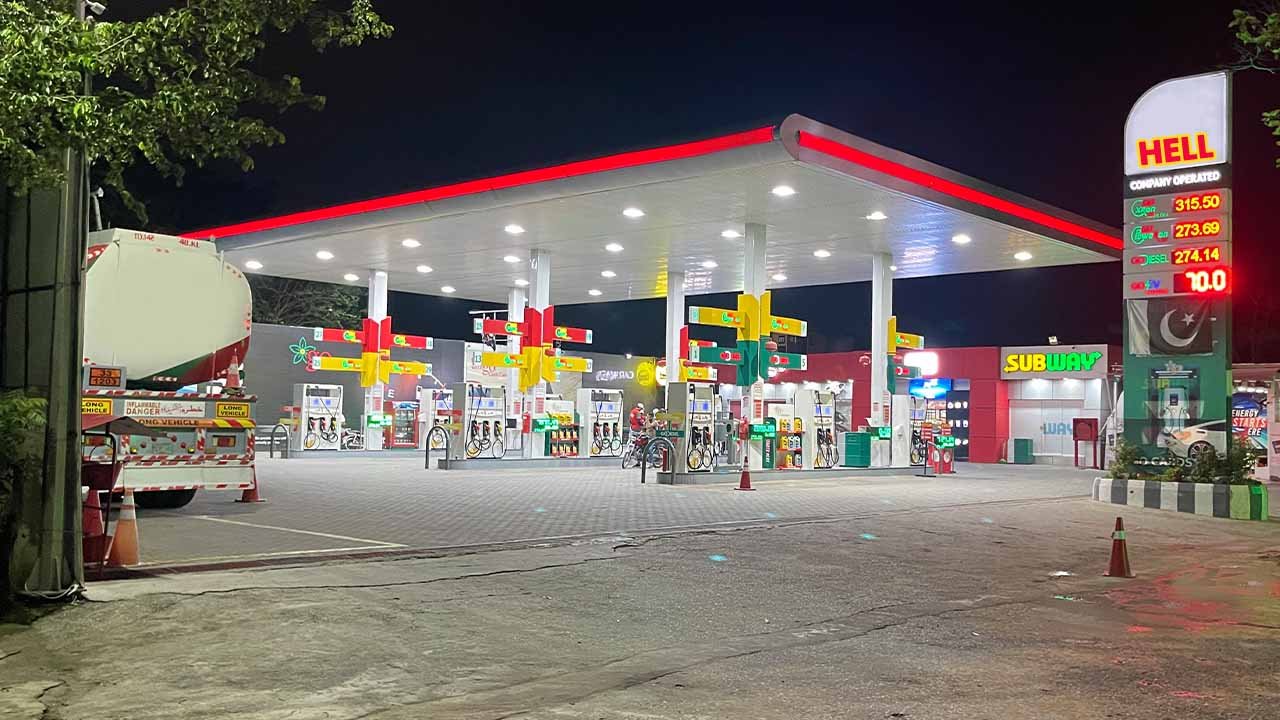
    As of October 1, 2023, the price of petrol will see a substantial decrease of Rs8 per litre, resulting in a new rate of Rs323.38. Additionally, a price reduction of Rs11 per litre has been announced for diesel, bringing the revised rate to Rs318.18 per litre. 

    This decision has been prompted by the strengthening of the Pakistani rupee and a global decrease in petroleum prices, as indicated by the Ministry of Finance in an official statement.  

    The Ministry stated, “In the wake of variations in international prices of petroleum products and the improvement in the exchange rate, the Government of Pakistan has decided to revise the consumer prices of petroleum products.” 

    Furthermore, the government has taken steps to lower the cost of kerosene oil by Rs7.53 per litre, establishing a new rate of 237.28, while light diesel oil will witness a reduction of Rs7.77 per litre, resulting in a price of 212.45 per litre. 

  • Pakistani rupee claims top spot as best-performing currency worldwide 

    Pakistani rupee claims top spot as best-performing currency worldwide 

    Amidst a determined crackdown on smuggling and illegal financial activities, the Pakistani rupee has emerged as the world’s top-performing currency for September. During this remarkable month, the rupee’s value surged from Rs305.54 against the US dollar on August 31st to Rs287.74 on September 28th, a notable increase of Rs17.8 or 6.2 per cent.

    Impressively, this positive trend persisted for 17 consecutive trading sessions, resulting in an overall gain of nearly 7 per cent since hitting its lowest point at 307.1 on September 5th. 

    It’s essential to note that the currency market was closed on Friday, September 29th. In terms of global currency performance, the Mauritian rupee secured the second position with a modest appreciation of 0.7 per cent, while the Hong Kong dollar claimed third place, showing a slight improvement of 0.2 per cent throughout September. These figures are based on data from the brokerage house Arif Habib Limited (AHL), reported on a recent Friday. 

    Financial experts attribute this remarkable rupee surge to a series of government measures aimed at curbing dollar smuggling and currency hoarding. Additionally, during the same month, the State Bank of Pakistan (SBP) introduced structural reforms targeting the Exchange Companies (ECs) sector. These reforms included a directive for commercial banks to establish their own ECs as wholly-owned subsidiaries and an increase in the minimum capital requirement for ECs from Rs200 million to Rs500 million. 

    Notably, the Pakistani rupee recorded substantial gains in the inter-bank market, appreciating by 6-9 per cent against three major currencies – the US dollar, UK Pound, and Euro – over the past few weeks. Even in the open market, the rupee showed a significant upswing of 11-13 per cent, effectively eliminating the premium associated with the open-market rate. This is particularly impressive given that the US Dollar index reached a 10-month high. 

    This strengthening of the rupee aligns with the commitment made by Pakistani authorities in July when they entered into a vital $3 billion Stand-By Arrangement (SBA) with the International Monetary Fund (IMF). This agreement was pivotal in averting a potential sovereign default and required the adoption of a market-based exchange rate, which has now proven to be a pivotal factor in the rupee’s impressive resurgence. 

  • Petroleum prices expected to decline as rupee gains ground against US dollar 

    Petroleum prices expected to decline as rupee gains ground against US dollar 

    As reported by Geo News on Saturday, there’s an expectation that starting on October 1st, petroleum prices will see a decrease due to the stability of the Pakistani rupee (PKR) against the US dollar (USD). This shift is also attributed to a decline in international market prices. 

    The final decision on these petroleum prices will be made by the Ministry of Finance following consultations with interim Prime Minister Anwaar-ul-Haq Kakar. 

    In recent news, the Oil and Gas Regulatory Authority (OGRA) cautioned against prematurely speculating about petroleum product pricing. This comes after federal ministers suggested that rates for petroleum, oil, and lubricants (POL) might decrease in the next fortnightly review. 

    Earlier statements by Caretaker Federal Commerce and Industries Minister Gohar Ejaz and Interim Federal Minister for Information and Broadcasting Murtaza Solangi hinted at a potential drop in POL prices, thanks to the recent strengthening of the Pakistani rupee against the US dollar. 

    Over the past two weeks, the Pakistani rupee has gained about Rs19 against the US dollar. This is significant because Pakistan, as a net importer of POL products, conducts transactions in US dollars. 

    In the previous fortnightly review, the caretaker government had raised petrol prices by more than Rs26 per litre and diesel prices by over Rs17 per litre, reaching record highs at Rs331.38 and Rs329.18 per litre, respectively. 

    OGRA emphasised that the pricing of petroleum products in Pakistan depends on international market trends and the exchange rate between the US dollar and the Pakistani rupee. While international petroleum prices have risen recently, the exchange rate between the US dollar and the Pakistani rupee has improved. 

    However, OGRA pointed out that there’s still one week left before the official announcement of new prices. So, any speculations about price changes during this period are speculative and could disrupt the smooth operation of the oil supply chain. 

  • Govt hints at major taxation system overhaul in economic revival drive

    Govt hints at major taxation system overhaul in economic revival drive

    The federal government is contemplating significant changes to the tax structure in its economic revitalisation plan, with a particular focus on sectors like retail, agriculture, and real estate. Additionally, the plan includes the introduction of a wealth tax on movable assets. These proposed revisions were outlined in the Ministry of Finance’s September 2023 Economic Update and Outlook report. 

    Underpinning the economic recovery efforts are strategies aimed at enhancing revenue, which include not only tax adjustments but also the restriction of tax exemptions to essential sectors such as food and medicine. To streamline government expenses, the plan also incorporates austerity measures and a review of subsidies and grants. 

    Furthermore, the government is set to scrutinise the development plan and promote public-private partnership (PPP) initiatives. Compliance with quarterly budget targets and agreements with the International Monetary Fund (IMF), encompassing aspects like tax collection and debt management, will be a priority. 

    The plan adopts a 5Es framework—exports, equity, empowerment, environment, and energy—to address socio-economic challenges and stimulate export growth and business facilitation. The digitization of the economy and an expanded tax base through information technology are also on the agenda. 

    According to Business Recorder, state-owned enterprise (SOE) reforms, including the enactment of an SOE policy, are part of the plan. It involves the establishment of a Central Monitoring Unit (CMU) and the preparation of SOE performance reports. The implementation of a Treasury single account (TSA), remittance incentives, energy conservation, and price controls are among the planned actions. 

    Additionally, the Privatisation Commission aims to privatise select public sector enterprises through various methods, including assessing privatisation options for distribution companies (DISCOs) and restructuring options for PIA-CL while conducting unbundling studies for SNGPL and SNGPL. 

    To bolster non-bank finance and promote the capital market, corporate taxes will be reduced. Short-term measures for export enhancement include the implementation of the Weighted Average Cost of Gas (WACOG), the operationalization of the EXIM bank, and expedited sales tax refund processes. 

    Business facilitation and investment promotion will be addressed by the Board of Investment, with initiatives like the Asaan Karobar plan, which involves the establishment of a central e-registry and the development of the Pakistan Business Portal. 

    The plan also outlines measures to boost IT exports, stimulate telecommunications growth with a focus on 5G technology, and revitalise the maritime, railway, and highway sectors. Price reforms, attracting foreign investment, and combating theft are key objectives in the energy sector. 

    Recent administrative actions have already begun to yield positive results in curbing illegal activities in the foreign exchange market and improving the availability of essential food items. The outlook for inflation has improved, albeit with ongoing concerns related to international oil prices and energy costs. 

    On the fiscal front, the fiscal deficit has remained stable, while the primary balance surplus has improved. Notably, federal revenues have seen significant growth, driven by higher non-tax collections and import-related taxes. Reductions in non-markup spending have contributed to this positive fiscal development. 

    The current account deficit has narrowed, primarily due to improvements in the trade balance. Overall, the government’s strategic measures, coupled with prudent economic policies, are expected to attract new investments and stimulate economic growth for fiscal year 2024 and beyond, following the initial steps towards recovery at the beginning of FY2024.