Category: Business

The most important business news, explained in a young, easy to understand way. News that affects young career professionals.

  • Pakistan and Gulf Cooperation Council sign historic free trade agreement 

    Pakistan and Gulf Cooperation Council sign historic free trade agreement 

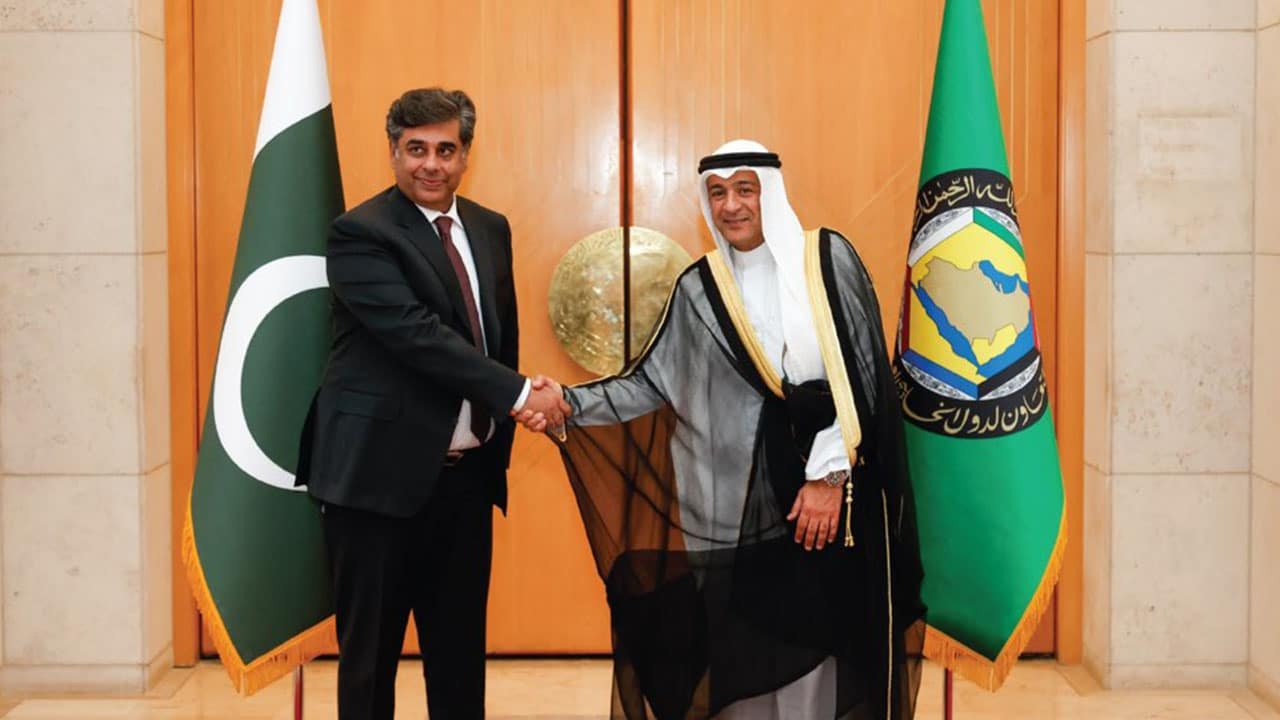
    Pakistan and the Gulf Cooperation Council (GCC) have officially initiated a comprehensive free trade agreement, as announced by the GCC through its communication platform, X. 

    The formal signing ceremony was conducted with the participation of GCC Secretary-General Jasem al-Budaiwi and Pakistan’s Minister of Trade, Gohar Ejaz. 

    In his remarks, Secretary-General Al-Budaiwi underscored the historic significance of this economic accord, characterising it as a pivotal moment in bilateral cooperation. He emphasised that this agreement would play a vital role in fostering mutual growth and prosperity, aligning with the shared interests of both parties, as conveyed in the GCC’s official statement. 

    Additionally, Al-Budaiwi highlighted the GCC’s commitment to advancing the cause of free trade by actively pursuing similar agreements with other nations, as indicated in the statement. 

    Both leaders expressed optimism about the agreement’s potential to significantly enhance trade relations between Pakistan and the Arab nations. 

    It’s worth noting that Pakistan and the GCC initially laid the groundwork for discussions on a free trade agreement back in August 2004. However, progress had been limited to only a few rounds of talks. The negotiations were reignited in 2021, leading to the formalisation of this momentous trade pact. 

  • PIA’s Boeing 777 planes encounter more technical issues due to lack of maintenance 

    PIA’s Boeing 777 planes encounter more technical issues due to lack of maintenance 

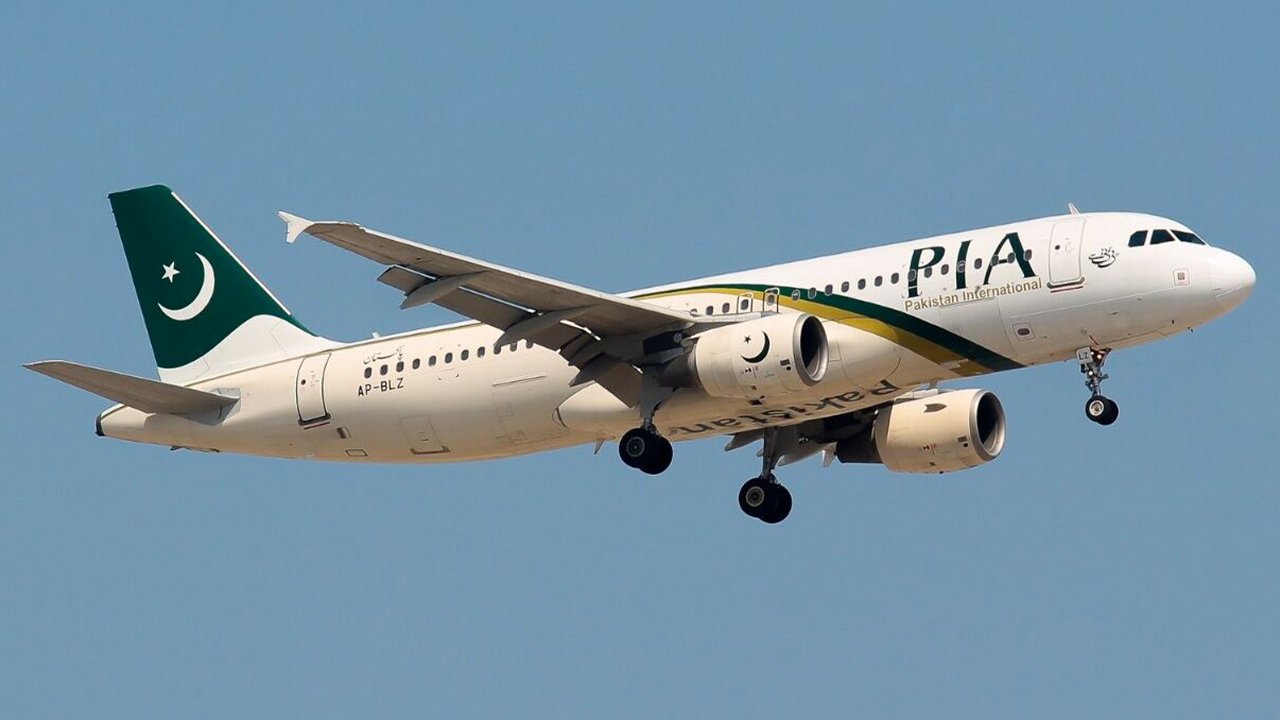
    Due to a serious lack of maintenance and repair work, numerous Boeing 777 aircraft operated by Pakistan International Airlines (PIA), the country’s national flag carrier, have experienced technical problems during international flights, according to reliable sources. 

    These technical issues within PIA’s aircraft have been steadily increasing due to the neglect of essential maintenance and repair tasks by the airline’s engineering department, as disclosed by insiders interviewed by ARY News. This unfortunate trend not only puts the safety of PIA flights at risk but also causes significant inconveniences for passengers and financial difficulties for the airline. 

    Sources have revealed that several Boeing 777 aircraft faced technical problems during flights to Saudi Arabia, resulting in substantial expenses for their repair and upkeep. In a recent incident, during the boarding process for Jeddah-Lahore flight PK-760, the auxiliary power unit (APU) exhaust malfunctioned, requiring the pilot to activate an emergency brake and initiate a fire control procedure. 

    The consequences of this incident were significant, leading to a delay of over a day for the affected flight as the aircraft had to be grounded due to the fault. Interestingly, this was the second such incident reported in a single day. Prior to this incident, another PIA plane flying from Sialkot to Jeddah experienced smog warnings within the cockpit. 

    In response to these events, the PIA spokesperson issued a statement reassuring passengers aboard the grounded plane that arrangements were being made for their prompt departure from Lahore to Jeddah. 

  • Pak Suzuki CEO reveals plan to export upgraded cars meeting WP-29 standards 

    Pak Suzuki CEO reveals plan to export upgraded cars meeting WP-29 standards 

    Hiroshi Kawamura, the Chief Executive of Pak Suzuki Motor Company Ltd. (PSMCL), recently shared insights into the company’s endeavours to enhance the export capabilities of their cars, aligning them with numerous WP-29 standards. This significant development was reported by The News on Friday. 

    During the second round of interactive meetings with key decision-makers, conducted under the Suzuki Motors banner, Kawamura underscored the transient nature of economic challenges. He reaffirmed the company’s unwavering commitment to delivering cost-effective vehicles to the ordinary citizens of Pakistan. Furthermore, he disclosed that the company was actively engaged in the development of hybrid vehicle variants. 

    In attendance at the meeting were prominent part manufacturers, and they unanimously advocated for the promotion of localization within the automotive industry while simultaneously pursuing global market expansion. In a call for collaborative efforts, Kawamura emphasised the vital need for collective action in addressing the mounting crises faced by the automotive sector, stating, “It is imperative to take stock of the escalating crisis collectively for the automotive industry. Nothing can be achieved without local partners.” 

    During the meeting, Usman Aslam Malik, Senior Vice Chairman of the Pakistan Association of Automotive Parts and Accessories Manufacturers (PAAPAM), expressed unwavering support for original equipment manufacturers (OEMs) in their endeavours to export auto components. 

    It is important to note that WP-29 standards represent a distinctive global regulatory forum operating under the auspices of the UNECE Inland Transport Committee. Three UN Agreements, adopted in 1958, 1997, and 1998, provide the legal foundation enabling contracting parties (member countries) participating in WP-29 sessions to establish regulatory frameworks governing motor vehicles and their equipment.

    These encompass UN Regulations, appended to the 1958 Agreement; United Nations Global Technical Regulations (UN GTRs), linked to the 1998 Agreement; and UN Rules, annexed to the 1997 Agreement. 

  • IMF spokesperson urges fair taxation and protection for vulnerable in Pakistan

    IMF spokesperson urges fair taxation and protection for vulnerable in Pakistan

    The International Monetary Fund (IMF) has emphasised that its $3 billion Standby Arrangement (SBA) programme with Pakistan serves as a critical policy framework. This framework addresses both domestic and international economic imbalances while also facilitating financial support from various donors, including the refinancing of outstanding debts.

    According to Geo, during a recent press conference held at the IMF headquarters in Washington, DC, Julie Kozack, the spokesperson for the global lender, fielded questions regarding the IMF’s engagement with Pakistan. These inquiries encompassed Pakistan’s request for relief and permissions within the existing agreement, specifically in relation to rising energy costs, notably electricity bills.

    In response to concerns about potential human rights implications, particularly for minority populations and the vast number of people living below the poverty line (an estimated 92 to 95 million), the IMF spokesperson emphasised that the programme received approval on July 12. It is a nine-month standby arrangement amounting to $3 billion, designed to support the economic stabilisation programme of the Pakistani government.

    The core objectives of this programme revolve around providing a policy framework to address both domestic and external economic imbalances, along with establishing a structure to secure financial support from various donors, both multilateral and bilateral. This includes securing fresh financing and addressing upcoming debt obligations.

    The IMF outlined that policy efforts are focused on implementing the fiscal year 2024 budget, formulating appropriate monetary policies to combat inflation, and continuing reforms to enhance the sustainability of the energy sector.

    These reforms are ultimately geared towards fostering higher, more inclusive, and more resilient economic growth. They also aim to bolster social development and climate resilience by strengthening public financial management, improving tax administration, and enhancing the prioritisation of public investments.

    Furthermore, these efforts are conducted in collaboration with partner institutions, not only the IMF but also the World Bank and the Asian Development Bank, underscoring a collective commitment to Pakistan’s economic stability and development.

    Kozack also highlighted IMF Managing Director Kristalina Georgieva’s strong stance on poverty and inequality. She emphasised the importance of wealthier segments of society bearing a fair tax burden, particularly in a context where Pakistan’s tax-to-GDP ratio is notably low.

    The IMF’s commitment extends to safeguarding the interests of the poor and vulnerable members of society within the programme’s framework, aligning with the goal of achieving a more equitable and inclusive society.
  • No extension for tax return deadline, only commissioner-requested extensions accepted

    The Federal Board of Revenue (FBR) has officially announced that the deadline for income tax return submissions remains unchanged, concluding on September 30.

    However, individuals may request an extension of up to 15 days by submitting an application to their respective commissioner.

    FBR officials report that over 1.7 million tax returns have already been filed, with expectations of the total reaching over Rs2 million by the September 30 deadline.

    More to follow..

  • Pakistan’s forex reserves decline by $59 million to $7.64 billion due to debt payments

    Pakistan’s forex reserves decline by $59 million to $7.64 billion due to debt payments

    The State Bank of Pakistan (SBP) reported a weekly decrease in foreign exchange reserves, with a decline of $59 million, bringing the total to $7.64 billion as of September 22, according to data released on Thursday.

    The overall liquid foreign reserves of the country amounted to $13.16 billion, with commercial banks holding net foreign reserves of $5.52 billion.

    The central bank attributed this reduction in reserves to debt repayments, stating, “During the week ending on September 22, 2023, SBP’s reserves decreased by $59 million to $7,636.7 million due to debt repayments.”

    Notably, Pakistan’s central bank reserves had increased by $56 million the previous week, following four consecutive weeks of decline, during which SBP reserves had dwindled by a cumulative total of $416 million.

    In July, SBP’s reserves received a boost when Pakistan received approximately $1.2 billion as the first tranche from the International Monetary Fund (IMF), following approval of a new $3-billion stand-by arrangement. Additionally, inflows from Saudi Arabia and the UAE contributed to the increase.

    Despite these positive developments, the central bank’s reserves have come under pressure due to ongoing debt repayments, increased import payments following the easing of restrictions, and a lack of fresh inflows.

  • Things will get more expensive amidst soaring petroleum prices: Finance Ministry

    Things will get more expensive amidst soaring petroleum prices: Finance Ministry

    Due to the persistent escalation in energy and petroleum prices, it is anticipated that inflation will maintain its elevated trajectory in the months ahead.

    In its latest monthly economic update, the Ministry of Finance has presented a forecast indicating that inflation is poised to remain at an elevated level during the upcoming months. The report projects inflation to fall within the range of 29 per cent to 31 per cent for the month of September 2023, primarily attributing this surge to the notable uptick in prices of petroleum products and electricity.

    Furthermore, the report identifies several contributing factors to this inflationary pressure, including the possibility of surging transportation costs, a dearth of essential services and commodities, and the depreciation of the dollar, which has had a mitigating effect on imported inflation.

    In response to these challenges, the finance ministry has implemented rigorous measures to combat illegal currency exchanges and stockpiling activities while actively working to stabilise the exchange rate.

    The report also highlights a global trend of decreasing food grain prices, albeit with notable exceptions such as rice and sugar, whose prices have surged due to the ongoing conflict between Russia and Ukraine.

  • Pakistani rupee set to become best performer against US dollar following record-low recovery

    Pakistani rupee set to become best performer against US dollar following record-low recovery

    In September, Pakistan’s rupee emerged as the global front-runner in currency performance, driven by the interim government’s vigorous measures to curb illicit US dollar trading.

    According to a comprehensive report by Bloomberg, the Pakistani rupee has experienced a remarkable surge of nearly 6 per cent during this month, a notable accomplishment given the downward trajectory of most other currencies like the Thai baht and South Korean won against the strengthening US dollar, fueled by expectations of prolonged high US interest rates.

    On Thursday, the rupee exhibited resilience by rising 0.1 per cent, reaching Rs287.95 per dollar after hitting a record low of approximately Rs307 earlier in the month.

    Khurram Schehzad, the Chief Executive Officer of Alpha Beta Core Solutions Pvt. Ltd., a financial consultancy located in Karachi, commented on the situation, highlighting the prevalence of leakages through informal channels such as hawala and hundi trade, which are common in South Asia.

    Schehzad noted, when the USD rate reverses, everyone from hoarders to exporters, who have been holding onto their export proceeds, starts offloading their dollars.

    The Bloomberg report underscores the Pakistani government’s intensified efforts to crack down on illegal dollar trading, which have significantly contributed to the rupee’s resurgence.

    In addition to these measures, the central bank has raised capital requirements for smaller exchange companies and mandated large banks to establish their exchange entities, aiming to enhance transparency and oversight in the retail foreign exchange market.

  • FIA cracks down on luxury car showrooms in Karachi over money laundering suspicions

    FIA cracks down on luxury car showrooms in Karachi over money laundering suspicions

    On Thursday, the Commercial Banking Circle team of the Federal Investigation Agency (FIA) executed a seizure of four high-end vehicles at a Karachi-based car showroom.

    The owner of the establishment was unable to furnish credible documentation regarding the vehicles’ importation, raising suspicions of their involvement in a trade-based money laundering operation.

    The FIA has embarked on a comprehensive inquiry into the proprietors of car showrooms in Karachi, honing in on trade-based money laundering—an illicit stratagem that exploits international trade transactions as a conduit for unlawful financial transfers.

    In a recent enforcement operation, the FIA confiscated a quartet of opulent automobiles, including a Land Cruiser and an Audi, from a showroom situated on Khalid bin Waleed Road. Despite repeated requests, the showroom owner failed to comply with the FIA’s summons.

    The agency has further dispatched notifications to the proprietors of thirteen other car showrooms in Karachi, intensifying its scrutiny of this matter.

    Earlier in the week, the FIA conducted a search at the residence of a businessman by the name of Aziz Seekha in Karachi. This operation yielded a substantial haul of both foreign and Pakistani currency, alongside prize bonds, underscoring the agency’s ongoing efforts to combat financial irregularities.

  • Inventory challenges lead Indus Motor Company to halt Toyota car production in Pakistan

    Inventory challenges lead Indus Motor Company to halt Toyota car production in Pakistan

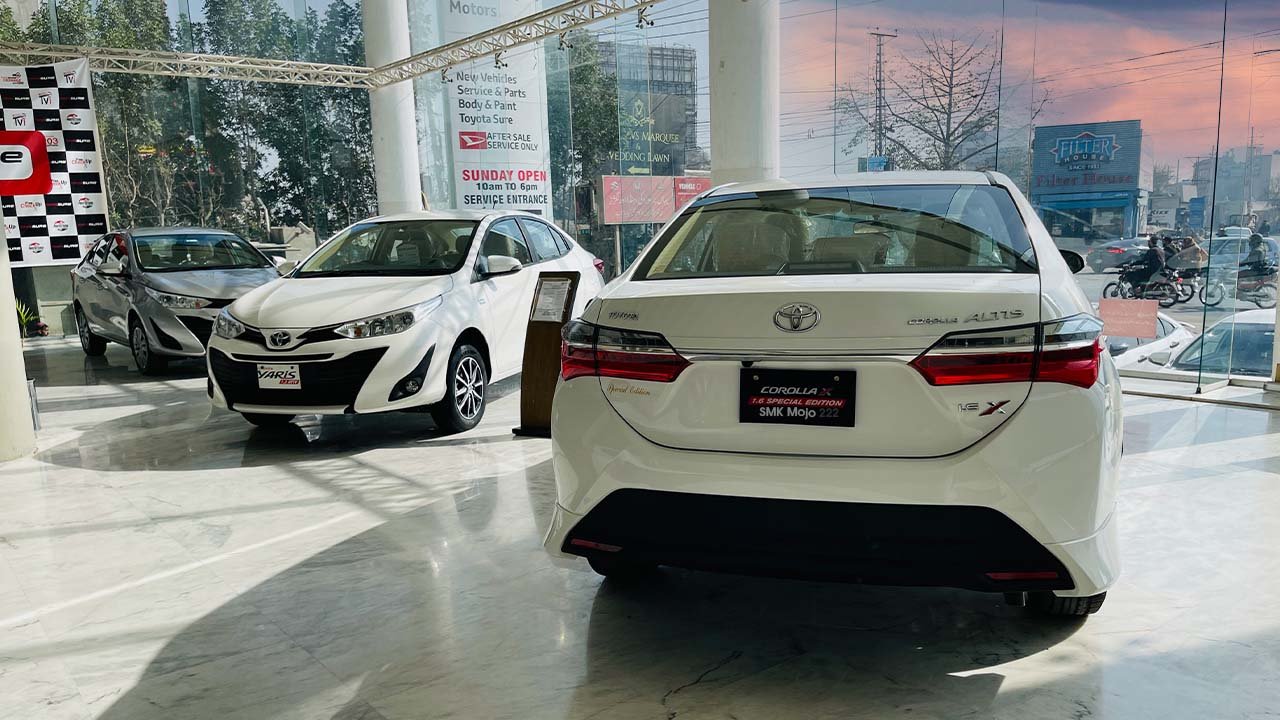
    Indus Motor Company Limited, the firm responsible for the assembly of Toyota vehicles in Pakistan, has recently announced a temporary suspension of its production operations until October 9. This significant decision was formally communicated through a notice submitted to the Pakistan Stock Exchange (PSX).

    The rationale behind this temporary cessation of production is primarily linked to the company’s current vehicle inventory status. Indus Motor Company Limited has set the production plant’s closure period from September 28 through October 9 to address these concerns.

    This pause in production is the latest in a series of similar actions undertaken by the company. Previously, Indus Motor Company Limited had temporarily halted production from August 25 to September 6, attributing it to reduced demand and inventory challenges. Additionally, the company faced a production plant shutdown from July 21 to August 3, driven by complications in the importation of raw materials, logistical hurdles in clearing consignments, and disruptions in the supply chain from select international vendors.

    These issues collectively hampered the company’s supply chain, leading to insufficient inventory levels to sustain uninterrupted production. Furthermore, a similar production hiatus had occurred earlier, from June 26 to June 27, with the same underlying reasons.