Category: Business

The most important business news, explained in a young, easy to understand way. News that affects young career professionals.

  • SECP registers over 400 new IT companies in Pakistan in one month

    SECP registers over 400 new IT companies in Pakistan in one month

    The Securities and Exchange Commission of Pakistan (SECP) registered 2,617 new companies in September 2024, marking a 5.7 per cent increase compared to the same month last year.

    This brings the total number of registered companies in Pakistan to 231,111.

    Of the companies registered in September, 55 per cent were private limited companies, while 41 per cent were single-member companies. The remaining 4 per cent included public unlisted companies, not-for-profit associations, trade organizations (TO), and limited liability partnerships (LLP).

    The majority of these companies—99.8 per cent—were registered online, with only 0.2 per cent registered offline.

    The information technology sector saw the highest number of new companies, with 410 being incorporated in September. Following closely were trading companies with 377 new firms and the services sector, which registered 306 companies.

    Other key sectors included:

    – Real estate development and construction: 237 new companies

    – Tourism and e-commerce: 125 new companies each

    – Food and beverages: 112 new companies

    – Education: 101 new companies

    – Mining and quarrying: 98 new companies

    – Marketing and advertising: 73 new companies

    Additional sectors that showed notable activity included:

    – Corporate agricultural farming: 60 new companies

    – Engineering: 57 new companies

    – Healthcare: 49 new companies

    – Textile: 49 new companies

    Smaller sectors, such as cosmetics and toiletries (46 companies), chemicals (42 companies), and transport (39 companies), also contributed to the overall growth, with a total of 82 companies incorporated in various other sectors.

    With over 400 new IT companies registered in Pakistan in just one month, the benefits are immense. This growth means more job opportunities, driving employment and boosting economic activity and innovation across the country.

    The rise of these IT firms also enhances Pakistan’s tech exports, bringing in much-needed foreign revenue and attracting international investments. On top of that, it helps improve digital infrastructure, inspires more people to start their own businesses, and boosts the skills of the local workforce.

  • World Bank ranks Pakistan in fourth quintile for challenging business environment

    World Bank ranks Pakistan in fourth quintile for challenging business environment

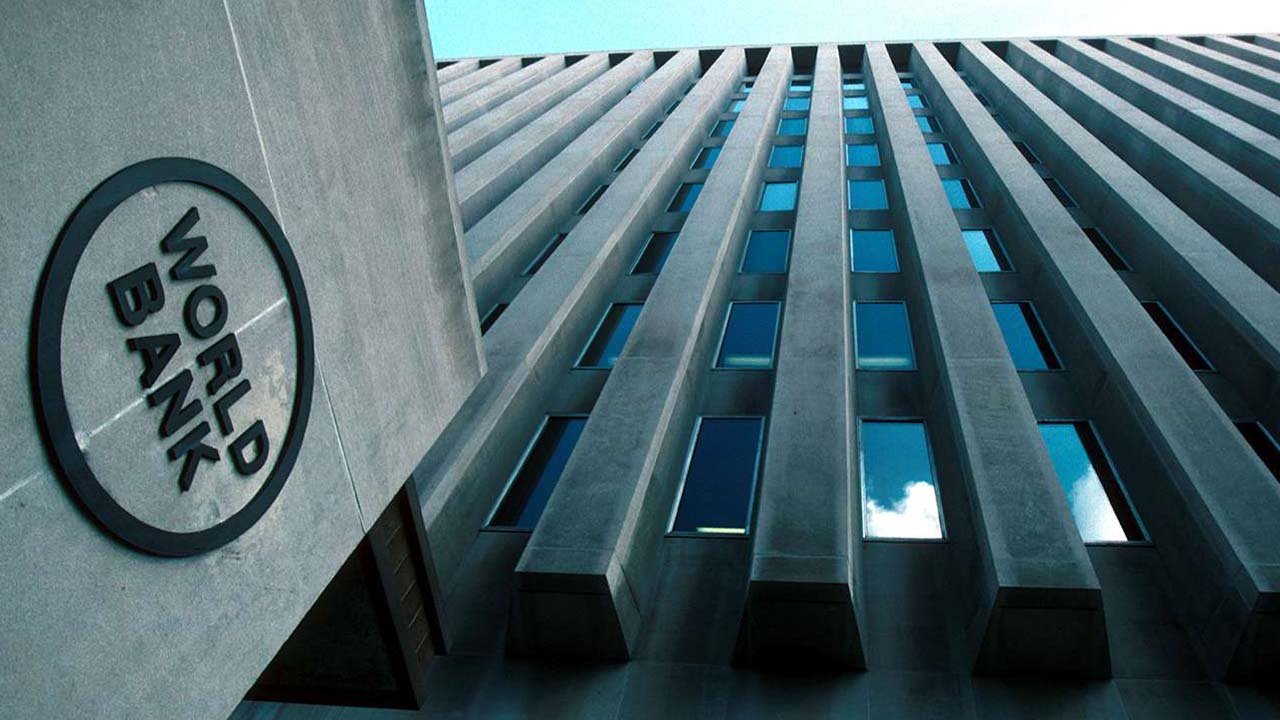
    The World Bank has placed Pakistan in the fourth quintile of economies owing to a challenging business environment caused by weak regulatory frameworks and limited public services, which hinder business operational efficiency.

    The newly released report, “Business Ready (B-READY),” is a data collection and analysis project to assess the global business and investment climate. This annual report replaces and improves upon the previous “Doing Business” project, with the first edition of B-READY covering 50 economies.

    B-READY is currently in a three-year rollout phase, from 2024 to 2026, during which the project will expand its geographic coverage and refine its methods. The 2024 report is the first of three in this rollout phase.

    Pakistan scored 65.90 in operational efficiency, placing it in the third quintile, indicating a mixed performance in its business environment.

    The report highlighted that eight economies—Botswana, Cambodia, Indonesia, Lesotho, Morocco, Pakistan, the Philippines, and the Seychelles—ranked in the top quintile for at least one topic. Meanwhile, Hungary and Singapore scored in the top quintile across eight topics.

  • Pakistan’s forex reserves surge by $1.17 billion, reaching highest level since April 2022

    Pakistan’s forex reserves surge by $1.17 billion, reaching highest level since April 2022

    The foreign exchange reserves held by the State Bank of Pakistan (SBP) increased by $1.17 billion in one week.

    Despite the fact that the latest ‘surge’ is due to a loan, the SBP’s reserves are currently at their highest level since April 2022.

    According to data from the central bank for the week ending September 27, Pakistan’s foreign exchange reserves rose by more than 12 per cent as compared to the previous week, hitting $10.7 billion.

    This increase is mainly due to a $1.03 billion loan received from the International Monetary Fund (IMF) under the Extended Fund Facility (EFF) programme.

    Moreover, the country’s net reserves climbed by $1.11 billion, or 7.46 per cent, compared to the previous week, reaching $15.98 billion.

    However, reserves held by commercial banks fell by $58.3 million, or 1.09 per cent, in the same period, now standing at $5.28 billion.

    Since the start of the current fiscal year, SBP-held reserves have grown by $1.31 billion, or 13.98 per cent. In the current calendar year, reserves have increased by $2.48 billion, or 30.17 per cent.

  • 24-karat gold price drops by Rs1,100 per tola in Pakistan

    24-karat gold price drops by Rs1,100 per tola in Pakistan

    Gold rates in Pakistan continued their downward trend on the fourth trading day of the week after rebounding slightly in the previous session.

    The latest rates shared by the All-Pakistan Gems and Jewellers Sarafa Association (APGJSA) on Thursday revealed a decline of Rs1,100 per tola in the price of 24-karat gold.

    The association said that the gold rate in the local market was recorded at Rs274,400 per tola following the latest drop.

    This drop comes after the precious metal’s price rose by Rs600 per tola to Rs275,500 per tola on Wednesday.

    Interestingly, the latest gold price is just about Rs2,600 lower than the all-time high price of Rs277,000 per tola seen last week.

    Some non-investors are viewing this as an ideal time to sell gold, while a number of experts think that the gold price will go further up.

    In the global market, bullion rates were seen in a narrow range. Spot gold was quoted at $2,655.03 per ounce around 03:33 GMT. The last record-high rate was reported on September 26, with spot gold quoted at $2,685.42.

  • IMF director says Pakistan’s 24th loan programme could be last if conditions met

    IMF director says Pakistan’s 24th loan programme could be last if conditions met

    Director of the International Monetary Fund’s (IMF) mission for Pakistan, Nathan Porter, has claimed that if the country faithfully follows the IMF’s economic advice, the current programme would be the last for Pakistan.

    Appearing in an interview with Voice of America, the IMF director said that after the economic crisis of 2023, Pakistan’s economy has been improving, which he deemed crucial for the foundation of economic progress.

    Responding to Prime Minister (PM) Shehbaz Sharif’s recent statement declaring that the 24th IMF loan programme would be the last for the country, Nathan Porter said that this could be possible if Pakistan sincerely acted on economic reforms.

    Commenting on Finance Minister Aurangzeb’s statement regarding the tough conditions imposed on Pakistan, the IMF director rejected the claim, adding, “IMF recommended solutions which the concerned country needed to get out of the economic uncertainty.”

    Porter further said the IMF’s stance on Chinese loans to Pakistan was the same as its perspective on the loans of other countries.

  • New regulations: A surgical strike on Pakistani exporters

    New regulations: A surgical strike on Pakistani exporters

    Industrialists in Sialkot have been reeling from a regulation set upon them from the world over. Pakistan’s surgical instrument industry, which brings in $400 million annually in exports, is in serious jeopardy. This is in light of the European Union (EU) implementing a Medical Device Regulation (MDR) on the trade of surgical instruments.

    While the EU introduced this law in 2017, its enforcement deadline has only just passed, and exporters are feeling the costs.

    The MDR now demands that manufacturers meet the new quality controls, conduct audits for product safety, and carry out rigorous lab testing for all surgical instruments before they can be sold in the European Union. Moreover, manufacturers will also have to sign mandatory contracts with European notified bodies for external audits.

    To comply, Pakistani exporters must hire a European representative at an annual fee upwards of PKR 1.5 million. Additionally, they must sign an agreement with a notified body, which costs at least PKR 3.1 million for small exporters.

    This only grants companies a three-year window to fully implement a production process that is MDR-compliant. The cost of complying with the stipulations set out by the MDR and acquiring the necessary paperwork is a staggering PKR 30 million.

    Abdul Moize, Marketing Director of Weldon Industries, captured the hardships, stating, “The burden these new regulations have created is unbearable. With interest rates at around 18%, securing loans for MDR compliance is almost impossible. The new laws favour only the big players, pushing smaller manufacturers out of the European market.”

    What’s worse for smaller manufacturers is that Pakistan has one EU MDR-certified notified body, SGS, that can perform the required tests to check for compliance. The lack of local testing facilities causes manufacturers to send their instruments overseas for testing, which increases costs.

    While larger exporters have the financial capital to absorb these expenses, the same can not be said for smaller ones.

    Could the current situation lead to the extinction of smaller manufacturers, giving way to the monopolisation of the surgical instruments sector?

    For these businesses, whose primary clients are located in Europe, the stakes are incredibly high. Failure to meet MDR requirements means losing access to the EU market – a loss of around $110 million.

    If exports fall by such a magnitude, it would cause factory closures and a consequential increase in the local unemployment rate. This might decrease local consumer demand, which means that the economic aftershocks will be felt in other sectors, too. Also, fewer exports will negatively impact the current account, which has stayed, historically, in the red.

    Given the seriousness of the situation, the surgical instruments business community has started urging the government to provide some sort of economic relief. The government could offer subsidies, and if not, it could offer financial relief by providing low-interest loans specifically for MDR implementation, which would help manufacturers get the funding they need to take steps towards complying with the new regulations.

    This will serve the interests of the business community responsible for the export of surgical instruments and political interests in Islamabad, where lawmakers want to portray a positive image of the economy to their constituents.

  • Exchange rates: PKR closes at Rs277.64 against US dollar, Rs368.97 versus Pound

    Exchange rates: PKR closes at Rs277.64 against US dollar, Rs368.97 versus Pound

    The Pakistani rupee (PKR), on the third trading day of the week, gained almost five paisa versus the US dollar (USD).

    PKR ended the session at Rs277.64 against the USD.

    The latest exchange rate released by the State Bank of Pakistan (SBP) shows PKR about 0.2 per cent up as compared to the last closing of Rs277.69, which was reported on Tuesday.

    During the trading session, the home unit remained stable as it saw an intraday high of Rs277.7 with the lowest level reported at Rs277.6.

    Exchange companies in the country were buying USD for Rs278.5 and selling for Rs280.

    Here is how the PKR performed against other foreign currencies:

    Currency Previous rate Today’s rate Difference
    British Pound 370.39 368.97 1.43 rupees
    UAE Dirham 75.59 75.60 1.35 paisa
    Euro 308.64 307.32 1.32 rupees
    Swiss Franc 327.56 328.35 79.37 paisa
    Chinese Yuan 39.57 39.56 0.71 paisa
    Saudi Riyal 74.02 73.97 4.18 paisa
    Japanese Yen 1.926 1.9277 0.17 paisa
    Exchange rates

    The Saudi Riyal closed today at Rs73.97 losing more than four paisas from its previous rate of Rs74.02.

    The British Pound decreased by Rs1.43, clocking in at Rs368.97, compared to Rs370.39 from a day ago.

    The rupee surged Rs1.32 versus Euro, ending at Rs307.32 as opposed to the Tuesday’s rate of Rs308.64.

    The UAE Dirham declined by only 1.35 paisa from Rs75.59 to Rs75.6.  

    The Chinese Yuan also witnessed very minor loss of 0.71 paisa, closing at Rs39.56 against Rs39.57.

    Swiss franc climbed 79.37 paisa, closing Wednesday at Rs328.35 compared to its last close of Rs327.56.

    Against the Japanese Yen, rupee shed 0.17 paisa, closing at Rs1.927 versus Rs1.926.

    Interestingly, Pakistani currency has remained stable for months against the US dollar as it has gained only 70.38 paisa or 0.25 per cent in the ongoing fiscal year.   

    The calendar year has also seen minimal changes USD to PKR rates as the home unit has appreciated by only Rs4.22. 

  • Pakistan’s inflation drops to 6.9%, lowest since January 2021

    Pakistan’s inflation drops to 6.9%, lowest since January 2021

    Pakistan’s inflation has dropped to lowest level since August 2021, according to latest data released by the Pakistan Bureau of Statistics (PBS).

    Shockingly, the headline inflation in Pakistan was recorded at 6.9 per cent on a year on year (YoY) basis in the previous month.

    This CPI reading marks the lowest level recorded in over three years.

    Experts believe that this level is an outcome of aggressive monetary tightening. The State Bank of Pakistan (SBP) has achieved bringing inflation below the one-year target of 7 per cent ahead of time.

    CPI inflation dropped 0.5 per cent in September 2024 as opposed to a rise of 0.4 per cent in the previous month and an increase of 2.0 per cent in September 2023.

    Analysts are of the view that  inflation is declining due to multiple factors, which include high base effect, sliding global commodity and energy rates, and our very stable home unit.

    Interestingly, the latest inflation reading is also lower than government expectations.

    The finance division had projected inflation to decelerate further in the next two months (September-October), and hover around 8 to 9 per cent, in the monthly economic outlook released last week.

  • Petrol, diesel prices reduced for next fortnight

    Petrol, diesel prices reduced for next fortnight

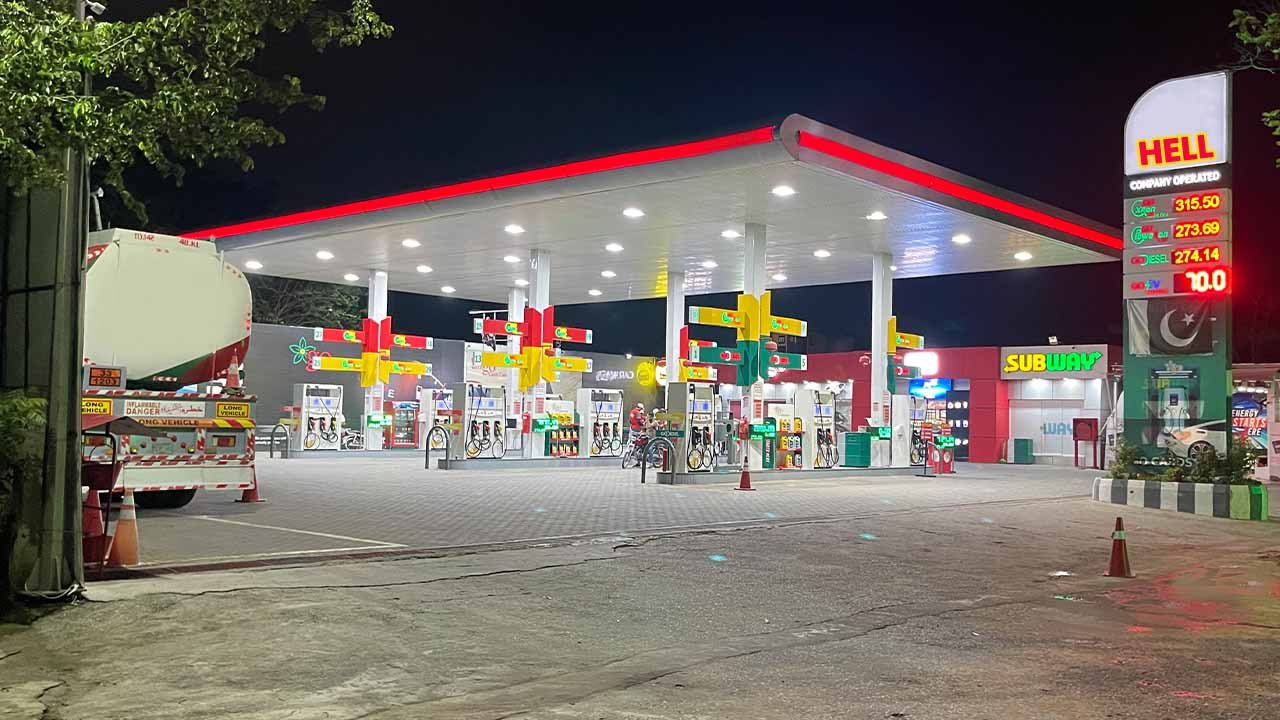
    The federal government has unexpectedly reduced the price of petrol by Rs2.07 per litre.

    As per the official notification, the price of petrol in Pakistan will now remain at Rs247.03 per litre for the next two weeks.

    According to PTV News, the price of high-speed diesel (HSD) was decreased by Rs3.40 to Rs246.29 per litre.

    The price of light diesel oil is slashed by Rs1.03 to Rs140.90, and Kerosene oil by Rs3.57 to Rs154.90 per litre.

    In the previous fortnightly review, the petrol price was reduced by Rs10 per litre to Rs249.10. Hi-octane fuel, before the latest revision, was being sold approximately Rs17 per litre higher than the price of regular petrol in the country.

    Petrol pumps will start selling fuel at revised rates after 12 AM.

    This is a developing story…

  • Latest IMF bailout: Temporary relief?

    Latest IMF bailout: Temporary relief?

    Whispers of the latest disbursement of the IMF package to Pakistan can be heard in Islamabad as the International Monetary Fund (IMF) plans to release $1.1 billion to the cash-strapped nation on September 30.

    But what does this mean for the economy and, more importantly, the Rupee?

    To figure that out, we must consider the historical relationship between IMF loan programs and the value of the PKR alongside other economic indicators.

    The release of IMF funds signals the commitment of the country to IMF-stipulated reforms and financial stability. This will boost investor confidence as they will know Pakistan is committed to maintaining fiscal discipline and policy stability. The PKR, as a result, will appreciate as financial capital inflows to the country will rise.

    With the availability of these funds, the State Bank of Pakistan (SBP) can partake in open market operations to artificially increase the value of the PKR. The SBP can buy PKR in circulation using the freshly gained foreign exchange reserves.

    This move is likely to reduce inflation in the short term as well, leading to everyone breathing a much-needed sigh of relief because, as per the Finance Division of the Government of Pakistan, the Consumer Price Index inflation rate sits at an uneasy 26 per cent for July-April FY 2024.

    As far as inflation is concerned, the IMF-mandated fiscal discipline will lead the government to take austerity measures. To put it simply, government expenditures will be slashed while taxation will increase.

    The government is likely to want to retain the IMF’s goodwill to guarantee the disbursement of the remaining $5.9 Billion. These austerity measures will reduce consumer demand for goods and services, resulting in a decline in the inflation rate, thus easing inflationary pressures plaguing the economy.

    While reduced government expenditure will result in a fall in the GDP growth rate initially, it’s not all doom and gloom.  

    The fall in government expenditures should help private investors, as the financial scale of Government projects will shrink, causing interest rates to decline.

    This is true for two reasons.

    Firstly, the government often borrows money from local banks at exorbitant rates, putting upward pressure on the interest rates. This crowds out private investments as investors are not keen to borrow money at high interest rates. If the government ceases to borrow money from local banks, interest rates are expected to decline.

    Secondly, the decline in government expenditures will reduce inflation that was previously caused by expansionary fiscal policy. This will allow the SBP to target a lower interest rate, as inflation will be lower.

    The main question for the curious reader, however, should be whether Pakistan is likely to ever get out of its debt problems.

    Having spent the past 22 out of 30 years in bailout programs, Nadeem ul Haque doesn’t think so, as he called Pakistan an IMF addict. Prime Minister Shehbaz Sharif has, nonetheless, expressed hope and enthusiasm despite the quagmire the economy finds itself in.

    “God willing, this will be Pakistan’s last IMF Programme,” he has claimed.