Category: Business

The most important business news, explained in a young, easy to understand way. News that affects young career professionals.

  • Significant decline in mobile phone imports in two months

    Significant decline in mobile phone imports in two months

    In the current financial year, the volume of imports of mobile phones was 89.93 million dollars

    In the first two months of the current financial year, a significant decline has been recorded in the imports of mobile phones.

    According to data from the State Bank of Pakistan, the volume of imports of mobile phones in July and August was 8.314 million dollars. In the same period last year, the volume of imports of mobile phones was recorded at 59.31 million dollars.

    The statistics also revealed that during the last month in August, foreign exchange was spent on the import of mobile phones worth 4.979 million dollars, which was 3.33 million dollars in June and 43.66 million dollars in August last year.

    The volume of imports of mobile phones recorded in the current fiscal year was 89.93 million.

  • Power sector’s circular debt surpasses Rs2 trillion despite massive tariff increase 

    Power sector’s circular debt surpasses Rs2 trillion despite massive tariff increase 

    Despite raising tariffs significantly, Pakistan’s power sector debt grew to Rs2.31 trillion by June 2023, up from Rs2.25 trillion in the previous fiscal year (FY22). This increase of Rs57 billion (about 3 per cent) over 12 months is quite different from FY22 when the debt actually decreased by Rs27 billion. 

    Here’s a breakdown of the key points: 

    1. In FY22, the debt was Rs2.25 trillion, but by June 2023, it had risen to Rs2.31 trillion. 

    2. In FY22, power producers were owed Rs1,351 billion, generation companies owed Rs101 billion to fuel suppliers, and Rs800 billion was held in Pakistan Holding Limited (PHL).  

    3. In FY22-23, the debt to power producers increased to Rs1,434 billion, while the debt to PHL decreased to Rs765 billion in FY23. 

    4. In FY22, some subsidies were reduced by Rs12 billion, but in FY23, there were no subsidies left. 

    5. The interest charges on delayed payments by independent power producers (IPPs) increased to Rs105 billion in FY22 but dropped to Rs100 billion by the end of FY23. 

    6. The markup paid on IPPs’ claims by PHL increased from Rs29 billion in FY22 to Rs43 billion in FY23. 

    7. The pending generation cost, including tariff adjustments and fuel charges, decreased from Rs414 billion in FY22 to Rs250 billion in FY23. 

    8. K-Electric’s outstanding dues went from Rs107 billion in FY22 to an excess payment of Rs53 billion in FY23. 

    9. However, power distribution companies (Discos) saw their losses due to inefficiency rise from Rs133 billion to Rs160 billion in FY23. 

    Read more: Pakistan to launch digital rupee to reduce printing and distribution costs 

    In simple terms, even though the government raised tariffs to collect more money for the power sector, the debt continued to increase. This debt is owed to various power-related entities, and some subsidies and charges also changed over the years. Additionally, while some costs went down, the losses due to inefficiencies in power distribution increased. 

  • Rice exports from Pakistan decline by 17.33% in first two months of current fiscal year 

    Rice exports from Pakistan decline by 17.33% in first two months of current fiscal year 

    During the initial two months of the current fiscal year, a total of 340,237 metric tonnes of rice, with a market value of $233.991 million, were exported. This marked a notable contrast with the previous year’s corresponding period, which recorded exports of 507,144 metric tonnes of rice valued at $283.056 million.  

    According to data provided by the Pakistan Bureau of Statistics, rice exports from July to August 2023 witnessed a 17.33 per cent decline in comparison to the same period in the previous year. 

    However, within this timeframe, Basmati rice exports experienced 8.29 per cent growth. Approximately 79,257 metric tonnes of Basmati rice, valued at $94.733 million, were exported, compared to the previous year’s figures of 84,709 metric tonnes at a cost of $87.480 million. 

    Concurrently, the nation achieved earnings of $39.338 million by exporting approximately 20,539 metric tonnes of fish and fish preparations, showing an improvement from the previous year when 15,922 metric tonnes of these products were exported, amounting to $38.086 million. 

    Read more: WhatsApp to introduce animated avatars for video calls soon 

    It is noteworthy that overall food group exports in the first two months of the current fiscal year registered a modest decrease of 1.65 per cent. The total value of food commodities exported during this period amounted to $711.748 million, contrasting with the previous year’s export value of $723.696 million for the same duration. 

    On the other hand, food group imports into the country during the initial two months of the current fiscal year witnessed a substantial decline of 26.91 per cent when compared to the corresponding period of the previous year. From July to August 2023, food imports decreased from $1.783 billion to $1.303 billion. 

  • US Embassy in Islamabad reduces visa wait times for Pakistanis

    US Embassy in Islamabad reduces visa wait times for Pakistanis

    The US Embassy in Islamabad has announced to reduce the visa appointment wait times for Pakistani people.

    According to the official announcement by the US Embassy on their X, formerly Twitter account, ‘Demand for US visas is the highest it has ever been. We are processing more visa applications than ever before and are working hard to bring down visa appointment wait times.’

    In order to reduce the waiting time, the US has announced three ways for visa applicants from Pakistan to meet the ‘unprecedented demand’ for US visas.

    ‘First, we have expedited thousands of non-immigrant visa appointments. More than ten thousand Pakistani visa applicants originally scheduled for 2024 at the US Consulate General in Karachi are receiving notice that their appointments have been rescheduled for 2023, some as early as next week. If you have a visa appointment in the next few months at the US Consulate General in Karachi, please check your e-mail and log-in to your account at our website to confirm your expedited appointment time.’

    The second method is that ‘to create added flexibility for Pakistani travellers, visa applicants can rebook appointments at either the Consulate General in Karachi or the US Embassy in lamabad—whichever  works best for them. Our hope is that this will allow applicants more freedom and flexibility to find a convenient date, time, and location.’

    Furthermore,’starting September 25, US Consulate General Karachi will begin accepting new interview waiver applications for some applicants who have previously been issued US visas. Applicants can check ustraveldocs.com/pk to determine whether they are eligible, print out a confirmation letter, and submit their application materials to a drop box without the need for an appointment. The US Embassy in Islamabad is already accepting interview waiver applications for qualified applicants.’

    It is pertinent to mention here that the United States Embassy in Pakistan has announced that it will facilitate Pakistanis applying for the country’s visa with a new optional visa delivery policy.

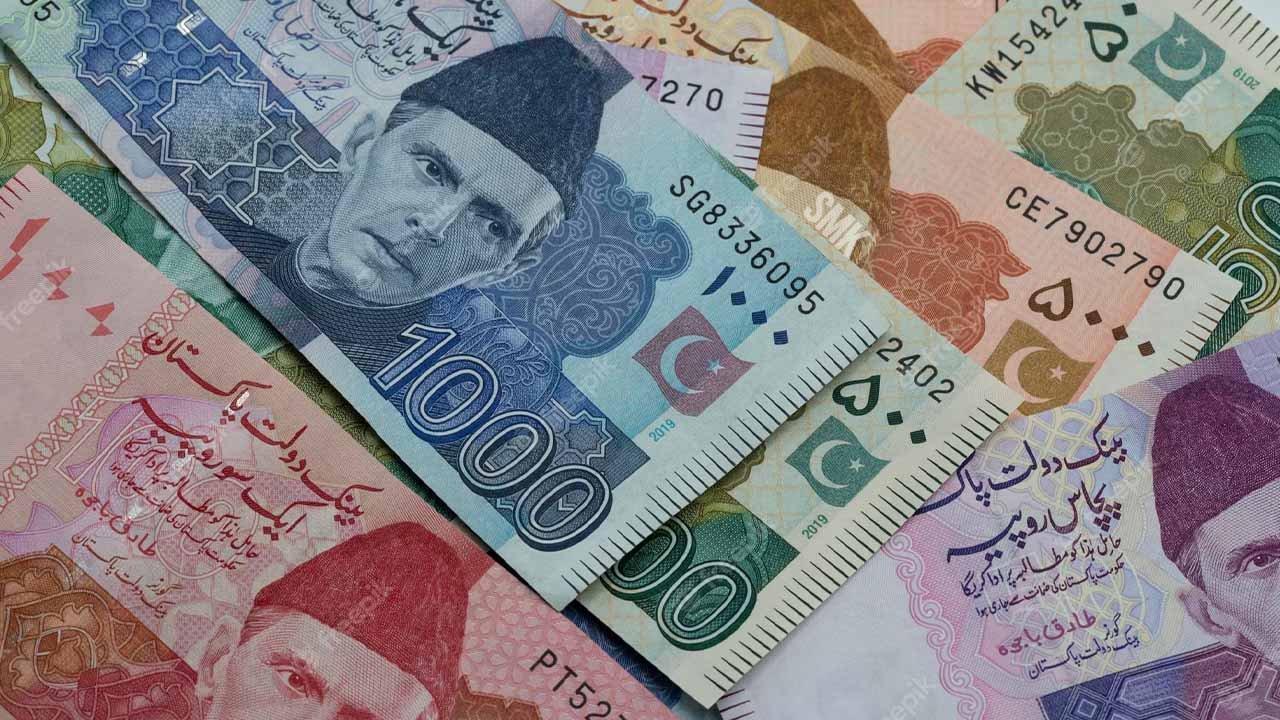
  • Pakistan to launch digital rupee to reduce printing and distribution costs

    Pakistan to launch digital rupee to reduce printing and distribution costs

    The government has opted to introduce a digital currency as a strategic move aimed at reducing expenses associated with currency printing and distribution.

    According to The News, this digital currency initiative is expected to contribute to the appreciation of the rupee’s value, bolster the overall economy, and facilitate extensive financial transactions.

    Much like the Chinese digital currency, where one unit is equivalent to one Chinese Yuan, the value of this digital currency will be pegged to the Pakistani rupee. The State Bank of Pakistan (SBP) will be the driving force behind this endeavour, offering government-backed guarantees similar to traditional currency notes. The SBP has already begun its efforts, enlisting the expertise of professionals for its development.

    To oversee this transformation, a specialised department known as the Central Bank Digital Currency has been established. This department is diligently assessing the cost benefits and feasibility of the digital currency to ensure seamless transactions upon its launch.

    The government’s objective is to gradually replace physical currency notes with digital currency while maintaining an 80:20 ratio, allowing currency notes to coexist as a backup in unforeseen circumstances.

    The adoption of digital currency will also yield significant savings by eliminating the expenses associated with printing, distributing, and disposing of physical notes. Additionally, every digital transaction will be meticulously documented, enhancing the effectiveness of monetary policy enforcement.

    Furthermore, digital currency holds substantial potential for advancing cross-border trade and investment and extending access to financial services for the unbanked population. The World Bank acknowledges its potential to enhance the financial industry’s efficiency, resilience, and reliability, with blockchain technology serving as one of the pivotal distributed ledger technologies supporting these advancements.

  • Chinese electric car maker set to invest big in Pakistan

    Chinese electric car maker set to invest big in Pakistan

    In a momentous development, a prominent Chinese electric vehicle (EV) manufacturer is making preparations to establish its EV production facility within Pakistan. However, their ambitions extend far beyond this endeavour, as they are also poised to inaugurate showrooms in key urban centres nationwide.

    This momentous announcement materialized following a productive meeting involving a delegation led by GU Xongquan, Assistant Chairman of the Xinjian Jingyi Cheng Group, and Amin Ullah Baig. Notably, Amin Ullah Baig holds the esteemed position of Vice President at the Federation of Pakistan Chambers of Commerce and Industry (FPCCI).

    GU Xongquan astutely emphasised a pivotal aspect of this development. In a country where automobiles hold paramount importance for commuting, and with gasoline prices incessantly soaring due to global oil market fluctuations, the exigency for alternative energy solutions is abundantly clear. Electric vehicles (EVs) have emerged as a seamlessly fitting answer to this imperative.

    This undertaking transcends the realm of mere vehicular transportation; it signifies a substantial stride towards embracing more environmentally sustainable mobility alternatives within Pakistan.

    In an era marked by an escalating emphasis on sustainability worldwide, the presence of a prominent Chinese entity in the EV sector within Pakistan holds the potential to revolutionize our automotive industry. It offers the promise of a greener, more sustainable future that aligns with global imperatives.

  • Pakistan’s exports surge by 22.45% in FY23-24’s first two months, crossing Rs1.27 trillion mark

    Pakistan’s export sector has demonstrated remarkable growth, achieving a substantial 22.45 per cent increase, reaching the noteworthy milestone of Rs1.27 trillion during the initial two months of the fiscal year 2023-24 (FY23-24).

    According to data released by the Pakistan Bureau of Statistics (PBS), exports from July to August 2023 stood at Rs1.27 trillion, marking a remarkable 22.45 per cent surge compared to the Rs1.04 trillion recorded during the corresponding period the previous year.

    In a year-on-year analysis, exports in August 2023 surged by an impressive 26.75 per cent, reaching Rs695.1 billion, as opposed to the Rs548.4 billion recorded in August 2022. Furthermore, on a month-to-month basis, exports surged by 19.62 per cent when juxtaposed with the Rs581.1 billion recorded in July 2023. The textile and knitwear sector emerged as the most substantial export contributor, accounting for an impressive Rs117.8 billion.

    In contrast, imports during July and August of the fiscal year 2023-24 experienced a modest decline of 2.42 per cent, totaling Rs2.3 trillion. This is in contrast to the imports recorded at Rs2.4 trillion during the corresponding period the previous year. Of note, Pakistan’s imports in August 2023 included Rs180.6 billion worth of petroleum products, followed by crude oil and liquefied natural gas (LNG) valued at Rs119.4 billion and Rs89.8 billion, respectively.

    When analyzed on a year-on-year basis, imports into Pakistan in August 2023 displayed a marginal 0.5 per cent decrease when compared to August 2022. On a month-on-month basis, imports into the country saw a significant uptick of 27.79 per cent in August 2023 when compared to the Rs1.04 trillion worth of imports in July 2023.

    According to Geo, this surge in exports is indeed promising as it holds the potential to bolster Pakistan’s diminishing foreign exchange reserves, a much-needed development in light of the challenging economic situation stemming from the depreciation of the Pakistani rupee

  • Pakistan Railways increases train fares amid record-high fuel prices 

    Pakistan Railways increases train fares amid record-high fuel prices 

    Pakistan Railways has announced a second fare increase this September in response to a significant surge in petrol and diesel prices. 

    According to ARY News, effective tomorrow, September 19th, train fares will see a 5 per cent hike across all categories, encompassing shuttles, passenger trains, express services, and freight. It’s worth noting that this increase excludes shuttle and passenger trains covering distances of 250 kilometres or less. 

    Over the past 1.5 months, the railway ministry has already implemented a cumulative 20 per cent fare increase. The previous increments occurred on August 10th (10 per cent) and September 2nd. 

    This decision by Pakistan Railways closely follows an earlier announcement this month, wherein a 5 per cent fare increase was revealed for all shuttle, passenger, express, and inter-city trains. 

    These adjustments coincide with a recent decision by the caretaker government to raise petroleum product prices by up to Rs14 per litre. This move is seen as contradictory to previous promises of relief to the general populace. 

    Of particular note is the substantial increase in petrol and diesel prices, with petrol rising by Rs26.2 per litre to reach a new price of Rs331.38 per litre and diesel increasing by Rs17.34 per litre, now priced at Rs329.18 per litre. 

    Within the span of just one month, the caretaker government has raised petrol prices by Rs58 per litre and diesel prices by Rs56 per litre, raising concerns among economic experts regarding a potential fresh wave of inflation triggered by these drastic fuel price hikes. 

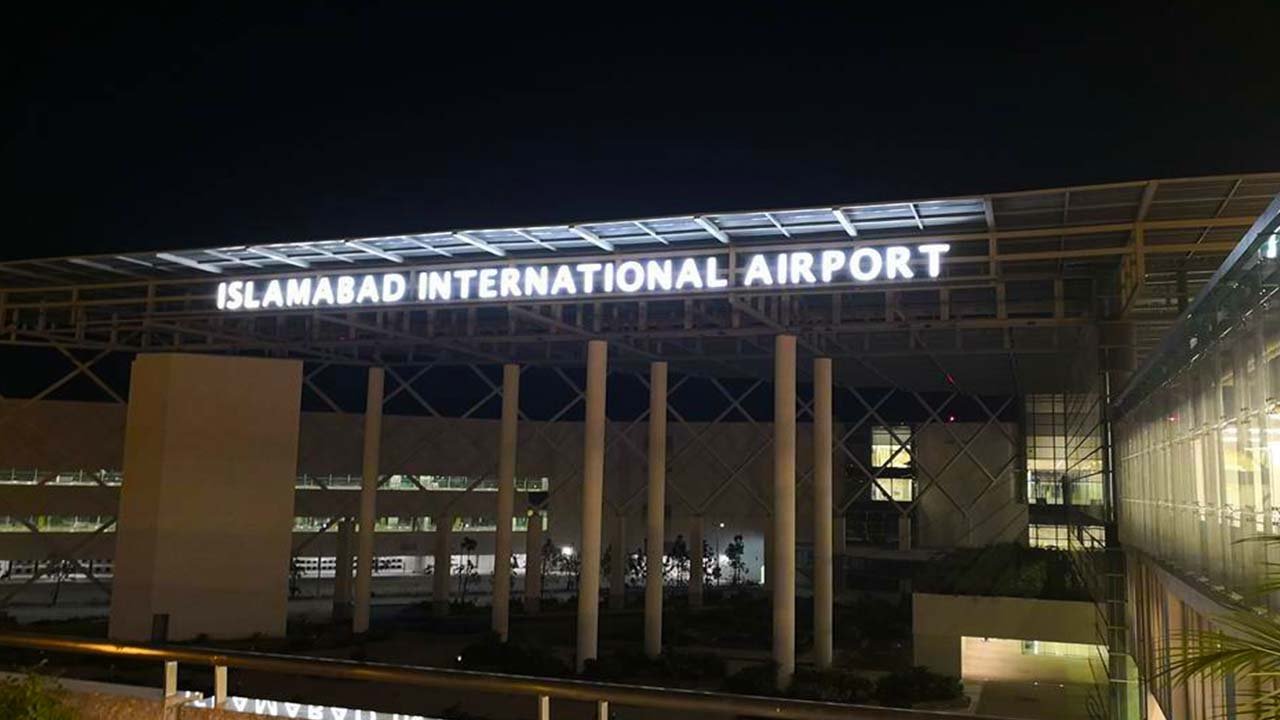
  • CAA gathers global players: Meeting in Dubai to discuss Islamabad airport outsourcing 

    CAA gathers global players: Meeting in Dubai to discuss Islamabad airport outsourcing 

    The Civil Aviation Authority (CAA) has convened a significant meeting in Dubai to address matters pertaining to the outsourcing of Islamabad airport. 

    Sources indicate that the CAA administration has scheduled this meeting for September 26 in Dubai, extending invitations to international companies interested in participating in the outsourcing of the airport. 

    This development follows the federal government’s issuance of tenders, soliciting applications for the outsourcing of Islamabad International Airport for a duration of 15 years. 

    According to ARY News, the Civil Aviation Authority has stipulated that interested bidders must submit their applications, along with a Rs5,000 fee, in favour of CAA by November 8. 

    Notably, the government recently made the decision to pursue the outsourcing of Karachi, Lahore, and Islamabad International Airports, drawing keen interest from the United Arab Emirates, Qatar, Turkey, China, and Saudi Arabia. 

    In response to this decision, CAA unions launched a protest movement, which has persisted despite attempts at negotiation by Aviation Minister Khawaja Saad. 

    The steadfast stance of CAA employees remains unwavering, with a spokesperson for the CAA Union asserting during a media address that the protest movement will persist until their demands are met. 

  • Saudi Arabia enters talks with Tesla for potential manufacturing facility in kingdom

    Saudi Arabia enters talks with Tesla for potential manufacturing facility in kingdom

    Saudi Arabia is engaged in preliminary discussions with the American electric vehicle manufacturer, Tesla, regarding the establishment of a manufacturing facility within the kingdom, as reported by The Wall Street Journal

    This development coincides with Turkish President Recep Tayyip Erdogan’s request to Tesla CEO Elon Musk to consider the construction of a vehicle production plant in Turkey. Furthermore, Elon Musk is scheduled to meet with Israeli Prime Minister Benjamin Netanyahu in California today.

    To incentivize Tesla, Saudi Arabia has been offering the company access to essential metals and minerals required for electric vehicle production, procured from various nations, including the Democratic Republic of the Congo. 

    This effort aligns with Saudi Arabia’s broader strategy to diversify its economy away from its dependence on oil. Notably, the kingdom’s sovereign wealth fund holds a majority stake in Lucid Group, an electric vehicle startup aiming to challenge Tesla’s market dominance.

    One proposal being explored by Saudi Arabia involves extending financial support to Trafigura, a prominent commodities trading company, for a struggling cobalt and copper project in the Congo. 

    This project could potentially serve as a source of crucial supplies for a prospective Tesla factory. Both Tesla and Trafigura have not yet provided responses to Reuters’ inquiries, while Saudi Arabia’s sovereign fund, the Public Investment Fund, has declined to comment.

    Elon Musk previously mentioned in May that Tesla was likely to select a location for a new factory by the end of the year. Presently, Tesla operates six factories worldwide and is in the process of constructing a seventh in Mexico as part of its ambitious global expansion strategy. 

    The company’s goal is to achieve annual vehicle sales of 20 million units by 2030, a significant increase from the approximately 1.3 million vehicles sold in 2022.