Category: Business

The most important business news, explained in a young, easy to understand way. News that affects young career professionals.

  • Business community finds hope as COAS Munir vows to tackle corruption and boost investment 

    Business community finds hope as COAS Munir vows to tackle corruption and boost investment 

     
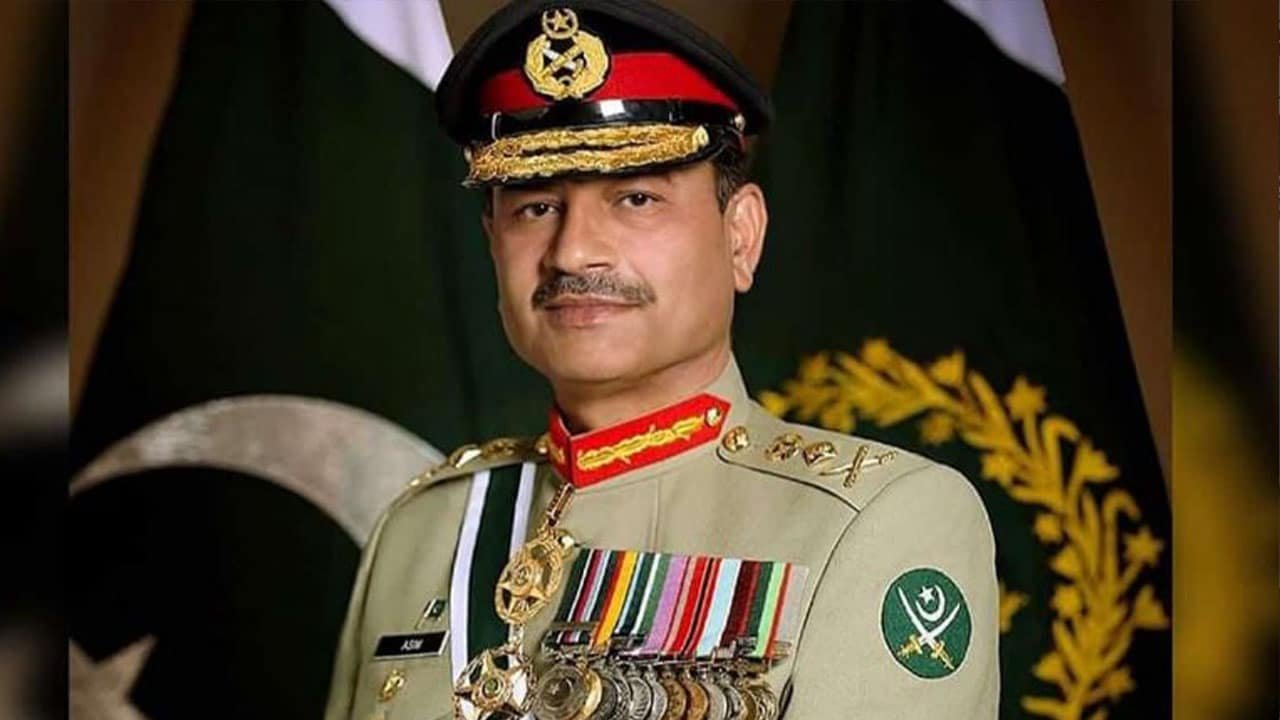
    In response to the pressing economic crisis facing the country, Chief of Army Staff (COAS) General Syed Asim Munir has pledged unwavering efforts to attract foreign investment and rejuvenate the economy, as reported by The News on Tuesday. General Munir made these assurances during a recent extensive meeting with members of the business community, where he engaged openly and candidly with them. 

    During an appearance on Geo News‘ “Aaj Shahzeb Khanzada Kay Sath” programme on Monday, President of the Federation of Pakistan Chambers of Commerce & Industry (FPCCI), Irfan Iqbal Sheikh, expressed optimism following their meeting with the army chief. He revealed that General Munir had conveyed discussions of a potential $25 billion investment from Saudi Arabia, encompassing sectors such as IT, minerals, agriculture, and defence. 

    Highlighting a pivotal development, General Munir disclosed that Saudi Crown Prince Mohammad Bin Salman had committed to depositing $10 billion of this investment in the State Bank of Pakistan (SBP), to be reimbursed in Pakistani rupees or goods, thereby bolstering foreign exchange reserves. 

    General Munir also acknowledged the bureaucratic obstacles hindering investment and emphasised the establishment of a Special Investment Facilitation Council (SIFC) to streamline processes and eliminate bureaucratic impediments. He assured that this initiative would protect investors from interference, bureaucratic hurdles, or legal complications. 

    Irfan Iqbal Sheikh further mentioned that Saudi Arabia and the United Arab Emirates (UAE) had both pledged $25 billion in investments, with Qatar and Kuwait following suit with similar commitments. 

    General Munir expressed determination to combat corruption, particularly by curbing land-grabbing and extortion mafias. To this end, he announced the formation of four task forces to address issues related to the Federal Board of Revenue of Pakistan (FBR), border control, smuggling, and social media, aiming to improve the overall situation. 

    Sheikh stressed that the business community had grown disillusioned but found renewed courage and hope through the army chief’s commitments. 

    Meanwhile, Business Group Chairman Zubair Motiwala noted the distinct approach of General Munir in engaging with traders compared to his predecessors. He highlighted the COAS’s efforts to revive the economy through engagements in Saudi Arabia, the UAE, and upcoming visits to Qatar and Kuwait. 

    Motiwala reported that General Munir had instructed the corps commander to prevent the influx of Iranian diesel into Karachi and issued directives to address land encroachments, corruption, and law enforcement issues. 

    General Munir also emphasised that only registered Afghan refugees would be allowed to stay in Pakistan, while the rest would need to return to their home country. He conveyed Saudi Crown Prince Mohammad Bin Salman’s concerns regarding corruption and bureaucracy in Pakistan. 

    Motiwala further disclosed discussions about the charter of the economy with General Munir, expressing hope that such substantial investments would significantly improve the economic conditions in the country. 

    He also pointed out that state-owned enterprises were incurring significant losses, amounting to Rs1,300 billion, and stressed the need for action, noting that political governments might not fully embrace privatisation but would seek to relieve this burden. General Munir expressed his understanding of the government’s approach to this issue and its commitment to addressing it comprehensively. 
  • IMF declines request for tariff adjustment and subsidy on high electricity bills 

    IMF declines request for tariff adjustment and subsidy on high electricity bills 

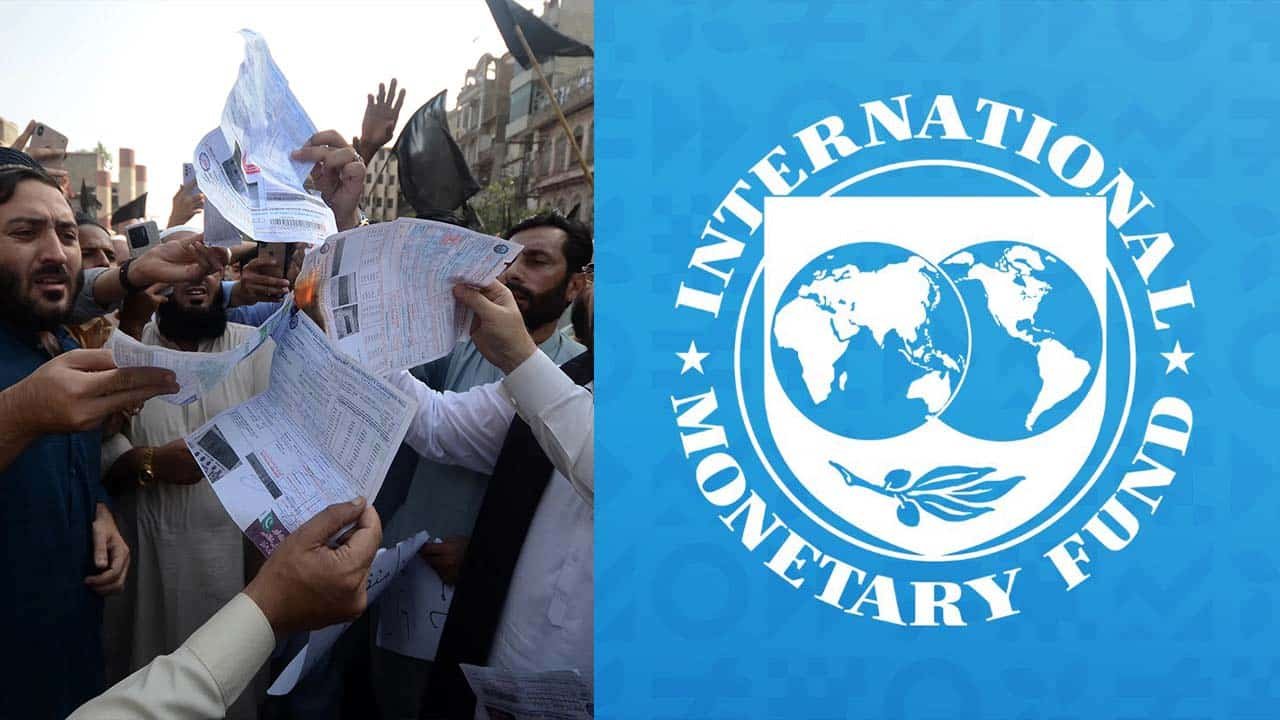
    In light of the government’s comprehensive deliberation on strategies to alleviate the burden of electricity bills, the International Monetary Fund (IMF) has declined the proposal for tariff adjustments or additional subsidies. This decision was made despite the government’s assertion that its bill collections for August had nearly met expectations, as reported by The News on Tuesday. 

    The IMF has expressed strong reservations regarding the government’s initiative to provide relief to economically disadvantaged individuals facing high power bills. Pakistan has consequently approached the global lender, requesting permission to phase in upcoming quarterly tariff adjustments (QTAs) and Fuel Price Adjustments (FPAs) amounting to Rs7.50 per unit over the next four to six months. 

    An authoritative source confirmed this request, stating, “Pakistan has sought the IMF’s approval for a gradual implementation of QTAs and FPAs over a four to six-month period, potentially incurring additional costs that will require mutual agreement.” 

    According to sources, the power sector continues to grapple with challenges, given the necessity of increasing tariffs by approximately Rs5 per unit in the current month and incorporating FPAs amounting to Rs2.72 per unit. Consequently, a cumulative tariff increase exceeding Rs7 per unit is anticipated.  

    The computation of QTAs will be based on losses incurred during the April-June period, reflecting reduced unit usage, increased interest payments, and fluctuations in exchange rates. Meanwhile, the FPA is calculated to address the rising prices of imported fuel, resulting in a potential hike of Rs7.50 per unit in September bills, subject to regulatory approval.  

    Simultaneously, the Ministry of Power asserts that its bill collection performance for August 2023 has improved and is nearing expectations. They contend that to mitigate the impact of inflated bills, they must seek the IMF’s approval for the staggered implementation of QTAs and FPAs.  

    According to calculations by the Ministry of Power for various consumer categories, those utilising 400 units can anticipate a reduction in power charges from Rs21,000 in August 2023 to Rs16,963 in September and further to Rs11,356 in October, factoring in QTAs and FPAs. Similarly, charges for consumers using 300 units are projected to decrease from Rs13,000 in August to Rs10,000 in September and Rs8,000 in October 2023. 

    With the onset of winter in October, it is anticipated that the issue of escalated bills will gradually subside. Additionally, officials are planning to approach the National Electric Power Regulatory Authority (Nepra) to determine the next tariff adjustments, considering seasonal usage trends. Given the peak usage during the summer months followed by a decline in winter, tariff adjustments will be tailored to accommodate these seasonal fluctuations. 

    The Prime Minister has instructed the Ministry of Finance to develop a strategy for economic stability in Pakistan. During a meeting with Interim Finance Minister Shamshad Akhtar, the current economic situation was discussed. 

    The government aims to find innovative solutions to ease the burden on electricity consumers, addressing issues like circular debt, power theft, and taxes with short-term measures. 

    The caretaker government’s primary goal is to facilitate early general elections while upholding constitutional obligations such as constituency delimitation following the population census. The focus is on restructuring fiscal and monetary policies for economic revitalization. 

  • Young Pakistanis in the UK lead in unemployment, govt stats confirm 

    Young Pakistanis in the UK lead in unemployment, govt stats confirm 

    Official data from the United Kingdom’s government shows that among different ethnic groups in the country, young Pakistanis are the least active in terms of work and education. 

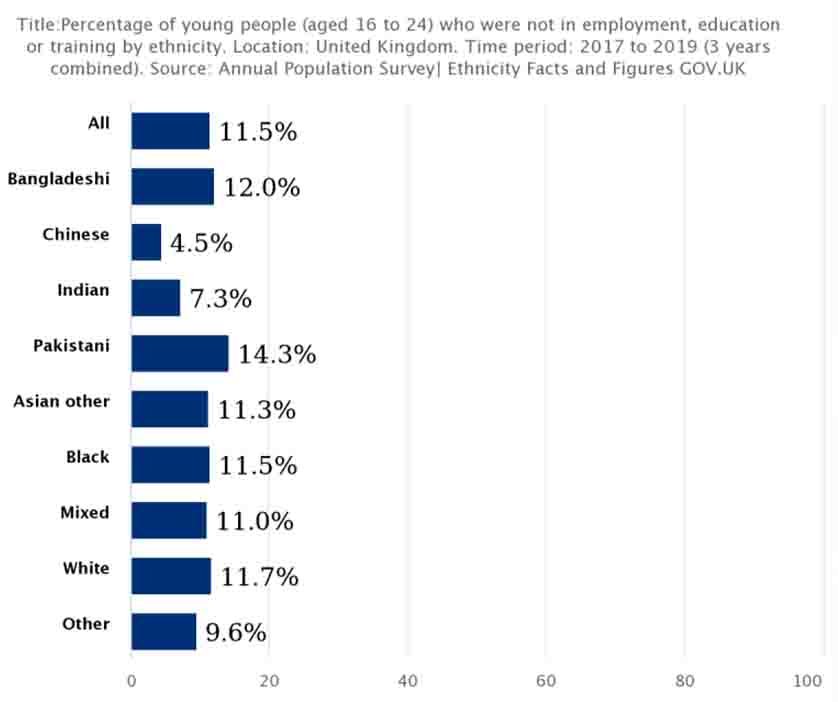
    The dataset in question is categorised as “unemployment,” encompassing individuals aged 16 to 24 who are neither employed nor engaged in any form of training or educational pursuits. This data was systematically collected over a three-year period spanning from 2017 to 2019. 

    Notably, within the spectrum of ethnic backgrounds in the UK, individuals of Pakistani origin stand out with the highest unemployment rate at 14.3 per cent, surpassing their counterparts from nine other nations. The next highest rate pertains to individuals of Bangladeshi descent at 12 per cent, while young individuals of Indian heritage exhibit a comparatively lower inactivity rate of 7.3 per cent, as indicated by the data. 

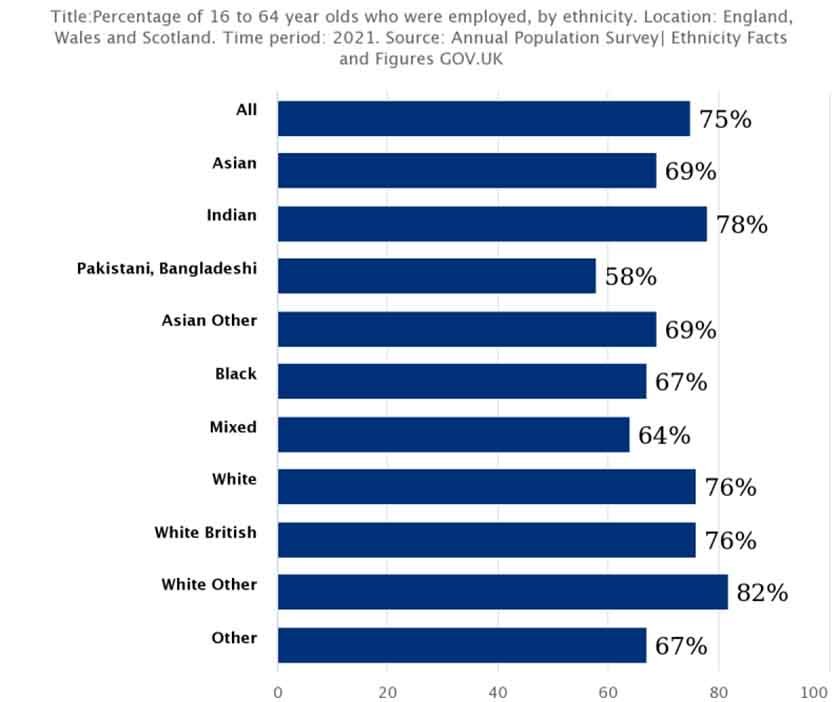
    A similar pattern is discernible when examining the overall employment data for the country, which encompasses individuals aged 16 to 64. In this context, Pakistani and Bangladeshi individuals are grouped together and collectively exhibit the lowest employment rate, standing at a mere 58 per cent, the lowest among ten defined categories. In contrast, individuals of Indian descent display a more favourable employment rate at 78 per cent, trailing only those of non-British white origin, of whom 82 per cent are gainfully employed. 

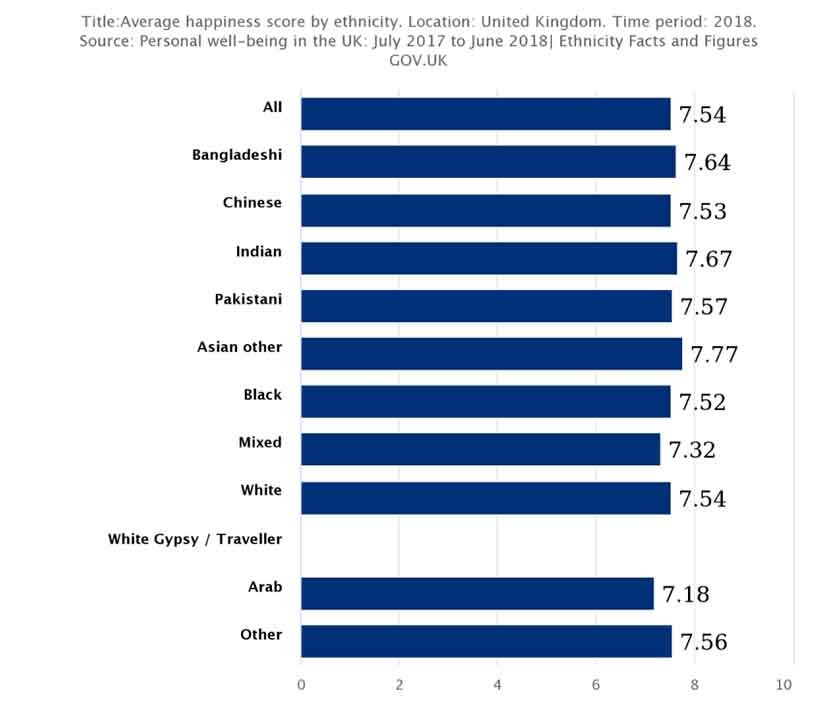
    It is worth noting, however, that the observed trends in employment and unemployment figures do not appear to have a conclusive impact on the overall happiness score, as the data does not differentiate by age and represents the broader community. The happiness index assigns a score on a scale of 10, and according to the data, individuals of Pakistani descent in the UK have a happiness score of 7.57, ranking as the fourth highest among the ten surveyed ethnic groups. 

    While individuals of Indian, Bangladeshi, and other ethnic backgrounds report higher levels of happiness than those of Pakistani origin, individuals of Arab, black, Chinese, and even white ethnicities exhibit lower happiness scores in comparison. 

  • IMF’s ‘yes or no’ decision nears on relief for electricity bills

    IMF’s ‘yes or no’ decision nears on relief for electricity bills

    In the midst of extensive protests regarding soaring electricity charges, the interim government has reportedly devised a strategy aimed at alleviating the financial burden on electricity consumers in the country.  

    According to Geo News, the interim government is preparing a relief package that will grant up to Rs3,000 in relief to customers who use up to 300 units of electricity in their October bills. Furthermore, those facing electricity bills between Rs60,000 and Rs70,000 stand to benefit from a significant reduction of Rs13,000. 

    Simultaneously, discussions between the International Monetary Fund (IMF) and the interim government are ongoing, focusing on providing relief to electricity consumers. 

    In a separate report by The News, it’s revealed that the IMF, headquartered in Washington, has requested additional data from the Power Division to inform its decision regarding various proposals to address the impact of high bills in August and September. 

    “We have shared the required data with the Fund people hoping that IMF may today (Monday) come up with its response with a yes or no to the assertions of the Finance and Power Divisions, seeking permission for relief to inflation-stricken people in electricity bills,” shared sources involved in discussions with the IMF. 

    Currently, officials from both the Power and Finance divisions are engaged in intensive discussions with IMF representatives, considering the data associated with proposed measures to alleviate power tariffs and their potential effects on circular debt, cash flow, and potential delays in Independent Power Producers (IPPs) payments, ensuring the stability of the power sector. 

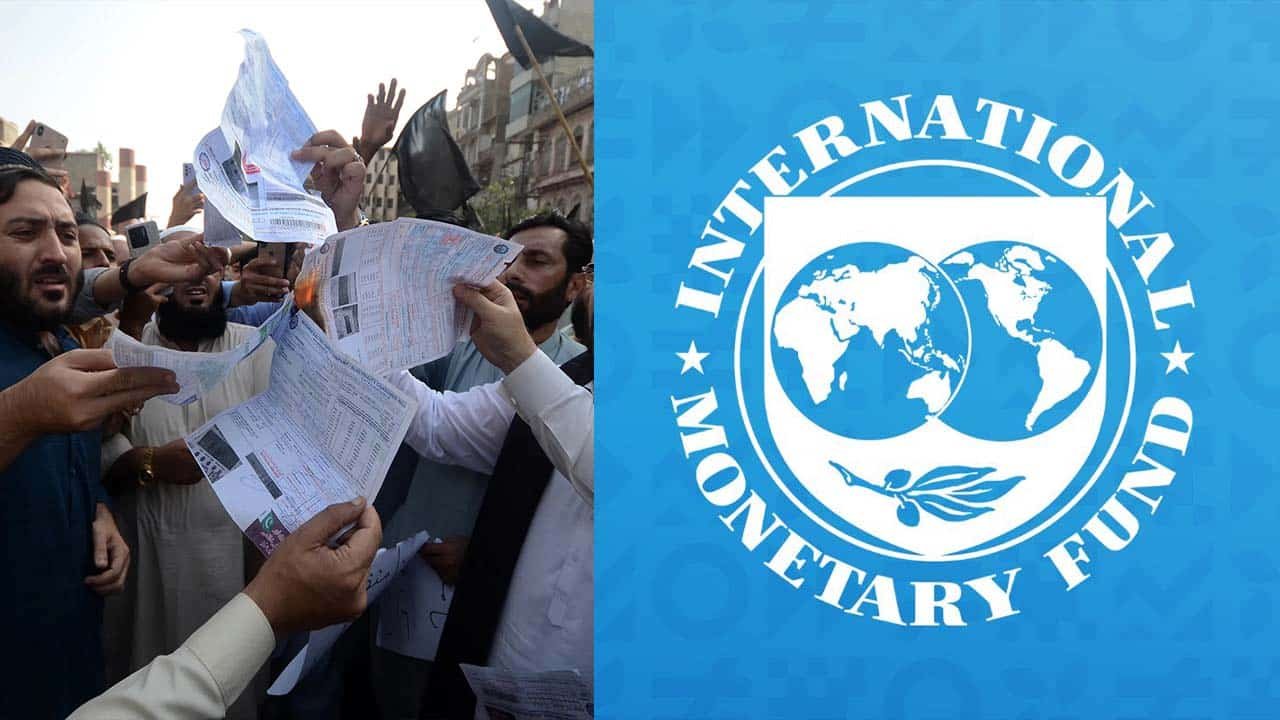
    In response to continuous protests by citizens and traders against soaring power bills and added taxes, the government is actively seeking to convince the global lender to grant immediate relief to electricity consumers in a nation already grappling with severe inflation. 

  • CAA employees announce nationwide protests, demand DG’s removal

    CAA employees announce nationwide protests, demand DG’s removal

    The Civil Aviation Authority (CAA) officers and employees unions have formally announced their intent to hold nationwide airport protests today. Furthermore, the unions have collectively resolved to initiate a campaign aimed at the removal of the current Director-General (DG) of the CAA.

    According to a report by ARY News, these demonstrations are a direct response to the federal government’s recent decision to contract out the management of three prominent airports, which has elicited strong opposition from CAA personnel.

    In the month of July, CAA employees had previously expressed their objections to the outsourcing of Pakistan’s three major airports.

    In this regard, a protest was organized at Lahore’s Allama Iqbal International Airport, led by the CAA’s union and officer association.

  • Karachi police seizes smuggled Iranian diesel worth nearly Rs1 crore

    Karachi police seizes smuggled Iranian diesel worth nearly Rs1 crore

    On Sunday, Karachi police successfully thwarted an attempt to smuggle Iranian diesel valued at Rs9.6 million into the city. 

    According to ARY News, during an operation in Orangi Town, the police confiscated an oil tanker carrying 31,000 liters of Iranian diesel with the same estimated value. 

    Two individuals, Muhammad Qasim and Muhammad Yaseen, were apprehended and subsequently handed over to Pakistan Customs authorities.

    On Friday, the Caretaker Prime Minister, Anwaarul Haq Kakar, issued strict instructions to customs authorities and law enforcement agencies to intensify efforts in combatting the smuggling of sugar, petroleum products, urea, agricultural items, and other commodities. 

    These directives were issued during a high-level meeting chaired by the caretaker premier, which included the presence of Caretaker Federal Minister for Trade Gohar Ejaz, Minister for Interior Sarfraz Ahmed Bugti, Minister for Petroleum Muhammad Ali, Advisor to the PM Ahmed Cheema, federal secretaries, the Federal Board of Revenue chairman, and senior officers from law enforcement agencies.

  • Inflation in Pakistan stays above 27% despite IMF reforms

    Inflation in Pakistan stays above 27% despite IMF reforms

    Pakistan continues to grapple with soaring inflation, with the rate holding steady at 27.4 per cent in August, according to data released on Friday. This persistent inflationary pressure is partially attributed to the reforms mandated as part of the IMF loan agreement, which have complicated efforts to stabilise prices and curb declines in the national currency, the rupee.

    The South Asian nation is treading cautiously on its path to economic recovery, with a caretaker government at the helm following the approval of a $3 billion loan programme by the International Monetary Fund (IMF) in July, averting a potential sovereign debt default.

    However, the conditions tied to this bailout, including the relaxation of import restrictions and the removal of subsidies, have contributed to a surge in annual inflation. In May, inflation reached a staggering 38.0 per cent, setting a new record. Concurrently, interest rates have risen, and the rupee has experienced historic lows, with a 6.2 per cent decline in the currency’s value last month.

    While the August data from Pakistan’s statistics bureau indicates a slight easing from July’s 28.3 per cent inflation rate, food inflation remains alarmingly high at 38.5 per cent. Authorities have further exacerbated the situation by raising gasoline and diesel prices to record highs on Friday.

    These worsening economic conditions, coupled with escalating political tensions ahead of a national election scheduled for November, have triggered sporadic protests. Jamaat-e-Islami has announced a nationwide strike in response to the increased power tariffs.

    Every day, Pakistanis are feeling the pinch and struggling to make ends meet. Waseem Ahmed, a bank employee in Islamabad, lamented the plight of the middle class, stating, “More than 60 to 70 per cent of my salary is spent on bills and petrol. Where will we get basic staples from? This is why people are contemplating suicide,” he told Reuters.

    According to ARY News, Mohammed Sohail, CEO of Topline Securities, a Karachi-based brokerage firm, acknowledged that August’s inflation reading aligns with expectations. However, he cautioned that the depreciating rupee and rising energy prices may prevent a significant year-on-year decline in inflation, contrary to earlier government projections that had anticipated a drop to 22 per cent by the end of the fiscal year running until June 31.

    Pakistan’s central bank, in its last monetary policy statement in July, held benchmark interest rates steady at 22 per cent and expressed optimism that inflation would follow a downward trajectory over the ensuing 12 months. However, the current economic challenges present formidable hurdles to achieving that goal.

  • PIA’s controversial decision: UK staff appointments on high salaries amid financial crisis

    PIA’s controversial decision: UK staff appointments on high salaries amid financial crisis

    In a recent development, Pakistan International Airlines (PIA) has come under scrutiny for making new staff appointments in the United Kingdom (UK) despite grappling with a severe financial crisis and a three-year ban on direct flights to the United Kingdom (UK).

    According to ARY News, the national flag carrier, PIA, has faced mounting challenges in recent years, with the ban on direct flights to the UK being a significant blow to its operations. Despite these challenges, the airline has proceeded to appoint officers and staff members with substantial salaries.

    Notably, the PIA country manager has been appointed with an annual salary of £70,000, while the passenger sales manager and finance manager will each receive £55,000 annually. Furthermore, a manager has been assigned to the Manchester station with a yearly compensation package of £55,000, coupled with other perks.

    Responding to these appointments and the ongoing financial crisis, a PIA spokesperson explained that the airline has continued its flight operations in the UK by collaborating through code-sharing agreements with Turkish Airlines, which generates an annual revenue of £14 million. The spokesperson emphasised that a mere 1.8% of these earnings are allocated to PIA staff in the UK.

    The PIA spokesperson also expressed optimism about the resumption of direct flight operations between Pakistan and the UK, citing this as a reason for the recent appointments of the country manager and sales manager.

    However, the controversy surrounding PIA deepened when the Federal Board of Revenue (FBR) froze the airline’s bank accounts due to non-payment of more than Rs8 billion in taxes. A total of 26 bank accounts belonging to the national carrier have been locked by the FBR.

    The FBR revealed that PIA had pledged to settle Rs2 billion in dues under Federal Excise Duty in August, but it failed to honour this commitment, leading to the account freeze.

    Despite this financial setback, the PIA spokesperson reassured the public that the closure of bank accounts would not disrupt Pakistan International Airlines’ flight operations. The airline remains committed to maintaining its services in the UK while navigating this challenging period.

    As the situation unfolds, stakeholders and industry observers continue to monitor PIA’s financial stability and the progress towards the resumption of direct flights between Pakistan and the UK.

  • WASA Faisalabad lays off over 700 daily wage workers

    WASA Faisalabad lays off over 700 daily wage workers

    WASA Faisalabad has laid off over 700 daily wage workers due to the financial crisis, as the country battles with unprecedented inflation.

    According to Samaa News, Faisalabad WASA has also issued a notification to the same. According to the Director Admin, he is unable to bear the expenses so daily wager employees will no longer be working in the department.

  • Pak Suzuki halts motorcycle production amidst raw material shortage

    In response to an acute shortage of raw materials, Pak Suzuki Motor Company (PSMC) has once again announced the suspension of its motorcycle production. This marks the third production halt in the current fiscal year, underscoring the challenges faced by Pakistan’s automotive industry.

    According to a report by The News, the automobile manufacturer formally communicated its decision through a notice to the Pakistan Stock Exchange (PSX). The production halt will extend for 12 days, commencing on September 1 and concluding on September 12, 2023. This move follows previous shutdowns from August 18 to 31 and from July 31 to August 15, 2023, due to inventory constraints, as reported by the company’s secretary.

    It’s worth noting that while production may be on hold, regular operations will persist at the vehicle manufacturing plant, as clarified in the bourse filing.

    Pak Suzuki’s ongoing struggle with raw material shortages can be traced back to July of the preceding year, primarily resulting from challenges in importing essential components. The nation’s dwindling foreign exchange reserves have further exacerbated these import disruptions.

    Sunny Kumar, an analyst at Topline Securities, provided insight into the impact of these disruptions: “PSMC produced 19,293 units with capacity utilisation of 26% in 1H2023 compared to 76,325 units produced with capacity utilisation of 102% in 1H2022.”

    In a glimmer of hope, the company’s management anticipates an economic rebound in FY24, driven by an upturn in agriculture output and eased import restrictions, with expected improvements in manufacturing and construction activities.

    Pak Suzuki’s predicament is not unique, as other prominent automakers such as Honda Atlas and Indus Motor Company, the local manufacturer of Toyota vehicles, have also faced repeated production stoppages due to raw material shortages. This scarcity has had a cascading effect, impacting the automobile parts industry and causing intermittent production halts.

    In a related development, Agriauto Industries Limited, a prominent automotive parts manufacturer, has announced a partial plant closure in September due to decreased production. Furthermore, Agriauto Stamping Company Pvt. Ltd., a wholly-owned subsidiary of the company, will also undergo a partial shutdown during the same period, as confirmed by the company secretary.

    The announcement of Pak Suzuki’s latest production halt has raised concerns among employees, stakeholders, and the general public. The motorcycle plant, a significant division within the company, plays a pivotal role in employment generation in the country.

    This situation has far-reaching implications, as experts anticipate that the closure will not only impact the company’s workforce but also reverberate through the broader economy. An industry observer emphasised the need for coordinated efforts between stakeholders and government bodies to address the root causes of raw material shortages and prevent further disruptions in Pakistan’s automotive sector.