Category: Business

The most important business news, explained in a young, easy to understand way. News that affects young career professionals.

  • Free electricity extended to President, judges, and NAB chairman, contrary to PM’s claims

    Free electricity extended to President, judges, and NAB chairman, contrary to PM’s claims

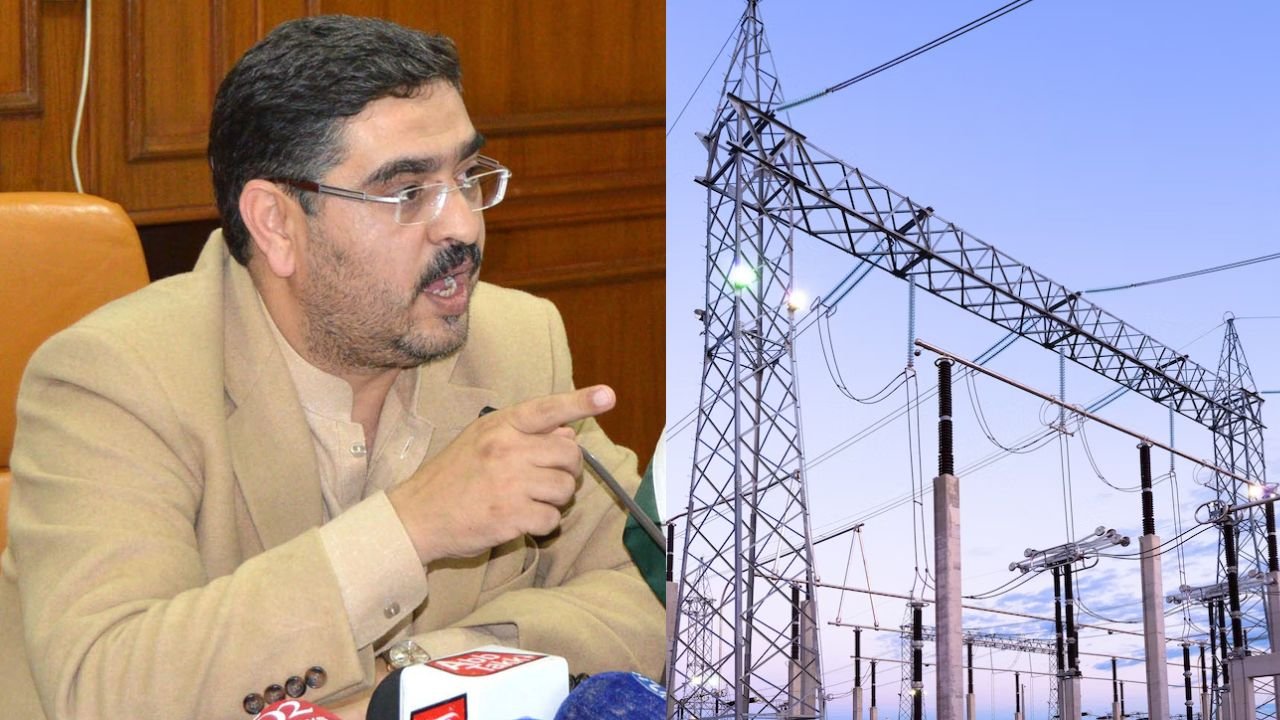
    Prime Minister Anwaar ul Haq Kakar’s recent statement regarding free electricity for judges in Pakistan has sparked controversy, as it appears to be at odds with existing policies and practices.

    In a recent address, the Prime Minister asserted that only Wapda’s employees, including retirees, are entitled to free electricity, and this privilege is not extended to judges or other officials. However, a closer examination of the facts suggests that the Prime Minister may have been misinformed., according to Geo.

    Contrary to the Prime Minister’s statement, serving judges of the Supreme Court and High Courts in Pakistan enjoy the benefit of having their utility bills, including electricity, covered by the government. This includes both current and retired judges.

    For retired Supreme Court judges, the provision of free electricity extends up to 2000 units per month, while retired High Court judges receive 800 units per month without incurring any charges. The President and Prime Minister, whether in office or after retirement, are also entitled to free utilities, including electricity, without any specified limits.

    It’s worth noting that even former President’s receive a monthly allowance of 2000 units of electricity, with the costs borne by taxpayers’ funds.

    Additionally, the National Accountability Bureau (NAB) chairman enjoys similar privileges to those of a Supreme Court judge, which includes the provision of free electricity. However, there is no official confirmation regarding the entitlements of services’ chiefs as claimed by the Prime Minister.

    The President’s Salary, Allowance and Privileges Act of 1975, amended in 2018, specifies in Section 7 that the actual charges for electricity and gas consumption shall be covered each year for the President. Similarly, the President’s Pension Act outlines provisions for electricity, gas, and water supplies.

    The transparency of these policies was underscored in October 2020 when Justice Faez Isa and his wife disclosed their income tax and asset details. These documents clearly indicated that post-retirement benefits for a Supreme Court judge include 2000 units of electricity, 25 HM3 of gas, water, and 300 litres of petrol per month.

    Furthermore, the High Court Judges (Leave, Pension, Privileges) Order of 1997 not only addresses the payment by the government for electricity, gas, and water but also states in Section 28 that retired judges and their spouses are entitled to certain benefits, including 800 units of electricity per month and 25 HM3 of gas per month.

  • One rupee relief: Petroleum Division reveals ‘benefit’ of importing Russian crude

    The Petroleum Division has presented a comprehensive briefing to the caretaker Prime Minister, Anwaar ul Haq Kakar, regarding the potential impact of Russian crude oil on petroleum prices in Pakistan.

    According to The News, the Petroleum Division highlighted that the projected benefit to consumers resulting from the import of Russian crude oil remains relatively modest, at approximately Re1 per litre for both petrol and diesel. This assessment takes into account various operational intricacies and market dynamics.

    Importing Russian crude oil carries two notable risks, the division stated. The first pertains to the duration of transportation, which spans between 30 and 36 days, and the second revolves around the production of furnace oil.

    Approximately 60 per cent of furnace oil generated from Russian crude must be exported, incurring a 25 per cent loss in the process.

    It is significant to note that, currently, only the Pakistan Refinery Limited (PRL) has expressed readiness to refine Russian oil. However, if PRL assumes the responsibility of refining Russian oil exclusively, only a nominal Re1 relief can be passed on to consumers for each litre of gasoline and diesel.

    In a potential collaborative effort, the prime minister was informed that if PARCO (Pak-Arab Refinery Company) and NRL (National Refinery Limited) jointly undertake the refining of Russian oil, the benefit to consumers could potentially increase to Rs3 per litre. The magnitude of this relief would be contingent on the volume of Russian crude involved in the process.

    PARCO, as a comparatively modern refinery with superior facilities, is expected to contribute to enhanced yields from Russian crude and, consequently, a reduction in the production of furnace oil. However, it was also revealed that both PARCO and NRL have declined the proposition to refine Russian oil.

    The caretaker Prime Minister, Anwaar ul Haq Kakar, has expressed the need for a thorough evaluation of the situation, considering the potential benefits, risks, and the willingness of refineries to participate in the process. The decision regarding the import and refining of Russian crude oil remains a pivotal concern as Pakistan navigates its energy landscape in the coming days.

    This development emphasises the intricate balance between economic considerations and strategic decisions in the energy sector that Pakistan faces as it grapples with global oil market dynamics.

  • Relief plan for electricity bills to be revealed in 48 hours: PM Kakar

    Relief plan for electricity bills to be revealed in 48 hours: PM Kakar

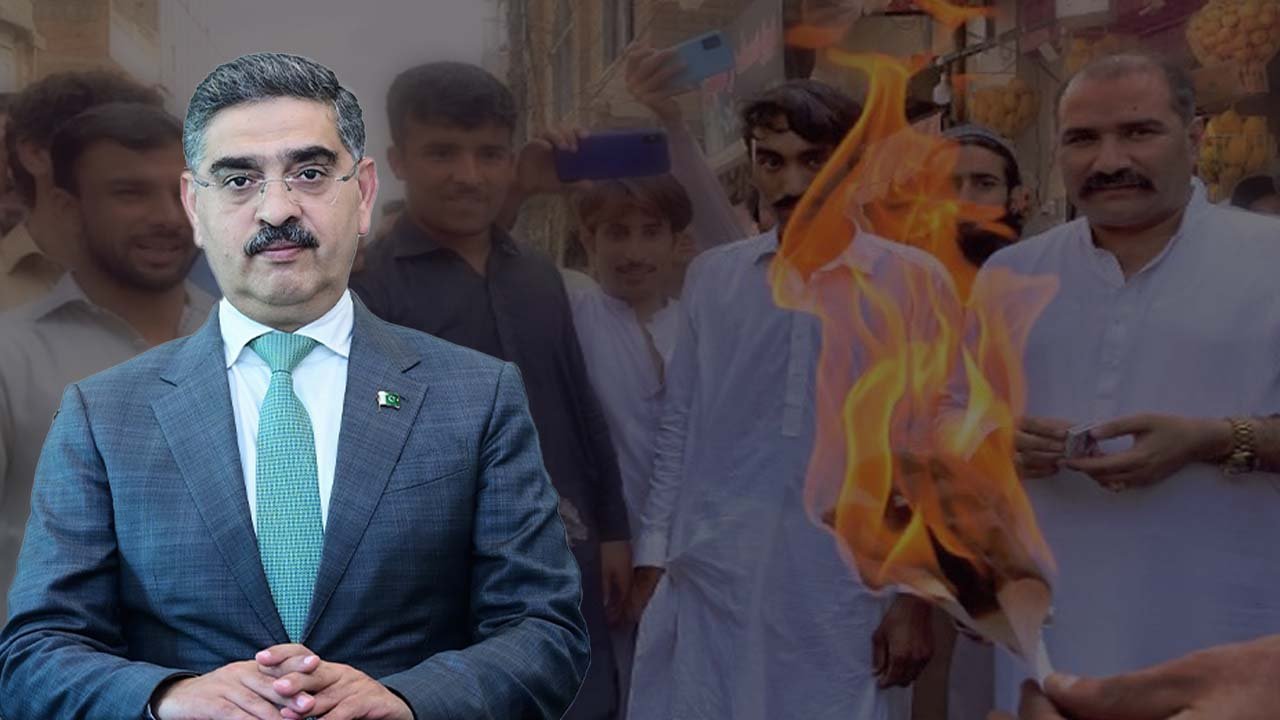
    Caretaker Prime Minister Anwaar ul Haq Kakar made an announcement on Thursday, revealing that his administration will unveil a relief plan for addressing the widespread protests triggered by escalating electricity bills within 48 hours.

    PM Kakar informed me that his government conducted an exhaustive review of electricity bills spanning the last two months. He highlighted that all institutions were questioned regarding their utilisation of complimentary electricity and stressed that the issue of exorbitant electricity bills needed a measured perspective.

    According to Geo, the caretaker prime minister underscored that while the electricity bills must be settled, it is imperative to comply with the terms outlined by the International Monetary Fund (IMF). He attributed the surge in electricity bills to independent power producers (IPPs) and transmission line losses, emphasising that collaboration with the IMF was underway to address the matter. Despite the prevalent inflation, PM Kakar argued against an extensive strike.

    In addressing the allocation of free electricity units, PM Kakar assured that the military does not avail itself of free electricity; rather, it is funded through the defence budget.

    Additionally, he clarified that the judiciary does not enjoy complimentary electricity, and in the Wapda sector, only certain employees from grades 1 to 16 benefit from this provision. Employees in grades above 17 receive free units.

    PM Kakar expressed his perspective that most protests originate from employees in grades 1–16. He suggested redirecting financial assistance towards officers in grades 17 to 22 instead of offering free electricity. He emphasised the need for stakeholders to formulate a policy within the following 48 hours.

    Regarding the impending general elections, PM Kakar assured that the elections would occur as scheduled, with the understanding that the Election Commission of Pakistan holds the authority in this matter. He asserted that adherence to the interpretation of the law by the Supreme Court is essential and should be respected.

    Frustrated citizens, grappling with soaring inflation, have been participating in demonstrations against substantial increases in electricity tariffs and heightened taxes nationwide.

    In light of the ongoing public outcry over exorbitant electricity bills, the caretaker government is contemplating the possibility of allowing individuals burdened by inflation to settle bills for up to 400 units in six-month installments. This proposal emerged following discussions held during a cabinet meeting, which also addressed the influence of IMF conditions on elevated energy costs.

    During the session, caretaker Finance Minister Dr Shamshad Akhtar updated the attendees about ongoing negotiations with the IMF, highlighting its pivotal role in the escalated energy tariffs.

  • Petrol price increased to historic high of Rs305.36 per litre

    Petrol price increased to historic high of Rs305.36 per litre

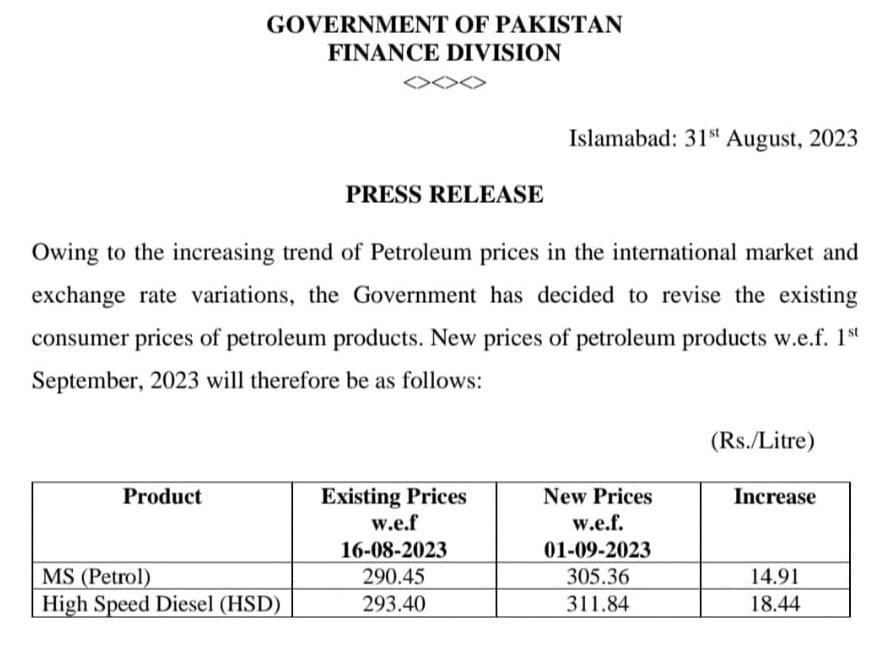
    For the first time in Pakistan’s history, the price of petrol has crossed the Rs300 mark due to a recent hike of Rs14.91. This brings the new petrol price to Rs305.36 per litre. The diesel price has also increased by Rs18.44, now at Rs311.84 per litre.

    The government has attributed these revisions to the upward trajectory of global petroleum prices and the consequential fluctuations in exchange rates.

    A statement issued by the finance ministry highlights that due to the escalating trend of petroleum prices in the international market and the subsequent shifts in exchange rates, the Government has opted to recalibrate the prevailing consumer prices of petroleum products.

    In the days ahead, the effects of these significantly heightened petrol and diesel prices will become evident. These price fluctuations are poised to have a substantial impact on individuals who rely on personal vehicles, such as bikes and cars, as well as those who depend on public transportation services.

  • IMF should help Pakistan uphold right to electricity, says HRW

    IMF should help Pakistan uphold right to electricity, says HRW

    For the past week, Pakistan has witnessed extensive protests against the recent surge in electricity prices. In several cities, these protests escalated into violence.

    The government-sanctioned price increase arrives at a critical juncture as Pakistan grapples with one of the most severe economic crises in its history. This crisis imperils the fundamental rights of millions, including access to healthcare, nutrition, and a satisfactory standard of living.

    According to Human Rights Watch, successive Pakistani governments have failed in reforming the country’s energy sector, contributing to the current crisis. The recent surge in prices is linked to a substantial US$3 billion agreement between the International Monetary Fund (IMF) and Pakistan.

    This pact, sanctioned in July 2022, stipulates the government’s obligation to eliminate energy and fuel subsidies, transition to a market-driven exchange rate, and implement tax increments.

    While Human Rights Watch fundamentally opposes fossil fuel subsidies due to their adverse climate impact, the removal of these subsidies without substantial investment in social security often results in disproportionate repercussions for individuals with low incomes.

    Elevated electricity prices can further elevate the costs of essential commodities like food, housing, and services.

    Recognising the right to an adequate standard of living, Human Rights Watch asserts that access to dependable, secure, clean, and affordable electricity without discrimination is imperative.

    Given the situation, it is imperative for the IMF to conduct a comprehensive assessment of the consequences of these adjustments. Rather than abrupt subsidy removal, the IMF should establish a comprehensive reform strategy aimed at mitigating price escalations and facilitating a seamless transition to sustainable energy sources.

    Such reforms could encompass the implementation of a universal social protection system designed to extend benefits to individuals at higher risk of income insecurity, including children, elderly citizens, and people with disabilities.

  • SBP likely to hike key policy rate by up to 300 basis points next month

    SBP likely to hike key policy rate by up to 300 basis points next month

    The Monetary Policy Committee (MPC) of the State Bank of Pakistan (SBP) will likely meet at its upcoming meeting to decide on the key policy rate, and the market anticipates a possible rate increase of up to 300 basis points.

    According to the analysts contacted by the Brecorder, the SBP is likely to increase the rate from its current historic high of 22 per cent. As per the advance calendar issued in July, the SBP is currently slated to hold its MPC meeting on September 14.

    Notably, the central bank has previously taken the initiative to declare changes in its key policy rate through ’emergency’ meetings, similar to what occurred in June.

    Market speculation hints that the central bank might adopt a more patient approach this time, making an emergency meeting less probable.

     Tahir Abbas, the Head of Research at Arif Habib Limited (AHL), foresees a rate hike ranging between 100 and 150 basis points.

    He emphasised, the inflation rate is projected to remain elevated not only in August but also in the upcoming months. Furthermore, the persistent depreciation of the currency might compel the SBP to push interest rates upwards.

    Abbas added, “We expect a policy rate hike of around 100-150 bps.”

    In a previous report, AHL stated that headline inflation is expected to climb higher in August, surpassing the 28.3 per cent figure recorded in July 2023.

  • Dramatic drop: Pakistan Stock Exchange crashes over 1,700 points amid economic concerns

    Dramatic drop: Pakistan Stock Exchange crashes over 1,700 points amid economic concerns

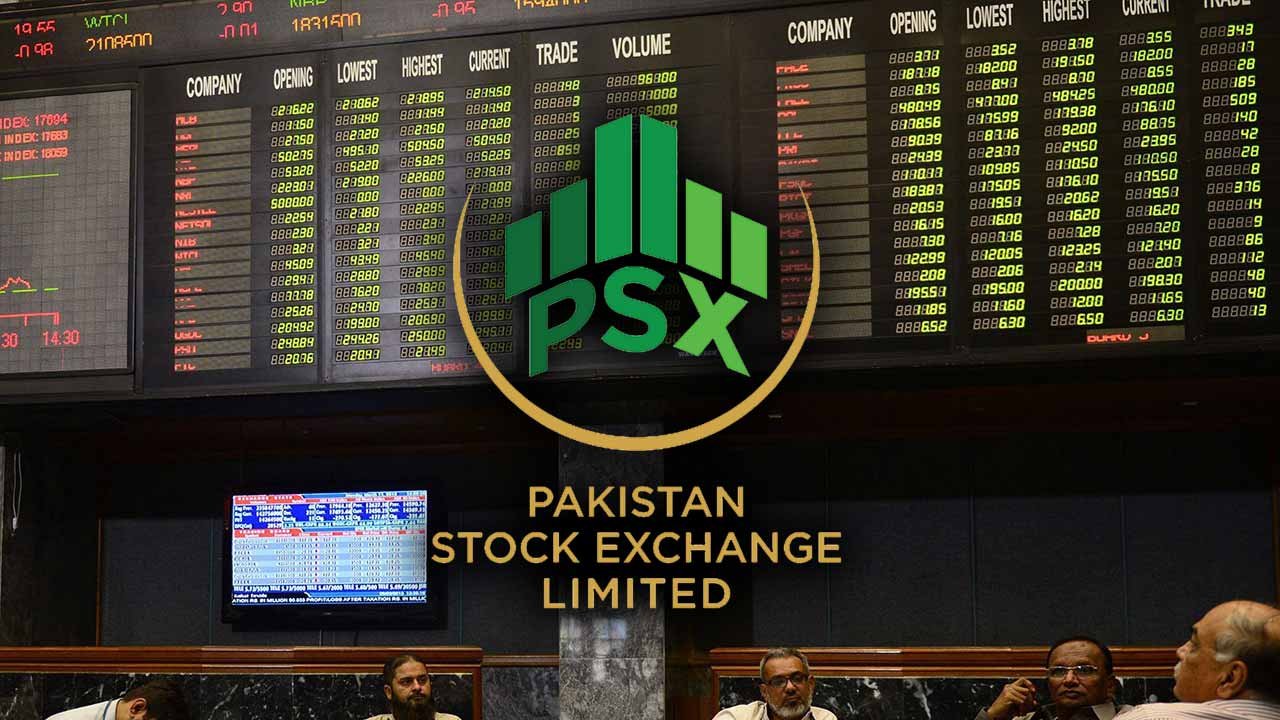
    On Thursday, the Pakistan Stock Exchange (PSX) encountered a challenging session as the primary index witnessed a substantial decline of 3.86 per cent, reflecting a loss of 1,784 points by 2:53 pm. This notable downturn was attributed to growing concerns pertaining to the nation’s economic landscape.

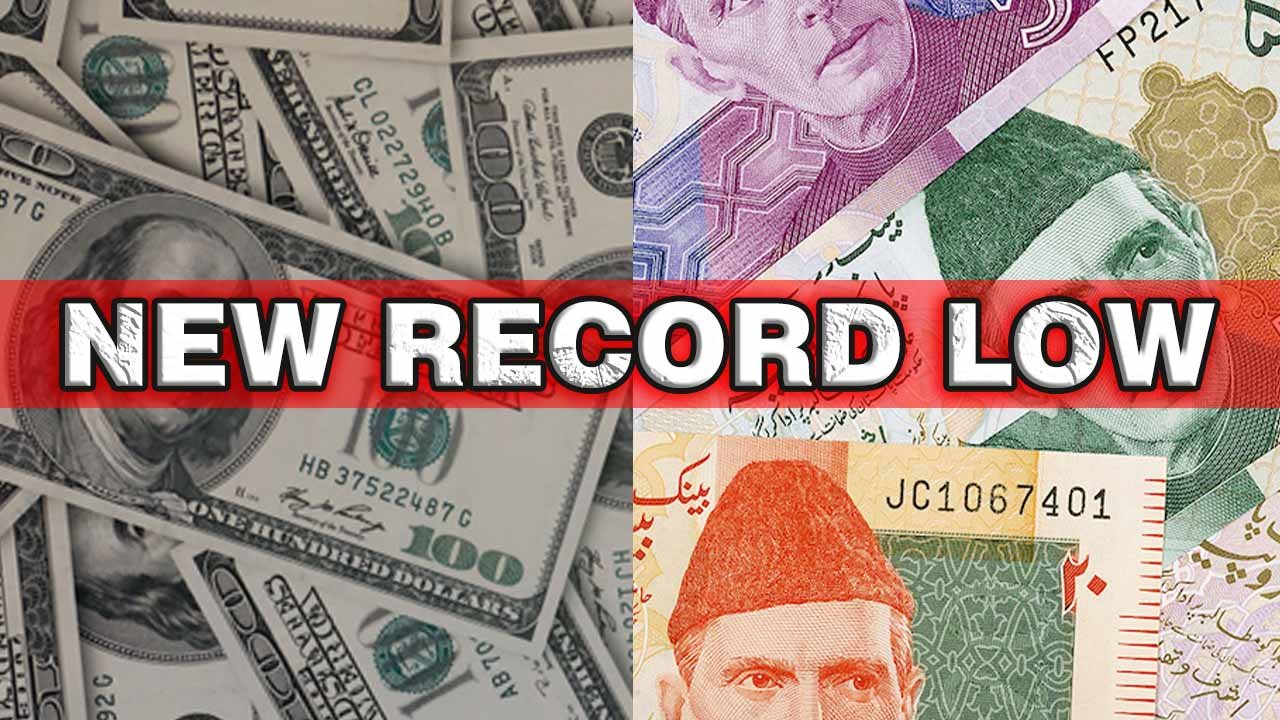
    Investors were worried about the rupee losing value against the dollar. This concern led them to sell off their shares, fearing that the economy could face trouble ahead.

    Right from the start of the trading day, the KSE-100 index saw a big fall of over 1,100 points, taking it below the 46,000 mark. Unfortunately, the index couldn’t bounce back due to low investor confidence.

    By 2:14 PM, the PSX had fallen to 45,139.34 points, a drop of 1,105.21 points compared to the previous day’s close of 46,244.55 points.

    Investors are also keeping an eye on the rupee’s decline, especially since the International Monetary Fund (IMF) won’t review the situation for a few more months. Additionally, there’s uncertainty about investments from the Gulf Cooperation Council (GCC).

    If the market keeps falling, some buyers might return, as the index is currently down 8 per cent from its recent high. But a real recovery would need clear information about politics and the economy.

    According to experts, the PSX is under pressure due to the rupee’s continuous slide.

    This could cause inflation to rise, which could affect the next Monetary Policy Committee (MPC) meeting in September. During that meeting, the central bank might consider raising interest rates again.

    The financial market is worried about public protests against higher power tariffs. If the government tries to please the public with short-term measures, it could complicate talks with the IMF.

    This report serves as an intraday update on the developments in the Pakistan Stock Exchange as of 2:53 pm.

  • Pakistan aiming for $25 billion textile exports in this fiscal year

    Pakistan aiming for $25 billion textile exports in this fiscal year

    Dr Gohar Ejaz, the Caretaker Federal Minister for Commerce, Industries, and Production, has set a bigger target of achieving $25 billion in textile exports for the current fiscal year, a substantial increase from the $16 billion target of the previous year. 

    Speaking at a meeting with the Pakistan Textile Exporters Association, led by Khurram Mukhtiar, Dr Ejaz outlined his strategic vision. He pledged to revitalise dormant industries within the nation within a tight one-month deadline, expressing confidence in surpassing last year’s export figure of $16 billion.

    Assuming the role with a bold $80 billion export objective, Dr Ejaz assured a systematic approach to address impediments hampering industrial operations. He expressed eagerness to directly engage with stakeholders, even offering to visit facilities as a symbol of his dedication to the industrial landscape’s rejuvenation. He requested a comprehensive list of inactive industries and their specific challenges to better tackle the issues.

    Furthermore, the minister vowed to promptly resolve pending financial obligations owed to industries by various departments, including the Federal Board of Revenue (FBR) and customs. 

    He extended an open invitation to associations and business leaders, emphasising his readiness to collaborate and find solutions for their concerns.

    With a focus on swift resolutions for challenges related to gas, electricity, energy, and fund allocation, Dr Ejaz reaffirmed his commitment to fostering a thriving and supportive business environment.