Category: Editorial

Official opinion on current social and cultural policy in Pakistan. The editorial states The Current’s official stance on Pakistan’s national issues.

  • Political arrests show our politicians have learnt nothing

    Pakistan Tehreek-e-Insaf’s (PTI) social media head Azhar Mashwani went missing outside his house on Thursday when he was taking a cab to Zaman Park. His brother has lodged an FIR of his kidnapping. PTI has alleged that Azhar has been illegally abducted by the authorities. It is indeed quite alarming that three days have passed since he went missing from Lahore and yet there is no news about his whereabouts. Imran Khan has condemned the police in Punjab and Islamabad for “breaking all laws with impunity as they target PTI”. The recent targeting of PTI leaders and workers, including Fawad Chaudhry, Hassaan Niazi, and now Mashwani shows that our political parties have not learnt anything and will do the same when they come in power which they condemned when they were at the receiving end of the same treatment during the regime of their political opponents.

    Two wrongs don’t make a right is something we often hear, but we don’t see this being professed in Pakistan. Witnessing the wrongs in the politics of Pakistan, it is safe to say that no one learns from past mistakes. For years, we have seen politics in our country. The people in power change, and their faces change, but their means and tactics to settle scores remain the same, and this vicious cycle continues. In the last few months, we have seen how the PTI leaders and workers have been arrested on frivolous charges just like workers and leaders of the Pakistan Muslim League-Nawaz (PML-N), Pakistan People’s Party (PPP) or others when the PTI was in power. For years now, we have seen some very powerful sectors influencing decision-making both in politics and otherwise. The political arena is overshadowed by these mighty decision-makers and their idea of politics. Every time a politician is arrested to silence him or her, it just shows a flagrant disregard for the law of the land.

    An arrest should only be made if, and only a crime has been committed or one is found guilty of any wrongdoing. Arrests on frivolous charges are not the answer to silence opinion. Democratic countries allow dissent. We have seen journalists and activists being arrested or picked up because of their views and opinions. The PDM government, which was a victim of such brutal policies in the past, has now made it abundantly clear that it will go to the same lengths to arrest Khan and his supporters. However, this vicious cycle must end. It is the responsibility of the political class to decide if they want to continue with settling scores and political victimisation or they want to put a stop to it. All politicians, be they in the government or the Opposition, need to unite on this point. Otherwise, such arrests and disappearances will continue. This culture must stop and change because political arrests will get us nowhere. A country facing multiple crises – from economic to political – needs stability. Not more chaos.
  • Maria B and what continues to be wrong with our society

    Designer Maria Butt, running the Maria B design label, somehow stays more in the news because of her controversial, many times toxic and mostly disappointing point of view than her clothing brand itself. The designer has a way of getting attention for all the wrong reasons.

    So a designer who has been in the industry for a long should have evolved with the changing times, but sadly, to our disappointment, Butt reflects a more significant part of our society that is still stuck in ancient times. But, like many bigoted Pakistanis, it provides little to no space for accepting people for who and what they are.

    Let’s talk about her many problematic views that have hurt the sentiments of many, put the lives of marginalised groups in danger and not to forget the very recent emotional damage done to a family because of her brand’s recent photoshoot.

    Maria B has several times attempted to “raise awareness” about her apparent “vast distinctions” between the Khwajasira and Transgender community through her limited knowledge, which resulted in putting the lives of the already marginlised community in danger. People like Maria B should understand that the transgender community is struggling to stay alive, let alone benefit from rights granted to them by the laws of this country. She has a huge following and the words she utters against anyone have consequences of their own.

    How can one forget that Maria B expressed great joy in a series of Instagram stories, when the censor board in Punjab banned the film Joyland. A film that has put Pakistan’s name on the world map was widely opposed by the designer. She then hailed the Punjab government saying, “You guys rock!” when they banned the film. Maria also highlighted how this ban “gives hope” to people like her who want a better future for children in Pakistan.

    Despite being from a previliged class, she has only displaying ignorance. A member of Bahawalpur’s Abbasi family, the former nawabs of the once princely state, called out the Maria B brand for posting and later deleting pictures and videos of a campaign shot in their private family graveyard. The campaign featured shots from various locations in Bahawalpur. In it, the models are seen walking and twirling around in various locations, one of which was identified as the private graveyard of the royal family of Bahawalpur. The videos and pictures have since been deleted and the Maria B page posted an apology for the “unfortunate incident”.

    Needless to say, Maria B has been receiving backlash for offering her unsought and limited knowledge about topics she is no expert on. Yet, her ignorance and insensitivity makes her believe that it is her duty to raise her voice, and speak without thinking of consequences for others. We can only hope she and others like her learn for the better. Pakistan is already intoxicated by the narrow mindset of many. We don’t want additional toxicity in our country.

  • Editorial: Are we betraying our culture if we accept something might be different?Bilkul nahi

    Editorial: Are we betraying our culture if we accept something might be different?Bilkul nahi

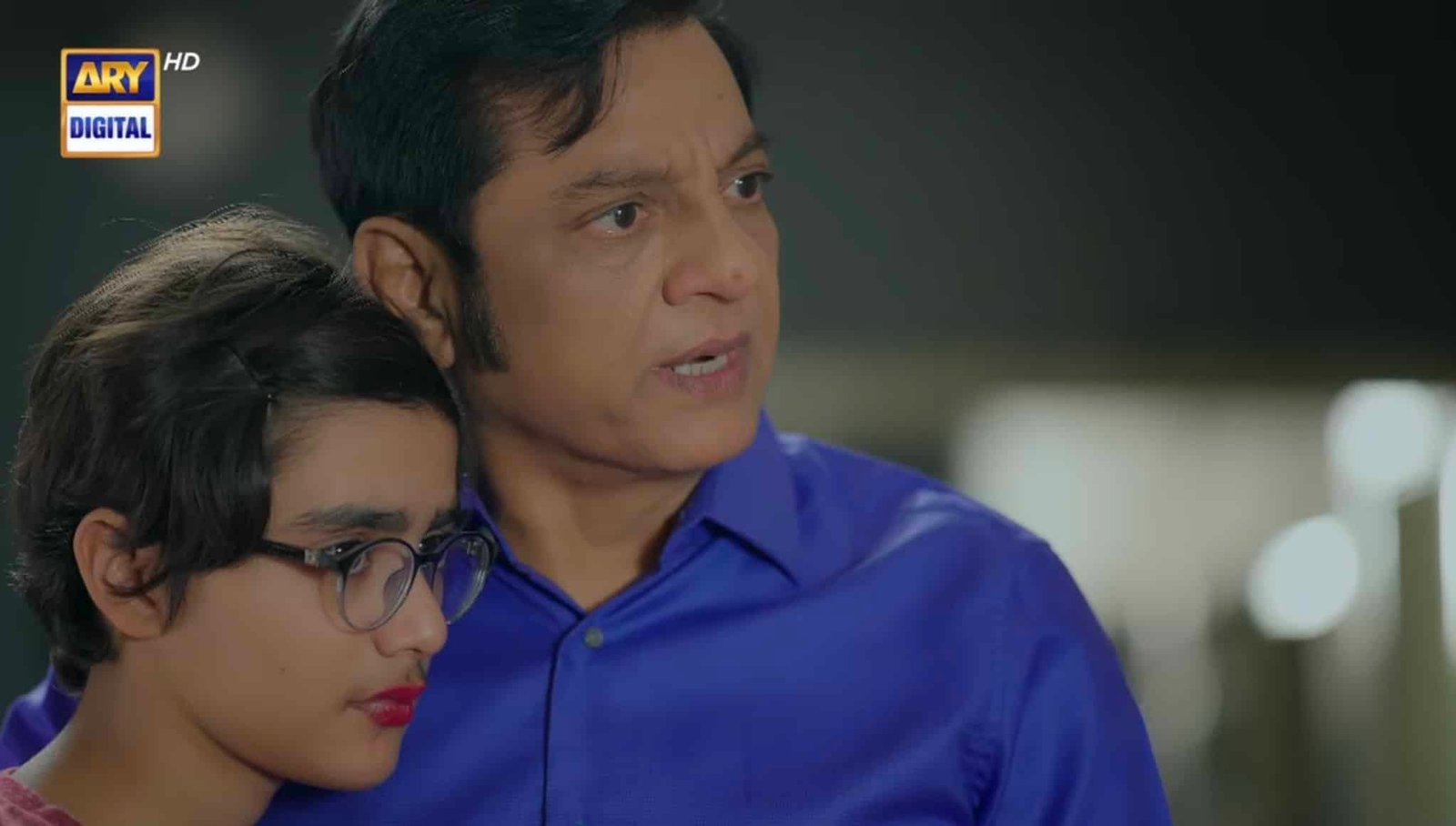
    Sar-e-Rah, a drama well known to the Pakistani audience, recently aired one of its most anticipated episodes that explored the struggles of a transgender boy who tries to gain acceptance from his family by studying hard.

    The episode delved into how Sarim (played by Muneeb Butt) is bullied by his stepmother and brother because of the fact that he is an intersex boy. However, Sarim and his father have a close bond, who encourages him to work hard and is the only one who embraces his true nature rather than hiding it away.

    In a scene that gained massive audience attention and praises on Twitter, the father and son are sitting by the sea where he teaches his son that there is no shame in wanting to be feminine, and he can choose to be whatever he likes because it won’t diminish his father’s love for him.

    Many users praised the way this episode depicted the relationship between the father and son, as portrayed by Nabeel Zafar and Butt’s moving acting. The show was lauded for handling a taboo subject in a delicate manner, and showing how important it is for parent’s to empathise with and support their children.

    In a time when censorship overrules freedom of thought, and many drama creators refuse to engage with the audience, there are creators who are making stories for the audience by taking bold steps in crafting unique stories that tackle social issues in a sensitive yet thorough manner.

    Unfortunately this message did not resonate with everyone, as harsh critics like fashion designer Maria B once again stepped up to criticise the drama for ‘promoting vulgarity’ and encouraging the acceptance of the transgender community. This isn’t the first time Maria B has targeted the transgender community through her hate campaigns and probably won’t be the last time either. But it all comes down to a few questions we really need to ask ourselves: How is being an intersex a bad thing? Why can’t we as people accept everyone for who they are and what they are? Why is it so hard for us to choose kindness? What are we so afraid of? How is accepting a child for what and who they are a problem? At a tender age, a child only needs validation and acceptance. Parents don’t love in categories, their love is unconditional. Then why do we always put conditions on things which only need love and kindness.

    Moving forward to the larger debate, which is about culture and what will people say. We need to understand that the world has massively changed. It’s the 21st century and people have a way of living on their own terms. Why do we always bring society, culture in things we ourselves are afraid to handle? Take the example of the scene in this drama itself, in our society a father is mostly shown as the angry adult, who doesn’t speak much, expresses even lesser and then here was a father, calm, tender and accepting of his son. We should promote such culture where fathers shower their children with kindness and love.

    Kindness and love is the need of the hour. Pakistan already has a lot of problems. Let’s not make acceptability a problem as well. Our children deserve better. They deserve peace, security and assurance that yes our parents have our back. It all starts from home. Children need these little affirmations from a young age. Let’s not disappoint them just because they are different.

  • Pakistani teens need to understand that bullying, violence isn’t cool

    Pakistani teens need to understand that bullying, violence isn’t cool

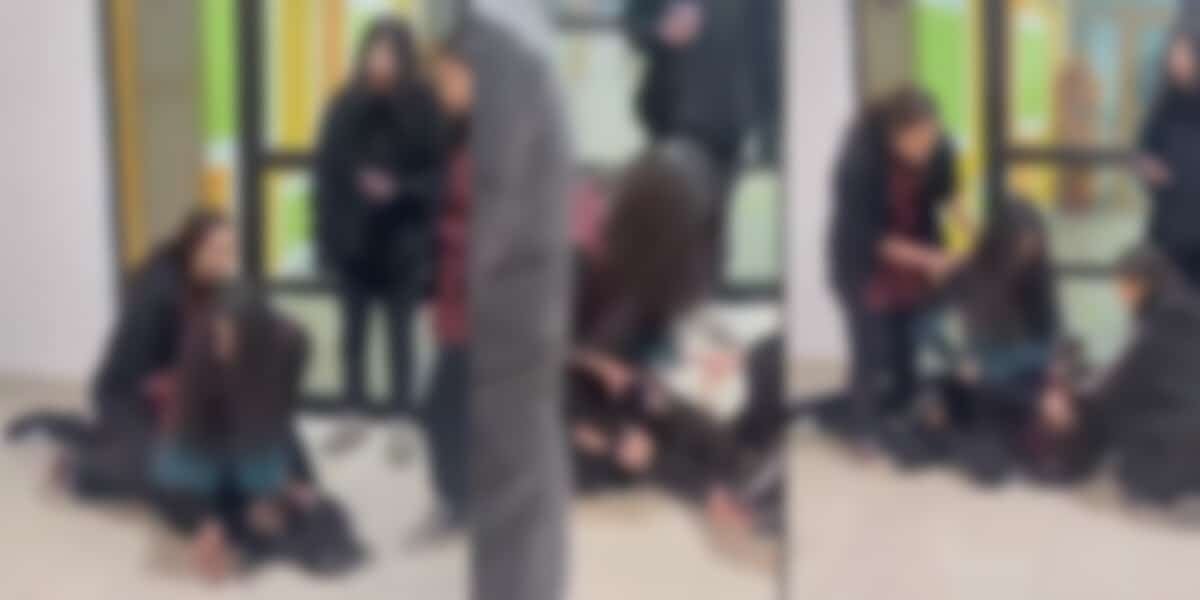
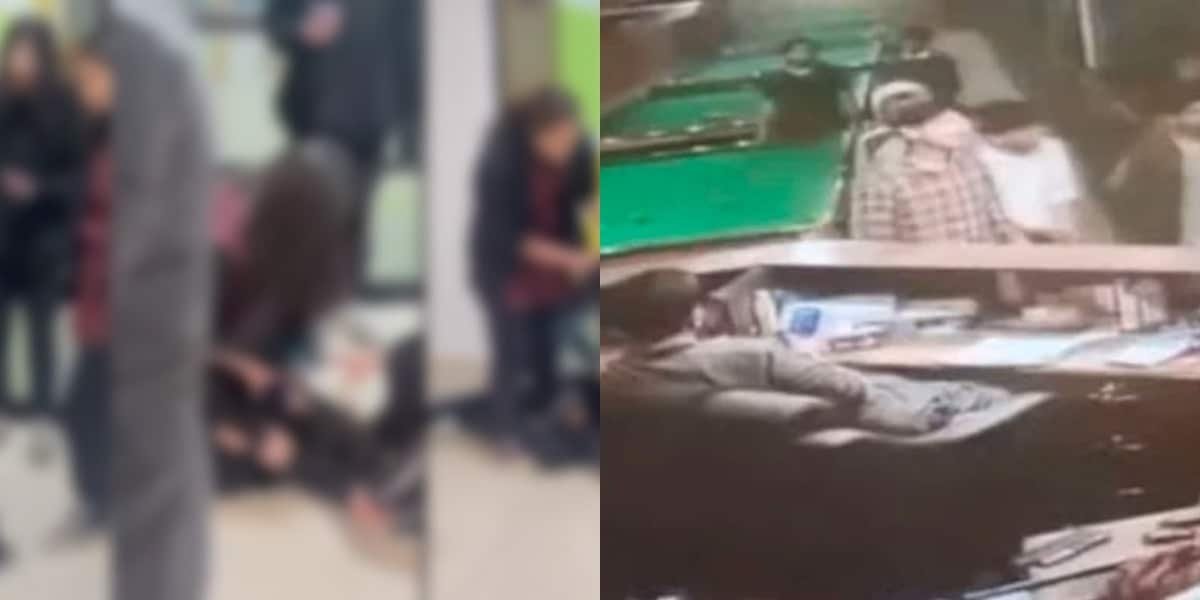
    A 35-member violent gang of boys enrolled in different private schools in Lahore is operating in the city under the name ‘102’. According to the police, one of the gang members reportedly tortured a young boy in a snooker club, taped the assault and uploaded the video on social media. This is not the first time we are hearing about teenagers in private schools indulging in bullying and harassing other young students. Last month, a video surfaced where three girls were forcing their classmate to the ground and then sitting on her back. One of the girls could be seen pulling the victim’s hair and swearing at her while making her apologise.

    These incidents are triggering, but what is more alarming is to witness the behaviour of these teenagers. What is it that they are learning? Why are these kids indulging in violence? How are parents so unaware of their kids’ whereabouts and what are they doing? What is even more concerning is how these kids have normalised bullying, harassment and violence.

    Parents need to teach their children what is right and wrong. They need to be extra vigilant to know what their children are consuming online. Teenagers, too, need to realise that if they are given freedom, it doesn’t mean they can hurt others in the name of being cool and resort to violence. Nothing justifies violence and bullying. The schools where such children are studying also need to be vigilant and watchful of how students are treating each other.

    With every passing day, violence is increasing in children. Have we ever wondered what are the reasons for this increase in violence? Maybe it’s the content children are consuming online or maybe violent video games that they play makes violence just another act of being cool to them.

    We have seen how gun culture is prevailing and how children are taking lives of their own peers. Actions have consequences. Parents, teachers and elders need to be careful and watchful towards their young children. These young minds need to be protected and taken care of. Negligence and ignorance can lead to serious problems as the kids grow up. What we are witnessing with the behaviour of these young children is rather an appalling sight. We hope our children do better and learn better. This evilness, and unkind behaviour needs to stop.

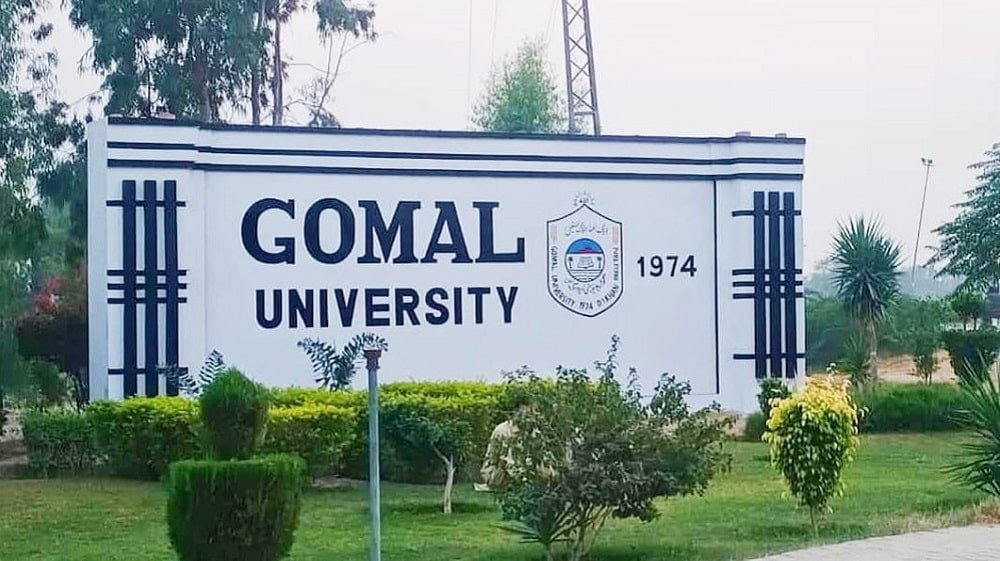
  • Gomal University, are you listening? Women deserve the same education as men

    Gomal University, are you listening? Women deserve the same education as men

    Gomal University in Khyber Pakhtunkhwa’s (KP) Dera Ismail Khan implemented a total ban on joint gatherings of male and female students on campus. The university issued a notification in this regard on Wednesday, which stated: “Gathering/coupling (male and female) is totally banned in any ground, roads etc. beyond the premises of department. Female students are directed to be careful and limit themselves just in their class rooms and department common rooms.” Interestingly, the notification was issued a day after Valentine’s Day.

    The Human Rights Commission of Pakistan (HRCP) rightly demanded that the notification must be withdrawn immediately. HRCP said that it takes strong exception to the said notification and that “segregation will reinforce a culture of ignorance and inequality”. This notification reminds us of the Afghan Taliban and their regressive mindset. Universities are not supposed to ask women to restrict themselves or limit themselves. In fact, universities are the learning grounds for both men and women so that they are prepared to go out into the world once they finish their education. This is the year 2023, a world where that is progressing rapidly and then comes such actions and/or notifications that make us question our choices towards education and developing critical mindsets. Are we against women’s education or moves like these are done just for restricting and policing women? We must not forget that in a patriarchal society like ours, females are told how to sit how to speak, how to dress. Policing of women’s behaviour is quite common in our country. Every year at Aurat March, the women are told not to raise slogans that challenge patriarchy, that challenge their own lived experiences. They are told by men, who have no idea what it is to be a woman in Pakistan, on what to do, what to say, what words to use for their slogans, what tone to take when they chant those slogans, how to ask for their rights, etc.

    According to the university administration, the decision would help provide a better and safer environment for female students. If it is all about safety, then one thinks of how is it logical that restricting the movement of women would help in providing security. The regressive outlook makes us one wonder if the male-dominated university administration would enforce the same or stricter curbs on the movement of male students and will the same kinds of bans and limitation be put on male students?

    In 2018, the KP government called for banning the entry of male MPs and politicians in girls’ schools as guest speakers. In 2019, the provincial government decided to make the wearing of an abaya or burka mandatory. And now a ban on joint gatherings by a university. We can only hope that those who make such rules understand that universities are a place for education. They act as places where individuals are trained, developed and prepared to be change-makers, influencers and leaders. Imagine how such restrictions and bans will hamper students’ growth and evolution. We hope these regressive double standards end, and both our men and women are treated equally.

  • Punish the victim, protect the rapist. Will Pakistan change?

    Punish the victim, protect the rapist. Will Pakistan change?

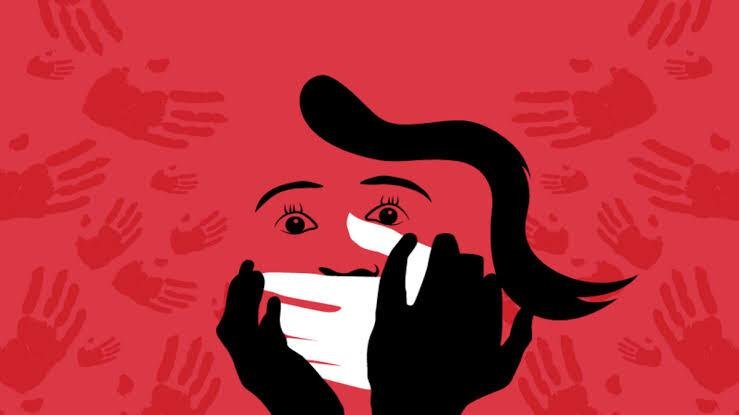
    In a shocking incident, a young woman was raped by two armed men at the F-9 Park in Islamabad on February 2. According to the 24-year-old victim, she was visiting the F-9 Park along with a male companion around 8pm when two armed stopped them at gunpoint, separated them and then took her towards a thicket and raped her. They also threatened her to remain silent or they would call “more friends” to rape her. After raping her, she was told by the rapists that she should not have been in the park at night. A police complaint at Margalla police station mentioned that the woman had marks of torture on her legs and face. “I was slapped. My hair was pulled and I was thrown on the floor,” the woman’s statement to the police read.

    People in Pakistan have expressed anger over the country’s “rape epidemic” and also slammed negligence over such cases of violence against women. Hundreds of protesters gathered in the F-9 park slamming the law enforcement’s response to the assault as they tied their dupattas to the railings in solidarity with the rape victims and survivors.

    It was also quite shocking that the Islamabad Police asked people after this incident to only visit well-lit areas in the park when the rapists took the girl to a thicket to rape her at gunpoint. Instead of taking responsibility and providing security to citizens, the police want to restrict people’s movement. As anger and rage engulfed Pakistan over the issue of women’s safety, we still look for answers to whether this will ever end and whether women will find happiness, security and peace in Pakistan. Will victim-blaming ever stop? Will there ever come a time when society and the lawmakers all unanimously stand as one with the victims and survivors? Will the predators of such heinous crimes be punished? Will the war on women ever come to an end?

    To the hopelessness and rage that fills our hearts, may women find security, protectiveness and justice in this country. Will Pakistan ever stand with its women? The women are angry, and rightly so as they have been betrayed by their own system, society and law-enforcers.

  • Why are we so scared of people who aren’t afraid to be different?

    Why are we so scared of people who aren’t afraid to be different?

    In a world full of moral policing and the constant battle between right and wrong, we get introduced to the newly-appointed Assistant Commissioner (AC) of North Nazimbad Karachi, Hazim Bangwar. The 29-year-old, commonly known as the ‘cool’ commissioner, has been called out for ‘imitating women’ as he carries himself in a certain way and because of his unique fashion sense, while others have been classifying him as transgender or even female.

    Bangwar is nothing like what one expects a bureaucrat in Pakistan to be like. Bureaucrats are generally considered serious and sober people who follow a particular dress code. Our mental image of a government servant is a man or a woman wearing spectacles, shalwar kameez or perhaps sunglasses. Some of the older lot wear smart suits with perfect ties.

    And here comes Bangwar, a breath of fresh air who defies the rules, looking like the most unconventional Assistant Commissioner in the country.

    Bangwar does not fit the bill of a traditional AC. This uber cool AC deviates from our conventional idea of masculinity and that is what people can’t digest. So we are forced to ask: why are we so scared of people who aren’t afraid to be different? Many people shared an alleged screenshot of a Twitter post supposedly made by Hazim in August 2018 that featured a rainbow flag with the tweet, “Happy Pride Month”. Hazim assured a news outlet that the post is “fake”. No such tweet can be found on Hazim’s official Twitter handle either.

    Where many were ready to rebuke him for his fashion sense and choice of living differently, there were others who said Bangwar was the change we all need. Many came out in support of the 29-year-old AC for his hard work and being a compassionate officer.

    Bangwar recently said that he can be judged by his work but whatever he does in his personal life has no bearing on his professional one. Nonetheless, the AC is being trolled online for allegedly being a transgender. Addressing the issue, he said that he is not a transgender but a male. However, the urge that people have shown to call him out as a woman or a transgender are rather offensive. One wonders: Is being a woman terrible? Or is being a third gender bad?

    In a world ready to put down people for being different, may we all learn to be unique and live our lives whichever way we like. Bangwar, through his unapologetically cool self, taught us that society and people need to change. Not you. Never you. Way to go, Bangwar!

  • Why you need to write for Aap ki Awaaz

    Why you need to write for Aap ki Awaaz

    As a budding journalist, student or just someone who has an interest in writing, one often questions what should I write and where can my work be published? Will I be able to put across my voice for the world to hear and learn from or will it just be something that I post on my personal social media instead of sharing it with the world? So here is a chance for all of you.

    The Current is soon going to launch its sister website, ‘Aap ki Awaaz’, an important platform that is of the people, by the people, for the people. It will be the voice and stories of the people as they want the world to hear and read it.

    This is one space that will be fully covering the raw emotion of the people. We at The Current have been overwhelmed after reading some great pieces written by the younger generation. Listening to their inspiring stories and understanding how at times the mainstream media just can’t provide a space for the common person’s story has made us realise how important this platform will be.

    To our readers and students, ‘Aap ki Awaaz’ will serve as one platform where you can learn and then write for. The best part is you are not bound by any one genre. The website will allow you to be creative and write whatever you like, be it on history, fashion, politics, sports or lifestyle. So grab your pens, keyboards, cameras, mobiles, Aap ki Awaaz needs to be heard out loud by the common man.

  • Punish those involved, but remember, violence is not the answer to violence

    Punish those involved, but remember, violence is not the answer to violence

    A video of an incident shows three girls forcing their classmate to the ground, then sitting on her back. One of the girls can be seen pulling the victim’s hair and swearing at her while making her apologise. On Friday, a first information report (FIR) was registered on the complaint of the victim’s father Imran Younis, who stated that his daughter was studying in Scarsdale American International School in Lahore.

    The incident was triggering, but what was more alarming to witness was how everyone jumped on the punishment bandwagon. Yes, what we all witnessed was rather a sad and scary face of our society and teenagers being violent. But how does that take away from the fact that all the girls in the video are minors. And there is a way to deal with it. The first step for parents is to tell their children what is right and what is wrong. The second is for children to realise that if they are given freedom, it doesn’t mean they can hurt others in the name of being cool and resort to violence. Nothing justifies violence and bullying.

    This incident reminds us how little space for correction and repentance we give to others. The school must take action against all those involved in this shocking incident of bullying and violence. This one incident should act as an eye-opener for all. The parents and schools really need to reflect on what it is that they are teaching their kids. This should not be made an act of revenge or seeking violence. This should be taken as an example of what should not be done. The reaction from various classes of our society has been a shocking cry for help.

    We hope both the parents and schools rather than instilling values of crushing competition, power and the continuous race to be on the top, teach inclusivity, kindness, anti-bullying practices, encourage healthy debate, and much more.

  • Bollywood’s obsession with ‘adab’ Pakistanis is out of line

    Bollywood’s obsession with ‘adab’ Pakistanis is out of line

    It’s 2023 but Bollywood can’t seem to get over its obsession of portraying lame and rather bizarre stereotypes about Pakistanis in its movies.

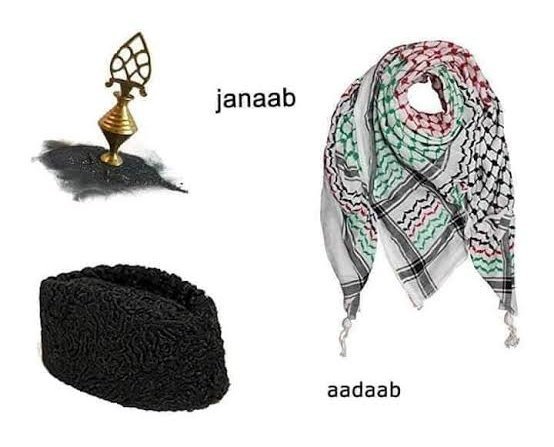
    Netfilx released the official trailer for Mission Majnu that features Sidharth Malhotra as an Indian spy on a covert operation to expose nuclear weapons in the heart of Pakistan that India must “neutralise”. Everything was fine till Malhotra dresses up like a ‘Muslim Pakistani’. So Indian filmmakers have a starter pack for actors playing the roles of Muslims and Pakistanis. A man with kohl-rimmed eyes who spits adaab in every sentence, wearing a namaz ki topi [skullcap] and something green in the background somewhere to show that this is a Muslim person or from the Muslim community. Women would be shown wearing lehnga aur ghagra, with lots of bangles, and yes the tradition of adaab continues for them too. However, the reality is far different.

    The matter of the fact is that Bollywood has been successfully fooling the world by portraying and creating this image to represent Pakistanis. One of the leading film industries in the world has been adamantly bent on trying to portray and represent Pakistanis as a threat. Due to this portrayal, for the longest time people believed it to be true when it comes to Pakistan.

    Bollywood has been making bad anti-Pakistan propaganda for years now but a little research would tell them that no, Pakistanis do not look, wear or talk like they depict in their movies. From Veer-Zaara in 2004 to Mission Majnu in 2023, Bollywood’s depiction of Pakistan and Pakistani lifestyle has been completely wrong. No, we don’t live in 19th century Lucknow. Lahore, Islamabad, Rawalpindi, Karachi, Peshawar, Quetta and other cities of Pakistan don’t have men with kajal going adaab-adaab or roaming around in sherwanis as if it’s a norm.

    What is even more appalling is to witness that in India, most leading Bollywood actors are Muslims, some originating from Pakistan and yet they don’t wear and look like anything Bollywood so often depicts Muslims, be they in India or Pakistan.

    We hope that for once Bollywood comes out of its propagandist thinking and portrays ‘Pakistani Muslims’ as they are.