Category: Editorial

Official opinion on current social and cultural policy in Pakistan. The editorial states The Current’s official stance on Pakistan’s national issues.

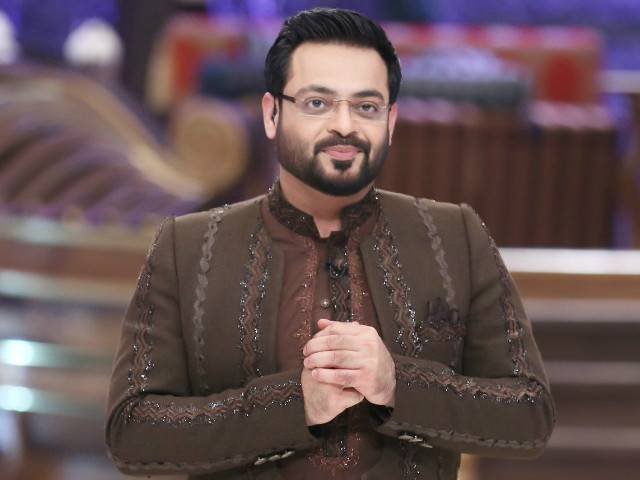
  • Why give Aamir Liaquat so much attention?

    Why give Aamir Liaquat so much attention?

    Aamir Liaquat is a public personality known for being in the limelight for all the wrong reasons. The man, nearing his 50s, is revered by one segment of Pakistani society and utterly despised by the other. Liaquat has recently been a hot topic of discussion for his third possible divorce with Dania Malik, who allegedly leaked two videos of Liaquat: one, where he can be seen roaming stark naked around in his room, and another where he is allegedly taking drugs. The two viral videos surfaced days after Aamir’s allegedly underage wife, Dania Shah, claimed that the televangelist takes illegal substances. The recent turn of events has clearly sparked a debate around a society glorifying child-and-adult unions. Dania claims she is 15, and Aamir knew it but still forged documents to get married. There can be no defence for a predatory act that takes advantage of class difference, age gap, and fame to trap a young teenage girl from a small city. Similarly, there can be no defence against revenge porn, even when it is against a person who has repeatedly aggravated public sentiment with impunity while disrespecting the institution of marriage, and religion.

    Liaquat has announced to leave Pakistan for good, but what still remains a question is why Liaquat or men like him are given so much limelight or attention. Where are we heading as a society? What examples are we setting for younger boys? We can expect no less in a country where misogyny is peddled as soon as children are born, and underage marriage is glorified as some invaluable social norm. This is the sad reality of Pakistani discourse.

    We can only hope that our society learns for the better and rather than giving so much limelight to people who are habitual of committing such acts with no remorse. We need to make people aware of the legal age of marriage, the exploitation of impressionable young girls, of the absence of justice, law, and order, which have led to a glorification of such vile acts of abuse in our society.
  • Saffronised India: Shah Rukh Khan at Lata’s funeral

    Saffronised India: Shah Rukh Khan at Lata’s funeral

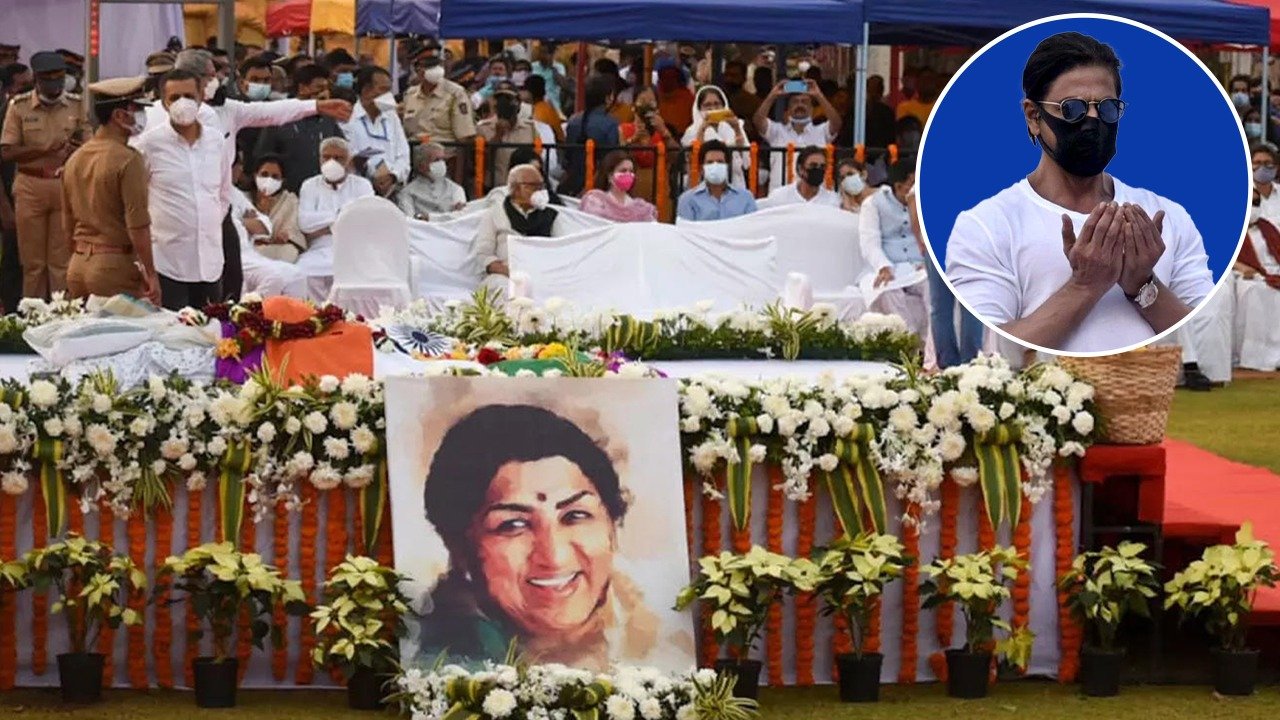
    Legendary Indian singer Lata Mangeshkar passed away on Sunday at the age of 92 and was given a state funeral by the Indian government. Music lovers from across the globe paid tributes for the “nightingale of India”. It is said that music transcends borders, which was proved by the condolence messages for Lata and shows how loved she was across the border in Pakistan.

    Prime Minister Imran Khan tweeted, “With the death of Lata Mangeshkar the subcontinent has lost one of the truly great singers the world has known.” Pakistani politicians, sportspersons, journalists, actors, artists, and people from across the country posted condolence messages on social media platforms. Pakistani state-owned broadcaster PTV and other television channels played Lata’s songs and paid rich tributes to the melody queen.

    Thus, it was extremely disappointing but not surprising to see the hate campaign against Bollywood superstar Shah Rukh Khan after he went to Lata’s funeral yesterday and paid respect to the departed soul by saying a prayer for her and blowing the dua (prayer) in the air near her body, a custom that many Muslims around the world follow. The anti-Muslim, Islamophobic propaganda campaign against SRK was started by leaders of the ruling Bharatiya Janata Party (BJP).

    BJP’s Arun Yadav was the first to tweet a video of SRK at the funeral, blowing a prayer in the wind with the misleading and hateful caption: “Kya isnay thooka hai?” (Did he spit?)

    Soon after Yadav, another BJP leader Prashant Umrao tweeted: “Shahrukh is Spitting!” while he quote-tweeted another anti-Muslim tweet against the Bollywood star. These tweets led to many BJP-affiliated accounts and Hindutva trolls abusing and spreading false information about Shah Rukh’s actions at Lata Mangeshkar’s funeral on Sunday.

    Many rightly called out the BJP leaders as well as their followers for starting an evil campaign against SRK just because of his faith. Minorities in India, especially Muslims, have been facing the worst persecution and injustice under the Modi government. Such misleading campaigns are nothing new under the BJP regime. When the coronavirus pandemic started in India, the Modi government and its mouthpieces in the Indian media falsely blamed the Tablighi Jamaat congregation in Delhi for being a super-spreader event, which was later rubbished by Indian courts. Such misleading, false, and ‘communal reporting’ has become a norm in India now.

    Therefore, it was not surprising to see the false and malicious attacks against a superstar of Shah Rukh’s stature just because he is a Muslim. A Muslim artist saying a prayer for a Hindu singer at her funeral could be communalised to such an extent that some people would actually think that SRK would spit on Lata’s body is unimaginable. It just goes on to show how India under Modi has become extremely communal and uninhabitable for minorities. The Saffronisation of India seems to be complete.

  • New terrorist wave

    New terrorist wave

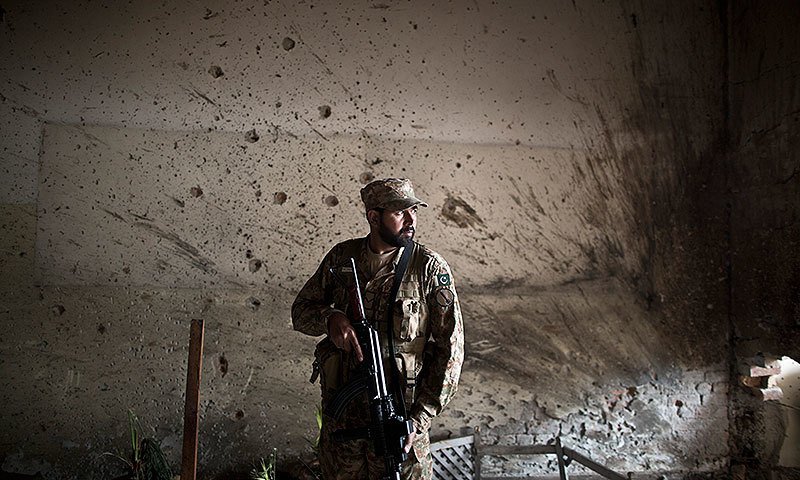
    A new wave of terrorism seems to be gripping the country in recent months, with the Lahore blast being the latest in a series of attacks that have targeted security forces, policemen, and civilians. From Khyber Pakhtunkhwa to Balochistan, from Sindh to the capital city to the heart of Punjab, there is a rise in such attacks across the country.
     
    Khyber Pakhtunkhwa police chief Moazzam Jah Ansari told Dawn and Geo News that the Islamic State group’s Khorasan chapter (IS-K) is a different and bigger threat than even the Tehreek-i-Taliban Pakistan (TTP). Coming from the police chief of a province that has been one of the worst victims of terrorism in the country, his statement should raise alarm bells for the state. Pakistan has given immense sacrifices in its war against terrorism – 70-80,000 people lost their lives at the hands of terrorist attacks. The APS attack is a tragedy that can never be erased from our memories. Our security forces and police officials have fought bravely against terrorist outfits and now for terrorism to make a comeback, it is even more important that the state should build a consensus on this issue and tackle the hydra of terrorism.
     
    A study conducted by the Pakistan Institute for Conflict and Security Study (PICSS) says that the rise in militant attacks in Pakistan coincided with the Afghan Taliban’s military offensive and their eventual takeover of Kabul. Many had been pointing out to the Pakistan government that a government that does not believe in the rule of law and does not abide by any international covenants cannot bring any stability in the region and will in fact lead to instability in the neighbouring countries when Pakistan was celebrating the takeover of Kabul by the Afghan Taliban.
     
    With the withdrawal of the US and NATO troops from Afghanistan, the fall of Kabul and the rise of the Afghan Taliban were inevitable. However, the support that they got from Pakistan has led to many problems, including the tensions between the US and Pakistan when it comes to diplomatic ties. But the most critical consequence of the new government in Afghanistan is the rise of militant outfits who are rearing their heads once again in neighbouring Pakistan.

    The rise of the Afghan Taliban has given new ideas and strength to militant outfits that had gone underground since the security forces defeated the TTP and crushed other terrorist outfits some years ago. We hope that the state will not let them wreak havoc with the country’s future again. Pakistan needs peace and stability, not chaos. 

  • Equal citizens

    Recently, we heard about two bakeries in Karachi that refused to write ‘Merry Christmas’ on cakes. Both Delizia and Aunty Munaver turned away customers who wanted cakes with Christmas greetings. It is deeply disturbing to see such acts of bigotry in a country whose founder and others who fought for its freedom believed in rights for all and equality regardless of caste, creed, and faith. Yet we see how non-Muslims in Pakistan continue to face discrimination on a regular basis.

    Today, when we celebrate Christmas with our Christian brethren and wish them a day full of joy, we hope that our society will change for the better. Today is also the birth anniversary of Quaid-e-Azam Muhammad Ali Jinnah, who taught us the meaning of tolerance and who believed in pluralism and inclusiveness.

    We often repeat and quote Jinnah’s August 11 speech but it is important to reiterate what he said again and again: “We are starting in the days where there is no discrimination, no distinction between one community and another, no discrimination between one caste or creed and another. We are starting with this fundamental principle that we are all citizens and equal citizens of one state.”

    This is what Pakistan stands for as this is what our founder taught us. It was good to see many people raising their voices against those bakeries that refused to write Merry Christmas on their cakes. It was social media outcry that led to Delizia bakery management on the backfoot and saying that it was an individual act. Whether it was an individual act or not can be ascertained as this isn’t the first time that such an incident took place. This year, we saw the horrible lynching of a Sri Lankan national. The government took strong exception to the incident and promised to take action against all those responsible. But the incident also showed how intolerance has seeped into our society. It is this bigotry and intolerance that has to end. On the birth anniversary of Jinnah, we should pledge to make this Jinnah’s Pakistan and not a Pakistan where extremism prospers. Once again, Merry Christmas to all those celebrating. 

  • Pakistan cricket fights back…hard

    Pakistanis are on a high these days after Pakistan cricket team’s three consecutive wins at the T20 World Cup. Pakistan is on the top in their group with three out of three wins against India, New Zealand and Afghanistan. We still have to play the remaining two matches against Namibia and Scotland next week (November 2 and 7) before the semi-finals.

    Pakistan cricket team broke its jinx by beating India for the first time in a World Cup match. And what a win it was! We restricted the India side to just 151 runs and we chased the score without losing a single wicket. The second match against New Zealand was even more special as this had come after the team pulled out of its tour to Pakistan last month.

    In September, cricket fans across Pakistan were heartbroken after New Zealand’s disappointing decision to abandon the Pakistan series over “security threats” just minutes before the first One-Day International (ODI) match was about to begin in Rawalpindi. Following New Zealand’s unilateral decision, England also decided to cancel their men’s and women’s teams’ tour to Pakistan in October. New Zealand was to play in Pakistan after almost 18 years while England’s men have not played an international match in Pakistan since 2005 and their women’s team were to visit the country for the first time.

    It was not just the cricket fans who were disappointed; apart from the huge financial loss to the Pakistan Cricket Board (PCB) because of these cancellations, it must have affected the Pakistan cricket team as well. After the terrorist attack on the Sri Lankan cricket team in Lahore in 2009, Pakistan has had to play their ‘home series’ away from home for many years. Cricket came back to Pakistan due to the efforts of Najam Sethi and others at the PCB.

    We Pakistanis criticise our team a lot when they don’t perform well but we need to understand what our players have been through for more than a decade now. They have been away from their families for months on end due to home series in the UAE; they have had to rebuild the team after the 2010 spot-fixing scandal; Pakistanis are kept out of the Indian Premier League (IPL) due to political reasons; and they have had to face discrimination in cricket because of India’s influence at the International Cricket Council (ICC) – Pakistan does not get enough bilateral series and enough international matches to compete with other teams. Under such difficult circumstances, our team has won the ICC Champions Trophy, ruled the Test rankings, made the Pakistan Super League (PSL) a huge international success and much more. We are proud of our Men in Green. They have cheered us up in the most depressing of times. Pakistan Zindabad.

  • Forced conversions are against the spirit of the constitution 

    On Wednesday, a parliamentary committee rejected the anti-forced conversion bill after the Ministry of Religious Affairs opposed the proposed law. According to Dawn, Religious Affairs Minister Noor-ul-Haq Qadri said the “environment is unfavourable” for formulating a law against forced conversions and warned that forming a law on forced conversions would “create further problems for minorities” as they will be made more vulnerable. He also said the proposed law will deteriorate peace in the country.

    It is unfortunate that the minister thinks such a law will lead to problems and will affect peace in the country. Minorities in Pakistan make up a very small number as more than 96 per cent population of the country is Muslim. So why would a bill that is against forced conversions, something that our religion also does not allow, make the minorities vulnerable? The Constitution of Pakistan guarantees that the rights of the minorities would be fully protected. Forced conversions are against the spirit of the Constitution as well as our religious teachings. 

    The Joint Action Committee for People’s Rights (JAC), a collection of  37 human rights groups, in an open letter has urged Prime Minister Imran Khan to take legal as well as administrative measures to protect minorities, especially the under age girls from forced conversions and marriages. The letter has also urged PM Khan to ensure the approval of the draft bill for timely legislation. The JAC also expressed its concern on the statements of the Minister for Religious Affairs on the draft bill to curb forced conversions, recalling that such statements are not only against the spirit of the Constitution, judgments of the Supreme Court of Pakistan but are also in contradiction with the stand taken by the PM against forced conversion of minority groups in Pakistan.

    Hopefully, the government will address this issue soon. We know that the majority of these forced conversions are underage girls from minority communities. Such practices should not be condoned by the government. Quaid-e-Azam Muhammad Ali Jinnah had envisioned a Pakistan where the minorities would feel safe. We should not let our founding father down. 

  • Nobel Peace Prize for journalists

    Nobel Peace Prize for journalists

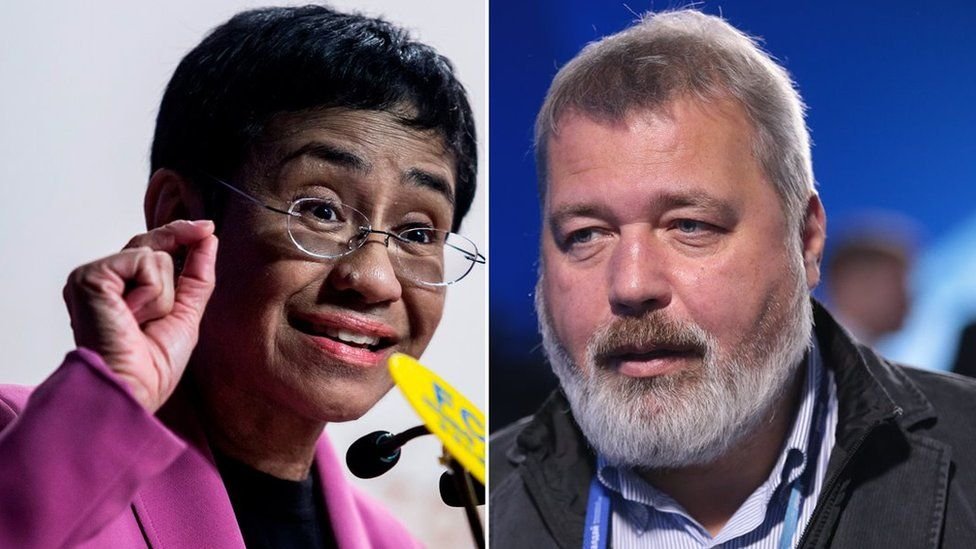
    The importance of free media and freedom of expression was highlighted once again when journalists Maria Ressa and Dmitry Muratov won the Nobel Peace Prize for their fights to defend freedom of expression in the Philippines and Russia. Both of them have done work that led to threats from the rulers of their respective countries.

    The Norwegian Nobel Committee said in a statement that Ressa and Muratov won the Nobel for “their efforts to safeguard freedom of expression, which is a precondition for democracy and lasting peace”. The statement added that “they are representatives of all journalists who stand up for this ideal in a world in which democracy and freedom of the press face increasingly adverse conditions”.

    It is an honour for journalists around the world that people of their fraternity were awarded the most prestigious award for standing up for free media. At a time when journalists are facing problems and many countries are clamping down on free media, it gives journalists more strength and courage when their struggle is recognised. 

    Read more- Journalists Maria Ressa and Dmitry Muratov win 2021 Nobel Peace Prize

    Unfortunately, like many other countries, the space for free media is fast shrinking in Pakistan. The government claims that the Pakistani media is more independent than even western countries but the fact of the matter is that censorship has increased over the years, journalists have faced physical attacks in the capital but no one has been arrested, and relentless attacks against journalists continue online as well.

    The government claims that they do not shy away from sharing facts with the media but in a recent report published in The News, it says that when Geo News sent approximately 400 different queries to 36 key institutions in the past nine months under the Right to Information (RTI) law but 90 per cent of them were either not responded to or simply declined by them. Only 43 (10 per cent) queries were partially responded to by them through either very little or patchy information in 2021.

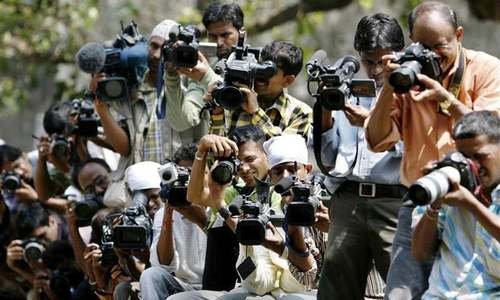
    It is pertinent that the government realises that the media is not its enemy. Media will act as a watchdog and it is media’s job to report the truth. Journalists will continue to do their job and such tactics will not make them stop. A free and vibrant media is critical for democracy. One should believe in more freedom, not less. Long live media freedom.

  • New Zealand’s disappointing decision

    New Zealand’s disappointing decision

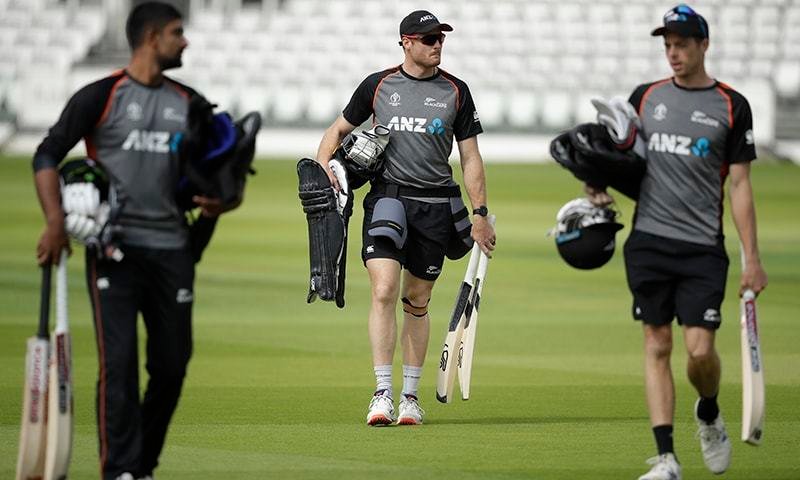
    Yesterday was a dark day for Pakistan cricket when New Zealand unilaterally decided to abandon the Pakistan series over “security threats” just minutes before the first One-Day International (ODI) match was about to begin in Rawalpindi. This decision was taken without sharing any details of the security threat with the host country. New Zealand was visiting Pakistan after 18 years.

    Chairman Pakistan Cricket Board (PCB) Ramiz Raja tweeted how frustrating it was and said that New Zealand will “hear us at ICC”. Prime Minister Imran Khan also spoke with his New Zealand counterpart Jacinda Ardern but could not convince her to reconsider this unilateral decision. “When I spoke with the Prime Minister of Pakistan, I conveyed our thanks for taking care of the New Zealand Cricket team. I know how disappointing it will be for everyone that the game hasn’t gone ahead, but we totally support the decision that’s been made. Player safety has to be paramount,” PM Ardern told Reuters.

    New Zealand’s decision is a huge blow and setback to Pakistan cricket. The terrorist attack on the Sri Lankan cricket team in Lahore in March 2009 left Pakistan cricket in chaos for years. There were no international cricket matches in Pakistan and it took us many years to convince smaller cricketing nations to gradually but surely bring back cricket to Pakistan. Former PCB Chairman Najam Sethi managed to convince teams and international players to visit Pakistan. Our security forces, police, cricket management, and many others made sure that all visiting teams and players were given fool-proof security, even if it meant shutting down cities.

    Cricket fans did not complain about the inconvenience either because they understood how vital it was to make the visiting teams feel safe so as to make sure that international cricket properly returns to Pakistan. This year was going to be extremely important with New Zealand and English cricket teams’ tours. Next year, Australia is also supposed to tour Pakistan. Now – with New Zealand abandoning its tour – the England tour is also up in the air for another 24 hours as the England and Wales Cricket Board (ECB) said yesterday that due to the security threat to New Zealand, the ECB will “decide in the next 24-48 hours whether our planned tour should proceed”.

    PCB officials told Dawn that Pakistan will suffer financial losses in millions. And it is not just about the financial loss but the loss of so many years of efforts made by the security officials, PCB, Pakistani players, and many other unsung heroes who made sure that cricket comes back to Pakistan. Pakistani cricket fans are disappointed, angry and depressed, and rightly so. We know that Pakistan cricket will overcome this. But it hurts. Pakistan Zindabad!

  • PMDA: Why all the secrecy?

    PMDA: Why all the secrecy?

    The mystery shrouding the elusive proposed draft of the Pakistan Media Development Authority (PMDA) is quite intriguing. Some consultations have been held with journalists, civil society members, and parliamentarians but without a copy of the proposed draft. Members of the National Assembly (NA) Standing Committee on Information and Broadcasting on Thursday demanded that the draft be shared instead of verbal briefings by the Information Ministry. Chairman of the NA standing committee Mian Javed Latif then formed a sub-committee, which will be headed by Marriyum Aurangzeb with Nafisa Shah and Kanwal Shozab as its members. Let’s see if the proposed draft will now be shared with the sub-committee. 

    Last month, representatives of media organisations issued a joint statement that rejected the proposed media authority. They said that it was unconstitutional and deemed it as a draconian law. It seems that this is yet another tactic by the government to curb media freedom. Human Rights Watch (HRW) recently also issued a statement on the PMDA saying that the Pakistani government is “seeking broad new powers to control the media as part of its crackdown on freedom of expression. Journalists, human rights activists, and political leaders across that country have raised the alarm about proposed legislation that would bolster powers of the government to censor and restrict the media.” The government reacted to HRW’s statement by issuing a rejoinder through the Pakistan Embassy in the US challenging the human rights organisation’s assertions on PMDA. Patricia Gossman, HRW’s associate director for the Asia division, asked for a draft, which has so far not been shared with anyone. 

    It is quite worrying that in a country where media freedom is already quite curtailed, where interviews have been stopped from going on air or stopped mid-way, where anchors have been taken off-air, where there are now so many red lines that media organisations have to tread very carefully, where attacks on journalists have become frequent and culprits are still at large, where online trolling of journalists has become a norm, where the government issues reports of social media trends and hashtags it deems anti-state, where government officials keep on targeting journalists and media organisations without any shred of evidence, a new media authority with immense powers is being proposed without sharing the details of the proposed law and/or taking the main stakeholders on board.

    We hope that the government will share the proposed draft with all stakeholders so that the mystery shrouding this media authority ends once and for all. There is already a lot of mistrust between the government and the media. We hope the government will listen to the legitimate concerns of media organisations and not dismiss them. A free and independent media is essential for any democracy. Pakistan is a democracy and we hope the government will not undermine it in any way. 

  • Stop moral policing

    Stop moral policing

    One of the favourite pastimes in Pakistan seems to be moral policing. We really don’t believe in the principle of ‘live and let live’. No, we have to interfere in others’ lives, we have to comment on others’ life choices, we have to judge everyone around us and we have to somehow make life difficult for others. 

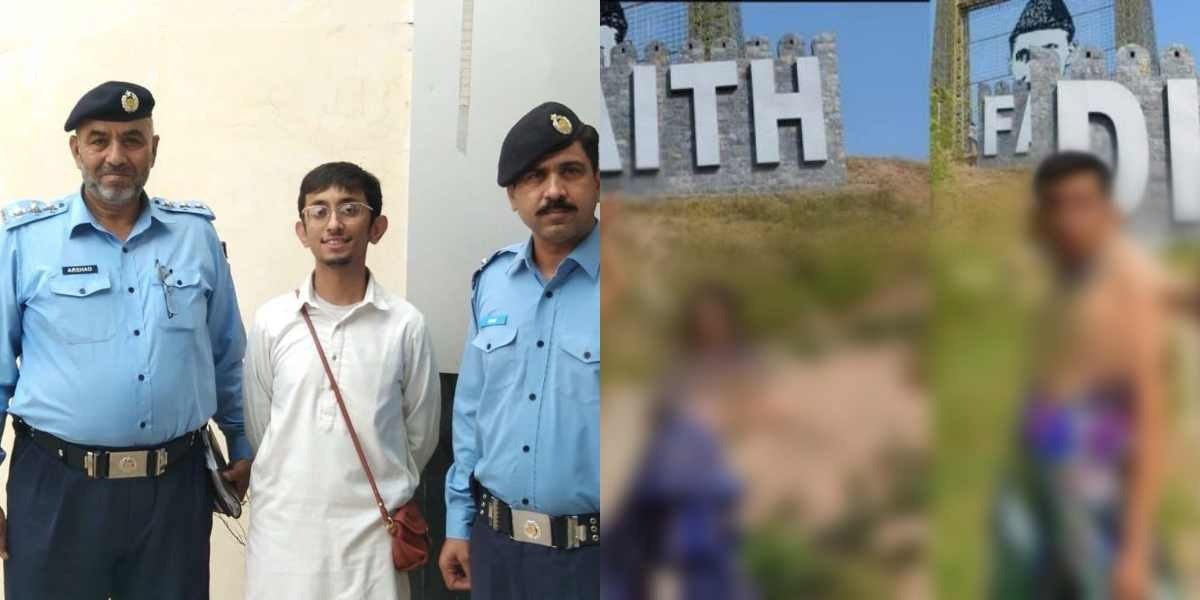
    Just recently, we saw social media outrage regarding a photoshoot that was deemed ‘obscene’ by senior journalist Ansar Abbasi. Mr Abbasi somehow keeps finding everything ‘obscene’ under the sun, be it a video, an advertisement, a YouTube show, a photoshoot — you name it and Mr Abbasi has seen it. Mr Abbasi tweeted to Deputy Commissioner (DC) Islamabad that the couple must be arrested as they “displayed extreme obscenity in public in the federal capital”. As if on cue, DC Islamabad asked people to share any information they had about the couple and/or photoshoot. Both of them did not think for a second how they could be endangering the lives of the young girl and boy in the pictures. We live in a society that believes in mob justice. But our senior journalists and officials really don’t care, it seems. 

    The Islamabad police booked the couple for an indecent photoshoot under Section 294 of the PPC, which makes “engaging in obscene acts, or singing, reciting or uttering obscene songs, ballads or words, in or near any public place, to the annoyance of others, an offense punishable with imprisonment for a term which may extend to three months, or with fine, or with both”. The law is so vague that anything can be deemed obscene as there is no clear definition of the word in PPC. And this is why it was used against the kids in the photoshoot.

    At around 5:30am on Tuesday (August 24), 10 police officers — one SHO, one ASI, and eight constables — reportedly arrived at the house of the boy, Zulfi, in Lahore to arrest him. They had come to arrest him from Islamabad. The boy’s lawyers got a protective bail from a court so he could not be arrested. But look at the priorities of our state that 10 police officials were sent to Lahore to arrest someone for a photoshoot. A photoshoot!!! Let that sink in. Zulfi is not a terrorist, not a murderer, not a rapist, not a child abuser, but an activist. And the police wanted to arrest him for a photoshoot. We must thank the Islamabad Police for making us feel so safe.

    A woman was assaulted by hundreds of men at Minar-e-Pakistan and the police did not come to help her despite calls, another woman was forcibly kissed by a man while sitting in a rickshaw but nobody helped her, but one photoshoot and one tweet by a vigilante journalist and our police can swiftly be seen in action. 
    We hope that our officials would stop moral policing and let people express themselves however they want. There is already so much intolerance around us. Do not make this society more suffocating than it already is.