Category: Editorial

Official opinion on current social and cultural policy in Pakistan. The editorial states The Current’s official stance on Pakistan’s national issues.

  • Modi Administration exposed – India’s COVID crisis

    Modi Administration exposed – India’s COVID crisis

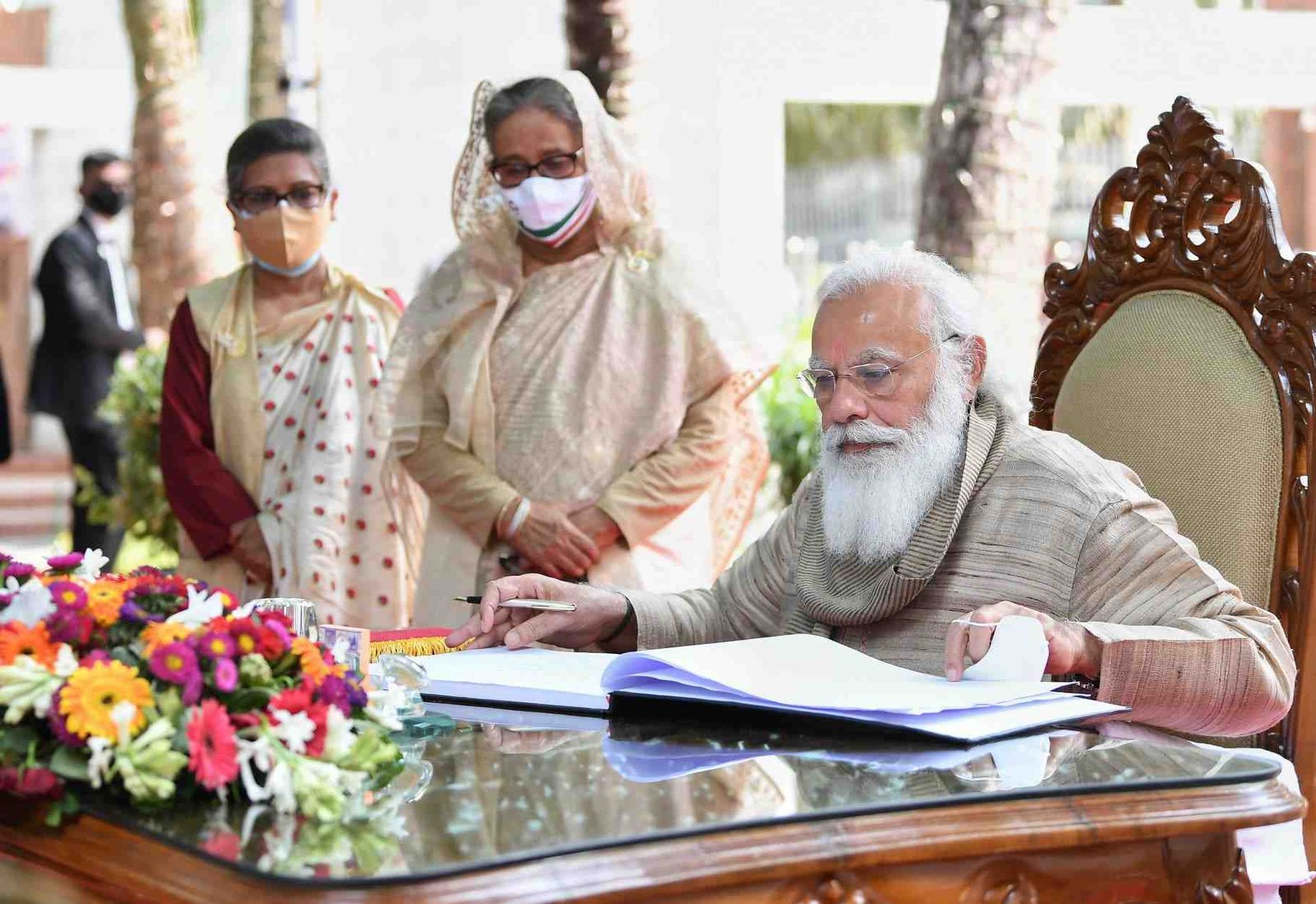
    The visuals from our next-door neighbour, India, are just horrendous. The record-breaking surge in coronavirus cases and the reports from India have left the entire world in shock. According to the Indian health ministry, 3,689 people have died within the past 24 hours. Last month, India became the first country in the world to register over 400,000 coronavirus infections in a single day. The situation in India continues to get worse. The second wave of coronavirus has exposed the Modi administration.

    The Modi administration gravely mishandled the COVID-19 crisis in India. From declaring a premature victory after the first wave, the Modi government is now downplaying the crisis. According to a report published in the New York Times, “Interviews from cremation grounds across the country, where the fires never stop, portray an extensive pattern of deaths far exceeding the official figures. Nervous politicians and hospital administrators may be undercounting or overlooking large numbers of dead, analysts say. And grieving families may be hiding Covid connections as well, out of shame, adding to the confusion in this enormous nation of 1.4 billion.”

    We have seen how journalists in India are being attacked online for telling the truth. The Modi government, it seems, is more worried about its international image than handling the crisis. From pro-Modi actors like Kangana Ranaut to media channels like Times Now to websites acting like the government’s mouthpieces, we have seen journalists Rana Ayyub and Barkha Dutt being attacked for their journalism. What is worse is how Indian government is also directly involved in intimidating those critising it. The police in Uttar Pradesh (UP) – a state run by BJP’s Yogi Adityanath – filed a criminal case against a man who used Twitter to appeal for an oxygen cylinder for his grandfather. CM Adityanath also asked the UP administration to “crack down” on hospitals that discharge patients due to shortage of oxygen or “complain” about it to the media. Just a week ago, India’s Ministry of Electronics and Information Technology said it had asked Twitter, Facebook and other social media platforms to remove some posts “in view of the misuse of social media platforms by certain users to spread fake or misleading information”. Such sort of censorship and intimidation just points to one thing: the Modi government is more interested in its image-building than addressing the disastrous COVID-19 crisis. Hospitals across India have run out of beds, oxygen supply is dwindling, the vaccination rollout programme is slow. All of this combined with election rallies and large gatherings that were allowed by the government in recent months led to catastrophic results.

    Pakistan government has offered relief and support to India. Prime Minister Imran Khan as well as others expressed their solidarity with India in this difficult time. We hope and pray that the situation changes for the better in India. 
  • Cabinet reshuffle, again

    Cabinet reshuffle, again

    The Pakistan Tehreek-e-Insaf (PTI) government has had another cabinet reshuffle this past week. The news of another reshuffle was doing the rounds for some weeks and finally it was announced on Friday, April 16. Except for one new but expected addition, all other portfolios have been given to already serving cabinet ministers. Only their portfolios have been changed.

    Hammad Azhar, who had just been appointed the finance minister less than three weeks ago after the ouster of Hafeez Shaikh, has now been removed and given the portfolio of energy. Shaukat Tarin, who served as the finance minister in the Pakistan People’s Party (PPP) regime, has been appointed as minister for finance. He has been given the additional charge of revenue as well. Tarin is the fourth finance minister under the current regime and the second ex-PPP finance minister after Shaikh. Asad Umar was originally appointed the finance minister by PTI before being removed unceremoniously after a few months into his tenure whereas Hammad Azhar’s stint as finance minister was the shortest of all in this government. Tarin will be finance minister for at least six months and then the government will have to get him elected for him to remain in the ministerial position. Tarin has been extremely critical of PTI’s economic management. We will have to wait and see how he turns around the economy.

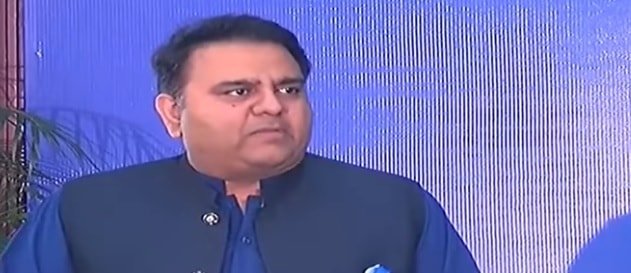
    Omar Ayub has been made the minister for economic affairs; he was previously energy minister. Khusro Bakhtiar, who held Ayub’s portfolio has now been given the portfolio of industries and production – a portfolio held earlier by Hammad Azhar, who now has Ayub’s portfolio. If this does not make your head hurt, do not fret for we now have Fawad Chaudhry back as the Information Minister while his ministry – Science & Technology – has been given to former information minister Shibli Faraz. Musical chairs, much?

    Fawad Chaudhry was an asset as the information minister when the PTI government came to power but he was replaced by Dr Firdous Ashiq Awan. Shibli Faraz later replaced Firdous. Chaudhry is the fourth – yet the original – information minister. When Chaudhry took on the science ministry, he brought his ministry to the limelight by starting many new projects. One of Chaudhry’s feats was his tussle on moonsighting for Ramzan and Eid with Mufti Muneeb. Chaudhry won in the end through his use of technology. Unfortunately, the new science minister Shibli Faraz thinks that moonsighting and the use of technology for this should not be the science ministry’s concern. We hope that Faraz will not rollback all the good work done by Chaudhry.

    We also hope that we will not need a new finance minister or a new information minister anytime soon.

  • Daniel Pearl case

    The Daniel Pearl verdict comes at a time when the new US administration has just come to power. The Supreme Court (SC) on Thursday ordered the release of four men accused of the murder of US journalist Daniel Pearl in 2002, including Ahmed Omar Saeed Sheikh, the principal accused in the kidnapping and beheading of Pearl.

    Daniel Pearl was Wall Street Journal’s South Asia Bureau Chief. He was working on a story about links between religious extremists in Karachi and ‘shoe-bomber’ Richard Reid. He went missing in January 2002 from Karachi and a month later, a video of Pearl’s beheading was delivered to the US Consulate in Karachi.

    The White House did not take the SC order lying down and expressed outrage right after. White House spokeswoman Jen Psaki called the decision “an affront to terror victims everywhere” and said Washington is “committed to securing justice for Daniel Pearl’s family”. Foreign Minister Shah Mahmood Qureshi US Secretary of State Antony J Blinken on Friday and discussed the Daniel Pearl murder case, among other issues.

    Blinken tweeted: “Spoke with @SMQureshiPTI on ensuring accountability for convicted terrorist Ahmed Omar Saeed Sheikh and others responsible for Daniel Pearl’s murder. The Foreign Minister and I underscored the importance of continued US-Pakistan cooperation in supporting regional stability.”

    The Sindh government filed a review petition on Friday, asking the SC to revisit its decision. As per news reports, the federal government will also join the review proceedings. While it may not lead to any different outcomes, lawyers believe that it could give the Sindh government a chance to keep Sheikh in jail.

    Ahmed Omar Sheikh is quite notorious. According to an explainer by AP, “Sheikh was arrested by India after the 1994 kidnappings but was among terror suspects freed by India on December 31, 1999, in exchange for the hostages on an Indian Airlines aircraft that was hijacked and taken from Nepal to the then Taliban-controlled Afghan city of Kandahar.” He is also said to have been a part of the conspiracy to assassinate General Musharraf and was said to be the person who called Asif Zardari, impersonating the Indian external affairs minister from inside his prison cell, as per Dawn.

    Last year in April Sheikh was found guilty of a lesser charge of kidnapping and sentenced to seven years in prison and a fine of Rs 2 million to be paid to Pearl’s widow and his orphaned son who was born after the murder. The other three accused — Fahad Nasim Ahmed, Sheikh Muhammad Adil, and Syed Salman Saqib — were also cleared of all charges. They were earlier given life sentence, which was overturned. The SC order also shows how the case was mishandled by the prosecution from the start.

    The case was treated on the basis of a conspiracy and never went into the details of the murder. There was no weapon recovery, which is important in a murder case. That such a sensitive and a high profile case was mishandled by our prosecution speaks volumes about our weak judicial system. It is important that we improve our judicial system as well as forensic investigation. Pakistan cannot take this lightly as the new US administration and Pakistan’s relations cannot start on a wrong footing.

  • Vaccine procurement woes

    Vaccine procurement woes

    We thought the year 2021 will be a year of hope after last year’s pandemic outbreak. This year will indeed be a year when a vaccine is rolled out around the world but there is a catch. According to the People’s Vaccine Alliance – a coalition including Oxfam, Amnesty International and Global Justice Now – just one in 10 people in dozens of poor countries will be able to get vaccinated against the coronavirus because wealthy countries have hoarded more doses than they need.

    The Alliance said that the rich nations have bought more than 50 per cent of the total stock of the world’s most promising vaccines, despite being home to just 14 per cent of the global population. According to the Duke Global Health Innovation Centre, the current models predict that there will not be enough vaccines to cover the world’s population until 2023 or 2024. This is quite worrying. Pakistan, too, has yet to procure the vaccines.

    Special Assistant to the Prime Minister on Health Dr Faisal Sultan told Dawn that Pakistan’s target is to procure the vaccine in the first quarter of the current year, and “we are confident of doing so. But it is quite difficult to say on which date we will acquire the vaccine”. Reports indicate that apart from Chinese vaccines and the Oxford vaccine, Pakistan will also be relying on the World Health Organization’s (WHO) COVAX initiative, which insures “rapid and equitable access to COVID-19 vaccines for all countries, regardless of income level”. Some government officials say that Pakistan did not have enough resources to place orders initially for vaccines. It is understandable given that Pakistan’s economy is already struggling.

    The lesson to learn from this pandemic is that countries like Pakistan must invest in science, technology and medical/health research. If we do this, we would be able to work on our own vaccines and manufacture them in the future. Healthcare is one of the top priorities of the current government. The government must step up and invest in research related to healthcare so that it helps Pakistan in the future. Coronavirus may have been a once-in-a-century pandemic but there will be new health emergencies that we could face in the future. Thus, it is important to invest heavily in research because the future is all about scientific research and development.

  • Hazaras face yet another tragedy

    Hazaras face yet another tragedy

    Imagine the pain of those families who not just lost their loved ones to a gruesome terrorist attack but also kept waiting for the state to show empathy towards them.

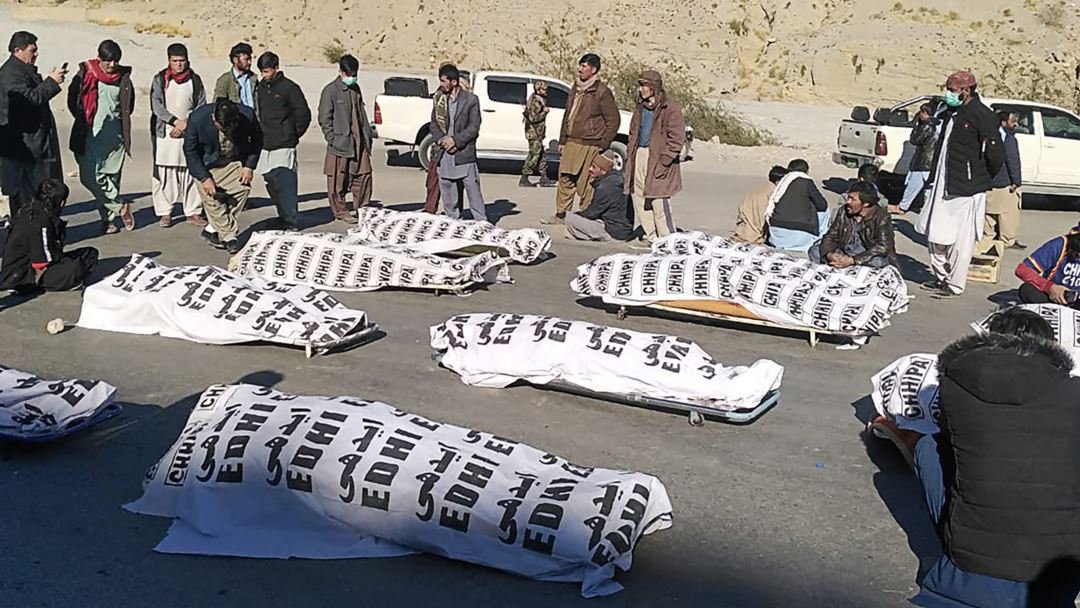
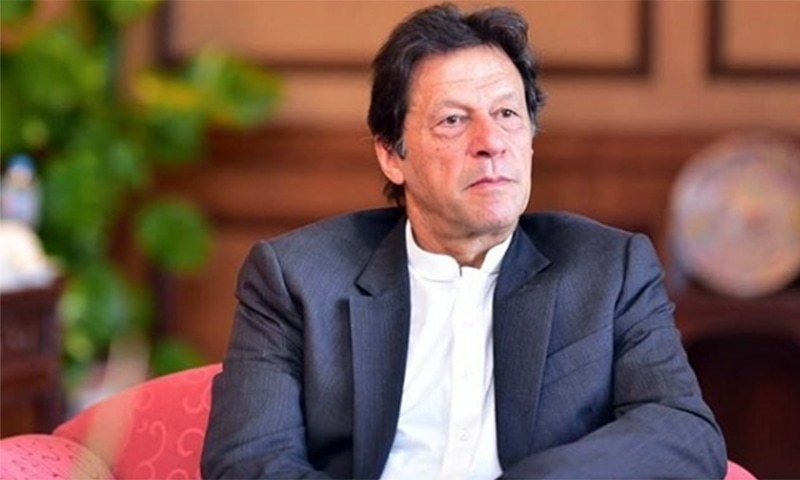
    11 Hazara coal miners were target killed in Balochistan last week. Their families staged a protest in the freezing cold of Quetta for a week and said they would not bury their dead till they meet Prime Minister Imran Khan. But the PM asked them to bury their dead first. He said he wouldn’t be ‘blackmailed’.

    At last, the Hazara mourners had to bury their dead and only then did PM Imran visit Quetta to meet them. No words can make us imagine the pain of the mourners. And to even think that they could blackmail anyone — those who are a marginalised community, those who have been relegated to a designated area, those who cannot even roam their area freely, those who cannot even get justice for their dead. There are Hazara families that have no male members left as they have all been target-killed.

    In a 2014 report by the Human Rights Watch (HRW), the Hazara Shias were described as ‘The Walking Dead’. They have continued to suffer at the hands of sectarian terrorist outfits committing genocide of the Hazara community. Thus the state should not have shown apathy towards their demand of meeting the PM. A powerful state cannot put conditions on its marginalised and beleaguered people. It is callous. Period.

    It is also important that the state safeguards the lives of all citizens, especially a marginalised community like the Hazaras. Pakistan made a lot of gains in its fights against terrorism in the last few years. The government should have consolidated those gains and made a proper strategy to counter terrorism and extremism.

    It is also important to empower the local police in Balochistan just like it was done in Khyber Pakhtunkhwa. We hope that the Hazaras will get justice as well as protection. They have suffered enough.

  • Police brutality, again

    Pakistan is no stranger to incidents of police brutality but there are events that leave the entire nation shell-shocked.

    Five officials of Islamabad Police’s Counter-Terrorism Department (CTD) were arrested after they gunned down a 21-year-old boy, Usama Satti, in cold blood near Srinagar Highway, G-10 sector in the federal capital.

    This incident has led the nation to question why ours is a trigger-happy police force.

    Earlier today, Senate’s Human Rights Committee Chairperson Senator Mustafa Nawaz Khokhar tweeted, “Heart goes out to the family of young Usama. Can’t imagine what his parents and loved ones must be going through. Although judicial inquiry has been ordered, will take it up in HR committee too. Use of deadly assault weapons should b the last resort. Fatal error of judgement.”

    Social media trends asking for justice for Satti as well as arresting Interior Minister Sheikh Rasheed started trending following the young man’s brutal killing.

    In a report published by Human Rights Watch (HRW) in 2016 on police in Pakistan, the rights group noted that successive Pakistani governments have for decades failed to reform an under-resourced and under-equipped police force or hold abusive police to account. 

    Two years ago in January 2019, police officials killed several members of the same family in Sahiwal town on suspicion of terrorism. At that time, Prime Minister (PM) Imran Khan not just condemned the killings but he also promised police reforms so as to avoid torture and extrajudicial killings.

    An anti-terrorism court acquitted all six personnel of the CTD who were allegedly involved in the Sahiwal incident. The Punjab government did challenge the acquittal but such is the state of justice in this country that an encounter in broad daylight in front of young children could not garner any justice for the victims’ family.

    Two years ago in January 2019, police officials killed several members of the same family in Sahiwal town on suspicion of terrorism. At that time, Prime Minister Imran Khan not just condemned the killings but he also promised police reforms so as to avoid torture and extrajudicial killings. An anti-terrorism court acquitted all six personnel of the CTD police who were allegedly involved in the Sahiwal incident. The Punjab government did challenge the acquittal but such is the state of justice in this country that an encounter in broad daylight in front of young children could not garner any justice for the victims’ family.

    Police reforms were one of the key promises made by PM Imran and his party, the ruling Pakistan Tehreek-e-Insaf (PTI), when they came to power in 2018. Unfortunately, we have not seen any substantive move towards the same. It is important now more than ever that the government starts walking the talk because such incidents occur due to lack of accountability. We cannot continue to live in fear of a trigger-happy police force that can kill at will without any consequences.

    After police reforms in Khyber Pakhtunkhwa (KP) by the PTI government during its last tenure, we had high hopes that the PTI’s federal government would emulate the KP Police Act, 2017 in other provinces where it is in power, especially Punjab. We hope that the government would now do so at an urgent basis. 

  • We are celebrating Christmas

    We are celebrating Christmas

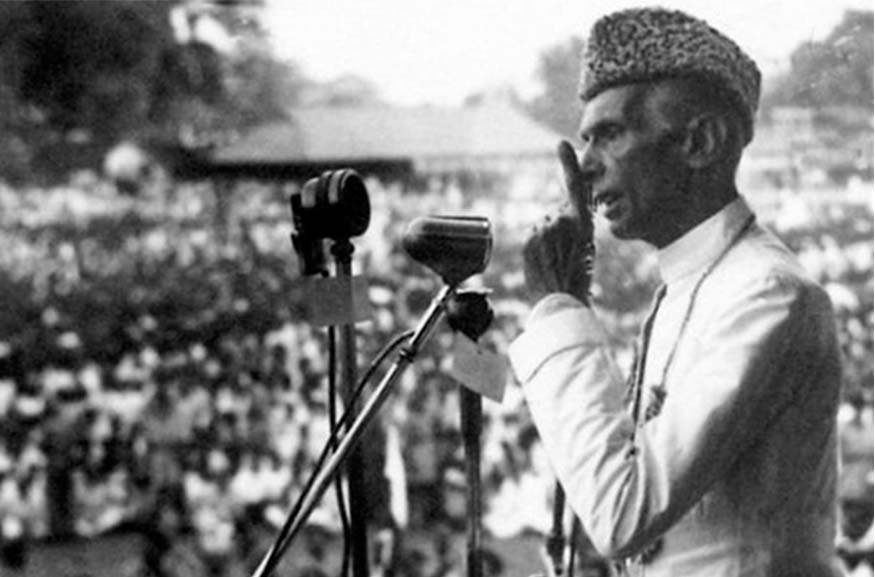
    In his first presidential address to the Constituent Assembly of Pakistan, Quaide Azam Muhammad Ali Jinnah said, “Now if we want to make this great State of Pakistan happy and prosperous, we should wholly and solely concentrate on the well-being of the people, and especially of the masses and the poor […] if you change your past and work together in a spirit that every one of you, no matter to what community he belongs, no matter what relations he had with you in the past, no matter what is his colour, caste or creed, is first, second and last a citizen of this state with equal rights, privileges and obligations, there will be no end to the progress you will make.”

    The Quaid made a case for equality of all citizens of Pakistan regardless of their colour, caste, or creed.

    In the same speech, he said, “I think we should keep that in front of us as our ideal and you will find that in course of time Hindus would cease to be Hindus and Muslims would cease to be Muslims, not in the religious sense, because that is the personal faith of each individual, but in the political sense as citizens of the State.”

    Christmas is just around the corner. We must remember Jinnah’s words. We must keep this in mind if we want Pakistan to progress. Recently we saw the case of a minor Christian girl Arzoo Raja’s forced conversion and underage marriage. Both the Sindh government and the federal government played their part in ensuring that justice was served. Every year, we see hundreds of cases of forced conversions in the country, most of them young Hindu and Christian girls. This is a worrying trend.

    Christians, Hindus and people belonging to other minority faiths have equal rights as citizens of Pakistan according to our Constitution. Unfortunately, we see discrimination against minorities around us all the time. From giving separate utensils to minority workers at our homes, workplaces to using derogatory terms for them, we show our bigotry and racism without even acknowledging it. We casually remark on people’s colour or caste or religion without realising how wrong it is.

    On this Christmas Day, and every other religious celebration of minorities, we should ensure that we don’t discriminate. Due to COVID-19, this year’s celebrations may not be as festive as in the past but through kindness and interfaith harmony, we can spread a message of love and cheer.

  • Pakistan’s new social media rules

    Pakistan’s new social media rules

    Pakistan’s new social media rules have ‘alarmed’ the Asia Internet Coalition (AIC), an industry association that promotes the understanding and resolution of Internet policy issues in the Asia Pacific region. It comprises leading internet and technology companies such as Amazon, Airbnb, Apple, Facebook, Google, LinkedIn, Twitter, and Yahoo, among others.

    AIC issued a statement on Thursday about the Removal and Blocking of Unlawful Online Content (Procedure, Oversight and Safeguards) Rules 2020. As per the AIC statement, “The Rules would make it extremely difficult for AIC Members to make their services available to Pakistani users and businesses. If Pakistan wants to be an attractive destination for technology investment and realise its goal of digital transformation, we urge the Government to work with industry on practical, clear rules that protect the benefits of the internet and keep people safe from harm.”

    Digital rights activists in Pakistan have also condemned the move.

    In a world that is now all about technology, Pakistan should be embracing the digital spaces instead of alienating tech giants. Not only will it be a huge blow to everyone in Pakistan who uses the internet but it also means that leading tech companies will not consider investing in Pakistan.

    During the corona pandemic, we saw how tech companies were successful and also made life easier for people during lockdown. It is thus baffling to see a government that always talks about Digital Pakistan and has actually used social media and digital media to its advantage now come up with rules that are draconian and not practical.

    Such shortsighted moves could lead to consequences that we can ill afford. With a struggling economy, we should ideally be more open and welcoming to tech companies. Instead, these companies are now expressing alarm at the new rules.

    If we just look at countries around us, including China and India, they have taken full advantage of the digital world. The US economy is helped immensely by technology companies. Pakistan’s new rules make it almost impossible for international tech companies to even consider opening their offices in the country.

    In the past, the ban on Facebook and YouTube pushed Pakistan back digitally by several years according to digital rights experts. The new rules, if not improved, could have far-reaching consequences. While these companies have not given an inkling of their next move, what if they stop providing these services in Pakistan? We need to factor in that there can be such a possibility and how it will affect hundreds of thousands of users.

    Why is it that we want to ban games or apps or even bring in new rules that take away fundamental freedoms when we are a democratic country and not an autocratic state. It is hoped that the government would rethink this strategy and make Pakistan a more open and tech-savvy country that is on par with the digital world.

  • Shaheena Shaheen’s murder

    Shaheena Shaheen’s murder

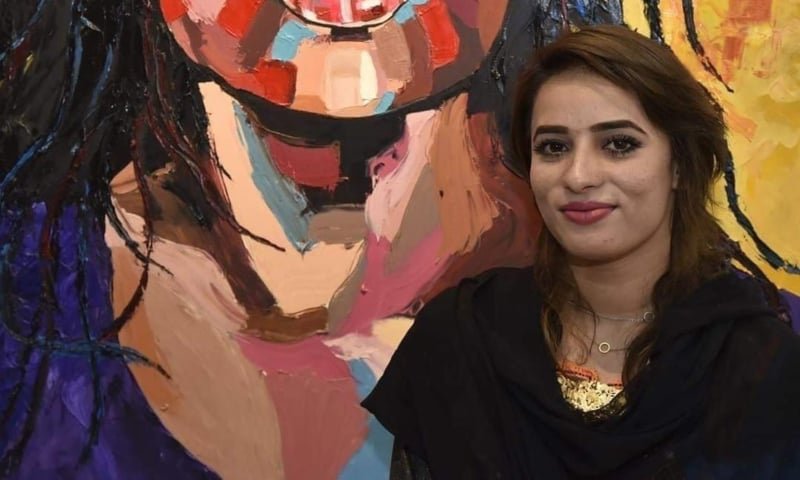
    Yesterday, a female journalist in Balochistan was shot dead. A social activist, an anchorperson at PTV and editor of a Balochi language magazine Dazgohar, Shaheena Shaheen was shot three times in Turbat on Saturday. She succumbed to her bullet injuries at the hospital. According to media reports, Kech Superintendent of Police Najeebullah Pandrani said the killing was the result of domestic violence. Shaheena’s family has nominated her husband in the First Information Report (FIR), whom she married just five months ago.

    Spokesperson of the Government of Balochistan Liaquat Shahwani tweeted that the murder seems to be due to a domestic issue and promised that justice would be served. Federal Minister for Information and Broadcasting Senator Shibli Faraz also condemned Shaheena’s murder. He said the government would fulfil its responsibility and bring the culprits to justice.

    Shaheena achieved a lot during her short but meaningful life. She was a talented artist, a brave social activist, and a talented journalist. Shaheena’s murder brings forth multiple issues plaguing our society, especially domestic abuse.

    Domestic violence is a serious issue in Pakistani context. According to a report released by SSDO in August and titled ‘Tracking Numbers: State of Violence Against Women and Children in Pakistan’, violence against women increased 10 times in just three months in Pakistan. A large number of women are victims of domestic abuse at the hands of their husbands but suffer silently due to multiple reasons, which include family ‘honour’, children’s future, lack of financial independence and the taboo attached to divorce. It is because of their silent suffering and lack of repercussions that these men continue to commit this crime. Some, like Shaheena’s husband, are emboldened enough to even commit murder. Apart from domestic violence, ‘honour killing’ by family members is not an uncommon practice in Pakistan. On Friday, the Supreme Court observed that the killing of women in the name of honour had never been an honourable practice and that such murders should not be categorised as honour killings. “It will help deter such killings if the term ‘Ghairat’ is not used to describe them,” observed Justice Qazi Faez Isa.

    Why is it that ‘honour’ is always attached to a woman’s actions and not that of any man in our society? Why is a woman expected to suffer at the hands of her abuser just to save family’s honour? Our lexicon is filled with phrases like, ‘Log kya kaheinge?’ [what will people say?], which make women think twice before leaving an abusive relationship. We wonder what these ‘people’ will say when a woman is murdered by her husband?

    The Ministry of Human Rights launched an awareness campaign about domestic abuse and violence in March this year, asking the victims to call their helpline. We have laws against domestic violence and honour killing in place but the major issue is under-reporting of these cases by the victims themselves who choose to stay silent due to societal pressures. It is time to raise awareness across the country and let these women know that they are not alone. The state as well as society stands with them. Shaheena, we hope your murderers are brought to justice. Rest in power, Shaheena!

  • Destroying Buddha

    Destroying Buddha

    Police in Khyber Pakhtunkhwa (KP) on Saturday arrested four men involved in smashing an antique Gandharan Buddha statue found during construction work in Mardan. The remaining parts of the 1,700-year-old statue have also been recovered by Mardan police.

    When videos of a man breaking the antique statue surfaced on social media, many Pakistanis expressed their anger and disappointment at the blatant vandalism of an ancient cultural heritage. According to reports, the man who broke the Buddha statue was instigated by local cleric[s]. The video reminded one of the Bamiyan Buddhas in Afghanistan, which were once the world’s tallest Buddhas but were blown up and destroyed by the Taliban in 2001 on orders by Mullah Omar.

    Federal Minister for Science and Technology Fawad Chaudhry tweeted that if the progressive people of Pakistan remain silent observers and neutral, all hopes of a progressive and modern Pakistan will be dashed. Chaudhry added that “social degradation is immense and silence is not an option unless you want this society to be as dead as [a] graveyard”. His words about a dead or decadent society should be pondered over. Pakistani society is fast turning into a reactionary and intolerant one. The construction of a Hindu temple was halted just a week ago in Islamabad after protests by religious groups and now we have witnessed the destruction of a Buddha statue.

    While the KP government must be appreciated for its quick response in arresting those involved in this crime, we must ask ourselves if we want Pakistan to be a country envisioned by founder Muhammad Ali Jinnah or if we want it to turn it into a land of bigotry. The mistreatment meted out to our religious minorities renders the white in our flag meaningless. Unless and until all citizens are treated equally, regardless of their colour, caste, creed, religion and ethnicity, Pakistan cannot prosper.

    It was also unfortunate to see some of our lawmakers, including Leader of the Opposition Shehbaz Sharif, justify and defend the conversion of Hagia Sophia into a mosque in Turkey by citing Turkey’s laws and system of judiciary. This kind of obfuscation leads to the justification of bigoted acts. The progressive people of Pakistan do speak out against injustices but they are a minority, or so it seems. We used to say that the ‘silent majority’ in Pakistan is tolerant and against discrimination of religious minorities but in the past few years, we have seen that the so-called ‘silent majority’ actually nods in agreement with the reactionaries.

    It is rather sad to see Pakistan spiral into a regressive society. We must go back to the vision of our founding father who wanted to see a progressive and pluralist Pakistan.