Category: Editorial

Official opinion on current social and cultural policy in Pakistan. The editorial states The Current’s official stance on Pakistan’s national issues.

  • Caged children

    Caged children

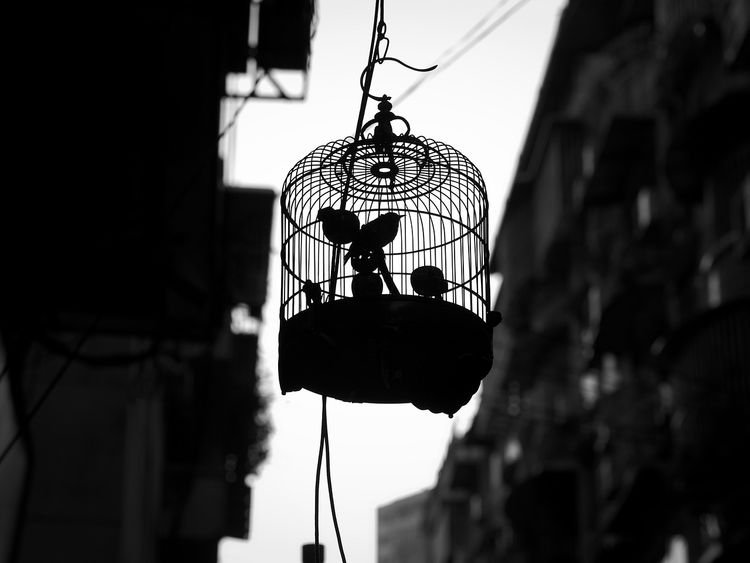
    The year is 2020. We have rules. We have laws. Yet we have children who live in cages — who are enslaved. The news of a minor domestic worker’s death after being beaten and tortured by her employers for letting “expensive pet parrots escape from their cage” sent chills down everyone’s spine. It also made one’s blood boil over the callousness of the employers who had employed an eight-year-old girl at their house to ‘take care’ of their infant. And then they killed her over a small mistake. Is the cost of a poor minor ‘housemaid’ worth nothing compared to pet parrots no matter how ‘expensive’ they may be?

    Zohra Shah’s employers – who were arrested soon afterwards – did not just kill the child but also recorded the girl being tortured on cell phones recovered by the authorities. One video reportedly shows the minor girl locked up in a large birdcage as a form of punishment. Did the couple think locking up a child in a cage was okay at some level? Are we human beings or barbarians?

    It shows another side of our society as well: we all know someone who has employed minors at their homes. We usually turn a blind eye to this ‘slavery’ because they are not our own children. They are children of the poor – people who have no choice but to let their children work for strangers just so they can make ends meet. Even if we don’t condone such practices, we don’t condemn them either – at least not vocally. We outrage at the latest incident of a minor domestic worker but soon we will forget her name. Until the next incident. And the cycle continues.

    Minister for Human Rights Dr Shireen Mazari says that domestic child labour should be declared hazardous under the Employment of Children Act 1991, as this is “the quickest way to protect children in the absence of a proper law to protect domestic labour”. This is a short-term solution. We need proper child labour reforms. Declaring domestic child labour ‘hazardous occupation’ may help to some extent but when the law already says that children under 14 years of age cannot be employed and we see children younger than that working around us, how will it benefit the children? How will it ensure that children are not losing their childhood because the state failed to ensure their rights?

    Pakistan is a signatory to the UN Convention on the Rights of the Child but children from lower-income groups have no rights whatsoever it seems. The impunity with which Zohra Shah was tortured and subsequently killed by her employers shows that the rich and powerful think they can get away with anything, even if it’s taking away someone’s life. How will we ensure justice for an eight-year-old girl who was born to a family so poor that they did not have the money for an ambulance that could take the body back to their village and to arrange a funeral?

    ‘Justice for Zohra’ does not mean punishing the couple who beat her to a pulp, subsequently leading to her death, but it means that we make sure there are no more Zohras in Pakistan. That we make sure an end to the practice of minors being employed in private households, that we ensure children get their basic right to education and do not lose their childhoods enslaved in cages, both literally and metaphorically.
  • Not-so-‘smart lockdown’

    Not-so-‘smart lockdown’

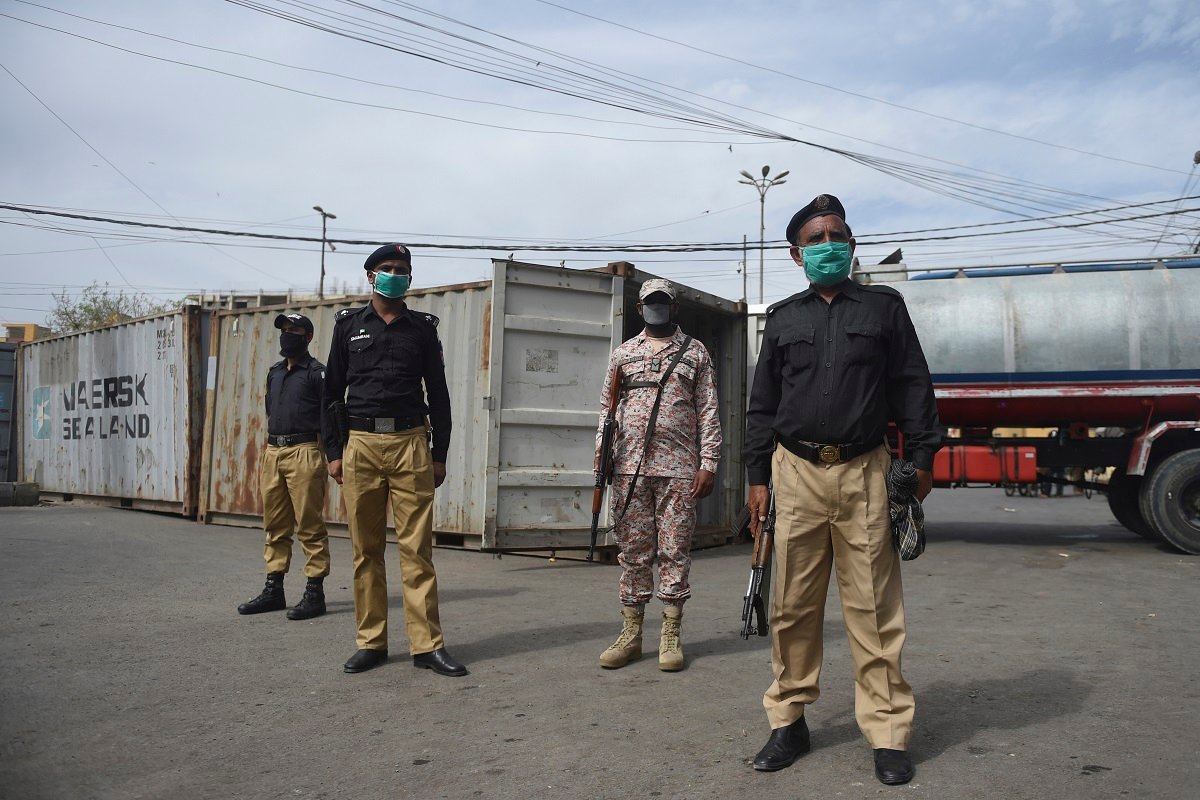
    More than 30,000 confirmed cases of coronavirus have been reported in Pakistan with over 600 deaths. The government has opted for a “smart lockdown” as both the number of cases and fatalities continue to increase on a daily basis, but nationwide lockdowns are also being eased with each passing day.

    Some government officials allude to the theory of herd immunity while others say that since the mortality rate of coronavirus is low in Pakistan, we must reopen the economy as the country cannot survive without it. We are left to our own devices now. You can choose to stay at home and in isolation if your work allows you to do it. Otherwise, go out but take precautions and hope that you don’t get coronavirus.

    We understand that the decision must not have been easy for the government but are we really preferring death over struggle?

    The world is also facing the brunt of easing lockdowns: South Korea warned of a ‘second wave’ of the coronavirus as infections rebounded to a one-month high on Sunday while coronavirus infections are rising in Germany days after the country eased its lockdown restrictions. These were two countries that had actually flattened the curve and had controlled the coronavirus cases to quite an extent.

    Imagine if the said countries — with the capacity of aggressive testing and better healthcare facilities — are struggling once again due to the second wave of the virus, what can happen in the near future in Pakistan — a country where a proper lockdown was hardly imposed for two weeks. Where the prime minister was against locking down from day one and where the ‘elite’ were blamed by the premier for somehow enforcing lockdown. Where the lockdown restrictions were eased but it led to everyone thinking that things were back to normal.

    Punjab is now allowing gyms, hair salons and barbershops to reopen again. If the administrations could not ensure that proper SOPs were followed in mosques during Ramzan, how will the local administrations ensure the same at barbershops or gyms or salons? While KP and Balochistan seem to be taking the pandemic lightly, hard-hit Sindh is also mulling opening markets.

    We talk of a ‘smart lockdown’ but we are not too smart, are we? People follow rules when they are enforced and properly implemented. They follow government instructions when the government is not giving out mixed messages or confusing messages. First, we tell them that only old people die of coronavirus, then we tell them that coronavirus doesn’t kill too many people and then we say well, even if it kills people, we must not give up hope and we need to go back to work because… economy.

  • Celebrating culture

    The eighth edition of the Lahore Literary Festival (LLF) is taking place this weekend. It is refreshing to see cultural events like the LLF take place in the country because we are fast becoming a society that doesn’t celebrate culture and critical thinking anymore.

    From Orhan Pamuk to William Dalrymple, from Audrey Truschke to Fatima Bhutto, from Omar Shahid Hamid to Vali Nasr, the line-up at the LLF is brilliant. It was good to see on the first day sessions discussing journalist integrity and the poetry of Pashtun poet Rehman Baba.

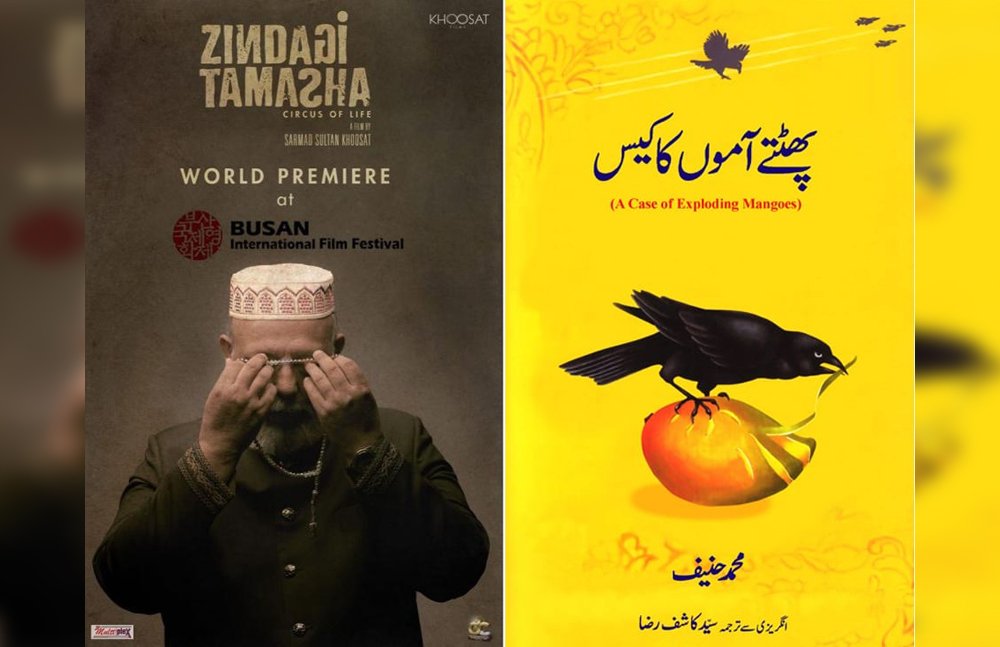
    Pakistanis boast generosity, kindness and hospitality. Yet there is something we are slowly but surely losing – tolerance. When movies like Zindagi Tamasha cannot be screened and Urdu translations of fictional books are not allowed, we should know that there’s something wrong. Neither do we entertain critical thinking nor do we tolerate difference of opinion. Also, we are quite a judgemental lot. 

    Last month, Fahad Mirza posted a picture of his European holiday with his wife Sarwat Gilani. They were kissing in the picture. Comments on social media under that picture were mostly so negative and vile that Gilani had to ask haters to unfollow her if they hated her so much. Imagine that a picture displaying affection between a husband and wife on social media could lead to such negativity, little wonder then that victims of sexual harassment get the sort of abuse that they do online and offline.

    Recently, we saw our parliamentary debates turn rowdy. The level of debates was not just low but downright personal. From Abdul Qadir Patel’s innuendo-laden speech targeting Murad Saeed to Saeed’s own abusive speech about “dogs” ruling Sindh, the level of discourse in parliament was quite disgraceful. If the people’s representatives can stoop so low, what kind of message are we giving to our citizens? No wonder then that peaceful protestors are booked under sedition charges and the prime minister thinks Maulana Fazlur Rehman should be tried for high treason under Article 6 of the constitution.

    FIA issued a statement saying that columnist Gul Bukhari will be charged with terrorism and her property confiscated if she doesn’t appear before the agency in Pakistan within 30 days. And this is because the government doesn’t like Bukhari’s tweets. One doesn’t have to agree with Bukhari’s tweets, but since when has criticism become terrorism? This is a country where terrorist Ehsanullah Ehsan escapes and flees to Turkey while the government remains silent except for interior minister’s confirmation – after over a week – but the same wants to regulate social media by asking tech companies to open their offices in Pakistan and share data of users the government thinks are making anti-state state?

    Intolerance on social media is at another level. If you support ‘ABC’ party, ‘XYZ’ party’s supporters will call you names we can only hope they never take in front of their families. Difference of opinion is not tolerated anymore – both online and offline. Thus to have literary festivals like the LLF, which celebrate critical thinking and have discussions on culture, arts, poetry and literature, is a blow of fresh air.

  • Damning bans

    Damning bans

    “Creativity takes courage” – Henri Matisse

    Matisse wasn’t wrong. When filmmaker Sarmad Khoosat released the first trailer of his upcoming movie, ‘Zindagi Tamasha’, it created quite a buzz. The movie was supposed to release today (January 24) across Pakistan. It has already won the Kim Ji Seok Award at Busan International Film Festival. Film critics and the public at large were waiting for its release as Sarmad is known to be quite creative and the movie looked promising enough. Just like other governments, this government too promised the revival of Pakistani cinema. Sarmad Khoosat’s ‘Zindagi Tamasha’ seemed like a step in the right direction.

    But what happened when religious hardliner Tehreeke Labbaik Pakistan (TLP) threatened to hold protests against the movie just because the protagonist was a bearded man who is shunned by society after a video of him dancing at a wedding goes viral? The Pakistani state caved in to pressure, again.

    A film that was passed by three censor boards cannot be released now because the state fears the religious pressure group. The federal government has decided to block its release and has asked the Council of Islamic Ideology (CII) to critically review it. The Punjab government will review it on February 3 and a TLP representative will be in the review committee. The Sindh Censor Board halted its release citing the reason that it “may create unrest within religious quarters and may deteriorate and be detrimental to the peaceful circumstances in the country”.

    There is nothing outrageous or anti-Islam in the movie. Busting the myths about the movie, Mohammed Hanif writes for Samaa, “The only taboo the film breaks is showing a man with a beard doing house chores. It humanises a religious man.”

    Sarmad wrote two beautiful and heartfelt open letters – one was addressed to the president, prime minister, chief justice, army chief and information minister, while the other was for Pakistan and Pakistanis. He ended his first letter with these poignant words, “The space for rational and artistic thinking and expression must not be annexed by a few troublemakers for their political ends, but I fear this is what will happen if we buckle under this time.”

    We are barring the release of a movie that promises to be creative and critical while being sensitive and responsible at the same time. Why do we then complain about misogyny on our television screens if we will not allow films like ‘Zindagi Tamasha’ to be screened in our cinemas? Films that make us think, films that break stereotypes, films that make us question the dark side of our society; films that celebrate the beauty of our nation.

    There already are curbs on freedom of expression in Pakistan these days. Copies of the Urdu translation of Hanif’s ‘A Case of Exploding Mangoes’ were confiscated after threats to the publisher. The Punjab Assembly has recommended banning three books on Islam as they critically evaluate historical events. When a country starts banning books and movies, it means its descent into the dark ages is almost complete. Once we complete this downward journey, there’s no coming back.

    It’s better to stop right now and celebrate critical thinking instead of banning art and creativity.

  • Regressive roles perpetuate myths

    Regressive roles perpetuate myths

    If you are an avid follower of Pakistani serials/dramas, the one thing that is common in almost all of them is how women are portrayed.

    There is a ‘good girl’ who is a homemaker, wears eastern clothes, who will sacrifice everything for family, who is often seen in the kitchen cooking food or cleaning the house, who hardly steps out of the house unless it’s with her husband and/or family, who will forgive her husband for many things, including domestic violence or infidelity or both.

    Then there is the ‘bad girl’, who is more often than not a working woman, who wears western clothes, drives a car, goes out on her own, is ambitious and ‘conniving’. Divorced women are either shown as bad girls or sad girls.

    We often wonder how educated writers can write such stuff and why educated women actors can take up such roles.

    Actor Hina Bayat in an interview with Fifi Haroon for BBC Urdu once said, “ “Most scriptwriters today are women who have never seen the inside of an office. In their real-world, working women don’t exist so they don’t write them into their fictional worlds either – except perhaps as negative characters or mothers who ignore their children.”

    This explains why the writers write what they do to a certain extent.

    As for the actors, maybe there is not much they can do when acting is their bread and butter and these are the roles that are in the market. We are not blaming the actors, but we do believe that if there is a market for plays like ‘Udaari’, then why do we need plays like ‘Jhooti’ that perpetuate falsehoods about domestic violence.

    We need more progressive writers. Otherwise, these dramas will keep feeding our already patriarchal and misogynist society.

    Lest we forget, when 20-year-old law student Dua Mangi was kidnapped from Karachi on November 30, 2019, it highlighted a dark side of Pakistan that we often ignore, i.e. extreme misogyny.

    BBC did a story on the Mangi case titled, ‘Dua Mangi: Slut-shamed in Pakistan for being abducted’. The story talked about the inappropriate remarks regarding Dua’s dressing and comments on how she was out at night with a male friend were discussed more than the actual incident of kidnapping.

    It was tragic to see that there was more outrage online over Dua’s clothes, her friend and why she was out at night than over the actual crime. It should have been a moment of introspection for us. Instead, we ignored it once again. By ignoring or not calling out such perverted behaviour, we normalise misogyny. Horrid practices like ‘honour killing’ and ‘Vani-Swara’ are not frowned upon; instead, they are dismissed as tribal culture.

    When women and young girls are used to settle family disputes, it is a crime, not tribal culture.

    That our society is prevalently misogynistic is no secret as this vile misogyny has always been on display when it comes to crimes against women.

    When General (r) Musharraf was asked in an interview with the Washington Post about the high-profile gang rape case of Mukhtaran Mai, he said, “You must understand the environment in Pakistan… this has become a money-making concern. A lot of people say if you want to go abroad and get a visa for Canada or citizenship and be a millionaire, get yourself raped.”

    When heads of a state of a country can think like this and say it out loud to an international media organisation, we can imagine the state of overall apathy and insensitivity regarding women.

    Meesha Shafi’s sexual harassment case against Ali Zafar is another case in point. The kind of abuse that Meesha got online shows why it is hard for Pakistani women to talk about sexual abuse let alone coming out in public with the details.

    It doesn’t matter if the woman is Mukhtaran Mai, Meesha Shafi or Dua Mangi, she will get abused. Victim blaming and victim shaming has become the norm. It seems as if being a woman is some sort of a crime. According to a report by Media Matters for Democracy, “95 per cent of women journalists feel online violence has an impact on their professional choices, while 77 per cent self-censor as a way to counter online violence.”

    This is the reality of Pakistan – where women are the culprits even after being harassed, raped, kidnapped, shot at and even after being murdered. A country where ‘Aurat March’ triggers ‘ghairat’ but where the kidnapping of a young girl cannot even elicit apathy.

    This is why we don’t need regressive roles for women in dramas. This is why we don’t need to portray working women who are independent and strong as the ‘bad girls’ or ‘vamps’. This is why we need good writers who don’t demonise women or stereotype them. This is what we ask of our entertainment industry.