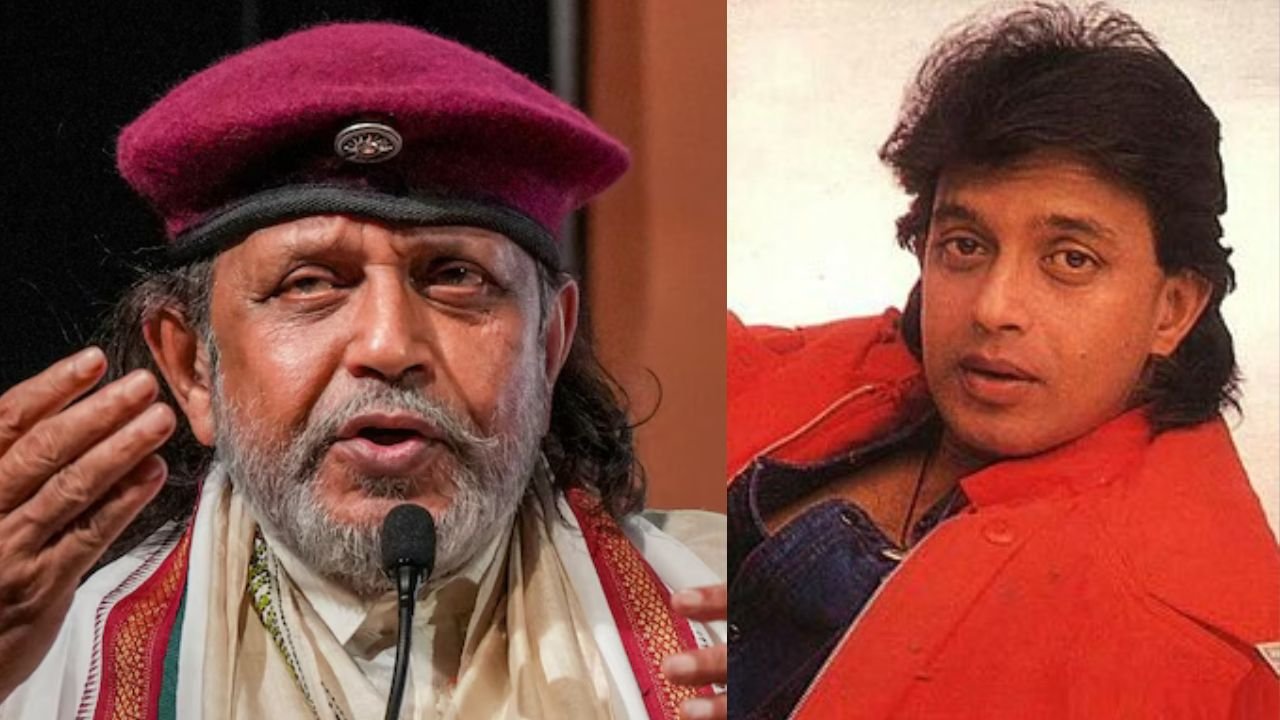
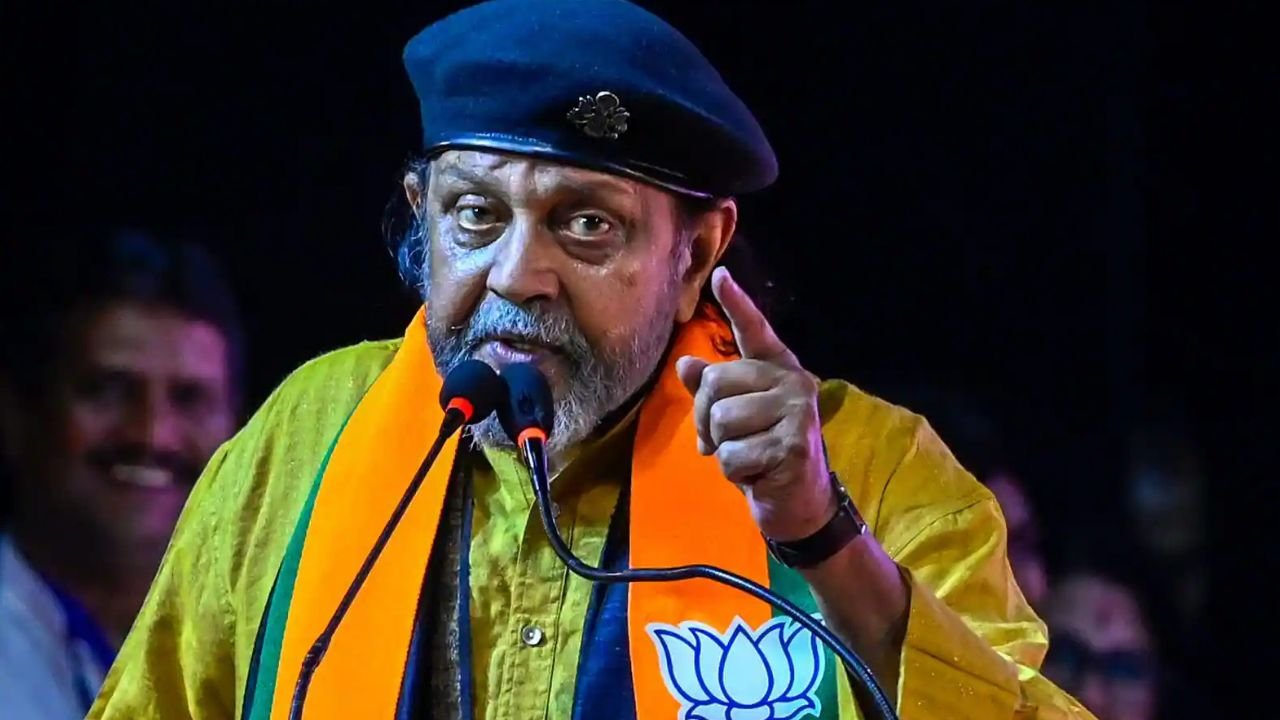
Actor-turned-politician Mithun Chakraborty of the ruling Bharatiya Janata Party (BJP) has incited violence against Muslims in India, threatening to “chop them up” and burying them in the ground.
As per the details, a viral video of his address at a political rally in West Bengal showed him responding to a statement made by opposition member Humayun Kabir ahead of the upcoming Lok Sabha elections.
“A leader says there are 70 per cent Muslims and 30 per cent Hindus [and] that he will ‘cut’ and throw them in the Bhagirathi [River]… I thought the chief minister [Mamata Banerjee] would say something. She didn’t… so now I am saying, we will chop them [up] and bury them in the ground,” the BJP leader can be heard as saying while addressing a ceremony to kick-off BJP’s membership drive in West Bengal.
“I am not the chief minister… but I am saying this,” he said, adding that his party would do anything to win the “throne” of Bengal. “It will belong to the BJP after the 2026 assembly election.”
“I am saying it again and again… we will do anything… anything. I am saying this with Home Minister Amit Shah Ji sitting here — we will do anything,” Chakraborty asserted.
“I say we will cut you up and throw you, not in the Bhagirathi because that is our mother, but we will throw you in the ground,” he threatened in response to Humayun Kabir’s pre-election comment.
“You are 30 per cent [of the people here] but we are 70 per cent… if you think you can demolish mosques and Muslims will sit back and relax… [you are wrong]. I will leave politics if I don’t drown you people in the Bhagirathi within two hours, I will leave politics. I will not let you guys stay in Shaktipur,” Kabir had said.
Notably, the opposition member was reprimanded by the Indian Election Commission over his remarks.
Mithun Chakraborty, however, relentlessly accused the Bengal state government of not allowing the Hindu community to cast votes.
The 74-year-old actor has also served as a member of the Upper House of the parliament, the Rajya Sabha, for which he was nominated by West Bengal Chief Minister Mamata Banerjee. He resigned from Banarjee’s All India Trinamool Congress (TMC) in 2016 and later joined the BJP.
A video of a New York woman repeatedly pepper sprayed her Muslim Uber driver praying inside the car has emerged online. The attack occured on July 31, however, the woman has been indicted with perpetuating a hate crime, as per a recent press release by the Manhattan District Attorney’s Office.
Jennifer Guilbeault, 23, was indicted on multiple hate crime charges on October 28 for pepper-spraying a 45-year-old Muslim Uber driver, Shohel Mahmud, as he began praying in Arabic at a red light.
Court documents reveal that Jennifer was seen lunging forward towards the driver’s seat and spraying his face with pepper spray, inflicting pain and burning sensations, just after Shohel Mahmud started praying.
The driver subsequently called the police, and the woman was arrested.
She has now been formally charged by the local Court and is set to return for a court appearance in January.
CNN quotes Manhattan District Attorney Alvin Bragg, who said, “As alleged, Jennifer Guilbeault senselessly assaulted a Muslim Uber driver while he was just doing his job. The victim is a hardworking New Yorker who should not have to face this type of hate because of his identity. Everyone is welcome to live and work in Manhattan.”
The Council on American-Islamic Relations (Cair) also welcomed the indication.
“We welcome the hate crime charges in this case and thank law enforcement authorities for sending a clear message that those who allegedly carry out bias-motivated attacks will face the consequences,” said Afaf Nasher, the Cair-NY executive director in a statement cited by The Guardian.
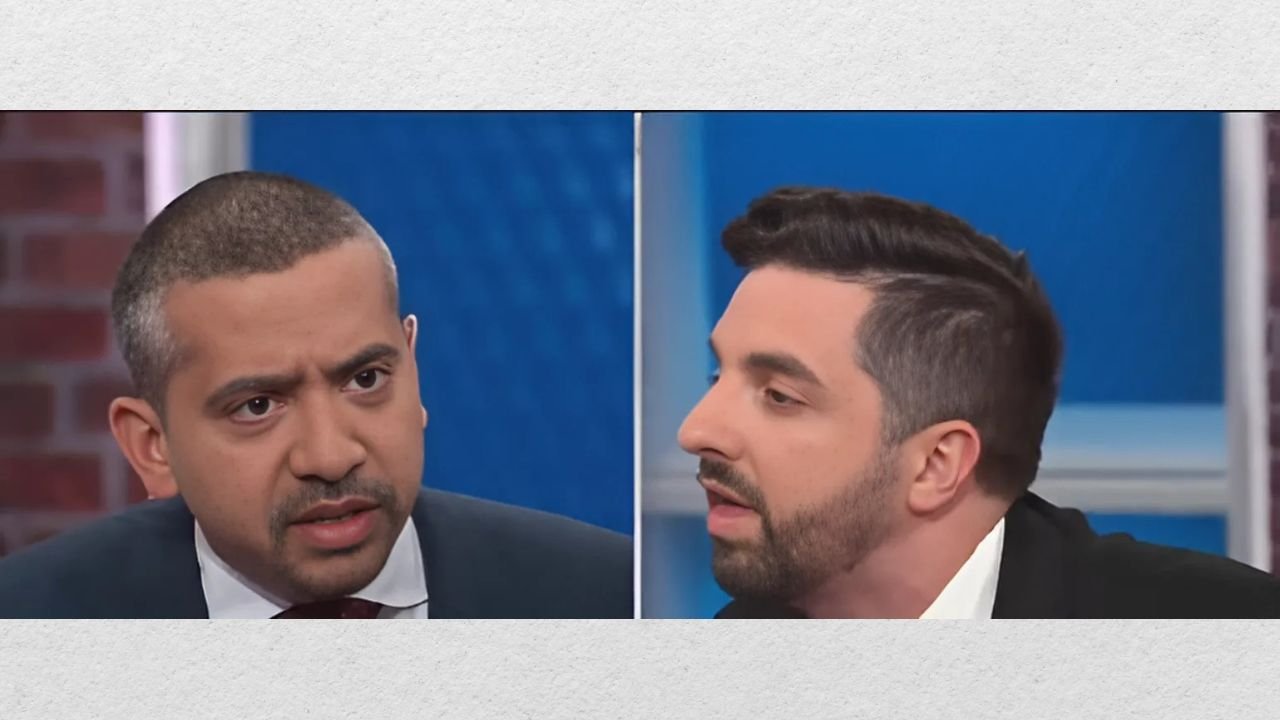
Mehdi Hasan, internationally renowned broadcast journalist and founder of media company Zeteo, recently appeared on CNN NewsNight, where right-wing fellow panellist Ryan James Girdusky told him that he hoped his “beeper doesn’t go off”.
The reference to a series of pager blasts in Lebanon last month that specifically targeted Hezbollah fighters came in response to Mehdi saying that he supports Palestinians.
“Did your guest just say I should be killed on live TV,” Hasan asked the show’s host, Abby Phillip.
The other guests also sprang to Hasan’s defence, calling out the conservative panellist.
However, after a commercial break, the program host issued an apology to Hasan while viewers were informed that Ryan Girdusky had been removed from the show.
“I want to apologise to Mehdi Hasan for what was said at this table. It was completely unacceptable,” she said. “I want to apologise to the viewers at home.”
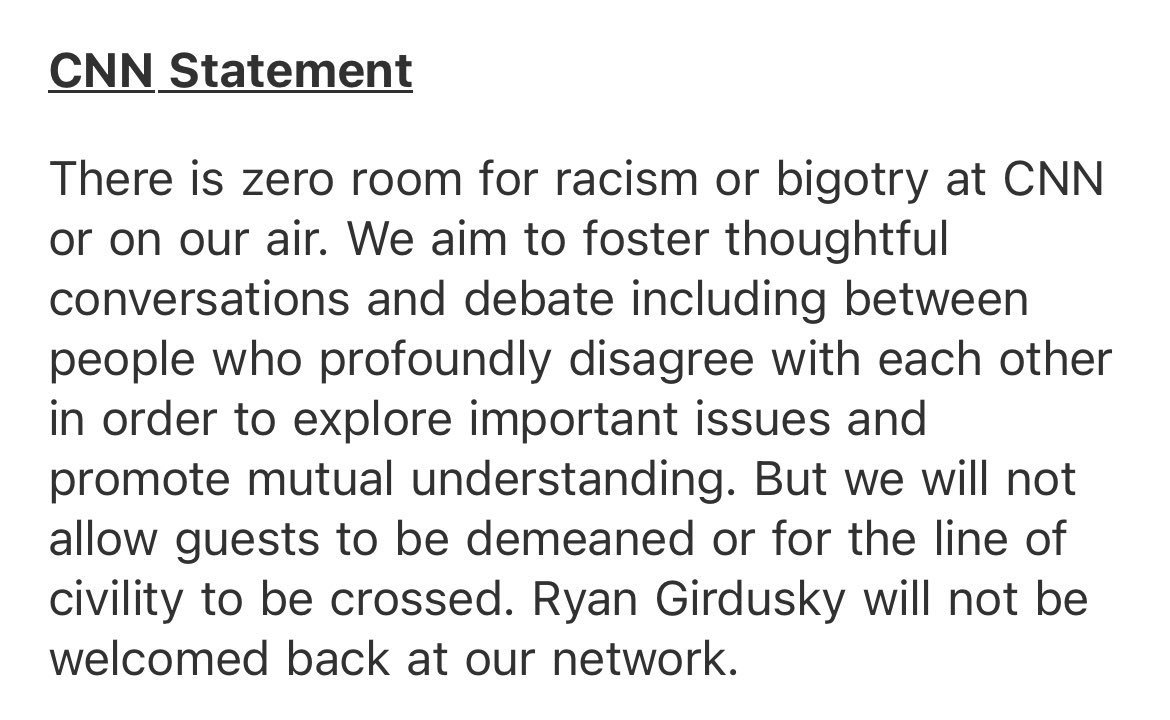
Later, CNN also issued a public apology in a statement that said, “Zero room for racism or bigotry at CNN or on our air” while announcing that Girdusky “will not be welcomed back at our network”.
Mehdi Hasan also retweeted the statement on X (formerly Twitter).
The panel on CNN Newsnight was debating the upcoming United States presidential elections and Republican candidate Donald Trump’s controversial remarks.
Hasan criticised the racist and sexist comments aimed at several minority groups, including Black Americans, Latinos and Jews. However, he still acknowledged that the accusation against Trump and his supporters being Nazis is “inflammatory”.
Earlier, in their heated discussion, Mehdi Hasan had said that if people on the far right “don’t want to be called Nazis, stop doing, stop saying”. To this, Girdusky butted in by saying Hasan has been called an “antisemite more than anyone at this table”.
Hasan responded by saying that he is used to being labelled an antisemite due to his support for the Palestinian people. Girdusky interjected by saying, “Well, I hope your beeper doesn’t go off.”
Ryan attempted to apologise amid crosstalk and tried to justify his comment by indicating he assumed Hasan said he supported Hamas.
Girdusky continued with his opposing approach in a tweet: “You can stay on CNN if you falsely call every Republican a Nazi and have taken money from Qatar-funded media. Apparently, you can’t go on CNN if you make a joke. I’m glad America gets to see what CNN stands for.”
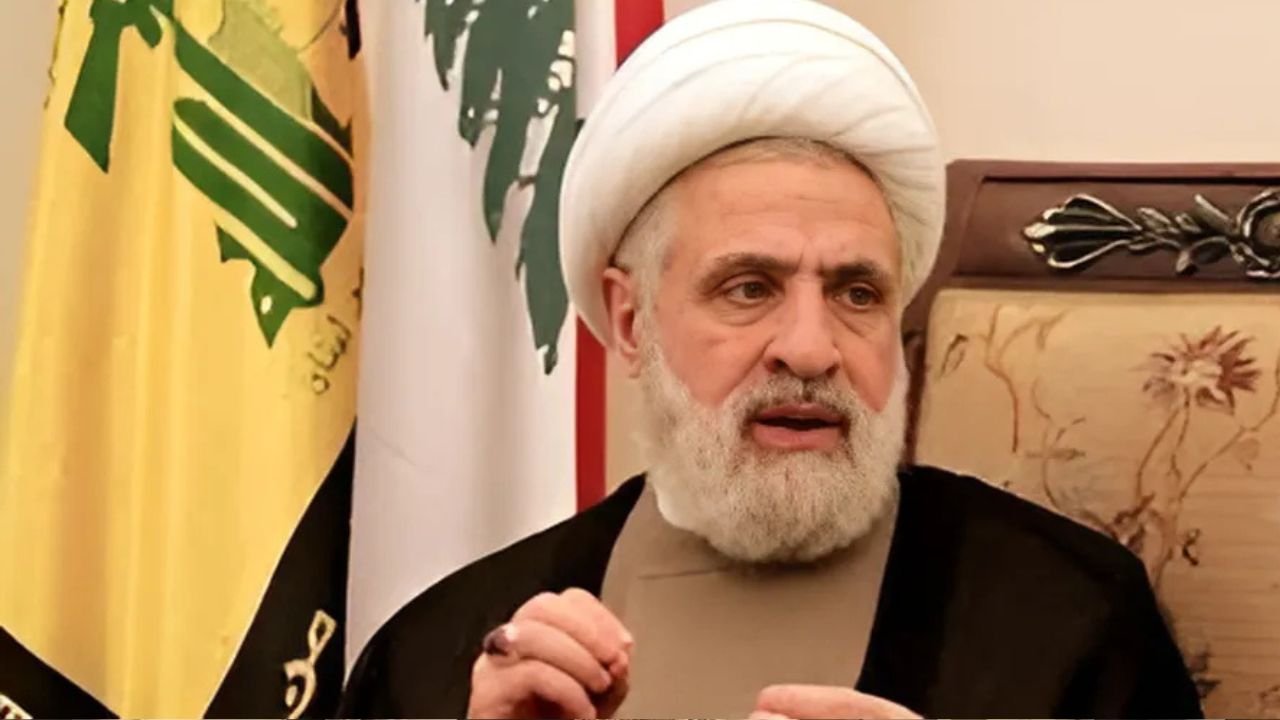
Lebanon’s Hezbollah movement announced Tuesday it has chosen deputy head Naim Qassem to succeed Hasan Nasrallah as leader after his death in an Israeli strike on south Beirut last month.
“Hezbollah’s (governing) Shura Council agreed to elect… Sheikh Naim Qassem as secretary general of Hezbollah,” the group said in a statement, more than a month after Nasrallah’s killing.
Hezbollah pledged to keep “the flame of resistance burning” until victory is achieved against Israel after an all-out war erupted on September 23.
Qassem was elected by the five-member Shura Council, the group’s main decision-making body, two days before Tuesday’s announcement, a source close to Hezbollah said.
The source, who spoke on the condition of anonymity because he is not authorised to speak to the press, said a new Shura Council would be elected after the end of the war.
The council may then opt to elect a new leader or keep Qassem in the top post, the source said.
Qassem had long operated in the shadows of Nasrallah, a towering leader who was one of the most enigmatic and influential figures in the Middle East.
Hashem Safieddine, the head of Hezbollah’s executive council, was initially tipped to succeed Nasrallah.
But he, too, was killed in an Israeli strike on Beirut’s southern suburbs shortly after Nasrallah’s assassination.
Hezbollah’s Palestinian ally Hamas, whose October 7, 2023 attack on Israel triggered the Gaza war, welcomed Qassem’s election.
“We consider this election evidence of the party’s recovery from the targeting” of its leaders, Hamas said in a statement, pledging “support for the new leadership”.
Qassem, 71, was one of Hezbollah’s founders in 1982 and had been the party’s deputy secretary general since 1991, the year before Nasrallah took the helm.
He was born in Beirut in 1953 to a family from the village of Kfar Fila on the border with Israel.
He was the most senior Hezbollah official to continue making public appearances after Nasrallah largely went into hiding following the group’s 2006 war with Israel.
Since Nasrallah’s death in a huge Israeli air strike on September 27, Qassem has made three televised addresses, speaking in more formal Arabic than the colloquial Lebanese favoured by Nasrallah.
With less charisma and fewer oratorical skills than Nasrallah, Qassem said the group will soon replace its assassinated leader.
He claimed Hezbollah’s military capabilities were intact and backed efforts by parliament speaker Nabih Berri to broker a ceasefire.
In his last speech on October 15, Qassem said a ceasefire was the only way Israel could guarantee the return of its residents to the north.
The Israel-Hezbollah war erupted last month after nearly a year of cross-border fire.
On September 23, Israel ramped up strikes on Hezbollah strongholds and sent in ground forces while killing one member of the group’s top leadership after another.
The onslaught has killed more than 1,700 people in Lebanon since September 23, according to an AFP tally of health ministry figures, though the real number is likely higher due to gaps in the data.
The Israeli military says it has lost 37 soldiers in its Lebanon campaign since it launched ground operations on September 30.
Saudi Arabia executed seven people on Wednesday, including five for drug trafficking, the official Saudi Press Agency (SPA) said.
The deaths brought the total number of executions carried out this year in the Gulf kingdom to 236, according to an AFP tally based on official statements.
Yahya Lutfullah, Ali Azib, Ahmed Ali and Salem Nahari were executed in the southern province of Asir for “smuggling hashish” into the country, the interior ministry said in a statement published by SPA.
The report said all four were Yemeni citizens.
Also on Wednesday, the same source announced the execution of a Pakistani man for drug trafficking, bringing the number of people executed in the kingdom for that crime this year to 71.
Saudi Arabia has become a major market for captagon, an addictive amphetamine drug flooding in from war-torn Syria and Lebanon.
Saudi authorities launched a high-profile anti-drug campaign last year, leading to a spate of raids and arrests.
Executions of drug traffickers have been increasing since a moratorium on the death penalty for drug cases ended two years ago.
The interior ministry also announced the execution of two Saudis for murder on Wednesday.
Saudi Arabia executed the third highest number of prisoners in the world after China and Iran in 2023, according to Amnesty International, which began recording the annual figures in 1990.
Riyadh’s use of the death penalty has been criticised numerous times, with rights groups saying it is excessive and out of step with the kingdom’s efforts to present a more modern image on the world stage.
Riyadh has previously said that the death penalty is necessary to “maintain public order” and sentences are only carried out if “the defendants have exhausted all levels of litigation”.
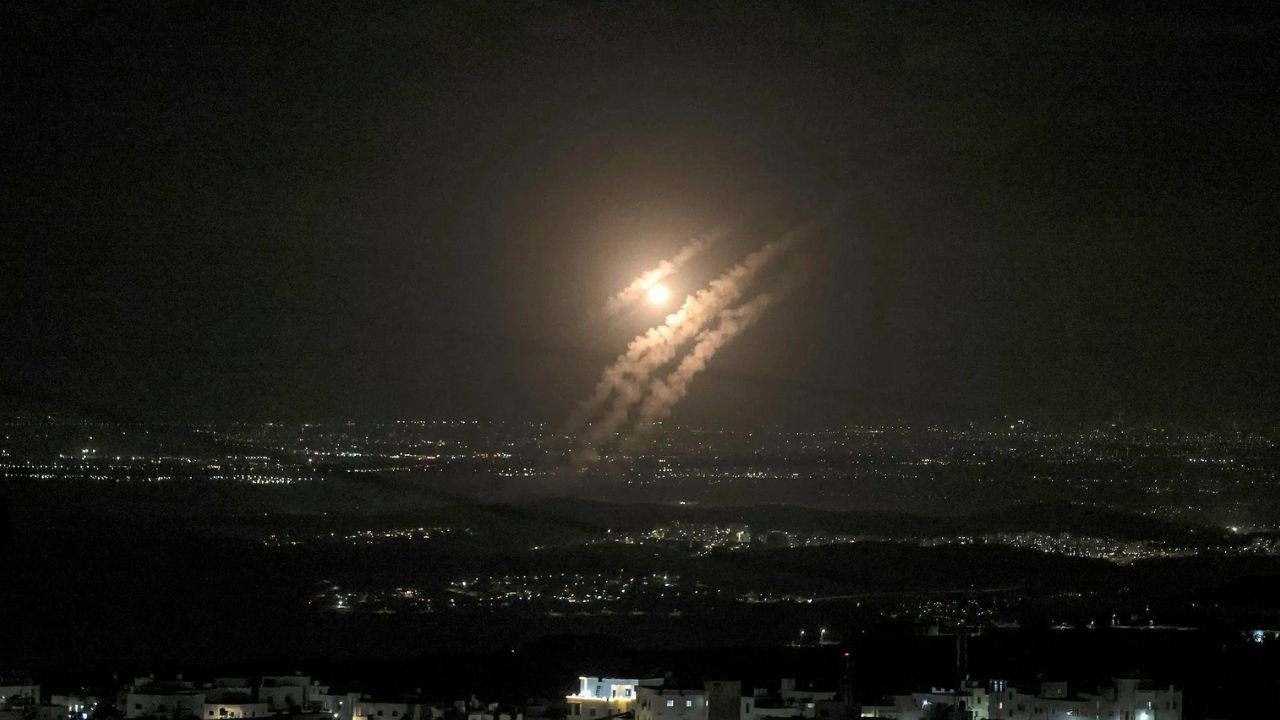
Israel said it conducted air strikes against Iran on Saturday that hit military bases and missile sites in retaliation for the Islamic Republic’s attacks, warning it would “pay a heavy price” if it responded.
The Israeli military said its strikes hit Iran’s missile manufacturing facilities, missile arrays and other systems in several regions.
Iran confirmed an Israeli attack had targeted military sites in the capital, Tehran, and other parts of the country but said it had caused “limited damage”.
Israel had vowed to hit back at Iran for its October 1 missile strike, the second-ever direct attack by the Islamic Republic on its arch-foe.
The rapid escalation of violence has heightened fears across the region and beyond of a wider war, pitting Israel against Iran and the allies it dubs the “axis of resistance” on multiple fronts.
“Based on intelligence, IAF (air force) aircraft struck missile manufacturing facilities used to produce the missiles that Iran fired at the State of Israel over the last year,” Israel’s military said in a statement.
“Simultaneously, the IDF (military) struck surface-to-air missile arrays and additional Iranian aerial capabilities,” the army said, adding that the “retaliatory strike has been completed and the mission was fulfilled”.
Since October 7, 2023, Israel has been committing genocide in Gaza, and since late last month, it has been at war with Hezbollah in Lebanon.
Both Hezbollah and Hamas are allies of Iran, as are armed groups in Yemen and Iraq and the government in Syria.
In a statement announcing the operation, the Israeli military said it was conducting “precise strikes on military targets in Iran”, in response to what it said were “months of continuous attacks from the regime in Iran”.
“The regime in Iran and its proxies in the region have been relentlessly attacking Israel since October 7th — on seven fronts — including direct attacks from Iranian soil,” the military said.
Iran to resume flights after Israel strikes, local media says
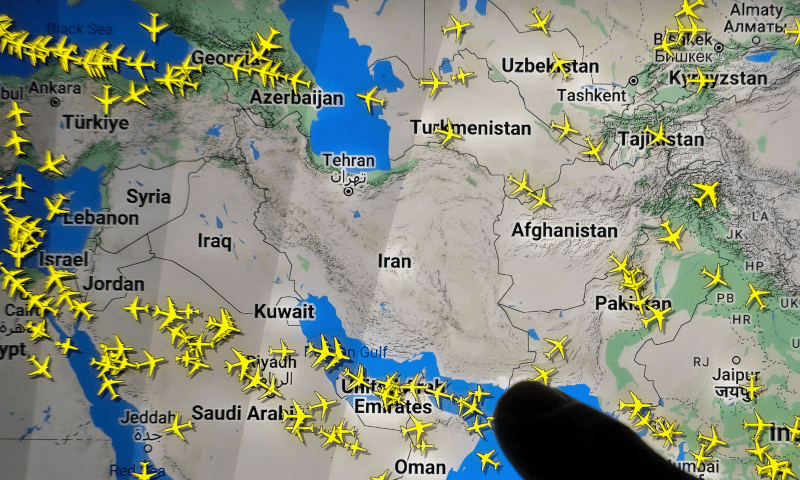
Iran will resume flights as normal from 9am (5:30am GMT), Reuters reports citing the semi-official news agency Tasnim, following a brief suspension after Israel struck military targets in the country.
This photo shows a page on the Flightradar24 website, taken in Nicosia early on Oct 24, 2024, displaying commercial flights around Iran’s airspace. — AFP
Iran in April launched its first-ever direct assault on Israeli territory in retaliation for a deadly strike on Iran’s consular annex in Damascus.
‘Fully mobilised’
Israel’s genocide in Gaza has killed 42,847 people, the majority civilians, according to figures from the Gaza’s health ministry, which the United Nations considers reliable.
Israel has since broadened the scope of its operations to Lebanon, vowing to secure its northern border after nearly a year of attacks launched by Iran-backed Hezbollah in support of Hamas.
At least 1,580 people have been killed in Lebanon since September 23, according to an AFP tally of Lebanese health ministry figures.
Iran’s October 1 strike came after an Israeli air raid killed Hezbollah chief Hassan Nasrallah and Revolutionary Guards general Abbas Nilforoushan in Lebanon on September 27.
The killing of Nasrallah, which dealt Hezbollah a seismic blow, followed the death of Hamas political leader Ismail Haniyeh on July 31 in Iran in an attack widely blamed on Israel.
Iran’s air defence force confirmed an Israeli attack had targeted several military bases in Tehran and other areas.
“This fake regime (Israel) attacked parts of military centres in Tehran, Khuzestan and Ilam provinces,” it said in a statement, adding that the attack “caused limited damage” while being intercepted.
US informed
Iran had in recent weeks warned that any attack on its infrastructure would provoke an “even stronger response”, while Revolutionary Guards general Rassul Sanairad said an attack on nuclear or energy sites would cross a red line.
US National Security Council spokesman Sean Savett said the “targeted strikes on military targets” are “an exercise of self-defence and in response to Iran’s ballistic missile attack against Israel on October 1.”
The United States was “informed beforehand and there is no US involvement,” a US defence official told AFP, on condition of anonymity.
The official did not say how far in advance the United States had been informed or what had been shared by Israel.
Syrian state news agency SANA said Israel conducted an air attack on Saturday from the occupied Golan Heights and Lebanon, targeting military positions in Syria.
Citing an unnamed military source, the agency said the attack at around 2:00 am (2300 GMT) had targeted positions in central and southern Syria.
The attack prompted Syria to activate its air defences, SANA said, as Israel announced it was launching “precision strikes” in neighbouring Iran.
Iran and Syria are allies in the so-called “axis of resistance” that also includes Hezbollah in Lebanon and Hamas in Gaza.
“Our anti-aircraft defence is confronting hostile targets in the skies around Damascus,” state news agency SANA reported on Telegram.
SANA had previously reported the “sounds of explosions” in the vicinity of the Syrian capital.
The Islamic Resistance in Iraq, a loose network of pro-Iran factions, claimed responsibility early Saturday for a drone attack against a “military target” in northern Israel, following the announcement of Israeli strikes on Iran.
Iraq suspended all air traffic Saturday at its airports until further notice after Israel its attack.
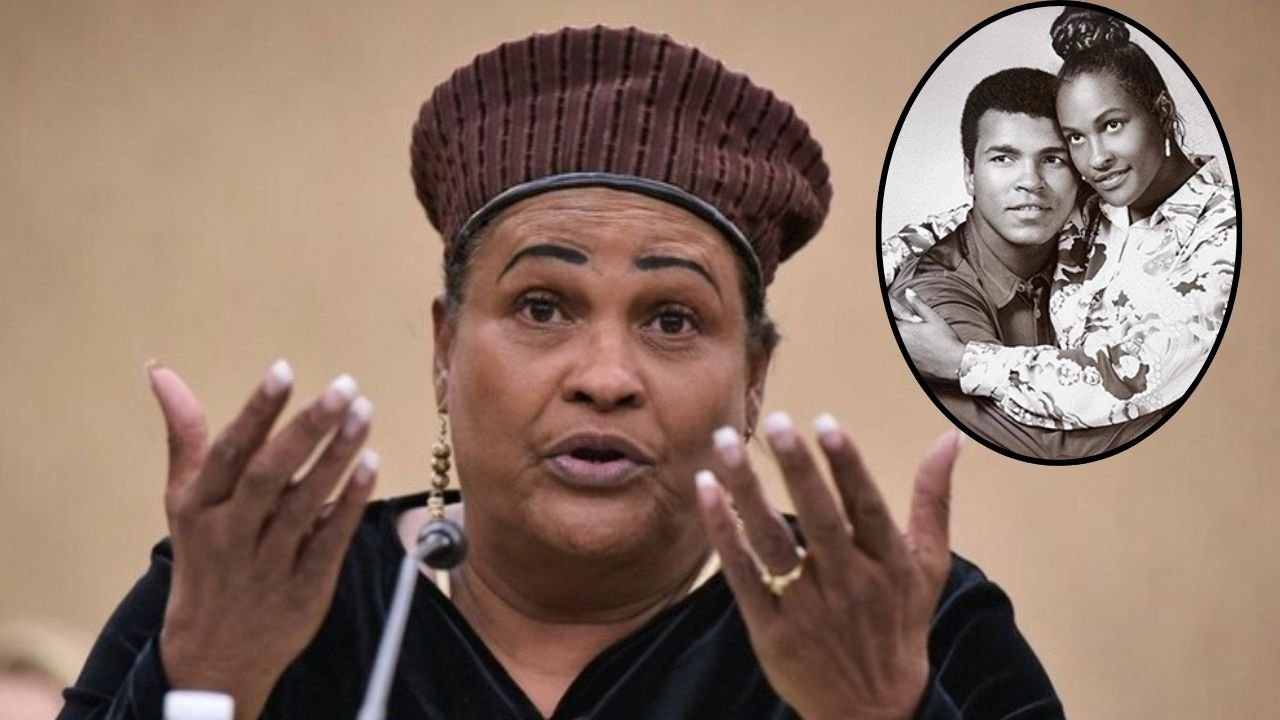
A former wife of legendary US boxer Muhammad Ali arrived in the Afghan capital, a Taliban government official said Friday, to reportedly open a stadium in a country where women are barred from sports.
The head of the Taliban government’s sports directorate, Ahmadullah Wasiq, told AFP that Khalilah Camacho-Ali, who was married to the boxer for a decade from 1967, had arrived in Kabul.
State media cited the directorate as saying she was in the city “to build a sports stadium to be named ‘Pirozi’ (victory in Dari) and a sports association named after Muhammad Ali”.
Born Belinda Boyd in 1950 in the United States, Camacho-Ali, like her world champion boxer ex-husband, converted to Islam after they married.
Muhammad Ali himself visited Kabul in 2002, a year after the US forces overthrew the first Taliban government, visiting a girls’ school in his role as a United Nations peace ambassador.
Since the Taliban government came to power in Afghanistan in 2021, they have imposed a strict interpretation of Islamic law, with women bearing the brunt of restrictions the United Nations have called “gender apartheid”, including blocking women from participating in sports.
During the Taliban’s first rule from 1996 to 2001, public executions in sports stadiums were common.
Public corporal punishment has continued since their return to power and at least two public executions have been held in a sports stadium.
The authorities have recently set restrictions on combat sports as well, saying free fighting such as in Mixed Martial Arts was un-Islamic.
Camacho-Ali is a martial artist, as well as an actress and author, according to her website.
Ali was born Cassius Clay in the southeastern state of Kentucky and is known as both a sporting great and for his role in fighting for civil rights for African Americans. He died in 2016.
Two women tourists got lost in Dubai’s desert, and a camel ride from Uber came to their rescue.
While Dubai is famous for its towering skylines, luxurious malls, cars, and futuristic architecture, it also has a tint of nature with its desert. And recently, a couple of women tourists got lost after their vehicle broke down.
This uneventful episode took an unusual turn when they decided to book a ride via an app that gave them the option of booking a camel ride.
Frustrated and waiting for the ride, one of the women in the video says to the camera, “We got lost and decided to check Uber, and guess what? There’s a camel!”.
The two booked the ride for 50.61 AED.
It was reportedly shot at Al Badayer along the Dubai-Hatta Road, where the tourists were surprised to learn that the Uber app provides a strange variety of options, such as ATVs and, surprisingly, a camel, in addition to the regular vehicles.
A man with a camel then arrives and comes to their rescue, introducing himself as an “Uber Camel driver”.
“What do you do for a living?” one of them asks, and he replies, “I drive Uber Camel. I help people who get lost.”
As the video started circulating on social media, internet users were stunned, and some called it a “staged” video.
“How can they be lost if they have a working smartphone, internet and GPS??” reacted a netizen online.
Times of India, however, set the record straight and revealed that it was a promotional video and that the camel ride service is not available for everyone.
The influencer was hired to promote Uber’s recent collaboration with a tour agency, Jetset Dubai, which offers a camel ride.
Since its release, the video has garnered more than 115,000 views on Instagram.
BRICS countries, such as Brazil, Russia, India, China, and South Africa, are deliberating the launch of a new reserve currency using blockchain technology to store and transfer digital tokens. It will be backed by their respective currencies.
According to reports, the proposal has come from Russia, a leading member of the group as it seeks to convince other members to build an alternative platform for international payments that would be immune to the hegemony of the West.
The purpose of having BRICS currency is to ensure safe and secure transactions among this group of emerging economies while also bypassing the United States (US) dollar. Russian President Vladimir Putin sees it as a solution to increasing problems in settling trade payments.
Putin, in his address, also highlighted that new economic opportunities will be created by integrating digital currencies not only for BRICS nations but also for other developing economies.
This switching of traded currency is part of BRICS’ long-term goals, which are to evade the dependence on the US dollar in international trade and solidify the economic cooperation among emerging markets of BRICS.
The final Kazan declaration of BRICS 2024 also stated, “We recognise the widespread benefits of faster, low cost, more efficient, transparent, safe and inclusive cross-border payment instruments built upon the principle of minimizing trade barriers and non-discriminatory access. We welcome the use of local currencies in financial transactions between BRICS countries and their trading partners.”
While experts believe the BRICS cryptocurrency model might not be feasible, there also are concerns that non-Chinese members might increase their dependence on China’s yuan instead, leading to a rift between Beijing and Moscow.
Notably, there have been talks of the potential launch of a Yuan-backed stablecoin as well.
Except for India, Pakistan shares good relations with all BRICS countries and has already been trading with China in Yuan. According to a Profit report, Pakistan and China’s Yuan trade increased to over 14 per cent in 2023, up from just two per cent in 2018.
While cryptocurrency remains an alien phenomenon in the economic corridors of Pakistan, the launch of such a currency could certainly open new trade avenues. This, however, is subject to approval for Pakistan’s inclusion in BRICS.
With Pakistan making a formal request to join BRICS in 2023, all eyes were on the summit to find out if Islamabad’s bid would be accepted this year. Russia’s Deputy Prime Minister Alexei also expressed his support to Pakistan’s membership of BRICS during his visit to Islamabad in September.
Foreign relations experts deemed India as a big hurdle in this process but chances became bright when reports from across the border suggested that India will give a nod to this inclusion. “One of the key takeaways of the summit is likely to be India’s green signal to Pakistan’s long-pending bid for membership in the bloc,” ABP Live reported.
The BRICS alliance has already expanded to include Iran, Egypt, Ethiopia, the United Arab Emirates, and Saudi Arabia.
After Pakistan’s application for membership in August 2023, Turkiye, Azerbaijan, and Malaysia have also formally applied to become members, while a few others also showed interest in joining.
During the summit, Indian Prime Minister Narendra Modi expressed India’s support for the inclusion of new countries into the bloc. He said that during his remarks at the Closed Plenary of the 16th BRICS Summit in Russia’s Kazan on October 23.
He further added that this process should happen only through consensus among all nations. “India is ready to welcome new countries into BRICS as Partner Countries. In this regard, all decisions should be taken by consensus, and the views of BRICS founding members should be respected. The Guiding principles, standards, criteria and procedures adopted during the Johannesburg summit, should be complied with by all members and partner countries,” he said.
While analysts see this as a bid to thwart Pakistan’s inclusion in BRICS, a formal response remains awaited.
An Indian woman from Uttar Pradesh allegedly killed her husband by poisoning him after breaking the Karwa Chauth fast for his long life.
As per Indian traditions, women are supposed to keep a fast for the husband’s long life, but this one took a tragic turn in India’s UP as Shailesh Kumar, 32, was poisoned by his wife Savita, who suspected him of cheating on her.
NDTV reports that Savita suspected that Shailesh was having an affair with another woman. This enraged her, and she poisoned his food.
The woman had been fasting the whole day to pray for her husband’s long life as part of the Hindu ritual of Karwa Chauth. Her husband, Shailesh had also been busy making arrangements.
Just when Savita was breaking her fast in the night after sighting the moon, she had an argument with her husband but things seemed to return to normal soon after as the couple ate together.
However, Savita asked Shailesh to go to a neighbour’s house to get something and then fled from home.
The victim’s brother told the police that he was rushed to a hospital, where he also recorded a video stating that Savita had poisoned his food. Later, he died.
Savita was then arrested by the police.
The local police, in their official statement, said, “The crime was reported from Ismailpur village. The woman allegedly poisoned her husband after they had a fight. The man died during treatment. A case has been registered, the woman has been arrested and the body has been sent for a post-mortem.”