Category: FOREIGN

Foreign Blogs is a network of global affairs blogs and a supplement to the Foreign Policy Association’s Great Decisions program.

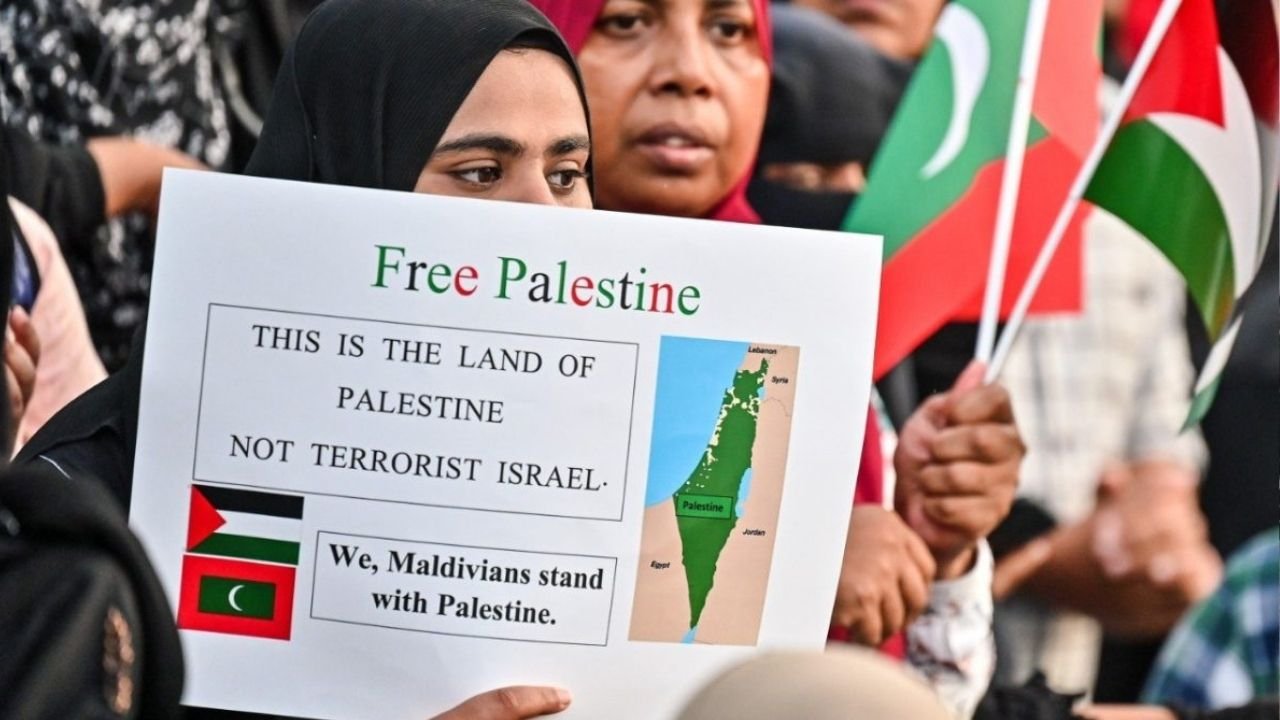
  • Maldives to ban Israeli tourists

    Maldives to ban Israeli tourists

    MALE: The Indian Ocean nation of the Maldives will ban Israelis from the luxury tourist hot spot, the office of the president said on Sunday, announcing a national rally in “solidarity with Palestine”.

    The Maldives, a tiny Islamic republic of more than 1,000 strategically located coral islets, is known for its secluded sandy white beaches, shallow turquoise lagoons, and Robinson Crusoe-style getaways.

    President Mohamed Muizzu has “resolved to impose a ban on Israeli passports,” a spokesman for his office said in a statement, without giving details of when the new law would take effect.

    Muizzu also announced a national fundraising campaign called “Maldivians in Solidarity with Palestine”.

    The Maldives had lifted a previous ban on Israeli tourists in the early 1990s and moved to restore relations in 2010. However, normalisation attempts were scuttled following the toppling of President Mohamed Nasheed in February 2012.

    Opposition parties and government allies in the Maldives have been putting pressure on Muizzu to ban Israelis, as a sign of protest against the Gaza attack.

    Official data showed the number of Israelis visiting the Maldives dropped to 528 in the first four months of this year, down 88 percent compared to the corresponding period last year.

    In response to the ban, an Israel Ministry of Foreign Affairs spokesman urged citizens to avoid travel to the Maldives.

  • India’s six-week election ends with vote in Hindu holy city Varanasi

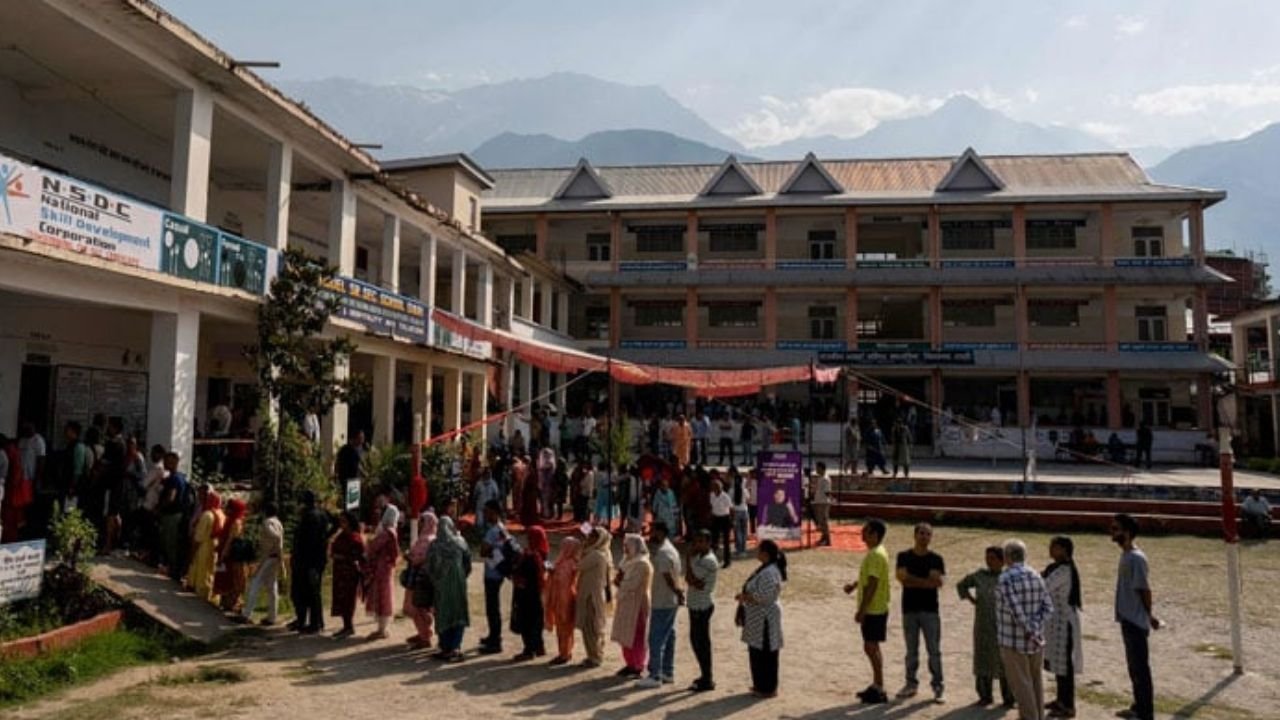
    India’s six-week election ends with vote in Hindu holy city Varanasi

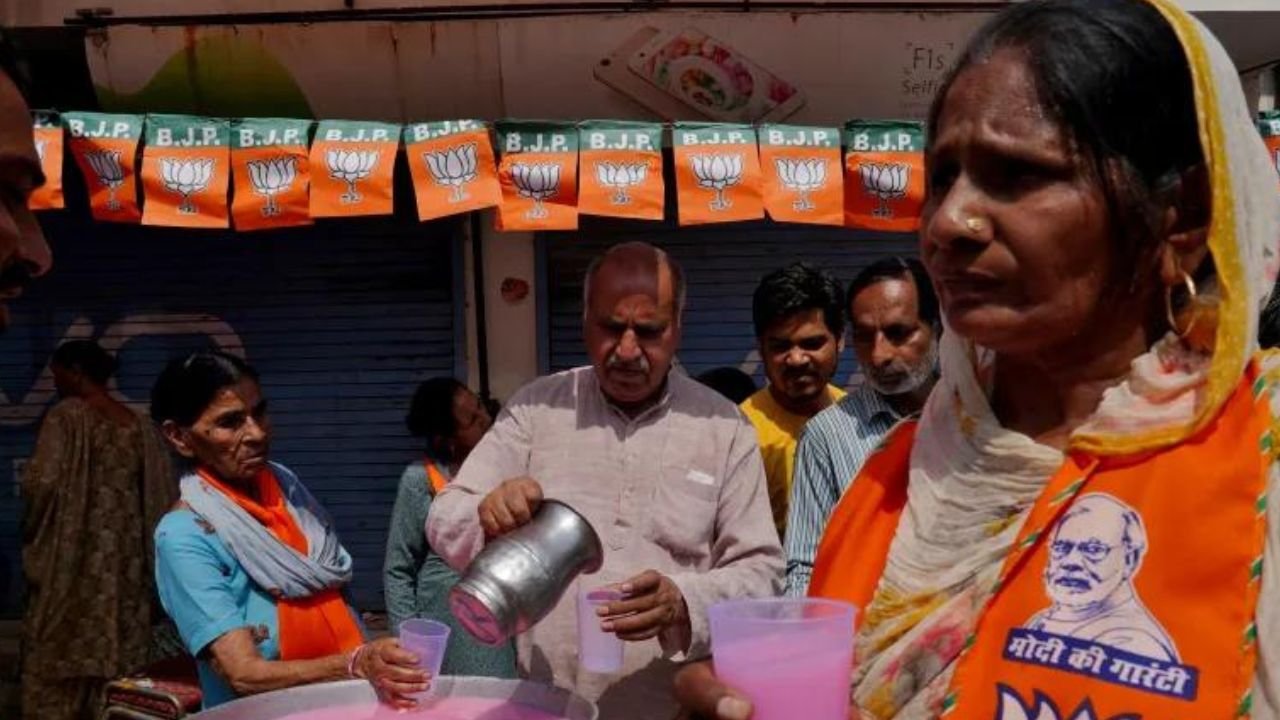
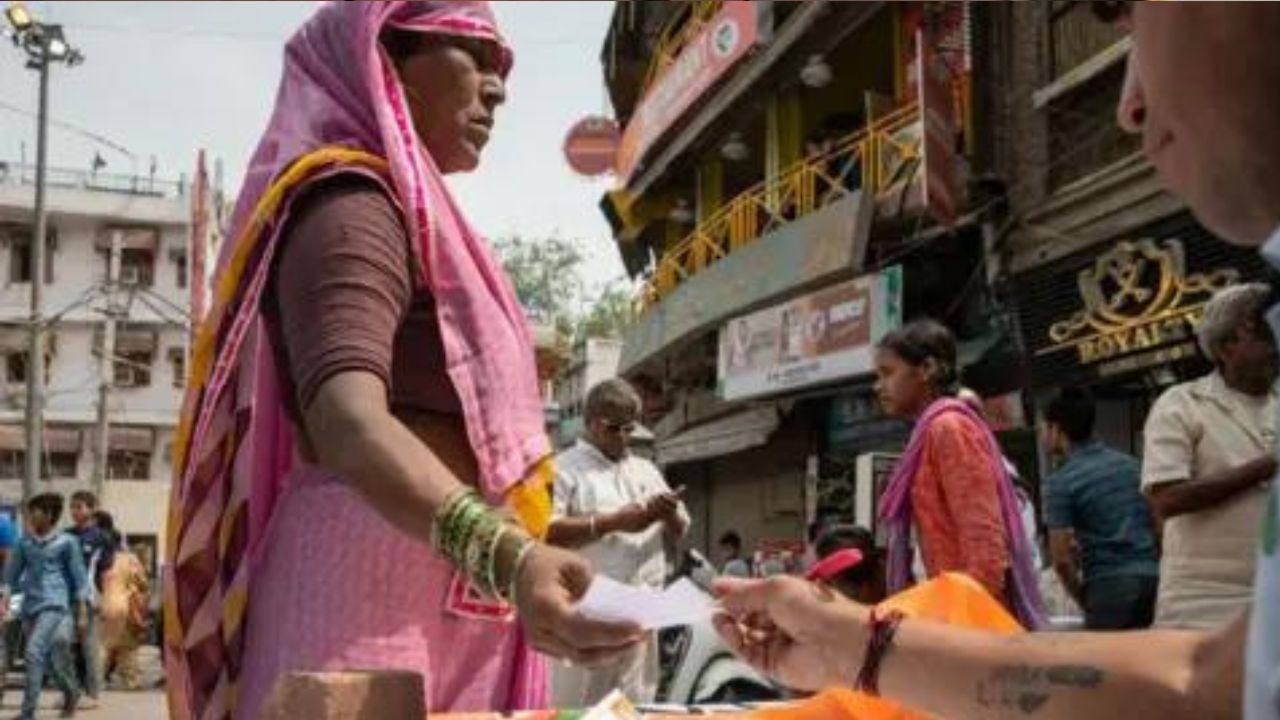
    VARANASI: Indians flocked to the polls under scorching heat in the Hindu holy city of Varanasi on Saturday as a marathon national election reached its final day, six weeks after the voting first began.

    Indian Prime Minister Narendra Modi is widely expected to win a third term in office when results are announced Tuesday, in large part due to his cultivated image as an aggressive champion of India’s majority faith.

    The 73-year-old’s constituency of Varanasi is the spiritual capital of Hinduism, where devotees from around India come to cremate deceased loved ones by the Ganges river.

    It is one of the final cities to vote in India’s gruelling election and where public support for Modi’s ever-closer alignment of religion and politics burns brightest.

    “Modi is obviously winning,” Vijayendra Kumar Singh, who works in one of the popular pilgrimage destination’s many hotels, told AFP.

    “There’s a sense of pride with everything he does, and that’s why people vote for him.”

    Modi has already led the ruling Bharatiya Janata Party (BJP) to two landslide victories in 2014 and 2019, forged in large part by his appeal to the Hindu faithful.

    This year, he presided over the inauguration of a grand temple to the deity Ram, built on the grounds of a centuries-old mosque in Ayodhya razed by Hindu zealots in 1992.

    Construction of the temple fulfilled a longstanding demand of Hindu activists and was widely celebrated across the country with back-to-back television coverage and street parties.

    The ceremony, and numerous other chest-beating appeals to India’s majority religion over the past decade, have in turn made many among the country’s 200 million-plus minority Muslim community increasingly uneasy about their futures.

    Modi himself has made a number of strident comments about Muslims on the campaign trail, referring to them as “infiltrators”.

    He has also accused the motley coalition of more than two dozen opposition parties contesting the poll against him of plotting to redistribute India’s wealth to its Muslim citizens.

    ‘Already so hot’

    India has voted in seven phases over six weeks to ease the immense logistical burden of staging an election in the world’s most populous country.

    Both counting and results are expected on Tuesday, but exit polls published after polls close Saturday are expected to give some indication of the winner.

    Turnout is down several percentage points from the last national election in 2019, with analysts blaming widespread expectations of a Modi victory as well as successive heatwaves scorching India’s northern states.

    Extensive scientific research shows climate change is causing heatwaves to become longer, more frequent and more intense, with Asia warming faster than the global average.

    A scorching sun bore down on Varanasi and its countless temples and riverside crematoriums during Saturday’s vote, with temperatures forecast to peak at 44°C (111 Fahrenheit).

    “It’s already so hot,” Chinta Devi, who arrived to cast her vote at eight in the morning, told AFP.

    “Varanasi has felt hotter than usual over the last few days,” she added. “You see all the streets and markets empty.”

    ‘A lot more respect’

    Analysts have long expected Modi to triumph against the opposition alliance competing against him, which at no point has named an agreed candidate for prime minister.

    His prospects have been further bolstered by several criminal probes into his opponents and a tax investigation this year that froze the bank accounts of Congress, India’s largest opposition party.

    Western democracies have largely sidestepped concerns over rights and democratic freedoms in the hopes of cultivating an ally that can help check the growing assertiveness of China, India’s northern neighbour and rival regional power.

    Modi’s image at home has been bolstered by India’s rising diplomatic and economic clout — the country overtook Britain as the world’s fifth-biggest economy in 2022.

    “As an Indian, I feel that he has ensured a lot of respect and prestige for India during his term,” Shikha Aggarwal, 40, told AFP while waiting to cast her vote.

    “People now look at India and Indians with a lot more respect, something not accorded earlier.”

  • Israel pounds Gaza after Biden outlines ceasefire plan

    Israel pounds Gaza after Biden outlines ceasefire plan

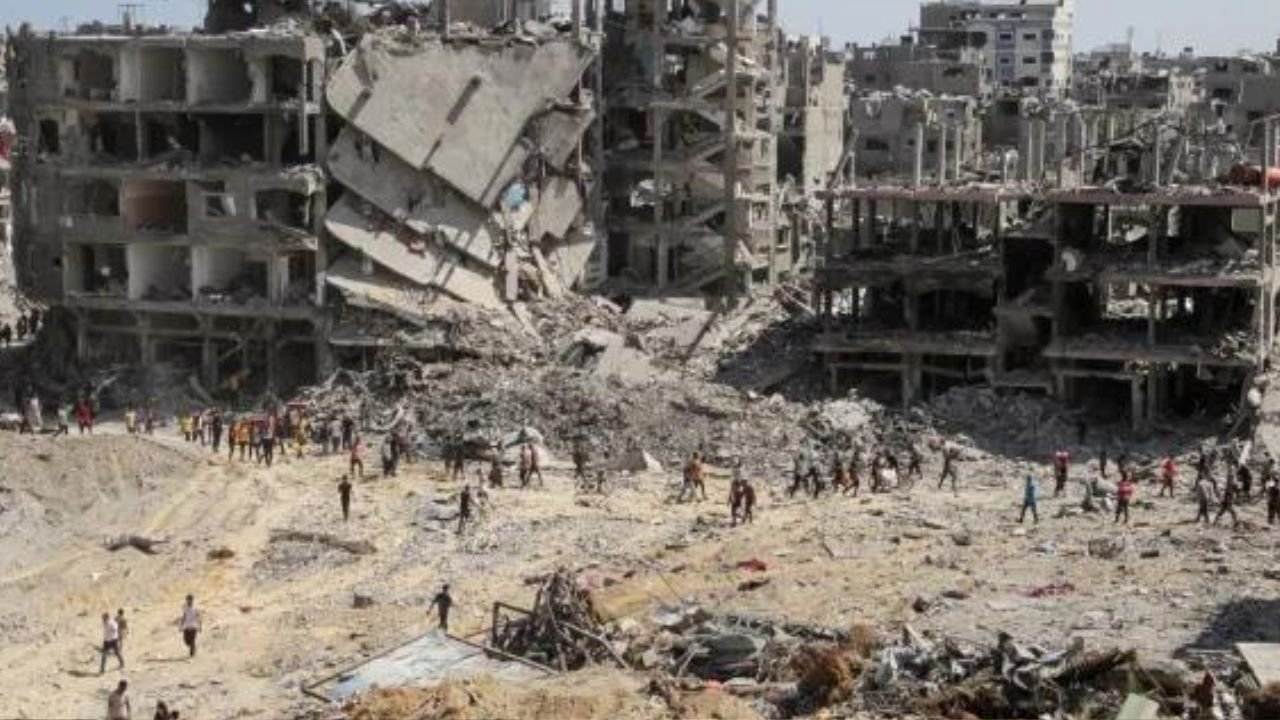
    Israeli forces hammered Rafah in southern Gaza with tanks and artillery on Saturday, hours after US President Joe Biden said Israel was offering a new roadmap towards a full ceasefire.

    Shortly after Biden’s announcement, Israeli Prime Minister Benjamin Netanyahu insisted his country would still pursue the war until it had reached all its aims.

    He reiterated that position on Saturday, saying that “Israel’s conditions for ending the war have not changed: the destruction of Hamas’s military and governing capabilities, the freeing of all hostages and ensuring that Gaza no longer poses a threat to Israel”.

    A permanent ceasefire without those conditions being met was “a non-starter”, he said.

    Hamas, meanwhile, said it “views positively” the plan laid out by Biden.

    In his first major address outlining a possible end to the conflict, the US president said Israel’s three-stage offer would begin with a six-week phase that would see Israeli forces withdraw from all populated areas of Gaza.

    It would also see the “release of a number of hostages, including women, the elderly, the wounded, in exchange for (the) release of hundreds of Palestinian prisoners”.

    Israel and the Palestinians would then negotiate during those six weeks for a lasting ceasefire — but the truce would continue while the talks remained underway, Biden said.

    The US leader urged Hamas to accept the Israeli offer. “It’s time for this war to end, for the day after to begin,” he said, in comments echoed by British Foreign Secretary David Cameron.

    Israel insists on war aims

    US Secretary of State Antony Blinken called his counterparts from Jordan, Saudi Arabia and Turkey on Friday to press the deal.

    UN chief Antonio Guterres “strongly hopes” the latest development “will lead to an agreement by the parties for lasting peace”, his spokesman Stephane Dujarric said.

    German Foreign Minister Annalena Baerbock said the Israeli offer “provides a glimpse of hope and a possible path out of the war’s deadlock”, while EU chief Ursula von der Leyen welcomed a “balanced and realistic” approach to end the bloodshed.

    Saudi Arabia stressed its “support for all efforts aimed at an immediate ceasefire” and the withdrawal of Israeli troops. 

    Indonesia, meanwhile, said it was ready to send “significant peacekeeping forces” as well as medical personnel to Gaza if a ceasefire is agreed.

    But Netanyahu took issue with Biden’s presentation of what was on the table, insisting on Friday the transition from one stage to the next in the proposed roadmap was “conditional” and crafted to allow Israel to maintain its war aims.

    “The prime minister authorised the negotiating team to present an outline for achieving (the return of hostages), while insisting that the war will not end until all of its goals are achieved,” Netanyahu’s office said.

    “The exact outline proposed by Israel, including the conditional transition from stage to stage, allows Israel to maintain these principles.”

    Israel has repeatedly vowed to destroy Hamas since the Palestinian militant group attacked southern Israel on October 7.

    Rafah Massacre

    Israel sent tanks and troops into Rafah in early May, ignoring concerns over the safety of displaced Palestinian civilians sheltering in the city on the Egyptian border.

    On Saturday, residents reported tank fire in the Tal al-Sultan neighbourhood in west Rafah, while witnesses in the east and centre of Rafah described intense artillery shelling.

    “From the early hours of the night until this morning, the aerial and artillery bombardment has not stopped for a single moment”, a resident from west Rafah told AFP on condition of anonymity.

    “There are a number of occupation (Israeli) snipers in high-rise buildings overseeing all areas of Tal al-Sultan… making the situation very dangerous”, the resident added.

    There was also shelling and gunfire from the Israeli army in Gaza City, in the north of the Palestinian territory, according to an AFP reporter.

    Before the Rafah offensive began, the United Nations said up to 1.4 million people were sheltering in the city.

    Since then, one million have fled the area, the UN agency for Palestinian refugees, UNRWA, has said.

    The Israeli seizure of the Rafah crossing has further slowed sporadic deliveries of aid for Gaza’s 2.4 million people and effectively shuttered the territory’s main exit point.

    ‘Everything is ashes’

    Israel said last week that aid deliveries had been stepped up.

    But Blinken acknowledged on Friday that the humanitarian situation was “dire” despite US efforts to bring in more assistance.

    The World Food Programme said daily life had become “apocalyptic” in parts of southern Gaza since Israel began its assault on Rafah in early May.

    The genocide in Gaza has killed at least 36,379 people in Gaza, mostly civilians, according to the Hamas-run territory’s health ministry.

    In northern Gaza, witnesses said that after carrying out a three-week operation in the town of Jabalia and its neighbouring refugee camp, troops had ordered residents of nearby Beit Hanun to evacuate ahead of an imminent assault.

    The Israeli army said troops “completed their mission in eastern Jabalia and began preparation for continued operations in the Gaza Strip”.

    Jabalia shopkeeper Belal al-Kahlot said there was nothing left of his store after the Israeli operation. “Everything is ashes.”

    The Israeli military announced the deaths of two soldiers in Gaza, taking to 294 the number of Israeli troops killed since the start of ground operations in late October.
  • Heatwave in India kills 33, including election officials

    Heatwave in India kills 33, including election officials

    Thirty-three people, including election officials on duty, died of suspected heatstroke in three major Indian states on Friday, including Bihar, Uttar Pradesh, and Odisha.

    Fourteen people died in Bihar on Thursday, including 10 people involved in organising the seven-phase national elections that are currently underway. Many election officials are usually required to stand on duty all day, many times outdoors.

    Parts of Bihar are voting in the final round of polling on Saturday as well.

    In Uttar Pradesh, nine election personnel, including security persons, died on Friday, government officials said.

    Ten deaths were reported from the government hospital in Odisha on Thursday, authorities said, prompting government to advise against outdoor activities between 11:00 am and 3:00 pm local time when temperatures heighten.

    Three people died of suspected heatstroke in Jharkhand state, neighbouring Bihar.

    India has been experiencing a record hot summer. A locality of the capital Delhi recorded the country’s highest-ever temperature at 52.9°C this week.

    While temperatures in north-western and central India are expected to fall in the coming days, the prevailing heatwave over eastern India is likely to continue for two days, according to India’s Meteorological Department (IMD), which declares a heatwave when the temperature is 4.5°C to 6.4°C higher than normal.

    The last phase of voting is scheduled to be held on Saturday and votes will be in counted on Tuesday.

    However, the deadly heatwave in the South Asian region is expected to continue until Saturday.

  • USAID contractor resigns, alleging work on Palestine was censored

    Alexander Smith, a contractor for the US Agency for International Development (USAID), resigned from his private sector position, saying he could no longer perform contract work for the Biden administration after a presentation he was preparing on Gaza’s humanitarian crisis was cancelled.

    Smith claimed that USAID gave him a choice between resigning or dismissal after he attempted to give a presentation on maternal and child mortality among Palestinians, says a report published by The Guardian.

    “I cannot do my job in an environment in which specific people cannot be acknowledged as fully human, or where gender and human rights principles apply to some, but not to others, depending on their race,” Smith wrote in his resignation letter quoted by The Guardian.

    Smith’s resignation adds to a small but growing list of officials working inside or for the US government who have resigned in protest against the Biden administration’s support for Israel’s genocide in Gaza.

    On Tuesday, Stacy Gilbert, a career official in the US State Department’s Bureau of Population, Refugees and Migration (PRM), told staff she was resigning because she felt the State Department had wrongly concluded that Israel was not preventing the entry of aid into Gaza.

    Earlier this month, Lilly Greenberg Call became the first Jewish-American political official to resign. Call worked in the Department of Interior, but there have been a number of high-profile resignations from officials working on the Middle East and defence.

    Major Harrison Mann tendered his resignation from the Department of Defence Intelligence Agency in May, citing Washington’s support for the war on Gaza.

  • One dead after falling into jet engine at Schiphol

    A person died Wednesday after falling into the spinning turbine blades of a departing passenger jet at Amsterdam’s Schiphol airport, officials said.

    The death occurred on the apron outside the busy hub’s terminal as a KLM flight was ready to depart for Billund in Denmark.

    “An… incident took place at Schiphol today during which a person ended up in a running aircraft engine,” Dutch flagship carrier KLM said in a statement.

    “Sadly the person has died,” KLM said, without disclosing the victim’s identity.

    Dutch border police, who are responsible for security at the Netherlands’ largest airport, said passengers were removed from the plane and an investigation was opened.

    The plane involved is a short-haul Embraer jet, used by KLM’s Cityhopper service which operates flights to other nearby destinations like London, Dutch news reports said.

    A picture posted on the NOS public broadcaster showed the plane surrounded by fire trucks and ambulances next to the departure terminals.

    Safety and security measures are strict at Schiphol and accidents are rare at the busy airport, which handled around 5.5 million passengers last month alone, according to airport figures.

  • North Korea drops rubbish-filled balloons on South Korea

    North Korea drops rubbish-filled balloons on South Korea

    North Korea just dropped at least 260 filth-filled balloons on South Korea, prompting officials to warn residents to stay indoors.

    South Korea’s army cautioned the public against touching the balloons and the plastic bags attached to them because they contain “filthy waste and trash”.
    The balloons have been found in eight of nine provinces in South Korea and are now being investigated.

    The recent incident comes days after North Korea said it would retaliate against the “frequent scattering of leaflets and other rubbish” in border areas by activists in the South.

    Photographs shared on various social media platforms show bags attached via string to white translucent balloons carrying toilet paper, dark soil, batteries, and leaflets, among other contents.

    BBC quotes South Korea’s Yonhap news agency’s report: “Some of the fallen balloons carried what appears to be faeces judging from its dark colour and odour”.

    Battle of Ballons

    North and South Korea have both used balloons in their propaganda campaigns since the Korean War in the 1950s.

    South Korea’s military had earlier said it was investigating whether there were any North Korean propaganda leaflets in the balloons.

    Earlier this month, a South Korea-based activist group claimed it had sent 20 balloons carrying choco pies, leaflets, and USB sticks containing Korean pop music and music videos across the border, all of which are banned in North Korea.

    Back in 2016, North Korea launched balloons southward that attacked Seoul’s leaders The balloons reportedly carried toilet paper, cigarette butts, and rubbish.

    However, Seoul police described them as “hazardous biochemical substances”.

    “It seriously threatens the safety of our people. North Korea is entirely liable for what happens due to the balloons and we sternly warn North Korea to immediately stop this inhumane and crass action,” the South’s military said.

  • Danish student protest in support of Gaza successful, Copenhagen university agrees to divestment

    Danish student protest in support of Gaza successful, Copenhagen university agrees to divestment

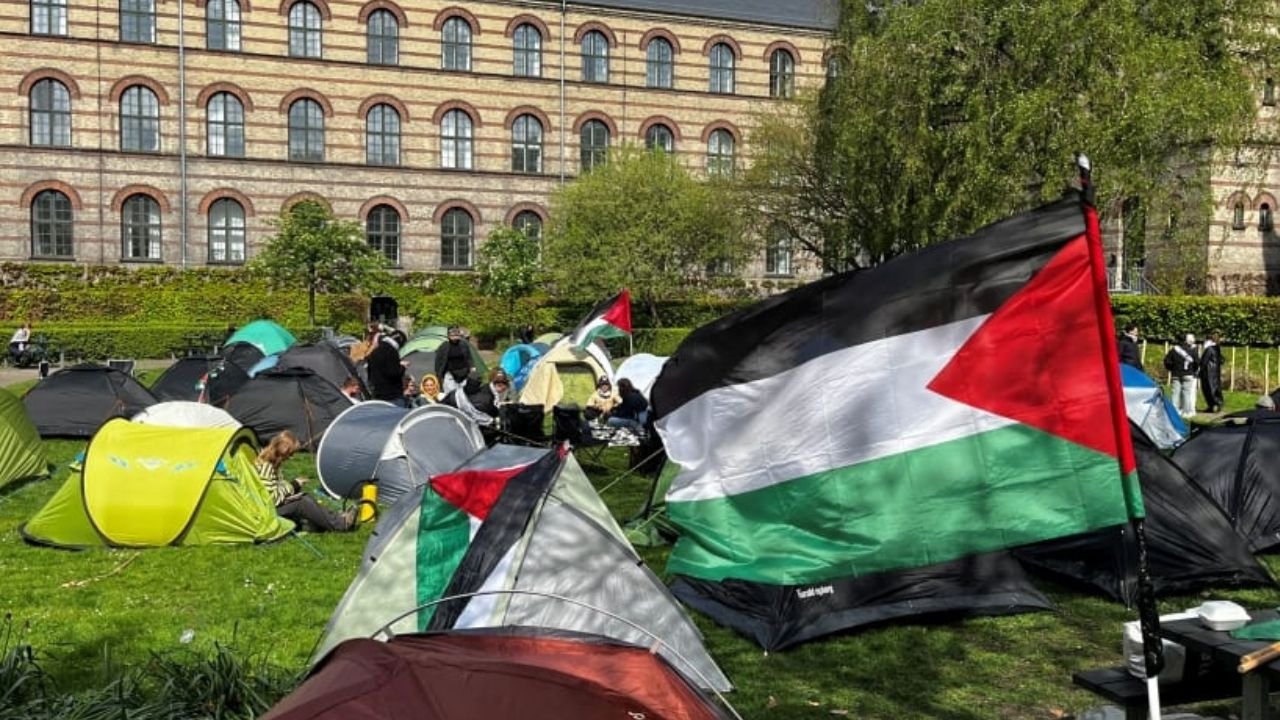
    Copenhagen University has decided to stop investing in companies operating in Israeli settlements, Reuters has reported.

    Amid student protests pressuring the campus to cut financial and institutional ties with Israel, the University of Copenhagen says that it will stop investing in companies doing business in the occupied West Bank.

    The university has announced that it will, as of May 29, divest its holdings worth a total of about 1 million Danish crowns ($145,810) in Airbnb, Booking.com, and eDreams.

    The university also said that it would work with fund managers to manage its investments and ensure they comply with a United Nations list of companies involved in illegal Israeli settlements in the West Bank.

    The University of Copenhagen has a yearly revenue of over 10 billion crowns, some of which is invested in bonds and equities.

  • Know the story behind the viral post ‘All eyes on Rafah’

    Know the story behind the viral post ‘All eyes on Rafah’

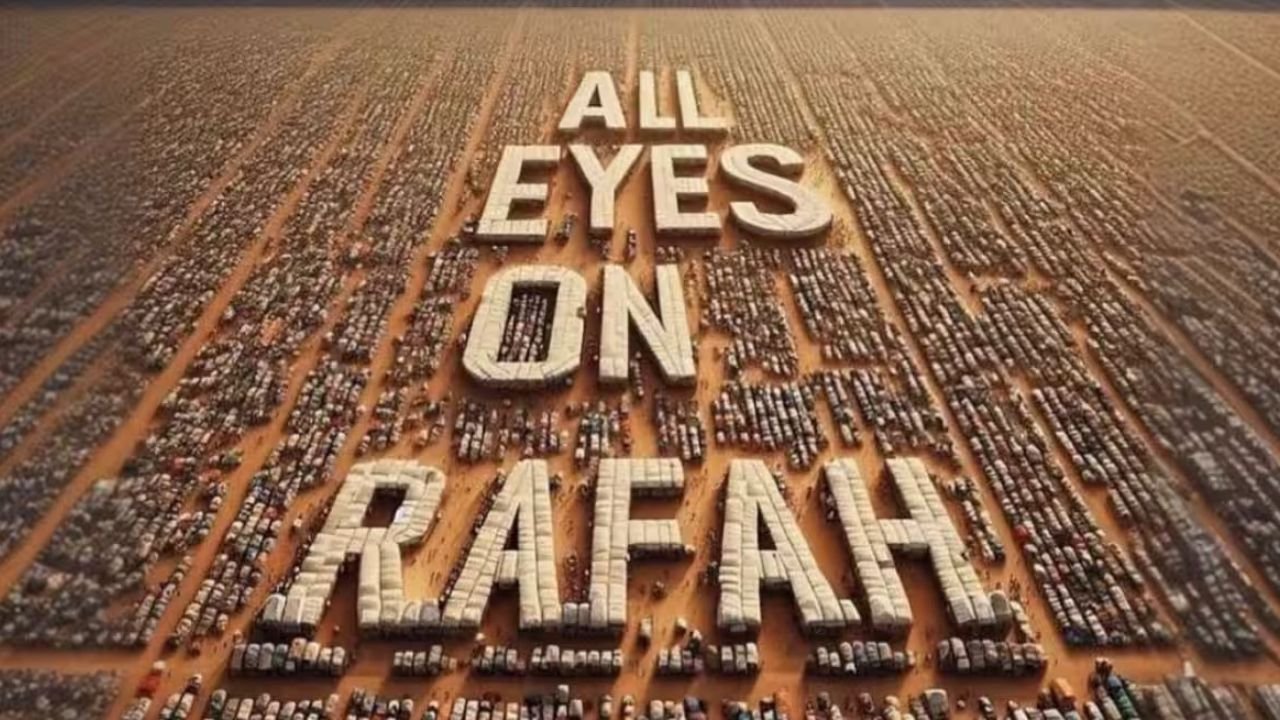
    An artificial intelligence (AI) post showing many tented camps with the inscription ‘All Eyes on Rafah’ in the middle has gone viral on Instagram.

    The photo was posted as a story template by shahv4012, a user from Malaysia, which has since gone viral. The image was posted on May 28 and has since been shared by more than 38 million Instagram users.

    It was shared on Instagram by many celebrities including Bollywood and Hollywood stars to highlight the seriousness of Rafah’s situation.

    What does it mean?

    The Malaysian user posted the photo to draw the world’s attention to the massacre in Rafah following an Israeli attack on a refugee camp on May 27.

    The attack was carried out in a safe zone. Many people including, women and children, were martyred and injured in this attack. Videos flooded social media sites, showing children beheaded and refugees burnt alive.

    The purpose of the post is not only to focus the world’s attention on the situation in Gaza but also to show support for the Palestinian cause. The more people share this photo, the more eyes will be able to see the genocide in Gaza.

    The slogan “All eyes on Rafah” was probably taken from a statement by Dr.Rik Peeperkorn, director of the World Health Organization (WHO) office in the Palestinian region.

    In February, the Israeli Prime Minister instructed the Palestinians to withdraw from Rafah, after which Rik Peeperkorn said in a statement that all eyes are on Rafah.

  • Protestors set fire to Israeli Embassy in Mexico City

    Protestors set fire to Israeli Embassy in Mexico City

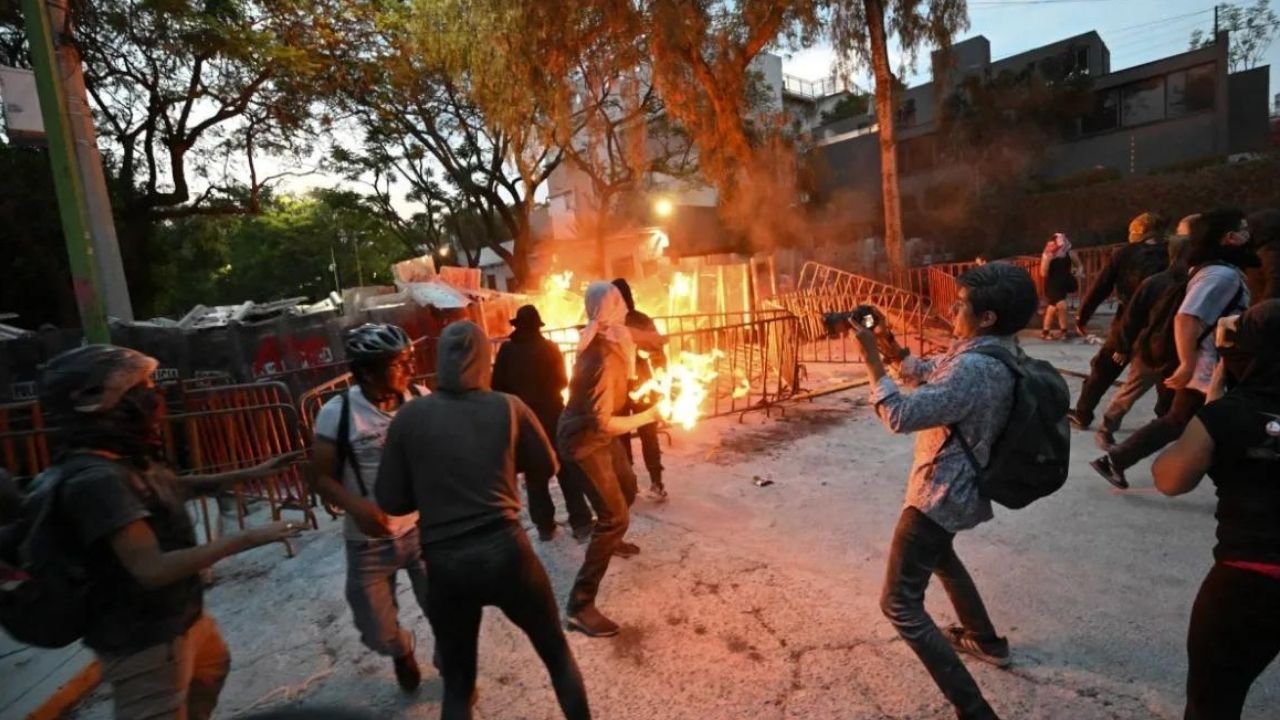
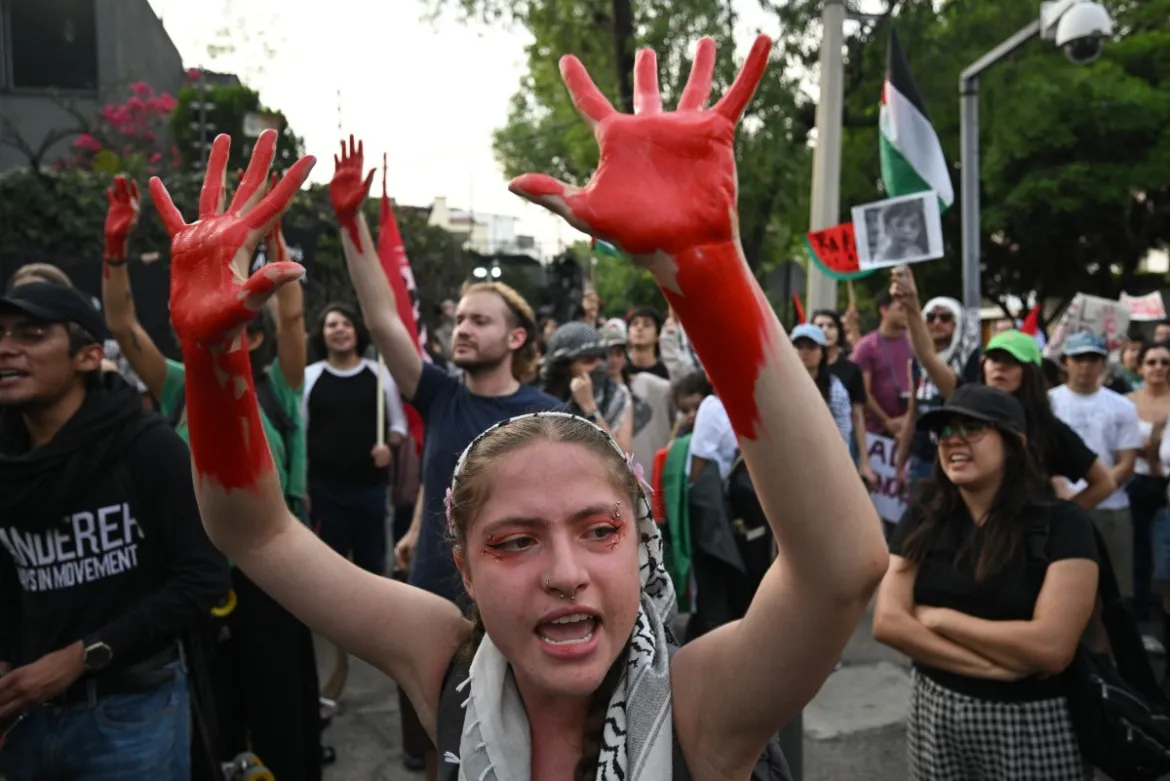
    Videos of enraged protestors setting fire to the Israeli embassy in Mexico City have emerged online.

    The protest was a reaction to the massacre carried out by Israel in Rafah where displaced people’s tents were burnt down, leaving at least 45 refugees dead and hundreds injured.

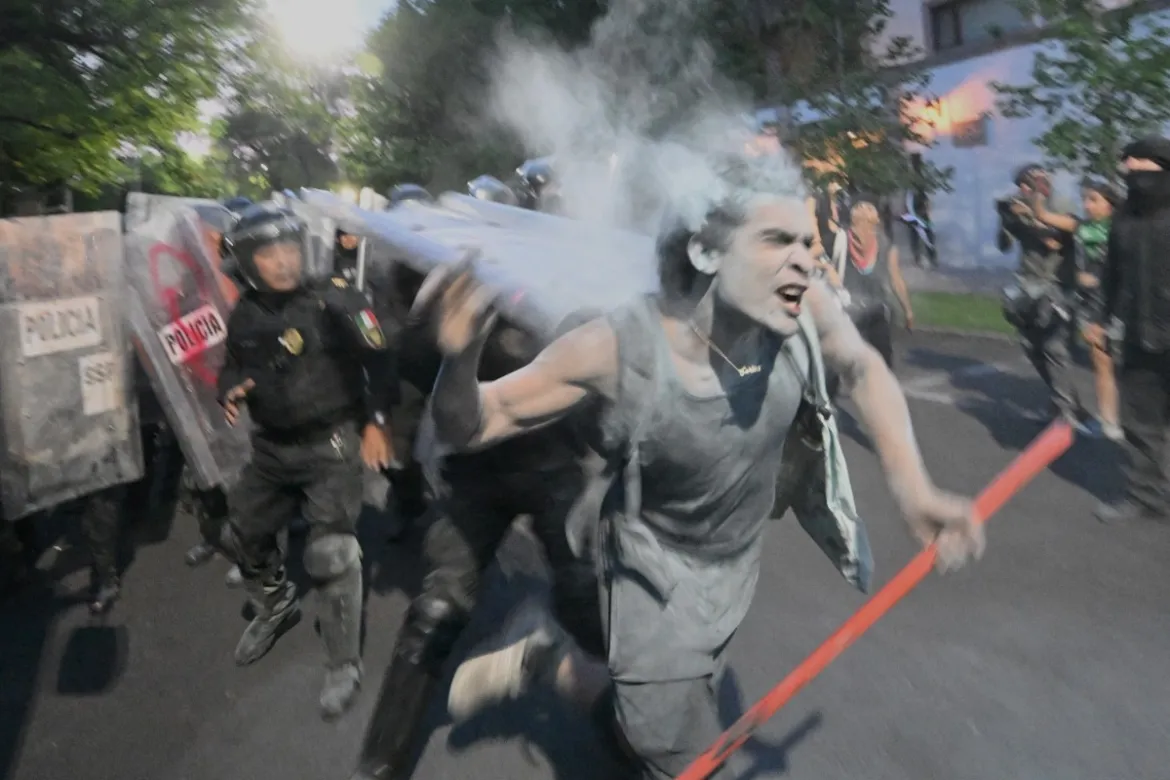
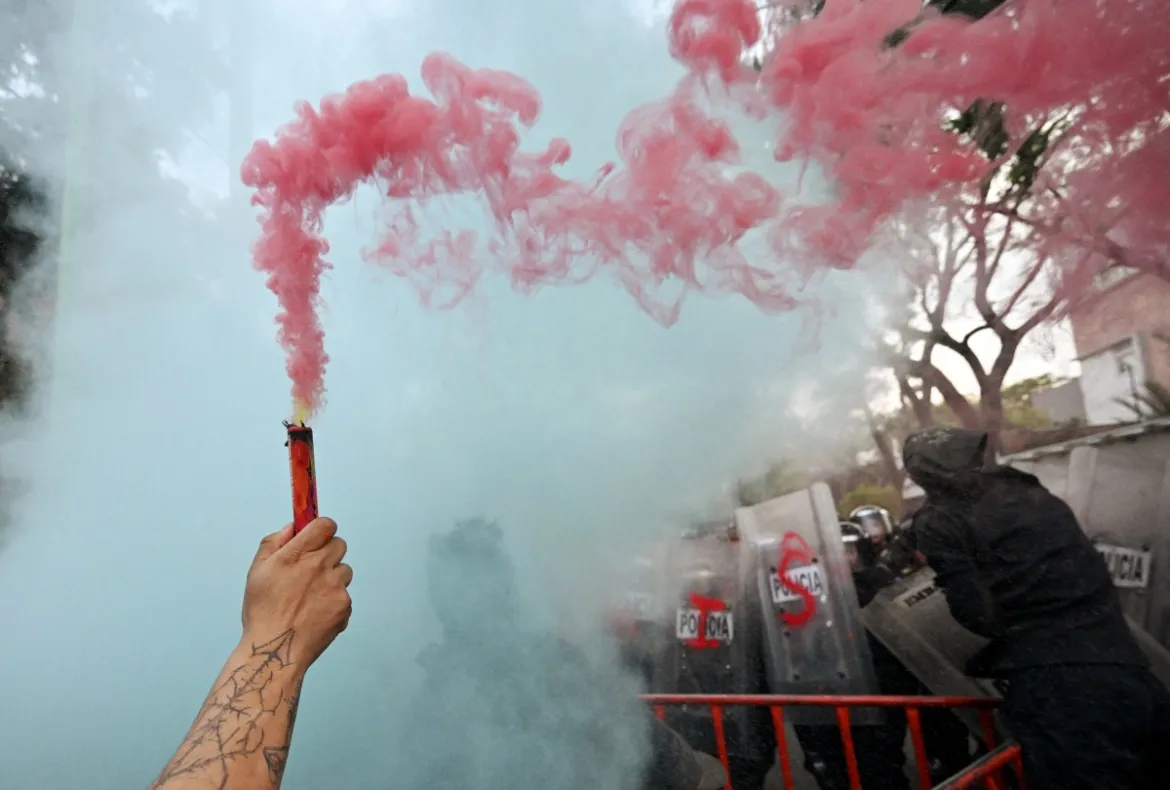
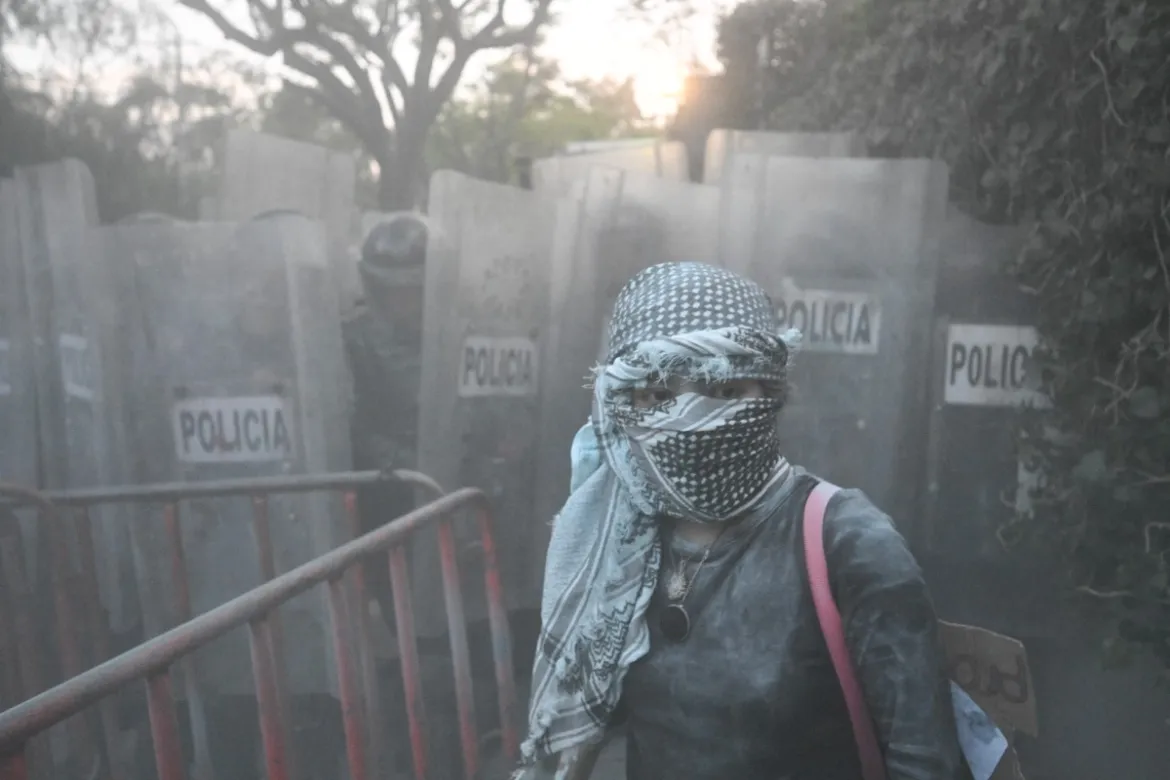
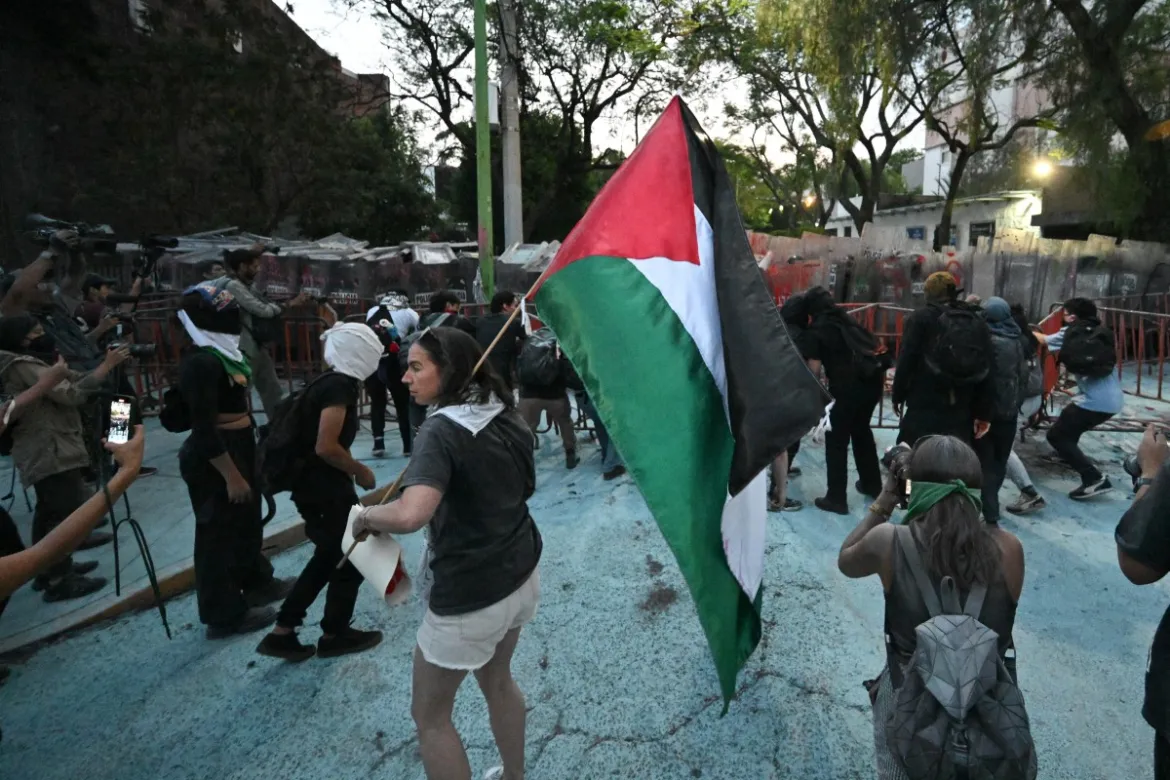
    In the capital of Mexico, Mexico City, about 200 people gathered outside the embassy in a demonstration called “Urgent Action for Rafah”. Protesters covered their faces and threw stones at the police blocking their path to the Israeli Embassy.

    Demonstrators clash with the police in front of the Israeli embassy in Mexico City. [Pedro Pardo/AFP]
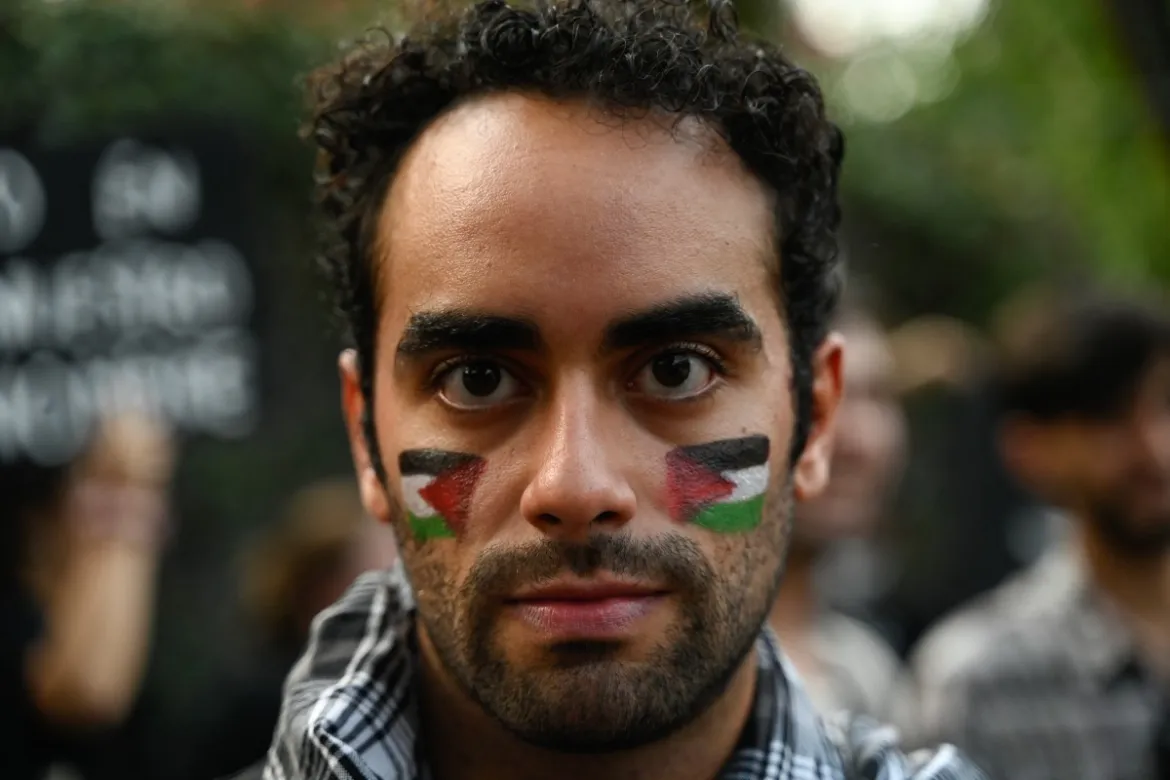
    A man with Palestine flags painted on his face attends the pro-Palestinian rally. [Pedro Pardo/AFP]
    Demonstrators shouted slogans during the pro-Palestinian “Urgent action for Rafah” rally. [Pedro Pardo/AFP]
    Protesters tried to break down barriers preventing them from reaching the Israeli mission. [Pedro Pardo/AFP]
    Police officers deployed tear gas and threw back the stones hurled at them by protesters. [Pedro Pardo/AFP]
    About 200 people joined the demonstration. [Pedro Pardo/AFP]