Category: FOREIGN

Foreign Blogs is a network of global affairs blogs and a supplement to the Foreign Policy Association’s Great Decisions program.

  • Indian capital records highest-ever temperature of 49.9 Celsius

    Indian capital records highest-ever temperature of 49.9 Celsius

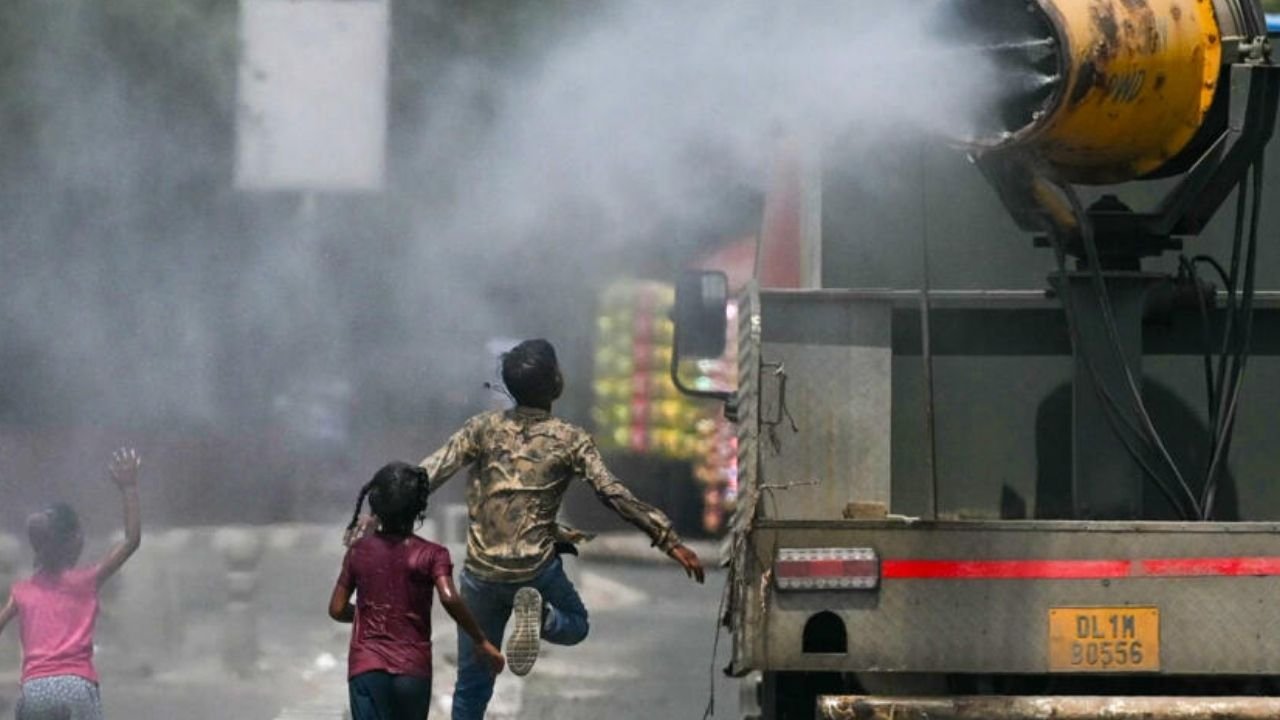
    New Delhi (AFP) – Temperatures in India’s capital have soared to a record-high 49.9 degrees Celsius (121.8 Fahrenheit) as authorities warn of water shortages in the sprawling mega-city.

    The India Meteorological Department (IMD), which reported “severe heat-wave conditions”, recorded the temperatures on Tuesday at two Delhi suburbs stations at Narela and Mungeshpur.

    The weather bureau said the temperatures were nine degrees higher than expected.

    Forecasters predict similar temperatures Wednesday for the city of more than 30 million people, issuing a red alert warning notice for people to take care.

    In May 2022, parts of Delhi hit 49.2 degrees Celsius (120.5 Fahrenheit), Indian media reported at the time.

    India is no stranger to searing summer temperatures.

    But years of scientific research have found climate change is causing heatwaves to become longer, more frequent and more intense.

    ‘Water scarcity’

    New Delhi authorities have also warned of the risk of water shortages as the capital swelters in headache-inducing heat — cutting supplies to some areas.

    Water Minister Atishi Marlena has called for “collective responsibility” in stopping wasteful water use, the Times of India newspaper reported Wednesday.

    “To address the problem of water scarcity, we have taken a slew of measures such as reducing water supply from twice a day to once a day in many areas,” Atishi said, the Indian Express reported.

    “The water thus saved will be rationed and supplied to the water-deficient areas where supply lasts only 15 to 20 minutes a day,” she added.

    The IMD warned of the heat’s impact on health, especially for infants, the elderly and those with chronic diseases.

    Many blame the soaring temperatures on scorching winds from Rajasthan state, where temperatures on Tuesday were the hottest in the country, at 50.5 degrees Celsius.

    Rajasthan’s desert region of Phalodi holds the country’s all-time heat record, hitting 51 degrees Celsius in 2016.

    At the same time, West Bengal state and the northeastern state of Mizoram have been struck by gales and lashing rains from Cyclone Remal, which hit India and Bangladesh on Sunday, killing more than 38 people.

    Bangladesh’s Meteorological Department said the cyclone was “one of longest in the country’s history”, blaming climate change for the shift.
  • After Raisi’s funeral, Iran’s focus turns to vote for successor

    After Raisi’s funeral, Iran’s focus turns to vote for successor

    After Iran mourned President Ebrahim Raisi, who died in a recent helicopter crash, the nation’s focus turns to an election next month for his successor, with the conservative camp seeking support from Ayatollah Ali Khamenei.

    The lead-up to the early vote on June 28 has opened up the field to a broad range of hopefuls from all political parties. The big question for them is how many candidacies will survive the vetting process in the Islamic republic.

    President Raisi, who had more than a year left of his first term, died on May 19 alongside his foreign minister Hossein Amir-Abdollahian and six others when their helicopter crashed into a fog-shrouded mountainside.

    They were laid to rest in multi-day funeral rites drawing mass crowds of mourners.

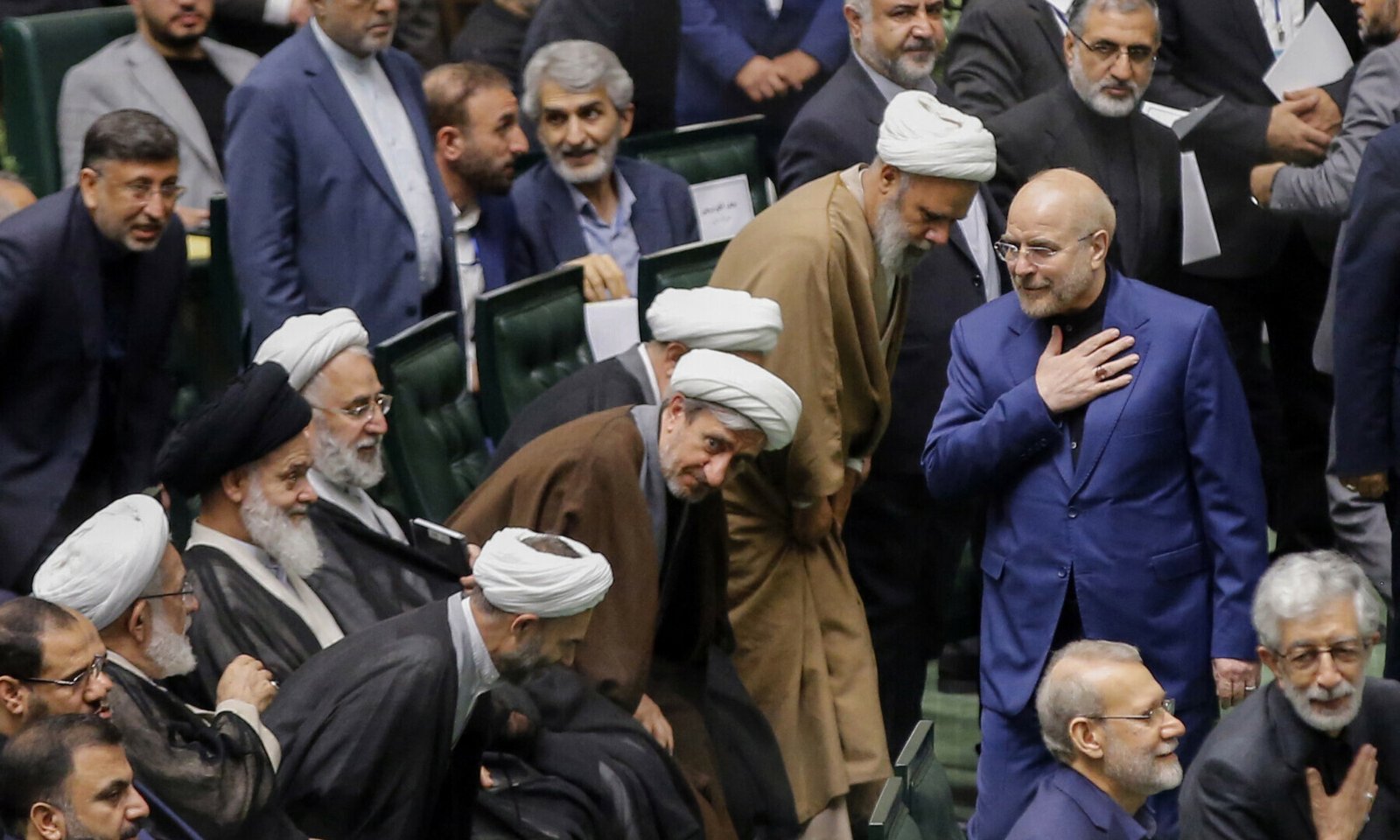
    Iran’s Parliament Speaker Mohammad Bagher Qalibaf (R) greets lawmakers during the inauguration session for the new Parliament in Tehran on May 27, 2024. — AFP

    The June vote will be held during a turbulent time, as the Gaza war rages between Israel and Hamas, and amid continued diplomatic tensions over Iran’s nuclear programme.

    Khamenei, who has the final say in all matters of state, has assigned Raisi’s vice president, Mohammad Mokhber, 68, to assume interim duties for the next few weeks and organise the June election.

    Among other hopefuls, former nuclear negotiator Saeed Jalili was one of the first to announce his candidacy.

    Other contenders include moderate former foreign minister Mohammad Javad Zarif, and centrist Ali Larijani, who served as the speaker in parliament.

    Ex-president Mahmoud Ahmadinejad has so far kept voters guessing and said he is “checking the conditions to decide whether to register”.

    Under Iran’s election process, candidates will have several days to formally register, starting on May 30.

    The final list, however, will depend on the outcome of the validation process by the conservative-dominated Guardian Council following a June 3 registration deadline.

  • Gaza officials say 40 killed as Israeli strikes set tents of displaced Palestinians on fire

    Gaza officials say 40 killed as Israeli strikes set tents of displaced Palestinians on fire

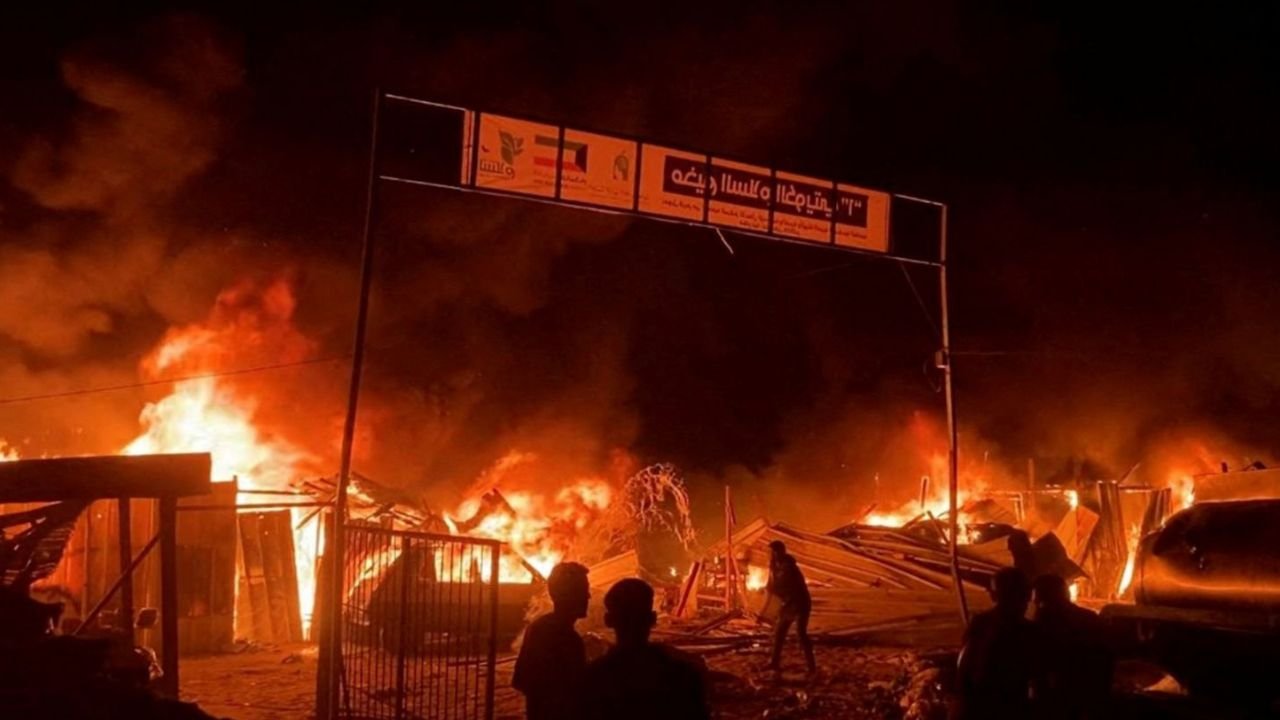
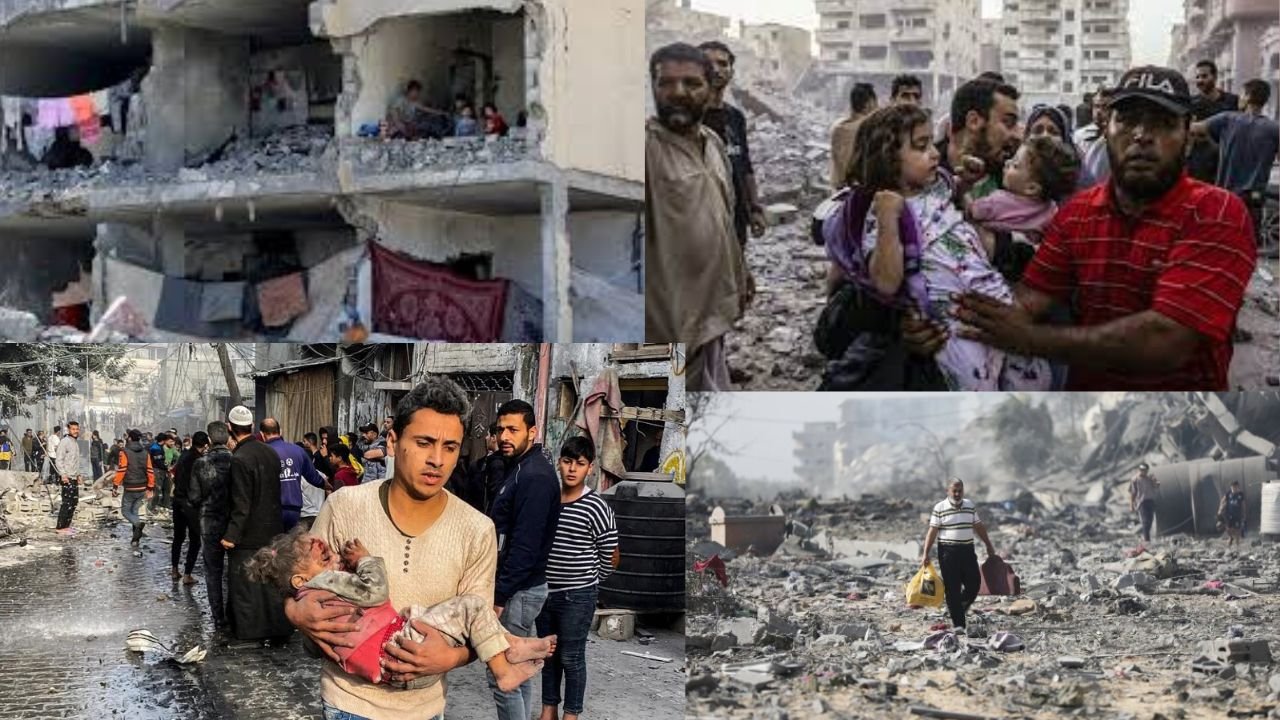
    Gaza’s civil defence agency said Monday that many bodies were “charred” after the strikes triggered a fire that ripped through a displacement camp in northwest Rafah.

    “The massacre committed by the Israeli occupation army in the refugee tents northwest of Rafah city in the southern Gaza Strip has left 40 martyrs and 65 wounded,” said agency official Mohammad al-Mughayyir.

    “We saw charred bodies and dismembered limbs … We also saw cases of amputations, wounded children, women and the elderly.”

    Footage released by the Palestinian Red Crescent Society showed chaotic night-time scenes of paramedics in ambulances racing to the fiery attack site and evacuating the wounded, including children.

    “We had just done with the evening prayers,” recalled one survivor, a Palestinian woman who declined to be named.

    “Our children were asleep … suddenly we heard a loud sound and there was fire all around us. The children were screaming … the sound was terrifying.”

    Mughayyir said the rescue efforts were hampered by war damage and the impacts of Israel’s siege on the territory amid the over seven-month-old conflict.

    “There is a fuel shortage … there are roads that have been destroyed, which hinders the movement of civil defence vehicles in these targeted areas,” he said. “There is also a shortage of water to extinguish fires.”

    The ICRC said that one of its field hospitals was receiving an “influx of casualties seeking care for injuries and burns” and that “our teams are doing their best to save lives”.

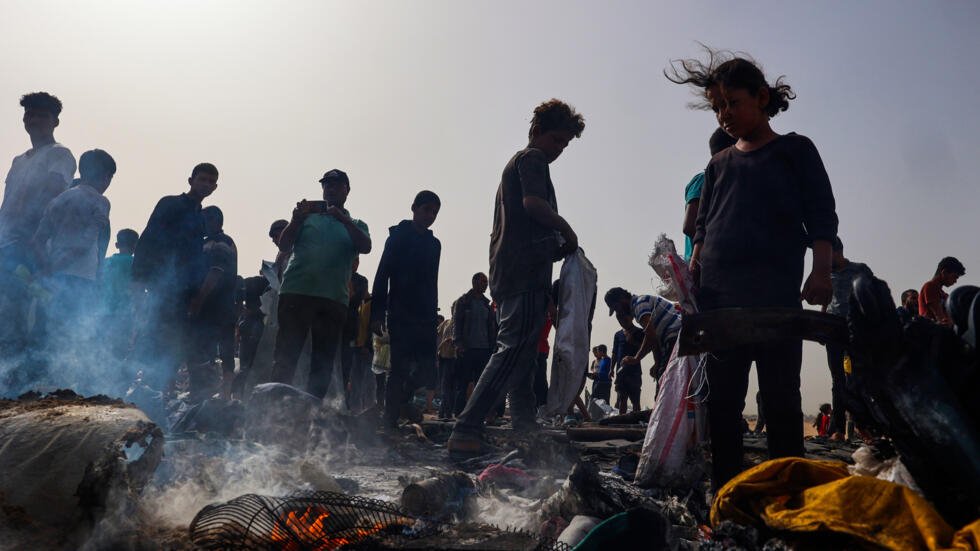
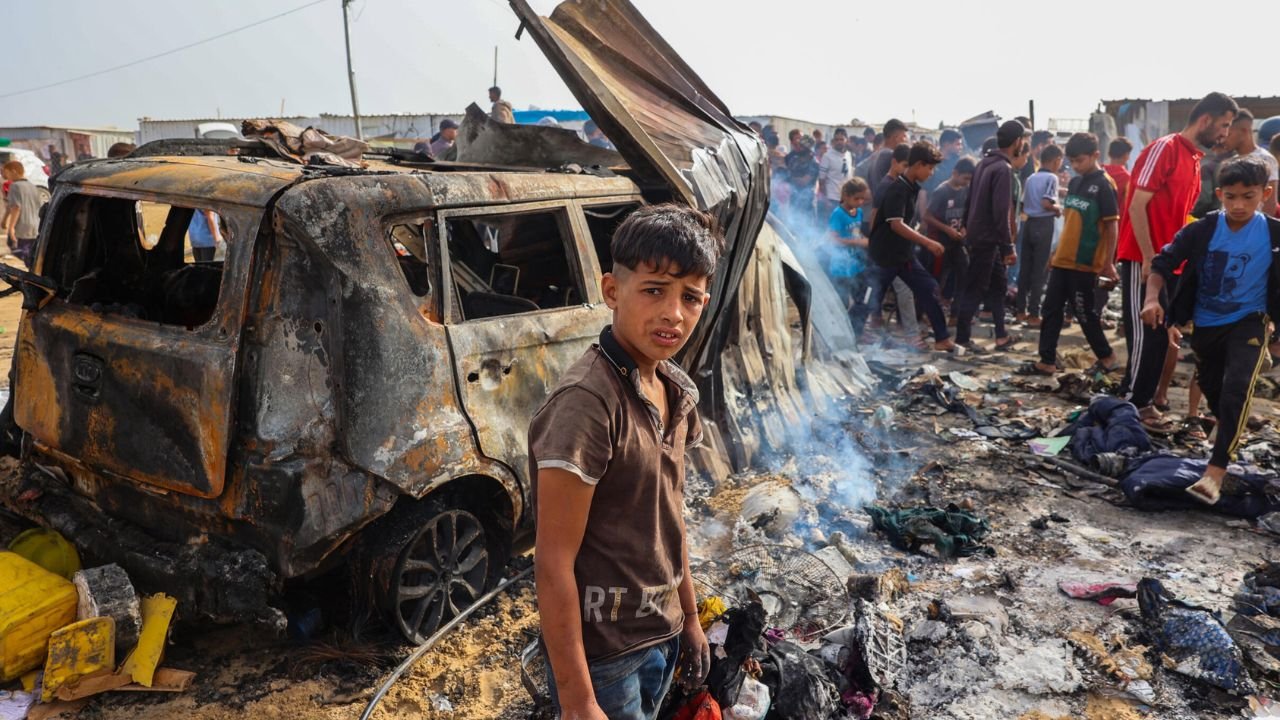
    AFP images after sunrise showed the charred remains of makeshift tents and vehicles as Palestinian families looked at the blackened destruction.

    Israeli occupation forces on the other hand said the air strikes late Sunday, hours after a rocket attack had targeted Tel Aviv, had killed two senior Hamas operatives. However, it will investigate the reports of civilians killed in a fire..

    It added that it was “aware of reports indicating that as a result of the strike and fire that was ignited, several civilians in the area were harmed. The incident is under review.”

    ‘Dangerous violation’

    The Israeli attack sparked strong protests from Egypt, Jordan, Kuwait, and from Qatar which warned it could “hinder” budding steps to revive stalled truce and hostage release talks in the Israel-Hamas war raging since October 7.

    Egypt

    Egypt deplored the “targeting of defenceless civilians” and labelled it part of “a systematic policy aimed at widening the scope of death and destruction in the Gaza Strip to make it uninhabitable”.

    Jordan

    Jordan also expressed its condemnation, accusing Israel of committing “ongoing war crimes”.

    Kuwait

    Kuwait charged the attack exposed Israel’s “blatant war crimes and unprecedented genocide to the whole world”.

    Qatar

    And Qatar condemned the Israeli bombing as a “dangerous violation of international law”.

    Israel’s top ally the United States has strongly urged all sides to resume truce talks, with efforts underway in recent days toward new talks with US, Egyptian and Qatari mediators.

    After the latest violence, Qatar’s foreign ministry voiced “concern that the bombing will complicate ongoing mediation efforts and hinder reaching an agreement for an immediate and permanent ceasefire”.

    Hamas attack on Tel Aviv

    The strike came hours after Hamas had on Sunday, for the first time in months, launched a barrage of rockets at Tel Aviv and other areas of central Israel, sending people running into bomb shelters.

    Although Israeli air defences took out most of the rockets and no casualties were reported, the attack was seen as an effort by Hamas to signal that it remains undefeated.

    Hamas’s armed wing said it had targeted Tel Aviv “with a large rocket barrage in response to the Zionist massacres against civilians”.

    Israel invaded Gaza in late October, but its ground forces are still battling Hamas in northern and central areas where Hamas has regrouped, as well as around Rafah.

    Hamas said, after the overnight strikes, that Palestinians must “rise up and march”.

  • Fire at children’s hospital in India kills six babies, owner arrested

    Fire at children’s hospital in India kills six babies, owner arrested

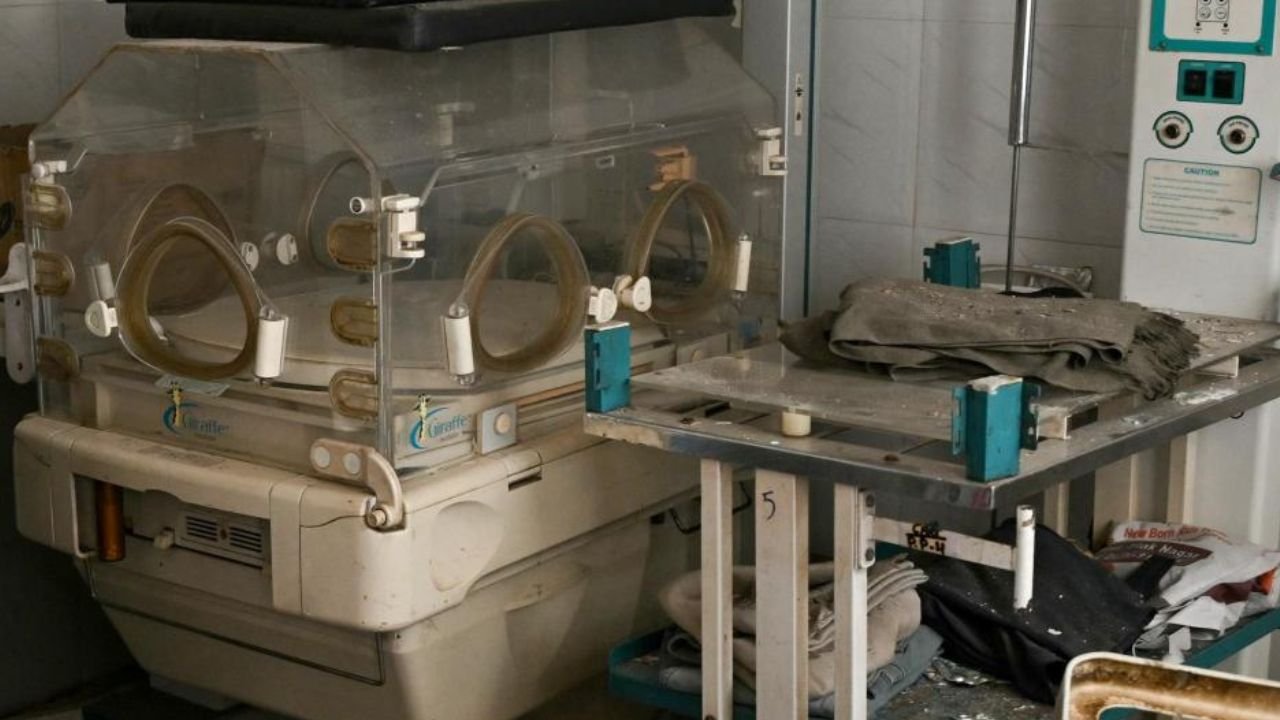
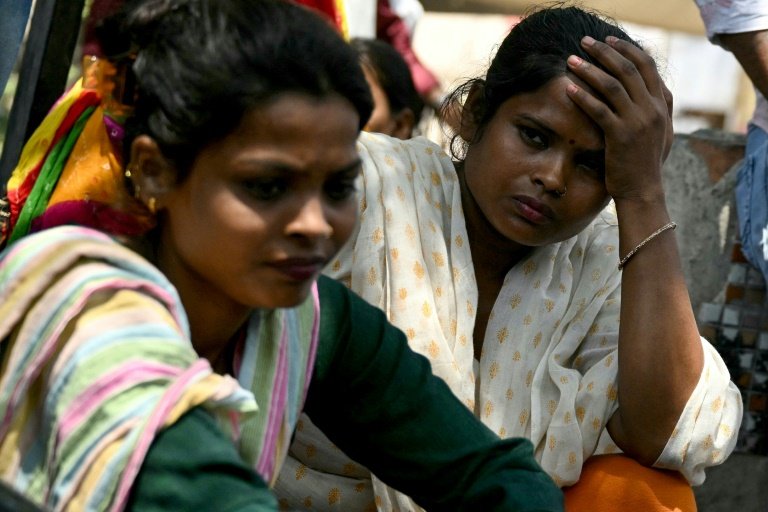
    Indian police said on Monday they had arrested a doctor and the owner of an unlicensed hospital where six newborn babies died when a fire erupted in a crowded ward without fire exits.

    The blaze broke out at the New Born Baby Care hospital in New Delhi’s Vivek Vihar area late Saturday evening. In the crucial first minutes, bystanders spotted the fire and braved the blaze to rescue the newborns inside.

    “We didn’t even name her […] I never even held her in my arms,” Anjar Khan, whose 11-day-old daughter died in the blaze, was quoted as saying by the Hindustan Times.

    Vinod Sharma, who lost his day-old baby boy, blamed the hospital authorities for the tragedy.

    “He had a problem with breathing. The doctor had said that he will be fine in a few days,” Sharma was quoted as saying by The Indian Express newspaper. “We didn’t know that the hospital would kill him.”

    Mothers wait to identify the bodies of their children a day after a fire broke out at a children’s hospital in New Delhi
    Arun SANKAR

    Five babies rescued alive

    Fires are common in India due to poor building practices, overcrowding and a lack of adherence to safety regulations. The narrow two-storey hospital building was squeezed between a row of homes, without space on either side, making it hard for fire engines to reach.

    “We were trying to control the fire, but there was no way to enter the building and rescue the 12 babies who were trapped,” local fire officer Atul Garg told reporters.

    Senior police officer Surendra Chaudhary told AFP that the hospital did “not have a fire exit system”.

    Its licence expired in March and the owner filled the ward with more than twice the number of beds it previously had permission for.

    “The hospital had permission for up to five beds but they had installed more than 10 beds,” he said. “In view of all this, we have made the arrests.”

    Five babies pulled out from the fire are still recovering in another hospital.

    ‘Highly flammable’

    The blaze in the hospital on Saturday broke out just hours after a separate fire at an amusement park in India’s western state of Gujarat. The toll from that fire rose to 28 on Monday, police said.

    The blaze — which ripped through a centre with a bowling alley and other games crowded with youngsters — was triggered by welding work on the ground floor, chief fire officer Ilesh Kher told reporters.

    “The CCTV footage clearly shows that a spark from the welding work fell on a stack of corrugated cardboard sheets below, causing the fire,” Kher said. “This spread very fast as the material was highly flammable.”

    The corpses were so badly burned they have not been identified so far.

    Police have charged seven people with culpable homicide in connection to that fire. The two fires came as northern India was gripped by intense heat, with temperatures in Delhi hitting 46.8°C.

  • Over 300 million children a year face sexual abuse online: study

    Over 300 million children a year face sexual abuse online: study

    More than 300 million children a year are victims of online sexual exploitation and abuse, according to the first global estimate of the scale of the problem published on Monday.

    Researchers at the University of Edinburgh found that one in eight of the world’s children have been victims of non-consensual taking, sharing and exposure to sexual images and video in the past 12 months.

    That amounts to about 302 million young people, said the university’s Childlight Global Child Safety Institute, which carried out the study.

    There have been a similar number of cases of solicitation, such as unwanted sexting and requests for sexual acts by adults and other youths, according to the report.

    Offences range from so-called sextortion, where predators demand money from victims to keep images private, to the abuse of AI technology to create deepfake videos and pictures.

    The problem is worldwide but the research suggests the United States is a particularly high-risk area, with one in nine men there admitting to online offending against children at some point.

    “Child abuse material is so prevalent that files are on average reported to watchdog and policing organisations once every second,” said Childlight chief executive Paul Stanfield.

    “This is a global health pandemic that has remained hidden for far too long. It occurs in every country, it’s growing exponentially, and it requires a global response,” he added.

    The report comes after UK police warned last month about criminal gangs in West Africa and Southeast Asia targeting British teenagers in sextortion scams online.

    Cases — particularly against teenage boys — are soaring worldwide, according to non-governmental organisations and police.

    Britain’s National Crime Agency (NCA) issued an alert to hundreds of thousands of teachers telling them to be aware of the threat their pupils might face.

    The scammers often pose as another young person, making contact on social media before moving to encrypted messaging apps and encouraging the victim to share intimate images.

    They often make their blackmail demands within an hour of making contact and are motivated by extorting as much money as possible rather than sexual gratification, the NCA said.

    pdh/bp

    © Agence France-Presse

  • Israel official says ‘intention’ to renew Gaza talks ‘this week’

    Israel official says ‘intention’ to renew Gaza talks ‘this week’

    An Israeli official said Saturday the government had an “intention” to renew “this week” talks aimed at reaching a hostage release deal in Gaza, after a meeting in Paris between US and Israeli officials.

    “There is an intention to renew the talks this week and there is an agreement,” the official told AFP on condition of anonymity.

    The Israeli official did not elaborate on the agreement, but Israeli media reported that Mossad chief David Barnea had agreed during meetings in Paris with mediators CIA Director Bill Burns and Qatari Prime Minister Mohammed bin Abdulrahman Al-Thani on a new framework for the stalled negotiations.

    Top US diplomat Antony Blinken also spoke with Israeli war cabinet minister Benny Gantz about new efforts to achieve a ceasefire and reopen the Rafah border crossing, Washington said.

    Talks aimed at reaching a hostage release and truce deal in the Gaza Strip ground to a halt this month after Israel launched a military operation in the territory’s far-southern city of Rafah.

    The current war in Gaza has caused the deaths of more than 1,170 people, mostly civilians, according to an AFP tally based on Israeli official figures.

    Meanwhile, Israel has carried out a massacre of 35,903 people in Gaza, mostly women and children, according to data from Gaza’s health ministry.

  • Modi’s struggling rival Gandhi votes as India election resumes

    Modi’s struggling rival Gandhi votes as India election resumes

    New Delhi, India – Key Indian opposition leader Rahul Gandhi voted Saturday as the country’s six-week election resumed, with Prime Minister Narendra Modi’s rivals accusing his government of unjustly targeting them in criminal probes.

    Modi, 73, remains roundly popular after a decade in office and his ruling Bharatiya Janata Party (BJP) is widely expected to win a third term next month after a poll hit by recurrent early summer heatwaves.

    His prospects have been further bolstered by several criminal investigations into his opponents, sparking concerns from UN rights chief Volker Turk and rights groups over the poll’s fairness.

    Gandhi, the most prominent leader of India’s opposition Congress party, cast his ballot at a polling station in New Delhi, where temperatures were forecast to reach 43 degrees Celsius (109 degrees Fahrenheit).

    A son, grandson and great-grandson of former prime ministers, Gandhi paused after voting to take a selfie with his mother Sonia but did not speak to crowds of reporters.

    The scion of a dynasty that dominated Indian politics for decades, he was convicted of criminal libel last year after a complaint by a member of Modi’s party.

    His two-year prison sentence saw him disqualified from parliament until the verdict was suspended by a higher court.

    Delhi Chief Minister Arvind Kejriwal, 55, leader of the opposition Aam Aadmi party, who was detained in March in a long-running graft case, was due to vote later Saturday.

    The Supreme Court bailed Kejriwal earlier this month and he returned to the campaign trail, urging Indians to vote against what he called a nascent “dictatorship”.

    “Modi has started a very dangerous mission,” he said soon after his release. “Modi will send all opposition leaders to jail.”

    Congress is spearheading an opposition alliance of more than two dozen parties competing jointly against Modi, including the Aam Aadmi party.

    Kejriwal’s organisation grew out of an anti-corruption movement a decade ago — its name means Common Man’s party — and has been elected to office in the Delhi region and the state of Punjab, but has struggled to establish itself as a nationwide force.

    In February authorities froze several Congress bank accounts as part of a running dispute over income tax returns filed five years ago, a move Gandhi said had severely impacted the party’s ability to contest the election.

    “We have no money to campaign, we cannot support our candidates,” the 53-year-old told reporters in March.

    Modi’s political opponents and international rights campaigners have long sounded the alarm on India’s shrinking democratic space.

    US think-tank Freedom House said this year that the BJP had “increasingly used government institutions to target political opponents”.

    Heatwave ‘red alert’

    India is voting in seven phases over six weeks to ease the immense logistical burden of staging an election in the world’s most populous country.

    Turnout is down several percentage points from the last national poll in 2019, with analysts blaming widespread expectations of a Modi victory as well as hotter-than-average temperatures heading into the Indian summer.

    India’s weather bureau this week issued a heatwave “red alert” for Delhi and surrounding states where tens of millions of people were casting their ballots on Saturday.

    The India Meteorological Department warned of heightened health risks for infants, the elderly and those with chronic diseases.

    Extensive scientific research shows climate change is causing heatwaves to become longer, more frequent and more intense, with Asia warming faster than the global average.

    More than 968 million people are eligible to vote in the Indian election, with the final round of polling on June 1 and results expected three days later.

    abh-asv/slb/sco

    © Agence France-Presse

  • No foul play in Raisi chopper crash: Iran

    No foul play in Raisi chopper crash: Iran

    Iran’s army has so far found no evidence of suspicious activity in a helicopter crash that killed the country’s president Ebrahim Raisi and seven others, state media reported.

    President Raisi, 63, along with his entourage died on Sunday after his helicopter went down in the country’s mountainous northwest while returning from a dam inauguration on the border with Azerbaijan.

    “No bullet holes or similar impacts were observed on the helicopter wreckage,” said a preliminary report by the general staff of the armed forces published by the official IRNA news agency late on Thursday evening.

    “The helicopter caught fire after hitting an elevated area,” it said, adding that “no suspicious content was observed during the communications between the watch tower and the flight crew”.

    Raisi’s helicopter had been flying on a “pre-planned route and did not leave the designated flight path” before the crash.

    The report said the wreckage of the helicopter had been found by Iranian drones early on Monday but the “complexity of the area, fog and low temperature” hindered the work of search and rescue teams.

    The army said “more time is needed” to investigate the crash and that it would announce more details later.

    Raisi was laid to rest in his hometown of Mashhad on Thursday, concluding days of funeral ceremonies in major cities of Iran, including the capital, attended by throngs of mourners.

    Among the people killed in the incident was Foreign Min­ister Hossein Amir-Abdollahian who was also buried on Thursday, in the town of Shahre Ray, south of Tehran.

  • New crime: Green eyes

    New crime: Green eyes

    A husband in Egypt divorced his new bride for an absurd reason.

    During a hearing at the family court of Cairo, the lawyer of the woman revealed that the morning after the wedding, the woman’s husband started quarrelling with her because of the colour of her eyes after she took off her contact lenses post- event.

    The real colour of his wife’s eyes is green which the husband did not know about.

    To end the quarrel, the wife tried to tell her husband that poor eyesight compelled her to always wears contact lenses and take them off only when she sleeps, but all was in vain.

    On the other hand, the ex-husband of the woman said that since the wife’s eyes are green, their children could also have green eyes — citing that as the reason for asking for a divorce.

    According to Al Arabiya News, the woman belongs to Cairo, the capital of Egypt, and is a law student.

  • EU accused of funding migrant dumping in Sahara

    EU accused of funding migrant dumping in Sahara

    The European Union admitted on Tuesday to a “difficult situation” after a journalism consortium said Tunisia, Morocco, and Mauritania were dumping migrants in the desert, using the bloc’s funds.

    The wide-ranging investigation by Lighthouse Reports with outlets including Le Monde and The Washin­gton Post paints the EU as complicit in a “system of mass displacement” and serious rights abuses.

    “Europe supports, finances and is directly involved in clandestine operations in North African countries to dump tens of thousands of black people in the desert or remote areas each year to prevent them from coming to the EU,” a report said.

    Such operations, it said, were “run thanks to money, vehicles, equipment, intelligence and security forces provided by the EU and European countries”.

    “This is a difficult situation. It’s a fast-moving situation, and we will continue to work on it,” European Commission spokesman Eric Mamer told reporters when questioned about the investigation.

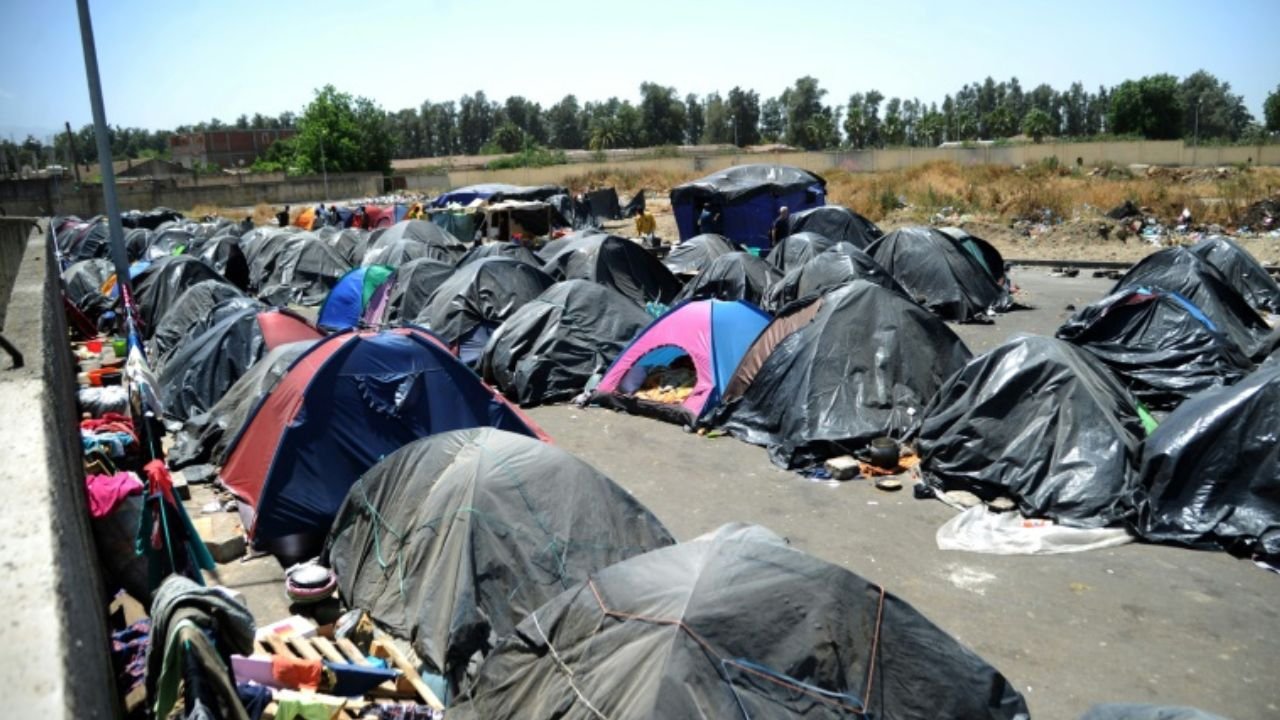
    The report said refugees and migrants in Morocco, Mauritania and Tunisia were being “apprehended based on the colour of their skin, loaded onto buses and driven to the middle of nowhere, often arid desert areas”, without water or food.

    Others reportedly were taken to border areas where they were allegedly “sold by the authorities to human traffickers and gangs who torture them for ransom”. The 27-nation EU has struck deals with the three named countries with explicit financing to boost stopping irregular migration to Europe.

    Brussels has given 150 million euros ($160 million) to Tunisia under a recent accord, with more promised. It has also allocated 210 million euros to Mauritania and 624 million euros to Morocco under the cooperation agreements.

    Racially motivated practices

    The EU’s efforts to have African countries stem migration flows across the Mediterranean Sea go hand in hand with a newly agreed overhaul of the bloc’s asylum rules. These will make EU borders tighter and speed up the deportation of unsuccessful asylum seekers.

    The Lighthouse Reports said it interviewed more than 50 black migrants — all of them from sub-Saharan Africa and West Africa — who had been expelled from the three North African countries.

    Their testimony, including videos and photos, “helped us to recognise the systematic and racially motivated nature of the practices,” along with the consortium’s own evidence gathering, it said.

    It cited unnamed European officials as denying that EU funds were being used to violate migrants’ rights. But it said two EU sources acknowledged it was “impossible” to fully account for how the funding from Brussels was being used.

    The European Commission — the EU’s executive arm — did not respond explicitly to the report’s allegations. Commission spokeswoman, Ana Pisonero, said: “Sometimes the situation is challenging in our partner countries… (but they) remain sovereign states and they continue to be in control of their national forces.” She said the EU monitored programmes it provided funding for, and noted pledges from partner countries to uphold international law and human rights.