Category: FOREIGN

Foreign Blogs is a network of global affairs blogs and a supplement to the Foreign Policy Association’s Great Decisions program.

  • Relieved travellers land in Singapore after deadly turbulence

    Relieved travellers land in Singapore after deadly turbulence

    Rattled travellers and crew landed in Singapore Wednesday after a terrifying high-altitude plunge on a flight from London during which an elderly passenger died and more than 80 were injured.

    Singapore Airlines flight SQ321 hit “sudden extreme turbulence” over Myanmar 10 hours into its journey on Tuesday, abruptly rising and plunging several times.

    One passenger said people were thrown around the cabin so violently they put dents in the ceiling during the drama at 11,300 metres (37,000 feet), leaving dozens with head injuries.

    Photos from inside the plane show the cabin in chaos, strewn with food, drinks bottles and luggage, and with oxygen masks dangling from the ceiling.

    The plane, carrying 211 passengers and 18 crew, made an emergency landing at Bangkok’s Suvarnabhumi Airport, where medical staff used gurneys to ferry the injured to ambulances waiting on the tarmac.

    A 73-year-old British man died, while Bangkok’s Samitivej Srinakarin Hospital said late Tuesday 71 people had been sent for treatment — six of them seriously injured.

    The airport in the Thai capital said 83 passengers and crew were hurt.

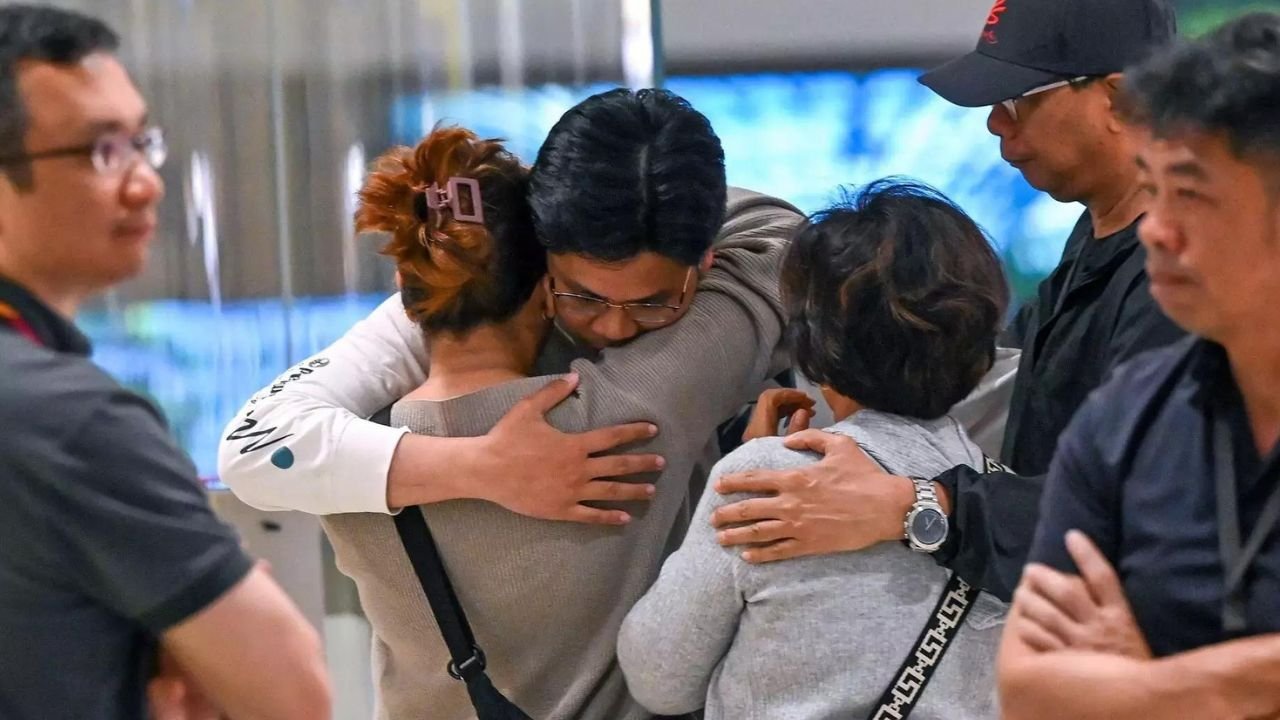
    A relief flight carrying 131 passengers and 12 crew landed at Singapore’s Changi Airport on Wednesday morning.

    Relieved relatives greeted the arrivals with hugs but all were too shaken to talk to waiting reporters.

    Andrew Davies, a British passenger aboard the Boeing 777-300ER, told BBC radio that the plane “suddenly dropped” and there was “very little warning”.

    “During the few seconds of the plane dropping, there was an awful screaming and what sounded like a thud,” he said, adding that he helped a woman who was “screaming in agony” with a “gash on her head”.

    Separately, he told a BBC podcast he feared the plane was going to crash.

    “Remembering the plane now — the huge dents in the roof that people had obviously hit with their head. There was a water bottle stuck in a gap in the ceiling,” he said.

    Singapore Prime Minister Lawrence Wong sent his “deepest condolences” to the family and loved ones of the dead man — identified as Geoff Kitchen, a musical theatre director from near Bristol.

    The city-state is sending investigators to Bangkok to probe the incident and Wong posted on Facebook that they were “working closely with Thai authorities.”

    Of the passengers, 56 were Australians, 47 British and 41 Singaporeans, according to the airline.

    “In terms of exactly what happened, it’s too early to tell. But I think passengers are too casual on board commercial aircraft,” US-based aerospace safety expert Anthony Brickhouse told AFP.

    “The moment the captain turns off the seatbelt sign, people literally unbuckle.”

    Davies, the passenger, said “the plane suddenly dropped” at the very moment a seatbelt sign came on.

    Allison Barker told the BBC her son Josh, who was aboard the plane, texted her that he was on “a crazy flight” that was making an emergency landing.

    “It was terrifying,” she said. “I didn’t know what was going on. We didn’t know whether he’d survived, it was so nerve-racking. It was the longest two hours of my life.”

    Scientists have long warned that climate change is likely to increase so-called clear air turbulence, which is invisible to radar.

    A 2023 study found the annual duration of clear air turbulence increased 17 percent from 1979 to 2020, with the most severe cases increasing more than 50 percent.
  • Before Raisi, other leaders killed in aviation crashes

    Before Raisi, other leaders killed in aviation crashes

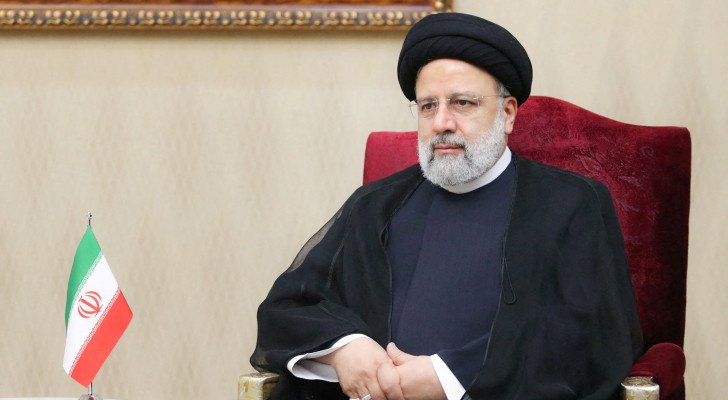
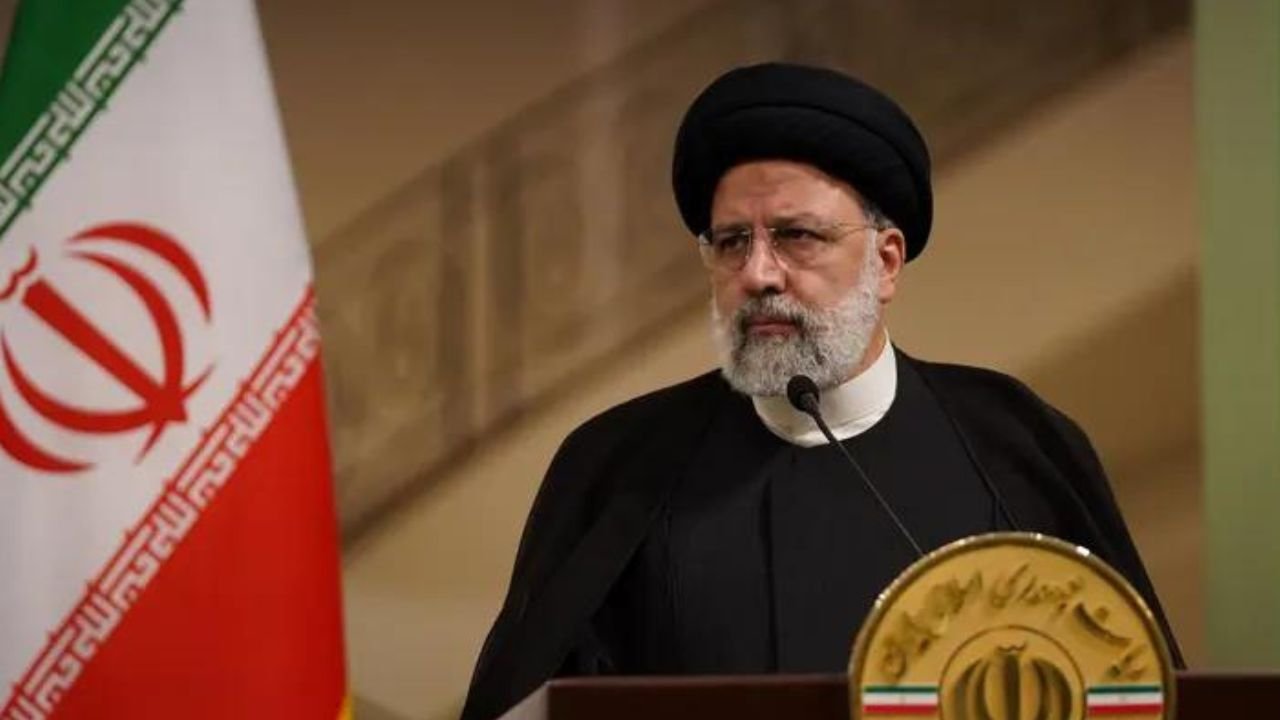
    Iranian President Ebrahim Raisi, whose death in a helicopter crash was announced Monday, is the latest major political leader to die in an aviation crash. Here are some of the best known among the others:

    2024: Former Chilean president Sebastian Pinera

    On 6 February 2024, former Chilean president Sebastian Pinera (in office from 2010-2014, and then 2018-2022), died in a helicopter crash at Lago Ranco, a vacation site 920 kilometres (570 miles) south of the capital Santiago.

    2010: Poland’s president Lech Kaczynski

    On 10 April 2010, a Tupolev 154 with 96 people aboard including Polish President Lech Kaczynski and senior political and military figures, crashed while trying to land in thick fog at an airport near Smolensk in western Russia.

    There were no survivors. The crash was attributed to bad weather as well as errors by the Polish pilots and Russian air traffic controllers.

    2005: Rebel leader turned Sudanese vice-president John Garang

    On 30 July 2005, John Garang, the former separatist rebel leader who became vice-president of Sudan, died when his helicopter crashed in Sudan on a flight back from Uganda.

    2004: Macedonian President Boris Trajkovski

    Macedonia’s president Boris Trajkovski was killed along with eight others when his plane crashed on February 26 2004, as it prepared to land in thick fog in the southern Bosnian town of Mostar.

    1994: Presidents Juvenal Habyarimana of Rwanda and Cyprien Ntaryamira of Burundi

    On 6 April 1994, a Falcon 50 transporting Rwandan president Juvenal Habyarimana and his Burundi counterpart Cyprien Ntaryamira was shot down over Kigali by at least one missile.

    The attack is considered the spark that unleashed the genocide of Tutsis that left at least 800,000 dead, according to the United Nations.

    1988: Pakistani President Zia ul-Haq

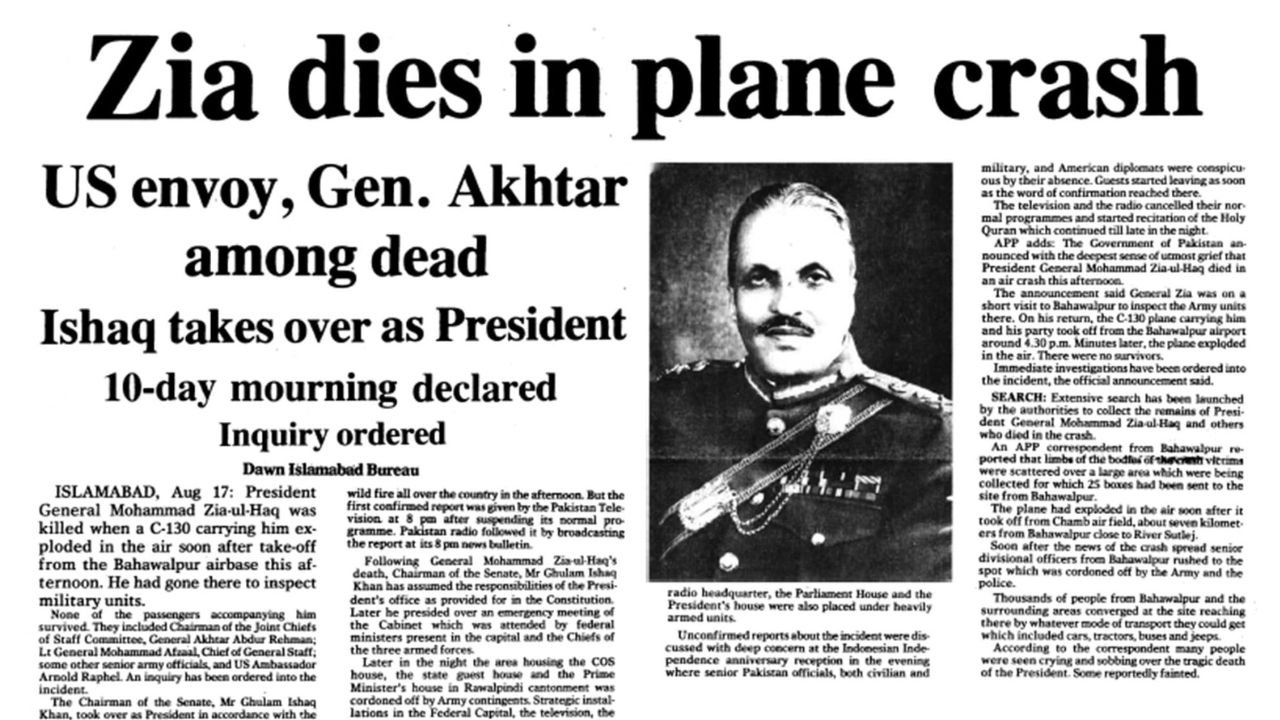
    Pakistan’s president Zia ul-Haq was among the victims of a 17 August 1988 plane crash near Bahawalpur, in the country’s east.

    1986: Mozambique President Samora Machel

    On 19 October 1986, Mozambique’s first president Samora Machel died when his Tupolev 134 went down in the north-east of South Africa.

    1961: UN Secretary General Dag Hammarskjold

    On September 17 or 18 of 1961, a plane carrying the UN Secretary General Dag Hammarskjold crashed in Northern Rhodesia, now Zambia, while attempting to negotiate a ceasefire between warring factions in the former Belgian Congo. The cause of the crash has never been established.

    doc-ang/lch/gv/rox/gv/db

    © Agence France-Presse

  • World reactions to death of Iran’s President Raisi

    World reactions to death of Iran’s President Raisi

    Iran’s powerful allies on Monday mourned the death of its President Ebrahim Raisi in a helicopter crash, while regional militants hailed him as a supporter of the Palestinian cause.

    Here is a roundup of key reactions:

    China

    China’s President Xi Jinping said “his tragic death is a great loss to the Iranian people, and the Chinese people have lost a good friend,” foreign ministry spokesman Wang Wenbin said at a regular press conference.

    European Union

    The European Union expressed its “sincere condolences”.

    “Our thoughts go to the families,” EU Council President Charles Michel said in a statement.

    France

    France sent its condolences “to the Islamic Republic of Iran… (and) to the families of the victims of this accident,” in a statement from the foreign ministry.

    India

    Indian Prime Minister Narendra Modi said he was “deeply saddened and shocked by the tragic demise” of Raisi, adding that “India stands with Iran in this time of sorrow.”

    Exiled opposition group

    Exiled Iranian opposition group the National Council of Resistance of Iran (NCRI) said Raisi’s death “represents a monumental and irreparable strategic blow to the mullahs’ supreme leader Ali Khamenei and the entire regime, notorious for its executions and massacres”, in a statement from the group’s leader, Maryam Rajavi.

    Russia

    Russian President Vladimir Putin hailed Raisi as an “outstanding politician” and said his death was an “irreplaceable loss.”

    “As a true friend of Russia, he made an invaluable personal contribution to the development of good-neighbourly relations between our countries, and made great efforts to take them to the level of a strategic partnership,” Putin said in a letter to Iran’s Supreme Leader Ayatollah Ali Khamenei.

    Turkey

    Turkey was “deeply saddened” by Raisi’s death and “shares the pain of the friendly and brotherly Iranian people,” Foreign Minister Hakan Fidan said.

    President Recep Tayyip Erdogan sent his “sincere condolences to the friendly and fraternal people and government,” in a message on X, formerly Twitter.

    Hamas-Gaza

    Hamas mourned Raisi as an “honourable supporter” of the Gaza-based Palestinian militant group whose October 7 attack is responded disproportionately by Israel in form of a genocide.

    Hamas said it appreciated Raisi’s “support for the Palestinian resistance and tireless efforts in solidarity” with Palestinians since the start of the Israel-Hamas war in Gaza.

    Hezbolllah-Lebanon

    Lebanon’s powerful Hezbollah group, which has traded deadly cross-border fire with Israel during the war, praised Raisi as “a strong supporter, and a staunch defender of our causes… and a protector of the resistance movements”.

    Lebanon announced three official days of mourning.

    Houthis-Yemes

    Yemen’s Tehran-backed Houthi rebels saying Raisi’s death “is a loss not only for Iran but also for the entire Islamic world and Palestine and Gaza,” Huthi spokesman Mohammed Abdulsalam said on X, adding that the Palestinians were “in dire need of the presence of such a president who continued to defend” their right to freedom.

    UAE

    Iran’s Gulf neighbours the United Arab Emirates, Bahrain and Qatar sent their condolences.

    The oil-rich UAE “stands in solidarity with Iran at this difficult time”, said Emirati President Sheikh Mohammed bin Zayed Al Nahyan.

    Qatar

    Qatar’s emir, Sheikh Tamim bin Hamad Al-Thani, called the news “painful”.

    Syria

    Syrian President Bashar al-Assad expressed solidarity with close ally Tehran, which has backed him during more than a decade of civil war.

    “We worked with the late President to ensure that strategic relations between Syria and Iran flourish always,” the Syrian presidency said in a statement.

    Iran’s arch-enemies the United States and Israel had yet to react publicly.

  • Iranian President Raisi killed in helicopter crash

    Iranian President Raisi killed in helicopter crash

    Iran’s President Ebrahim Raisi, and his foreign minister Hossein Amr-Abdollahian, have been killed in a helicopter crash on Sunday night in the north of the country near the border with Azerbaijan, State Television has confirmed.

    Rescue teams finally reached the site of the helicopter crash where dense fog and adverse weather conditions impeded rescue and recovery efforts.

    “Upon finding the helicopter, there was no sign of the helicopter passengers being alive as of yet,” state TV reported. The helicopter carrying the head of the state crashed during President Raisi’s return flight to Tabriz after he and Azerbaijani President Ilham Aliyev inaugurated the Qiz Qalasi Dam on the border.

    Iran’s Supreme Leader Ayatollah Ali Khamenei urged calm and assured his people that there would be no disruption in the country’s governance.

    Vice President Mohammad Mokhbar is expected to become the new President now, Al Jazeera has reported.

    Raisi became president in 2021.

  • Protest after Peru classifies transsexuality as mental disorder

    Protest after Peru classifies transsexuality as mental disorder

    LGBTQ groups protested Friday outside Peru’s health ministry after the government issued a decree listing transsexualism as a mental disorder.

    “It is a decree that takes us back three decades,” said Jorge Apolaya, spokesman of the Collective Pride March, a Lima-based rights group.

    “We cannot live in a country where we are considered sick,” he said.

    Transgender people are those who reject the sex they were assigned at birth. Some opt for surgical or medical intervention.

    The government on May 10 updated its list of insurable health conditions — which since 2021 has offered benefits for mental health treatment — to include services for transgender people.

    In the decree, the health ministry describes the condition as a “mental disorder” — an obsolete term long officially abandoned by the World Health Organization.

    More than 200 activists gathered outside the health ministry to demand the revocation of the decree on Friday — the International Day Against Homophobia, Biphobia and Transphobia.

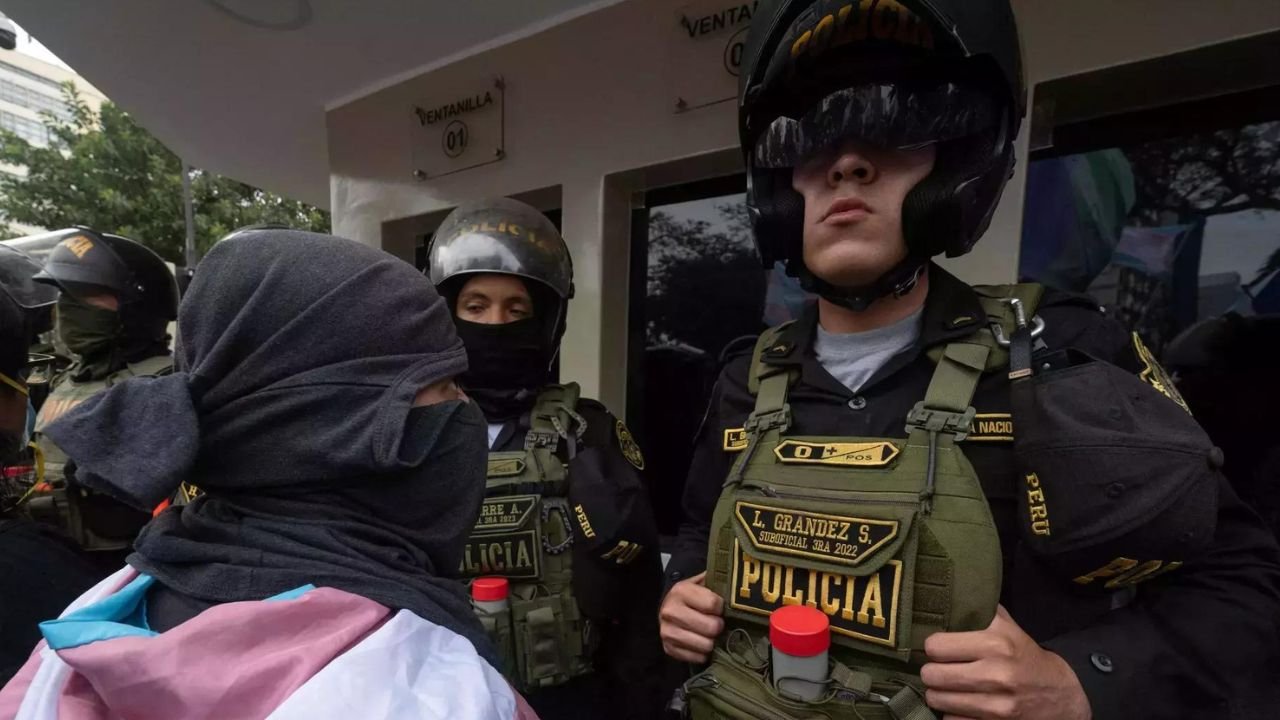
    Police guard the entrance of Peru’s Ministry of Health during a protest staged by LGBTQ groups against a new government decree listing transsexualism as a “mental disorder” (Cris BOURONCLE)

    “It is a regulation that violates us … they are positioning us as sick people, as if we have a problem,” said 25-year-old Afrika Nakamura.

    With slogans like “It’s not a  disease, it’s diversity!” and “We are trans and we are not sick,” the protesters blocked the busy avenue in front of the ministry for a few hours.

    No clashes with police were reported.

    “We demand the repeal of this transphobic and violent decree, which goes against our trans identities in Peru,” activist Gianna Camacho of the Coordinacion Nacional LGTBIQ+ told AFP.

    “We are not mentally ill and we do not suffer from any mental disorder,” she added.

    The government said it would not scrap the decree.

    Health ministry official Carlos Alvadrado told AFP that doing so would “remove the right to care.”

    The ministry has previously insisted it does not consider gender diversity as an illness, and in a statement expressed “our respect for gender identities and our rejection of the stigmatization of sexual diversity.”

    It said the decree was meant merely to extend mental health coverage “for the full exercise of the right to health and well-being” of those who want or need it.

    An article on the website of Human Rights Watch describes the decree as “profoundly regressive” in a country that does not allow same-sex marriage nor for transgender people to change their identity documents.

    For Percy Mayta, a medical doctor and activist, “pathologizing” transgender people “opens the door to… conversion therapy” — which UN bodies have equated to torture and is not illegal in Peru.

    In its press statement, Peru’s health ministry underlined that “the sexual orientation and gender identity of a person does not in itself constitute a physical or mental health disorder and therefore should not be subjected to medical treatment or care or so-called reconversion therapies.”

  • Austria to resume aid to UN agency for Palestinians

    Austria to resume aid to UN agency for Palestinians

    Austria said on Saturday that it will restore its funding to the UN agency for Palestinian refugees after suspending it over allegations that staff were involved with the Hamas.

    Israel alleged in January that some United Nations Relief and Works Agency (UNRWA) employees may have participated in the Hamas attacks on Oct. 7 that triggered the genocide in the Gaza Strip.

    In the weeks that followed, numerous donor states, including Austria, suspended or paused some $450 million in funding.

    Many, including Germany, Sweden, Canada and Japan, had since resumed funding, while others have continued to hold out.

    “After analysing the action plan in detail” submitted by UNRWA “to improve the functioning of the organization,” Austria has decided to “release the funds,” its Foreign Ministry said in a statement.

    A total of 3.4 million euros ($3.7 million) in funds have been budgeted for 2024, and the first payment is expected to be made in the summer, the statement said. 

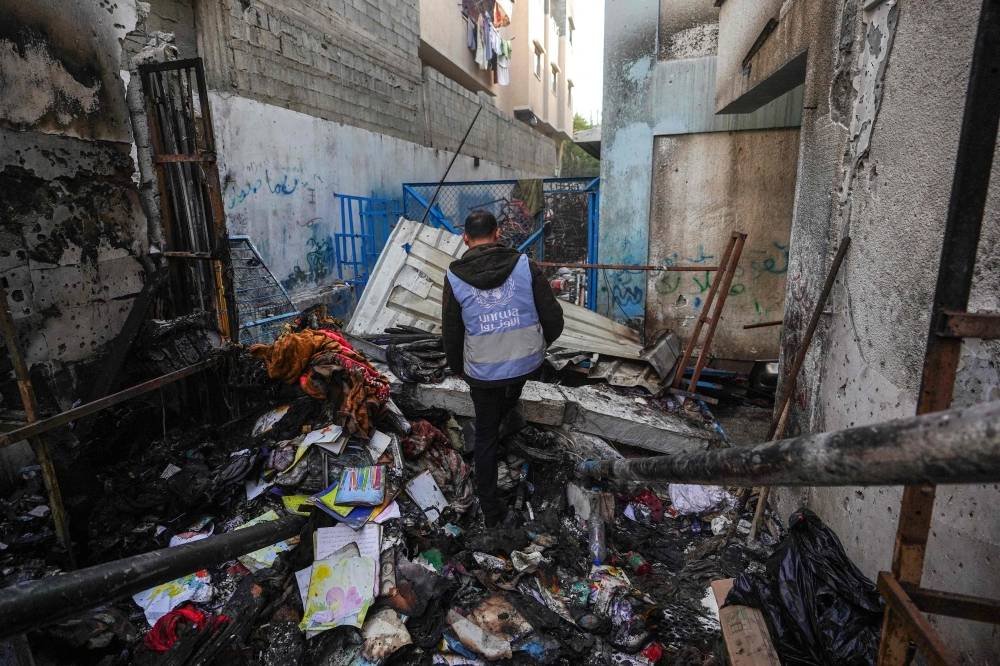
    An UNRWA staff member checks a burned area at a school housing displaced Palestinians that was hit during the ongoing conflict between Israel and Hamas, in Nuseirat in the central Gaza Strip on May 17, 2024. (Credit: AFP)

    “Some of the Austrian funds will be used in the future to improve internal control mechanisms at UNRWA,” it added.

    Austria said it will “closely monitor” the implementation of the action plan with other international partners, noting that “a lot of trust had been squandered.”

    The Alpine country said it has substantially increased support for the suffering Palestinian population in Gaza and the region since Oct. 7, making 32 million euros ($34.8 million) in humanitarian aid available to other international aid organizations.

    Israel’s has massacred at least 35,303 people, mostly civilians, according to data provided by the health ministry in the Gaza territory.

  • ‘Danger behind the beauty’: more solar storms could be heading our way

    ‘Danger behind the beauty’: more solar storms could be heading our way

    Tourists normally have to pay big money and brave cold climates for a chance to see an aurora, but last weekend many people around the world simply had to look up to see these colourful displays dance across the sky.

    Usually banished to the poles of Earth, the auroras strayed as far as Mexico, southern Europe and South Africa on the evening of May 10, delighting skygazers and filling social media with images of exuberant pinks, greens and purples.

    But for those charged with protecting Earth from powerful solar storms such as the one that caused the auroras, a threat lurks beneath the stunning colours.

    “We need to understand that behind this beauty, there is danger,” Quentin Verspieren, the European Space Agency’s space safety programme coordinator, told AFP.

    Mike Bettwy of the US Space Weather Prediction Center said that “we’re focused on the more sinister potential impacts” of solar storms, such as taking out power grids and satellites, or exposing astronauts to dangerous levels of radiation.

    The latest auroras were caused by the most powerful geomagnetic storm since the “Halloween Storms” of October 2003, which sparked blackouts in Sweden and damaged power infrastructure in South Africa.

    There appears to have been less damage from the latest solar storms, though it often takes weeks for satellite companies to reveal problems, Bettwy said.

    There were reports that some self-driving farm tractors in the United States stopped in their tracks when their GPS guidance systems went out due to the storm, he told AFP.

    ‘Definitely not over’

    These strange effects are caused by massive explosions on the surface of the Sun that shoot out plasma, radiation and even magnetic fields at incredibly fast speeds born on the solar wind.

    The recent activity has come from a sunspot cluster 17 times the size of Earth which has continued raging over the week. On Tuesday it blasted out the strongest solar flare seen in years.

    The sunspot has been turning towards the edge of the Sun’s disc, so activity is expected to die down in the short term as its outbursts aim away from our planet.

    But in roughly two weeks the sunspot will swing back around, again turning its gaze towards Earth.

    In the meantime, another sunspot is “coming into view right now” which could trigger “major activity in the coming days”, ESA space weather service coordinator Alexi Glover told AFP.

    So the solar activity is “definitely not over”, she added.

    It is difficult to predict how violent these sunspots could be — or whether they could spark further auroras.

    But solar activity is only just approaching the peak of its roughly 11-year cycle, so the odds of another major storm are highest “between now and the end of next year”, Bettwy said.

    What threat do solar storms pose?

    Geomagnetic storms such as the recent one create a magnetic charge of voltage and current, “essentially overloading” things like satellites and power grids, according to Bettwy.

    The most famous example came in 1859 during the worst solar storm in recorded history, called the Carrington Event.

    As well as stunning auroras, the storm caused sparks to fly off of telegraph stations. The charge that originated from the Sun was so strong that some telegraphs worked without being plugged into a power source.

    So what would happen if such a powerful geomagnetic storm struck Earth again?

    Bettwy said most countries have improved their power grids, which should prevent prolonged outages like those that hit Sweden in 2003 or Canada in 1989.

    Still, he suggested people have an emergency kit in case electricity is knocked out for a day or two. Fresh water might also help in case filtration plants go offline.

    Astronauts are particularly at risk from radiation during extreme solar activity. Those on the International Space Station usually take the best shelter they can when a bad storm is expected.

    Bettwy said a massive solar storm could expose astronauts to an “unhealthy dose” of radiation, but he did not think it would be lethal.

    Emphasising that he did not want to “instil fear”, Bettwy added that radiation can also potentially “get through the fuselage” of planes flying near the north pole.

    Airlines sometimes change routes during extreme solar storms to avoid this happening, he added.

    Several upcoming missions are expected to improve forecasting of the Sun’s intense and unpredictable weather, aiming to give Earth more time to prepare.

    If the ESA’s Vigil mission, planned to launch in 2031, was in place today, it would give us far more information about the currently rotating sunspot, Glover said.

    dl/tw/sco

    © Agence France-Presse

  • Modi claims to have stopped war in Gaza during Ramzan

    Modi claims to have stopped war in Gaza during Ramzan

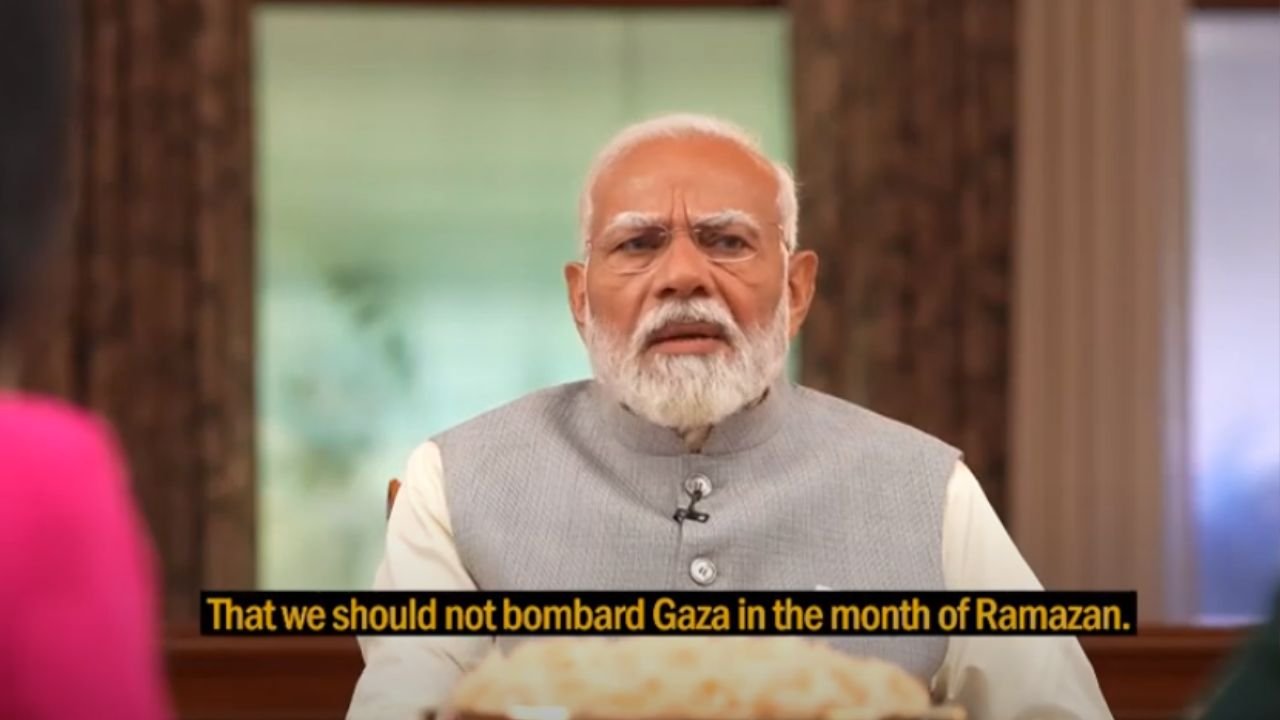
    Indian Prime Minister Narendra Modi recently appeared in an interview with a group of journalists and claimed that he played an instrumental role in stopping the war in Gaza for the month of Ramzan.

    In a video clip that surfaced on X (formerly Twitter), shared by ALT News journalist Muhammad Zubair Modi asserted that in the holy month of Ramzan, he sent a special envoy to Israel in order to convince the Israeli Prime Minister to at least stop the war in Gaza for the month. “Kam se kam Ramzan mein Gaza mein bambari na karein,” Modi stressed. He also stated that the Israeli Premier tried to follow his advice but he did make the effort.

    Modi went ahead to point out that, “Here you guys accuse me of politics against the Muslims but, Modi attempted to stop the bombardment in Gaza. Now I don’t want publicity for this.”

    The claim is being taken with a large pinch of salt by social media users.

  • Spain to not authorize ships carrying weapons for Israel in big win for Palestinian cause

    Spain to not authorize ships carrying weapons for Israel in big win for Palestinian cause

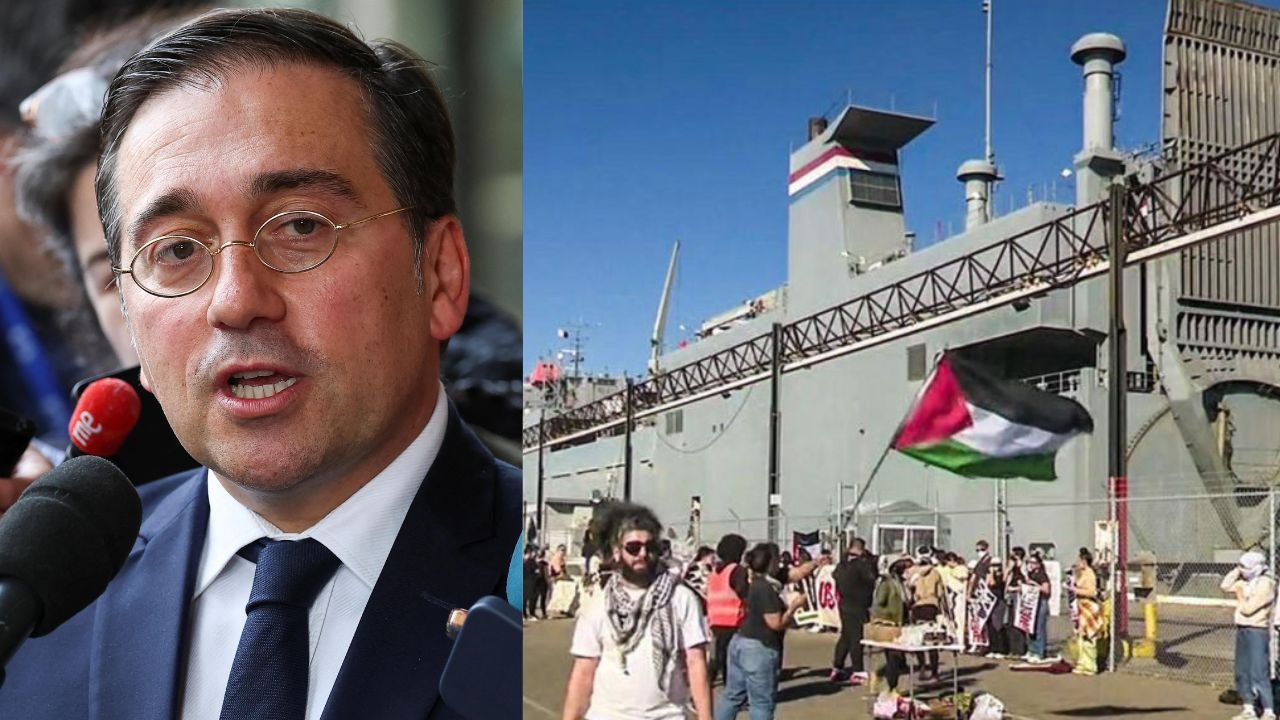
    In an effort to not contribute to or help Israel’s genocide in Gaza, Spain has decided that it will not authorise ships carrying weapons for Israel to call at its ports. The monumental decision was announced by foreign minister Jose Manuel Albares on Friday after the country refused to let a ship call at the southeastern port of Cartagena.

    The ship was the first to be denied access to a Spanish port, Albares asserted, adding the refusal was consistent with the government’s decision to not grant weapon export licences to Israel since Oct. 7, as Spain doesn’t “want to contribute to war”, reported Reuters.

    Previously, Spanish universities expressed willingness to suspend ties with any Israeli educational institution that failed to express “a clear commitment to peace”.

  • ‘Hindu nation’: Religion trumps caste in India vote

    ‘Hindu nation’: Religion trumps caste in India vote

    Agra, India – Born at the bottom of the Hindu faith’s rigid caste system, voters like Anil Sonkar will determine whether Indian Prime Minister Narendra Modi returns to power next month.

    More than two-thirds of India’s 1.4 billion people are estimated to be on the lower rungs of a millennia-old social hierarchy that divides Hindus by function and social standing.

    Politicians of all stripes have courted lower caste Indians with affirmative action programmes, job guarantees and special subsidies to mitigate long-standing discrimination and disadvantage.

    But Modi’s Hindu-nationalist Bharatiya Janata Party (BJP) has established itself as India’s dominant political force with a different pitch: think of your religion first, and caste second.

    “There are no economic opportunities and business has never been so bad for me,” said Sonkar, a 55-year-old fishmonger and a member of the Dalit castes, once disparagingly known as “untouchables”.

    “But under this government, we feel safe and proud as Hindus,” he told AFP in the tourist city of Agra, home of the Taj Mahal. “That is why, despite everything, I voted for Modi.”

    Modi’s party is expected to easily win this year’s national election once it concludes in June, in large part due to his government’s positioning of the Hindu faith at the centre of its politics.

    His government has been accused in turn of marginalising the country’s 200-million-plus Muslims, leaving many among them fearful for their futures in India.

    But its strategy of appealing to pan-Hindu unity, and directing the faith’s internal frictions outwards, has reaped political dividends.

    “The BJP’s base among the marginalised has grown over every election since 2014,” political scientist and author Sudha Pai told AFP.

    The party, she added, had successfully forged a new pan-Hindu political coalition by showing respect to the “cultural symbols, icons and history” of low-caste voters, and in the process furthering its goal of building a “Hindu nation”.

    Station in life

    Caste remains a crucial determinant of one’s station in life at birth, with higher castes the beneficiaries of ingrained cultural privileges, lower castes suffering entrenched discrimination, and a rigid divide between both.

    Modi himself belongs to a low caste, but the elite worlds of politics, business and culture are largely dominated by high-caste Indians.

    Less than six percent of Indians married outside their caste, according to the country’s most recent census in 2011.

    Modi’s political coalition has managed to bridge this internal divide by trumpeting a vision of a resurgent and assertive Hindu faith.

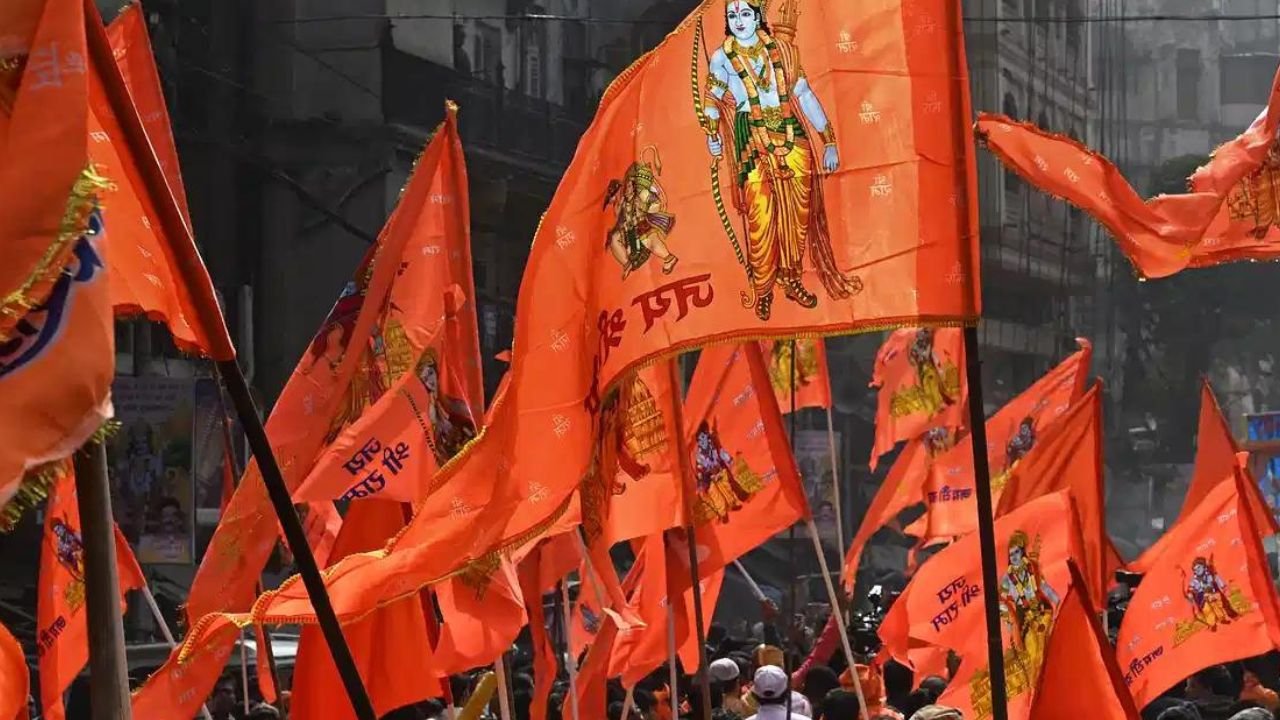
    The prime minister began the year by inaugurating a grand temple to the Hindu deity Ram, built on the site of a centuries-old mosque razed by Hindu zealots decades earlier.

    Construction of the temple fulfilled a long-standing demand of Hindu activists and was widely celebrated by Hindu voters, whatever their caste group.

    Modi’s rise also coincided with the declining fortunes of caste-based political parties that had dominated politics for decades in Uttar Pradesh, India’s most populous state with more people than Nigeria and its most important electoral battleground.

    Many in the state accused these parties of directing welfare programmes and other benefits of political power to their own caste groups, a situation they say changed when Modi came to power and made them available for all disadvantaged voters.

    “The soles of my slippers wore off as I ran around trying to get a card for free rations,” homemaker Munni Devi, 62, told AFP at a BJP campaign rally over the din of frenzied drum beats and music.

    “But Modi gave me one immediately after coming to power,” she told AFP.

    ‘Demons of those contradictions’

    The BJP has been able to unite a broad array of caste groups into a single bloc of support, but caste discrimination remains a fact of life both in politics and society at large.

    Despite Modi’s own low-caste origins, the senior ranks of his ministry, party and civil service remain overwhelmingly dominated by upper-caste functionaries.

    “Our lawmaker is from our caste and from the BJP,” said farmer Patiram Kushwaha, a Modi supporter reconsidering his allegiance.

    “He cannot do anything for us because those sitting at the top don’t listen to him.”

    More than two dozen opposition parties in this year’s poll have campaigned on a joint pledge to address the structural causes of discrimination by staging a caste-based national census and redirecting resources to the most disadvantaged.

    Analysts nonetheless expect Modi to triumph convincingly over the opposition bloc, but Neelanjan Sircar, of the Centre for Policy Research think-tank in New Delhi, said the BJP faced a monumental challenge in holding its coalition together over the long term.

    “This balancing act of keeping together groups which don’t really get along with each other is extremely tough in the long run,” he told AFP.

    “At some point, you have to face the demons of those contradictions.”

    sai/gle/sco

    © Agence France-Presse