Category: FOREIGN

Foreign Blogs is a network of global affairs blogs and a supplement to the Foreign Policy Association’s Great Decisions program.

  • Thousands in heatwave-hit Bangladesh pray for rain

    Thousands in heatwave-hit Bangladesh pray for rain

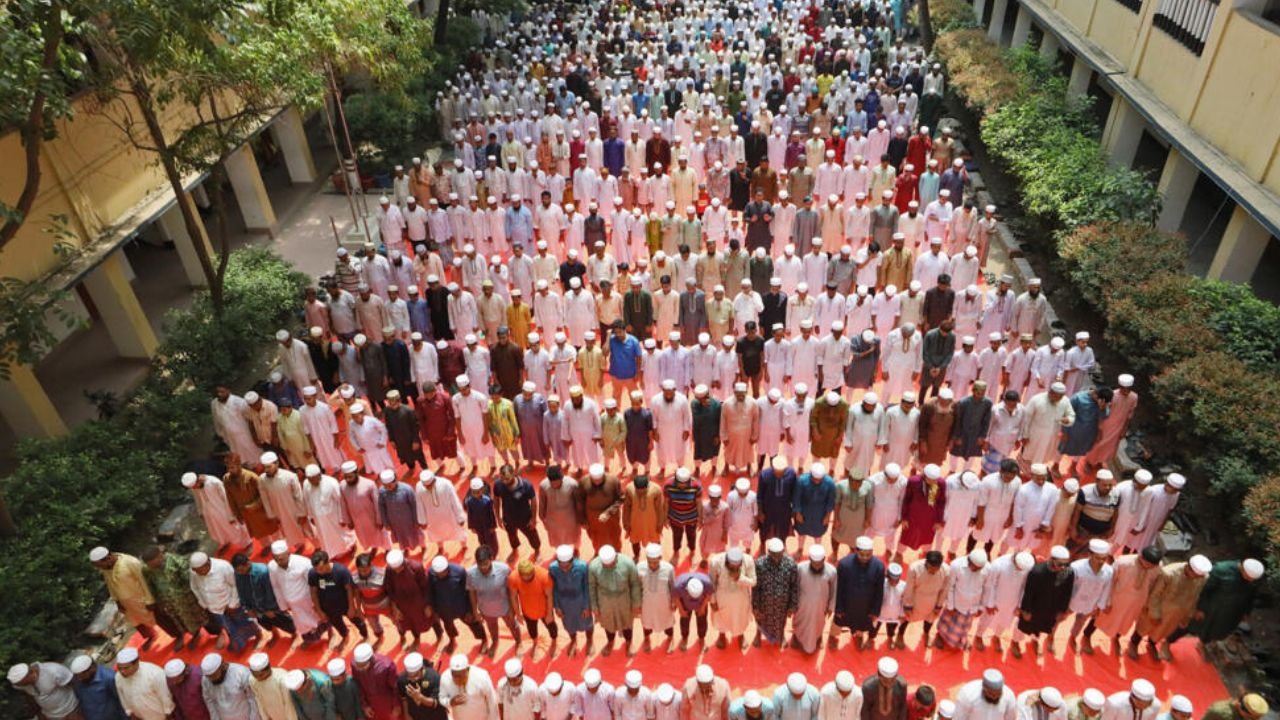
    Dhaka (AFP) – Thousands of Bangladeshis gathered to pray for rain on Wednesday in the middle of an extreme heatwave that prompted authorities to shut down schools around the country.

    Extensive scientific research has found climate change is causing heat waves to become longer, more frequent and more intense.

    Bangladesh’s weather bureau says that average maximum temperatures in the capital Dhaka over the past week have been 4-5 degrees Celsius (39-41 degrees Fahrenheit) higher than the 30-year average for the same period.

    Muslim worshippers gathered in city mosques and rural fields to pray for relief from the scorching heat, which forecasters expect to continue for at least another week.

    “Praying for rains is a tradition of our prophet. We repented for our sins and prayed for his blessings for rains,” Muhammad Abu Yusuf, an Islamic cleric who led a morning prayer service for 1,000 people in central Dhaka, told AFP.

    “Life has become unbearable due to lack of rains,” he said. “Poor people are suffering immensely.”

    Police said similarly sized prayer services were held in several other parts of Bangladesh.

    The country’s largest Islamist party, Jamaat-e-Islami, issued a statement calling its members to join the prayer services planned for Wednesday and Thursday.

    Authorities ordered all schools last week to cancel classes until the end of the month.

    Temperatures across Bangladesh have reached more than 42C (108F) in the past week.

    “April is usually the hottest month in Bangladesh. But this April has been one of the hottest since the country’s independence (in 1971),” government forecaster Tariful Newaz Kabir told AFP.

    Kabir said fewer rainstorms than average for the period had contributed to the heat.

    “We expect the high temperature will remain until the end of this month,” he said.

    Hospitals in the southern coastal district of Patuakhali had recorded local outbreaks of diarrhoea due to higher temperatures and the resulting increased salinity of local water sources, state medical officer Bhupen Chandra Mondal told AFP.

    “The number of diarrhoea patients is very high this year,” he said. “This is all linked to climate change.”

  • He hippo in Japan zoo turns out to be a she

    He hippo in Japan zoo turns out to be a she

    Tokyo (AFP) – Betrayed by its DNA and unmanly toilet habits, a hippopotamus in Japan thought for seven years to be a he is in fact a she, the zoo where the wallowing giant lives said Tuesday.

    The 12-year-old came to Osaka Tennoji Zoo in 2017 from the Africam Safari animal park in Mexico, where officials attested on customs documents that the then five-year-old was male.

    But zookeepers long scratched their heads, a spokeswoman told AFP.

    In particular, Gen-chan did not display the typical male hippo behaviour of splattering faeces around while defecating — with a propeller-like tail motion — in order to mark territory.

    Nor did it make courtship calls to females and zookeepers were unable to visually identify any male genitalia, a dangerous task in such a large and potentially aggressive beast.

    “Therefore, we requested a DNA test at an external institution, and the result showed it was female,” the zoo said in a statement posted last week.

    “We will keep doing our best to provide comfortable environment to Gen-chan, so everyone, please come and see,” it said.

  • Tensions flare at US universities over Gaza protests

    Tensions flare at US universities over Gaza protests

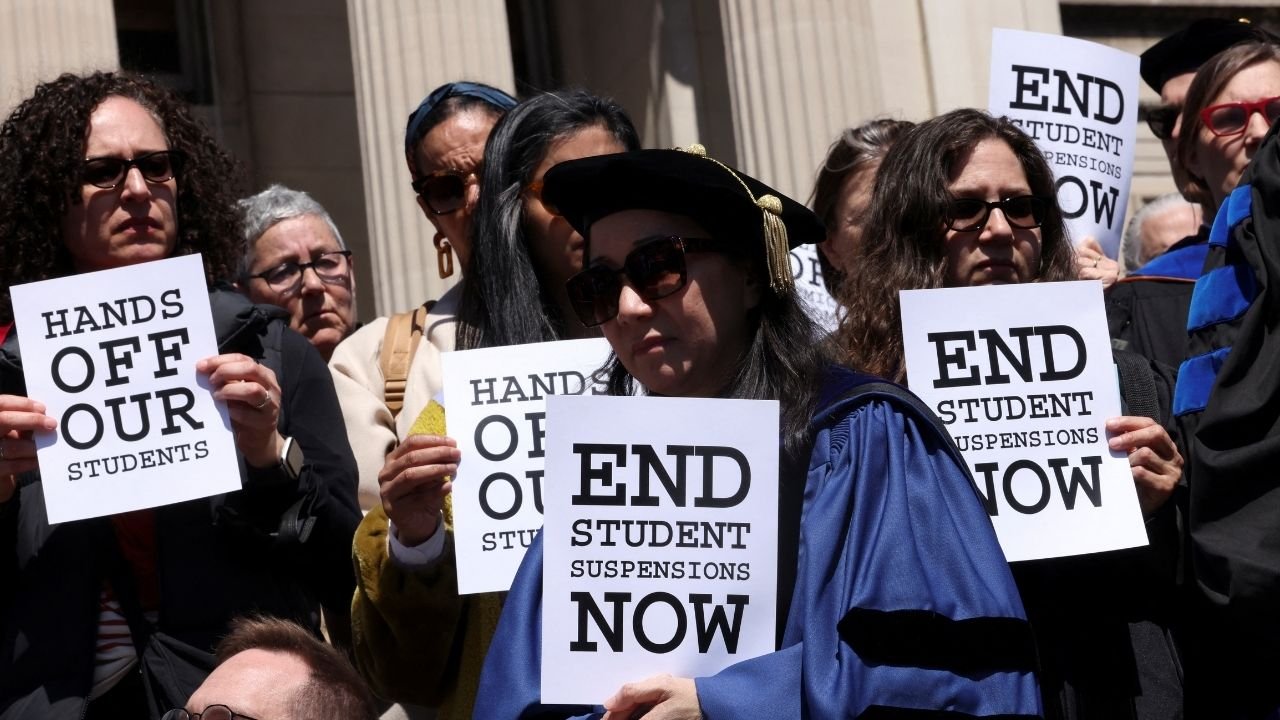
    New York, United States – Tensions flared between pro-Palestinian student protesters and school administrators at several US universities Monday, as in-person classes were cancelled and demonstrators arrested.

    The protests, which began last week at Columbia University with a large group of demonstrators establishing a “Gaza Solidarity Encampment” on school grounds, have spread to other campuses, including Yale, MIT and others.

    Some Jewish students at Columbia have reported intimidation and anti-Semitism amid the days-long protest, which is calling for the prestigious New York institution to divest from companies with ties to Israel.

    Classes were moved online Monday, with university president Nemat Shafik calling for a “reset” in an open letter to the school community.

    “Over the past days, there have been too many examples of intimidating and harassing behavior on our campus,” she said.

    “Anti-Semitic language, like any other language that is used to hurt and frighten people, is unacceptable and appropriate action will be taken.

    “To deescalate the rancor and give us all a chance to consider next steps, I am announcing that all classes will be held virtually on Monday,” she added.

    Last week, more than 100 protesters were arrested after university authorities called the police onto the private campus Thursday, a move that seemingly escalated tensions and sparked a greater turnout over the weekend.

    Mimi Elias, a social work student who was arrested, told AFP on Monday: “We are going to stay until they talk to us and listen to our demands.”

    “We don’t want anti-Semitism or Islamophobia. We are here for the liberation of all,” Elias said.

    Joseph Howley, an associate professor of classics at Columbia, said the university had reached for the “wrong tool” by involving police, which had attracted “more radical elements that are not part of our student protests.”

    “You can’t discipline and punish your way out of prejudice and community disagreement,” Howley told AFP.

    Disciplinary action

    As the holiday of Passover began Monday night, social media images appeared to show pro-Palestinian Jewish students holding traditional seder meals inside the protest areas on multiple campuses, including at Columbia.

    Further downtown, police began detaining protesters who had set up their own encampment at New York University at around 8:30 pm, the New York Times reported, after the school called the students’ behavior “disorderly, disruptive, and antagonizing.”

    There were also demonstrations at MIT, the University of Michigan and Yale, where at least 47 people had been arrested on Monday after refusing requests to disperse.

    “The university made the decision to arrest those individuals who would not leave the plaza with the safety and security of the entire Yale community in mind,” the Ivy League university said in a statement.

    At Harvard, university officials on Monday suspended the Palestinian Solidarity Committee, the student group said on Instagram.

    They were ordered to “cease all organizational activities” for the rest of the term, or risk permanent expulsion after holding an unregistered demonstration last week, student newspaper the Harvard Crimson reported, citing an email to the group.

    Universities have become the focus of intense cultural debate in the United States since Hamas’s October 7 attack and Israel’s overwhelming military response, as a humanitarian crisis grips the Palestinian territory of Gaza.

    President Joe Biden on Monday said he condemned “the anti-Semitic protests.”

    “I also condemn those who don’t understand what’s going on with the Palestinians,” he told reporters, without further details.

    hg/amz/bjt/des/caw/mtp

    © Agence France-Presse

  • World’s largest private firms fail to set climate targets: report

    World’s largest private firms fail to set climate targets: report

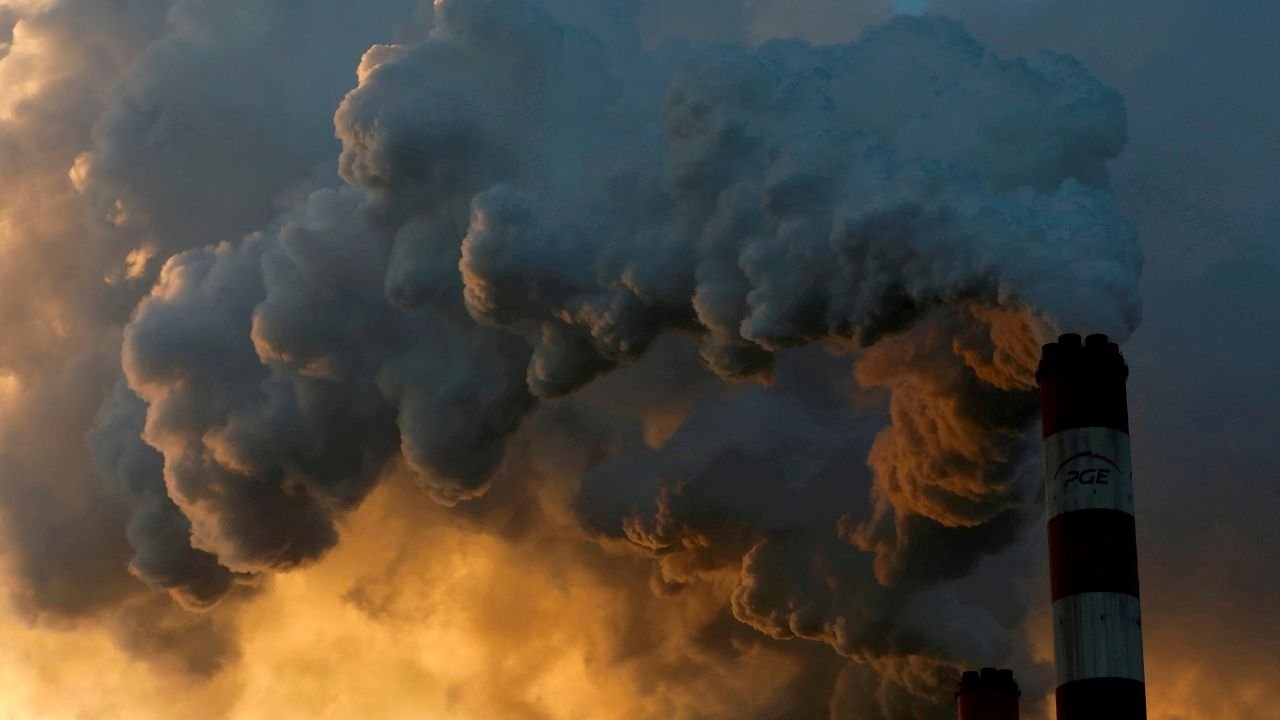
    Paris, France – Only 40 of the world’s 100 largest private firms have set net-zero carbon emissions targets to fight climate change, according to a report released Monday, lagging far behind public companies.

    But for the world to meet the 2015 Paris Agreement to limit global warming 1.5 degree Celsius, all companies need to reduce their planet-heating emissions, the report by the group Net Zero Tracker noted.

    The lack of market and reputational pressures on private firms compared to those publicly-listed, along with an absence of regulation are to blame for their slow uptake of climate commitments, John Lange of Net Zero Tracker told AFP.

    “I think things are changing on all three of those fronts,” he added.

    The report compared 200 of the world’s largest public and private companies based on their reported emissions reductions strategies and net-zero targets.

    It found that only 40 of the 100 private firms assessed had net zero targets, compared to 70 of 100 publicly-listed companies.

    Of the private companies that have set targets, just eight have published plans on how they will meet them.

    “A pledge without a plan is not a pledge, it is a naked PR stunt,” the report said.

    Regulations coming

    Only two firms — furnishing giant Ikea and US engineering giant Bechtel — ruled out using controversial carbon credits to achieve their net-zero goals, the report said.

    Carbon credits allow businesses to offset their emissions by directing money toward a project that reduces or avoids emissions, such as protecting forests, but critics say they allow companies to keep polluting.

    Meanwhile, none of the eight fossil fuel companies included in the report was found to have a net-zero target, compared with 76 percent of the sector’s largest public firms.

    There was also little improvement in the figures compared with a previous analysis done in 2022, “despite a massive uptick in regulation around the world”, Lang said.

    Several jurisdictions including the United Kingdom have adopted climate disclosure regulations.

    Others have regulations on the horizon, with business hubs of California and Singapore requiring greenhouse gas emissions reporting from 2027.

    The European Union also introduced two climate regulations — the Corporate Sustainability Reporting Directive (CSRD) and the Corporate Sustainability Due Diligence Directive (CSDDD) — which will soon require thousands of large companies to report their climate impacts and emissions, and to take action to curtail them.

    “We’re trying to get private firms to understand what’s coming for them,” Lang said.

    ‘Trickledown effect’

    The EU policies will have far-reaching effects in particular, targeting firms not only based in the bloc but those that may be headquartered elsewhere with branches or subsidiaries within the member states.

    Yet two European private firms, including French hypermarket chain E. Leclerc, were singled out in the report for having set any emissions reduction targets.

    E.Leclerc told AFP that the company has made efforts toward more sustainable practises like eliminating the use of single-use plastic bags, and is “committed to setting near-term company-wide emissions reduction targets”.

    But with the enforcement of EU regulations looming, firms will not be able to “dodge” climate targets much longer, Sybrig Smit of the NewClimate Institute told AFP.

    “It’s actually quite watertight. If companies want to do business in Europe, they are going to have to face the consequences,” she said.

    The firms analysed account for roughly 23 percent of the global economy, with the majority based in either China, the United States or EU states — the biggest emitters of greenhouse gases, Lang said.

    Any changes the firms make to meet new regulations will have substantial benefits for the environment.

    “They have such a trickledown effect. Whenever such a big company is implementing something real, it will have a huge effect on the rest of the sector that they operate in,” Smit said.

    giv/cw

    © Agence France-Presse

  • Apple drops WhatsApp, Threads from China app store on official order: report

    Apple drops WhatsApp, Threads from China app store on official order: report

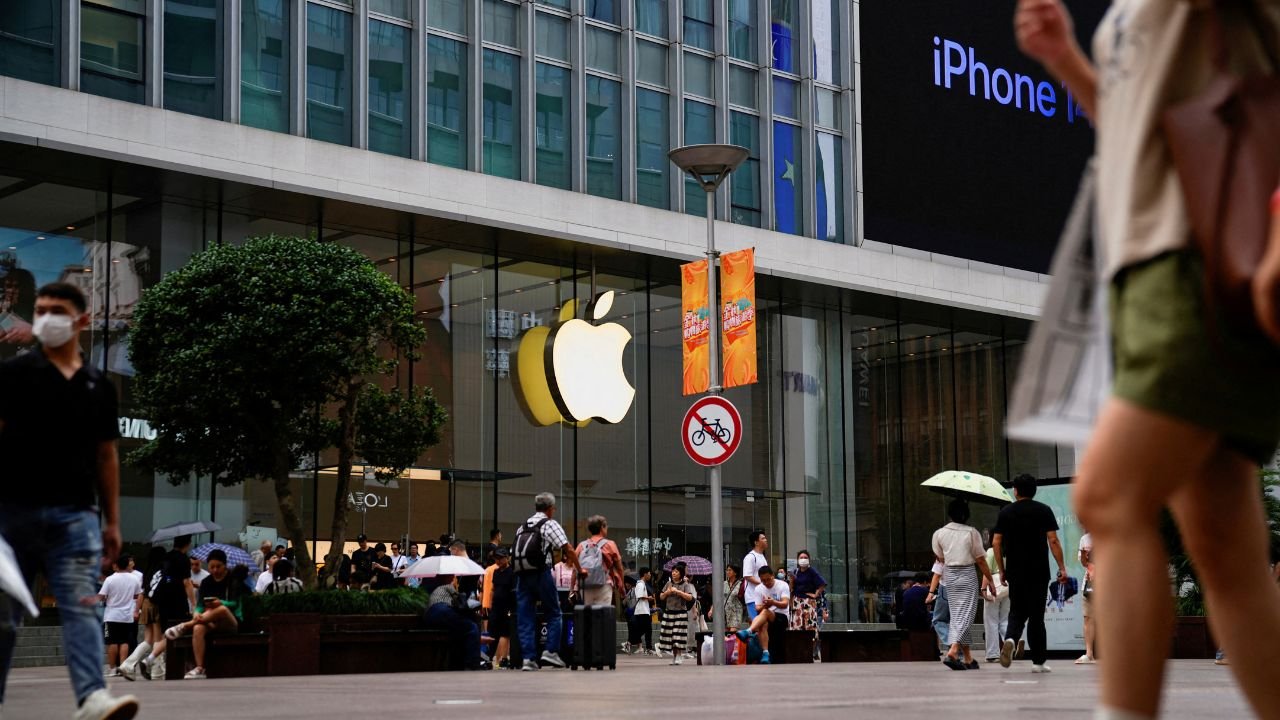
    Beijing (AFP) – Apple has removed the Meta-owned WhatsApp and Threads from its App Store in China following an order from the country’s top internet regulator, Bloomberg reported Friday citing the tech giant.

    Beijing engages in some of the world’s most extensive internet censorship, with web users in mainland China unable to access everything from Google to many foreign apps without using a virtual private network.

    “We are obligated to follow the laws in the countries where we operate, even when we disagree,” said Apple in a statement, according to Bloomberg.

    “The Cyberspace Administration of China (CAC) ordered the removal of these apps from the China storefront based on their national security concerns,” said Apple, referring to China’s internet regulator.

    “These apps remain available for download on all other storefronts where they appear.”

    A Meta spokesperson referred AFP to Apple, which did not immediately respond to a request for comment.

    The CAC and the Ministry of Industry and Information Technology — another top Chinese internet regulatory body — also did not immediately respond.

    China is a key market for Apple, which last year topped the country’s smartphone market for the first time.

    But thorny issues of censorship and national security have long hounded the US-based firm’s operations in China as Beijing and Washington engage in a fierce battle for technological supremacy.

    In January, China said it had cracked Apple’s encrypted AirDrop communication service, which had once given protesters a vital channel for sharing information during the major 2019 pro-democracy protests in Hong Kong.

    State-backed experts said in January that they had devised a way to reveal an iPhone’s encrypted device log, allowing them to then identify an AirDrop user’s phone number and email accounts.

    Many online platforms that are popular in much of the world — including Google, Facebook, X, WhatsApp and TikTok — are blocked in mainland China.

    But savvy iPhone users in China have still been able to download banned platforms through Apple’s app store, then use a VPN to get around the restrictions.

    Removing WhatsApp and Threads from the Chinese app store will greatly complicate the ability of new iPhone users to access the apps.

    The latest development comes a day before a scheduled vote in the US House of Representatives to force the wildly popular video app TikTok to sever all links with its Chinese parent ByteDance.

    US officials have raised concerns in recent years over potential national security and privacy threats posed by TikTok, despite repeated assurances by the firm that it presents no risks to the American public.

    Beijing has frequently lashed out against US restrictions on Chinese tech, claiming they are a pretext to contain the country’s economic rise.

  • Google fires 28 workers protesting contracts with Israel

    Google fires 28 workers protesting contracts with Israel

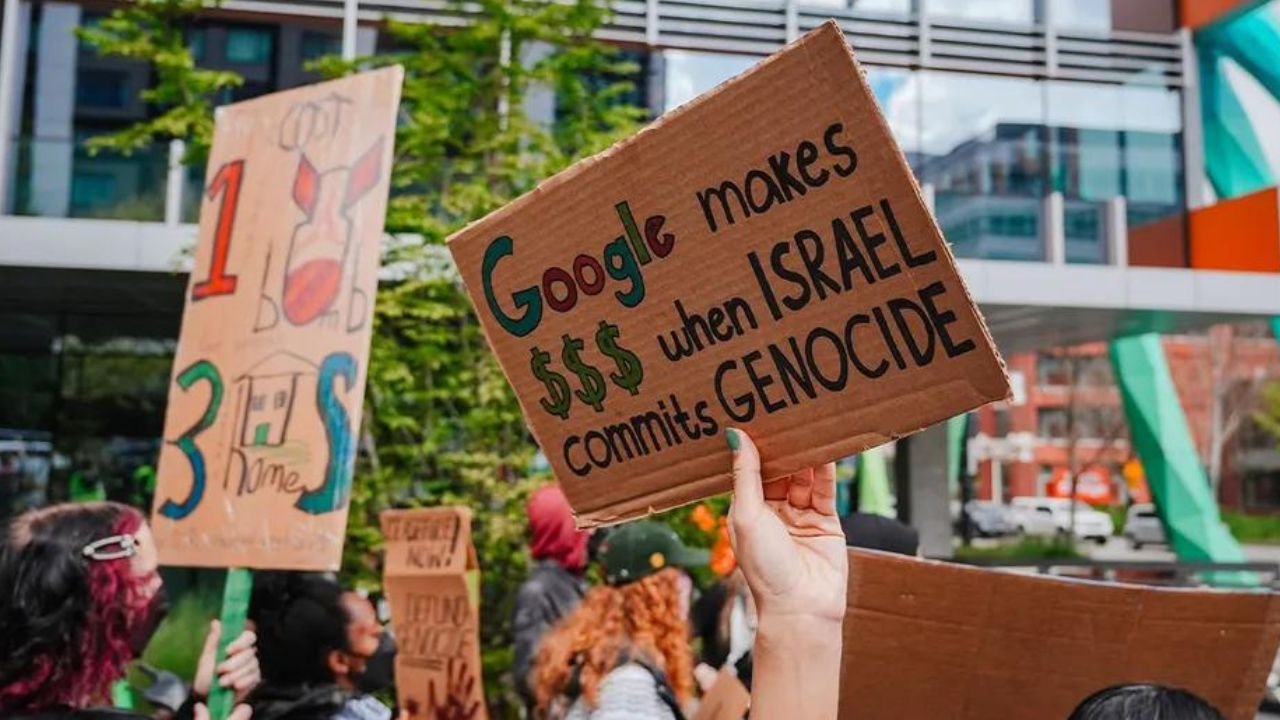
    New York, United States – Google fired 28 employees following a sit-down protest over the tech giant’s contract with the Israeli government, a Google spokesperson said Thursday.

    The Tuesday demonstration was organized by the group “No Tech for Apartheid,” which has long opposed “Project Nimbus,” Google’s joint $1.2 billion contract with Amazon to provide cloud services to the government of Israel.

    Video of the demonstration showed police arresting Google workers in Sunnyvale, California, in the office of Google Cloud CEO Thomas Kurian’s, according to a post by the advocacy group on X, formerly Twitter.

    Kurian’s office was occupied for 10 hours, the advocacy group said.

    Workers held signs including “Googlers against Genocide,” a reference to accusations surrounding Israel’s attacks on Gaza.

    “No Tech for Apartheid,” which also held protests in New York and Seattle, pointed to an April 12 Time magazine article reporting a draft contract of Google billing the Israeli Ministry of Defense more than $1 million for consulting services.

    A “small number” of employees “disrupted” a few Google locations, but the protests are “part of a longstanding campaign by a group of organizations and people who largely don’t work at Google,” a Google spokesperson said.

    “After refusing multiple requests to leave the premises, law enforcement was engaged to remove them to ensure office safety,” the Google spokesperson said. “We have so far concluded individual investigations that resulted in the termination of employment for 28 employees, and will continue to investigate and take action as needed.”

    Israel is one of “numerous” governments for which Google provides cloud computing services, the Google spokesperson said.

    “This work is not directed at highly sensitive, classified, or military workloads relevant to weapons or intelligence services,” the Google spokesperson said.

    jmb/nro

    © Agence France-Presse

  • UK parliament debates law phasing out smoking

    UK parliament debates law phasing out smoking

    London, United Kingdom – The UK parliament on Tuesday kicked off its first debate on Prime Minister Rishi Sunak’s planned flagship legislation to prevent young people from smoking, despite opposition from many in his own Conservative Party.

    The law would ban the selling of tobacco products to anyone born after January 1, 2009 –- effectively raising the smoking age by a year each year until it applies to the whole population.

    “This has the potential to phase out smoking in young people almost completely as early as 2040,” the government said when it unveiled the plan, calling the move “historic”.

    While the law looks set to pass thanks to support from opposition parties — including Labour, which is expected to win a general election due this year — Sunak faces the prospect of a rebellion from backbench Tory MPs.

    The beleaguered leader has little political capital to expend within his fractured party as he struggles to revive its fortunes following months of dire polling.

    Smoking is the UK’s biggest preventable killer and opinion polls show that around two-thirds of people in the UK back a phased smoking ban.

    However, libertarian-leaning MPs on the right of the ruling Conservatives, including former prime minister Liz Truss, have branded the move an attack on personal freedoms.

    Conservative MP Simon Clarke told BBC radio that he was “both sceptical and downright opposed” to the plans.

    “I think that an outright ban risks being counterproductive, I think it actually risks making smoking cooler, it certainly risks creating a black market, and it also risks creating a unmanageable challenge for the authorities,” he said.

    Former prime minister Boris Johnson also said at an event in Canada last week it was “mad” that the party of Winston Churchill was “banning cigars”.

    Vaping clamp down

    Opening the debate for the government, Health Secretary Victoria Atkins told the House of Commons that there is “no liberty in addiction”.

    “Nicotine robs people of their freedom to choose. The vast majority of smokers start when they are young, and three quarters say that if they could turn back the clock they would not have started,” she said.

    MPs are due to vote on whether to approve the plans for the next stage of the legislative process on Tuesday evening.

    Conservative MPs have been given a free vote, meaning they are able to defy the government without fear of being suspended from the party.

    Westminster watchers will closely study the size of the rebellion to see what it suggests about Sunak’s authority, amid reports that some cabinet members are considering voting against.

    The proposed ban was supposedly inspired by a similar plan in New Zealand which was later dropped.

    Official figures show smoking causes about one in four deaths from cancer and leads to 64,000 deaths in England per year.

    “If parliament passes this new bill, it will put the UK at the very forefront of the fight to eradicate one of the most harmful inventions of modern times,” said Lion Shahab, co-director of the tobacco and alcohol research group at University College London.

    The legislation also seeks to clamp down on young people vaping by restricting flavours and packaging to make less appealing to children.

    jwp-pdh/jj/yad

    © Agence France-Presse

  • Jobs and rights on young voters’ minds for India polls

    Jobs and rights on young voters’ minds for India polls

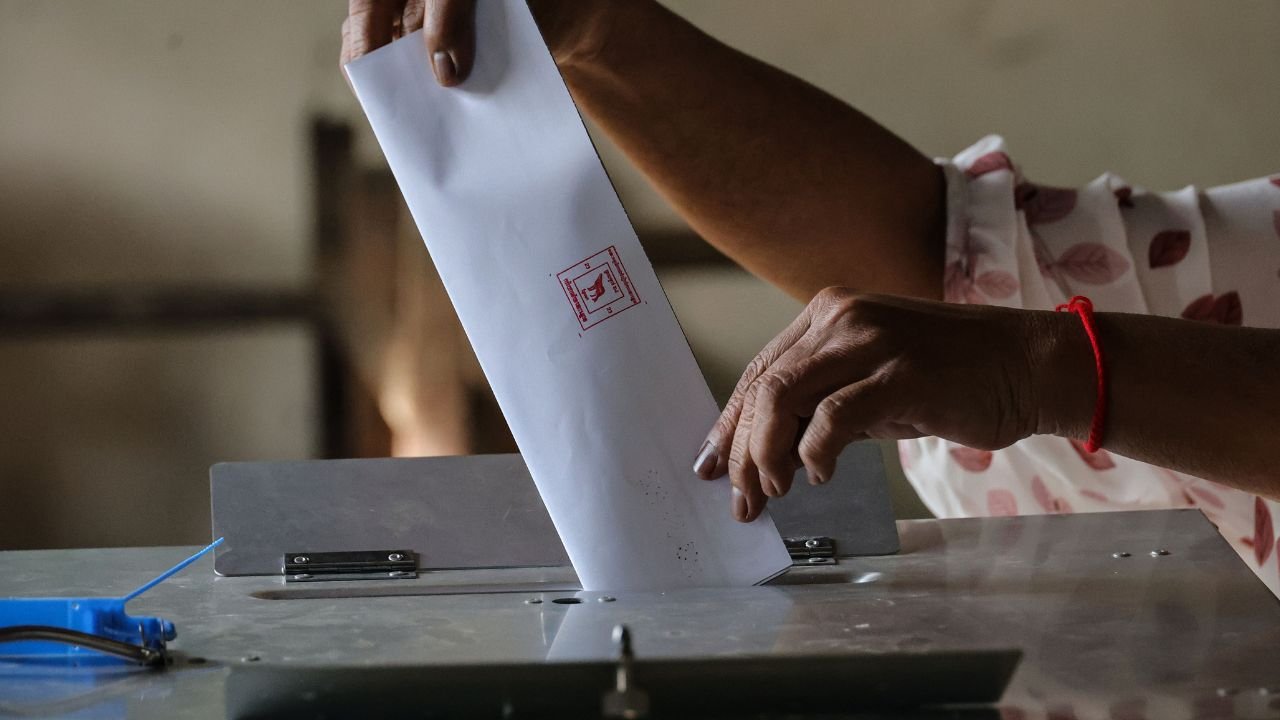
    New Delhi, India – Around 130 million young adults aged 18 to 22 will be newly eligible to vote in India’s national elections when polls open Friday — more people than the entire population of Mexico.

    AFP asked four first-time voters who were too young to vote in the 2019 elections about who they would support and the issues that mattered to them:

    The student

    Mumbai university student Abhishek Dhotre, 22, said he was unhappy with “the communal discord that is seen all throughout India” as a result of the government’s muscular Hindu nationalism.

    Prime Minister Narendra Modi’s government has brought India’s majority Hindu faith to the forefront of political life.

    That has left Muslims and other minorities anxious about their futures in the nominally secular country.

    Still, with India’s economy growing at a breakneck pace, overtaking former colonial ruler Britain as the world’s fifth-largest in 2022, Dhotre wants Modi and his Bharatiya Janata Party (BJP) to win again.

    “With the flow of development, infrastructure and everything that’s going on, I would prefer the current government to stay,” he told AFP.

    The software developer

    Thrishalini Dwaraknath, 20, epitomises India’s economic changes — she is about to move from Tamil Nadu to the tech hub of Bengaluru, both of them in the south, to work as a software developer.

    “I’m excited to be part of the Indian democracy and voicing my opinion for the first time,” she told AFP. “And I’m glad that my voice matters.”

    She praised Modi’s government for its achievements in office but said it needed to do more to help millions of unemployed young Indians find work.

    India’s annual GDP growth hit 8.4 percent in the December quarter, but the International Labour Organization estimated that 29 percent of the country’s young university graduates were unemployed in 2022.

    “Addressing the skill gap between students and the job market is key,” Dwaraknath said.

    The farmer

    One first-time voter who will definitely not be backing the BJP is Gurpartap Singh, 22, a wheat farmer from the northern state of Punjab.

    Farmers in Punjab were the backbone of a yearlong protest in 2021 against the Modi government’s efforts to bring market reforms into India’s agricultural sector.

    The reforms were later shelved, marking a rare political defeat for the prime minister, but farmers say their demands have still not been met.

    “So many farmers died in the protest,” Singh said. “They have not got justice.”

    Farmers are a significant voting bloc in India — hundreds of millions of people make their living from the land.

    “The government that thinks about the farmers, youth — that is the government that should come to power,” Singh said, adding that the BJP had failed that test.

    The transgender woman

    India’s 1.4 billion people encompass a vast range of backgrounds including a transgender community estimated to be several million people strong.

    The Hindu faith has many references to a “third gender”, and a 2014 Supreme Court ruling said people could be legally recognised as such.

    They nonetheless face entrenched stigma and discrimination, and Salma, a transgender Muslim woman from the Hindu holy city of Varanasi, said she did not expect that to change under another BJP government.

    “All the time this government has stayed in power, they have done nothing good for us,” said Salma, who declined to say who she would vote for.

    “We should get equal rights.”

    burs-ash/slb-gle/lb

    © Agence France-Presse

  • UN agency finds unexploded 1,000-pound bombs in Gaza schools

    UN agency finds unexploded 1,000-pound bombs in Gaza schools

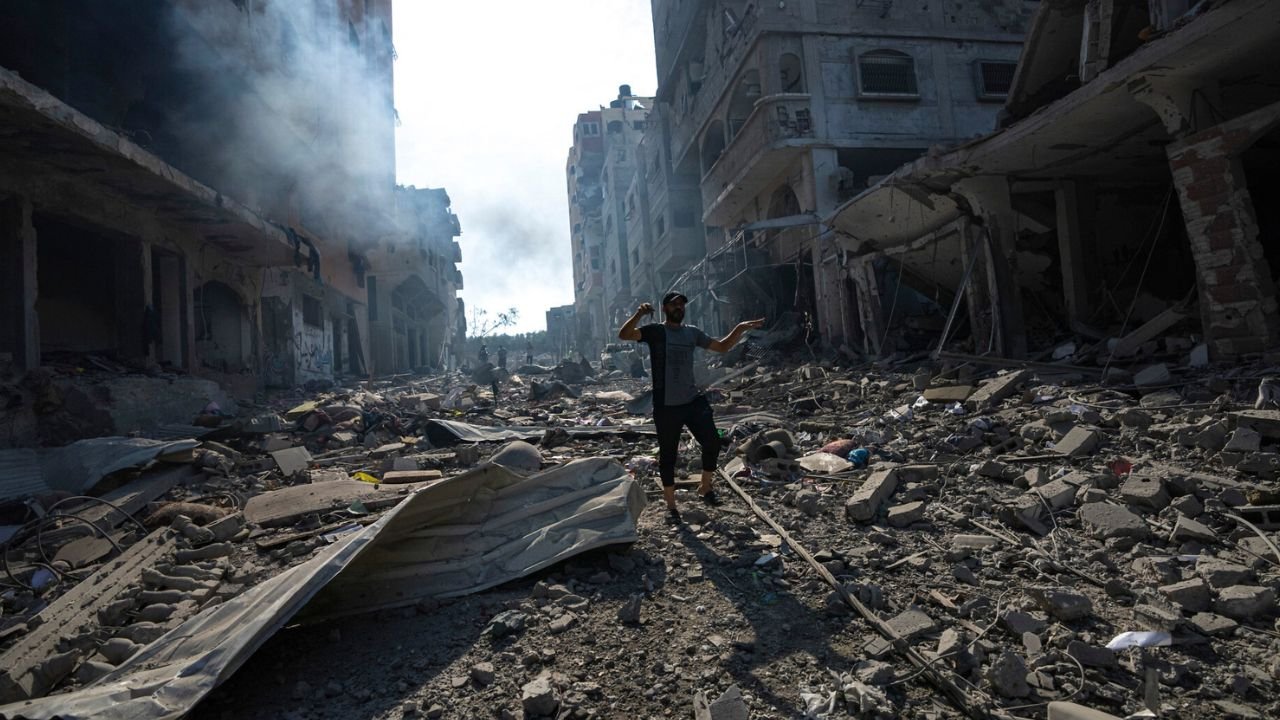
    The UN agency for Palestinian refugees said Tuesday it had found unexploded 1,000-pound bombs inside schools after Israel pulled troops out of southern Gaza’s main city Khan Yunis.

    The Israeli army has carried out relentless air strikes and bombardments in Gaza since October 7 attacks.

    UN agencies led an “assessment mission” in Khan Yunis after Israeli forces withdrew from the embattled city last week, UNRWA said.

    It found “significant challenges in operating safely due to the presence of unexploded ordnance (UXOs), including 1,000-pound bombs inside schools and on roads”.

    “Thousands of internally displaced persons (IDPs) require a range of lifesaving assistance, including health, water and sanitation, and food,” it said.

    Earlier this month, the United Nations said it would take “millions of dollars and many years to decontaminate the (Gaza) Strip from unexploded munitions”.

    “We work off the rule of thumb that 10 percent of ordnance doesn’t function as designed,” UN Mine Action Service chief Charles Birch said in a statement earlier this month.

    “We estimate that, to begin the clearance of Gaza, we need around $45 million.”

    Israeli genocide in Gaza since October 7 has killed at least 33,843 people in the besieged strip, mostly women and children, according to the health ministry.

    lcm/jd/kir

    © Agence France-Presse

  • Pakistani man among those killed in Sydney attack: community groups

    Pakistani man among those killed in Sydney attack: community groups

    A 30-year-old Pakistani man was named on Sunday as the security guard killed in a weekend knife attack in a Sydney shopping mall, according to two local community groups.

    The Australian Pakistani National Association and Ahmadiyya Muslim Community said Faraz Tahir was killed by a knife-wielding man who also killed five women.

    On Sunday evening, members of the Muslim community held a silent vigil for the man, who is said to have moved to Australia last year.

    “He quickly became an integral part of our community,” a statement said.

    The Australian Pakistani National Association encouraged the community to “stand together in solidarity, offering support and prayers to those grieving and affected by this heartbreaking loss”.

    As the attack unfolded on Saturday, online social media accounts falsely reported that the attack was linked to ideological or religious groups or events in the Middle East.

    Police have named the assailant as 40-year-old itinerant man Joel Cauchi who was previously diagnosed with a mental health issue.