Category: FOREIGN

Foreign Blogs is a network of global affairs blogs and a supplement to the Foreign Policy Association’s Great Decisions program.

  • Iran launches drone attacks on Israel in response to attack on consulate in Syria

    Iran launches drone attacks on Israel in response to attack on consulate in Syria

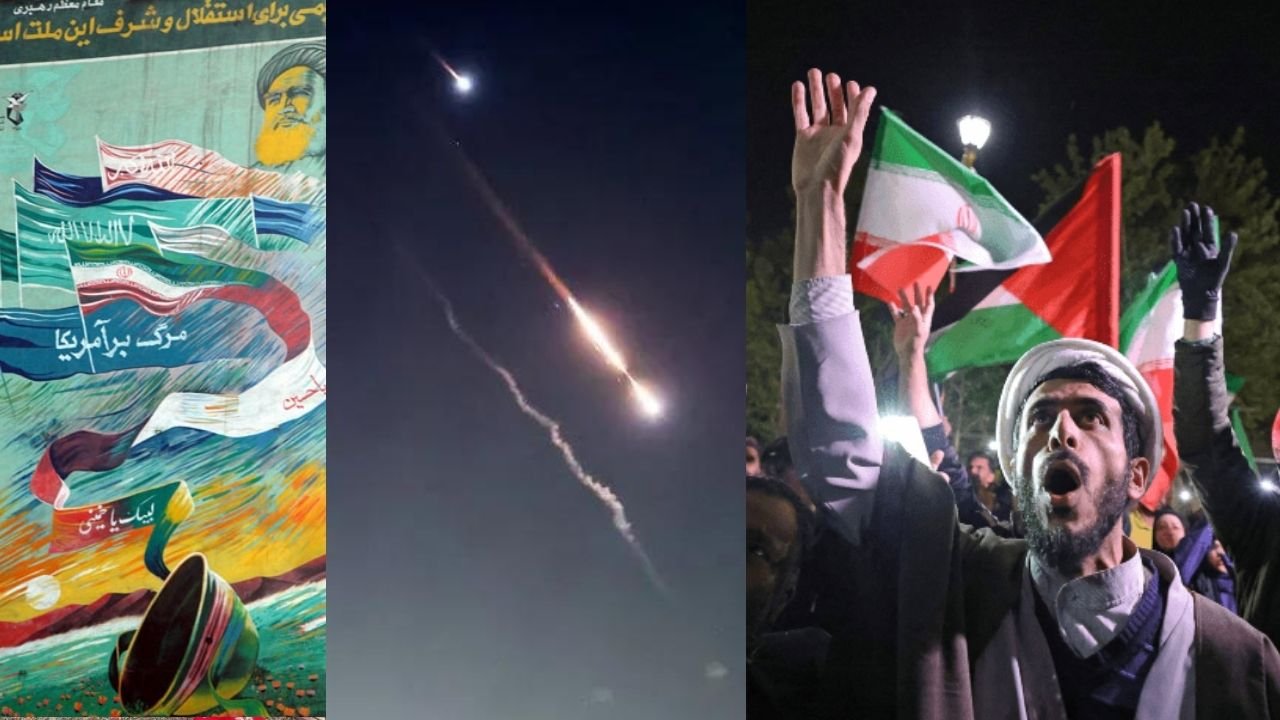
    Iran has launched more than 200 drones and missiles on Israel in an unprecedented attack late on Saturday “in response” to a deadly airstrike on its Damascus consular annexe earlier this month.

    Iran’s allies also carried out coordinated attacks on Israeli positions as sirens sounded in many places and blasts were heard in the skies above Jerusalem early on Sunday.

    Iran had vowed to strike back in retaliation for a deadly April 1 air strike on its Damascus consular annexe while America had warned repeatedly in recent days that the retaliation was imminent.

    Iran’s Islamic Revolutionary Guards Corps (IRGC) launched “extensive” drone and missile strikes — as part of what they called the Operation ‘True Promise’ against “certain targets” inside Israel.

    “Iran launched UAVs from its territory towards the territory of the state of Israel,” military spokesman Daniel Hagari said in a televised statement.

    Videos emerged as people in Jerusalem sought cover and flooded the roads. “As you can see it’s empty, everybody is running home,” said Eliyahu Barakat, a 49-year-old grocery shop owner in Jerusalem’s Mamilla neighbourhood.

    US President Joe Biden expressed “ironclad” support for Israel after an urgent meeting with his top security officials on the current attack against Israel.

    Hundreds of Iranians gathered in Tehran’s Palestine Square, waving Iranian and Palestinian flags to celebrate the unprecedented military action against Israel.

    On the other hand, Israeli military official said, “So far, we’ve intercepted the vast majority of incoming missiles,” Hagari said.
    The army said it had scrambled dozens of fighter jets to intercept “all aerial threats”.

    Iran’s allies in the region joined the attack with Yemen’s Houthi rebels also launching drones at Israel, according to security agency Ambrey, and Lebanon’s Hezbollah movement announcing rocket fire at Israeli positions in the annexed Golan Heights.

    The official Irna news agency said the attack had dealt “heavy blows” to an air base in the Negev desert, but the Israeli army said there had only been minor damage.

    US help for Israel neutralizing all the attacks

    The Iranian mission to the United Nations warned Washington to keep out of Iran’s conflict with Israel. “It is a conflict between Iran and the rogue Israeli regime, from which the US MUST STAY AWAY!” it said.

    Despite Tehran’s warning not to get involved, US forces took part in shooting down drones aimed at Israel.

    Biden said in a later statement that the United States had “helped Israel take down nearly all of the incoming drones and missiles”, but appeared to guide the key US ally away from retaliating against Tehran by saying Israel had now shown its strength.

    The US president said he had called Israeli Prime Minister Benjamin Netanyahu to reaffirm Washington’s “ironclad” support for Israel, after recent tense relations over Israel’s offensive in Gaza.

    “I told him that Israel demonstrated a remarkable capacity to defend against and defeat even unprecedented attacks — sending a clear message to its foes that they cannot effectively threaten the security of Israel,” he said.

    He said he had ordered US military aircraft and ballistic missile defence destroyers to the Middle East in recent days, as the likely threat following a presumed Israeli strike on Iranians in Damascus became clear.


    Matter of a ‘truce’ in Gaza

    The Gaza crisis began October 7 and has claimed lives of more than 33 thousand in Gaza.

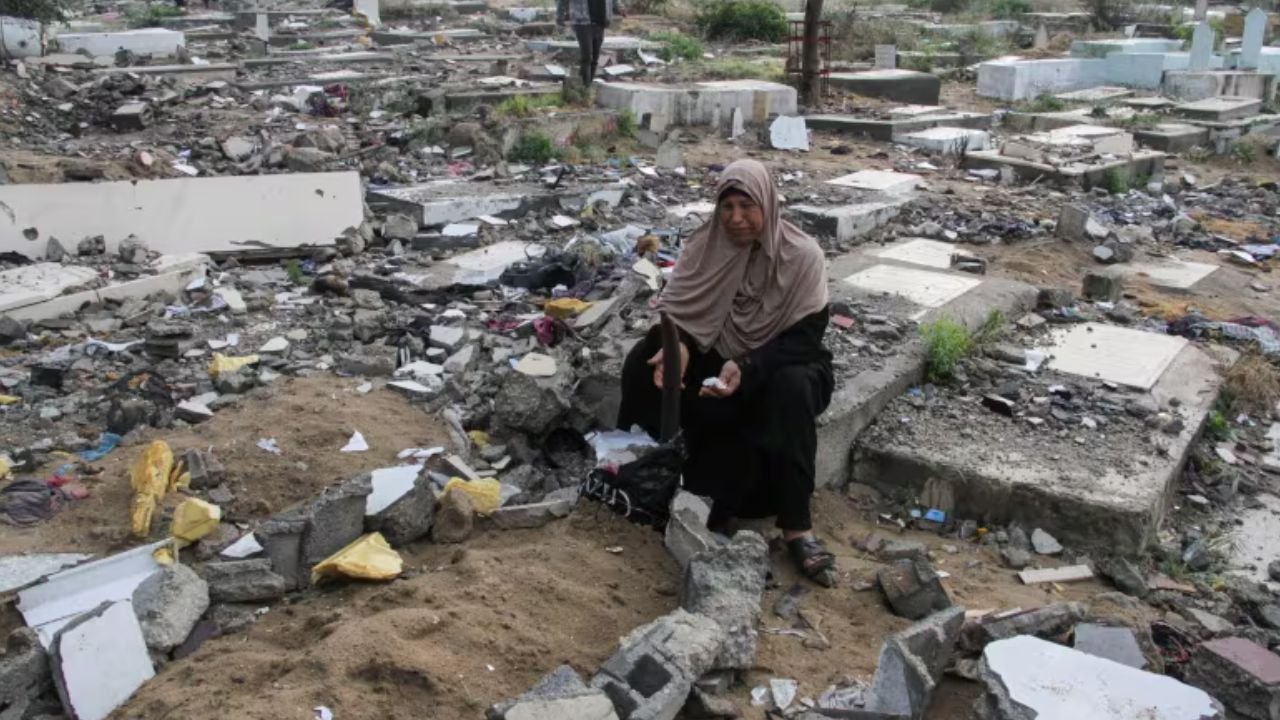
    In the main central city of Deir al-Balah, fire burned in the rubble of a destroyed mosque. Israel’s military “demanded that the whole area be evacuated” before it was “wiped out in minutes”, said Abdullah Baraka, a witness.

    In nearby Nuseirat refugee camp, Abd Thabet said residents had been warned to evacuate on Friday evening ahead of a large explosion that caused “massive destruction”.

    Hamas said it had submitted its response to a Gaza truce plan presented by US, Qatari and Egyptian mediators at talks in Cairo this week.

    The Palestinian group said it was sticking to its previous demands, insisting on “a permanent ceasefire” and the “withdrawal of the occupation army from the entire Gaza Strip”.

    During the October attack, Hamas seized about 250 hostages, 129 of whom Israel says remain in Gaza, including 34 the army says are dead.

    The Israeli prime minister’s office accused Hamas of sabotaging efforts for an exchange of hostages for prisoners. “Hamas to this day has refused any deal and any compromise proposal,” it said.
  • How humanitarian aid reaches war-torn Gaza

    How humanitarian aid reaches war-torn Gaza

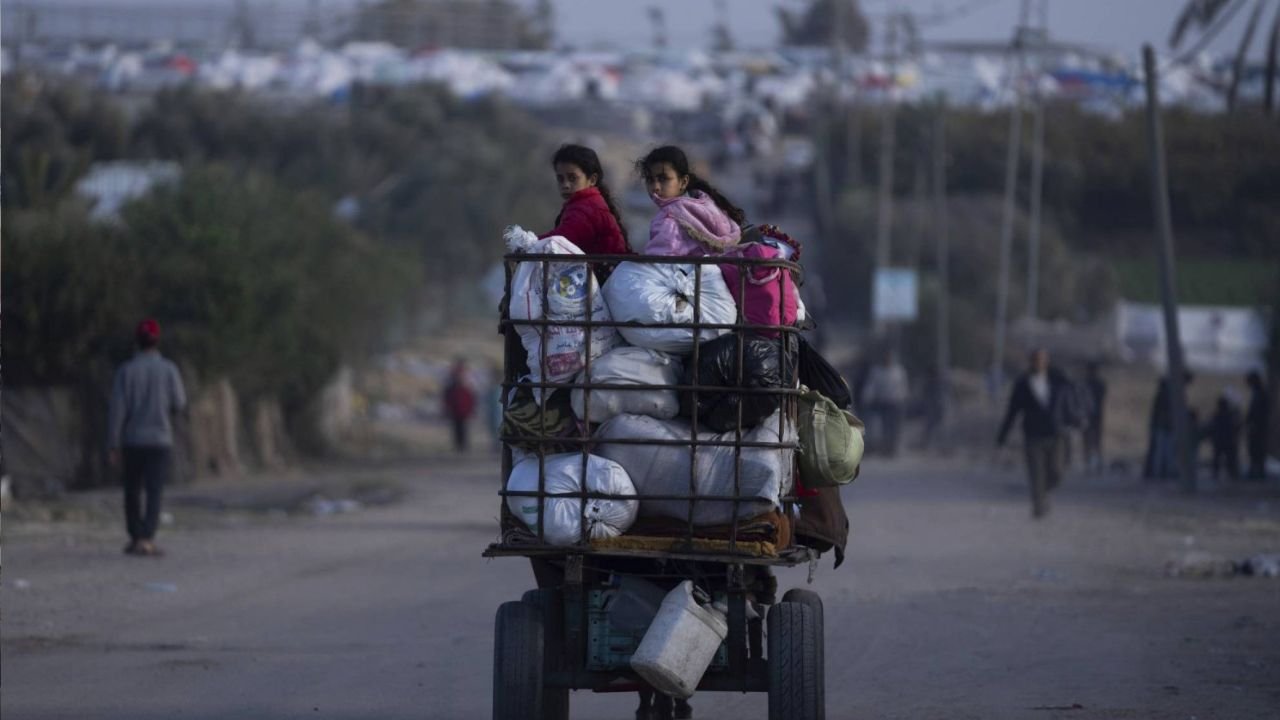
    Most aid bound for war-ravaged Gaza arrives overland from neighbouring Egypt but Israel and UN agencies clash on how much actually makes it inside the Palestinian territory.

    The volume of aid entering Gaza by road each day through the Rafah crossing from Egypt is insufficient, aid workers say, blaming rigorous Israeli inspections at least in part.

    With no truce in sight to pause the Israel-Hamas war, here is a look at how aid currently reaches Gaza and what alternatives are being weighed to alleviate the crisis in the besieged Palestinian territory.

    First stop: Egypt

    Most Gaza-bound goods arrive by sea in the Egyptian ports of Port Said or El-Arish.

    El-Arish is closer to Gaza but also smaller, and was quickly overwhelmed by the volume of shipments arriving, aid groups say.

    Israeli authorities, who have blockaded Gaza since Hamas took sole control of the Palestinian territory in 2007, require that all aid entering Gaza be inspected by them.

    The main inspection area for goods is Kerem Shalom in southern Israel, not far from the Rafah crossing.

    Another inspection area exists in Nitzana, on the Israeli-Egyptian border about 40 kilometres (25 miles) to the southeast.

    Long wait for trucks

    Before reaching the inspection areas, many aid trucks wait for days at the Egyptian side of the Rafah checkpoint.

    Once inspected, goods that are cleared to enter by Israel are unloaded from the mostly Egyptian trucks in the zone between Egypt and Gaza.

    The supplies are then loaded onto separate vehicles, driven by Gazans working for aid groups, for distribution inside the Palestinian territory.

    Cumbersome screenings are a major reason shortages are so glaring, aid workers say.

    Israel blames a lack of sufficient capacity on the Palestinian side to distribute the aid once it gets in.

    In recent days, Israel took issue with UN figures on the number of trucks entering Gaza, accusing UN Palestinian refugee agency UNRWA of counting only trucks it had processed, not those processed by Israel.

    Heading north

    For months, aid groups and foreign governments including top ally the United States have urged Israel to reopen border crossings into the north of Gaza, where the humanitarian crisis is most severe.

    Israel announced that six World Food Programme (WFP) aid trucks entered the north directly from its territory in early March, in what it described as a “pilot project”.

    The trial was not extended, however, and aid convoys bound for northern Gaza must travel the length of the territory negotiating battlegrounds, Israeli bombardments and mobs of desperate civilians.

    In March, the WFP said one of its convoys had been blocked by Israeli forces inside Gaza before it could reach the north.

    After turning back, the agency said the convoy was looted by a “crowd of desperate people”.

    According to Israeli authorities, 28 trucks reached northern Gaza on Wednesday.

    They were among 298 trucks that Israel said entered Gaza on Wednesday, still far below the number aid groups say is needed to sustain the territory’s 2.4 million people.

    Under pressure from the international community, Israel announced on April 5 that it would open a new crossing directly into northern Gaza, without specifying its exact location or when it would open.

    By air and by sea

    In a bid to get round the logjam, several Arab and European governments, later joined by Washington, began carrying out aid airdrops over Gaza, particularly the north.

    But the airdrops have proved controversial, with multiple deaths among civilians on the ground who were crushed by aid crates when parachutes failed to open, or drowned trying to reach others accidentally dropped in the sea.

    There has also been an attempt to establish a maritime aid corridor from the Mediterranean island of Cyprus but it has largely fizzled out after seven aid workers were killed by Israeli fire on April 1 as they unloaded food from the second flotilla to make the crossing.

    Even though the Cypriot government insists it has not given up on the aid corridor, no further crossings are currently planned after the US and Spanish charities behind the first two suspended their operations in the region.

    UN agencies have in any case said repeatedly that road convoys are the only practical way of meeting Gaza’s needs.

  • Chinese factory shreds wedding photos for fuel

    Chinese factory shreds wedding photos for fuel

    At a dusty warehouse in northern China, Liu Wei feeds photos of beaming bridal couples into an industrial shredder — turning stories of heartbreak into a source of electricity.

    Wedding photos are big business in China, where parks, temples and historic sites often teem with newlyweds posing for elaborate shots capturing their supposedly unbreakable bond.

    But in a country where millions of divorces take place each year, many marital snaps end up shoved into the attic or tossed into the trash.

    Liu’s company offers an alternative: bereft ex-lovers can have their memories destroyed and recycled into fuel.

    “From our daily business exchanges, we found the destruction of personal belongings is a blank space nationwide,” the 42-year-old told AFP at his factory, 120 kilometres (75 miles) from Beijing.

    “People with less experience in the market probably wouldn’t have spotted this opportunity,” he added.

    Despite cultural taboos around destroying images of living people, Liu’s facility receives an average of five to 10 orders per day from across China.

    They include large wall photos and smaller decorative shots and albums, mostly cast from plastic, acrylic and glass.

    Workers heave the images onto a forklift truck and scatter them onto the warehouse floor for sorting.

    They then obscure every face with dark spray paint to protect client privacy and smash unshreddable glasswork with a sledgehammer.

    “These people are all trying to find closure,” said Liu. “They mainly want to unpick the knots in their hearts.”

    Complex motivations

    Sullied and broken, the pictures give glimpses of broken families in happier times.

    In one, a woman in a white bridal dress reclines on a bed of flowers, while another shows a lovestruck couple gazing into each other’s eyes.

    A sporty pair in matching kits pose with a football, while nearby, a smitten man presses his face tenderly to his pregnant wife’s belly.

    Brandishing his phone, Liu films the defaced photos and sends clips to customers for final confirmation.

    He estimates he has served about 1,100 clients — mostly under the age of 45, and around two-thirds women — since launching the service a year ago.

    They typically speak little about their separations, and several declined interview requests from AFP.

    Liu says the motivations for destroying wedding photos are often complex.

    “Few of them do this out of malice,” he told AFP.

    “It might be that this item brings on certain thoughts or feelings… or be a hurdle hard to overcome.”

    Some clients attend the destructions in person to give a sense of ceremony to a closing chapter in their lives, said Liu.

    Others keep their photos for years and only dispose of them when they remarry or finally come to terms with a former spouse’s death.

    Given the irreversible nature of the process, Liu says he gives clients a final chance to salvage their items in case they live to regret their decision.

    After getting the green light, he films his staff gently pushing the photos into the shredder’s gnashing teeth.

    The debris is taken to a nearby biofuel plant where it is processed with other household waste to generate electricity.

    ‘Respect others’ choices’

    Divorce rates soared in socially conservative China after marriage laws were relaxed in 2003.

    They have fallen dramatically since the government enacted a law in 2021 mandating a month-long “cooling-off” period before couples untie the knot.

    China registered 2.9 million divorces in 2022, down from over 4.3 million two years earlier.

    The number of marriages rose last year for the first time in nearly a decade, giving Beijing some relief as it seeks to reverse a steep fall in births.

    After annihilating the visual evidence of hundreds of unions, Liu says he has become numb to the emotions they stir up.

    “The deepest feeling I have in my heart towards my clients… is that you must respect others’ choices,” he said.

    “You must never persuade people one way or another,” he added. “It does no good.”

  • Report links H&M, Zara to environmental destruction in Brazil

    Report links H&M, Zara to environmental destruction in Brazil

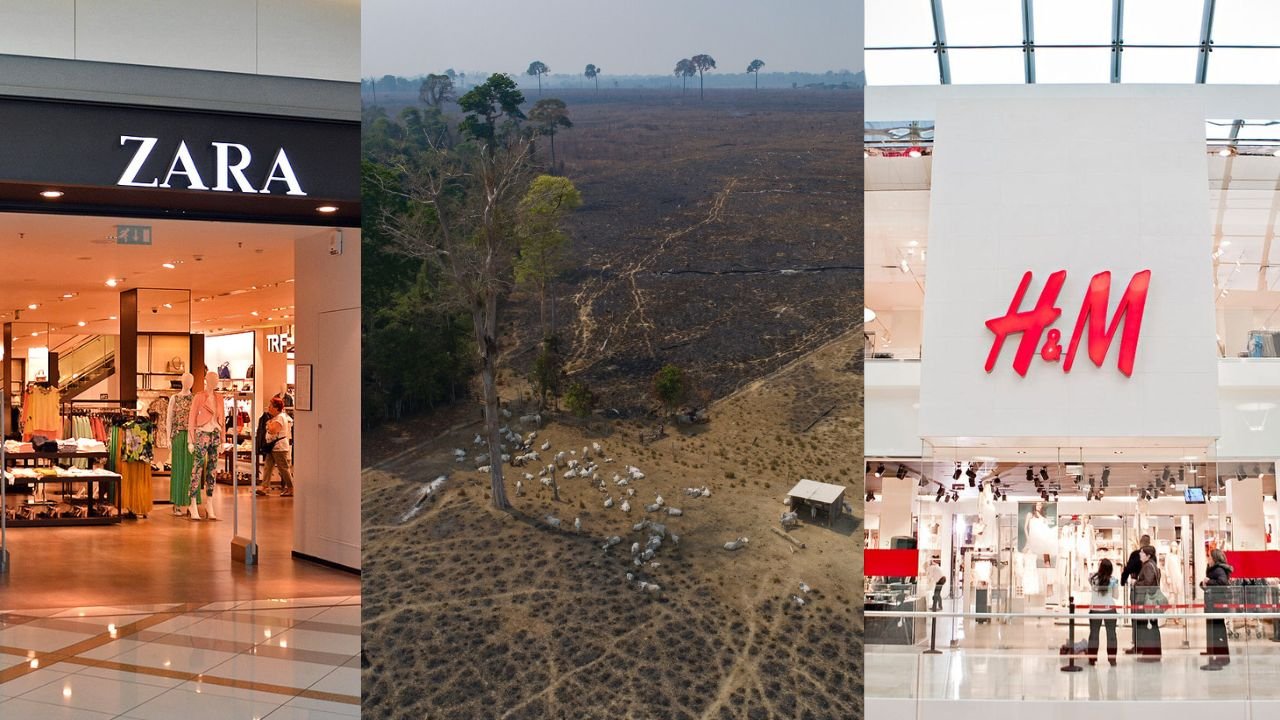
    Fast fashion giants H&M and Zara have used cotton from farms linked to massive deforestation, land-grabbing, corruption and violence in Brazil, a report by the environmental group Earthsight said Thursday.

    Based on satellite images, court rulings, shipment records and an undercover investigation, the report, titled “Fashion Crimes,” found the companies sourced “tainted cotton” farmed in the fragile Cerrado savanna by two of Brazil’s biggest agribusiness firms, SLC Agricola and the Horita Group.

    Despite abuses linked to its production, the cotton had been labeled as ethical by leading certification scheme Better Cotton, exposing “deep flaws” in the oversight program, said the British environmental group.

    The Cerrado, the most biodiverse savanna on Earth, has been disappearing at an accelerating rate as Brazil’s massive agribusiness industry has increasingly turned to the region in recent decades.

    Earthsight traced at least 816,000 tonnes of cotton exported from 2014 to 2023 to farms run by SLC and Horita, which “have a long record of court injunctions, corruption rulings and millions of dollars in fines related to clearances of around 100,000 hectares of Cerrado wilderness,” it said.

    The cotton in question was farmed in the northeastern state of Bahia and shipped to eight Asian clothing manufacturers whose clients include Sweden-based H&M and Spain-based Zara, the report said.

    Brazil, the world’s top exporter of beef and soybeans, has also emerged as a major cotton producer in recent years, now second only to the United States.

    But that has contributed to environmental destruction in the Cerrado, where “a ruinous mix of corruption, greed, violence and impunity has led to the blatant theft of public lands and dispossession of local communities,” Earthsight said.

    Better Cotton said in a statement it had conducted an independent audit of the “highly concerning issues raised” in the report, and that it would provide a summary of the findings.

    Zara parent company Inditex and H&M said they took the allegations seriously, and urged Better Cotton to release the auditors’ findings.

    The Brazilian Cotton Producers’ Association (ABRAPA) said it had worked with the growers in question to provide records and evidence countering the report’s allegations.

    “Unfortunately, these were largely disregarded,” it said in a statement.

    “ABRAPA unequivocally condemns any practices that undermine environmental conservation, violate human rights or harm local communities.”

  • Iran’s Khamenei renews threat of counterattack against Israel

    Iran’s Khamenei renews threat of counterattack against Israel

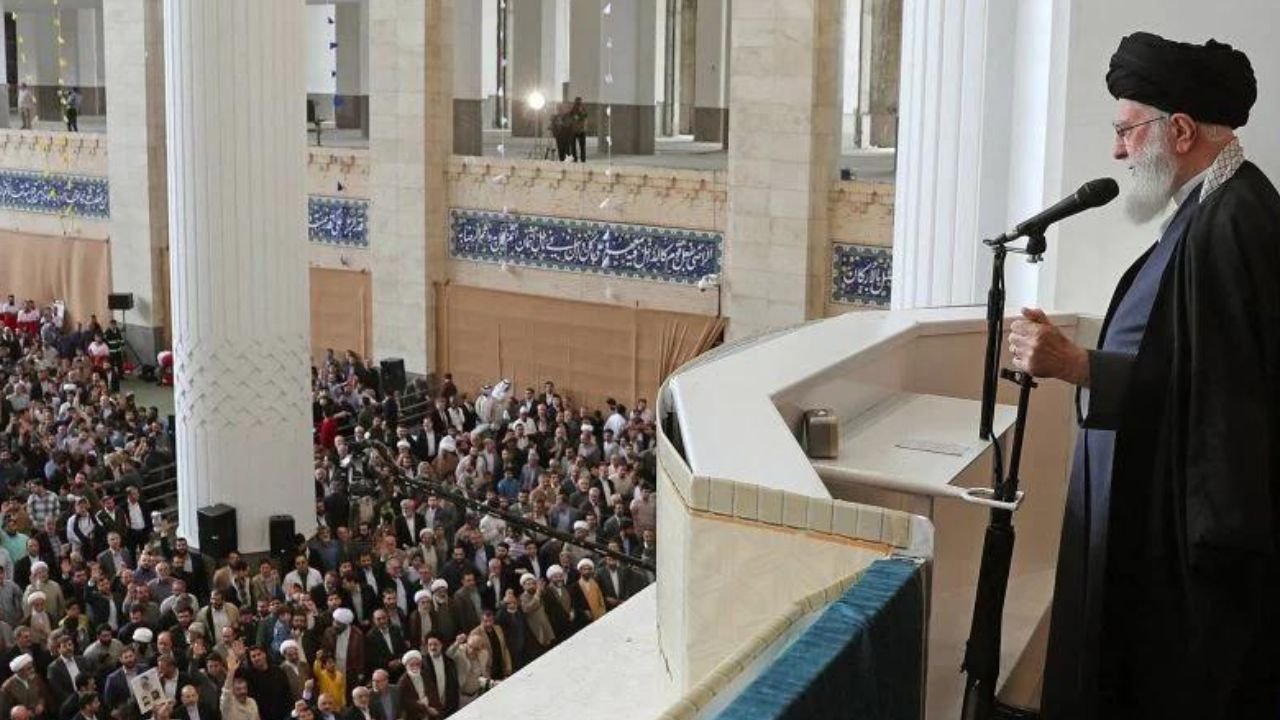
    Iran’s supreme leader Ayatollah Ali Khamenei again warned Israel Wednesday that it “will be punished” for a Damascus air strike that killed seven Revolutionary Guards, two of them generals.

    “The evil regime made a mistake in this regard. It must be punished and will be punished,” Khamenei said in a televised speech after Eid al-Adha prayers in Tehran.

    Israeli Foreign Minister Israel Katz swiftly riposted with a Persian-language statement on social media site X.

    “If Iran attacks from its territory, Israel will respond and attack Iran,” he said.

    Khamenei said the April 1 strike, which levelled the five-storey Iranian consulate building in the Syrian capital, had run roughshod over international agreements providing for the inviolability of diplomatic premises.

    “The consulate and embassy offices in any country are the territory of that country,” he said. “When they attacked our consulate, it means they attacked our territory.”

    Khamenei has led Iranian officials in a succession of promises to avenge the strike, which was widely blamed on arch foe Israel.

    One of his senior advisers, Yahya Rahim Safavi, warned on Sunday that Israeli embassies were “no longer safe”.

    Israel said last week it was strengthening its defences and pausing leave for combat units following Iran’s retaliation threats.

    Iran does not recognise Israel, and the two countries have fought a shadow war for years.

    Iran charges that Israel was behind a wave of sabotage attacks and assassinations targeting its nuclear programme.

  • Israel bombs Gaza during Eid despite US rebuke

    Israel bombs Gaza during Eid despite US rebuke

    GAZA STRIP: Israeli strikes hit Gaza on Wednesday as Muslims marked the end of the holy fasting month of Ramzan and after US President Joe Biden labelled Israel’s approach to the war a “mistake”.

    Palestinians gathered for morning prayers on the first day of the Eid al-Fitr holiday amid the ruins of Gaza, which has been devastated by more than six months of war since October 7.

    Tens of thousands also flocked to Israeli-annexed east Jerusalem’s Al-Aqsa mosque compound where one worshipper, nurse Rawan Abd, said: “It’s the saddest Eid ever… you could see the sadness on people’s faces.

    “Usually we come to Al-Aqsa to celebrate, this year we came just to support each other,” the 32-year-old said at Islam’s third holiest site, which is also revered by Jews as the Temple Mount.

    Israeli forces kept up combat operations and air strikes on Gaza a day after Prime Minister Benjamin Netanyahu vowed no let-up in the campaign to destroy Hamas and bring home the hostages.

    Netanyahu insisted on that “no force in the world” would stop Israeli troops from entering Gaza’s far-southern city of Rafah which is packed with displaced Palestinians.

    His threat came amid ongoing talks in Cairo involving US, Egyptian and Qatari mediators for a truce and hostage release deal.

    Biden, voicing his growing frustration with hawkish Netanyahu, issued some of his sternest criticism yet of the war, which has brought mass civilian casualties and widespread suffering.

    “I think what he’s doing is a mistake,” Biden told Spanish-language TV network Univision in an interview that aired Tuesday night after being recorded last week. “I don’t agree with his approach.”

    He urged Netanyahu to “just call for a ceasefire, allow for the next six, eight weeks, total access to all food and medicine going into the country.”

    ‘Famine-like conditions’

    The war broke out with October 7 against Israel, which resulted in the deaths of 1,170 people, mostly civilians, according to Israeli figures.

    Palestinian also took about 250 hostages, 129 of whom remain in Gaza, including 34 the Israeli army says are dead.

    Israel’s retaliatory offensive has killed at least 33,360 people in Gaza, mostly women and children, according to Gaza’s health ministry.

    Another 14 people were killed – including small children – in a strike on a home in Nuseirat camp in central Gaza, the health ministry said.

    The army said Wednesday that “Israeli troops are continuing to operate in the central Gaza Strip and killed a number of terrorists over the past day”.

    It added that aircraft had “struck dozens of terror targets in the Gaza Strip, including military sites, launchers, tunnel shafts and infrastructure.”

    Israel has imposed a siege that has deprived Gaza’s people of most food, water, fuel, medicines, and other essential goods.

    Humanitarian groups have accused Israel of using starvation as a weapon of war in Gaza, where UN experts say half the population is facing “catastrophic” food insecurity.

    Washington’s recent tougher line with Israel, its main ally in the region, has brought some results, according to the US Agency for International Development.

    Recent days had seen a “sea change” in aid deliveries, said USAID administrator Samantha Power, with Israel reporting 468 trucks entering from Egypt on Tuesday.

    However, Power stressed that Israel needs to do more, saying that “we have famine-like conditions in Gaza, and supermarkets filled with food within a few kilometres away” in southern Israel.

    Washington has also resumed funding to the UN agency for Palestinian refugees after cutting it weeks ago after Israel claimed that some UNRWA staff took part in the October 7.

    ‘It will be punished’

    Hamas has said it is studying the latest proposal for a truce. A framework being circulated would halt fighting for six weeks and see the exchange of about 40 hostages for hundreds of Palestinian prisoners.

    However, Hamas has so far also publicly insisted on a full withdrawal of Israeli ground forces and a permanent ceasefire – demands Israel has rejected outright.

    US National Security Advisor Jake Sullivan said Tuesday that Israel had to “take some steps forward” while Hamas’s public statements had been “less than encouraging”.

    The US State Department has however also warned Israel that “a full-scale military invasion of Rafah would have an enormously harmful effect” on civilians and “would ultimately hurt Israel’s security”.

    US Secretary of State Antony Blinken said Tuesday he had no indication of an “imminent” assault on the city, where around 1.5 million Palestinians are sheltering.

    Blinken also said he doubted Israel would attack Rafah before a delegation is set to visit Washington next week.

    Regional tensions have surged amid the Gaza war, and Israel was widely blamed for an April 1 strike on arch foe Iran’s consulate in Damascus that killed seven Revolutionary Guards.

    Iran’s supreme leader Ayatollah Ali Khamenei warned Israel that “the evil regime made a mistake in this regard. It must be punished and will be punished.”

    Israeli Foreign Minister Israel Katz swiftly replied with a Persian-language post warning that “if Iran attacks from its territory, Israel will respond and attack Iran.”

  • 150 Jewish celebrities show support for director’s pro-Palestine Oscars speech

    150 Jewish celebrities show support for director’s pro-Palestine Oscars speech

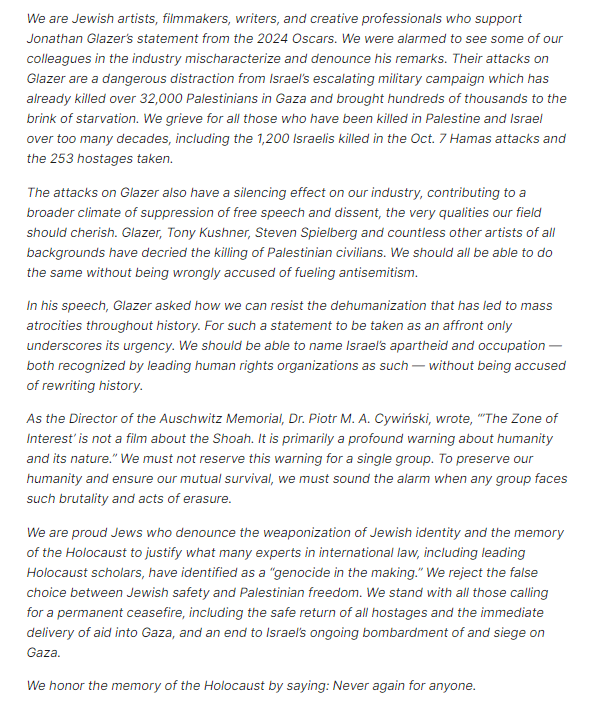
    More than 150 Jewish creatives have signed an open letter supporting Oscar Winner Jonathan Glazer’s pro-Palestine Oscars speech.

    The British filmmaker, Jonathan Glazer, who won the Best International Feature Oscar for his film ‘The Zone of Interest’, has been at the centre of an ongoing debate in Hollywood. He was under fire for his pro-Palestine speech at the Oscars. Glazer, who is Jewish himself, has now received support from heavyweight names.

    Jonathan Glazer’s speech is continuing to become one of the Oscars’ most debated and polarizing moments after many media outlets called it “anti-semitic”
    While accepting Best International Feature for his Holocaust film The Zone of Interest, Glazer drew a parallel between his film and the current conflict in Gaza: “Right now, we stand here as men who refute their Jewishness and the Holocaust being hijacked by an occupation, which has led to conflict for so many innocent people – whether the victims of October the 7th in Israel or the ongoing attack on Gaza – all the victims of this dehumanisation…”

    Now, the director has received fresh and welcome support through a new letter, whose signatories include major Jewish creatives like Nan Goldin, Joaquin Phoenix, Tom Stoppard, Elliott Gould, Debra Winger, Joel Coen, Emma Seligman, Nicole Holofcener, and Boots Riley.

    They are among more than 150 Jewish creatives who have signed the open letter supporting Glazer’s Oscars speech, writing that they were “alarmed to see some of our colleagues in the industry mischaracterize and denounce his remarks”.

    “In his speech, Glazer asked how we can resist the dehumanization that has led to mass atrocities throughout history,” read the letter. “For such a statement to be taken as an affront only underscores its urgency.”

    The letter also criticized the earlier condemnations of Glazer, saying they “have a silencing effect on our industry, contributing to a broader climate of suppression of free speech and dissent, the very qualities our field should cherish.”

    “We should be able to name Israel’s apartheid and occupation – both recognized by leading human rights organizations as such – without being accused of rewriting history.”

    The letter concluded: “We stand with all those calling for a permanent cease-fire, including the safe return of all hostages and the immediate delivery of aid into Gaza, and an end to Israel’s ongoing bombardment of and siege on Gaza.”

  • Swiss farmers dump dead sheep in protest against rising number of wolves

    Swiss farmers dump dead sheep in protest against rising number of wolves

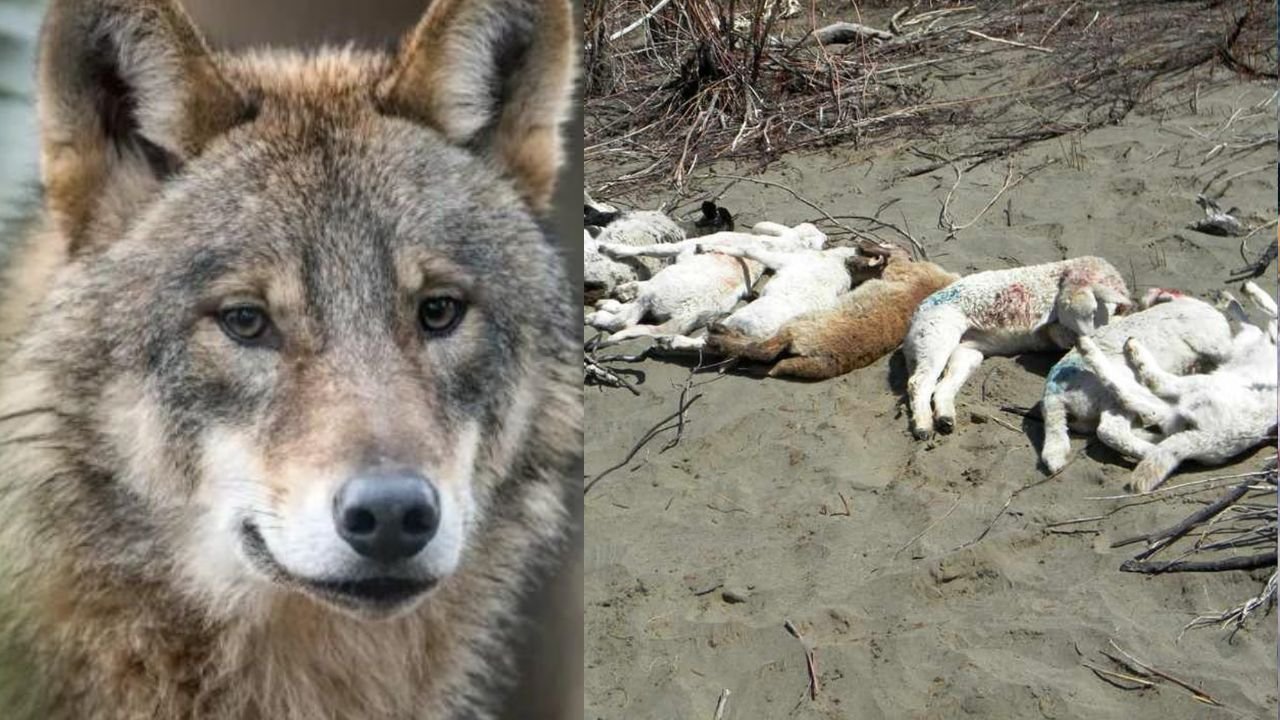
    Swiss sheep farmers on Saturday dumped the bodies of animals killed by wolves in front of a regional government building, demanding more action against the predators, Swiss media reported.

    Around a dozen breeders came from the Saint-Barthelemy area in the western Swiss canton of Vaud to lay out the carcasses of 12 sheep in front of the regional government headquarters in Lausanne, the Chateau Saint-Maire.

    “These sheep were killed last night,” Eric Herb, a member of a Swiss association demanding the regulation of big predators, was quoted as saying by the Keystone-ATS news agency.

    “It is really time to act.”

    “We are sick of this. We want the wolf killed,” agreed Patrick Perroud, a farmer and butcher from the nearby municipality of Oulens.

    “Cohabitation is not possible. Our territory is too small,” he told Keystone-ATS.

    The protesters told the news agency that wolves had killed 17 sheep in the same area late last month, two earlier this week and 13 overnight to Saturday.

    “The breeders have played nice until now, but this time it was too much,” Herb said.

    The protesters were planning to increase the pressure on the Vaud government environment minister, Vassilis Venizelos of the Green Party, he said.

    One of the protesters’ banners read: “Vassilis step down”, Keystone-ATS reported.

    The breeders had briefly negotiated with regional police before being allowed to lay down the animal carcasses on tarpaulin in front of the Chateau.

    Participants in the protest, which was supported by the regional chapter of the far-right Swiss People’s Party — Switzerland’s largest party — lamented that they were losing sleep.

    “We have to check on our animals every night,” one was quoted as saying.

    After being wiped out more than a century ago, wolves have in recent decades begun returning to Switzerland and to several other European countries.

    Since the first pack was spotted in the wealthy Alpine nation in 2012, the number of packs swelled to 32 last year, with around 300 individual wolves counted.

    Nature conservation groups have hailed the return as a sign of a healthier and more diverse ecosystem.

    But breeders and herders complain of attacks on livestock and have been ramping up demands to cull more wolves.

    Swiss authorities last year relaxed the rules for hunting the protected species, and decided to allow large preventative culls in the most affected cantons but swift legal actions put those plans partially on ice.

    The debate in several parts of Europe about wolves rose up the political agenda in September.

    In an open letter to the European Commission, eight leading conservation groups said there were ways to make coexistence easier between humans and large wild animals like wolves.

    “Damage to livestock is often linked to the lack of adequate supervision and/or physical protection,” they said. They pointed to strategies such as “the training of dogs to protect herds, education of herders, tools and technical solutions to deter wolves”.

  • Palestinian Muslims mark sad and tense ‘holiest Ramadan night’ in Jerusalem

    Palestinian Muslims marked a tense and sombre last Friday of Ramadan in Jerusalem as Israeli police controlling the entrance to the Al-Aqsa mosque – the third holiest site in Islam – attacked worshippers.

    Some 120,000 people descended on the shrine, which dominates the Old City, officials said, with grand mufti Muhammad Ahmad Hussein urging the faithful to brave the heavy police presence because of the war in Gaza.

    Adli al-Agha, 53, from Jerusalem, told AFP that many people “had to flee dawn prayers” after Israeli police deployed a mini-drone spraying tear gas to disperse people chanting “Glory to God”.

    “In our soul and our blood, we sacrifice for you Al-Aqsa,” worshippers declared, according to Agha.

    Police said they arrested eight people for inciting terrorism.

    Yasser Basha, from Tulkarem in the Israeli-occupied West Bank, said police were restricting entrance to the mosque to the old and the very young. Only men over 55 and women over 50 were being allowed inside, he said.

    “If it wasn’t for the war, things would have been much easier,” he added.

    Friday also marks Laylat al-Qadr (“The Night of Destiny”), the spiritual climax of the Muslim holy month, which commemorates the moment the archangel Gabriel first appeared to Prophet Mohammed and began revealing the Koran.

    It is the night when Muslims believe their prayers are most likely to be granted, a festive moment while children stay up late and shops stay open till the small hours.

    But many Palestinians are not in the mood to celebrate and are praying for an end to the war in Gaza after almost six months of bloodshed.

    Sameeha Al Qadi, 55, who had come from near Bethlehem, said Jerusalem “is sad and has lost its light — we all feel what is going on in Gaza. We can’t escape it for a minute.”

    This year there are few Ramadan decorations or lights in the Holy City, with Palestinians instead having a bitter coffee and a date — traditionally to mark mourning — on Tuesdays and Wednesdays, when feasts are usually held.

    “There is sweet nothing about the feast this year. People are not celebrating,” said Sabah, 54, some of whose relatives have been killed in Gaza.

    “Everything is bitter in my mouth. It is so painful at this time which is all about family.”

    Easter was similarly subdued last weekend for Palestinian Christians.

    Adnan Jafar, 60, a sweet maker in the Old City, said usually in Ramadan his shop is at its busiest.

    “But I have never had a Ramadan like this. And we all know why. (Gaza) is not just affecting us, it is affecting the whole world.”

    Israeli genocide in Gaza has killed at least 33,091 people since October 7, mostly women and children, according to the territory’s health ministry.

  • India’s Congress party promises minority protection and jobs

    India’s Congress party promises minority protection and jobs

    India’s main opposition party Congress vowed Friday to protect minorities – generally seen as a reference to the country’s Muslims – while accelerating growth and jobs in a manifesto for an election it is widely expected to lose.

    Nearly a billion Indians will vote to elect a new government in six-week-long parliamentary elections starting on April 19, the largest democratic exercise in the world.

    Many analysts see Prime Minister Narendra Modi’s re-election under his Hindu nationalist Bharatiya Janata Party (BJP) banner as a foregone conclusion.

    Congress led India’s independence struggle and dominated politics for most of the next seven decades but its secularist vision has since struggled against the BJP’s appeal to members of India’s majority faith.

    In its manifesto, Congress promised to protect “linguistic and religious minorities”.

    “The plurality of religions represents the history of India,” it said. “History cannot be altered.”

    India has a long and grim history of sectarian clashes between the country’s Hindu majority and Muslims, its biggest minority faith with 200 million members.

    Party leader Rahul Gandhi — the son, grandson and great-grandson of prime ministers — said the upcoming election was “fundamentally different” from any other in India’s history.

    “It is between those who want to end India’s constitution and democracy and those who want to save it,” he said.

    The Congress manifesto, titled a “justice document”, offered “concrete guarantees unlike Modi’s empty promises”, said lawmaker and lead author P Chidambaram.

    The party has promised to address India’s “massive unemployment” on a “war footing”, adding that it would earmark half of all government jobs for women.

    Young people voted for Modi in droves when he was first elected a decade ago after he said he would create 10 million jobs a year.

    But a recent International Labour Organization (ILO) report warned that India was hamstrung by a “grim” crisis, with unemployment on the rise.

    Congress proposed an unconditional annual cash transfer of Rs 100,000 ($1,200) “to every poor Indian family”, without precisely defining who would qualify.

    The BJP is yet to publish its own manifesto.