Yemen’s Houthis have reported the first civilian death in US and British air strikes after the latest round of joint raids over the weekend.
One person was killed and eight wounded, the Houthi’ official news agency said late on Sunday, a day after US and British forces said they fired on 18 targets across the country.
The US-British strikes were in response to dozens of Houthi drone and missile attacks on Red Sea shipping since November, which the group says are in solidarity with Palestinians in the Gaza war.
“The American-British aggression on the district of Maqbana in the governorate of Taiz has left one civilian dead and eight wounded,” the Houthi’ Saba agency said, citing a statement from the health ministry.
The Houthi have previously reported the death of 17 of their fighters in the Western strikes targeting military facilities.
The Houthi attacks have had a significant effect on traffic through the busy Red Sea route, forcing some companies into a two-week detour around southern Africa. Last week, Egypt said Suez Canal revenues were down by up to 50 percent this year.
Washington, Israel’s vital ally, gathered an international coalition in December to protect Red Sea traffic. It has launched several rounds of strikes as well as four joint raids with Britain, which began last month.
The Houthi initially said they were targeting Israel-linked shipping in the Red Sea and adjoining Gulf of Aden, but then declared that US and British interests were also “legitimate” targets.
The director general of the World Trade Organisation, Ngozi Okonjo-Iweala, on Sunday launched a $50 million fund to help female entrepeneurs in developing countries to export more using the opportunities offered by the digital economy.
The announcement came ahead of the 13th ministerial conference of the WTO which opens on February 29 in the United Arab Emirates.
Okonjo-Iweala, speaking alongside the Emirati Minster of State for Foreign Trade Thani al-Zeyoudi, said the “ground-breaking initiative… embodies our collective commitment to empower women”.
“We need catalytic solutions to solve the financing issue that women face,” she added.
The fund will help businesses run by women in developing countries to adopt digital technologies and increase their online presence.
Zeyoudi said his country would contribute $5 million to the fund, adding “this initiative allows us to celebrate the invaluable contribution of women entrepreneurs and women led businesses around the world and to recognise the critical role they play in driving economic growth”.
“While women are one half the world’s population, they only contribute 37 percent to the global GDP,” he said.
Also at the announcement was Saudi Arabian Minister of Commerce Majid al-Kasabi, who called it a “milestone” and said his country was “dedicated” to supporting female empowerment.
Okonjo-Iweala said that in meeting female entrepeneurs, “a common refrain among them is the need for adequate financing to scale their businesses and to tap into the vast opportunities of global trade”.
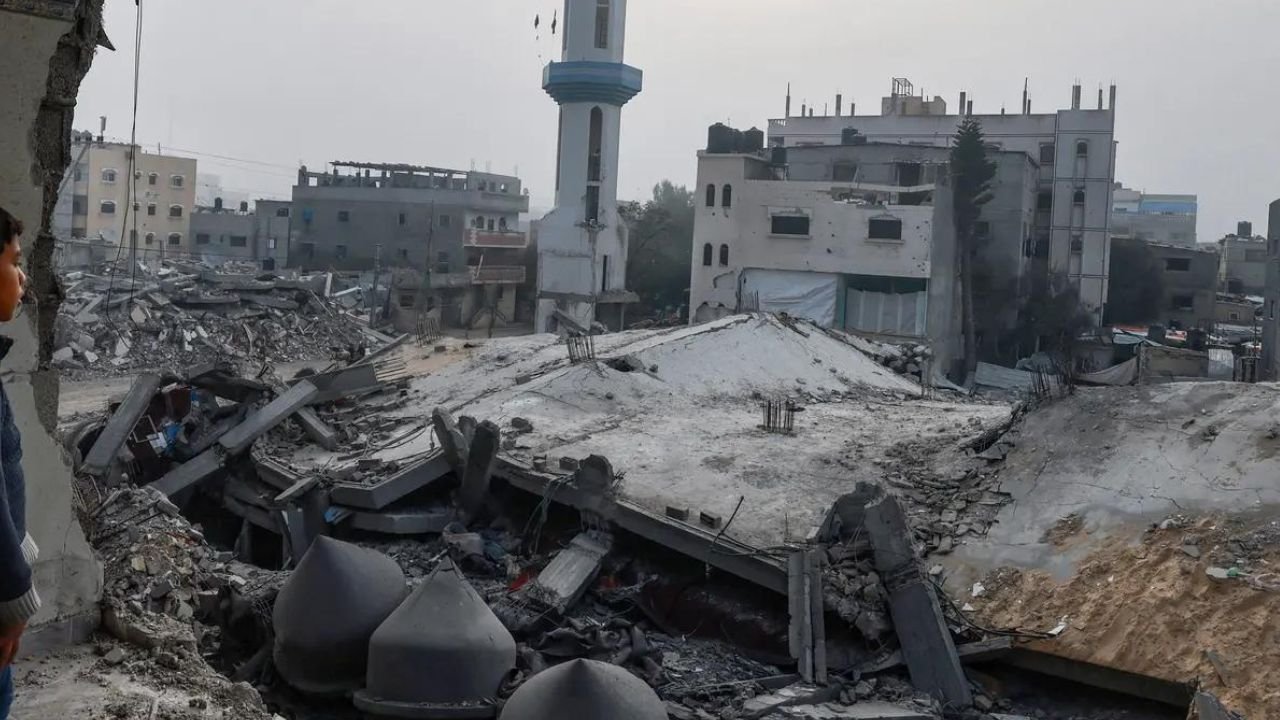
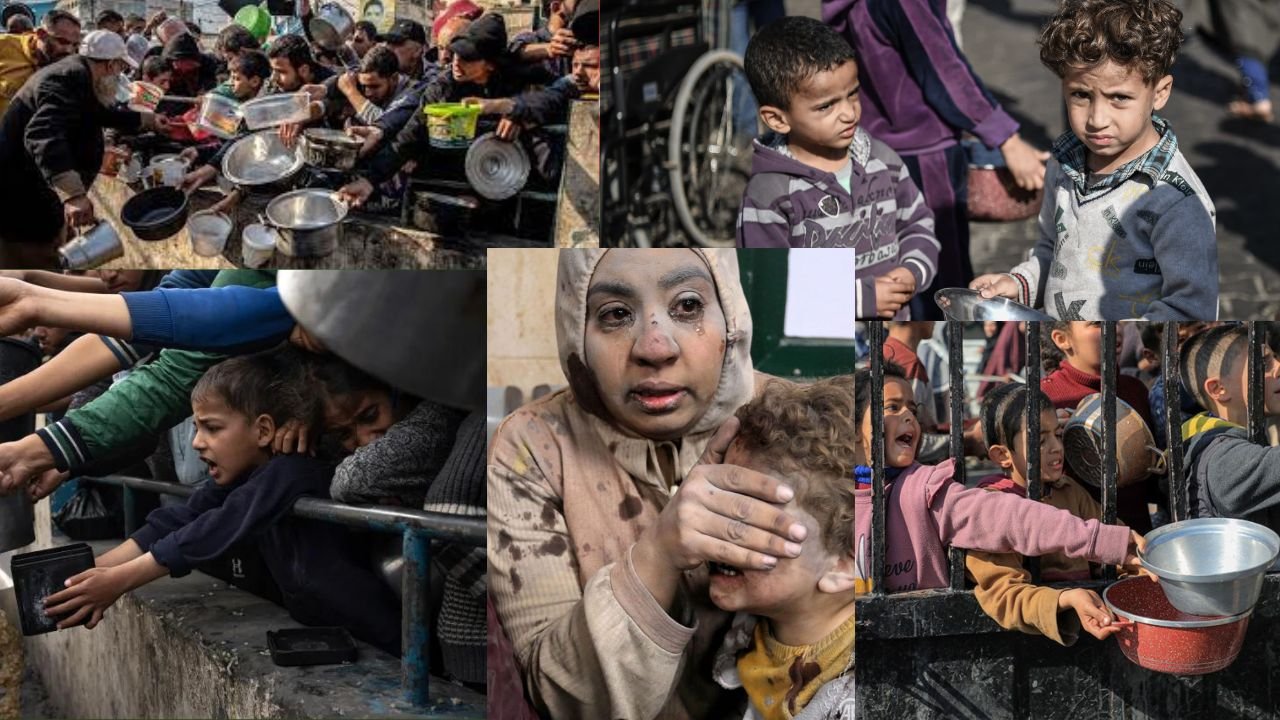
The people in Gaza who have managed to escape death by Israeli strikes in a war that has been forced on them are now dying of hunger and starvation. Videos of bread made out of animal feed and kids collecting flour accidently spilled on the ground are making rounds on social media leading to the drive for the ceasefire taking momentum. As recently as February 20, the UN Food Agency put a pause on its deliveries in the North of Gaza until the conditions are in place that allow for safe distributions.
Families in Gaza are forced to forage for scraps of food left by rats and eating leaves out of desperation to survive with nearly five months of war and rapidly declining aid supplies leaving all 1.1 million children in Gaza facing starvation, Save the Children said.
Hind Khoudary, the Palestinian Journalist in Gaza reporting from the ground, took to her Instagram to plead to the world to airdrop food in Gaza as people have started eating leaves and are making bread out of animal feed. “People are eating leaves and animal food. “I am calling the world and all the countries to Airdrop food to Gaza,” she said in an Instagram story.
Ali Jadallah, a photojournalist from Gaza, shared how her mother, a dialysis patient, is suffering because of the food and health crisis in Gaza. Finding food in Gaza is the most difficult thing nowadays.
Videos of hundreds of desperate and hungry Gazans heckling the UNRWA aid truck emerged from the besieged strip. Many reports from Gaza have already been warning the global authorities of impending famine and loss of lives due to hunger.
Back in December, Human Rights Watch had accused the Israeli government of intentionally starving civilians in Gaza as part of its offensive in the besieged Palestinian territory. “The Israeli government is using starvation of civilians as a method of warfare in the occupied Gaza Strip, which is a war crime,” the New York-based group charged in a report.
Additionally, The Times posted a report about the famine-stricken conditions of the people of Gaza where a mother revealed how her breasts no longer produce milk because of long periods of starvation and how her children are suffering immensely. Explaining the food crisis the article explained how Gazans are forced to eat rotten food and hunt cats to fulfill their needs as famine hits Gaza.
More than a million people are displaced in Gaza but none is safe from hunger. It is rampant in Gaza, it is in the wasteland of al-Mawasi encampment in Gaza where handfuls of dirty flour are kneaded by mothers to make bread for their children.
It is in the fires, stoked with plastic bottles, which produce nothing but choking black smoke. Children in Gaza no longer play but lie around, exhausted by hunger. It is in food that is rotten and makes you sick but is eaten just the same. Bissan shared in one of her videos how people have been having the only bread they have with the salt.
The last nail in the coffin has duly been the suspension of the aid program of the UN agency for Palestinian refugees. Established in 1949 following the first Arab-Israeli war, the agency provides services including schooling, primary healthcare, and humanitarian aid to Palestinians in Gaza, the West Bank, Jordan, Syria, and Lebanon. It is important to note that since the onset of the war on Gaza, Israeli authorities, including Prime Minister Benjamin Netanyahu, have accused it of fuelling anti-Israeli incitement – allegations it denies. UNRWA says it has provided aid to desperate people in Gaza and used its facilities to shelter those fleeing Israeli attacks. Meanwhile, the situation is getting worse with time.
Time recently shared in an article, the hurdles around the idea of food airdrops in Gaza. “Some experts warn that humanitarian airdrops are not as simple as they sound. Aside from the cost of conducting them (up to seven times more than land transport, according to the U.N.’s World Food Programme), airdrops tend to be less efficient and more hazardous than other methods of providing humanitarian relief,” the article read.
The biggest hurdle in Gaza’s case is the lack of safety in terms of the ongoing airstrikes of Israel and the damage it has done to the land of Gaza. Michel Schaffner, the head of air operations at the International Committee of the Red Cross, told TIME in an email that for this operation the specified land needs to be secure, large, and clean enough to be free of obstacles and people. “Once the cargo is on the ground, there need to be arrangements in place as regards who will collect it, where it will be stored, and how it will be distributed. … We do not do airdrops without these measures in place,” Time quotes him.
Even though Israeli aggression is again the biggest opposing factor in this proposed solution, it is important to note that it is not a permanent solution to this problem, a ceasefire is.
An Arabic saying implies that if someone dies of hunger, the neighbour should be charged with murder yet the whole world is watching a huge population dying of hunger and there is no action regarding that.
Russian President Vladimir Putin has given a meaningful response to US President Joe Biden’s rude remark calling him a son of a b***h.
While addressing an event in California, Biden lashed out at Putin, calling him a “crazy SOB” in a sentence about threats to the world – including “that guy Putin and others”, the risk of nuclear conflict, and the existential threat to humanity from climate change.
When a journalist asked Russian President Putin about the slur, he calmly replied that based on what Biden spoke, it can be said that his opinion about the American president was correct because Biden cannot say that Vladimir, you have done a great job, you have helped us.
Putin added that he can understand the internal politics in America at the moment, and that’s why he wants Biden to become the president again.
Farmers are protesting from India to Europe, separately, for their rights and to register their rebellion with sitting governments against soaring fuel, and fertilizer costs, lower prices of their produce, and restrictive regulations. The protests are shedding light on the very pertinent issues faced by the primary food-producing sector of countries owning big agricultural markets.
Demands of Greek farmers
Farmers in Greece are protesting across the country against rising costs. They are conducting a tractor rally all across the country. Manolis Liakis, a farmer from the southern island of Crete, talked to __ and singled out fuel costs as his biggest problem. He said farmers pay more than three times as much for petrol as shipping companies due to tax disparities. Farmers can’t sell their products “for ridiculously low prices while the consumer buys them at extremely high prices”, he said.
Demands of Polish farmers
In Poland, farmers are blocking roads to stop cheap grain imports crossing the border from Ukraine. They are demanding a “complete embargo” on Ukranian produce. During the protests on Tuesday against competition from imports of cheaper Ukrainian products, farmers in Gorzyczki, southern Poland, unfurled a banner saying “Putin, get Ukraine, Brussels, and our government in order”. Consequently, the farmers were warned by the government against raising the slogans.
Demands of Spanish farmers
Spanish farmers are gathering with hundreds of tractors in tow to protest against the unfair competition from outside the European Union. They want to include production costs in the end product so they don’t end up selling their goods at a loss. Additionally, they want imported products to be subjected to the same conditions that they have to face.
Demands of French farmers
French farmers blocked a milk transport in protest against wholesale prices they say are too low. The farmers’ unions have made it clear they want ironclad assurances that their grievances over produce prices and red tape have been addressed. French Prime Minister Gabriel Attal is trying to negotiate and pacify the raging farmers with the negotiations.
Demands of Czech farmers
In Prague, farmers are on the roads because they feel neglected in the policy-making process. After all, they are not given due attention by the government. “Around 3,000 tractors took to the streets,” The Czech Chamber of Agriculture said in a statement on the nationwide protests. Their demands included an end to restrictions on agricultural production, cutting red tape for farming, and introducing changes to the EU-Ukraine arrangements on farming imports.
Demands of Italian farmers
In Rome, cowbells are clanking with the message that Farmers feed the world, but can’t afford to farm.
Demands of Indian farmers
In India, massive protests have broken out over minimum crop price guarantees which were promised nearly a year ago but not implemented by the government. Thousands of Indian farmers riding tractors attempted to resume their push towards New Delhi. They were attacked by the police claiming the life of young farmer Shubhkaran Singh and injuring 25 others. Farm unions are demanding a law to set a minimum price on all crops, expanding a government scheme that already exists for staples, including rice and wheat. They have also demanded other concessions, including the waiving of loans and universal pensions for farmers aged 60 and above.
Concerns of Canadian Farmers
In Canada, there are fewer environmental regulations but farmers feel a disconnect with the central government whose main mandate is based on the environment. They have been pushing forward all kinds of policies about fertilizer reduction and disallowing certain pesticides. The green policies and higher costs have instead of favouring them making farmers feel ignored. Experts say the consumers feel that lower output prices and higher input prices are just a way for the government to tell them that do whatever they want but in a cleaner and environmentally friendly way.
Conclusion
Protesting farmers are trying to divert attention to the most neglected yet important sector of a country which is the food-producing sector which is the backbone of both the society and the economy of the country yet remains ignored by the political class for their vested interests.
A white supremacist committed terrorism when he ran down a Muslim family out for an evening stroll, a Canadian judge said Thursday as she sentenced him to life in prison for the murders.
The ruling is the first in Canada to make a link between white supremacy and terrorism in a murder case.
Nathaniel Veltman, 23, was convicted in November of four counts of first degree or premeditated murder, and one count of attempted murder in the killing of three generations of the Afzaal family that also left a young boy orphaned.
He acknowledged striking the family with his pickup truck in June 2021 in London, Ontario.
The prosecution argued at trial that he sought to intimidate and terrorize Muslims, while the defense said he’d suffered a mental decline — which did not, however, meet the requirements for an insanity plea.
His lawyers also said he was in “a state of extreme confusion” after consuming hallucinogenic psilocybin mushrooms that weekend.
Judge Renee Pomerance of the Ontario Superior Court of Justice at his sentencing said Veltman “had planned a murderous rampage for months and took steps to ensure that he would kill as many Muslims in this brutal manner as he could.”
Recalling Veltman’s statements to police, she said: “He wanted to intimidate the Muslim community. He wanted to follow in the footsteps of other mass killers, and he wanted to inspire others to commit murderous acts.”
“I find that the offender’s actions constitute terrorist activity,” she concluded.
The jury in the almost 10-week trial heard Veltman had penned a “terrorist manifesto,” found on his computer, in which he espoused white nationalism and described his hate for Muslims.
The judge noted that he wore “combat gear” including a helmet and bulletproof vest during the attack.
Veltman passed the Afzaal family on a London street on that warm Sunday evening, turned his newly purchased truck with a heavy grill guard around, jumped the curb and slammed into them.
Salman Afzaal, 46, his wife Madiha Salman, 44, their 15-year-old daughter Yumnah and her grandmother Talat Afzaal, 74, were killed. A nine-year-old boy orphaned in the ramming suffered serious but non-life-threatening injuries.
The slaying was the deadliest anti-Muslim attack in Canada since a shooting at a mosque in Quebec City in 2017 that left six dead. The perpetrator of that shooting was not accused of terrorism.
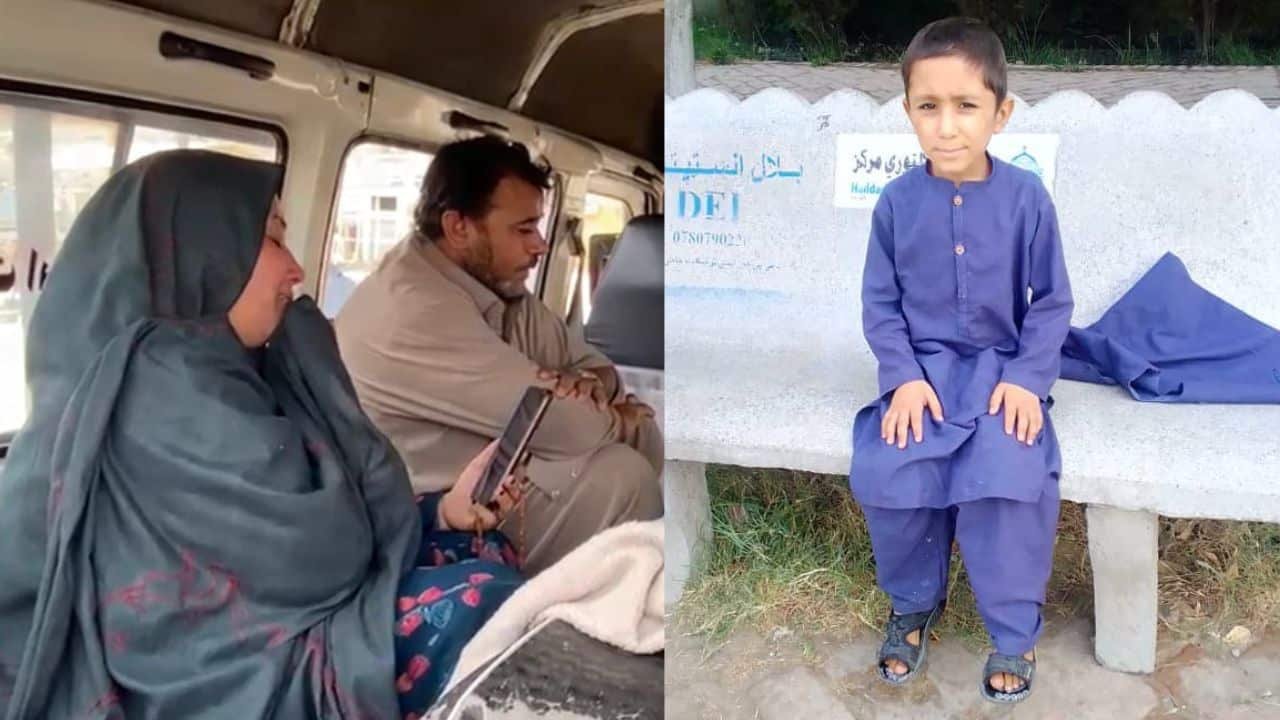
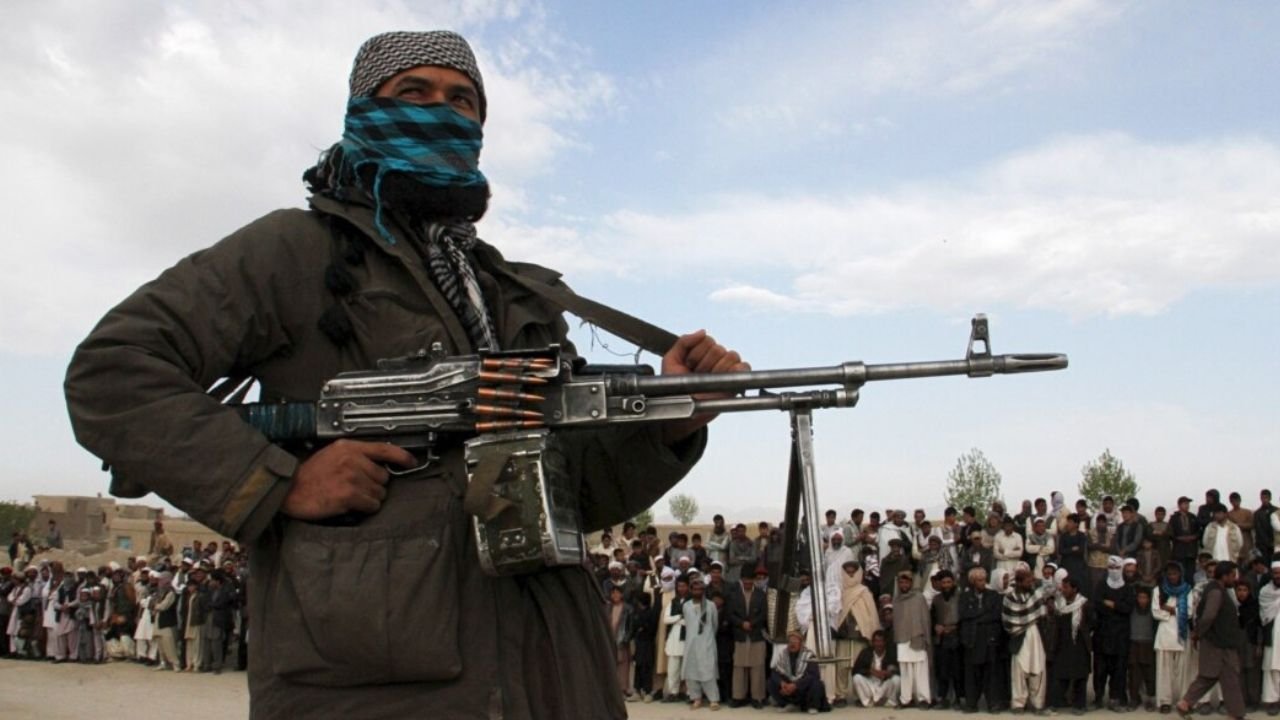
Two people were due to be publicly executed in a football stadium in eastern Afghanistan on Thursday, provincial officials said, in the third and fourth death penalties carried out since the Taliban returned to power.
The Ghazni province information and culture department said in a public notice that the execution was a qisas punishment — equating to “an eye-for-an-eye” — but did not initially provide details on the prisoners or their crimes.
Although public executions were common during the Taliban’s first rule from 1996 to 2001, they have only carried out two others since surging back to power in August 2021. Both were for the crime of murder.
There have been regular public floggings for other crimes, however, including theft, adultery and alcohol consumption.
Taliban Supreme Leader Hibatullah Akhundzada last year ordered judges to fully implement all aspects of sharia — including qisas punishment.
The last execution was carried out in June 2023, when a convicted murderer was shot dead in the grounds of a mosque in Laghman province in front of some 2,000 people.
The British Prince William has said that the “sheer scale of human suffering” had brought home the need for peace in an enclave “where too many have been killed”, reports Al Jazeera.
In a rare, direct intervention for a member of the royal family, William, the heir to the British throne, said it was critical that aid gets through to those who need it in Gaza.
“Sometimes, it is only when faced with the sheer scale of human suffering that the importance of permanent peace is brought home,” he said in a statement.
The 41-year-old visited the British Red Cross headquarters in London on Tuesday to hear about their work supporting people affected by war in the Middle East.
“I, like so many others, want to see an end to the fighting as soon as possible,” he said. “There is a desperate need for increased humanitarian support to Gaza. It’s critical that aid gets in and the hostages are released.”
Previously, the heir apparent of the British throne, Prince William, was reportedly set to commence a number of royal engagements in order to “recognise the human suffering” as a result of Israeli operations on Gaza and in the Middle East.
Kensington Palace has said that the future King will also take into consideration increasing anti-Semitism around the world.
He is set to meet with humanitarian workers in the region while also visiting a synagogue to listen to the youth countering anti-Semitism.
“The prince and princess were profoundly concerned by events that unfolded in late 2023 and continue to hold all the victims, their family and friends in their hearts and minds,” his office said.
Geneva, Switzerland – UN rights experts called Monday for an independent probe into alleged Israeli abuses against Palestinian women and girls, including killings, rapes and sexual assault.
The statement by the seven independent UN experts prompted an angry reaction from Israel, which rejected the “despicable and unfounded claims”.
The experts voiced alarm at “credible allegations of egregious human rights violations” targeting women and girls in the Gaza Strip and the West Bank.
They cited reports of women and girls reportedly being “arbitrarily executed in Gaza, often together with family members, including their children”.
“We are shocked by reports of the deliberate targeting and extrajudicial killing of Palestinian women and children in places where they sought refuge, or while fleeing,” they said.
The independent experts, who are appointed by the UN Human Rights Council but who do not represent the United Nations, also pointed to the “arbitrary detention of hundreds of Palestinian women and girls”, including human rights defenders, journalists and humanitarians.
They said many of those detained had reported been subjected to “inhuman and degrading treatment”, including severe beatings and being denied menstrual pads, food and medicine.
They voiced particular alarm at reports of “multiple forms of sexual assault”, including reports of rapes of at least two female detainees, while others were “stripped naked and searched by male Israeli army officers”.
Israel’s assault on Gaza has killed more than 29,000 people, mostly women and children, according to the health ministry.
The experts called for an “independent, impartial, prompt, thorough and effective investigation” into the allegations, urging Israel to cooperate.
The Israeli mission in Geneva dismissed the statement saying the experts were “motivated by their hatred for Israel, not by the truth”.
It said Israeli authorities had received no complaints, but stood ready to investigate any “concrete claims of misconduct by its security forces when presented with credible allegations and evidence”.
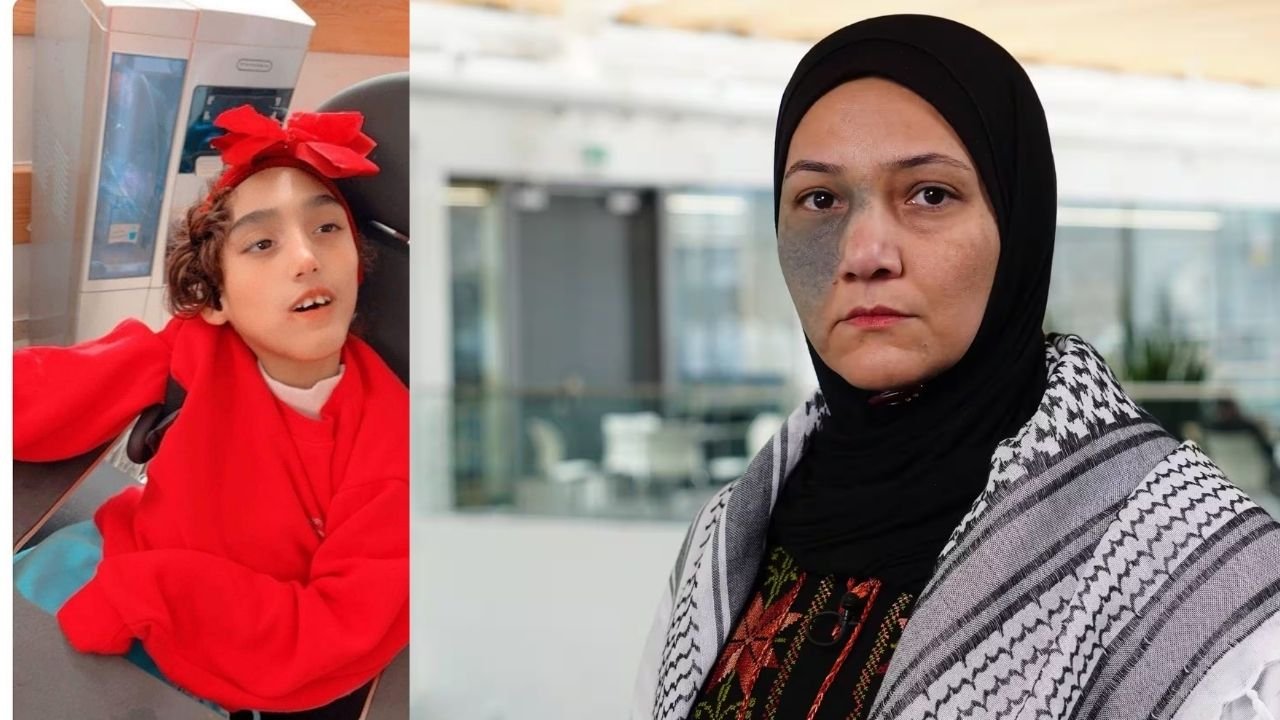
Samar Elkhadour, a Palestinian woman who had been trying to get her daughter Jana out of Gaza, for the past several years. She finally got the call from Global Affairs Department of Canada allowing her daughter with special needs to immigrate to Canada, two weeks after her death. The news was featured in CBC Montreal News.
Jana was born with severe cerebral palsy and was living with Samar’s in-laws in Gaza. Samar was living in Canada and was trying to get her daughter to join her as she dealt with Jana’s immigration process. Jana died on January 8 – four days after her 13th birthday – in Gaza, due to malnutrition and lack of medicine and two weeks later, Samar got the green light from the Canadian government to bring her but it was too late.
Samar talked to host Debra Arbec in a show and spoke her heart out. She shared how she had hoped to give her daughter the comfort she deserved had she been allowed to move in with her family. She along with her husband and other children left Gaza back in 2017 as a refugee but the immigration bureaucracy in Canada did not help them at all. Back then, her daughter was relatively safe because the escalation was not spiking. However, after October 7, she decided to move her to a church because she thought she’d be safe there under international law. “What happened after that, the Church was surrounded by tanks and snipers and there were restrictions on the entry of food,” Samar related with teary eyes, “Jana could only have soft food and since it is a war, this is a privilege”. Her health deteriorated and because she was not given proper medication she passed away.
When the interviewer asked about the time she got to know about the green light to bring her daughter to Canada, Samar replied, “I laughed, because it’s ridiculous. It was a child’s life at stake.”
The two then went on to discuss the immigration process in Canada and Samar highlighted the double standards of the process especially with Palestinians. She stressed the immediate need of a ceasefire.