Category: FOREIGN

Foreign Blogs is a network of global affairs blogs and a supplement to the Foreign Policy Association’s Great Decisions program.

  • The war will last for ‘months’, says the Israeli Defence Minister to US envoy

    The war will last for ‘months’, says the Israeli Defence Minister to US envoy

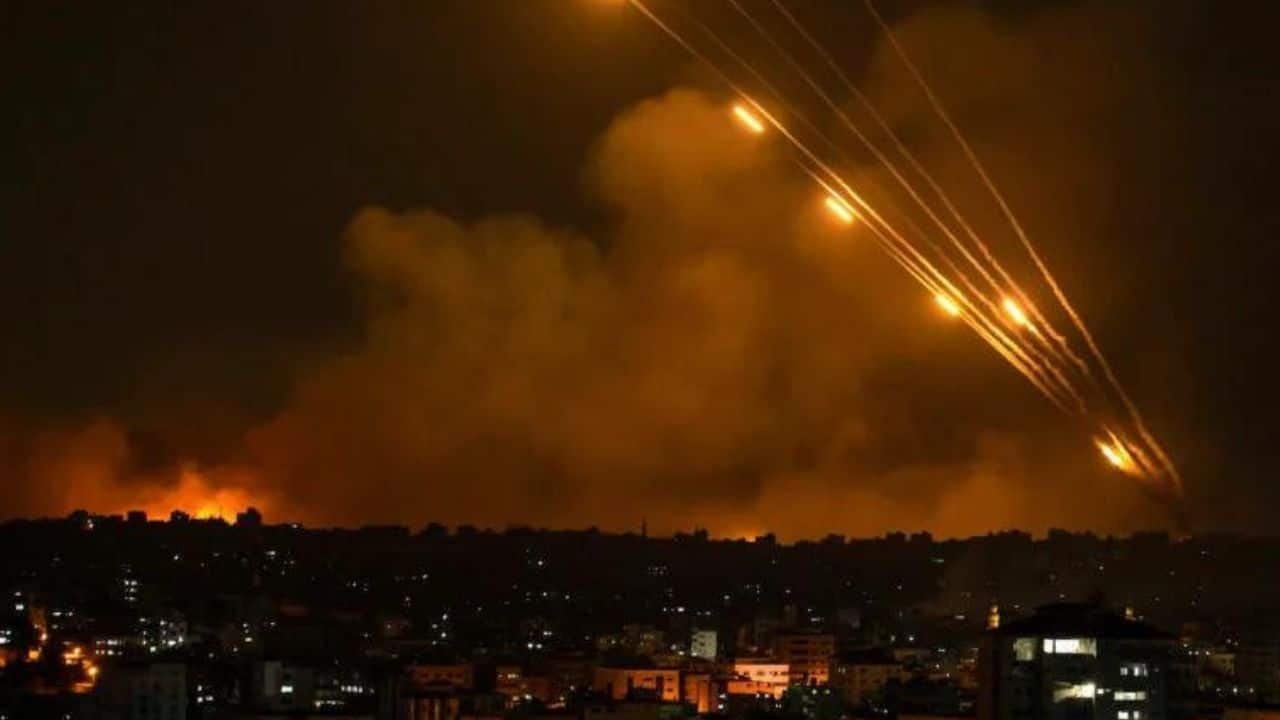
    Israel pressed its offensive in the Gaza Strip on Friday after telling a key supporter, the United States of America that the war to crush Hamas will last “more than several months”.

    On Thursday, US National Security Advisor Jake Sullivan met in Tel Aviv with Israeli Prime Minister Benjamin Netanyahu and Defence Minister Yoav Gallant.

    During their meeting, Mr. Gallant warned that Israel’s fight with Hamas “will require a period of time — it will last more than several months, but we will win and we will destroy them”.

    Speaking in Washington, U.S. President Joe Biden urged Israel to take more care to protect civilians in Gaza.

    “I want them to be focused on how to save civilian lives — not stop going after Hamas, but be more careful,” said Mr. Biden, whose government has provided Israel with billions of dollars in military aid.

    White House spokesman John Kirby, meanwhile, said Washington was “not dictating terms” to Israel and that the timeline given by Gallant was “consistent” with what Israeli officials had previously said.

    Mr Netanyahu on Thursday vowed to carry on “until victory”, and Foreign Minister Eli Cohen said the war would continue “with or without international support”.

    Mr Sullivan on Friday will head to the Israeli-occupied West Bank city of Ramallah for talks with Palestinian Authority leaders, a US official said on condition of anonymity.

    The West Bank, which is ruled by the Palestinian Authority (PA), has seen a surge in violence since October 7.

    There, the Palestinian health ministry said 11 people had been killed since the Israeli military launched a raid in the city of Jenin and its refugee camp earlier this week.

    The war in Gaza has led to increased popular support for Hamas in the West Bank, further weakening the internationally recognized PA.

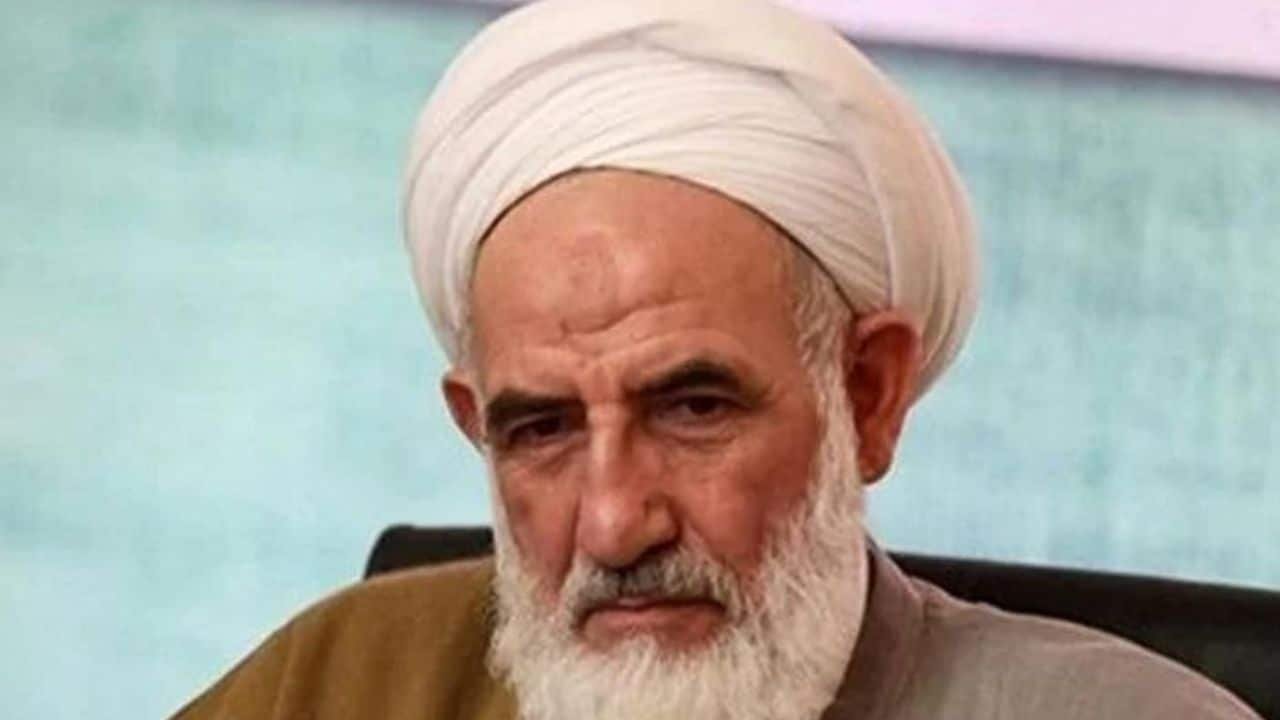
  • Iran executes murderer of Ayatollah Abbas Ali Soleimani

    Iran executes murderer of Ayatollah Abbas Ali Soleimani

    Iranian authorities executed a man convicted of killing a powerful cleric in April, the judiciary said Wednesday.

    Ayatollah Abbas Ali Soleimani, a member of the Assembly of Experts that selects the country’s supreme leader, was killed on April 26 in a bank in Babolsar city in the northern province of Mazandaran.

    The murderer, who has not been named, was a security guard at the bank. CCTV footage published by local media showed him shooting the cleric from behind as he was sitting in a chair.

    “The sentence of qesas (Islamic law of retribution) for the murderer of Martyr Ayatollah Abbas Ali Soleimani was carried out today after being approved by the country’s Supreme Court,” a local official said, according to the judiciary’s Mizan Online website.

    Under Islamic law, the sentence of qesas can be dropped if the victim’s family agrees to spare the convict.

    Soleimani, 75, was previously a representative of Supreme Leader Ayatollah Ali Khamenei and led Friday prayers in the cities of Kashan and Zahedan.

    The 88-strong Assembly of Experts is tasked with supervising, dismissing, and electing the supreme leader. It is headed by ultra-conservative 96-year-old cleric Ahmad Jannati.

    Its members are elected for eight-year terms, but candidates are closely vetted.

    In April 2022, two clerics died in a knife attack in Iran’s second city of Mashhad. A 21-year-old suspected jihadist, Abdolatif Moradi, was hanged two months later for the crime.

    Rights group Amnesty International says Iran executes more people than any country except China.

    It has executed more than 600 people so far this year, already the highest figure in eight years, according to a report last month by the Norway-based Iran Human Rights group.

  • White House approves ’emergency’ sale of tanks to Israel amidst war on Gaza

    White House approves ’emergency’ sale of tanks to Israel amidst war on Gaza

    The US State Department has approved the emergency sale to Israel of nearly 14,000 rounds of tank ammunition, it said Saturday.

    The department said it had notified Congress on Friday of a sale of 13,981 high-explosive 120mm tank cartridges and related equipment worth $106.5 million.

    That sale, while relatively small, comes amid heated political debate over the Gaza war, with Republicans slowing a far larger Biden administration request for new military spending for Israel and Ukraine, and Democrats divided over the use of US weaponry against Palestinian civilians.

    The State Department said the secretary of state had determined that “an emergency exists that requires the immediate sale to the Government of Israel” of the weaponry, thereby waiving the normal requirement of Congressional review.

    The statement said the sale, from US Army inventory, would be used by Israel “as a deterrent to regional threats and to strengthen its homeland defense” and would “not alter the basic military balance in the region.”

    On Wednesday, Republican senators blocked a White House request for $106 billion in emergency aid primarily for Ukraine and Israel as conservatives balked at the exclusion of immigration reforms they had demanded.

    The package would include roughly $60 billion to help Ukraine in its war with Russia and $10 billion for Israel in its conflict with Hamas, as well as aid for Taiwan.

    With the death toll in Gaza steadily mounting, meantime, some Democrats have strongly urged Israel to carry out a more targeted offensive against Hamas targets and limit civilian casualties.

  • The fallen kings of crypto

    The fallen kings of crypto

    Binance boss Changpeng Zhao has become the most powerful cryptocurrency figure to fall in a two-year period chaotic even by the standards of the notoriously volatile industry. 

    Zhao stepped down as CEO of Binance — the largest crypto exchange in the world — after he and the company pleaded guilty on Tuesday to sweeping US money laundering violations and agreed to fines of more than $4 billion.

    Here are three of the highest-profile crypto executives who have fallen foul of the law since last year:

    Changpeng ‘CZ’ Zhao

    Born in China in 1977, Zhao moved with his family to Canada in the 1980s and later got a degree in computer science from McGill University, according to his profile in the Bloomberg Billionaires Index.

    Zhao Changpeng, chief executive officer of Binance, speaks during a Bloomberg Television interview in Tokyo, Japan, on Thursday, Jan. 11, 2018. The world’s biggest cryptocurrency exchange keeps getting bigger. Binance.com is adding “a couple of million” registered users every week, with 240,000 people signing up in just an hour on Wednesday, said Zhao. Photographer: Akio Kon/Bloomberg

    He founded Binance in 2017 in Shanghai, and led the company’s explosive growth into the world’s biggest cryptocurrency exchange.

    An outspoken celebrity in the crypto world with 8.7 million followers on X, Zhao became the richest known figure in the nascent industry. His net worth peaked at around $65 billion in 2022, according to a Forbes index.

    With the prestige and wealth came increased scrutiny of Binance’s operations, as prominent crypto firms around the world began to buckle under a wave of criminal investigations.

    The United States accused Zhao and Binance of multiple violations, including knowingly allowing transactions to militant groups such as the Islamic State and in barred jurisdictions such as North Korea and Iran.

    On Tuesday, they pleaded guilty. The firm has agreed to total penalties of nearly $4.4 billion, while he will pay $50 million, according to court documents.

    Zhao resigned as CEO of Binance and while he will reportedly retain his shares in the company, he has been banned from any involvement in its business. He is expected to face sentencing later.

    Forbes listed his net worth as $10.2 billion as of Wednesday.

    Sam Bankman-Fried

    If Zhao was the richest and most powerful person in crypto, Sam Bankman-Fried was easily the most famous.

    Born to Stanford University professors, Bankman-Fried graduated from MIT with a degree in physics.

    In 2019, he founded FTX, which skyrocketed to become the world’s second-largest crypto exchange.

    Along the way, Bankman-Fried built up his image as the unofficial ambassador for the cryptocurrency industry, with high-profile appearances in the media and even the US Congress.

    At one point in 2022, he had a net worth of $24 billion, according to Forbes.

    But he had been walking a dangerous path — his team used customers’ money for everything from buying posh real estate to covering risky moves by affiliate Alameda Research.

    It all came crashing down when these moves were revealed in the media in November 2022. Within hours, rival CZ Zhao said Binance would sell all the FTX tokens it held.

    It sparked a stunning collapse of FTX and Bankman-Fried’s empire, his fame turning to notoriety.

    Arrested in the Bahamas in January, he was found guilty this month of what US prosecutors described as “one of the biggest financial frauds in American history”. He faces up to 110 years in prison.

    During his trial, the 31-year-old admitted to making “mistakes” but denied trying to defraud anyone.

    Do Kwon

    South Korean entrepreneur Do Kwon co-founded Terraform Labs in 2018, developing the cryptocurrencies TerraUSD and Luna.

    Do Kwon, co-founder and chief executive officer of Terraform Labs, poses in the company’s office in Seoul, South Korea, on Thursday, April 14, 2022. Kwon is counting on the oldest cryptocurrency as a backstop for his stablecoin, which some critics liken to a ginormous Ponzi scheme. Photographer: Woohae Cho/Bloomberg via Getty Images

    The Stanford grad successfully marketed them as the next big thing in crypto, attracting billions in investments and global hype.

    Media reports in South Korea described him as a “genius”.

    But in May last year, the value of these currencies — marketed as “stablecoins” — plummeted, wiping out around $40 billion in investments and sending a shock wave through the rest of the industry.

    It led to more than $500 billion in further losses on global crypto markets, industry data suggested.

    Experts said Do Kwon — whose full name is Kwon Do-kyung — had marketed a glorified Ponzi scheme.

    Brash and outspoken on social media, Do Kwon left South Korea before the collapse and spent months on the run.

    He was arrested in Montenegro this year after being caught trying to catch a flight using fake Costa Rican travel documents.

    He faces multiple criminal charges in the United States and South Korea.

  • Gaza’s embattled main hospital buries patients in ‘mass grave’

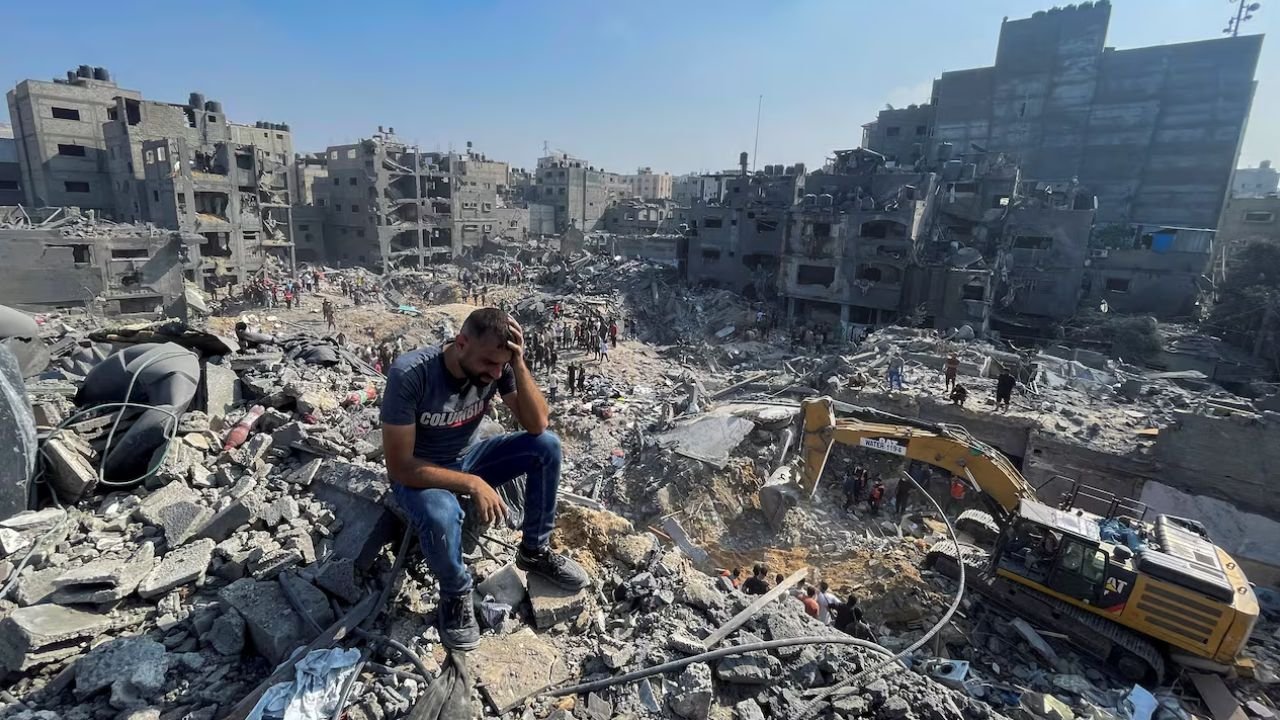
    Gaza’s main hospital has been forced to bury dozens of dead patients in a mass grave, its director said Tuesday, while thousands of Palestinians were trapped inside by fierce combat.

    Israeli forces were at the gates of the sprawling Al-Shifa hospital they say sits atop an underground Hamas command base, but the militants deny the charge while doctors say patients and people seeking shelter were stranded in horrific conditions.

    “There are bodies littered in the hospital complex and there is no longer electricity at the morgues,” said Al-Shifa hospital director Mohammad Abu Salmiya, adding that 179 bodies had been interred so far.

    “We were forced to bury them in a mass grave,” he said, adding that seven babies and 29 intensive care patients were among those who had died after fuel for the hospital’s generator ran out.

    A witness said the stench of decomposing bodies was everywhere in the Gaza City facility as bombardment and gunfire echoed constantly in the area.

    The United Nations estimates that at least 2,300 people — patients, staff and displaced civilians — are inside and may be unable to escape because of fierce fighting from the facility where supplies are nearly exhausted.

    Israel says it is not targeting the hospital, but has vowed to destroy Hamas in response to the attacks of October 7, which killed an estimated 1,200 people, mostly civilians, and saw 240 hostages being taken to Gaza.

    The health ministry in Hamas-run Gaza says Israel’s relentless assault has killed 11,320 people, also mostly civilians, including thousands of children.

    Israel’s military says 47 of its troops have been killed in Gaza.

    Al-Shifa’s fate has become a major focus of the more than five week war that has stirred international criticism of the suffering and death inflicted on civilians in the besieged territory.

    Israel’s Foreign Minister Eli Cohen acknowledged in a statement shared by his spokesman Monday that his nation has “two or three weeks until international pressure really steps up”. 

    ‘Completely soaked’

    The situation in Gaza’s other hospitals is also dire, with the UN saying 22 of 36 are not functional due to lack of generator fuel, damage and combat.

    “The 14 hospitals remaining open have barely enough supplies to sustain critical and life-saving surgeries and provide inpatient care, including intensive care,” said the World Health Organization in the Palestinian Territories.

    But the humanitarian crisis in the territory also includes the hundreds of thousands of people who have fled south at Israel’s urging to get away from the most intense fighting.

    On Tuesday displaced Palestinians in the south woke up to yet another scourge: rain, soaking their meagre belongings and threatening to bring waterborne diseases to their places of shelter.

    “We are completely soaked, all of our clothes are soaked, our mattresses, our blankets too, even a dog could not live like this,” said Ayman al-Jueidi, who has set himself up in the courtyard of a UN school in Rafah at the southern extremity of the Gaza Strip.

    Even escaping the fighting is dangerous and wounded Palestinians told AFP how they were hit by a strike on their way south.

    “I walked around three to four kilometres (around two miles) while I was bleeding,” said Hasan Baker, whose head and left hand were bandaged. “There was no possibility for any ambulance to enter the area.”

    Hostage talks

    Israeli leaders have so far insisted there will be no ceasefire until hostages are released, but Qatar is mediating talks on a possible deal to free captives.

    Abu Obeida, a spokesman for Hamas’s military wing, said Monday that Israel asked for the release of 100 hostages while the militants want 200 Palestinian children and 75 women freed from Israeli prisons.

    “We informed the mediators we could release the hostages if we obtained five days of truce… and passage of aid to all of our people throughout the Gaza Strip, but the enemy is procrastinating,” Abu Obeida said in an audio statement.

    Qatari foreign ministry spokesman Majed bin Mohammed Al-Ansari told a news conference in Doha that the “deteriorating” situation in Gaza was hampering mediation efforts.  

    “We believe that there is no other chance for both sides other than for this mediation to take place,” he said. 

    Relatives of hostages set out Tuesday on a five-day protest march to Prime Minister Benjamin Netanyahu’s office to demand “the immediate release of all the hostages”, the Hostages and Missing Families Forum said.

    Netanyahu responded in a statement that the government was “working relentlessly for the release of the hostages, including using increased pressure since the start of the ground incursion”.  

    As security officials and diplomats continued negotiations, Hamas’s military wing issued a video of captive Israeli soldier Noa Marciano.

    The Israeli army on Tuesday confirmed she was dead.

    Abu Obeida claimed Marciano was killed in an Israeli strike. The Israeli army did not say how she died.

    West Bank violence

    The Israeli army said it had captured Gaza’s parliament, the government building, the police headquarters and other government institutions run by Hamas in Gaza City, as its forces deepened their offensive in the Palestinian territory.

    The army also showed images of a discarded baby bottle, makeshift toilet and bullet-scarred motorbike as evidence Hamas held hostages in the basement of Al-Rantisi children’s hospital in Gaza City.

    AFP was not able to independently confirm the allegation.

    The video narrated by army spokesman Daniel Hagari also shows neatly arranged assault rifles, grenades and what he said were “vests with explosives”.

    The Hamas health ministry described the Israeli video as “poor staging” with “not a single piece of evidence” backing the Israeli army claims.

    The war in Gaza has also spurred violence on other fronts.

    In the occupied West Bank, eight Palestinians were killed in clashes with Israeli troops, seven during an army raid on the northern city of Tulkarem and one near the southern city of Hebron, the Palestinian health ministry said on Tuesday.

    At least 180 Palestinians and three Israelis have been killed across the West Bank since October 7, according to officials on both sides.

    The Israeli police said they were investigating “several cases” of alleged sexual violence against women by Hamas militants in the attack that triggered the conflict.

    Since the attacks, police have been gathering evidence about allegations of sexual violence from witnesses, surveillance footage and the interrogations of Palestinian militants arrested in the aftermath. 

    Police had “multiple witnesses” but no “living victims”, investigator David Katz said without giving the precise number of cases.
  • Bangladesh police clash with 25,000 protesting garment workers

    Up to 25,000 garment workers clashed with police in Bangladesh on Thursday, officials said, as protests rejecting a government-offered pay rise forced the closure of at least 100 factories outside Dhaka.

    A government-appointed panel raised wages on Tuesday by 56.25 percent for the South Asian nation’s four million garment factory workers, who are seeking a near-tripling of their monthly wage.

    Bangladesh’s 3,500 garment factories account for around 85 percent of its $55 billion in annual exports, supplying many of the world’s top brands including Levi’s, Zara and H&M.

    But conditions are dire for many of the sector’s four million workers, the vast majority of whom are women whose monthly pay starts at 8,300 taka ($75).

    Police said violence broke out in the industrial towns of Gazipur and Ashulia outside the capital after more than 10,000 workers staged protests in factories and along highways to reject the panel’s offer.

    “There were 10,000 (protesting) workers at several spots. They threw bricks and stones at our officers and factories, which were open,” Mahmud Naser, Ashulia’s deputy industrial police chief, told AFP.

    “One of our officers was injured. We fired rubber bullets and tear gas to disperse the workers,” Naser said.

    He said more than 100 factories were shut down in Ashulia and surrounding areas.

    Thousands of workers also clashed with the elite Rapid Action Battalion (RAB) and police at Konabari and Naujore in Gazipur, with police using batons and tear gas to drive them into alleys, AFP correspondents at the scene said.

    “Some 15,000 workers blocked the road at Konabari, and vandalised vehicles and other properties. We had to disperse them to maintain law and order,” Gazipur municipality administrator Sayed Murad Ali told AFP.

    At least two injured workers were taken to hospital, police said.

    Intimidation

    The workers are seeking a wage rise to 23,000 taka and unions representing them have rejected the panel’s increase as “farcical”.

    Police say at least three workers have been killed since the wage protests broke out in key industrial towns last week, including a 23-year-old woman shot dead on Wednesday.

    At least six police officers have also been injured in the protests.

    Unions say the panel’s wage increase fails to match soaring prices of food, house rents and schooling and healthcare costs.

    They have also accused the government and police of arresting and intimidating organisers.

    “Police arrested Mohammad Jewel Miya, one of the organisers of our unions. A grass-roots leader… was also arrested,” Rashedul Alam Raju, the general secretary of the Bangladesh Independent Garment Workers Federation (BIGWUF), told AFP.

    Another union leader, speaking on condition of anonymity, said at least six union leaders had been arrested and unions were being threatened by police to call off the protests and accept the wage offer.

    There was no immediate comment from police about the arrests.

    The United States has condemned violence against protesting Bangladeshi garment workers and “the criminalisation of legitimate worker and trade union activities”.

    In a statement, State Department spokesman Matthew Miller urged the panel “to revisit the minimum wage decision to ensure that it addresses the growing economic pressures faced by workers and their families”.

    Thea Lee, the US Department of Labor’s deputy undersecretary for international affairs, called for the release of BIGWUF organiser Miya.

    The Netherlands-based Clean Clothes Campaign, a textile workers’ rights group, has also dismissed the new pay level as a “poverty wage”.

    The minimum wage is fixed by a state-appointed board that includes representatives from the manufacturers, unions and wage experts.

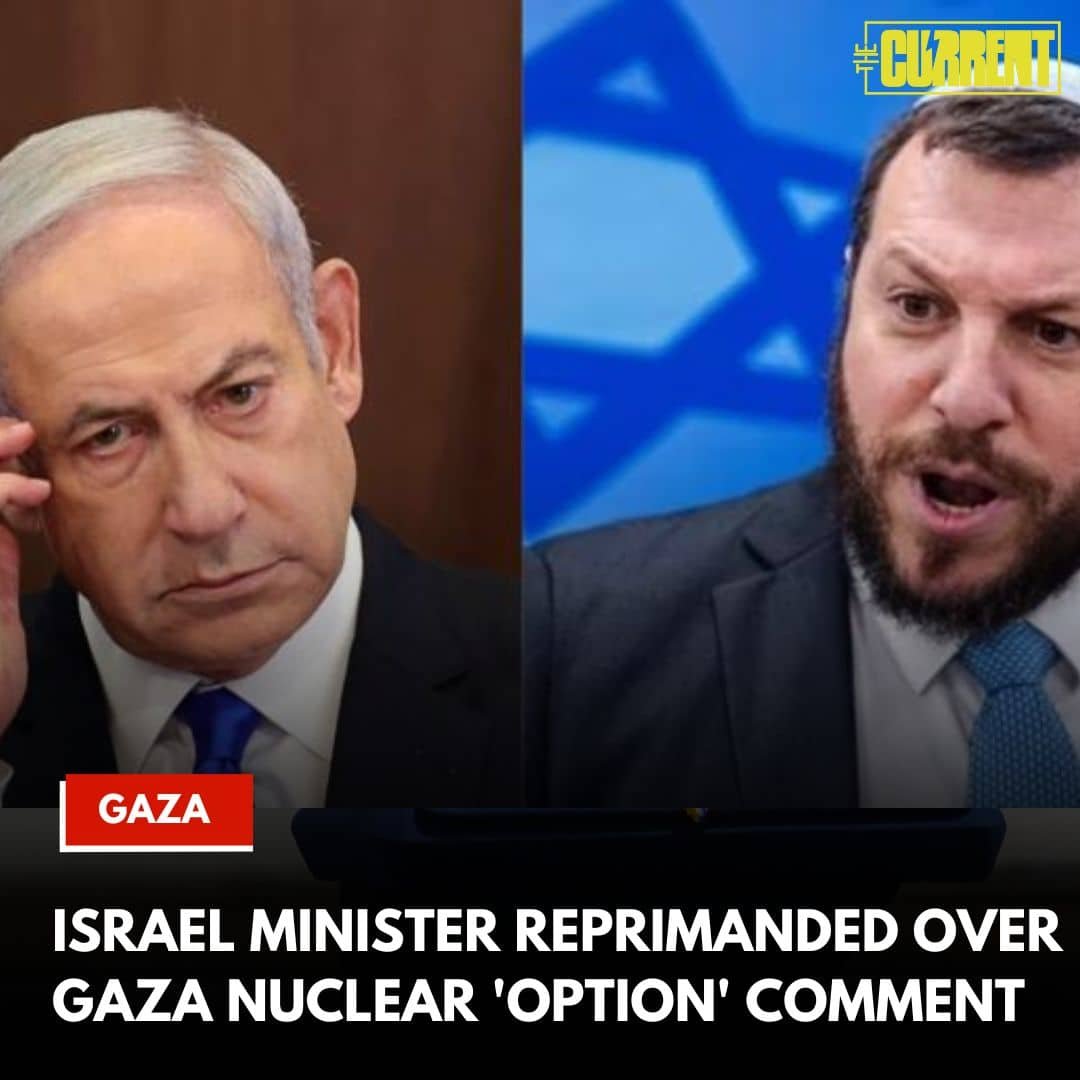
  • Israel Minister Reprimanded Over Gaza Nuclear ‘Option’ Comment

    Israel Minister Reprimanded Over Gaza Nuclear ‘Option’ Comment

    An Israeli minister was suspended from government meetings “until further notice” Sunday, Prime Minister Benjamin Netanyahu’s office said, after suggesting in an interview dropping a nuclear bomb on Gaza.

    The comments by Heritage Minister Amichay Eliyahu advocating a fierce military response to Hamas’s October 7 attacks even at the cost of the lives of hostages believed to be held in Gaza also drew rebuke from families of the captives.

    Eliyahu, an ultranationalist politician part of Netnayahu’s ruling coalition, told Israel’s Kol Barama radio he was not entirely satisfied with the scale of Israel’s retaliation in the Palestinian territory after Hamas fighters carried out their deadly attacks inside southern Israel.

    The attacks killed 1,400 people, mostly civilians, Israeli officials say.

    Israel’s military campaign in Gaza since October 7 has killed 9,488 people, most of them women and children, the Hamas-run health ministry says.

    When the interviewer asked whether the Israeli minister advocated dropping “some kind of atomic bomb” on the Gaza Strip “to kill everyone”, Eliyahu replied: “That’s one option”.

    Prime Minister Benjamin Netanyahu’s office quickly responded in a statement, describing Eliyahu’s remarks as “disconnected from reality” and adding that Israel was trying to spare “non-combatants” in Gaza.

    In a follow-up question about the estimated 240 hostages held in Gaza, Eliyahu said that “in war we pay a price.”

    “Why are the lives of the hostages… more important than the lives of the soldiers?” he said.

    “International law, along with fundamental principles of human morality and common sense, strictly prohibits the use of mass destruction weapons,” it said in a statement, calling for the release of all the hostages.

    Following the outcry over his remarks, Eliyahu said in a post on X, formerly Twitter, that his statement about the atomic bomb was “metaphorical”.

    He also said that Israel was “committed to doing everything possible to return the hostages safe and sound”.

    Israel has never admitted to having a nuclear bomb.

    The Hostages and Missing Persons Families Forum, representing relatives of people snatched to Gaza by Hamas militants, slammed Eliyahu’s “reckless and cruel” statement.

  • Bahrain to cut diplomatic and economic ties with Israel

    Bahrain to cut diplomatic and economic ties with Israel

    Bahrain has severed its economic ties with Israel, recalling its ambassador as the country continues bombarding Gaza.

    Bahrain took the step in the wake of Israel’s war on Gaza to show its support for the Palestinian cause and “The legitimate right of Palestinian people.”

    The Israeli ambassador had already left Bahrain. This announcement comes on the heels of Jordan’s decision to summon its envoy back home.

    Bahrain is the first Arab country to recall its ambassador from among the four that signed the Abraham Accords with Israel back in 2020. This agreement of normalization of ties brought in huge economic deals and the start of diplomatic relations between the two countries.

    Since October 7, Colombia, Chile, and Bolivia have cut ties with Israel and Bahrain is the newest addition to the list.

  • Death toll crosses 9,000: What we know about day 27

    Death toll crosses 9,000: What we know about day 27

    Biden finally calls for a ‘pause’ in war

    For the first time since October 7, US President Joe Biden has called for a humanitarian “pause” to Israel’s war in Gaza, asserting the eimportance of evacuation of all citizens in Gaza.

    “I think we need a pause,” he said on Wednesday when a heckler referred to an immediate ceasefire during a campaign speech.

    Biden was asked what he meant by “pause” to which he responded, “Time to get the prisoners out.”

    The White House later clarified that the reference was of captives under Hamas.

    Almost 200 killed, over 100 missing in Jabalia bombing

    According to a report by Gaza’s Government Media Office, more than 1,000 people have been affected by bombing on Jabalia refugee camp which includes 195 killed, 120 missing and at least 777 wounded.

    The Israeli military attacked the camp on Tuesday as well as Wednesday promoting the UN Secretary-General Antonio Guterres to deem the attacks “appalling”, while the UN High Commissioner for Human Rights said the “disproportionate attacks” could amount to “war crimes”.

    Israel, on the contrary, claimed to have targeted a Hamas commander.

    12,000 targets in Gaza attacked

    Israeli army spokesperson Daniel Hagari has stated that more than 12,000 targets have been attacked since October 7.

    Eleven bakeries destroyed

    UN relief agency UNOCHA has reported on the destruction of 11 bakeries in Gaza that were struck by Israel since October 7.

    Now, only nine bakeries are reportedly left in Gaza as of Wednesday.

    While UNOCHA is supplying the bakeries with flour, they are, nonetheless, struggling to operate due to fuel shortages and additionally, people have to wait in long queues.

    Israel-Lebanon conflict continues

    Al Jazeera reported that the Israeli army claimed that one of its drones was shot down by a surface-to-air missile fired from Lebanon.

    The military responded by attacking the squad and the site from where the rocket was launched.

    Egypt to help evacuate ‘about 7,000’ foreign nationals

    The Foreign Ministry released a statement saying that Egypt will help evacuate “about 7,000” foreigners and dual nationals from Gaza through Rafah border.

    These 7,000 people consist of “more than 60” nationalities.

    At least 60 people detained across the occupied West Bank

    In an overnight raid by the Israeli forces, at least 60 people have been detained across the occupied West Bank.

    The total number of Palestinians detained since October 7 now crosses 1,800.

    Additionally, 132 people have been killed in the occupied West Bank while more than 2,100 are wounded.

    Israeli agricultural sector struggling

    The Ministry of Labor reported that Israel’s agricultural sector is reportedly affected with “significant damage” as thousands of foreign workers have left since October 7.

    More than a quarter of about 30,000 foreign workers working in Israel have departed while about 20,000 Palestinian agricultural workers have not been allowed to enter Israel.

    The ministry has now given a green signal to 5,000 foreign workers to overcome the shortage in the agriculture sector.

    Credits: Al Jazeera

  • Indian journalists, opposition leaders ‘targeted by state-sponsored attackers’

    Indian journalists, opposition leaders ‘targeted by state-sponsored attackers’

    Several prominent leaders from India’s opposition parties, including members of the Indian National Developmental Inclusive Alliance (INDIA), have recently been alerted about potential security breaches concerning their Apple devices.

    Indian National Congress’s Shashi Tharoor and Pawan Khera, Shiv Sena’s Priyanka Chaturvedi, Trinamool Congress’s Mahua Moitra, and Aam Aadmi Party’s Raghav Chadha are among those who received warning emails from Apple, highlighting the threat of state-sponsored attacks targeting their iPhones.

    The news broke when The Wire, an online publication, revealed that even Siddharth Varadarajan, the founding editor of The Wire, and Samir Saran from the Observer Research Foundation, were also on the list of individuals who received the warning emails.

    The situation prompted immediate action from various quarters, including the media, with several journalists and opposition leaders reportedly receiving similar notifications from Apple about potential state-sponsored attacks.

    Shashi Tharoor, Pawan Khera, Priyanka Chaturvedi, and Siddharth Varadarajan confirmed the receipt of the warning emails during the late hours of Monday night and early Tuesday morning.

    Tharoor, who noticed the email on Tuesday morning, emphasized the importance of making these threats public, citing the necessity of transparency in safeguarding security. Expressing his concern, Tharoor highlighted the misuse of public funds and the urgent need to address more significant national security threats.

    The situation escalated further when The Wire alleged that the language used in the warning emails was similar to previous alerts from Apple, although this claim could not be independently verified by Newslaundry.

    Tharoor took to Twitter, sharing that the emails were sent from “threat-notifications@apple.com”.

    Mahua Moitra, a member of the Trinamool Congress, later added that individuals within Rahul Gandhi’s office had also been targeted.

    In response to the unfolding events, Apar Gupta, the founder of the Internet Freedom Foundation, provided a detailed analysis emphasizing the importance of not dismissing these alerts as false alarms.

    Seeking clarification from Apple, Newslaundry contacted the company’s official spokesperson, seeking information about the origin of the alleged attacks and the number of affected users. Apple responded, stating that while they do not specifically attribute the notifications to any state-sponsored attackers, the detection process is complex and evolving.

    Notably, the alerts were not limited to India alone, as it was discovered that individuals from nearly 150 countries had also received similar threat notifications from Apple.

    These developments have emerged approximately two years after reports of India’s alleged use of Israeli spyware for targeted surveillance, indicating a continued focus on digital security concerns within the country.