Category: FOREIGN

Foreign Blogs is a network of global affairs blogs and a supplement to the Foreign Policy Association’s Great Decisions program.

  • VIDEO: Dubai crown prince restricts access to his Mercedes SUV after bird builds nest on it

    VIDEO: Dubai crown prince restricts access to his Mercedes SUV after bird builds nest on it

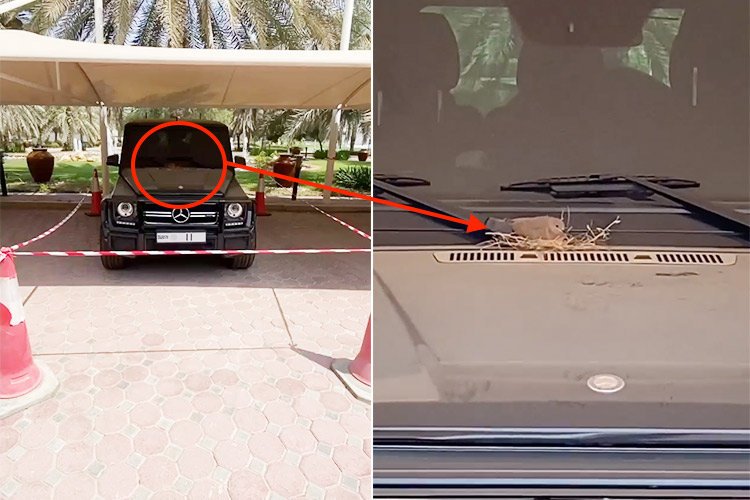
    Crown Prince of Dubai Sheikh Hamdan Bin Mohammed Bin Rashid Al Maktoum has cordoned off his car upon finding that a small bird had built a next on its hood, Gulf Today reported.

    As per the details, the crown prince on his Instagram shared a video of the bird nesting on his Mercedes-AMG G63 SUV parked within his residence in Dubai. 

    The video, which Sheikh Hamdan shot at a distance, shows the G-wagon cordoned off with red-and-white tape and he has told all personnel to stay away from the area so as to not disturb the bird.

    Reportedly an avid lover of nature, Sheikh Hamdan regularly shares his experiences across his social media platforms.

    Earlier this week, Hamdan shared videos and photos of the bird building the nest. Ever since, the royal has not been near his car and therefore told everyone to stay off the area.

    WATCH VIDEO:

    Hamdan Bin Mohammed bin Rashid Al Maktoum is the son of Sheikh Mohammed bin Rashid Al Maktoum and Sheikha Hind bint Maktoum bin Juma Al Maktoum, the senior wife of Mohammed. He is the second son of their 12 children and the fourth of his father’s children. Hamdan’s elder full brother was Sheikh Rashid bin Mohammed.

    He is popularly known as Fazza, the name under which he publishes his poetry, and which means “the one who helps” in Arabic.

    While the crown prince’s Instagram account with more than 10 million followers suggests his hobbies include animals, poetry, sports, photography and adventures, Hamdan Al Maktoum is also a licensed and a well-cultivated equestrian, a skydiver and a scuba diver. 

  • India continues celebrating arrival of Rafale jets that other countries dumped

    As India continues to celebrate the arrival of its Rafale jets, military experts are not only questioning its capabilities against United States (US) aircraft but are also raising questions why the Rafale jets failed to compete in the international arms markets and got dumped by a majority of nations.

    According to foreign media reports, Dassault’s Rafale was not India’s only choice as various other global firms expressed interest in the MMRCA tender. Six renowned aircraft manufacturers competed to bag the contract of 126 jets, which was hailed to be the largest-ever defence acquisition deal of India.

    The initial bidders were Lockheed Martin’s F-16s, Boeing’s F/A-18s, Eurofighter Typhoon, Russia’s MiG-35, Sweden’s Saab’s Gripen and Dassault’s Rafale.

    All aircraft were tested by the IAF and after careful analysis on the bids, two of them — Eurofighter Typhoon and Dassault Rafale — were shortlisted.

    Dassault received the contract to provide 126 fighter jets as it was the lowest bidder and the aircraft was said to be easy to maintain. After Rafale won the contract, the Indian side and Dassault started negotiations in 2012. Though the initial plan was to buy 126 jets, India scaled it down to 36, that too in fly-away condition.

    Despite boasting of awe-inspiring capabilities and selected by India after a mammoth testing & bidding process, the French origin jets didn’t see many buyers. Other than France and India, only Qatar and Egypt are using Rafale jets and that too in very limited numbers.

    As reported earlier by EurAsian Times, Russian aviation experts had claimed that Rafale jets would have been useless against the Chinese Airforce (PLAAF). The maximum speed of the Rafale jet is about Mach 1.8 compared to Chinese J-16s at Mach 2.2.

    The Rafale’s practical ceiling is also lower than the J-16s. Even in engine thrust, the Chinese J-16s aka Russian Su-35s are far superior to the French combat aircraft. Even if the Indian Air Force (IAF) was to deploy all 36 of its newly acquired jets, the technical superiority would still be on the side of China, claimed the Russian expert.

    The Rafale is one of the most expensive aircraft in the international market. India’s deal of 36 jets is worth Rs. 60,000 crores. Experts argue that the high cost is the result of many reasons including general inefficiency in the country’s defence sector, along with the small scale on which the Rafale is being produced in comparison to rival fighters such as the F-18, MiG-29 or F-35 due to which Rafale has not benefitted from economies of scale. This has contributed to its poor performance in the international markets.

    Rafale’s third buyer, India, previously proposed to acquire 126 jets under Make in India and not 36. However, it took five years for even the first five jets to arrive in India after Prime Minister Narendra Modi announced it in April 2015 during his trip to France.

    According to analysts, despite heavy marketing by the makers of Rafale, France’s relatively small and inefficient defence sector seems to have met its limit with the fighter program. The small production lines are unable to produce the aircraft quickly or efficiently and the French budget for research and development is smaller in contrast to the US or Russia.

    The aircraft is priced very steeply and most nations prefer to buy US jets not only because of the technical superiority but also to please the Americans instead of the French. The Rafales have seemingly lost the fight in the international market, despite boasting of excellent qualities.

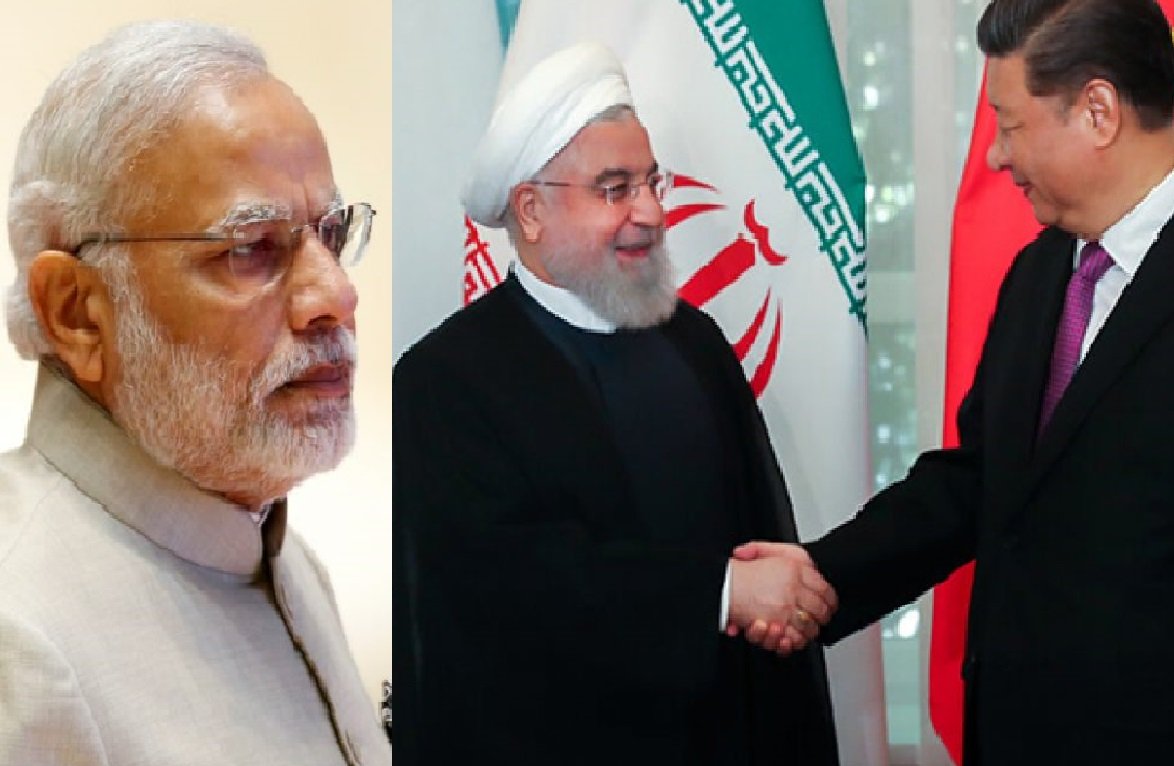
  • Friendship ended with India, now China is Iran’s best friend?

    Friendship ended with India, now China is Iran’s best friend?

    After being “dropped” from a key rail project in southeastern Iran along the border with Afghanistan, India is also set to lose an ambitious gas field project in the country that had been in the pipeline for the past 10 years. 

    India’s Ministry of External Affairs has said in a statement that Tehran would develop the Farzad-B gas field in the Persian Gulf region “on its own” and might engage India “appropriately at a later stage”.

    Last week, Masoud Karbasian, managing director of National Iranian Oil Company (NIOC), told reporters that a new operator had been roped in to develop the gas field, replacing India’s ONGC.

    The field, estimated to possess 21.7 trillion cubic feet of natural gas reserves, 12.8 trillion cubic feet of natural gas and 212 million barrels of gas condensates, was discovered in 2008 by a consortium of three Indian companies — ONGC, Oil India Limited and Indian Oil Corporation.

    According to the deal, the Indian side was supposed to develop the field but they abruptly stopped work in 2012, following the intensification of sanctions against Iran.

    After sanctions were eased in 2015 following the signing of a nuclear deal between Iran and Western countries, India showed its willingness to return to the project.

    However, things again fell apart amid the reinstatement of US sanctions on Iran in May 2018, which further “discouraged” India from making headway in the project, said sources familiar with the issue who requested not to be named.

    “By May 2018, the two sides had made tremendous progress and agreed on key details of the project,” the sources said. “However, the US sanctions played the spoilsport.”

    The two sides had disagreements among themselves as well, particularly on the number of pipelines to be laid and financial investment in the development plan, according to reports.

    In May 2019, Iran’s oil minister, Bijan Namdar Zanganeh, said his ministry had devised a plan to finance the development of the Farzad-B gas field.

    The NIOC had asked the Indian side to submit a financial plan for the field’s development. However, Tehran was “not impressed” with the plan and asked for a new one, said the sources. India had reportedly made a $5.5 billion investment plan

    In August 2019, after slow progress by the Indian side to submit a new plan, Karbasian said Iran would proceed with another operator for the project.

    India’s External Affairs Ministry, however, said the “follow-up bilateral cooperation” was impacted by “policy changes on the Iranian side”.

    This was, however, not the only blow that Iran has served to India as just earlier this week it had “dropped” India from a rail project after the Indian side showed reluctance to start work due to US sanctions.

    The memorandum of understanding to construct the 628-kilometre railway line from the port city of Chabahar to Zahedan was first discussed between the two sides in May 2016.

    It came on the sidelines of the signing of a trilateral agreement between India, Iran and Afghanistan to develop a transport and trade corridor from India to Afghanistan through the Chabahar port in southeast Iran. The port has been operational since 2016 and has been exempted from US sanctions.

    India’s External Affairs Ministry dismissed the reports that Iran excluded it from the rail project as “speculative,” saying Tehran was to “nominate an authorised entity to finalise outstanding technical and financial issues”. The matter, it said, was “still awaited”.

    “IRCON was appointed by [the] Government of India to assess the feasibility of the project. It was working with CDTIC, an Iranian company under their Ministry of Railways in that regard. IRCON has completed the site inspection and review of the feasibility report,” the ministry said in a statement on Thursday, referring to the state-run Indian infrastructure firm undertaking the project.

    “Detailed discussions were thereafter held on other relevant aspects of the project, which had to take into account the financial challenges that Iran was facing. In December 2019, these issues were reviewed in detail at the 19th India-Iran Joint Commission Meeting in Tehran.”

    An official from Iran’s Ports and Maritime Organisation has also denied the reports. However, he said Iran “has not inked any deal with India” for the construction of the Chabahar-Zahedan railroad.

    Both the developments come amid China-India tensions over a territorial dispute in the Ladakh region and as Beijing, sensing America’s internal political difficulties amid social justice protests and poor COVID-19 response, reportedly approves a $400 billion economic and security deal with Tehran.

    In addition to massive infrastructure investments, the agreement envisions closer cooperation on defense and intelligence sharing, and is rumored to include discounts for Iranian oil. If finalised, China would gain massive influence in this geopolitically critical region.

    The US is likely to push back against this partnership, which threatens its security and energy interests in the Middle East and Eurasia. According to Forbes, it is an open secret that Washington’s foreign policy interests constantly clash with those of Tehran and Beijing.
  • Parliament approves law allowing army men to contest elections

    Parliament approves law allowing army men to contest elections

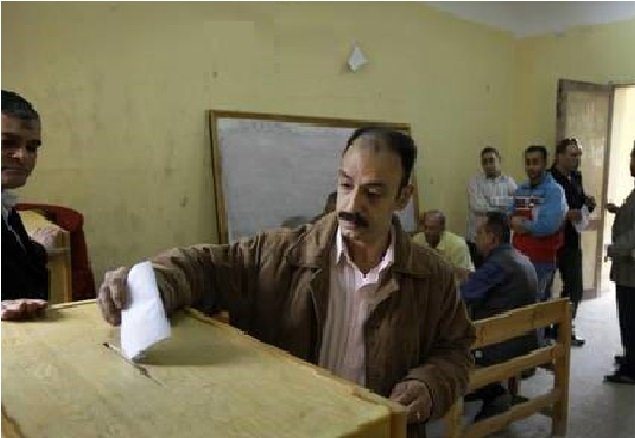
    Egypt’s parliament on Monday approved amendments allowing active or former military personnel to run for the presidency and parliament pending the army’s approval, AFP reported.

    The legislative changes come a year after Egyptians overwhelmingly voted in favour of constitutional amendments that potentially allow President Abdel Fattah al-Sisi, a former army chief, to stay on until 2030.

    Since it became a modern republic, all but two of Egypt’s presidents have hailed from a military background.

    The army is highly visible in Egypt’s public life, with former top brass currently serving as ministers and heading governorates as well.

    The nationalist institution boasts a sizeable business portfolio ranging from massive construction projects to most recently producing protective masks.

    Sisi, the former general-turned-president, led the army’s overthrow of elected president Mohamed Morsi in 2013 following mass protests against the Islamist leader’s rule.

    He won his first term as president in 2014 and was re-elected in March 2018 with more than 97 percent of the vote, after standing virtually unopposed.

    The amended law also prohibits officers from divulging information during their service publicly or joining political parties without the Supreme Council of Armed Forces’ permission.

    SCAF is a military council comprised of the country’s most senior generals. It ruled Egypt following the toppling of long-time autocrat Hosni Mubarak in 2011.

    A former chief of staff of the armed forces, Sami Anan, was jailed in January 2018 after contesting the presidential elections against Sisi without the military’s explicit approval.

    He was released nearly two years later.

    A military court jailed another former soldier in December 2017 for six years for announcing his decision to enter the presidential race as a potential candidate in a video he posted on YouTube.

  • Patient dies after ‘family unplugs ventilator to turn on air cooler’

    Patient dies after ‘family unplugs ventilator to turn on air cooler’

    A 40-year-old man died at a hospital after his family members allegedly unplugged the ventilator he was on to plug in an air cooler.

    Hospital authorities said a three-member committee will probe the incident.

    According to reports, the patient, who was suspected to be suffering from COVID-19, was brought to the ICU of the government-run hospital in the Kota city of India’s Rajasthan state on June 13. His test report, however, came negative later.

    The man was shifted to an isolation ward on June 15 as a safety measure after another patient in the ICU tested positive for the disease.

    Since it was very hot in the isolation ward, his family members bought an air cooler the same day. On finding no socket for the cooler, they allegedly unplugged the ventilator.

    They immediately informed doctors and medical staff, who administered CPR upon the patient, but he died.

    Hospital Superintendent Dr Naveen Saxena said the committee comprising the deputy superintendent, nursing superintendent and chief medical officer on duty will probe the incident and submit a report.

    The committee has recorded statements of medical staff in the isolation ward but the family members of the deceased patient are not responding to the panel, he alleged.

    The family members allegedly did not seek permission to plug in the cooler and when the patient died, they “misbehaved” with the medical staff and the resident doctor on duty, other hospital authorities said.

  • India accuses China of preparing attack on border troops

    India accuses China of preparing attack on border troops

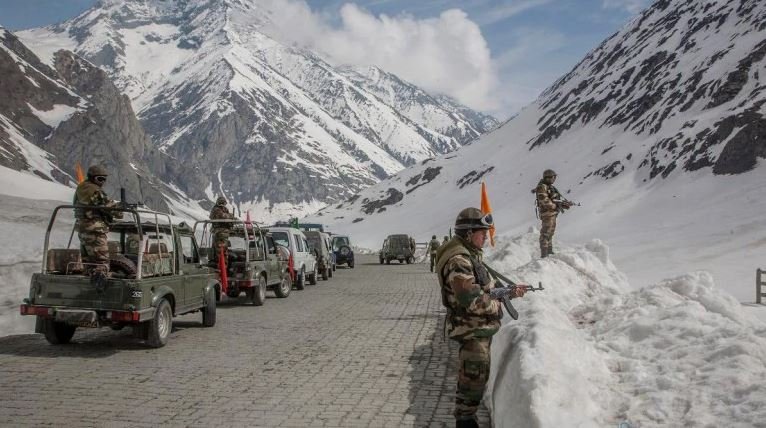
    India has accused Chinese troops of meticulously preparing an attack on its soldiers on the treacherous Himalayan border, claiming they erected a tent on the Indian side, dammed a river, brought in machinery and then lay in wait with stones and batons wrapped in barbed wire, The Guardian reported.

    The incident on Monday night, in which 20 Indian soldiers died and 76 were injured, was the worst violence between India and China in 45 years. China has not said whether it sustained any casualties.

    Ten Indian soldiers who were reportedly captured by Chinese troops during the attack were back in India on Thursday night. China said it had not seized any Indian personnel.

    Both sides continue to blame the other for the clash. China is now claiming sovereignty over the Galwan valley in Ladakh, where the attack happened, and has accused Indian troops of three times crossing into its territory. “The responsibility entirely lies with Indian side,” said Zhao Lijian, a spokesman for the Chinese ministry of foreign affairs.

    India accused China of carrying out a “premeditated and planned action” on its side of the border. Satellite images of the Galwan Valley taken by Planet Labs, an imaging company, in the days before the clash appear to show increased activity on the Chinese side, including the damming of a river and the movement of troops and machinery close to the disputed and poorly defined border.

    The Australian Strategic Policy Institute said its analysis of satellite images found there was “evidence that strongly suggests People’s Liberation Army forces have been regularly crossing into Indian territory temporarily on routine patrol routes”.

    Indian officials said commanders from the Indian and Chinese sides had met on 13 June and agreed to each retreat back two kilometres in the Galwan valley and Pangong Lake area.

    But rather than retreating, the officials said, Chinese troops erected a tent in disputed territory close to what is known as Patrolling Point 14. They said India’s 16 Bihar Regiment, led by Col Santosh Babu, dismantled the structure in an attempt to push back the PLA troops.

    According to accounts given to the Hindu newspaper, when Babu and his troops later approached the Chinese side to challenge the refusal to retreat, they were ambushed by PLA forces on the steep mountain precipice. The Chinese allegedly unblocked the dammed river, releasing a rush of water to destabilise Indian soldiers, and they attacked with stones and makeshift spiked weapons.

    Indian troops retaliated, it was reported, and reinforcements were summoned on both sides until there were upwards of 600 soldiers in hand-to-hand combat in the dark and icy conditions. No shots were fired.

    There were reports that the Indian soldiers were unarmed, but India’s external affairs minister, Subrahmanyam Jaishankar, said: “Let us get the facts straight. All troops on border duty always carry arms, especially when leaving post. Those at Galwan on 15 June did so.”

    Due to the treacherous conditions, many of the bodies of the Indian soldiers could not be retrieved until the next morning, by helicopters working with troops and border police. The injured were taken to hospitals in the Ladakh city of Leh.

    India and China have agreed to continue the process of disengagement that was first agreed on 6 June, and discussions are ongoing through political and diplomatic channels. Army generals from both sides have also had three days of talks at Patrolling Point 14. However, the Indian army and air force in Ladakh remain on high alert.

  • China kills 20 Indian soldiers in border clash

    China kills 20 Indian soldiers in border clash

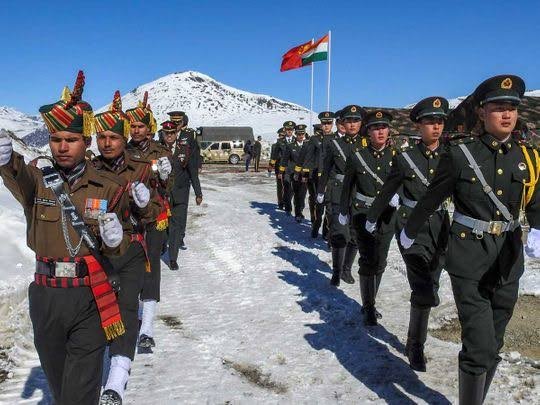
    In an armed conflict between two nuclear-armed neighbours, at least 20 Indian soldiers were killed in the Galwan Valley in Ladakh after a “violent face-off” with Chinese troops ensued.

    According to Indian media reports, both sides “have disengaged” after 17 Indian troops were injured.

    The injured troops “exposed to sub-zero temperatures in the high altitude terrain have succumbed to their injuries”, ANI reported, adding this had brought the death toll, from the earlier reported three to 20.

    According to earlier reports by Indian media, three troops, including an officer and two soldiers were among those killed near the Line of Actual Control (LAC).

    “During the de-escalation process underway in the Galwan Valley, a violent face-off took place yesterday night with casualties. The loss of lives on the Indian side includes an officer and two soldiers. Senior military officials of the two sides are currently meeting at the venue to defuse the situation,” an official statement said.

    Meanwhile, British news outlet The Telegraph, quoting Indian army sources, reported that four soldiers are currently missing and a further 32 “were handed back after being captured”.

    Indian media also reported that 40 Chinese soldiers were killed in the clash, however, the news was soon retracted.

    India and China have been locked in a standoff in the western Himalayas for weeks, though there had been no casualties on either side.

    In Beijing, Zhao Lijian, a spokesman for the Foreign Ministry, said that Indian forces had twice crossed the border illegally on Monday and attacked Chinese personnel. He said the Chinese side had “lodged strong protests” but continued to work toward resolving the tensions between the two countries.

    According to the Hindustan Times, Beijing accused the Indian army of provoking and attacking Chinese soldiers after a border meeting to de-escalate the ongoing tension led to a “physical conflict” between the two sides. Reuters’ report suggested that Beijing warned New Delhi not to take unilateral action or stir up trouble.

    The Asian giants have rival claims to vast swathes of territory along their 3,500 kilometers Himalayan border, but the disputes have remained largely peaceful since a border war in 1962.

  • Coronavirus: Pakistan out of list of 100 safest countries, Switzerland on top, India 56th safest, worst-hit US 58th

    Coronavirus: Pakistan out of list of 100 safest countries, Switzerland on top, India 56th safest, worst-hit US 58th

    In a detailed study of 200 countries, Switzerland has been found to be the safest place on earth to escape the ongoing coronavirus pandemic while Pakistan is no longer among the 100 safest places, falling down to the 148th rank — amongst the riskiest group of countries.

    India ranks 56th in the COVID-19 ranking by Deep Knowledge Group. The first tier comprises a list of 20 most safe countries while those in the fourth tier are amongst the riskiest lot.

    The study focuses on nations and their safety capability against the pandemic.

    Top 10 safest countries from coronavirus:

    1) Switzerland

    2) Germany

    3) Israel

    4) Singapore

    5) Japan

    6) Austria

    7) China

    8) Australia

    9) New Zealand

    10) South Korea

    The United States (US), which has the highest number of coronavirus cases in the world, was ranked 58th on the list.

    By the time this report was filed, Pakistan had a total number of 113,702 COVID-19 cases with at least 2,255 deaths.

    Punjab had the most number of infections (43,460) with Sindh trailing behind at 41,303 cases. The number of infections in Khyber Pakhtunkhwa (KP), Balochistan and Islamabad stood at 14,527, 7,031 and 5,963, respectively. Gilgit-Baltistan (GB) had a total 974 cases while the number in Azad Jammu & Kashmir (AJK) stood at 444.

  • Another Etihad plane from UAE carrying medical aid lands in Israel

    Another Etihad plane from UAE carrying medical aid lands in Israel

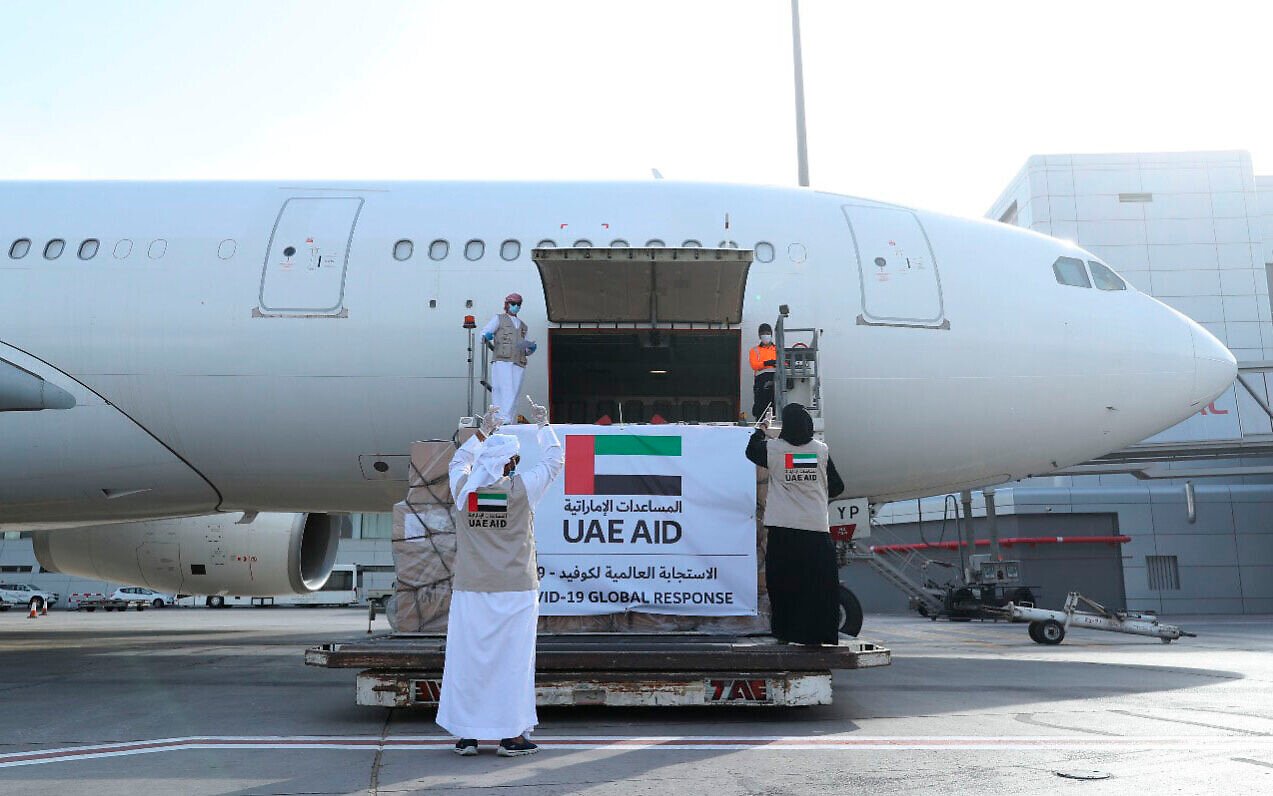
    United Arab Emirates (UAE) flag carrier Etihad Airways sent its second flight to Israel in less than a month on Tuesday, carrying medical aid to help Palestinians tackle the coronavirus pandemic, witnesses and officials said.

    Jordan and Egypt aside, Arab countries have no official diplomatic ties with Israel, but Gulf Arab nations have had ever more publicly warm ties with Israel of late, partly over shared rivalry with Iran.

    In mid-May, the UAE flew its first publicly announced flight to Israel, also an Etihad flight carrying coronavirus aid for the Palestinians.

    But Tuesday’s aircraft bore for the first time the logo of the Arab carrier, a source with knowledge of the flight told AFP.

    It is “the first time that a plane carrying Etihad’s marking is landing in Israel”, the source said.

    Israel’s foreign affairs ministry confirmed that Tuesday’s flight was the second one to Israel from the UAE.

    “It is the second direct flight from the UAE and it has medical aid for the Palestinians,” the ministry said.

    The aid “will be given to the UN to distribute,” it said.

    Palestinian premier Mohammed Shtayyeh said the Palestinians had not been informed about the flight.

    “The Emirati plane took us by surprise, we didn’t know about it,” he told foreign journalists at the Palestinian Authority headquarters in the occupied West Bank city of Ramallah.

    He voiced appreciation for the aid but said the delivery should have been coordinated.

    “When China decides to help us, they coordinate with us, when any country in the world is extending its assistance, they tell us,” he told foreign journalists in Ramallah.

    In another sign of warming ties between Israel and Gulf Arab nations, the Jewish state Tuesday congratulated the UAE on its bid to launch the first Arab space probe.

    That and the latest flight came as Israel prepares to potentially move forward in July with annexing its West Bank settlements and the Jordan Valley.

    A peace plan announced by US President Donald Trump in January gave the green light for such annexations as well as creating a reduced Palestinian state, crucially lacking a capital in east Jerusalem.

    The Palestinians have rejected the proposals and Shtayyeh said Tuesday the Palestinians had submitted a counter-proposal to the Quartet mediating in the conflict, namely the United Nations, United States, Russia and the European Union.

    Analysts say Prime Minister Benjamin Netanyahu believes Arab states normalising with Israel will push the Palestinians to reach a peace deal, not the other way around.

  • Indian Home Ministry accidentally posts whiskey pictures while advertising cyclone relief efforts

    Indian Home Ministry accidentally posts whiskey pictures while advertising cyclone relief efforts

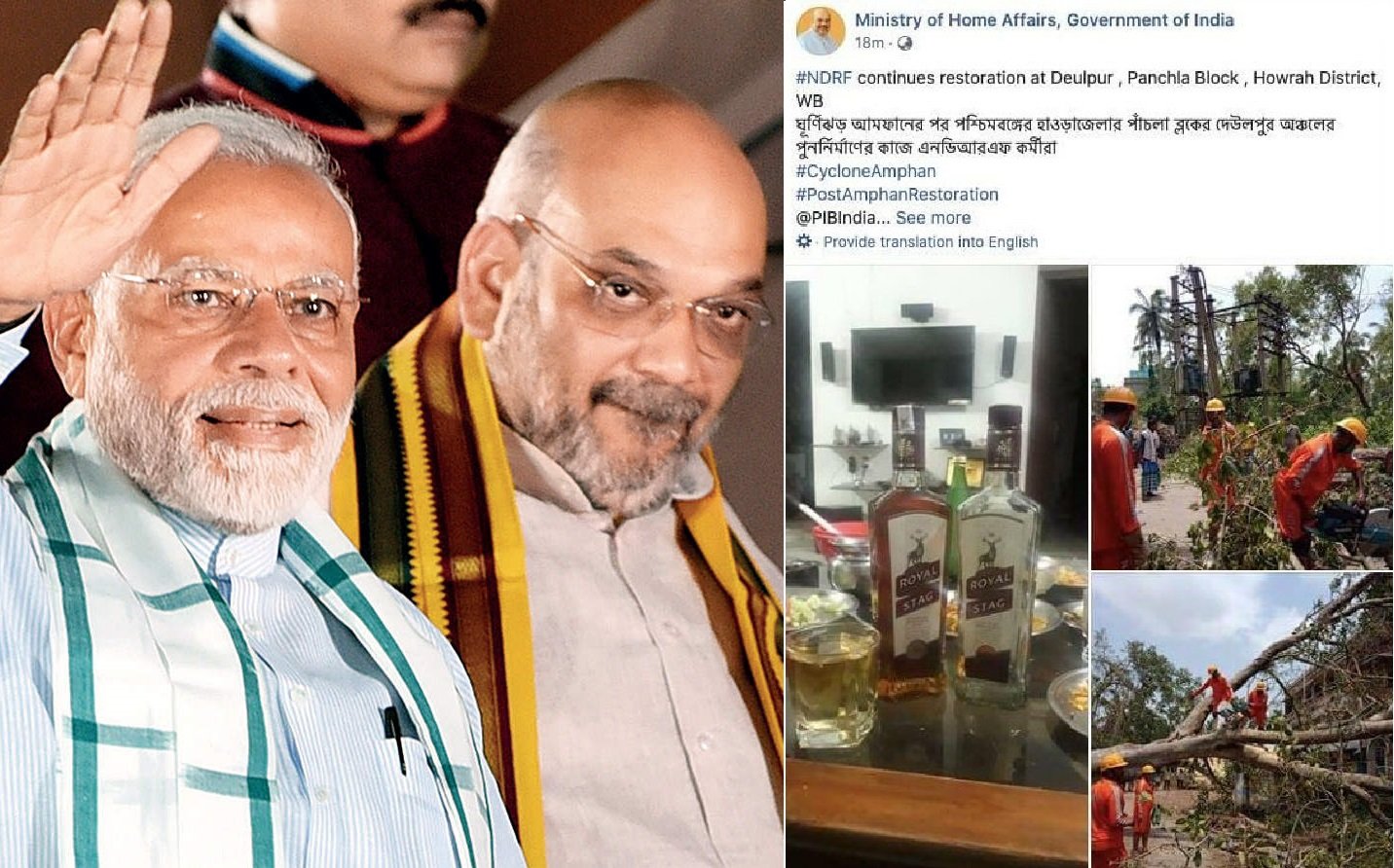
    There was panic in the Indian Ministry of Home Affairs (MHA) after efforts to advertise its relief operations in Cyclone Amphan-hit West Bengal, went awry.

    According to the details, the MHA had taken to Facebook to highlight the work that personnel of the National Disaster Response Force (NDRF), which falls under the ministry, were carrying out in the Trinamool Congress-governed West Bengal.

    However, with ‘work from home’ having its perils, one of the handlers of MHA’s social media accounts inadvertently posted images of two bottles of whiskey and snacks along with those of the rescue and relief work

    While the photos were posted on MHA’s official Facebook around 9 am and were taken off around 30 minutes later, screenshots of the post started doing rounds over social media. The post sparked exasperation and elation in equal measure as some were enraged by the “irresponsible behaviour” and others saw the funny side of the “accident”.

    The MHA refused to comment on who uploaded the picture but reports quoted officials as saying that the ministry was treating it as a case of human error that should not be shown out of proportion.  

    They added that although most officers were enraged at the “callousness”, many other civil servants laughed off the “disaster”.