Category: Health

The Current a variety of health and wellness blog post ideas, divided into key categories such as nutrition, fitness, mental health, and more.

  • Projection: August likely to be the worst month for Pakistan with one million coronavirus cases

    Projection: August likely to be the worst month for Pakistan with one million coronavirus cases

    The effects of poorly managed or no lockdowns at all are raising their ugly heads as Pakistanis has reached the 14th position in the global ranking of countries most affected by the new coronavirus — COVID-19 — with 165,062 cases, while it now ranks 6th among nations with the most number of active cases around the globe, as per Worldometers.

    The World Health Organization (WHO) earlier this year warned that South Asia could become yet another new epicenter of the pandemic, however, despite the warning and rapidly increasing number of coronavirus cases, Prime Minister (PM) Imran Khan has only announced the imposition of “smart lockdowns” with only certain areas in worst-hit cities being put under restrictions.

    The decision was taken keeping in view the consequent struggles of the poor, whom the government believes might not be able to survive a complete lockdown and its effects on the already deteriorating economic conditions.

    While experts, including Dr Attaur Rahman of PM’s task force, believe the government has already failed to deal with the pandemic and is grossly under-reporting both COVID-19 fatalities and infections, the virus is yet to peak — by the end of July or August –, data suggests.

    An analysis by The Current showed that before lockdown restrictions were eased in Pakistan ahead of Eidul Fitr, the highest number of confirmed coronavirus cases stood at 24,648 during the first week of May. The figure then crawled up to 122,574 by June 11, while the number of coronavirus cases as of this moment stands past 165,000 with thousands of cases being reported every day despite a low testing capacity.

    It is estimated that the actual number of infections is very high with Lahore alone having more than 2 million cases by now.

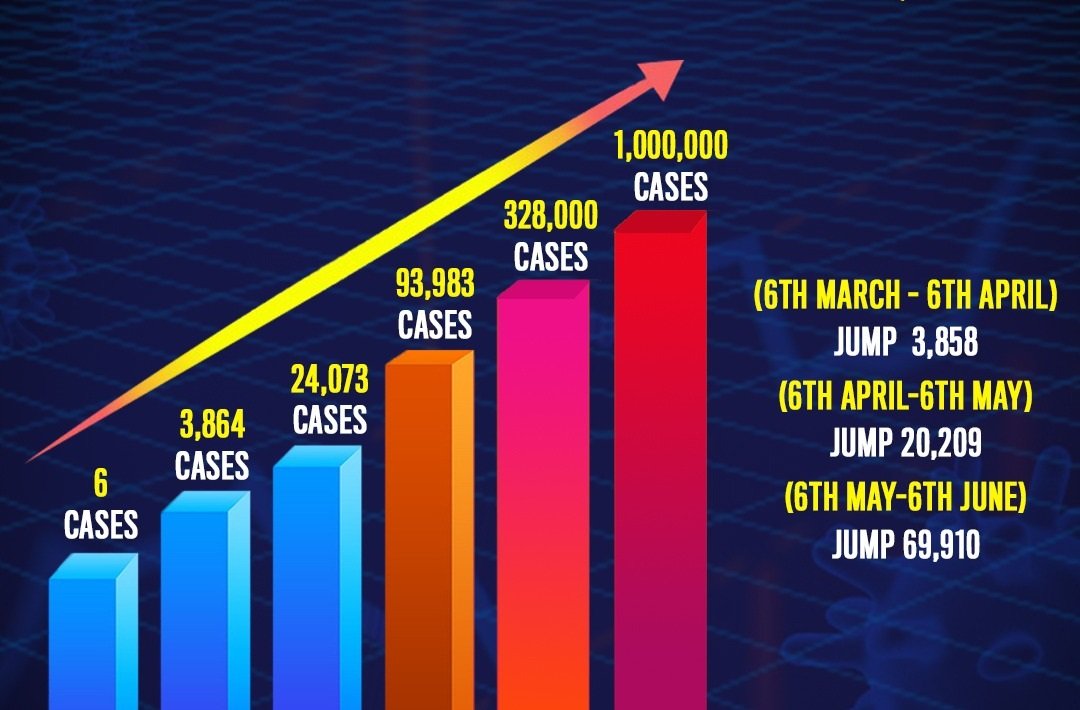
    Pakistan has experienced its largest month-wise jump since the pandemic began, with 69,910 cases being reported between May 6 to June 6. Earlier, 3,858 COVID-19 cases were recorded between March 6 and April 6 while 20,209 were reported between April 6 to May 6.
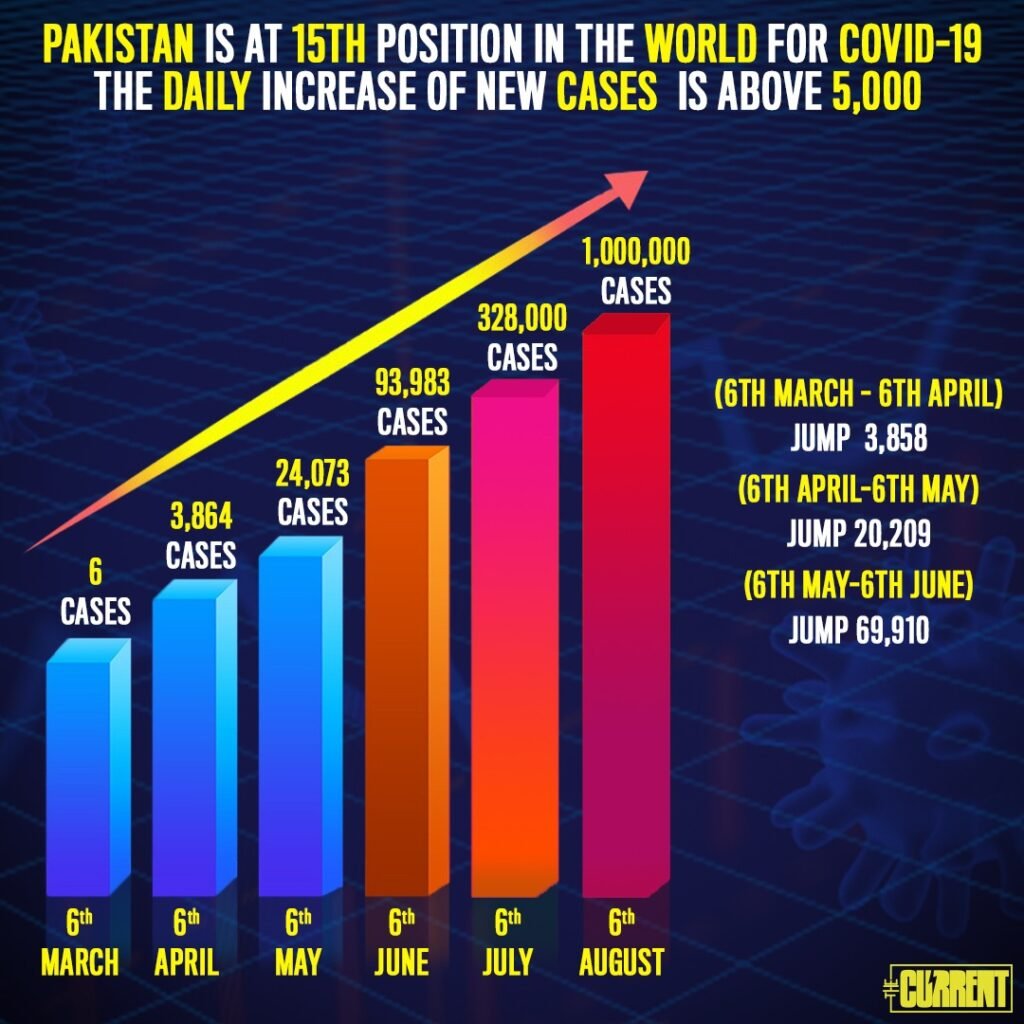
    According to projections, the figure is likely to reach a million by August 6 if strict lockdowns aren’t imposed and social distancing guidelines are not followed.

    A comparison with the best and worst managed lockdowns from across the globe also puts things into perspective.

    Country Outcome
      New Zealand
    Prime Minister Jacinda Ardern announced a strict lockdown on March 25 when 100 people had tested positive and no deaths had been reported.   After a 76-day lockdown, New Zealand lifted all restrictions, declaring the country ‘corona free’ but borders remain closed. No new case for more than two weeks has been reported in the country except three suspected ones.
    Wuhan
    The capital of Hubei province of China was the origin of the deadly virus, where 11 million residents were locked up at their homes since January. After an effective 77-day lockdown, Hubei reports zero COVID-19 infections and the country has reported zero coronavirus deaths since January.        

    On the other hand:

    Country Outcome
    India
    On March 25, India imposed a countrywide lockdown that was called a curfew by PM Narendra Modi. The development had come when 519 confirmed cases and 10 deaths had been reported across India.   A bit over two months later, with India easing lockdowns and shopping malls, restaurants as well as temples being re-opened, it has become the country with 4th highest number of coronavirus cases in the world.
    Iran
    Iran shut schools, postponed events and discouraged travel since the country reported its first COVID-19 death in February. Despite these measures, the number of deaths and infections continued to grow until a countrywide lockdown was imposed in March.   With the lockdown being eased from mid-April to May 26 when everything was reopened, including shopping malls, parks, religious shrines, restaurants and historical sites, the number of deaths has jumped to nearly 10,000 with over 200,000 infections.

    By the time this report was filed, Sindh topped the chart with most infections in Pakistan (62,269), with Punjab trailing behind at 61,678, Khyber Pakhtunkhwa (KP) at 20,182, Islamabad at 9,941, Balochistan 8,998 and Gilgit-Baltistan and Azad Jammu Kashmir (AJK) at 1,225 and 769 infections, respectively.
  • Sale banned as Punjab govt mulls using Actemra to treat COVID-19

    Sale banned as Punjab govt mulls using Actemra to treat COVID-19

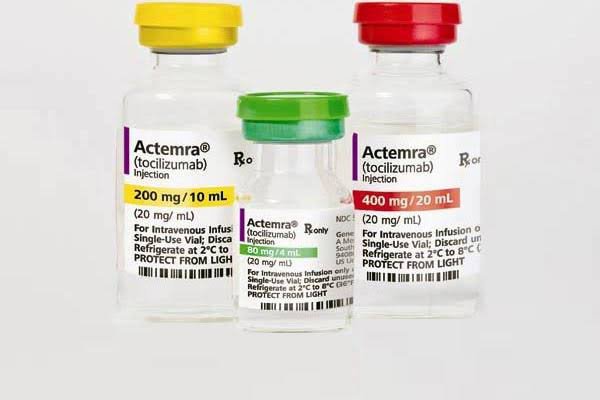
    The provincial authorities in Punjab have imposed a complete ban on the sale of Actemra injection in the open market as they mull treating critical COVID-19 patients with it.

    The Corona Experts Advisory Group has issued standard operating procedures (SOPs) with regard to the use of the Actemra injection.

    According to the SOPs, Actemra injection will be used on trial basis at some hospitals, initially for 500 critically ill patients admitted in ICUs.

    The experts advisory group will approve the hospitals that will treat patients with Actemra injection. The group will witness the trial of the injection in government hospitals.

    The Punjab Healthcare Commission will monitor the use of the injection at private hospitals and a committee of the hospital will approve the use of Actemra injection.

    A private company will issue this injection after approval of a specific profarma, sources said. The needy patients will be issued this injection 24 hours. The hospital and the company will keep the record of the use of injection.

    The data of recoveries and deaths after use of Actemra injection will also be compiled, sources said.

    The Punjab Healthcare Commission will be competent authority to audit the company and the hospital over usage of the injection. And this record will be submitted to the experts advisory group.

    The Punjab government has recently approved the use of Actemra, a life-saving drug, for treating critically ill Covid-19 patients in the wake of a sudden rise in the death rate reported by state-run hospitals across the province.

    The 400mg injectable drug — an interleukin-6 inhibitor which goes by the generic name of tocilizumab — will be prescribed to patients who develop lung complications and an abnormal level of IL-6 in the blood. The IL-6 is an endogenous chemical which causes inflammation.

    Actemra injections had reportedly given encouraging results in highly critical coronavirus patients.

  • Herd immunity against COVID-19: 3.7 million deaths projected at 2.11pc mortality rate in Pakistan

    With life in Pakistan returning to normalcy, it is feared that number of cases of the new coronavirus – COVID-19 — will increase further, wreaking havoc in the lives of the general public.

    Special Assistant to Prime Minister (SAPM) on Health Dr Zafar Mirza has also warned of the same while Minister for Science & Technology Fawad Chaudhry predicts that Pakistan is expected to see the peak of COVID-19 cases by mid-June.

    Meanwhile, epidemiologists are of the view that it is difficult to predict exactly when the virus will hit its peak in the country since there is always a risk of the number of infections escalating even after positive cases start declining.

    For a little perspective it may be noted that the United States (US) and Italy are the most-affected countries where the pandemic curve hiked and changed several times.

    Coronavirus hit its peak in the US between the 10th and 14th weeks since the first case was reported. More than 800,000 cases were reported during these weeks.

    Italy, on the other hand, witnessed a peak between the 6th and 10th weeks as more than 424,120 cases were reported.

    Pakistan entered its epidemic curve on April 29 (9th week) and the number of cases in Pakistan is still increasing as there is a possibility that the country might experience the peak after June 15.

    Pakistan may experience another curve later on because limited tests are being conducted as for now. According to experts, the country’s testing capacity should be between 40,000 to 50,000 at this point, while Pakistan is testing 7,000 to 13,000 people every day, which is not sufficient.

    Enter herd immunity, which opposition parties do not seem to be a huge fan of.

    Herd immunity is a form of indirect protection from infectious disease that occurs when a large percentage of a population has become immune to an infection, whether through vaccination or previous infections, thereby providing a measure of protection for individuals who are not immune.

    Here are some facts and consequences of herd immunity if the government goes on to consider it an option.

    Any population develops herd immunity when 40 per cent of the total number of people develop immunity against an infectious disease. In some cases, it can go up to 80 to 90 per cent of the total population.

    So, an important question is how much of the total population needs to get infected to develop herd immunity? So far, there is no evidence of herd immunity against coronavirus, as the Netherlands, which had planned to go for it and treat only critically ill patients, also stepped back from the said policy after a spike in mortality rate.

    According to predictions by some experts, it can take up to four or five years to develop herd immunity.

    To develop herd immunity in Pakistan, 176,000,000 people (80 per cent of the total population) have to get infected. This could cause 3,713,600 deaths as per the current 2.11 per cent mortality rate.

  • Wuhan officially bans eating wild animals

    Wuhan officially bans eating wild animals

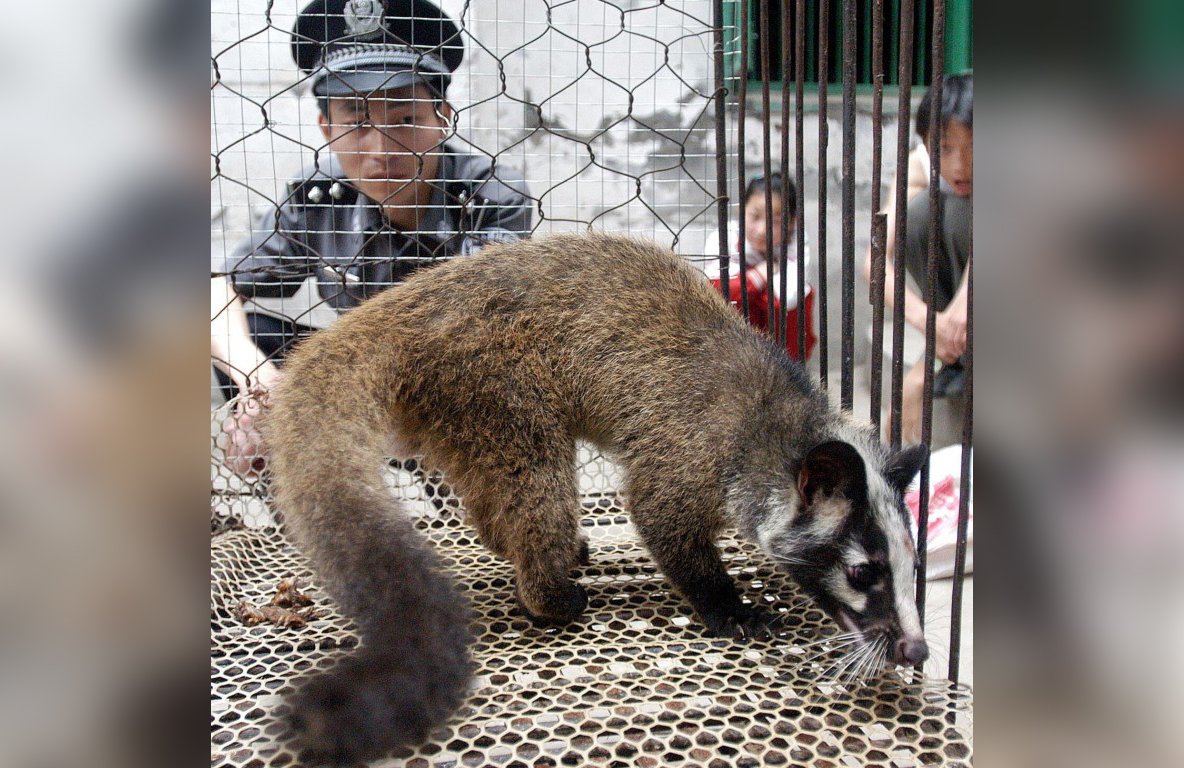
    The city at the centre of the coronavirus crisis — Wuhan — has banned the eating of wild animals and Chinese farmers are being offered cash to quit breeding exotic animals. Both moves come amid mounting pressure for China to crack down on the illegal wildlife trade blamed by many for the pandemic that has killed more than 330,000 people and left over 5 million infected.

    The local administration in Wuhan, the city of about 11 million people in China’s central Hubei province where cases of the new coronavirus were first recorded late last year, announced that the eating of all wild animals was officially banned.

    The city also banned virtually all hunting of wild animals within its limits, declaring Wuhan “a wildlife sanctuary,” with the exception of government-sanctioned hunting for “scientific research, population regulation, monitoring of epidemic diseases and other special circumstances”.

    Wuhan also imposed strict new controls on the breeding of all wild animals, making it clear that none could be reared as food. City officials said the local administration would take part in the wider national scheme to buy wild animal breeders out.

    The national plan is the first time Chinese authorities have pledged to buy out breeders in an attempt to curb exotic animal breeding, animal rights activists say.

    China had already banned the sale of wild animals for food as the new coronavirus — COVID-19 — spread around the world, citing the risk of diseases spreading to humans, but the trade remains legal for other purposes, including research and traditional medicine.

    The virus that causes COVID-19 is widely believed to have passed from bats to people, possibly via another species, before spreading worldwide.

  • Pakistani pharmaceutical company to manufacture Remdesivir, only drug approved to treat coronavirus

    Pakistani pharmaceutical company to manufacture Remdesivir, only drug approved to treat coronavirus

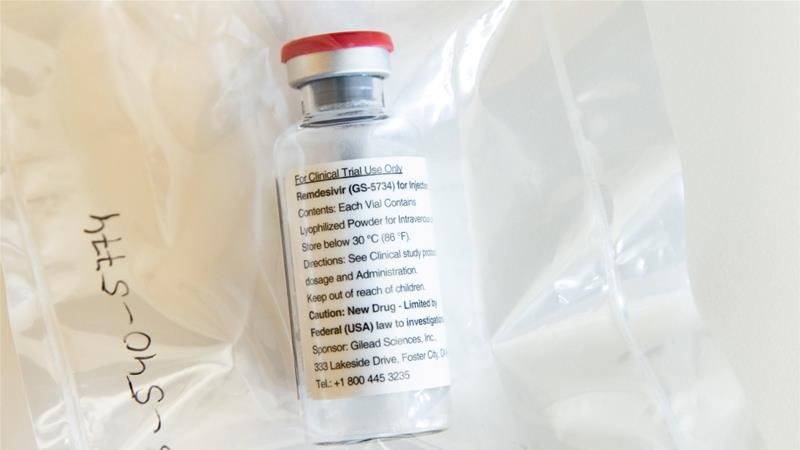
    A local Pakistani company will manufacture Remdesivir, an international drug being used to treat coronavirus patients, in less than two months, Special Assistant to Prime Minister (SAPM) on Health Dr Zafar Mirza announced as five companies in the world were granted the license to manufacture the medicine.

    “American company Gilead has manufactured this drug and it has proven effective in treating coronavirus patients,” he said during a press conference. “It is said that the use of the drug has reduced the intensity of the virus by 30%.”

    “Among the five companies [granted the license to manufacture the drug] one of them is a Pakistani company,” he said, referring to it as a “breakthrough news”.

    He said that the medicine will be available for COVID-19 patients in Pakistan after it is registered within six to eight weeks and manufactured in the country.

    “It will not only be available for patients in Pakistan but the plan is to export this drug to 127 countries,” he said. “Pakistan will be among three countries in the world to produce and export this to 127 countries. This is a big breakthrough and this is big news for coronavirus patients in Pakistan, who are increasing by the day and are expected to increase more.”

    Ferozsons Laboratories Limited CEO Osman Khalid Waheed said that it would be the company’s aim to sell the drug at the least cost, The News reported.

    Adviser to the PM for Commerce, Textile and Investment Abdul Razzak Dawood said that it was a proud moment for Pakistan and the country’s pharmaceutical industry that a Pakistani company had been made the licensee of the coronavirus drug.

    He said that it was the government’s aim to diversify exports and that included pharmaceuticals. “It is not only good news for the people of Pakistan but for countries around the world.”

    ‘FREE CORONAVIRUS VACCINE’:

    Meanwhile, PM Imran Khan has joined the more than 140 signatories of a letter saying any vaccine for COVID-19 should not be patented and the science should be shared among nations.

    The World Health Assembly, the policy-setting body of the UN’s World Health Organisation (WHO), holds its annual general meeting next week.

    The signatories, which include incumbent and former world leaders, called on the World Health Assembly (WHA) to rally behind the cause.

    “Governments and international partners must unite around a global guarantee which ensures that, when a safe and effective vaccine is developed, it is produced rapidly at scale and made available for all people, in all countries, free of charge,” the letter said.

    “The same applies to all treatments, diagnostics, and other technologies for COVID-19.”

    The letter was signed by Senegalese President Macky Sall and Ghanaian President Nana Akufo-Addo. Former presidents and premiers among the signatories included Shaukat Aziz, Jan Peter Balkenende, Jose Manuel Barroso, Gordon Brown, Helen Clark, Felipe Gonzalez, Ellen Johnson Sirleaf, Aleksander Kwasniewski, Mary McAleese, Olusegun Obasanjo and Juan Manuel Santos.

    The letter comes amid fury in France after French pharmaceutical giant Sanofi said it would reserve the first shipments of any COVID-19 vaccine for the United States (US).

    The multinational’s chief executive Paul Hudson said the US would get first dibs because its government was helping to fund the vaccine research, drawing outrage from officials and health experts.

    The letter ahead of the WHA said it was not the time to leave the task of resolving the pandemic to market forces or let the interests of wealthy companies and governments come before the need to save lives.

  • Israel makes ‘significant breakthrough’ as it develops protein that can overcome coronavirus

    Israel makes ‘significant breakthrough’ as it develops protein that can overcome coronavirus

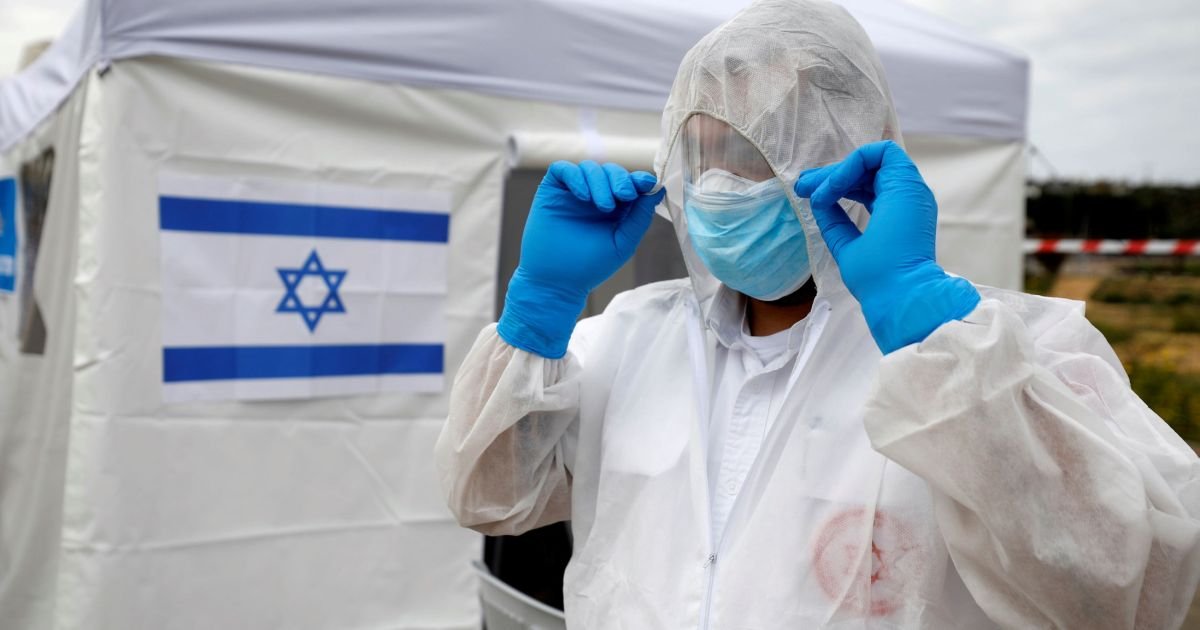
    Israel has isolated a key coronavirus antibody at its main biological research laboratory, the Israeli defence minister said on Monday, calling the step a “significant breakthrough” toward a possible treatment for the COVID-19 pandemic.

    The “monoclonal neutralising antibody” developed at the Israel Institute for Biological Research (IIBR) “can neutralise the disease-causing coronavirus inside carriers’ bodies,” Defence Minister Naftali Bennett said in a statement.

    The statement added that Bennett visited the IIBR on Monday where he was briefed “on a significant breakthrough in finding an antidote for the coronavirus”.

    It quoted IIBR Director Shmuel Shapira as saying that the antibody formula was being patented, after which an international manufacturer would be sought to mass-produce it.

    The IIBR has been leading Israeli efforts to develop a treatment and vaccine for the coronavirus, including the testing of blood from those who recovered from COVID-19, the respiratory disease caused by the virus.

    Antibodies in such samples — immune-system proteins that are residues of successfully overcoming the coronavirus — are widely seen as a key to developing a possible cure.

    The antibody reported as having been isolated at the IIBR is monoclonal, meaning it was derived from a single recovered cell and is thus potentially of more potent value in yielding a treatment.

    Elsewhere, there have been coronavirus treatments developed from antibodies that are polyclonal, or derived from two or more cells of different ancestry, the magazine Science Direct reported in its May issue.

    Israel was one of the first countries to close its borders and impose increasingly stringent restrictions on movement to hamper the domestic coronavirus outbreak. It has reported 16,246 cases and 235 deaths from the illness.

  • Over 700 dead after consuming poison to cure COVID-19

    Over 700 dead after consuming poison to cure COVID-19

    More than 700 people have died after ingesting toxic methanol, thinking it can cure the new coronavirus — COVID-19.

    According to Al Jazeera, the incident took place in Iran where the national coroner’s authority says that alcohol poisoning has killed 728 Iranians between February 20 and April 7 amid the coronavirus outbreak as compared to last year’s 66 fatalities from the same.

    An adviser to the Iranian Health Ministry, Hossein Hassanian, said that the difference in death tallies is because some alcohol poisoning victims died outside of hospital.

    Some 200 people died outside of hospitals, Hassanian was quoted as saying.

    Iran is facing the worst coronavirus outbreak in the Middle East with 5,806 deaths and more than 91,000 confirmed case.

    Methanol cannot be smelled or tasted in drinks. It causes delayed organ and brain damage. Symptoms include chest pain, nausea, hyperventilation, blindness and even coma.

    In Iran, the government mandates that manufacturers of toxic methanol add an artificial color to their products so the public can tell it apart from ethanol, the kind of alcohol that can be used in cleaning wounds. Ethanol is found in alcoholic beverages, though its production is illegal in Iran.

    READ: Britain, France, Germany bypass US sanctions to send medical aid to virus-hit Iran

    Some bootleggers in Iran use methanol, adding a splash of bleach to mask the added color before selling it as drinkable. Methanol also can contaminate traditionally fermented alcohol.

    The consumption of alcohol is generally prohibited in Iran. However, minority Christians, Jews and Zoroastrians can drink alcoholic beverages in private.

    Following the coronavirus outbreak, Iran’s government announced it would issue permission for new alcohol factories quickly.

    Iran has currently some 40 alcohol factory that have been allocated for pharmaceutical and sanitising items.

    The report comes days after United States (US) President Donald Trump raised the possibility of injecting disinfectant into patients, causing an international uproar with manufacturers, doctors and government agencies rushing out warnings against consuming disinfectants like bleach.

  • 21 cops on Sunday, 92 health professionals in two days test positive for coronavirus

    21 cops on Sunday, 92 health professionals in two days test positive for coronavirus

    At least 21 Punjab Police officials on Sunday and 92 health professionals within the last two days have tested positive for the new coronavirus. The sudden spike in the number of health professionals contracting the virus has increased the national tally of infected doctors, nurses, paramedics and support staff to 345.

    As per the details of the infected cops, additional inspector general (AIG) operations has said that over 60 police personnel were tested for the virus, out of which 21 tested positive. One of the cops was deployed at the Central Police Office (CPO) whereas the results of many others are awaited.

    While cops dealing with masses are at a greater risk to contract COVID-19 and incidents of them falling sick have been reported from various parts of the country, health professionals remain on the frontline in the battle against the global pandemic.

    According to a Ministry of National Health Services, Regulation and Coordination official, the number of health professionals contracting the virus increased to 345 from 253 after new cases were detected among the medical community.

    The official said that doctors are the most-affected among healthcare professionals with over 165 of them now undergoing treatment across the country. As many as 131 members of paramedical and support staff, as well as 41 nurses, have also contracted the virus.

    Apart from the confirmed cases, more than 1,500 doctors, nurses, paramedics and those with whom they came into contact, are in quarantine. Many are waiting for their test results after coming into contact with health professionals who have already tested positive, the official said.

    They added that most of the cases of coronavirus among health professionals had been reported in Balochistan, Khyber Pakhtunkhwa (KP) and Punjab, while a few cases had also been reported in Sindh and the federal capital.

  • Much-awaited coronavirus drug ‘fails in first trial’

    Much-awaited coronavirus drug ‘fails in first trial’

    A potential antiviral drug for the coronavirus has reportedly failed in its first randomised clinical trial, Financial Times reported.

    According to reports, there had been widespread hope that remdesivir could treat the new coronavirus — COVID-19 — that has left at least 191,000 people dead and 2.7 million infected across the globe.

    But a Chinese trial showed that the drug had not been successful, according to draft documents accidentally published by the World Health Organization (WHO).

    The drug did not improve patients’ condition or reduce the pathogen’s presence in the bloodstream, it said.

    Researchers studied 237 patients, giving the drug to 158 and comparing their progress with the remaining 79. The drug also showed significant side effects in some, which meant 18 patients were taken off it.

    Interest in the drug, had been high as there are currently no approved treatments or preventive vaccines for COVID-19, and doctors are desperate for anything that might alter the course of the disease that attacks the lungs and can shut down other organs in extremely severe cases.

    The United States (US) firm behind the drug, Gilead Sciences, is testing it in multiple trials, and highly anticipated trial results from a study involving 400 patients hospitalised with severe cases of the illness are expected later this month.

    It says the WHO documents mischaracterised the study.

    Remdesivir, which previously failed as a treatment for Ebola, is being tried against COVID-19 because it is designed to disable the mechanism by which certain viruses, including the new coronavirus, make copies of themselves and potentially overwhelm their host’s immune system.

  • Broken seals at Wuhan lab holding 1,500 different strains of virus, including bat coronavirus

    Broken seals at Wuhan lab holding 1,500 different strains of virus, including bat coronavirus

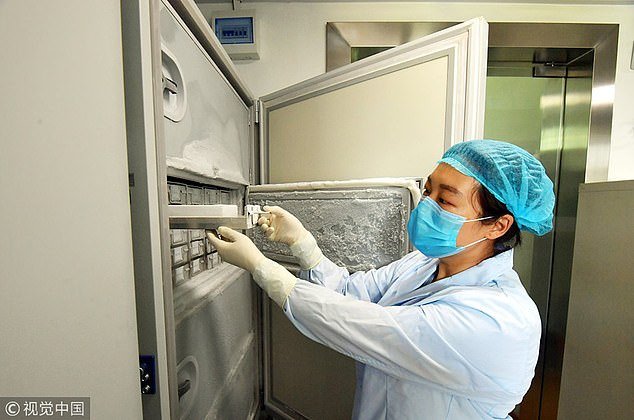
    In a rare glimpse inside a Chinese laboratory in Wuhan amid global suspicions about the COVID-19 pandemic, scenes from the “secretive” Institute of Virology have sent shockwaves over the internet.

    According to Mail Online, pictures from inside the laboratory show a broken seal on the door of one of the refrigerators used to hold 1,500 different strains of virus, including the bat coronavirus that has jumped to humans with over 2.4 million infections and over 165,000 deaths since the first case in November last year.

    The pictures, first released by a state-owned Chinese newspaper in 2018, were also published on Twitter last month, before being deleted.

    Meanwhile, according to New York Post, the director of the lab denies that the bug accidentally spread from his facility.

    “There’s no way this virus came from us,” Yuan Zhiming, director of the Wuhan Institute of Virology, told state media.

    Yuan admitted that the lab is studying “different areas related to the coronavirus,” but told the English-language state broadcaster CGTN that none of his staff has been infected.

    “As people who carry out viral studies we clearly know what kind of research is going on at the institute and how the institute manages viruses and samples,” he said.

    He said that since the lab is in Wuhan “people can’t help but make associations”, but claimed that some media outlets are “deliberately trying to mislead people”.

    But officials in the past have raised concerns over the safety conditions of the Wuhan Institute of Virology.

    In March 2018, US science diplomats dispatched to the lab issued two “sensitive” diplomatic cables about inadequate safety measures at the lab, the Washington Post reported, citing intelligence sources.

    The first cable warned the experiments conducted in the lab on coronavirus in bats “represented a risk of a new SARS-like pandemic,” according to the report.

    The cable, written by two US-China embassy officials, said there is a “serious shortage of appropriately trained technicians and investigators needed to safely operate this high-containment laboratory,” according to the report.