Category: Lifestyle

The lifestyle of millennials is underreported in our mainstream media. The Current’s lifestyle news covers social events and issues that are unique.

  • Why is Lahore more polluted than Delhi?

    Why is Lahore more polluted than Delhi?

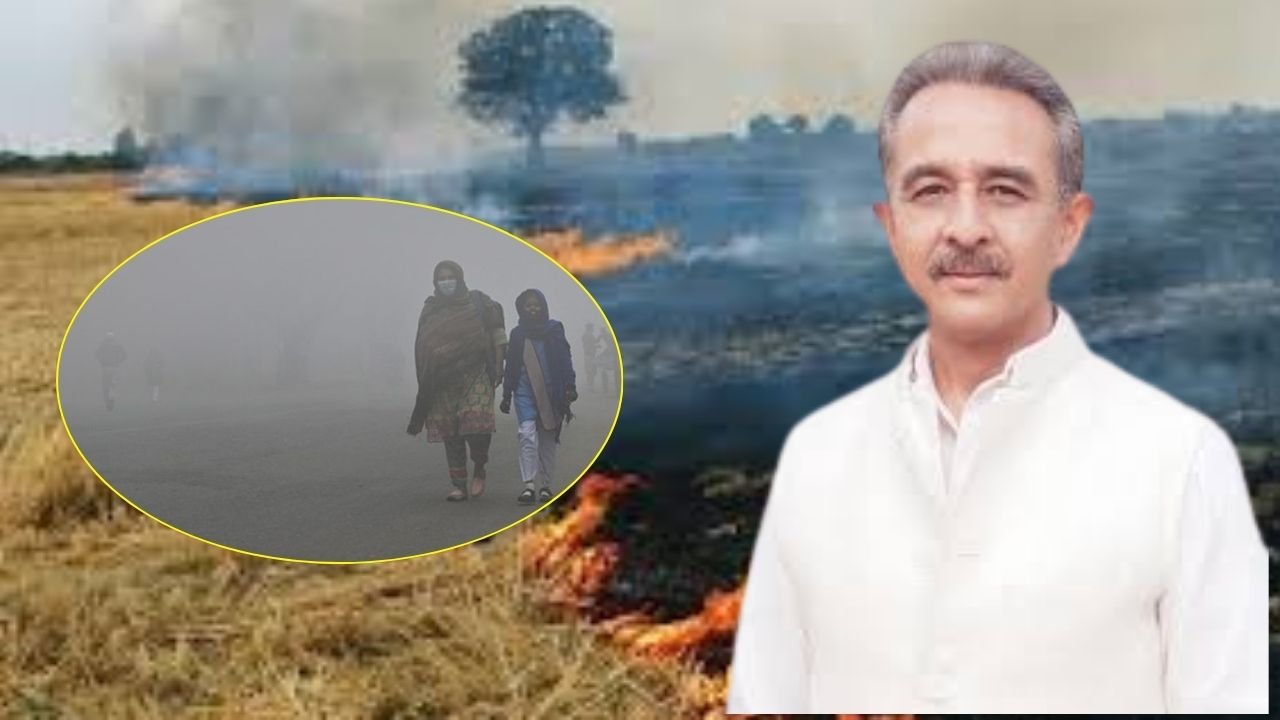
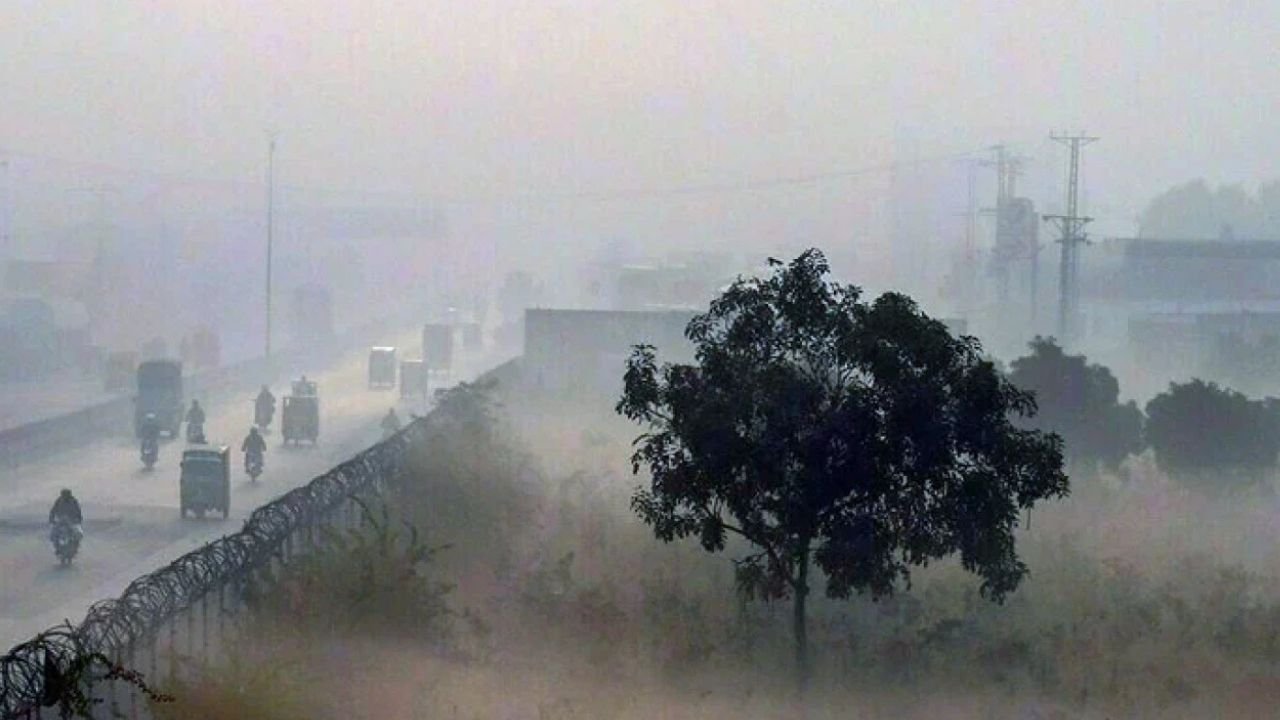
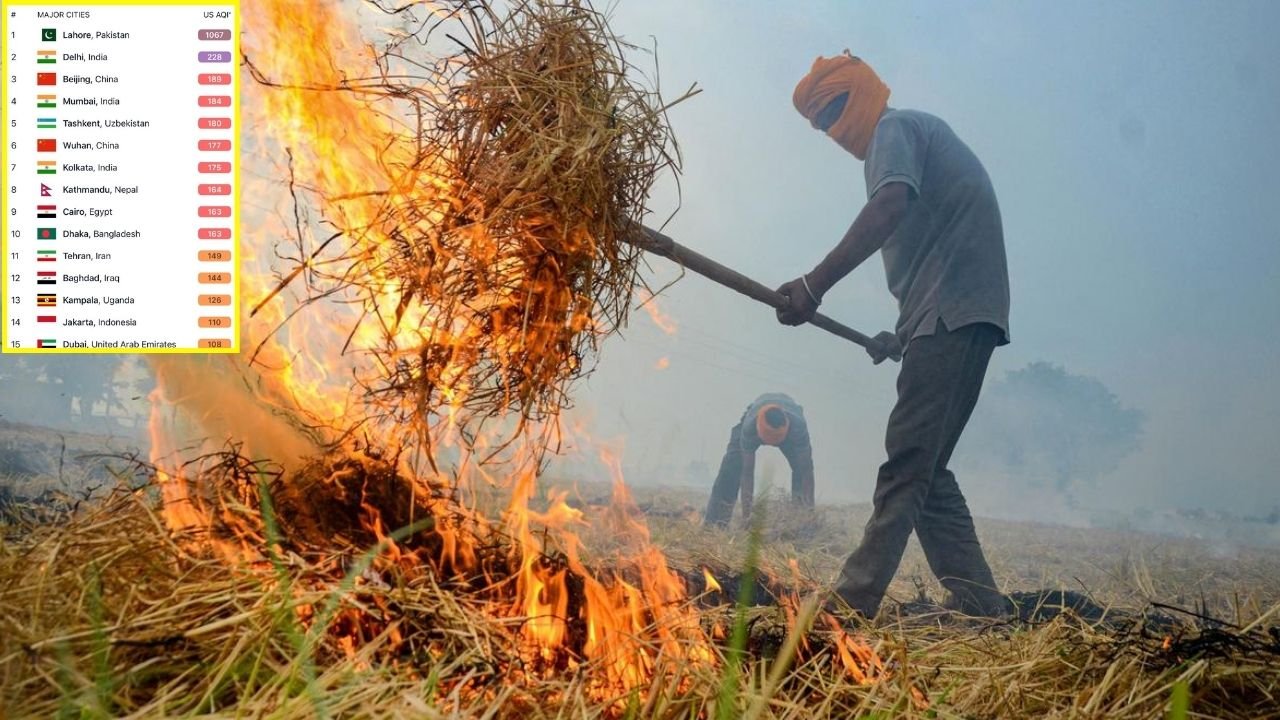
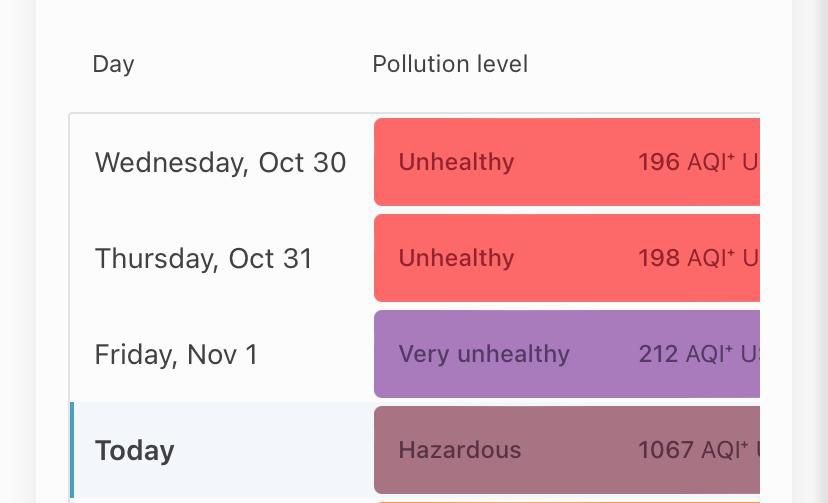
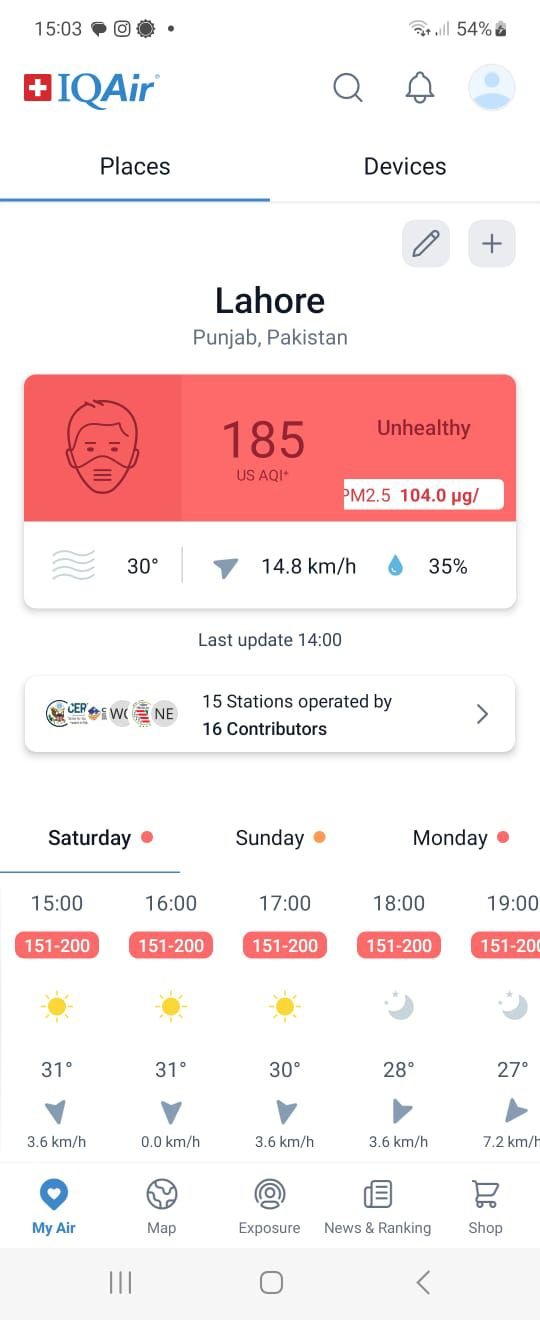
    Smog levels in Lahore have surged to dangerous levels, with the Air Quality Index (AQI) reaching a staggering 1,067 early in the day. In comparison, Delhi, which is second on the list, has an AQI of 228, significantly lower than Lahore.

    The visibility limit in Lahore has also reached zero.

    The Current reached out to Senior Minister Marriyum Aurangzeb, who is leading the mission to combat smog. She claimed that the sudden surge in smog levels is the consequence of the change in wind direction, which has caused smog levels to decrease in Delhi while surging in Lahore.

    The meteorological department had “warned the citizens that the intensity of smog will continue in Lahore for the next 48 hours,” she quoted in an official statement.

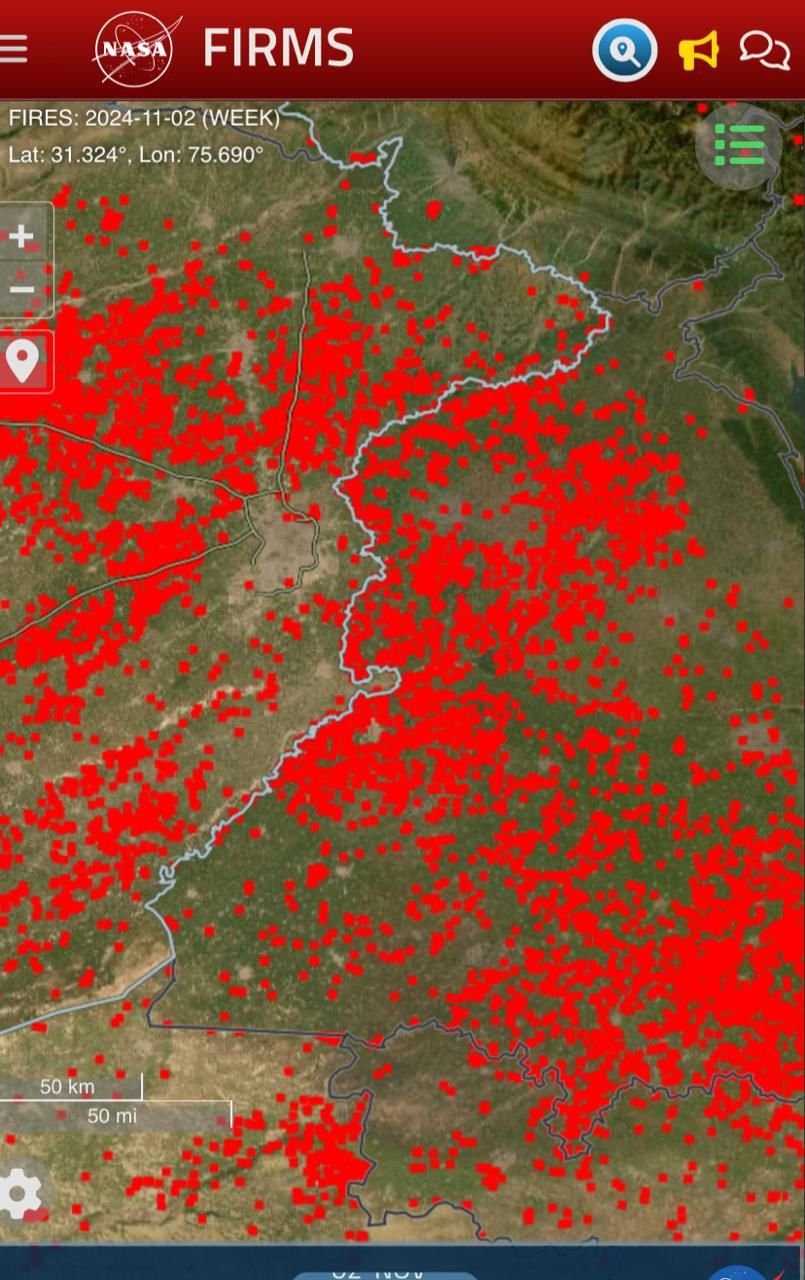
    The minister further backed her claims by acknowledging that “NASA has released an aerial image of smog from large-scale burning of crop residues in Indian regions.”
    The air pollution level in Lahore was previously at 157 as a result of the change in wind direction, but over the last five days, it has risen to an unprecedented level, as mentioned in her press release.

    The high-speed winds from India also brought smoke into Pakistani areas, regarding which Marriyam Aurangzeb appealed to citizens not to leave their homes unnecessarily.
    She also mentioned that the wind is slowly shifting to the south, which will improve air quality in the provincial capital.

    The Current reached out to the Secretary of the Environment Department of Punjab, Raja Jahangir, who described at length the steps taken by the government so far and the situation on the ground.

    The sudden surge of smog in Lahore can be attributed to the “Eastern Wind Corridor” and some local practices.

    “The cropping mechanism, agricultural practices, mindset and behaviour of the farmers from both India and Pakistan are same. They burn the stubble after the harvesting of rice,” Jahangir elaborated.

    “The thermal scanning of NASA’s satellite is the proof which shows both sides of the border red,” he said.

    According to Jahangir, this change in pattern had been previously predicted. However, it was intensified by the Diwali celebrations, which involved the widespread use of fireworks. The wind has now shifted to the south, affecting air quality in Muridke and nearby areas.

    “This will give Lahore a breathing space,” he added.
    And while the wind pattern is worsening the smog, some of the local factors can not be ignored.

    “Lahore is a city of 15 million, with 4.5 million bikes and 1.3 million cars on roads. There are 6,800 industrial units because it is the fastest growing city in the country and has the most construction sites, as well as more than 1,200 brick kilns,” Jahangir highlighted.

    For a city spread over 1,757 square kilometres, the green cover is not enough.

    “Ideally, it needs to be more than 30 per cent, but unfortunately, it is not more than four per cent,” he said, further that the smoke emitted from harvesting of 6.6 million of rice given a boost by air pressure is disturbing the air of Lahore while it doesn’t have enough to combat.

    “Ideally, it needs to be more than 30 per cent, but unfortunately, it is not above four per cent,” he said, adding that the smoke emitted from the harvesting of 6.6 million tons of rice, combined with air pressure, is contributing to the air pollution in Lahore, which lacks sufficient resources to combat it.

    What has the government done so far?

    Raja Jahangir emphasised that while smog has been a regular phenomenon in winter for the past 7-8 years, it has always been managed by the environment department. This time, however, the government has engaged multiple sectors, including transport, health, agriculture, and safe city projects, adopting a “whole government approach.”

    The smog mitigation plan is a product of this new strategy, supervised by Senior Minister Marriyum Aurangzeb.

    Jahangir also asserted that phenomena like smog do not have a “quick fix.”

    He noted that the government had demolished 600 brick kilns that were not using zig-zag technology and closed down industries emitting high carbon. Furthermore, smoking-emitting vehicles have been impounded while media awareness campaigns have been conducted.

    The agriculture department, on the other hand, has given incentives to farmers to use super seeders in efforts to encourage environment-friendly practices, while contracts have been signed with international companies that will convert the crop residue into biofuel and activate the Vehicle Inspection and Certification System. This will test the fitness of vehicles and ensure a zero-tolerance system.

    The goal is also to transition public transport, such as buses and trains, to electric, provide electric bikes to students, and convert gasoline vehicles to electric on a large scale.

    Additional steps also include a plantation drive across the province to restore green cover.

    Jahangir further mentioned the “Green Lockdown,” the latest initiative by the Punjab government, under which restrictions will be imposed on identified smog hotspots to create green zones in these areas.

    In these zones, construction is banned, and inspections are being conducted to stop the use of diesel in generators and offices, whereas to reduce traffic, work-from-home is encouraged. Meanwhile, water sprinkling is being carried out to reduce smoke in the air, along with changes to parking areas around the city.

    “It is a long battle, and this can’t be sorted in one day. For this, we have to change our practices, and everyone has to contribute to it,” the Environment Secretary asserted.

    He also believes that the ultimate solution is “climate diplomacy.”

    When asked about the Pakistan Air Quality Experts Group (PAQx)’s collective statement criticising the Punjab government’s Smog Mitigation Plan as “lacking to deal with the scale of the challenge,” Jahangir concluded that, for the first time, “Rs. 10 billion has been allocated to combat smog, with projects worth over Rs. 100 billion budgeted in the current development budget of the province.”

    “This is not the end of the story; rather, we have just begun,” he said.

  • Supreme Court verdict giving first wife right to annul marriage declared un-Islamic

    Supreme Court verdict giving first wife right to annul marriage declared un-Islamic

    The Islamic Ideology Council has declared the Supreme Court’s verdict of granting first wives the right to terminate their marriage upon the husband’s second marriage without their permission be against Sharia.

    In a landmark verdict, the Supreme Court had decided to give the first wife the right to terminate the marriage if her husband marries for the second time without her permission.

    On October 23, the top court’s three-member bench headed by Justice Mansoor Ali Shah announced the decision in an 18-page ruling which stated that the first wife can terminate the marriage contract if her husband undertakes a second marriage without her consent.

    Chairman of the Islamic Ideological Council Raghib Naimi said in a statement that there is no prohibition in Sharia on a man’s second, third or fourth marriage. He explained further that the decision to give the first wife the right to terminate the marriage if her husband remarries without her permission is illegal, and according to the constitution, no law can conflict with the rulings in Islam as described in the Qur’an and Sunnah.

    He asserted that the decision of the Supreme Court needs to be respected but added, “We have the right to give an opinion on it based on the rulings of Sharia.”

    However, the recent decision of the Supreme Court, according to Mufti Raghib Usmani, aligns with the “land of law” but contradicts Sharia principles.
    He announced that the Council of Islamic Ideology will include a discussion of the Supreme Court’s ruling in its upcoming meeting agenda.

  • Government just made it easier for you to get a passport

    Government just made it easier for you to get a passport

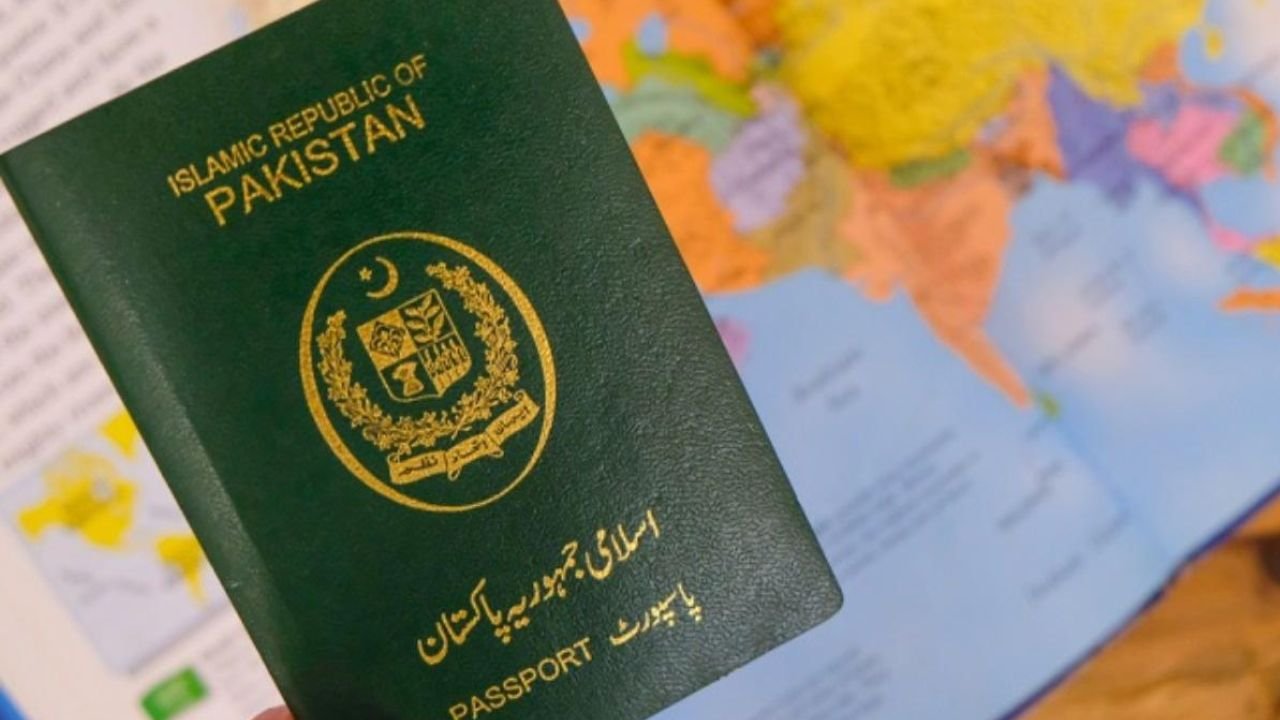
    The passport department has amended the rules governing the issuance of passports as citizens will now be able to get their passport made from any city across the country regardless of the address mentioned in their computerised national identity card (CNIC).

    The letter of amendment has been sent to regional offices.

    Directorate General (DG) of Immigration and Passports Mustafa Jamal Qazi told Geo News that the decision by the federal government was made in light of the increasing issues faced by the citizens due to these restrictions.

    As per the official statement, passport applications will not be refused if citizens’ residential address on CNIC is different from the area they are applying for the travel document.

    Furthermore, the backlog of passports for people travelling across the country is expected to be cleared soon which will make the process even smoother.

    10 advanced printing machines imported from outside the country have been included in the passport machinery and the installation is underway.

    Express Tribune sources say that these machines will be fully operational within the next few days.

    However, it is expected that this will double the printing capacity of passport office and reduce the waiting time for citizens applying for passports.

    Earlier, in August this year long delays in the issuance of passports created inconvenience for the applicants.

    The Passport and Immigration Department had confirmed that it failed to deliver passports to over 500,000 individuals on time, despite collecting millions of rupees in fees.

    Minister for Law and Justice Azam Nazeer Tarar informed the National Assembly that the issue would be resolved by the end of September after the installation of new machinery and software as this gap between demand and supply is the reason of the delay.

    The department, however, attributed the delays to a sudden increase in the number of Pakistanis seeking to travel abroad due to the plummeting economy of the country.

    Notably, Passport Office recieves 40,000 to 50,000 applications daily but, even at full capacity it can only print 20,000 to 22,000 passports per day.
    As a result, more than 500,000 people across the country are waiting for their passports despite having paid fee.

    Those opting for the fast-track passport service-costing between Rs 20,000 and Rs 27,000-are receiving their passports within a week.

    The passport office has expressed optimism about the installation of the new system as it will increase the daily capacity for issuing passports from 26,000 to 60,000.

  • ‘Climate does not recognise boundaries’; India’s state minister calls for South Asia alliance to tackle smog

    ‘Climate does not recognise boundaries’; India’s state minister calls for South Asia alliance to tackle smog

    India’s Minister of State for Environment, Forest, and Climate Change, Kirti Vardhan Singh, recently talked to a Pakistani platform, The Citizenry, where he emphasised the need for an “inclusive” approach to combat smog that has plagued both India and Pakistan since the start of October.

    COP 16 is taking place in Cali, Colombia. It is the 16th Conference of the Parties (COP) to the United Nations Convention on Biological Diversity. Today is the last day of the convention.

    The convention seeks to “protect 30% of the planet, including terrestrial, marine and freshwater areas, transforming them into protected areas by the end of this decade. In addition, the framework emphasizes the restoration and protection of critical ecosystems, such as rainforests and wetlands.”

    However, one of the delegates and the state minister of environment from India, while talking to the media, called for reviving the SAARC Malé Declaration on Control and Prevention of Air Pollution as he submitted its updated National Biodiversity Strategy and Action Plan (NBSAP) at the UN biodiversity conference (COP16) in Cali, Colombia.

    Singh emphasised the importance of regional cooperation in combating ever-rising air pollution in the Punjab region on both sides of the border, particularly in metropolitan centres like New Delhi and Lahore, where the Air Quality Index has soared to hazardous levels.

    While talking to the media at the conference in the Blue Zone, an area designated for negotiations and dialogues between member countries, he responded to a question asked by the Citizenry’s Oonib Azam by saying, “Since climate change does not recognise any national or political boundaries, we need an inclusive and collective approach that involves all governments.”

    Reportedly, India became the second SAARC country, after Afghanistan, to submit its update. India’s NBSAP included achievements such as “planting 98 million trees” and “efforts to conserve and restore India’s coastline”.

    However, Pakistan’s representation was limited to a single official delegate, Naeem Ashraf Raja, director of the Biodiversity Programme at the Ministry of Climate Change, who did not submit the biodiversity plan on the country’s behalf.

    The Indian minister also highlighted his country’s readiness to assist neighbouring countries in updating their NBSAPs that include knowledge, capacity building and infrastructure support.

    Additionally, he said that biodiversity conservation “must be integrated into broader, environmental and developmental strategies to combat climate change, reduce land degradation and promote sustainable livelihood”.

    Singh stressed the importance of a two-pronged approach to address regional air pollution and explained his side of the story by describing that there is a need for alternative solutions for farmers and, secondly, a strong legal framework within the country.

    “If issues such as pollution are not addressed, there can be no ‘Peace with Nature,’” he said, alluding to the COP16 theme.

    Earlier on October 30, Chief Minister Punjab Maryam Nawaz spoke at a Diwali ceremony, during which she hinted at writing a letter to the Chief Minister of Indian Punjab on the issue of smog.

    “We need to have diplomacy with India regarding the issue of smog in Lahore. I’m thinking of writing a letter to the Punjab Chief Minister [Bhagwant Mann] in India that this is not just a political issue, this is a humanitarian issue,” CM said while addressing the ceremony in Lahore, adding that if Pakistan makes this move, India should reciprocate.

    She even pointed out, “The winds don’t know there’s a border in the middle,” referencing the popular narrative of winds from India beginning pollutants to Lahore.

    “Until both Punjabs come together, we won’t be able to tackle the issue of smog,” she asserted.

    Effective from yesterday, the Punjab government has also imposed a “green lockdown” in Lahore, under which restrictions will be imposed on identified smog hotspots.

    The announcement was made in light of increasing pollution levels in the provincial capital, which continues to rank at the top of the world’s worst air quality index.

    Notably, the Pakistan Air Quality Experts Group (PAQx), comprising leading air quality experts, researchers, doctors and scientists, has issued a collective statement on the Punjab government’s “Smog Mitigation Plan”, criticising the measures taken by the provincial government as “lacking to deal with the scale of the challenge”.

  • Special children in Lahore get smog holidays

    Special children in Lahore get smog holidays

    Holidays have been announced from November 1 to January 31, 2025 for special children in Lahore.

    A notification issued by the Punjab government states that special children have been stopped from coming to school and the government has decided to give them leaves from November 1 to January 31, 2025.

    Special Assistant to Chief Minister Punjab Maryam Nawaz for Special Education Sania Ashiq issued the notification in which she stated that on the instructions of Chief Minister Punjab, special children will be given leave from schools as reports suggest that those suffering from broncho-vascular, cardiovascular and immunodeficiency diseases specially get affected by the smog in the environment.

    Sania Ashiq stated that special children of all government and private institutes will be given leave under the Punjab Environment Act 1997. She asserted that the purpose of this leave is to protect them from diseases because health experts have declared the atmosphere of Lahore as dangerous for them.

    Soaring environmental pollution is increasing the chances of developing chest diseases, throat diseases, respiratory diseases, colds, coughs, allergies and others are high among special children.

    The Punjab government has already imposed a “green lockdown” in Lahore which will take affect from today and under this the restrictions will be imposed on identified smog hotspots.

  • Pakistan air quality experts dismiss Punjab govt’s smog plan as ‘insufficient’

    Pakistan air quality experts dismiss Punjab govt’s smog plan as ‘insufficient’

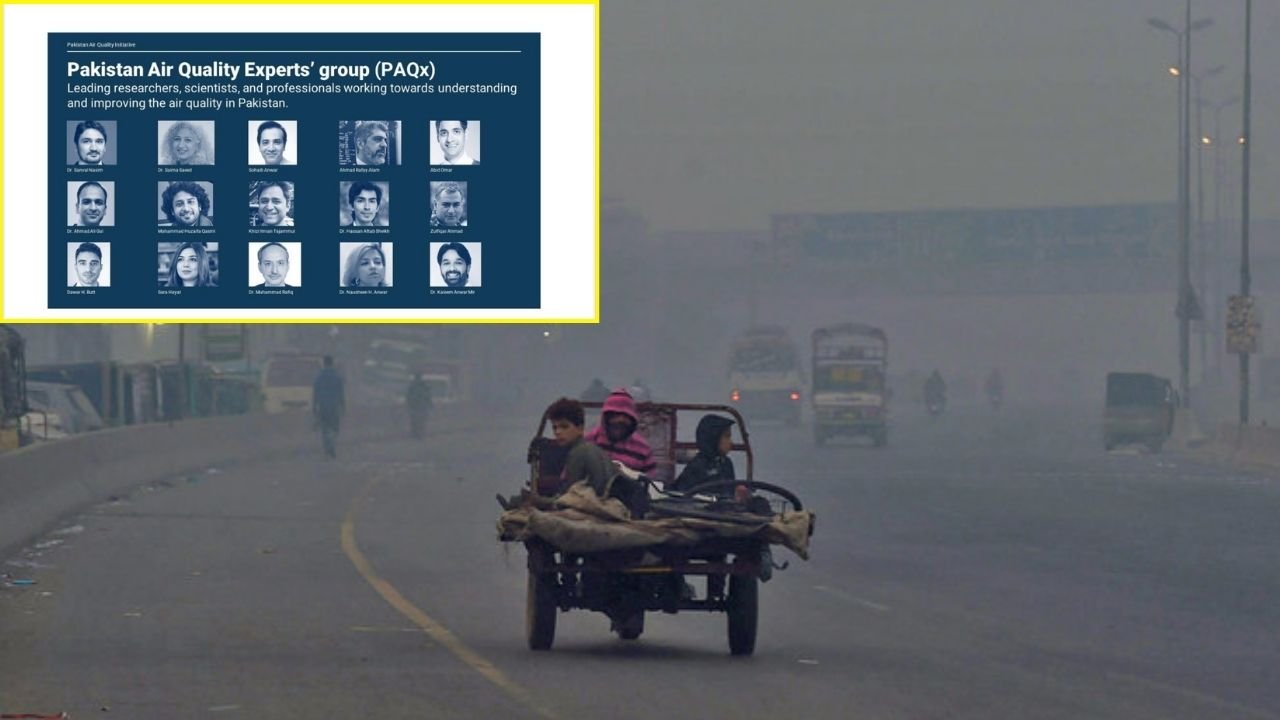
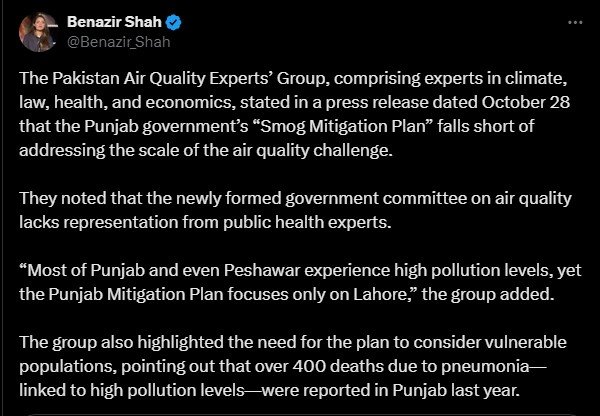
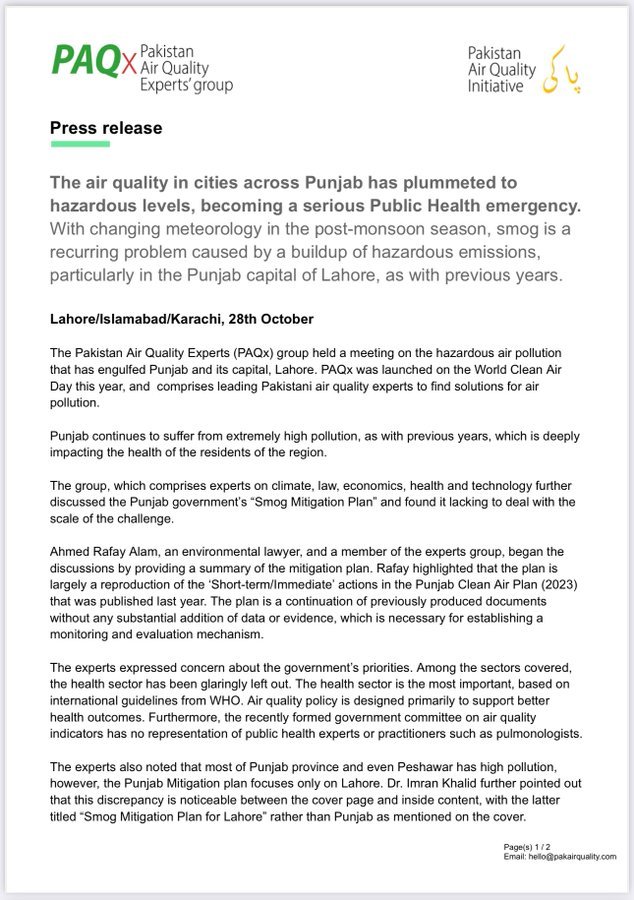
    Pakistan Air Quality Experts Group (PAQx) has issued a collective statement on the Punjab government’s “Smog Mitigation Plan”, criticising the measures taken by the provincial government as “lacking to deal with the scale of the challenge”.

    The provincial government has been on toes with Lahore continuing to rank as the most polluted city in the world. The government has so far changed school timings. Chief Minister Maryam Nawaz has pledged to initiate smog diplomacy with India, and most recently, a green lockdown has been imposed in the provincial capital.

    Amid all this, the statement by PAQx, which includes all leading air quality experts, researchers, doctors and scientists, is of paramount importance as journalist Benazir Shah, while sharing the statement, also pointed out that “the newly formed government committee on air quality lacks representation from public health experts”.

    “Most of Punjab and even Peshawar experience high pollution levels, yet the Punjab Mitigation Plan focuses only on Lahore,” she said while quoting the group’s statement that came from Lahore, Islamabad and Karachi chapters of the organisation.

    “Punjab continues to suffer from extremely high pollution, as with previous year, which is deeply impacting the health of the residents of the region,” the statement added.

    Group member Ahmed Rafay Alam, who is an environmental lawyer, stated that the “plan is largely a reproduction of the ‘short/immediate’ actions in the Punjab Clean Air plan (2023)”.

    Another expert, Dr Imran Khalid, highlighted a discrepancy in the plan. “While it mentions Punjab on the cover, its contents are titled as ‘Smog Mitigation Plan for Lahore’.”

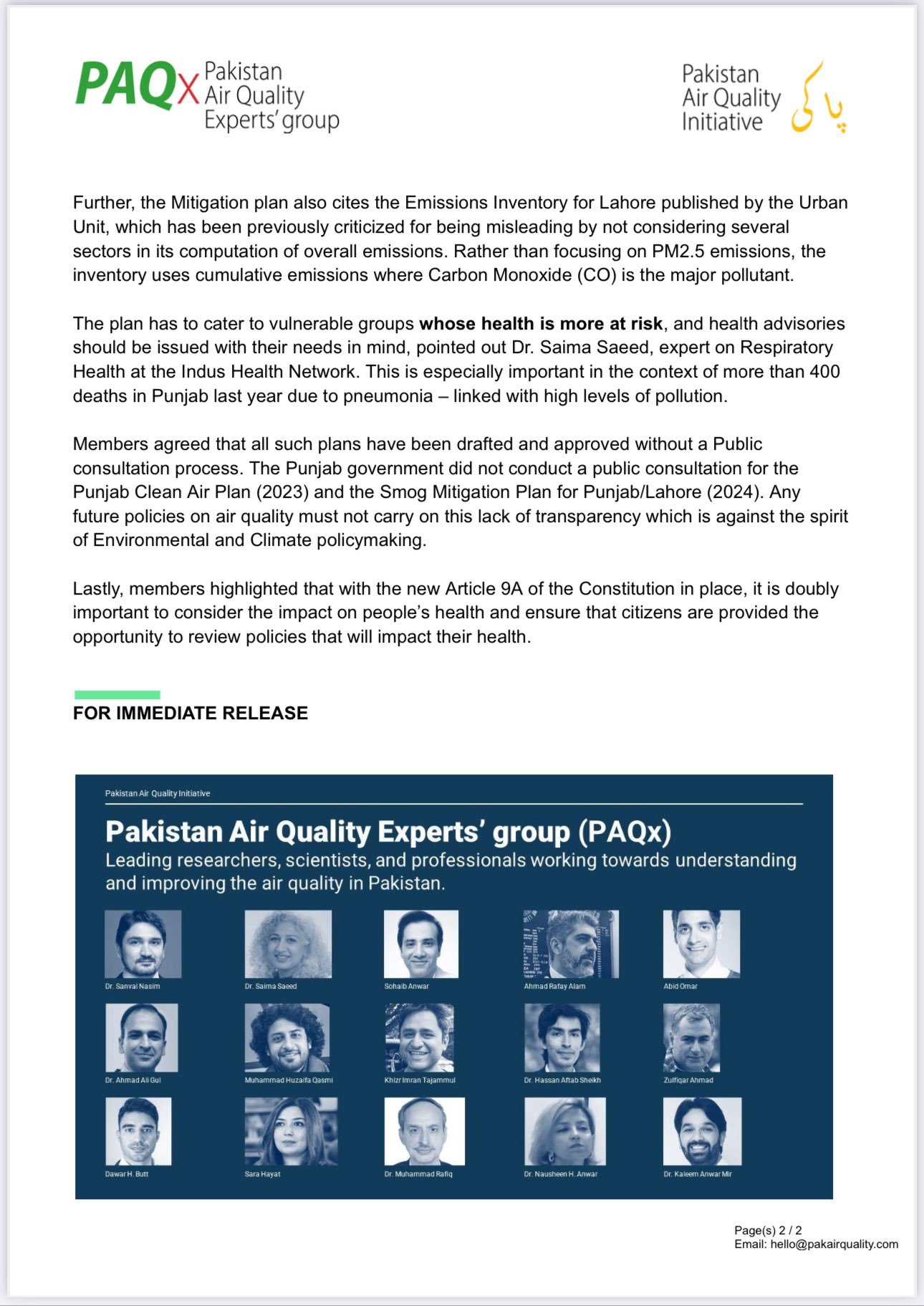
    The statement further said that the mitigation plan cites a much-criticised emission inventory, focusing on carbon monoxide as a major pollutant rather than PM 2.5 emissions, which is “misleading.”

    Respiratory health expert Dr Saima Saeed emphasised that the plan lacked guidelines for “the vulnerable groups whose health is more at risk” as Punjab reported over 400 deaths due to pneumonia last year.

    Additionally, the group highlighted that environmental and climate policymaking could be implemented by ensuring participation from all sectors and ensuring transparency.

    “With the new article 9A of the constitution in place, it is doubly important to consider the impact on people’s health and ensure that citizens are provided the opportunity to review policies that will impact their health,” it declared.

    Meanwhile, Punjab Chief Minister Maryam Nawaz has imposed a “green lockdown” in Lahore, under which restrictions will be imposed on identified smog hotspots.

    Key areas affected by the lockdown include Davis Road, Egerton Road, Durand Road, and Kashmir Road. Additionally, Shimla Pahari to Gulshan Cinema, Abbott Road, and Empress Road have also been declared as high-pollution zones.

    Queen Mary Road and its surrounding areas are similarly marked as affected zones.

  • Punjab govt announces green lockdown in Lahore to tackle smog

    Punjab govt announces green lockdown in Lahore to tackle smog

    The Punjab government has imposed a “green lockdown” in Lahore, under which restrictions will be imposed on identified smog hotspots.

    The restrictions in designated areas will include barring barbecue joints and marriage halls from operating, while motorcycles and rickshaws will be prohibited.

    The government made the announcement in light of increasing pollution levels in the provincial capital, which continues to rank at the top of the world’s worst air quality index.

    Senior provincial minister Marriyum Aurangzeb, speaking in the Punjab Assembly, announced that 11 areas in Lahore have been identified as smog hotspots, with the Shimla Pahari area being the most affected.

    She affirmed that the “green lockdown” would be imposed starting Thursday (today).

    The director general of the Punjab Environmental Protection Agency, Dr Imran Hamid Sheikh, issued the green lockdown notification.

    Smog hotspots

    Dawn reports that smog hotspots include major roads of the city such as Davis Road, Egerton Road, Durand Road, Kashmir Road, Abbott Road, starting from Shimla Hill to Gulistan Cinema, Empress Road, starting from Shimla Hill to Railway Headquarters, and Queen Mary Road, starting from Durand Road to Allama Iqbal Road.

    Details of green lockdown

    The details of the green lockdown delineate that all construction activities within a one-kilometre radius of Shimla Hill are totally banned. Besides this, the use of commercial generators, Qingqi motorcycle rickshaws and barbecue activities are restricted after 8 pm.

    Food points using charcoal, coal or wood without a proper system of controlling carbon emissions are required to stop functioning right away.

    The Punjab government has directed marquees and marriage halls to close by 10 pm.

    Lahore Waste Management Company (LWMC) is ordered to conduct wept sweeping to reduce dust in the environment.

    To tackle the traffic jams on roads, encroachments will be removed.

    Moreover, half of office employees at workplaces are informed that they can work from home.

    Green Ring

    Marriyum Aurangzeb revealed that the government is planning to establish a “green ring” around the provincial capital using modern technology as part of the Lahore Green Master Plan.

    This will create a “wall of trees” to reduce emissions and increase oxygen levels.

    She further said every tree would be geo-tagged. To increase the number of trees in industrial areas, the Punjab government will collaborate with industries to expand tree plantations.

    The educational institutions and students will be encouraged to participate in “Green Force” during the smog season.

    Crackdown on environmental violations

    In light of the government’s crackdown on environmental violations, two factories were sealed, and fines of Rs 200,000 were imposed, a senior minister told the Punjab Assembly.

    Furthermore, three brick kilns and four plastic melting plants were demolished, and several food outlets in the Model Town area were sealed due to excessive pollutant emissions.

    Sand-carrying trolleys are advised to use covers now to reduce dust on the roads. 296 vehicles have been fined, a total amount of Rs592,000, and 102 cars were taken into police custody.

    Electric buses

    The Punjab government has also decided to introduce 30 electric buses and e-bikes in Lahore to control the pollution further.

    Punjab Safe Cities Authority is also directed to issue daily e-challans to vehicles emitting smoke and strict action against individuals involved in the burning of waste.

    Previously, Chief Minister (CM) Punjab Maryam Nawaz spoke at a Diwali ceremony earlier today, during which she hinted at writing a letter to the Chief Minister of Indian Punjab on the issue of smog.

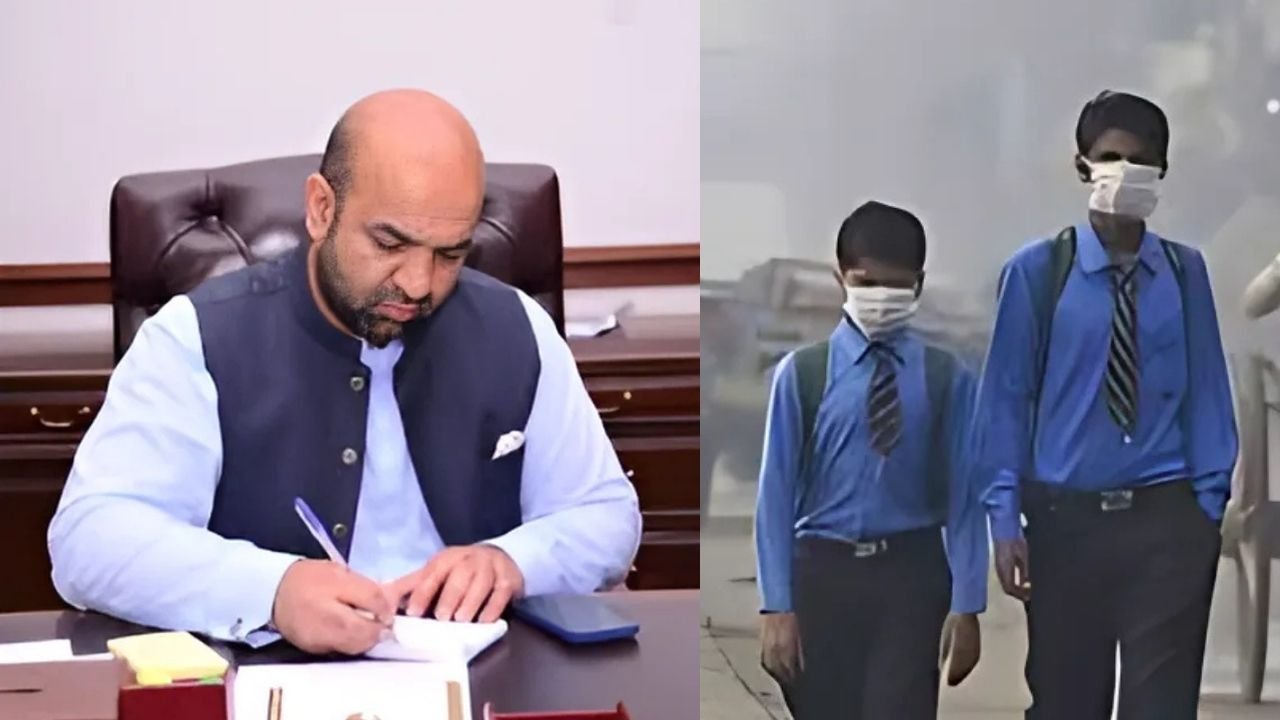
  • Punjab education minister’s wife has a problem with smog school timings, and we agree

    Punjab education minister’s wife has a problem with smog school timings, and we agree

    As new school timings amid smog add to the already heavy traffic load on the roads of Lahore, the wife of Punjab Education Minister Rana Sikandar Hayat, like all of us, also has an issue.

    All public and private sector schools in the provincial capital have been told to push their opening time to 8:45 am or later in view of the hazardous air quality in major parts of the city. The instructions from the government were issued on a health advisory by the environment department in view of smog engulfing major parts of the city, especially during the wee hours. This, however, has led to a further load on the city’s roads due to a clash between school and office timings.

    “Every year, smog cum fog is more intense earlier in the day. So, to beat that, we thought of opening schools one hour later,” Hayat said during an exclusive interview with The Current.

    When asked about the traffic situation the new arrangement has led to, the minister said, “That’s what my wife was saying this morning.”

    “The thing is that last week so many children in schools were getting sick [because of smog] with flu, early morning, so the environment department and the weather department consider [consulted] and decided to extend the school timings by an hour,” the minister reasoned, adding he agreed that office timings should also be altered to avoid all the rush and trouble.

    To a question about the relation between flu and changed timings, the minister said, “Yes, the reason behind this has been conveyed to us […] early in the morning, smog situation is worse, and as the sun comes out, it gets better.”

    The exclusive interview with the provincial education minister is set to be released on The Current’s YouTube channel this Sunday, November 3.

    On Tuesday, a private media outlet has also quoted Hayat as indicating that schools might be shut down altogether if the smog situation worsens any further.

    “The situation of pollution is getting worse, and for the elimination of smog, the government as well as the people will have to play their role,” the minister reportedly said as the provincial capital yet again becomes the most polluted city in the world.

    Meanwhile, authorities have implemented several measures aimed at combating the situation. Prominent steps include making it mandatory for citizens to wear masks. While around 2,500 vehicles with faulty engines or excessive emissions have been grounded, the government has also sealed 469 factories and demolished a number of brick kilns.

    According to reports, 318 FIRs have also been registered against those burning crop residues.

    Read more: Maryam Nawaz hints at starting smog diplomacy with India

  • Sindh High Court orders MDCAT retake across province

    Sindh High Court orders MDCAT retake across province

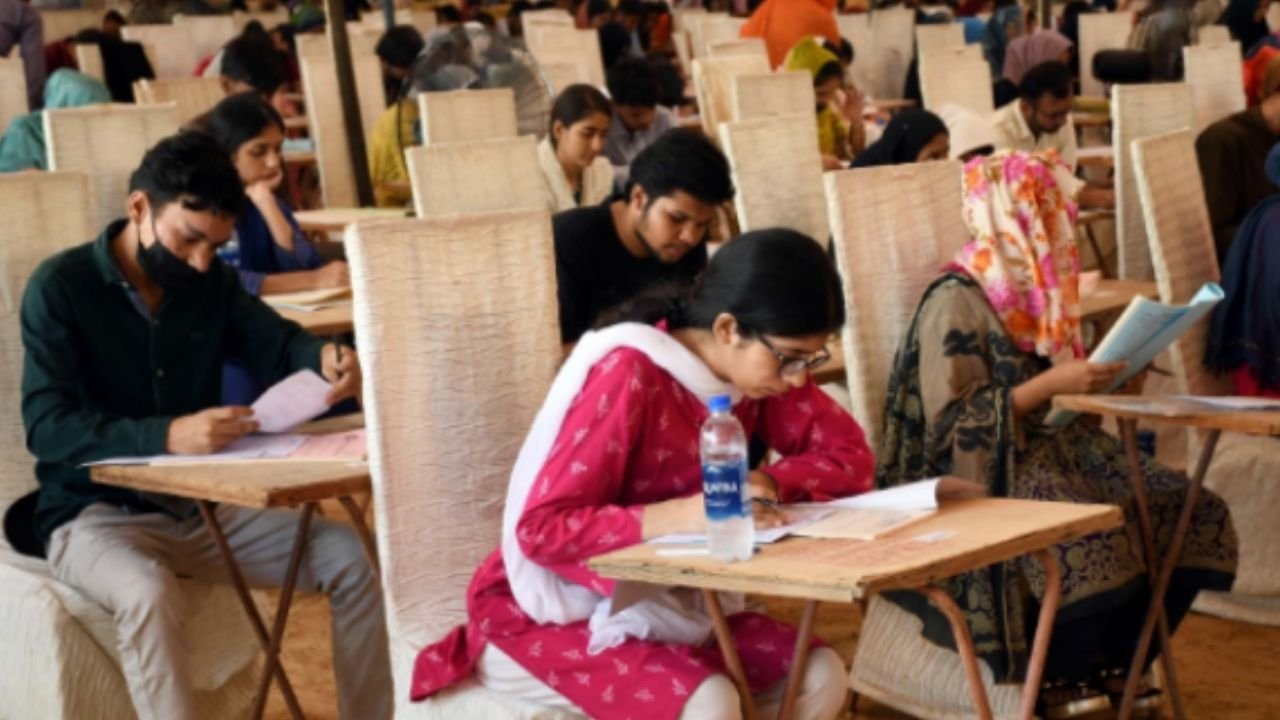
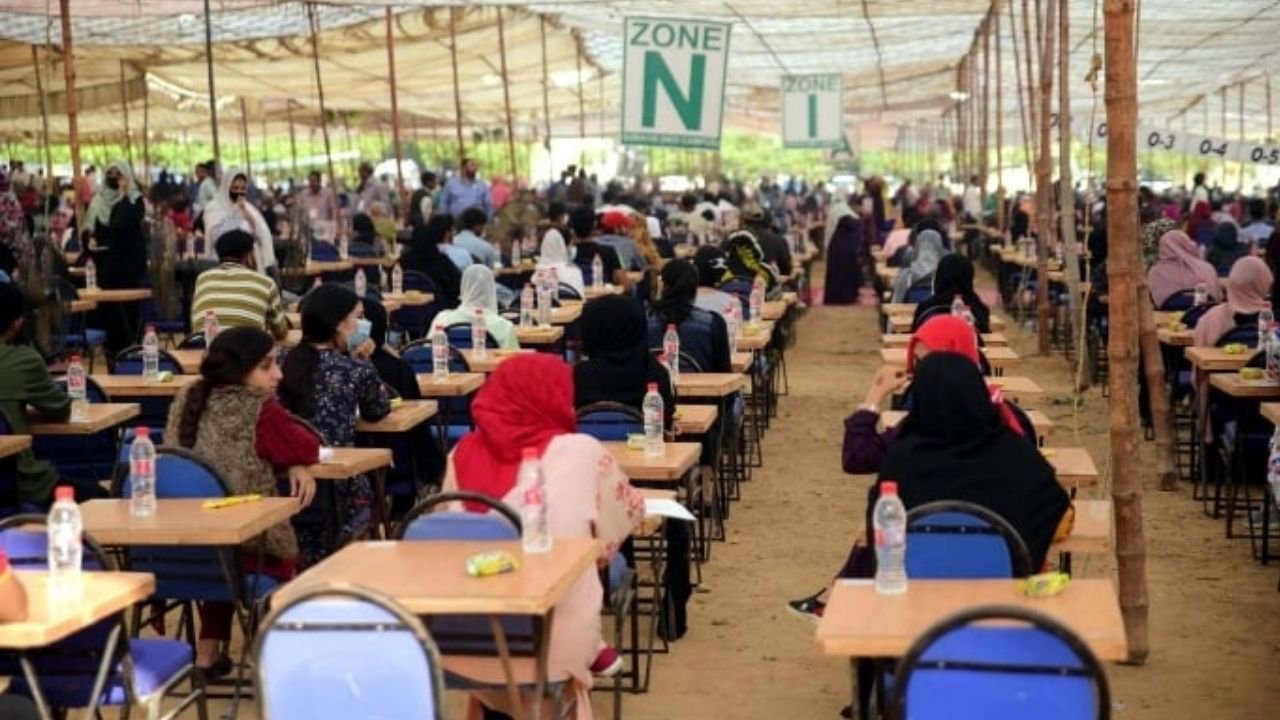
    The Sindh High Court has ordered the conduct of the Medical and Dental College Admission Test (MDCAT) in four weeks for admissions in government medical and dental colleges.

    The court ordered a retake after petitions were filed against alleged irregularities in MDCAT.

    The court, while recalling that a committee had been formed on the previous hearing, asked, “Did they [the committee] do any work, or did they sleep at home?”

    The committee chairperson, Shireen Nareju, submitted the report to the court, according to which there was no irregularity in the system.

    Nareju also stated that some students had contacted the committee, contending against the retaking of MDCAT, statements of which were included in the report.

    The Sindh High Court, however, noted that flaws in the examination system were pointed out during the investigation, indicating the system has been compromised at various levels.

    The report stated that about 42 people have been involved in the examination system.

    The court asked Shireen if the paper was leaked, considering that the mechanism had been compromised, to which she claimed that answer keys and questions circulated on WhatsApp.

    The Sindh High Court, therefore, ruled that the MDCAT test should be retaken in one month.

    Read more: MDCAT trends on X as students get swamped with problems

  • Punjab police wants domestic violence to become a non-bailable offence

    Punjab police wants domestic violence to become a non-bailable offence

    Punjab police has proposed to make domestic violence a non-bailable offence.

    Suggested amendments in the Punjab Protection of Women against the Violence Act (PPWVA-2016) include a Rs 1 million fine for the perpetrators and declaring it as a non-bailable offence to ensure the support and protection of women’s rights against violence across Punjab.

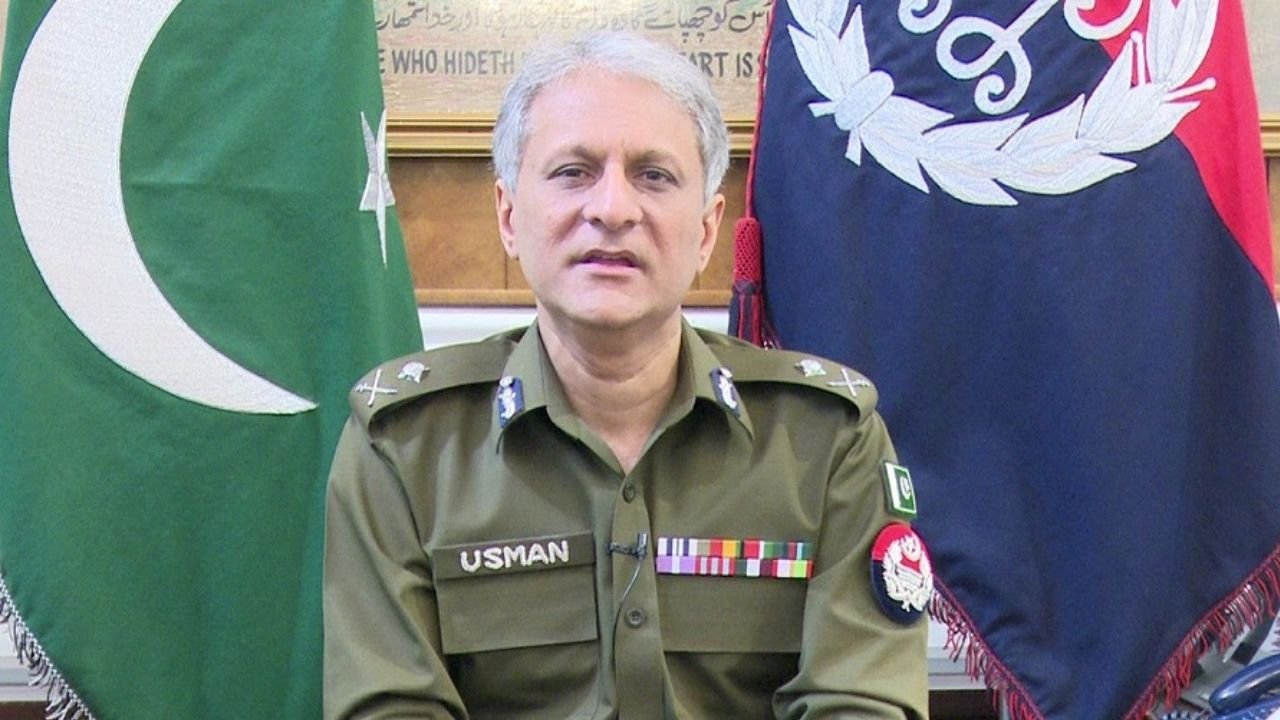
    A summary of this proposition has been moved by Inspector General of Police Punjab Dr Usman Anwar to Chief Minister Maryam Nawaz to place it before the provincial cabinet.

    Dawn reports that senior Punjab police felt the need for amendments following the reports that most domestic violence suspects manage to escape police action and even punishment from the courts.

    The report said that the FIRs get lodged on only six per cent of the total incidents.

    “Unfortunately, there was no explicit penal provision declaring domestic violence as a cognisable offence hence the first information report was lodged in only 3,365 cases out of 59,798,” whereas in all other cases, the matter was treated as non-cognisable,” reads the summary.

    In the majority of domestic violence cases, the matter was treated as non-cognisable when parties either reached an agreement or the victims did not pursue the criminal proceedings because of certain other reasons.

    The IG police quoted in the forwarded summary that “the absence of a strict legal regime further fuels the aggressors who have a perpetual sense of going unpunished due to legal void.”

    Shedding light on the main objective of the initiative, Dr Usman said the Punjab Protection of Women against Violence Act, 2016 was a significant legislation, but the effectiveness of VWPS and PPWVA has been hampered by a legal void, i.e., the absence of a penal clause specifically declaring domestic violence a cognisable offence.

    “In such circumstances, there is a dire need to amend the relevant section of the said Act to ensure the support and protection of women against violence across the province of Punjab,” reads the Punjab Police summary.

    Dawn quotes the legal amendment proposed in Section 21 of “The Punjab Protection of Women against Violence Act XVI of 2016”:

    Section 21: (1) The court shall not take cognisance of an offence under this Act except on a complaint of the district women protection officer or a woman protection officer acting on behalf of the district women protection officer.

    (2) The court shall conduct the trial of an offence under this Act in accordance with the provisions of Chapter XXII of the Code relating to the summary trials.
    Section 21-A: (1) (proposed) The offence of domestic violence shall be punished with imprisonment of three years or with a fine which may extend to Rs1 million or both. The offence shall be cognisable, bailable and compoundable.

    (2) The court may take cognisance of the matter either on a police report u/s 173 Cr.PC or on a private complaint filed by the victim and try the offence summarily.

    (3) If a person is punished under this Act and he commits the offence of domestic violence again, the offence shall be treated as non-bailable.