Category: Lifestyle

The lifestyle of millennials is underreported in our mainstream media. The Current’s lifestyle news covers social events and issues that are unique.

  • ‘Just a tiny facet of some horrible ongoing thing,’ A physicist’s tale of Palestine

    ‘Just a tiny facet of some horrible ongoing thing,’ A physicist’s tale of Palestine

    Physicist Nabil Iqbal, a professor at Durham University, posted a thread on X (Twitter) detailing his experience of teaching in a physics school co-organized by him in the West Bank. He shared that students from Gaza, both undergrads and from the University of Gaza, would send in applications but were never granted travel permits from Israel.

    He reminisces about the time they would conduct Zoom meetings with the physics enthusiasts and check their assignments on the phone. They would also wonder about the time they will get to talk ‘physics’ in person.

    Iqbal recently got connected to one of his students in Gaza. She told him that if this is the end, she wants us to remember that she is a physics student and that she wanted to teach others to be as inspired by science as she is.

    This story is a clear reminder of how such bright minds are wasted in ravaging wars.
  • Caretaker government approves 45 percent pay raise for bureaucracy’s top brass

    The federal caretaker government has just approved a hefty pay rise of 45 percent for top bureaucrats in management positions. These are distinct from career diplomats and are the ones typically drawn from the private sector because of their expertise in a relevant field.

    In a notification released by the Ministry of Finance, the increase would apply to all MP-I, MP-II, and MP-III positions, including basic salaries, house rents, and utilities as approved by the caretaker prime minister.

    The ministry said the monthly remuneration of officers on the MP-I scale used to begin from Rs554,600, including basic salaries, house rent, and utilities with a terminal amount of Rs699,250 per month. The minimum and maximum remunerations would now be Rs804,180 and Rs1,013,920 per month, respectively. The officers in this grade would also be drawing Rs95,910 per month for transport monetisation allowance, taking the revised monthly package to between Rs900,090 and Rs1,109,830.

    Likewise, the minimum and maximum monthly package of MP-II scales was Rs255,750 and Rs413,600 per month. This will now range from Rs370,850 to Rs599,740. The monthly monetisation allowance for this scale will be Rs77,430.
    The officers in the MP-III grade used to get Rs165,855 to Rs233,750 per month. The amount has now been revised to Rs240,460 and Rs338,960, apart from a monetisation allowance of Rs65,060.
    The rumenarations were last viewed in July 2017 and the current rise is effective from October 1.

  • Charles fails to give much-anticipated apology to Kenyans

    It was highly anticipated that King Charles will issue a strong apology for the harrowing atrocities of colonialism in the region during his visit to Kenya. Local rights groups were pressing for reparations but instead came a strongly-worded regret. “The wrongdoings of the past are a cause of the greatest sorrow and the deepest regret,” Charles said during a state banquet.

    The British King acknowledged the painful struggle of Kenyans as he said, “There were abhorrent and unjustifiable acts of violence committed against Kenyans as they waged… a painful struggle for independence and sovereignty and for that, there can be no excuse.”

    The crimes committed by the British colonial forces date back to the time when Kenyans were forced out of their tea lands as the British took over. Their lands are still producing more than 50 percent of tea for the British. Not just that, in the Mau Mau uprising during 1952-1960 a total of 90,000 people were brutally killed and 1,60,000 were detained.

    Exactly a decade ago, UK Government announced payments of almost 20 million pounds to more than 5,000 people in what is known as a “a process of reconciliation”. This visit was paramount as Kenya is celebrating its 60th independence anniversary. “It matters greatly to me that I should deepen my own understanding of these wrongs, and that I meet some of those whose lives and communities were so grievously affected,” the King remarked.

    While some are greatly disappointed at the lack of a formal apology speculated to be delivered ahead of the visit, President William Ruto has appreciated the courage of the British monarch for shedding light on “uncomfortable truths that reside in the darker regions of our shared experience”.

    British royalty speaks publicly on the advice of the cabinet and Rishi Sunak has already rejected the call for an apology.

  • Gaza women taking period-delaying pills amidst lack of privacy, water: Al Jazeera exclusive

    Gaza women taking period-delaying pills amidst lack of privacy, water: Al Jazeera exclusive

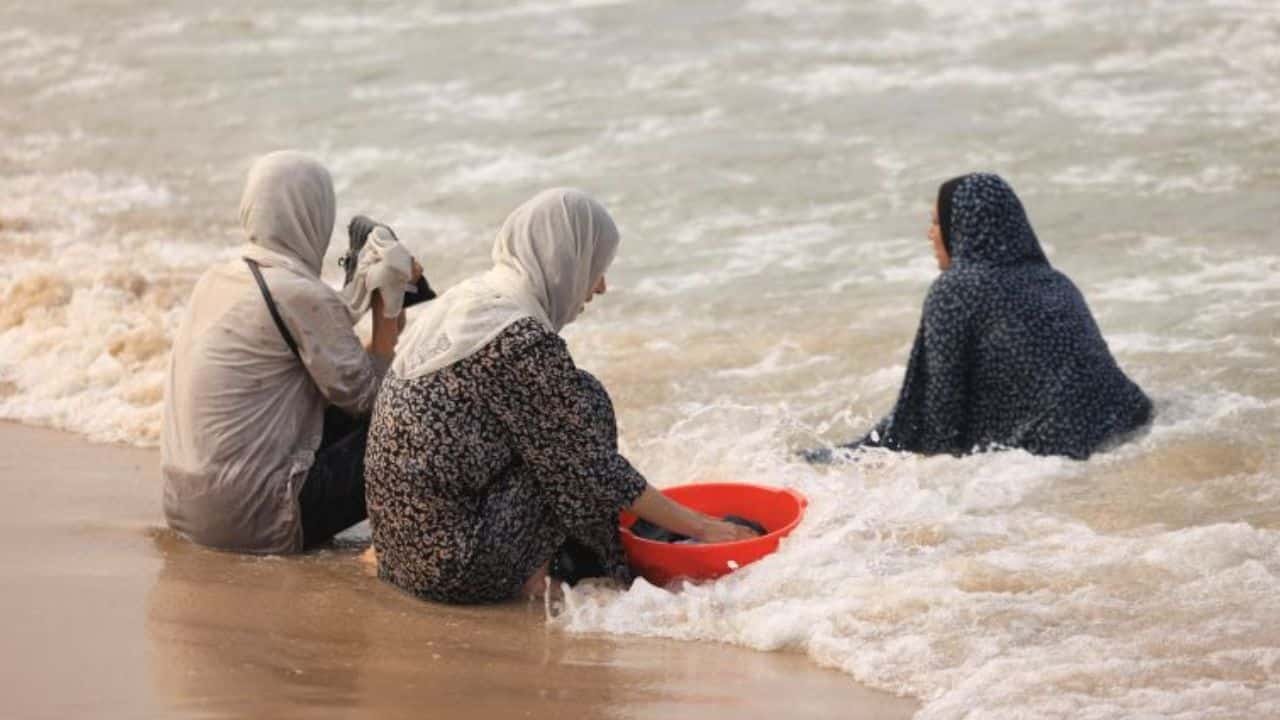
    Linah Alsaafin and Ruwaida Amer from Al Jazeera have reported from Gaza on Palestinian women who have been struggling to cope with menses at a time when medical supplies have been cut and the region is under heavy military attacks by Israel.

    Since Hamas’s attack on Israel on October 7, Gazans have been internally displaced, living in poor conditions among a large number of people with no privacy, and no access to water or menstrual hygiene products like sanitary napkins and/or tampons. To counter this major problem, women are resorting to norethisterone tablets that are usually prescribed in times of severe menstrual bleeding, endometriosis, and painful periods.

    While these pills have side effects like irregular vaginal bleeding, nausea, changes to the menstrual cycle, dizziness and mood swings, Palestinian women do not have any choice for now.

    Al Jazeera spoke to 41-year-old Salma who fled her hometown, Tel al-Hawa, and is now at a relative’s place in Deir el-Balah refugee camp. She is in a “constant state of fear, discomfort and depression, which has taken a toll on her menstrual cycle”.

    “I am experiencing the most difficult days of my life during this war,” Salma says. “I got my period twice this month so far – which is very irregular for me – and suffered heavy bleeding.”

    Nevin Adnan, a psychologist and social worker based in Gaza City, explained to Al Jazeera that while normally, women may experience psychological and physical symptoms before and during periods (changes in mood and lower abdominal, back pain); these symptoms, however, can worsen under stress.

    “Displacement causes extreme stress and that affects the woman’s body and her hormones,” she said.

    “There can also be an increase of the physical symptoms associated with menstruation, such as abdominal and back pain, constipation and bloating,” she said, adding that they may also experience insomnia, constant nervousness and extreme tension.

    This is why, Adnan asserts, more women are taking period-delaying pills “to avoid embarrassment and shame due to the lack of hygiene, privacy, and available health products”.

    “In war, we are forced to do everything we can,” says Salma.

    “There is never a choice.”

    Read full story: No privacy, no water: Gaza women use period-delaying pills amid war

  • 6 more deaths despite the ceasefire in Kurram Agency

    6 more deaths despite the ceasefire in Kurram Agency

    The sectarian clashes between the two groups in Kurram have claimed six more lives taking the death toll to 55 in nine days. A total of 105 people are injured. 

    Despite the efforts made by the local jirgas of the ceasefire the clashes between different other groups have erupted, pushing the region to be blocked from the rest of the world with no services of communication and internet along with lack of law and order.

    A ceasefire has been made between Sadda and Balish Khel while the fights between eight other group is still going on.  

    Read more: Kurram Agency’s sectarian clashes leave 50 dead before peace-deal

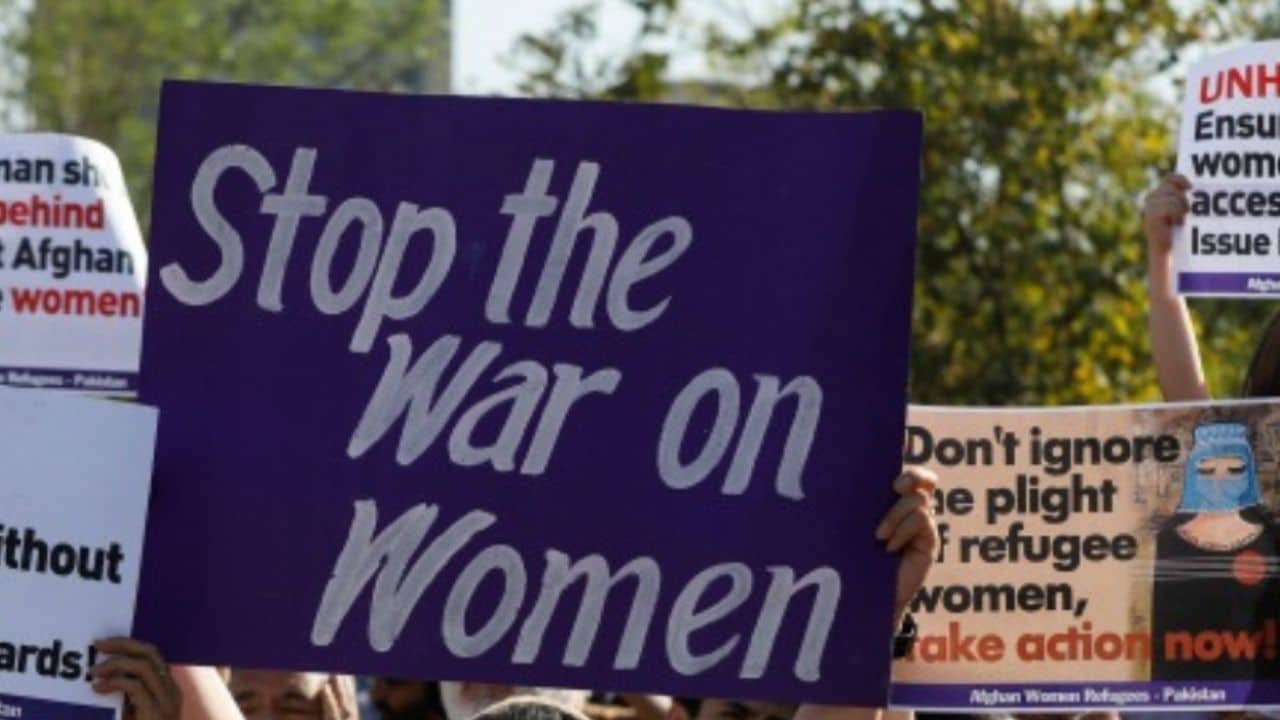
  • Taliban Calls For More Time For Afghans To Leave Pakistan

    Afghanistan’s Taliban government has urged Pakistan to allow undocumented Afghans in the country more time to leave as pressure mounts at border posts swarmed by thousands of returnees fleeing the threat of deportation.

    Islamabad has given 1.7 million Afghans it says are living illegally in the country until November 1 to leave voluntarily or be forcibly removed.

    More than 130,000 people have left Pakistan since the order was given at the start of October, according to border officials in the towns of Torkham and Chaman, creating bottlenecks at either sides of crossings.

    In a statement late Tuesday, Taliban authorities thanked Pakistan and other countries that have hosted millions of Afghans who fled their country during decades of conflict, but “asked them to not forcibly deport Afghans with little notice but to give them time to prepare”.

    Since taking power in 2021, the Taliban government has urged Afghans to return home, but has also condemned Pakistan’s actions, saying nationals are being punished for tensions between Islamabad and Kabul, and calling for people to be given more time to depart.

    Read more: All you need to know about Afghans being sent from Pakistan

  • Markhor hunting permit auctioned for $212,000

    Markhor hunting permit auctioned for $212,000

    Khyber Pakhtunkhwa’s departments of Climate Change, Forestry, Environment and Wildlife Department on Monday auctioned four liscences for the hunting of Kashmir Markhor in Chitral and Kohistan districts with the highest ever bid recorded at $212,000. The bids for the second, third and fourth were $185,000, $135,900 and $135,000 respectively.

    A week ago, on October 26, the bid for hunting the prized Astore Markhor was conducted in Gilgit Baltistanunder GB Forest, Park and Wildlife Department, which fetched a record $186,000. This was followed by $181,000 for second, $177,000 for the third and $171,000 for the fourth.

    The national animal of Pakistan, Markhor, found in the Northern Areas of Khyber Pakhtunkhwa and Gilgit Baltistan, is a species at near risk of extinction. Trophy hunting programs are conducted to help the local communities preserve the species and it’s habitat.

    80 per cent of the proceeds go to the development of local communities, their education and healthcare while the remaining is deposited into government’s treasury.

    However, Wildlife and Climate experts are extremely critical of these trophies for they believe that this is worsening the already dreadful condition of rare species. Even though the Hunting Guidelines specify that only old Markhors are to be hunted to make room for younger ones to procreate, violations of these rules are often observed in the form of killing of young species and the use of inappropriate weaponry.

  • British Home Secretary slammed for calling pro-Palestine demonstrations ‘hate marches’

    British Home Secretary slammed for calling pro-Palestine demonstrations ‘hate marches’

    Suella Braveman, Home Secretary of UK, has said that the thousands of people taking to the streets after the largest massacre of Jews post holocaust are, “chanting for the erasure of Israel from the map,” emphasizing that they are “hate marches”.

    She was speaking to the media after an emergency meeting called by Rishi Sunak over growing terror fears in the region. She reiterated her demand for “police to show zero-tolerance approach to antisemitism.”

    The shadow Home Secretary Yvette Cooper called out her statement as irresponsible citing, “use of careless rhetoric makes the job of the police much harder”.
    Previously, she urged the police to clamp down on any attempts to use flags, songs or swastikas to harass or intimidate the Jewish community. Her statement was also seen as a harsh response to the most famous chant of these marches, “from the river to the sea, Palestine will be free.”

    Former Cabinet Minister Saeeda Warsi lambasted the home secretary by saying that “she never misses the opportunity to create a culture war”.

    Braveman is being widely criticised over her remarks. Left-wing politician David Osland posted on X, writing, “British National Party’s protest as hate march or is this word reserve for those demanding peach for Palestine?”

    Netizen, Howard Beckett, reminded the world that she called a “protest against the ongoing murder of over 3000 children a hate march”.

    UK has seen massive protests and marches in support of Palestine but the stance of the Government is hostile and provocative against the marchers. Nearly a hundred arrests have already been made while five have also been charged with offences.

  • ‘Brain-eating’ amoeba causes two deaths in a week in Karachi

    ‘Brain-eating’ amoeba causes two deaths in a week in Karachi

    Sindh Health Authorities have reported two deaths within a week from Naegleria Fowleri, also known as brain-eating amoeba, in Karachi. The death toll has reached 10 victims this year.

    The latest victim is a 22-years-old student of North Karachi. Earlier in the week, a 45-year-old succumbed to the amoeba in the same locality. The two deaths have raised alarm bells both in the locality and the city.

    The student fell ill with high fever, headache and vomitting. His condition rapidly deteriorated, leading to hospitalisation in ICU. He tested positive for Naegleria, dying within four days on October 29.

    The symptoms of the two patients were similar but both had no history of swimming to suggest that they contracted the germs via nasal passage, as reported by the health department. The surveillance coordinator of the town has asked to collect samples from the area to detect the presence of the amoeba.
    Health Services Karachi Director Dr Abdul Hamid Jumani has however stressed the importance of chlorination at different levels in the water supply system. Not just that, the seepage in the pipelines should be corrected at once to avoid contamination of water.

    Water tanks at home need to be cleaned regularly and hygiene should be maintained. Experts suggest that water tanks should be cleaned once a year and a 20-gramme tablet is enough for a 100-gallon tank for 15 days.

    The infection caused by Naeglaria Fowleri is fatal in 98 per cent of cases. Contaminated water is its natural habitat. The medical term used for the disease is Primary Amoebic Meningoencephalitis. Among the 100 cases reported in 11, years only two survived; one for three months and the other is alive till date.

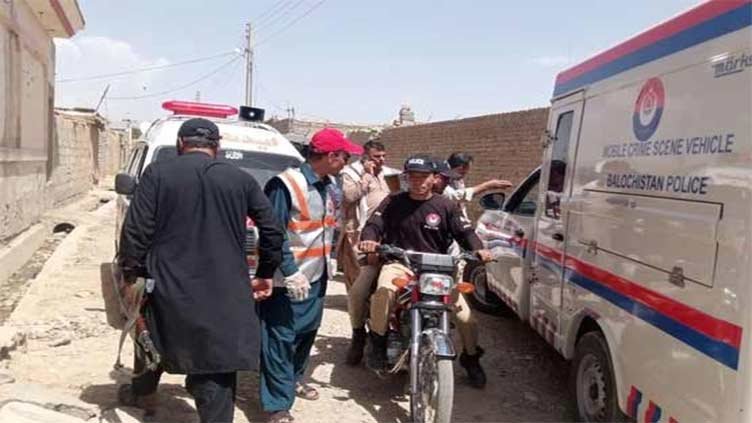
  • Four labourers from South Punjab were killed in Turbat Balochistan

    Four labourers from South Punjab were killed in Turbat Balochistan

    Four labourers, along with a police official, have been killed while one has been injured in the Nasirabad area of Turbat, Balochistan, in an attack on a police station by unidentified persons on Tuesday. The authorities have declared the attack terrorist activity.

    All the labourers killed in the attack were from district Muzaffargarh, South Punjab.

    According to police, dead bodies were transferred to the Teaching Hospital in Turbat.

    Caretaker Information Minister Jan Achakzai condemned the incident and said that it was a terrorist attack.

    The killing marks the second incident of targeted attacks on labourers from South Punjab in Balochistan.

    Earlier this month, at least six laborers  from Shujabaad were killed in Turbat city. The labourers were sleeping in an under-construction building when they were attacked.