Category: Lifestyle

The lifestyle of millennials is underreported in our mainstream media. The Current’s lifestyle news covers social events and issues that are unique.

  • What does the Palestinian phrase, ‘From the river to the sea, Palestine will be free’ mean?

    What does the Palestinian phrase, ‘From the river to the sea, Palestine will be free’ mean?

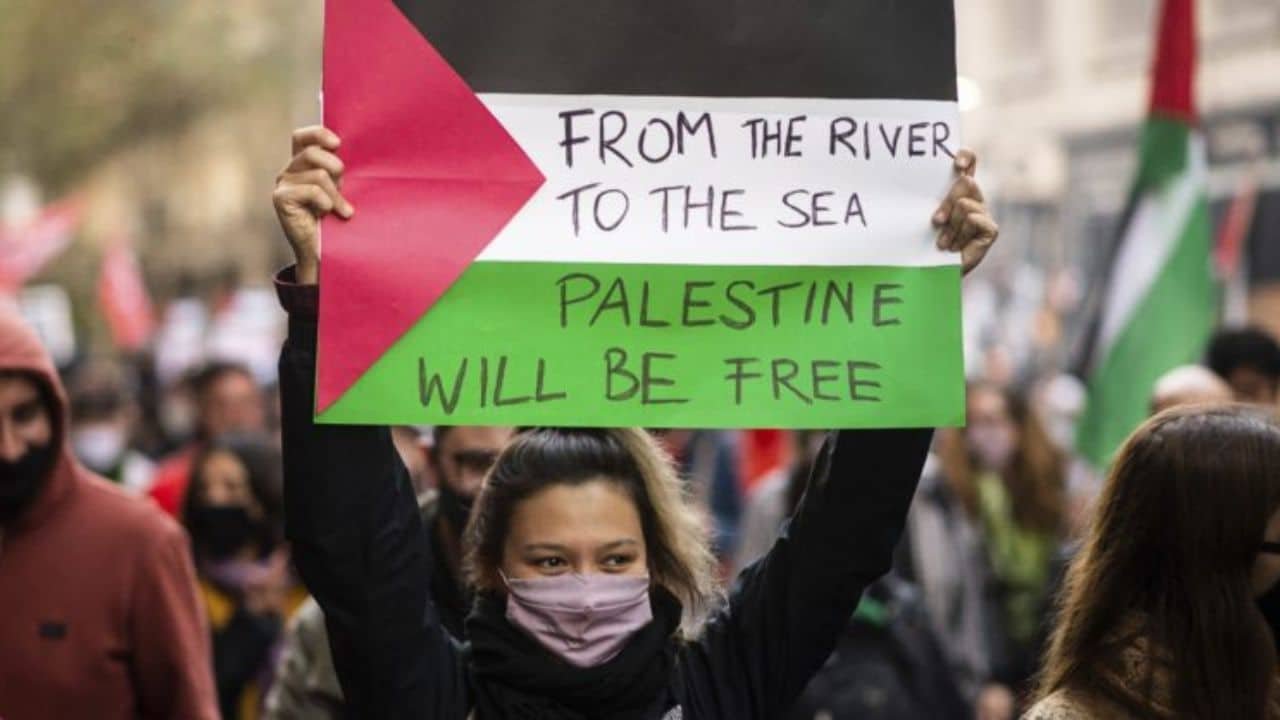
    Civilians around the world and human rights activists are staging protests outside US and Israeli embassies demanding an end to the ongoing genocide in Gaza, where the death toll is now about to reach 6,000 — with 2,000 among them children. At protests, the rallying cry is: ‘From the river to the sea, Palestine will be free’. What does this phrase mean and why does it hold so much significance for the Palestinian civilians? We’ll decode it all here.

    The phrase ‘From the river to the sea’ was officially endorsed by the Palestinian Liberation Organisation (PLO) in 1964, which called for a liberated Palestinian state from the Jordan River to the Mediterranean Sea, former Palestinian territories that are currently under forced occupation of Israel.

    Since then, the chant has been widely used in pro-Palestinian protests as a demand for the end to the ethnic cleansing of Palestinians by Israel and also that they are handed back their land. However, Zionists have consistently tried to paint it as ‘Anti Semite’ chant by claiming it calls for the genocide of Israeli Jews. A tube driver of the London Underground Train was suspended from his position after a viral video showed him leading the chant ”Free Free Palestine”. Similarly, UK Home Secretary Suella Braverman claimed the chant was ‘anti semitic’, and was “widely understood” to call for the destruction of Israel.

    Along with this phrase, another common thing spotted among Palestinian protests is the symbol of a watermelon, which is plastered on flags and posters as protestors condemn the growing death toll in Gaza.

    The watermelon became a powerful symbol of resistance during 1967 when Israel seized control over the West Bank, Gaza and East Jerusalem, during which the public display of the Palestinian flag was considered a criminal offence.

    The symbolic relevance of the watermelon began in 1980 when Palestinian artist Sliman Mansour was arrested by Israeli officials along with Nabil Anani and Issam Badrl as well as their works, because they featured the colours of the Palestinian flag.

    “They told us that painting the Palestinian flag was forbidden, but also the colours were forbidden. So Issam said, ‘What if I were to make a flower of red, green, black and white?’, to which the officer replied angrily, ‘It will be confiscated. Even if you paint a watermelon, it will be confiscated,’” Mansour revealed to The National in 2021.

    Watermelons were also a popular fruit exported around the world before the Nakba, as Palestinian controlled valleys like the Jordan Valley, Jenin and Arabet Al-Batouf were well known for growing enormous watermelons. Hyperallergic writes after Israeli defence forces drove out Palestinians from their neighbourhoods and brought in their own seed companies, Palestinian watermelons still remained popular due to their size in countries like Lebanon, Jordan and Syria.

    Since then, Palestinian artists used the watermelon as a symbol of Palestinian independence to protest against Israel’s illegal occupation. Artists like Khaled Hourani crafted a silkscreen series titled ‘The Story Of The Watermelon’ (2007), which is a series of watermelon slices in front of a white background.
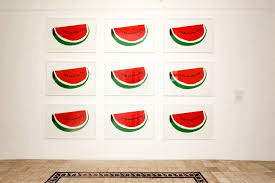
    Hourani later went on to co-found the International Art Academy of Palestine along with Mansour and Anani. Speaking about the growing resurgence of the political symbolism behind the watermelon, he was happy at how the Palestinian cause was receiving attention:

    “For me, it was kind of sudden. This is just one of my projects, which was not as successful or widespread as it is right now. It’s a unique kind of solidarity… It’s very powerful. I honestly don’t know how to deal with it. Some people are getting it as a tattoo, some are making patterns for clothes, putting it on flags, different mediums. I’m happy that it brings attention to the Palestinian cause.”

    Speaking on the rise of social media support for Palestine, Hourani said:

    “People around the world are standing up and saying that the occupation has to come to an end. This is a historical moment. As an artist, as a human being, I feel honoured that my work is being used as a tool or is a part of this driving force.”

  • Out of 687 staff members, only 45 women are employed in the Supreme Court

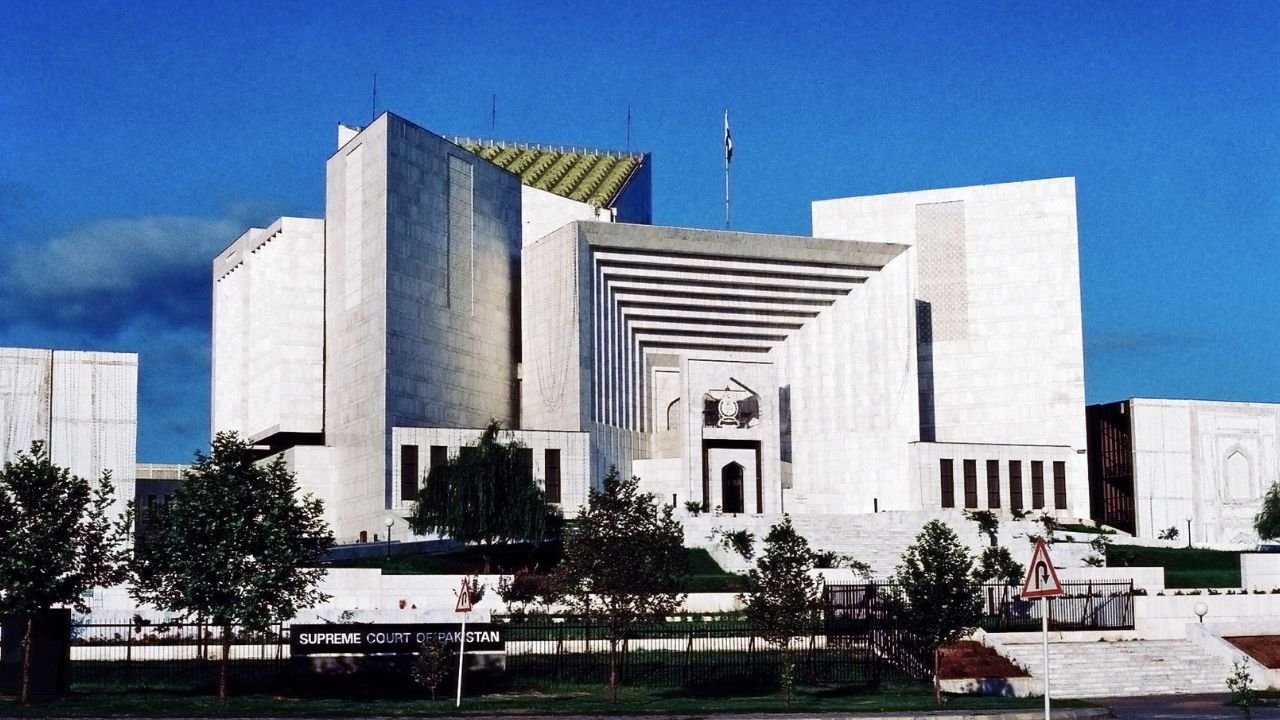
    Out of 687 staff members, only 45 women are employed in the Supreme Court

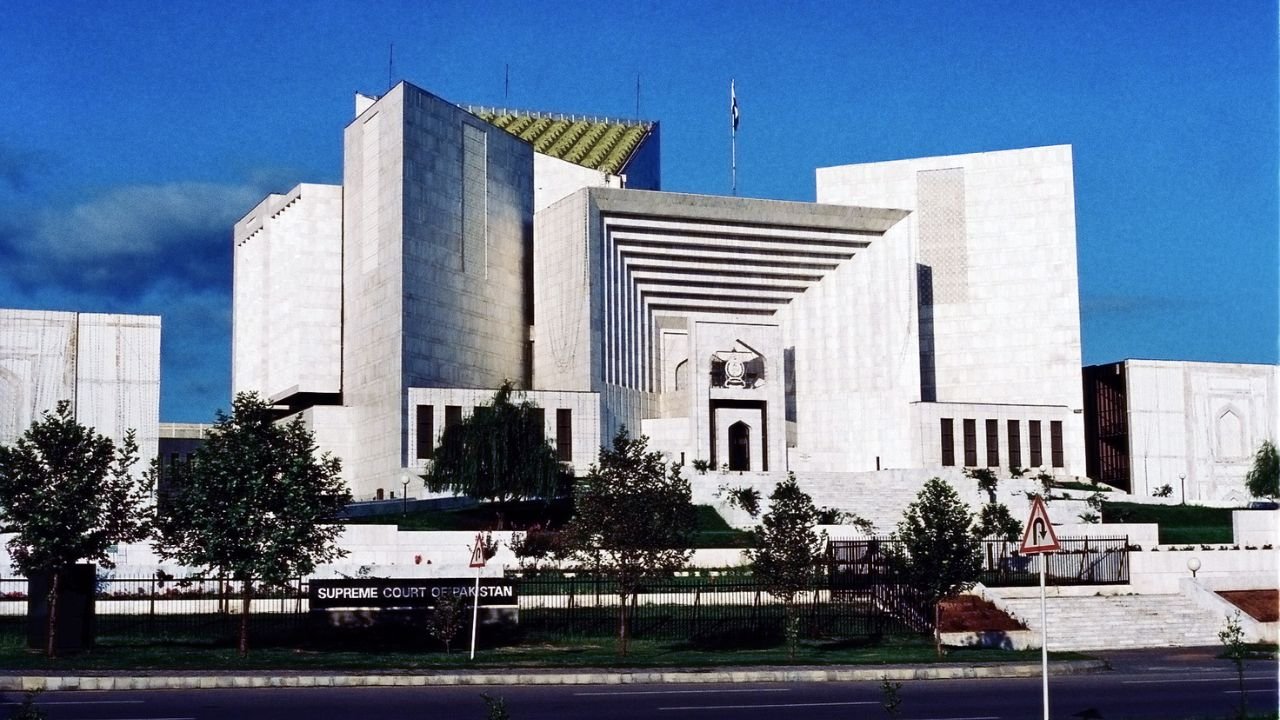
    New details reveal that among the total staff members of 687 in the Supreme Court, only 45 are women.

    The information came to light as a judicial order directed Supreme Court Registrar Jazeela Aslam to give details on staff following a petition filed in 2019, appealing the Right of Access to Information Act 2017 and Article 19-A of the Constitution.

    The apex court reportedly has 894 sanctioned positions at the moment but 207 of them are vacant and 687 employees were working as of September 25.

    146 are employed on a daily wage basis.

    84 new positions have been created since January 2017.

    The details also reveal that out of all the 45 women working in the apex court, 33 hold regular positions while 12 are contingent employees.

    Additionally, only two people with disabilities and two transgenders are employed.

  • Pakistan’s struggle continues on World Polio Day with four cases in 2023

    Pakistan’s struggle continues on World Polio Day with four cases in 2023

    October 23 marks the date when the world celebrates World Polio Day. Unfortunately, Pakistan and Afghanistan are the only two countries which have not been able to get rid of the virus completely.

    This year, the Global Polio Eradication Initiative has pledged to “Make Polio History”.

    Sadly, the news of sewer samples being found in different cities of the world keep surfacing more often than usual. Statistics reveal that a total of four cases have been reported in the year 2023 while 11 new samples have been detected in seven new cities of Pakistan.

    The most recent is the discovery of a two-year-old infected with the virus in the union council of Gujro, North-East Karachi. It’s the first case reported in the city since June this year. Before that, a case was confirmed in Landhi.

    Head of the Polio Eradication Programme in Punjab, Khizer Afzaal, on Monday pronounced Punjab-the country’s biggest province-to be polio-free for the last three years. He simultaneously cautioned about the looming threat that is evident after the identification of genomic samples of virus in different districts of Rawalpindi and Lahore.

    It is important to understand that along with immunisation, sanitation is equally a part of thwarting the paralysis of children from polio. Experts have stressed the absolute need of a proper sewage system which serves as the breeding ground of this virus and impair the kids for life.

    Aggressive measures, awareness campaigns and prioritisation can clear out the black spot from Pakistan’s name.

  • Asian-American Harvard student comes up with hilarious way to raise money for students lab

    Asian-American Harvard student comes up with hilarious way to raise money for students lab

    An Asian American student of the Harvard University, Benjamin Chang, is going viral on social media after he came up with a hilarious way to raise money for the student-led bio-engineering lab: by rowing in a pumpkin.

    Chang, who is a senior at Harvard, took help from his friends to purchase a 1500 pound pumpkin, then spent two hours carving it using basic tools like knife and a shovel.

    “There’s been so many roadblocks that have happened, and to actually be in the water in a giant pumpkin was so much fun,” Chang revealed to abc7 Chicago.

    Chang paddled in the giant pumpkin from the Cambridge side of the river to the Boston side and back. A dozen people donated to the lab in order to get a chance to row in a pumpkin, raising hundreds of dollars for the lab.

    “It was also so much fun to let other people try this as well,” Chang responded to the viral videos. “Seeing how excited and how strange of a feeling it was for other people to be inside this pumpkin was just as fun for me as being in it myself.”

    Check out this hilarious TikTok made by WBZ News Radio on how Chang accomplished his dream to make a pumpkin

    @wbznewsradio It’s the great pumpkin, Charles River. #Boston #Massachusetts #NewEngland #HarvardUniversity #HarvardSquare #massachusettsinstituteoftechnology #CambridgeMA #AllstonMA #BrightonMA #CharlesRiver #WatertownMA #BostonUniversity #EmersonCollege #BostonCheck #BostonTikTok ♬ original sound – WBZ NewsRadio

  • Two trains collide in Bangladesh, leaving 17 dead, 100 injured

    Two trains collide in Bangladesh, leaving 17 dead, 100 injured

    In a tragic incident on Monday afternoon, two trains in Bangladesh collided in the Eastern city of Bhairab leaving more than 17 dead and a hundred people injured.

    The incident occurred when a freight train collided with a passenger train traveling in opposite directions, resulting in the derailment of two passenger carriages.

    The railway administration has expressed concern that the death toll will rise because rescuers are still working to extricate bodies from under the overturned coaches. Two individuals have been recovered up till now as per the Red Crescent team.

    The initial rescue efforts were made by local residents and volunteers who rushed to the scene. Other response teams like the Rapid Action Battalion Security Force, Police and Fire Services have been sent there as well.

  • Tinder now has ‘arranged dating’ feature

    Tinder now has ‘arranged dating’ feature

    Every singleton dreads this question from their parents: “Are you currently dating anyone?” However, thanks to Tinder’s new feature, those days of avoiding this inquiry might be a thing of the past.  

    Tinder has introduced a feature called “Tinder Matchmaker,” which enables users’ friends and family to view and recommend potential matches for them. This feature might have spared Robert De Niro’s character a great deal of turmoil in the film “Meet the Parents,” where he clashed with his potential son-in-law, played by Ben Stiller.

    Tinder Matchmaker is currently available in the UK, US, Australia, Brazil, Canada, France, Germany, India, Indonesia, Japan, Mexico, South Korea, Spain, Thailand, and Vietnam. It will gradually expand to other countries.  

    This feature builds on the common practice of users seeking their friends’ opinions by handing them their phones. According to Melissa Hobley, the chief marketing officer, “For years, singles have asked their friends to help find their next match on Tinder, and now we’re making that so easy with Tinder Matchmaker. It brings your circle of trust into your dating journey, helping you see potential matches you might be overlooking from the perspective of those closest to you.”  

    Tinder, which initially launched in September 2012, has significantly transformed the online dating landscape. In September, it introduced a $500 invite-only membership tier called Tinder Select, catering to “elite” users, offered to less than 1 per cent of users.   

    Additionally, in August, the company announced testing an artificial intelligence tool designed to select a user’s best-looking photos for their profiles, with the hope of increasing the likelihood of getting swiped right. This tool will analyse a user’s photo album and choose the five images that best represent them. 

  • ‘Til trash do us part: Taiwan couple embraces garbage wedding shoot

    ‘Til trash do us part: Taiwan couple embraces garbage wedding shoot

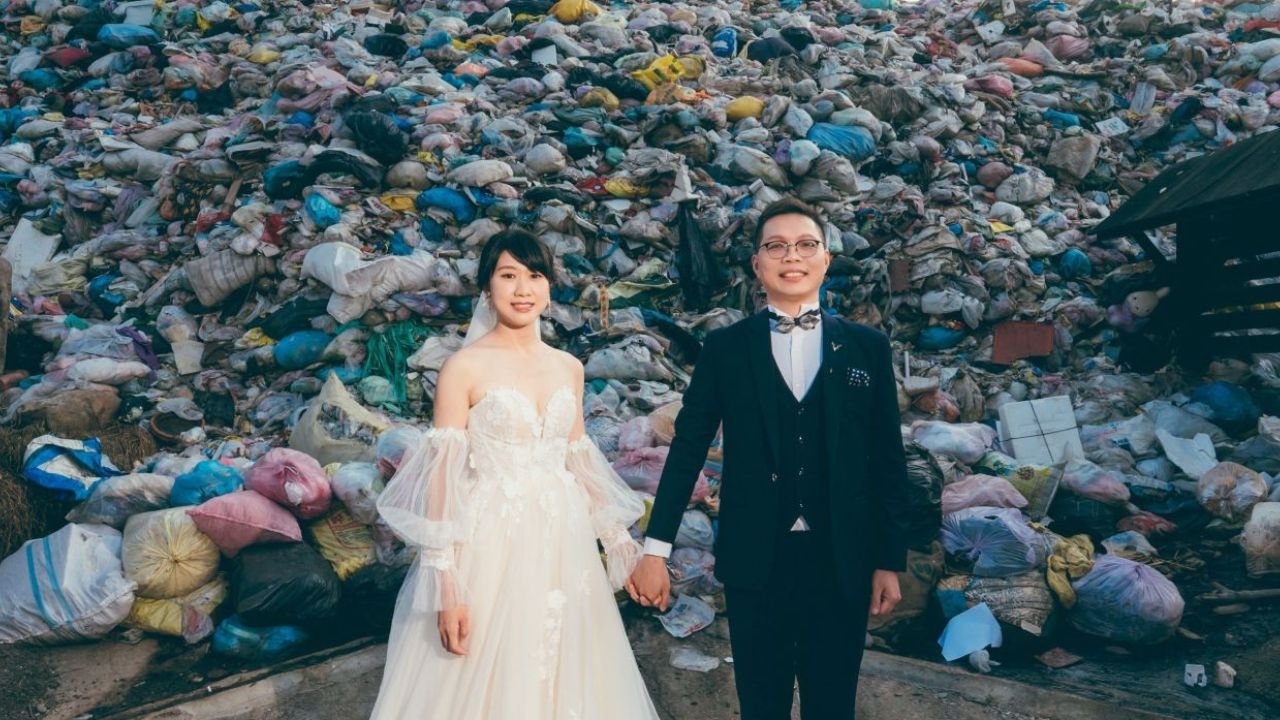
    A Taiwanese couple decked out in a tux and gown embrace in front of a mountain of trash in an unorthodox wedding photo – one the environment-conscious bride hopes will discourage her guests from generating unnecessary garbage.

    Greenpeace campaigner Iris Hsueh and her fiance are having their “environmentally friendly wedding” in January, and have asked guests to bring their own containers for taking home leftovers.

    Deciding that showing – not telling – was a more effective communication method, the Taipei-based couple travelled three hours south for a photo shoot in Nantou county’s Puli township, where the amount of trash brought to a local dump has steadily risen over the years.

    “If any guests are not willing to bring along a container, I would show them the photograph and say, ‘would you reconsider?’” the 33-year-old told AFP, adding that the photos ended up drawing local media attention.

    “I didn’t think it would create such a big sensation.”

    Self-ruled Taiwan, an island of 23 million people, has had a recycling programme since 1987, with over 50 per cent of household trash processed through the system – among the highest rates in the world.

    But Puli township’s sanitation crew chief Chen Chun-hung said the amount of garbage there has mushroomed – back in the 1980s, it was about 20 tonnes a day; now, its about 50.

  • Indian father welcomes back divorced daughter with a ‘Baraat’

    Indian father welcomes back divorced daughter with a ‘Baraat’

    The father of a divorced daughter in Jharkhand, India, Prem Gupta broke away from all the norms and welcomed back his daughter with a grand procession similar to that of a ‘baraat’. In a viral video of the event, women can be seen chanting and welcoming the daughter with open arms. The beat of a drum follows her as she greets everyone.

    Mr. Gupta posted the video himself with a caption that stated, “When your daughter’s marriage is done with great pomp and show and if the spouse and family turns out to be wrong or does wrong things then you should bring your daughter back to your home with respect and honour because daughters are very precious.”

    As per the details, Sakshi Gupta got married to Sachin Kumar in April. A few days into the marriage she found out that the man was already married twice and that there allegations of harassment were filed against him. Divorce was filed with an alimony of INR 17 lakh that Gupta gave to her in-laws at the time of wedding is to be paid back to her. Sakshi is happy to have such supportive parents and Mr.Gupta has set an example to shatter the stigma around divorce.

  • Kazakhstan puts ban on Hijab in schools

    Kazakhstan puts ban on Hijab in schools

    Kazakhstan government, home to a population with 70 per cent Muslims, has announced a ban on head-scarves for students and teachers in schools and educational institutions.

    “Requirements for the school uniform prohibit the wearing of the hijab, since any attribute, symbol, element in one way or another implies propaganda of the dogma to which they relate. Ensuring the equality of all religions before the law, the principles of secularism do not allow the advantage of any religion,” the Kazakh Government’s website stated on October 16.

    The ban has initiated a fierce debate on different levels of the populace. The Government, however, has maintained that Kazakhstan is a secular country. The opposing group consider the ban a violation of the freedom of expression and conscience.

    Consequently, many students have dropped out of the school. Education Minister Gani Beisembayev confirmed that a total of 150 girls dropped out of school in the Atyarau region, whereas in Turkestan, two men reportedly beat a school director for not allowing the girls wearing hijab to attend lectures.

    As a sign of protest, many are posting videos of burning down their books or pictures of them wearing a hijab stating that they will not trade anything for their right to wearing the head covering.
    A member of Almaty Social Council in Qojaly believes that “First of all, you have to know that the hijab is actually a headscarf with which girls in Kazakhstan were covered from puberty, that is, from the age of 13.There is no religious connotation here. Second, the law enshrines the right to education, and the ban that has been enacted is an artificial barrier to exercising that right. Why do headscarves suddenly prevent Muslim girls from joining secular life? No one is banning the wearing of Christian crosses or tubeteika caps. In fact, we are talking about a certain form of segregation.”

    The Grand Mufti of Kazakhstan, Nauryzbay Kazhy Taganuly, has proposed that the girls who want to wear hijab should join Madrassas or any Muslim Educational institution from grade 10 onwards. So far nobody has objected to this.

    Amidst all this, President Kassym-Jomart has expressed his determination to ensure “freedom of religion” as per the law of his secular state.

  • 23 journalists killed in Israeli airstrikes since October 7

    23 journalists killed in Israeli airstrikes since October 7

    The Israel-Gaza escalation has resulted in the killings of more than 4,700 people in Gaza —mainly Palestinians — as increasingly heavy Israeli air raids continue following October 7 Hamas attacks on Israel.

    Committee to Protect Journalists (CPJ) has been keeping a track of journalists who have been killed, injured, detained, or missing in the Israeli-declared war.

    Amidst Israeli airstrikes, disrupted communications, and extensive power outages, journalists are at risk at all times as they cover the situation in Gaza.

    As of yesterday, 23 journalists have reportedly been killed, including 19 Palestinians, three Israelis, and one Lebanese.

    The victims are identified as Khalil Abu Aathra, Sameeh Al-Nady, Mohammad Balousha, Issam Bhar, Abdulhadi Habib, Yousef Maher Dawas, Salam Mema, Husam Mubarak, Issam Abdallah, Ahmed Shehab, Mohamed Fayez Abu Matar, Saeed al-Taweel, Mohammed Sobh, Hisham Alnwajha, Assaad Shamlakh, Shai Regev, Ayelet Arnin, Yaniv Zohar, Mohammad Al-Salhi, Mohammad Jarghoun, and Ibrahim Mohammad Lafi.

    Additionally, eight journalists are reported injured and three are missing or detained.

    CPJ has also claimed to have been investigating a number of unconfirmed reports of other journalists being “killed, missing, detained, hurt or threatened, and of damage to media offices and journalists’ home.”

    According to CPJ’s Middle East and North Africa program coordinator, Sherif Mansour, “CPJ emphasises that journalists are civilians doing important work during times of crisis and must not be targeted by warring parties,

    “Journalists across the region are making great sacrifices to cover this heartbreaking conflict. All parties must take steps to ensure their safety.”