Category: Lifestyle

The lifestyle of millennials is underreported in our mainstream media. The Current’s lifestyle news covers social events and issues that are unique.

  • Keti Bandar: the recession of an ancient life along the Indus Delta

    Keti Bandar: the recession of an ancient life along the Indus Delta

    When Cyclone Biparjoy was hurtling towards the Sindhi coastline, many heard the name ‘Keti Bandar’ repeatedly on television, as well as talk of the existential threat the port-town faced due to the tropical storm. Many only recognised Keti Bandar as the part of coastal Sindh that Biparjoy was initially predicted to make landfall on. 

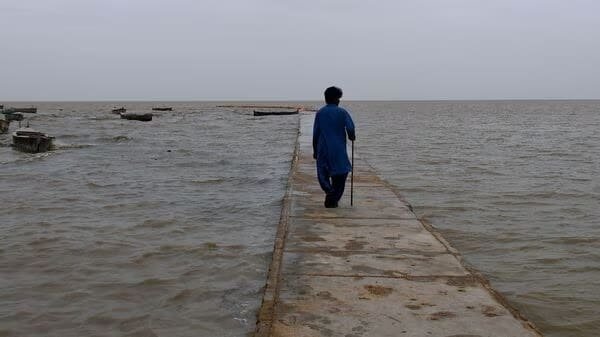
    Yet Keti Bandar is the remnant of a practically ancient community that has long suffered the systematic destruction of the Indus delta. What many don’t realise is that, before Biparjoy even began stirring in the Indian Ocean, Keti Bandar had sank under the Arabian sea and reemerged three times.

    This is the story of a community that is fighting against a disappearing delta. A community that still stands after being swallowed by the sea. A community that may not survive another submergence. 

    The lords of the sea

    The residents of Keti Bandar are part of the Mohana tribe, descendants of the first inhabitants of the Indus valley. The remains of the original Mohana settlement can still be seen at the archeological site of Mohenjo-daro, which once stood on the banks of the Indus before the mighty river changed its course.

    The Mohana refer to themselves as ‘Mir Bhar’, an Arabian word which means ‘kings of the sea’. They are historically a boat and river folk, engaged in the business of fishing and transport along the sea and river. The Mir Bhar are one of the oldest castes that have existed in Sindh. It is one of the few cultures dating back to the ancient Indus Valley Civilization that has remained continuous in the region. 

    Much of lower Sindh lay beneath the Arabian Sea 3000 years ago. Part of a rivers’ natural process is the deposit of silt. A river is as much mud as it is water, a fact that is often forgotten. Over time, the Indus deposited so much silt that the sea water receded, creating the mud flats that comprise much of lower Sindh. The mudflats that house communities such as Keti Bandar.
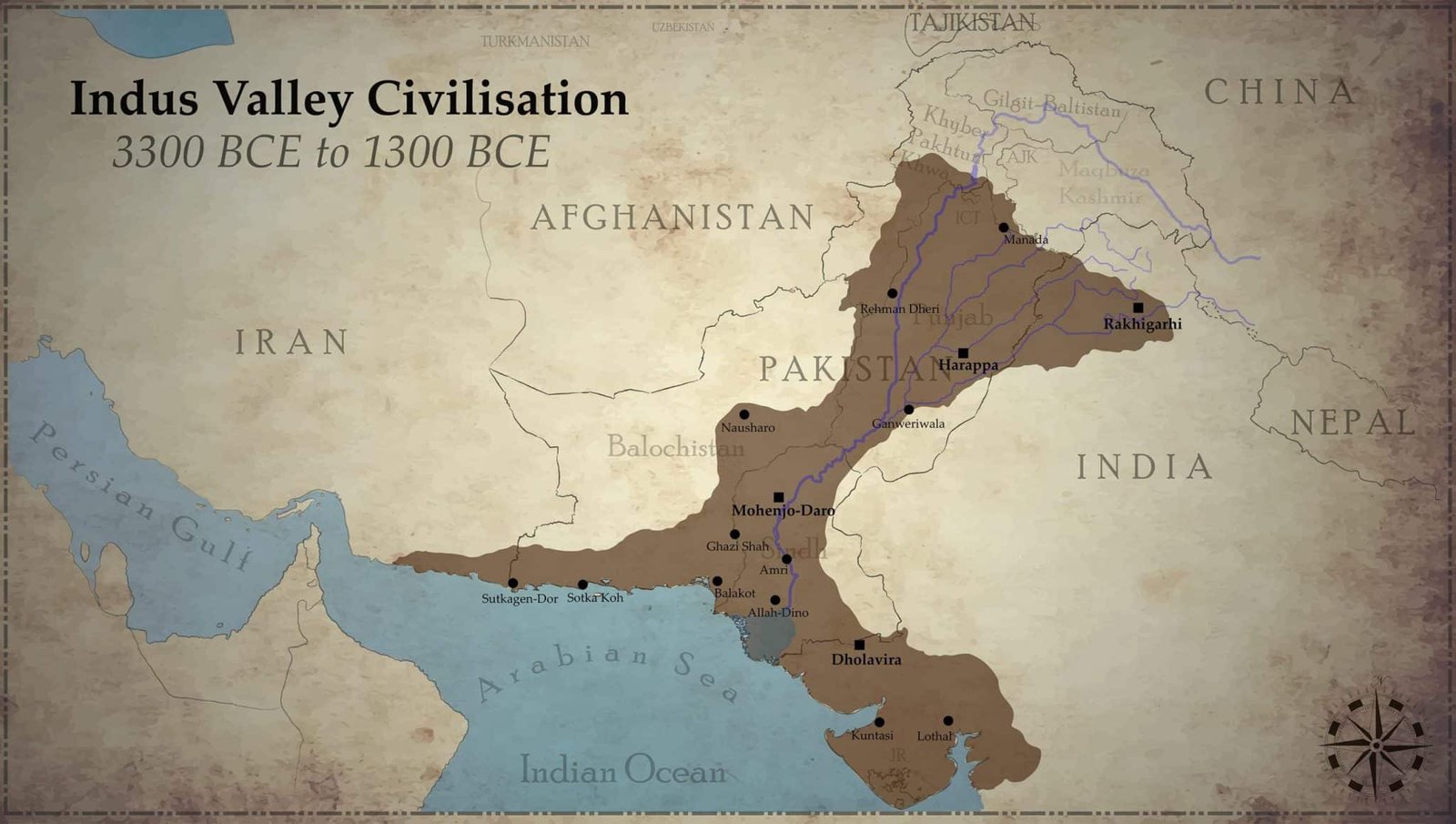
    Keti Bandar exists solely because of its connection to the river. There are so many subtribes of the Mohana fishermen community that live across lower Sindh, which shows the crucial part the Indus played in its creation and livelihood. 

    It was a thriving port once – in fact, the inhabitants of Keti Bandar were once far more affluent than those of Karachi. Rich fishermen and farmers that cultivated red rice would lend money to aspiring businessmen in the bustling city. The fresh river water of the delta allowed the Mir Bhar to live well and prosper.

    Keti Bandar sank three times due to hurricanes and sea advances: once in 1857, then in 1877, and the last known submergence was in 1910. When Cyclone Biparjoy came around, the sea swallowed many homes along Keti Bandar again, but the water receded fairly quickly as the storm moved along its course.

    Yet the persisting Mohanas were damned long before Cyclone Biparjoy, long before the current throes of climate change. The deposit of silt, that was so instrumental to the creation and preservation of Keti Bandar, was halted when the Kotri Barrage was finished in 1955. 

    The Gradual Death of the Delta

    The construction of the Kotri Barrage began during the British Raj in 1932. Environmental activist Zulfikar Ali Bhutto Jr. reflected on his visit to Keti Bandar in 2015. He shared how Kotri Barrage (also known as the Ghulam Muhammad Barrage), as well as other barrage systems built by The World Bank and IMF post partition, were the ‘final nail in the coffin’ on what we knew once as the mighty Indus delta. 

    “It’s as though Keti Bandar has suffered 15 – 16 years of dehydration,” Zulfikar said. Indeed, there can be no development with no fresh water. The excessive damming and redirecting of the Indus has drastically decreased the water flow from the river to the mudflats of lower Sindh. As a result of resource degradation, the Indus delta has seen a mass exodus. 

    According to a study by Altaf Memom published in 2005, an estimated 90, 000 had been displaced and about 120 villages depopulated. One can only imagine the state of things now: the lack of fresh water and the encroaching Arabian Sea has rendered Keti Bandar practically unlivable. And yet, the community persists. While we are hearing the term ‘climate refugees’ now more than ever – especially considering the devastation of the 2022 floods – Pakistan has technically had climate refugees since the 50s.

    Due to the various irrigation systems along the Indus, 43% of land in Northern Sindh has been left saline. Because of this, the entire delta system has seen catastrophic changes. The locals of Keti Bandar primarily complain of ‘kaala paani’: no fresh water. Without fresh water, there can be no development. And with the now obstructed deposition of silt, Keti Bandar and other coastal regions that lie atop mud flats are facing the existential threat of being swallowed by the sea. 

    When asked about the recent floods and their potential benefit to the arid region, Zulfikar said, “Even if there is a good summer monsoon, so much of it is still drained out. Whatever’s left behind after crossing through Sukkur Barrage is just seepage and not enough silt.”

    The Decline of Keti Bandar

    The Mohanas, once one of the oldest and wealthiest tribes of Sindh, has now become one of the poorest. The entire province of Sindh is part of the Indus delta, and because of it shrinking, the locals of Keti Bandar have gone from living in the abundance of the rich river to living in sheer poverty. 

    As lords of the sea, Keti Bandar’s community is mostly comprised of fishermen. They rely solely on fishing for sustenance. However, this stream of income is not only threatened by extreme weather events such as Cyclone Biparjoy. The fishermen of Keti Bandar have been ruined by loans with astronomical interest rates, endowed on them by Middlemen that orchestrate business between the fishermen of Keti Bandar and the fish markets of Karachi.

    They buy the catch at low prices, and sell them to traders in Karachi and other cities for a 200-500 percent profit. Since the poor fishermen owe them money, they have no choice but to sell their catch to these people, otherwise risking the seizure of their boats and fishing nets.

    The locals are very cognizant of the decline of wealth and prosperity in Keti Bandar. Some of the oldest members of the community were still alive when Keti Bandar’s municipality was loaning to the growing metropolis of Karachi. Since its steady decline, the government has made empty promises to provide for the community, but to no avail. 

    On a visit to Keti Bandar in 2011, Moin Khwaja shared the frustration of a local fisherman: “The government is literally pushing us into the sea. Loan sharks visit us every single day while the politicians come to us once in five years to beg for our votes”.

    While the climate crisis worsens, communities such as the Mohanas along Keti Bandar have already been facing the brunt of drastic environmental changes and lack of governmental support. One can only imagine the magnitude of the threat they face now, as extreme weather events such as Biparjoy will only increase in frequency. 

    Special thanks to Zulfikar Ali Bhutto Jr. for giving The Current his insights regarding the environmental degradation of the Indus Delta and Keti Bandar.

    Altaf A. Memon (May 14–19, 2005). “Devastation of the Indus River Delta”. World Water & Environmental Resources Congress 2005. Anchorage, Alaska: American Society of Civil Engineers. World Wildlife Fund.


  • ‘Abh Shakira nahi chalay gi’: Attock fruit vendor singing Waka Waka goes viral

    ‘Abh Shakira nahi chalay gi’: Attock fruit vendor singing Waka Waka goes viral

    Mangoverse of Madness?

    A fruit vendor from Attock, Pakistan has become the new darling of Indian publications for his extraordinary singing skills and his knack for bringing a hilarious twist to Shakira’s popular song ‘Waka Waka’.

    A video of the man was posted by a meme account with the name Hamza Choudhary, amassing more than 400,000 likes, with fans writing down all sorts of hilarious captions.

    “Shakira crying in the corner”, one user wrote.

    It’s lovely to witness

  • Beijing: US Secretary of State & Chinese officials hold ‘candid and constructive’ talks

    Beijing: US Secretary of State & Chinese officials hold ‘candid and constructive’ talks

    US Secretary of State Anthony Blinken met with Chinese officials during a rare trip to Beijing, as relations between the two superpowers continue to deteriorate. Blinken is the first man of his post to meet Chinese leader, Xi Jinping, since 2018. Both Blinken and Chinese Foreign Minister Qin Gang described the talks, held on Sunday, as “candid and constructive”.  

    Representatives of the two states ‘seemed to agree on little beyond keeping the conversation [of diplomacy] going’ as reported by Reuters. They did not appear to make concrete progress on disputes that include Taiwan, trade, human rights and fentanyl. 

    According to the State Department, Blinken stressed the “need to reduce the risk of misperception and miscalculation,” thereby underscoring the importance of open communication channels to manage their competition.

    Describing the US-China relationship as being at its lowest point since diplomatic relations began, China’s top diplomat Wang Yi said the root cause was the United States’ incorrect perception of China.

    “We must take a responsible attitude toward the people, history and the world, and reverse the downward spiral of US-China relations,” Wang was reported to have said during the meeting, as released in a statement by China’s foreign ministry. 

    Xi Jinping hails ‘progress’

    On Monday, Blinken met with Chinese leader Xi Jinping. Their meeting could be instrumental in facilitating a summit between Xi and U.S. President Joe Biden later this year.

    The visit reflects attempts from both states in ensuring disputes between the economic superpowers do not develop into outright conflict. 

    Xi praised the talks as “progress” between the two superpowers. Biden said he hoped to meet the Chinese leader again after their lengthy meeting in November, during the G20 summit in Bali, Indonesia. 

    “I’m hoping that, over the next several months, I’ll be meeting with Xi again and talking about legitimate differences we have but also how there’s areas we can get along,” Biden said, as reported by The Guardian.  

    It is likely that the two leaders will be in attendance at the next G20 summit, which is to be held in New Delhi in September. Xi is also invited to travel to San Francisco in November, to attend the Asia-Pacific Economic Cooperation forum.

  • Greece migrant boat disaster; Pakistani survivors claim vessel was deliberately sunk

    Greece migrant boat disaster; Pakistani survivors claim vessel was deliberately sunk

    According to video accounts of Pakistani survivors, Greek authorities deliberately sunk the vessel and provided no rescue efforts. 

    In the video, survivors can be heard saying: “They have done this [on purpose]. They have sunk it themselves.” The other added, “We did not sink for five days, so why would we sink now?”

    They recounted that the ship’s engine had broken down, leaving them still for almost a week. “We did not drown even though our engine had [completely] shut down. [the boat] sunk because of the one-maund-rope they threw into the boat.”

    In an investigation conducted by the BBC, many discrepancies were found in the statements released by the Greek authorities. For one, the coastguard claims that in the hours before the boat capsized, it was on a “steady course to Italy and not in need of rescue.” 

    However, analysis of the movement of other ships in the area suggests that the migrant boat was not moving for at least seven hours before the disaster. This corroborates eyewitness accounts of Pakistani survivors.

    The UN has called for an investigation into Greece’s handling of the disaster. Greek authorities have not yet responded to the BBC’s findings. 

    FIA arrests 10 alleged traffickers

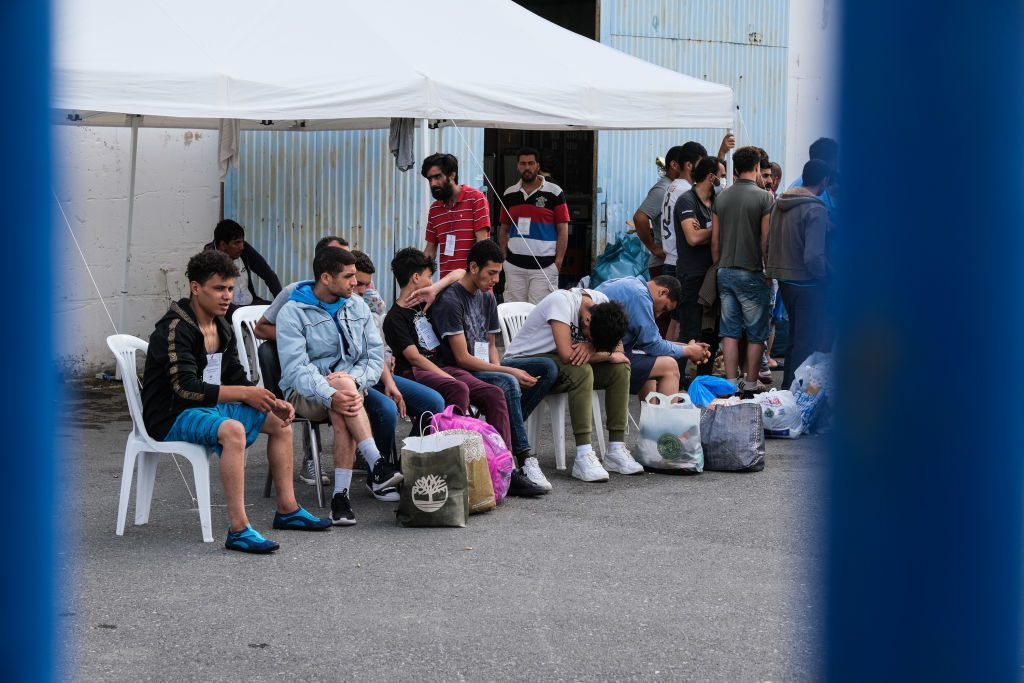
    Calamity struck a migrant boat that capsized off the south-eastern coast of Greece last week on Wednesday, leaving hundreds of Pakistani migrants dead. On Sunday, Prime Minister Shehbaz Sharif announced a high-level investigation to trace the human traffickers behind the incident. So far 10 alleged traffickers have been arrested in connection to the tragedy.

    The Federal Investigation Agency (FIA) arrested the suspected human traffickers from Azad Jammu and Kashmir, and another one from Karachi airport who was attempting to flee abroad, Geo News has reported.

    The 10 suspected traffickers are “presently under investigation for their involvement in facilitating the entire process” according to Chaudary Shaukat, an official from Pakistan-administered Kashmir.

    Condemned Pakistanis

    Last week in the early hours of Wednesday morning, a migrant boat capsized off the Southern Peloponnese while on its course to Italy from the Libyan town of Tobruk. The Guardian reported most of the victims were men from Pakistan and Afghanistan. More sinister details have since emerged from witness accounts.

    According to witnesses, the Pakistanis onboard were ‘forced below deck’ where they had far less chance of surviving a capsize. The Observer also reported that crew members were maltreating the Pakistanis below deck when they would appear in search of fresh water or tried to escape.

    The number of Pakistani lives lost is estimated to be around 298. 135 of them are reported to be from the Kashmir region. Greek authorities have yet to release a confirmation on Pakistan’s death toll.

    Mismanagement and alleged cover-up

    Many questions have been raised since witness accounts spread across global news, specifically about the role of Greek authorities in the tragedy.

    On Friday, two days after the accident, a spokesperson of the Greek government claimed that their assistance had been refused by the migrant boat after they threw a rope to the vessel to “stabilize and check if it needed help.” This contradicted the coastguard’s earlier statements that it had kept a ‘discreet distance’ from the boat.

    According to a witness interviewed by CNN, Greek authorities were seen towing the vessel with ropes, but since the ropes were tied in the “wrong places”, the boat capsized.

    The witness, Tarek Aldroobi, had three relatives on board. He told CNN, “Their boat was in good condition and the Greek navy tried towing them to the beach but the ropes were tied in the wrong places,” Aldroobi said. “When the Greek navy tried pulling them it caused the boat to capsize.”

    Nikos Alexiou, a spokesman for the coastguard, defended their response. He said their patrol boat only used a small rope to stabilize itself while it was close to the migrant boat, and that they were unable to tow it.

    In an interview with CNN, Alexiou explained: “Regretfully there was movement of people, a shift in weight probably caused by panic and the boat capsized. As soon as we got there, we started our rescue operation to collect those who were in the water.”

    In a report by The Guardian, Maurice Stierl, from the Institute for Migration Research and Intercultural Studies at Osnabrück University in Germany, responded to the coastguard’s defense: “What caused the sudden shift in weight? Was there a panic on board? Did something happen during the attempt to provide them with something? Or was it towed? And due to this towing, did the boat go down?”

    According to Stierl, EU countries ‘weaponise time’ by delaying rescue as long as they can. “They have managed to build in delays into European engagement at sea. They’re actively sort of hiding, in fact, from migrant boats, so that they are not drawn into rescue operations. We can see how a strategy is being created, that slows down –actively and consciously slows down – rescue efforts,” Stierl explains.

    Questions arose over whether the Greek coastguard should have intervened earlier, as government officials confirmed patrol boats and cargo ships had been shadowing the migrant vessel since Tuesday afternoon.

  • Indian inventor introduces futuristic one-wheel self-balancing electric scooter

    Indian inventor introduces futuristic one-wheel self-balancing electric scooter

    A visionary Indian man has ingeniously crafted a remarkable electric scooter that defies convention by featuring only a single wheel, embodying his innovative approach to transportation.

    The entire captivating journey of building this extraordinary self-balancing electric scooter has been meticulously chronicled in a captivating video shared on the Creative Science YouTube channel.

    The video commences with the creator sketching the initial blueprint of the scooter on cardboard, meticulously refining the design and making necessary adjustments before commencing work with durable metal sheets. Transferring the meticulously finalised cardboard design onto a substantial metal sheet, the skilled individual deftly cuts out the required components, which are then skillfully welded together, culminating in the creation of the wheel’s arch.

    To ensure optimal stability, the scooter boasts a wider wheel embedded with a cutting-edge hub motor. Additionally, the ingenious inventor fabricates a comfortable seat using sturdy metal sheets, ingeniously incorporating a cleverly concealed storage compartment beneath it to house the scooter’s vital battery pack.

    Drawing inspiration from the vintage designs of yesteryears, an exquisite metal fairing is meticulously fashioned. Complementing the ensemble, the handlebar and headlamp unit are borrowed from an existing scooter, while a robust bracket ensures the wheel’s secure placement, and a custom-fabricated metal pipe serves as the elegant rod for the handlebar.

    Once the meticulous structural work reaches its completion, a crucial self-balancer sensor is meticulously integrated into the scooter. This sophisticated sensor plays an indispensable role in maintaining optimal stability, enabling the audacious scooter to effortlessly remain upright, defying expectations with its singular wheel.

    Precise installation of the sensor is of utmost importance, ensuring accurate calibration and steadfast security. The wires from the wheel are diligently connected to the sensor, while an additional set of wires establish a vital link between the sensor and the throttle cable.

    With the technical aspects artfully completed, the protective panels are deftly removed, and the entire scooter embarks on a transformative painting process. Beginning with a meticulous primer, the scooter is then adorned with a radiant yellow hue, instantly captivating attention.

    To ensure safety and comfort, any sharp metal edges on the scooter are conscientiously concealed with carefully placed piping. Despite its unconventional appearance, this remarkable scooter functions with remarkable finesse, thanks to the flawlessly integrated sensor that effectively safeguards against any untoward tipping forward or backward.

    It is worth noting that the creator’s exceptional achievement was accomplished without relying on advanced modern technologies, proudly showcasing their remarkable ingenuity in crafting this awe-inspiring, home-built marvel.

  • 10 dead in motorway bus accident near Salt Range

    10 dead in motorway bus accident near Salt Range

    TRIGGER WARNING: DISTRESSING CONTENT

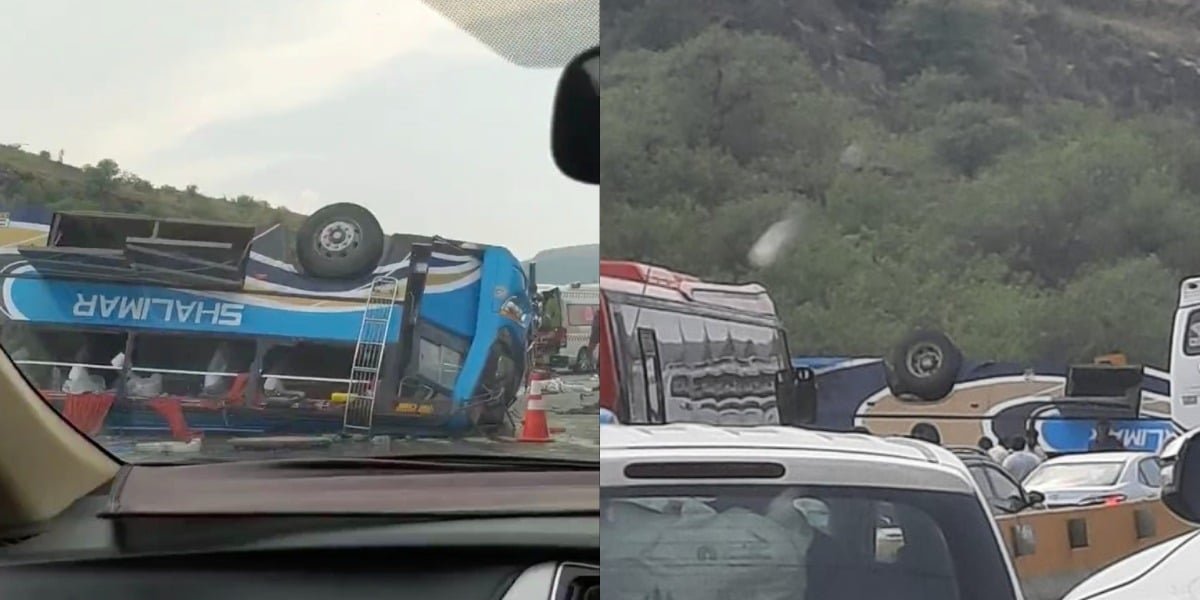
    A Shalimar Express bus, en route to Lahore from Islamabad, via M2 motorway, overturned near the Salt Range on Saturday.

    At least ten people have been declared dead while the rescue operation is still underway. Injured people have been admitted to the trauma centre at Kallar Kahar, women and children among them.

    The cause for the accident was overspeeding, as reported by PNN News. According to a witness, the bus was overspeeding at a turn when it broke through the barrier separating the highway. The bus flipped over onto the side of the hill, near Kallar Kahar.

    According to another witness, there were up to 20 passengers in the bus with rescue operations underway to retrieve those still stuck inside.

  • Court sentences man to jail for marrying without first wife’s consent

    Court sentences man to jail for marrying without first wife’s consent

    A man has been sentenced to jail by a court in Bahawalpur for marrying for a second time without the permission of his first wife, Geo News has reported.

    The Pakistani state observes a punishment of up-to a one year sentence and a fine for men that take up second wives without the written consent of their first wife.

    The first wife filed an application in the court against the second marriage of the husband. The family court of Bahawalpur sentenced him to six months in prison and fined him half a million rupees.

    While pronouncing the verdict, the court said that the accused will have to serve two more years of imprisonment if he fails to pay the fine.

  • ‘Pakistan was prepared but largely spared the full force of Cyclone Biparjoy’: Senator Sherry Rehman

    ‘Pakistan was prepared but largely spared the full force of Cyclone Biparjoy’: Senator Sherry Rehman

    Cyclone Biparjoy made landfall in India’s Gujarat on Thursday, largely sparing the coastal areas of Sindh in Pakistan. Due to swift evacuations ordered by Senator Sherry Rehman and executed by army forces, the inundated areas saw no loss of human lives.

    Forecasted to be hit hardest by the storm was the fishing port of Keti Bandar. According to an official from the Sindh provincial irrigation department, Keti Bandar suffered “zero damage”. Some shops have reopened in the city as intruding seawater has started receding. Fishermen have gradually started returning to Keti Bandar, anxious to make up for the several days of lost income.

    Biparjoy made landfall as a Category 1 cyclone, after weakening from its initial Category 3 status while it was in the Arabian Sea. Biparjoy further weakened into a cyclonic storm and was expected to become a depression by Friday evening, according to the Pakistan Meteorological Department.

    Life in Sindh is returning to normal, said Sindh Chief Minister Murad Ali Shah. Shops and markets have gradually reopened in Thatta and Karachi Commissioner ordered the resumption of examinations and other education-related activities from June 17.

    The authorities also lifted the ban on going out into the sea.

    However, fishermen were advised to refrain from venturing out into the open sea until the system ends on Saturday (today).

  • Indian mother names child ‘Biparjoy’ after cyclone

    Indian mother names child ‘Biparjoy’ after cyclone

    A woman in Gujarat India has named her one-month-old daughter ‘Biparjoy’.

    The family of the baby girl was in a shelter house in Jakhau in Kutch district, when she named the child after the cyclone. They are among thousands of Indians evacuated to safer locations due to the storm.

    The name ‘Biparjoy’ was coined by Bangladesh. It means disaster or calamity in Bengali.

    The reasoning behind naming cyclones is pretty simple. The storm is either given a code or a name, and it’s simpler to remember a name than a string of letters, numbers, or technical terminology.

  • Daska motorway rape case: Woman takes back statement, says she was not raped

    A case was registered against a National Highways and Motorway Police (NH&MP) police inspector at the Daska Saddar police station for allegedly raping a woman. However, the woman has now taken back her complaint saying that she was not raped.

    The First Information rape (FIR) stated that the woman who belonged to Lahore, went to Daska for personal work.

    The woman had earlier said in the FIR that she was waiting for a rickshaw when a motorway vehicle came to her and offered to drop her to her destination.

    The woman claimed that the inspector, who is named in the FIR, sent other police officers away and then raped her.
    The woman in a statement before the magistrate has now withdrawn her accusation of rape.