Iranian chess player Sara Khadem has taken part in an international chess tournament without wearing the hijab.
As per Iranian Law, it is compulsory for women to wear hijab or cover their head while competing in international tournaments. Sara Khadem has said that she still hopes she will continue representing her homeland in international competitions.
On September 13 last year in Tehran, Iran, the moral police arrested a 22-years-old woman named Masha Amini from Kurdistan Province for not wearing hijab properly.
Masha Amini went into a coma when the police assaulted her while she was under arrest. Masha died in the hospital on September 16.
Sara Khadem’s action is also being seen as support for the protests which have gripped Iran since Amini’s death. Iranian moral police planned to arrest Sara Khadem upon her arrival in the country but the chess player fled to Spain with her husband and 10-month-old son.
While talking to a Spanish newspaper Sara Khadem said that she is, “not my-self while wearing hijab.” She said that planned to leave Iran after the birth of her son Sam. “I want my son to move freely on roads and play without bothering us. Spain is the only place that pops up in my head and I took refuge here,” she stated.
Khadem also clarified that she will only wear hijab if there are cameras before an international chess match in Kazakhstan.
“But I’m not me when I wear hijab. I don’t feel well. So, I decided to put an end to that situation. Because of this, I have decided not to wear the hijab anymore,” she said.
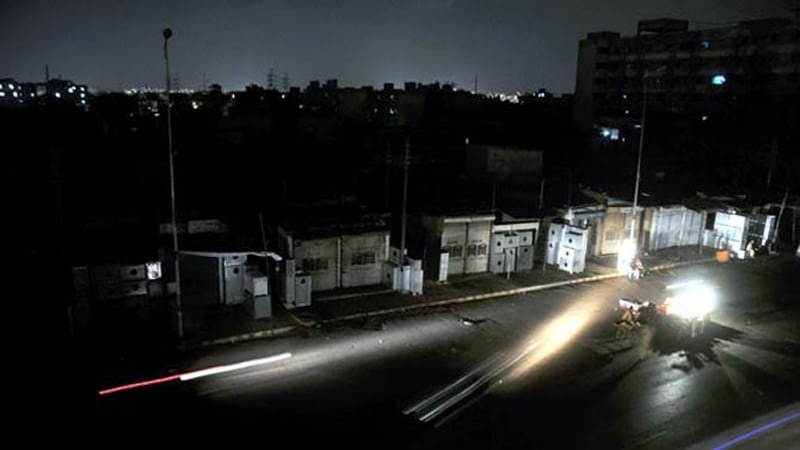
Pakistanis woke up to a nationwide power breakdown and utter confusion regarding about what is going on. But don’t worry, we got you covered. According to a statement released by the Energy Minister, the power outrage has gripped parts of Pakistan , begun when the country’s National Grid went out at 7: 30 am, “causing a widespread breakdown in the power system”, as per the tweet.
ابتدائی اطلاعات کے مطابق آج صبح 7:34 پر نیشنل گرڈ کی سسٹم فریکوئنسی کم ہوئ جس سے بجلی کے نظام میں وسیع بریک ڈاؤن ہوا سسٹم کی بحالی پر کام تیزی سےجاری ہے
— Ministry of Energy-Power Division, Government of P (@MoWP15) January 23, 2023
But if the lights are down, it means more meme material for Pakistanis. Any time a national crisis takes place, find your refuge on Twitter, among some of the hilarious reactions churning out since this morning.
they’re trying to fix the country by turning it off and on again.
Transgender activist Shahzadi Rai has said on Friday that Fly Dubai had barred her and another transgender activist from travelling on their flight. Rai took to Twitter to share her experience with Fly Dubai stating that she and her Project Manager Zarish were barred from travelling from Karachi to Dubai because of her X gender. The activist who works with the Gender Interactive Alliance narrated the incident in a video clip.
“We had a flight to attend our annual meeting, me and my project manager, Zarish. But they cancelled our ticket because we had written X in our gender category. This is extremely transphobic.”
In the next tweet, Rai shared a screenshot of her flight ticket and wrote that although transgender people are a part of mainstream community in other countries, it was shocking to witness Fly Dubai indulge in transphobic behavior. “Transgender persons are part of the main stream in other countries but Fly Dubai doesn’t allow x-gender cards to travel, Transphobic behaviour by Fly Dubai, if they don’t allow us to travel on their plane, why did they issue a ticket.”
Transgender persons are part in main stream in other countries but Fly Dubai don’t allow x-gender cards to travel, Transphobic behaviour by Fly Dubai, if they don’t allow to travel on plane so why they issue ticket. pic.twitter.com/Zck4Sgqtvp
Since this post was uploaded yesterday, many transgender activists and otter public figures have criticized the airline. Transgender activists like Mehrub Moiz Awan and Hina Baloch slammed Fly Dubai on their twitter accounts, and have called for Pakistan’s Foreign Office to address the matter.
@flydubai you need to give an official answer as to why THREE Pakistani citizens with the X gender marker on their passports were not allowed to board their flights. All three khwajasiras/transgender persons were issued tickets but not allowed to board. https://t.co/CRRN68LxnX
Today @ShahzadiRai was barred from boarding @flydubai flight KHI-DXB-KTM, UAE still lives in the stone age & they don’t recognize our Hijra Communities (Gender X on passport). This is Hijraphobia & we urge @ForeignOfficePk to look into this matter asap @UAE_karachi@uaeembassyisb
Lahore Police have initiated an inquiry of the alleged torture incident of a student by her classmates at a private school in Lahore, ARY has reported.
A video of the incident shows three girls forcing their classmate to the ground, then sitting on her back. One of the girls can be seen pulling the victim’s hair and swearing at her while making her apologise .
The incident’s First Information Report (FIR) has been recorded on the complaint submitted by Imran, the victim’s father, accusing his daughter’s classmate J of being a drug addict and forcing her daughter to do drugs with her.
According to the FIR, J tormented the victim alongside her sister K, U and N R The victim’s father also said that they stole the gold chain his daughter was wearing.
Police is yet to arrest the girls named in the FIR.
The School has issued a statement in this regard saying that “it strongly condemns the incident that recently took place.”
“Our school culture is our highest priority and we uphold our core values of honor, respect, compassion and responsibility,”
The National Highway and Motorway Police (NHMP) has announced a new initiative to facilitate travellers by issuing daily journey planners that would help drivers navigate the highway more efficiently.
The spokesperson of NHMP said that the project of journey planners has been initiated at the direction of Inspector General NHMP, Khalid Mahmood.
He stated that in addition to any planned construction or maintenance that may affect travel times, the planners would also take into account information such as traffic updates, road closures, weather updates, and accident reports.
By informing drivers of any potential risks or delays, the Motorway Police hope that this new service will assist in shortening travel times and increasing safety on the highways, the official said, adding that the planners would be accessible online through the website and social media channels. The trip planner has received a great deal of appreciation, and the NHMP is dedicated to giving its consumers helpful information. It also continues to receive excellent feedback.
Travelers reported that the trip planners have shortened their travel distances and increased road safety. Adnan Jameel, a motorist on the M-1 motorway, told APP that the planner had made it easier for him to organise his trip and prevent any unwelcome shocks along the route.
Researchers have identified the four abilities that are most in demand in evolving workplaces by analysing hundreds of millions of recent job listings in the US. The report How Skills are Disrupting Work was developed in collaboration with the Business-Higher Education Forum (BHEF), education publisher Wiley, and the Burning Glass Institute.
One of these skill sets was included as a necessity in one out of every eight job listings, according to the researchers. The report states that, “AI/ML, Cloud Computing, Product Management, and Social Media together exemplify skills disruption and serve as a laboratory for understanding the broader trend. The five-year growth rate for these four skill sets was 122% in 2021, compared with a 10% growth rate for the average skill over the same period.”
A mureed (follower) has murdered a Pir (spiritual healer) in Faisalabad after the amulet he was given failed in reconciliation with his wife.
Muhammad Hassan had been given an amulet by Pir Sajjad to help reconcile his relationship with his estranged wife. However, the amulet failed to do what had been promised to Hassan, leading to his marriage ending in a divorce.
The angry mureed then murdered the Pir.
Police have arrested Muhammad Hasan and said that he kidnapped Pir Sajid 10 days ago. After killing the Pir, Hasan threw his body into a nearby canal.
Muhammad Hasan told the police that he donated a lot of money to the Pir for the patch-up with his wife but all the donations and amulet did not work and instead he got divorced.
Sajid’s brother Sabir informed the police when his follower’s in-laws took his wife’s belongings from his house. “He came to our place and took Sajid with him,” the brother reportedly said.
Local police are conducting raids to find the people who helped Hasan in the killing.
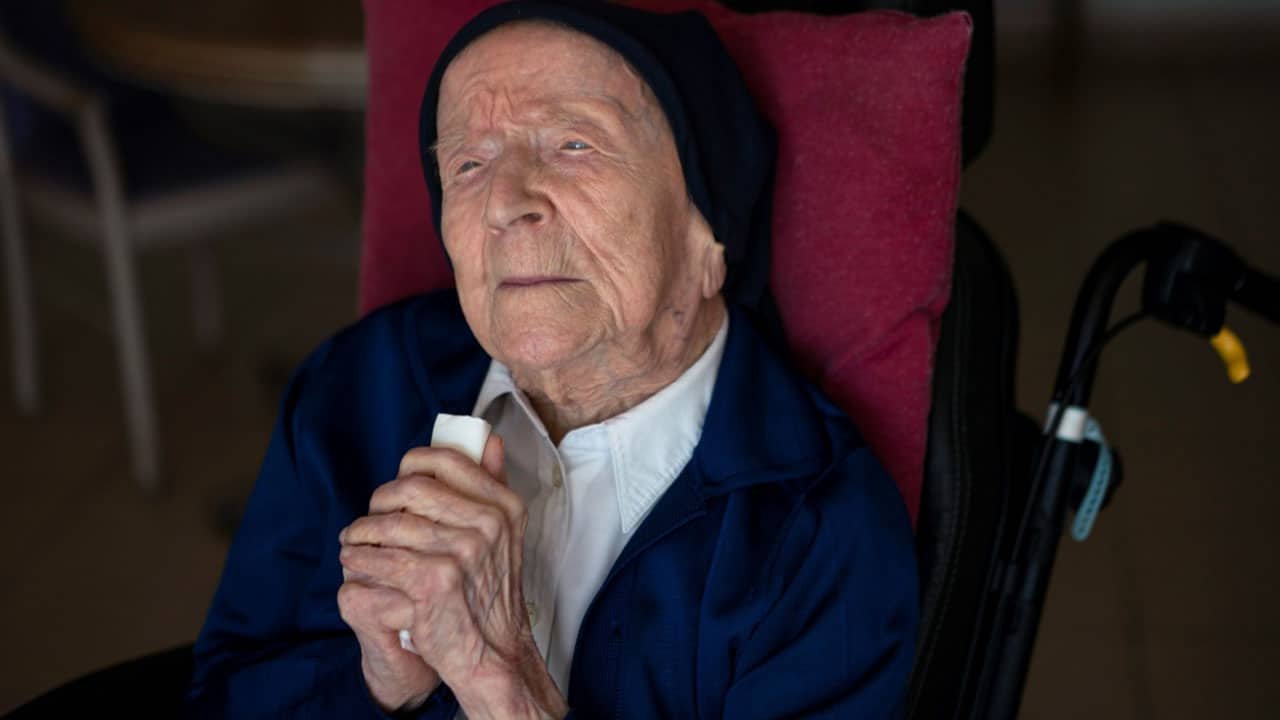
The oldest person in the world, French nun Lucile Randon, has died at the age of 118.
Randon, who took the name of Sister Andre when she became a nun in 1944, died in her sleep on January 17 at the nursing home where she lived.
According to BBC, Randon was born on February 11, 1904, and was the world’s oldest living person according to the Gerontology Research Group’s (GRG) World Supercentenarian Rankings List.
Long recognised as the oldest person in Europe, she became the world’s oldest following the death of Japan’s Kane Tanaka at 119 in 2022. Guinness World Records officially acknowledged her status.
“There is great sadness but … it was her desire to join her beloved brother. For her, it’s a liberation,” spokesperson David Tavella, of the Sainte-Catherine-Laboure nursing home in the southern French town of Toulon, told the AFP news agency.
Randon was born in the year New York opened its first subway, and World War I was still a decade away.
She grew up in a Protestant family as the only girl among three brothers, living in the southern town of Ales, France.
One of her fondest memories was the return of two of her brothers at the end of the war in 1918, she told AFP in an interview on her 116th birthday.
“It was rare, in families, there were usually two dead rather than two alive. They both came back,” she said.
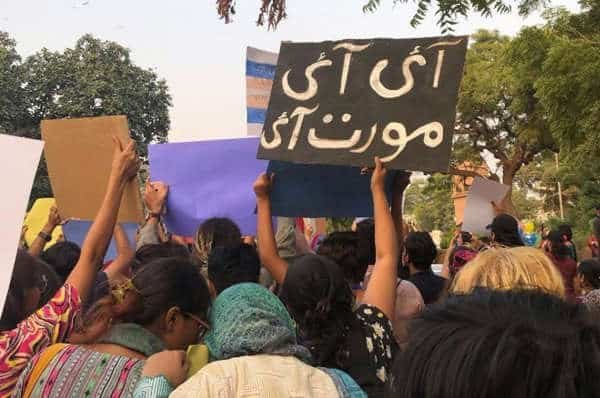
Thousands of people participated in a march on Monday in Strasbourg, France, to show support for the Iranian opposition movement in favour of women’s rights.
The famous Eiffel Tower became part of the demonstration as well as the landmark was illuminated with pro-Iranian demonstrators and pro-women activists’ messages.
“Woman. Life. Freedom” and “StopExecutionsInIran,” were displayed on the tower.
The protests in Iran were triggered after Mahsa Amini, died on September 16, 2022, while being held by the morality police for allegedly breaking a rigorously adhered-to Islamic clothing code. This incident served as the impetus for the protests in Iran. Despite widespread criticism, Iran has arrested many people for crimes connected to the uprising started by Mahsa Amini’s killing..
By Anum Hanif, Lubna Jerar Naqvi, Shreya Pareek, Zeba Warsi
Sara Zafar Mir, a social media entrepreneur from Karachi, Pakistan, is busy making her own money. She specializes in premium baby products and Facebook is her social media platform of choice. Every day, she reaches more than 150,000 followers who are all potential buyers, bringing to them customized baby clothes and postpartum care packages at the click of a button. She leads this while also raising two young pre-teens.
Mir said: “I am blessed to have a supportive husband and in-laws, who go out of their way to help me in my work. Both my kids help me in my business. It is great to be able to lean on family when needed.”
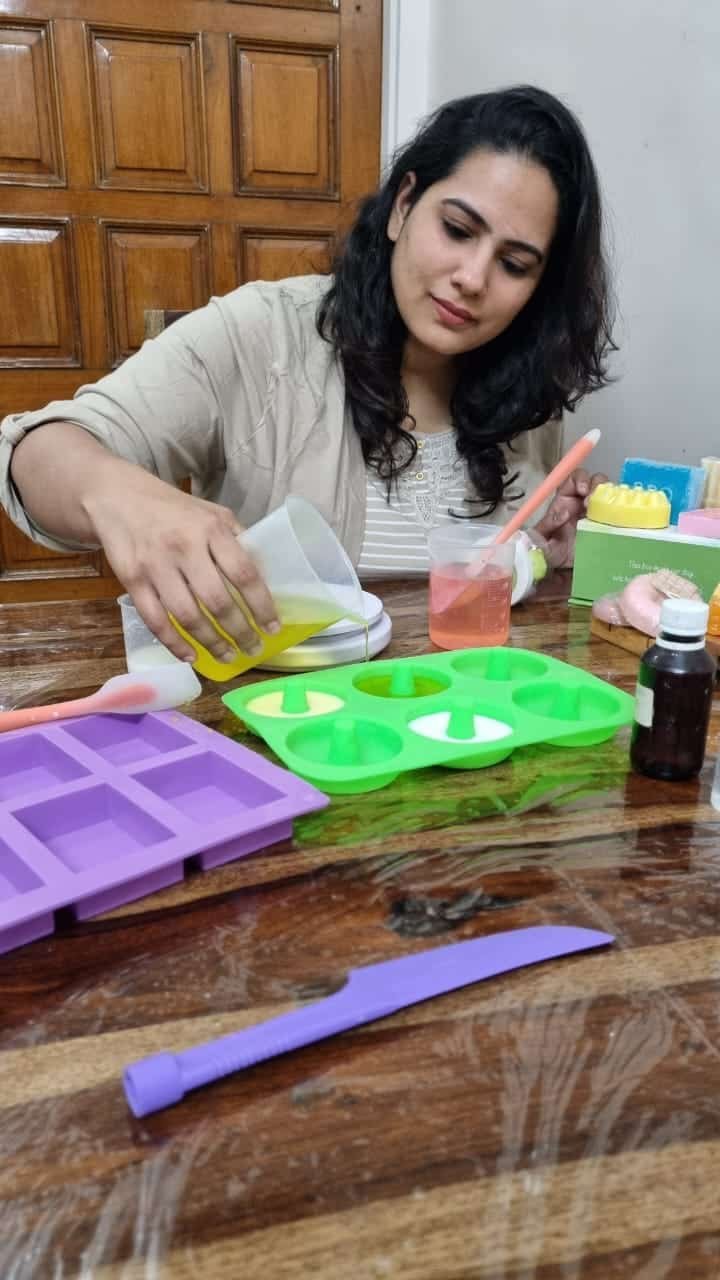
Nearly 500 miles away, in Jaipur, India, thirty-one-year-old Kriti Gupta has a busy morning ahead. She needs to get her daughter ready for school while her toddler demands her attention. Amid this hustle, Gupta’s phone chimes. It’s an Instagram notification. One of her clients has left a thank-you message for the timely delivery and premium quality of soap she sold on the social networking app. Like Mir, Gupta is also a social media entrepreneur who has built a credible brand of customized soaps and toiletries.
Both Mir and Gupta may be separated by the India-Pakistan border, but their similarities far outweigh their differences. They both belong to a new generation of South Asian boss ladies who are taking social media by storm. They’re creating unique online businesses. They use Instagram, WhatsApp, and Facebook, not just to post selfies, or share pictures of their baby showers and family dinners but to earn a livelihood, chase their dreams, and be financially independent.
Over 4.26 billion people use social media worldwide, a number projected to increase to almost six billion in 2027. That’s where a new, dynamic market is emerging, and South Asian women entrepreneurs are here to reach that whole new world of consumers. They are breaking stereotypes and patriarchal norms which had long been dominant in South Asian communities.
Mir, a Kashmiri, was married off at a very young age, moving to Karachi with her new husband. As a young mother in Karachi in 2013, Mir found herself searching for premium baby products and felt that there was a void to be filled. That led her to start Mummy and MiniMe, which is almost like her third baby.
Mir was a teacher before she got married. She left her job when she moved to Karachi. After her son was born, she was ready to start something but didn’t quite know what and how.
“At the time my son was young, so I would always be looking for baby clothes, shoes and products,” Mir said, “so I had some experiences (laughs). I realized that Karachi has some very good quality products which you don’t find in other cities.”
She explored the internet and found that there were not a lot of people in Pakistan who offered quality products at affordable prices. “We began with PKR 25,000 at the time, which is not a lot of investment,” she added. And so, Mother and MiniMe was born on Facebook and then expanded to Instagram. After the launch of her business, Mir was joined by her sister-in-law Nauwarah, who was studying at the time. Mummy and MiniMe currently has 157,673 people following on Facebook and 4,782 followers on Instagram.
“My goal as a young mother was to provide affordability and uniqueness. When I used to shop for my son, I realized there were so many options and I thought to help mothers to get quality stuff in one place,” Sara said. Apart from baby products she also began curating wooden toys. With time, the online space started becoming saturated. Many new businesses popped up online and the online market became competitive.
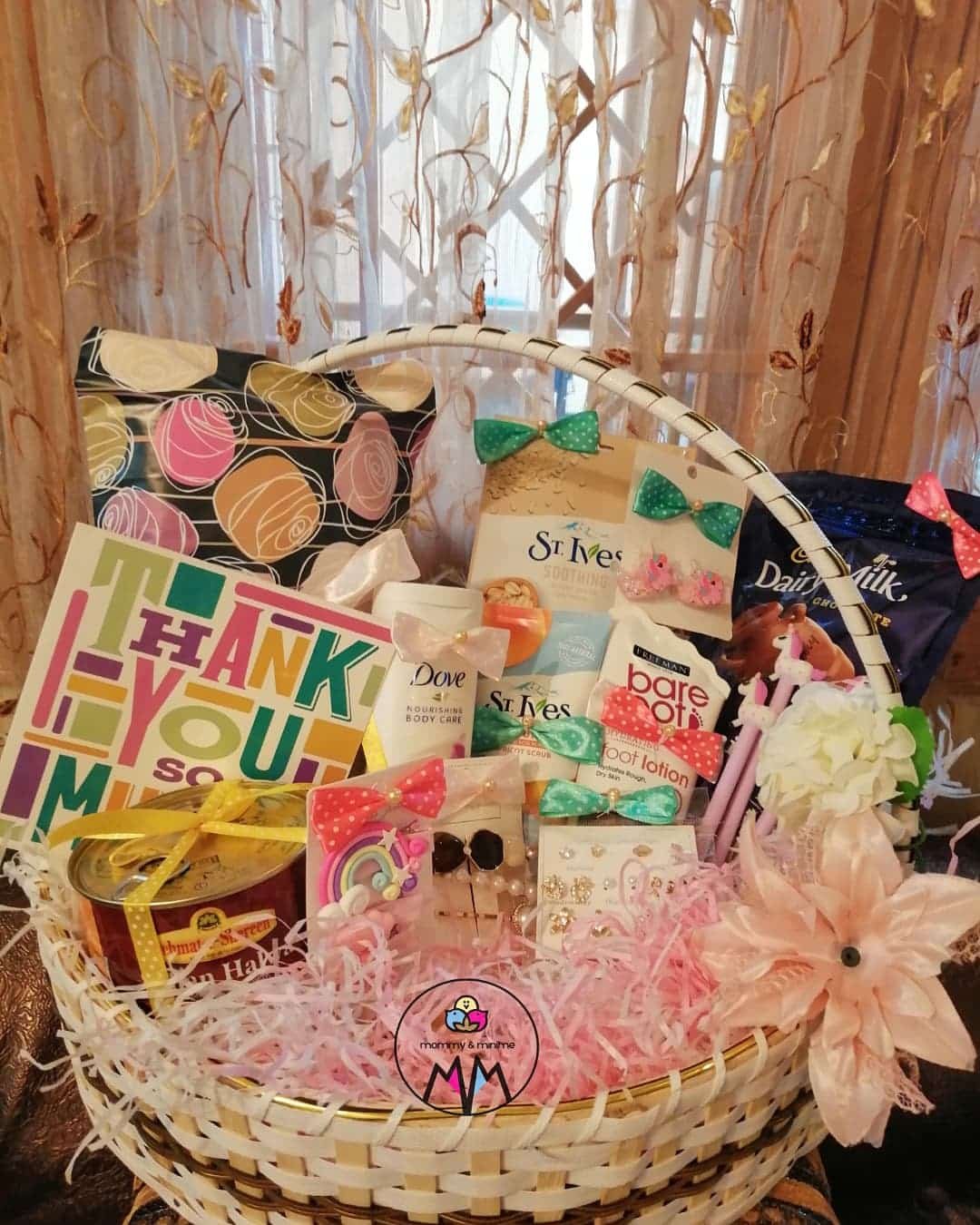
“In 2017, I realized that we need a new strategy. So, we began offering baby gift baskets for new-borns. This is now a favorite among our customers. Mostly grandmothers, aunts, and friends are ordering these.” Mir then started collaborating with bloggers on social media to promote her products.
“I sent a basket with panjeeri (nutritious mixture) to this blogger who had lost her mother and had just had a baby. When I sent her a PR basket, she called me crying saying that my mother used to send her this,” Mir said.
On the other side of the border, Gupta is running her own little online empire with the support of her family.
Gupta said: “My Insta-shop never shuts down. It is open 24×7. Living in a joint family I have realized that everything is manageable if you have a good mother-in-law. And I am blessed in that department,” Gupta said. Living in a three-storey home in Jaipur in northwestern India, she cradles her toddler in one arm, while updating her Instagram business account with the other. The festive season is upon her, she has an order of more than 50 exclusive bath hampers in the pipeline. But she knows she can make it with the support of her family.
Born and brought up in Bangkok, Gupta was 21 years old when she moved to India to get married. Initially, it was a culture shock to settle down in a rich but conservative Marwari (an Indian ethnic group from Rajasthan) family. She dropped out of journalism school to have her dream wedding. Soon, she had her first child, and her career took a back seat. It was on her daughter’s fifth birthday in 2020 that she kickstarted her entrepreneurial journey by starting Bath and Bubble Co, a brand that sells handmade, natural, artisan soaps and bath products.
The business model
In Pakistan, Mir’s business has now reached a stage where she earns a decent living since she first began in 2013. The revenue spikes during Eid but even otherwise her business is consistent and is doing good. She receives around 10-15 queries a week. And a good 80 percent of those convert to sales.
Since it takes time to build trust among customers online, many first-time buyers pay through cash on delivery but the majority of her customers make online payments. Due to her regular and direct engagement with customers online, Mir’s business rarely sees any returns or exchanges.
“It is hard work. You have to be consistent and patient. With time, we can get an idea who is going to continue ordering products and who is there just to window shop, just like a regular retail shop,” Mir said.
There are thousands of such women who use social media exclusively as their main marketplace, especially in South Asian countries.
In India, Gupta exclusively uses Instagram to sell her products. Despite her humble 760 followers on Instagram, she has already found some dedicated and returning customers. Gupta offers over 25 varieties of exclusive, natural soaps. Currently shipping across India, Gupta’s products are favorite among children due to their quirky and colorful designs. Her personalized hampers are a huge hit and are often ordered in bulk through Instagram and WhatsApp for special occasions. Since creating a website or an offline store would require a huge investment of money and time, she decided to stick to Instagram in the beginning.
Gupta manages to get four-to-five queries each day through Instagram. A majority of her buyers use Instagram DMs and WhatsApp to place orders and use online modes of payments like Google Pay or PayTm. Gupta also mentioned how using the right hashtags and trending reels has helped her reach her target audience. The visual format on Instagram has helped business owners like Gupta to connect with her customers in a better way. She claims it is easier to track her customers on a real-time basis on social media and immediately find out what is working for them. Instagram trends also help in boosting the sales.
“You never know what clicks. You have to constantly keep thinking of new ideas. I am currently manufacturing the soaps myself at home after I send my daughter off to school. I soon plan to set up a separate space for my business. The first person I plan to hire is someone who can handle our social media,” she said.
The rise and rise of social media
Economies worldwide have been disrupted by the pandemic, but it has also created new opportunities to do business through social media. Women-owned businesses have received a big boost in recent years. And with a second income coming in, the standard of living of most families has improved. This means the women are not only being empowered financially, but are also getting family support and acceptance for their role as working women.
Nighat Dad from Lahore, Pakistan, a lawyer, internet activist and founder and executive director of Digital Rights Foundation has closely tracked the trend of women using social media for their growing businesses in recent years. “I have so many examples of women who started online businesses and they have grown over the years. They started to have an online presence. A couple of years back, women were really not confident about using these platforms (social media) for their businesses not only in terms of what to do and how to use these platforms but also not having knowledge of financial gains and opportunities,” Dad said.
In Pakistan, Instagram has gradually become the preferred choice to run businesses replacing Facebook as the most popular platform. In 2019, Facebook signed a Memorandum of Understanding of its #SheMeansBusiness with Lahore Chamber of Commerce and industry to provide support in hands on training, skills enhancement and resources to women. This was a major step towards empowering women to become entrepreneurs. It is estimated that women’s earnings in Pakistan have increased by four percent compared to previous year. One of the reasons is start-ups owned by women, and social media has played a pivotal role in helping them grow their businesses.
In India, Sairee Chahal, founder of “Sheroes”, India’s first women-only social media network, has also looked into the changing trends of how women are using social media.
Chahal said: “When I started Sheroes, there were maybe 10 million women online in India. Today, there are 350 million women who are online, who have tasted the internet at least once and there’s an increasing number of women who are using this to their advantage.”
Chahal, who started her first company in 1999 as a first-generation entrepreneur shares her insights on how digital platforms have helped many women entrepreneurs grow: “The mobile phone in a very patriarchal society is a personal device, it has your name on it. And once you have it, there’s no looking back.”
For women in a patriarchal setup, running a business requires much more than entrepreneurial skills. There are many family dynamics that women are expected to navigate and balance.
“Women are invisible in their societal setups, whether it’s families or the work that they do both at home and outside. It’s this recognition that is driving women online. Look on the internet, everybody’s somebody you know. You’re the handler, you are handling your content. So, this recognition more than other things is what makes a difference,” Chahal said. She also said that only 9 percent of women are in the formal workforce. That means that most women are left to fend for themselves.
Thanks to social media, women are now getting a fair chance to establish their businesses and sustain a balanced personal and professional life.
Not all’s well in the digital universe
Although social media has played a pivotal role in helping women become financially independent, it also has its share of challenges. The major issue that entrepreneurs like Gupta and Mir face is developing a sense of trust among customers since it is difficult to showcase the quality of products through just pictures and videos. Another concern shared by various women was the easy imitation of handcrafted products at lower prices. This makes it difficult for micro-entrepreneurs to compete in the vast market.
The digital world can also be intimidating for some entrepreneurs who belong to a different generation. So, while it is a blessing for some women who have grown up with technology, it might not work for others who are still trying to get used to it.
“Social media can be very demanding and takes a toll on one’s life. We have to constantly think of the next reel, next trend, and next viral post,” Gupta said. At the same time, there is a serious threat to cyber security. Several entrepreneurs have found their accounts to be hacked causing them not just financial but also immense emotional loss.
“Sometimes I feel it is easier to make soaps as compared to making an Instagram reel,” Gupta said.
Dad from Pakistan believes there are serious challenges and risks associated with online entrepreneurship.
“All kinds of challenges these women face in terms of harassment, finances, and stumbling upon bad actors online and trusting them. In offline spaces, sometimes they are earning but sometimes they don’t own what they are earning due to having a patriarchal society. Even if you are earning, you really don’t have ownership of your income,” she added.
She also emphasized how women who work online should be aware of their rights. “How safe their devices are, how safe their platforms are, how much women know about digital security, and how strong are their passwords,” she added. Dad’s foundation has a toll-free number on its website to help women entrepreneurs in need.
While Dad is providing much-needed help to the women entrepreneurs of Pakistan, Chahal is filling this gap in India. She uses her platform ‘Sheroes not only provide livelihood and financial support to women but also the offer crucial mental support to them. Over three million women have benefited from Sheroes’ counseling services. During the pandemic, Sheroes launched a digital bank called Mahila Money. The platform exclusively serves women who are not served by microfinance. Sheroes also acts as a marketplace for women where they can sell a range of items online.
Is this the beginning of a new revolution?
This rise of women entrepreneurs on social media is not just restricted to South Asia. It is a global phenomenon attracting millions of dollars of investment.
In 2020 Facebook COO Sheryl Sandberg announced that the social media giant is investing $100 million to help 30,000 small businesses in over 30 countries. According to the latest statistics, there are 252 million female business owners in the world.
In 2021, Instamojo saw a 14.83 per cent spike in new female users in comparison to a five per cent drop in male new users. This shows that women are more eager to start their own businesses now and want to go online. Social media has enabled women to connect across boundaries, cultures, genders and has shown a positive trend where many women are comfortable establishing their businesses in a male-dominated society.
“I never got a chance to look back and see how far I have come. I can’t believe that something which was just an idea or a dream is now a fully functional business. It has not just made me financially independent but has also given my life a new purpose,” Gupta said.
Mir, who started her business with a small investment of 25000 Pakistani rupees, is always looking for innovative ideas to continually grow her business.