Category: Lifestyle

The lifestyle of millennials is underreported in our mainstream media. The Current’s lifestyle news covers social events and issues that are unique.

  • World Bank, Asian Development Bank approve millions of dollar loans for Pakistan

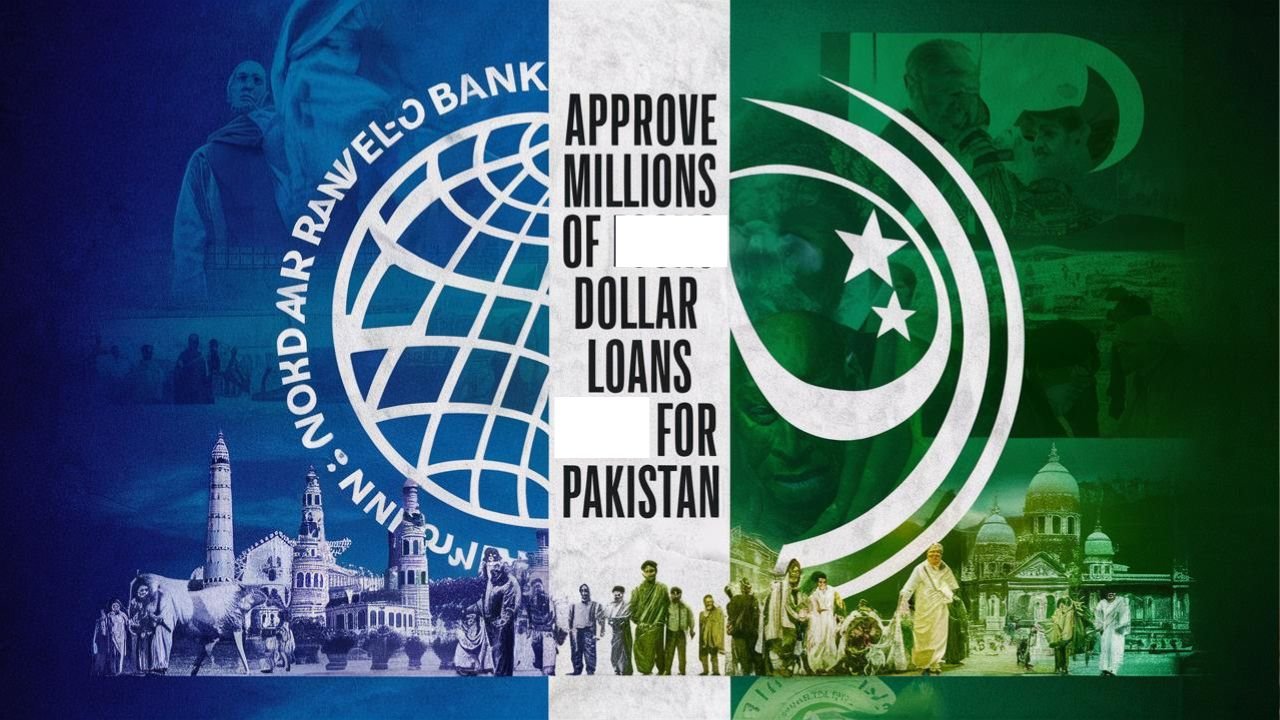
    World Bank, Asian Development Bank approve millions of dollar loans for Pakistan

    The World Bank and Asian Development Bank (ADB) have approved big loans for Pakistan.

    Asian Development Bank

    Pakistan and the Asian Development Bank signed a $250 million policy-based loan agreement to promote sustainable infrastructure and services through Public-Private Partnerships (PPPs).

    The agreement also aims to develop post-flood infrastructure, emphasizing climate resilience and gender considerations in project planning.

    A technical assistance grant of $700,000 was allocated for program implementation, with an additional $950,000 approved for PPP pipeline development and capacity building.


    World Bank

    The World Bank has approved loans of $535 million for Pakistan, focused on two key areas: the Crisis Resilient Social Protection (CRISP) Programme and the Sindh Livestock and Aquaculture Sectors Transformation Project.

    The CRISP Programme includes a $400 million loan to improve security schemes, particularly through the Benazir Income Support Programme (BISP), to build resilience among vulnerable households against economic and climate shocks.

    The World Bank defends criticism against BISP by stressing the need to strengthen social protection despite increasing poverty rates exacerbated by recent economic challenges and climate shocks.

    Additionally, the World Bank approved $135 million for the Sindh Livestock and Aquaculture Sectors Transformation Project, which targets climate-smart practices and enhances competitiveness among small and medium producers in Sindh. This initiative aims to benefit over 940,000 farm families, strongly emphasising gender inclusivity and provincial capacity building.
  • Pakistan’s first Human Milk Bank in Sindh suspended

    Pakistan’s first Human Milk Bank in Sindh suspended

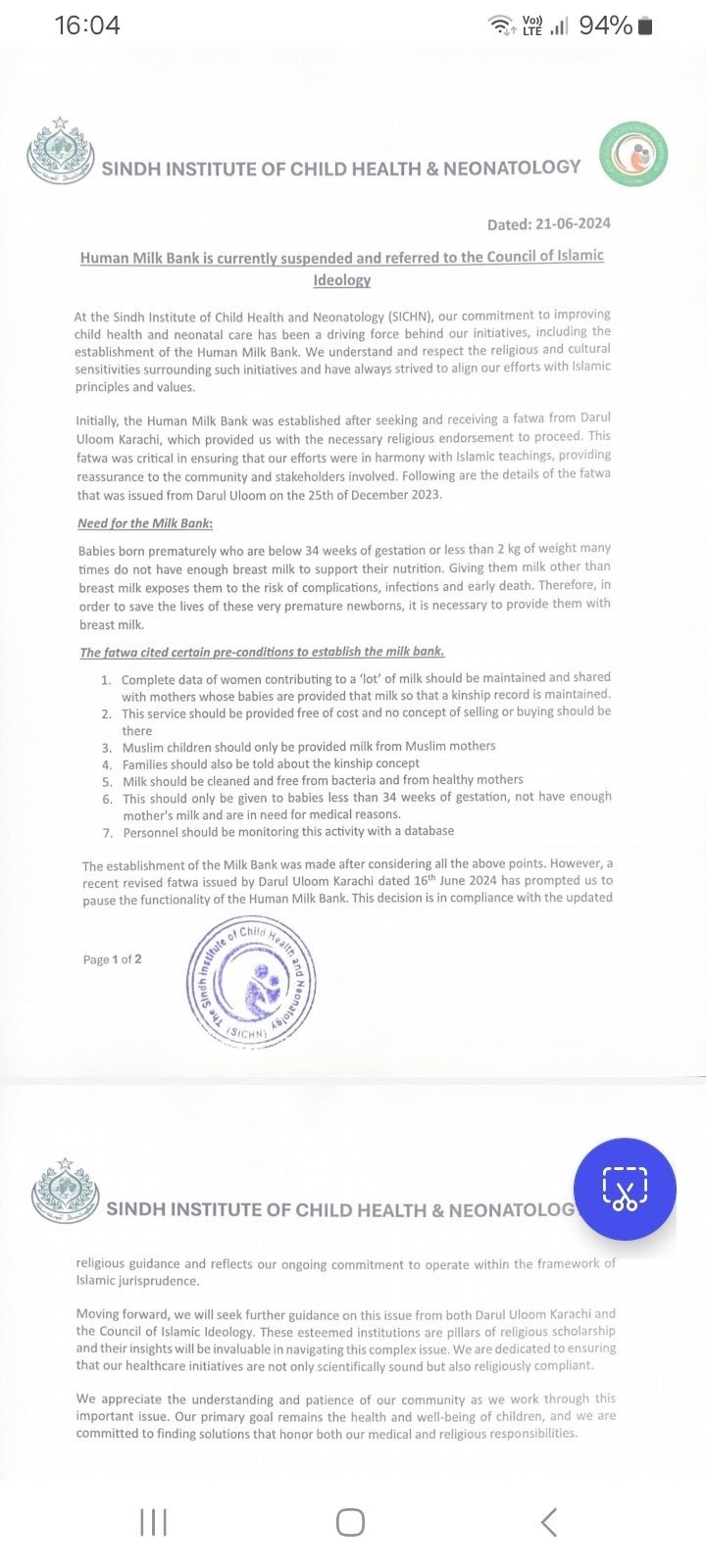
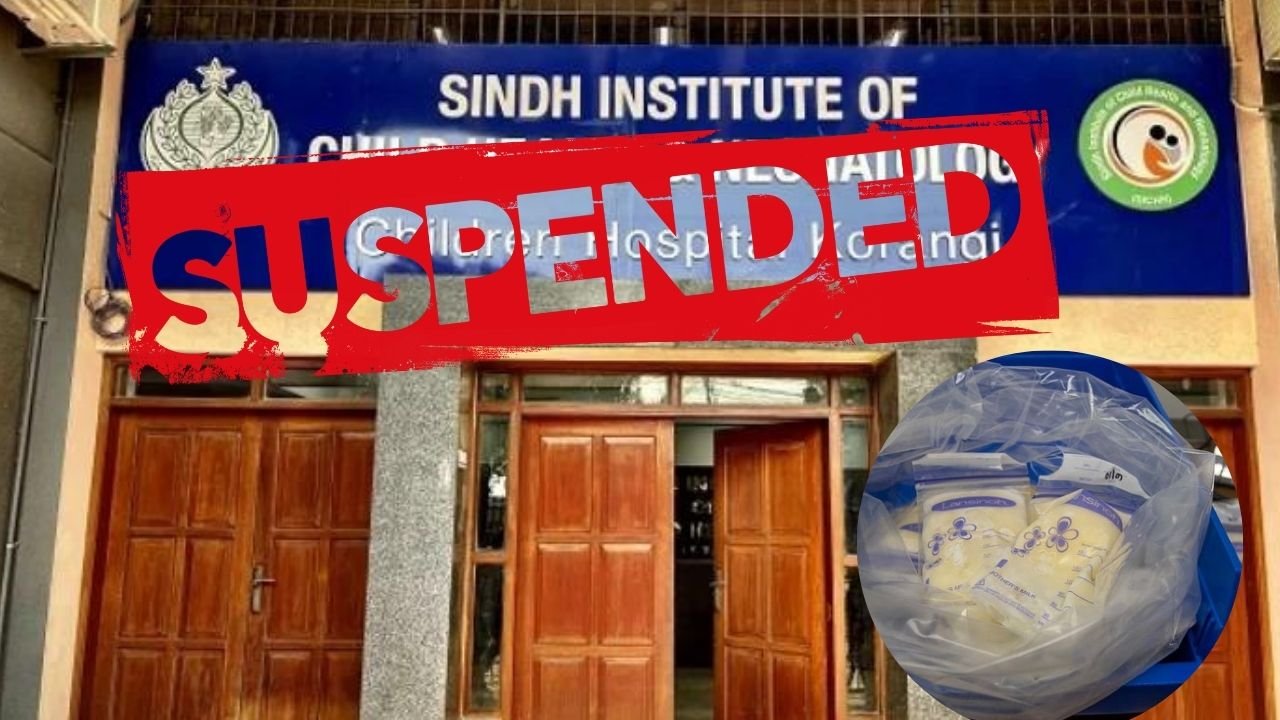
    Following a recently revised fatwa from Dar ul Uloom Karachi, the Sindh Institute of Child Health and Neonatology (SICHN) in Karachi announced on Friday the suspension of its ‘Human Milk Bank’ and referred the matter to the Council of Islamic Ideology (CII) for further guidance.

    “Initially, the Human Milk Bank was established after seeing and receiving a fatwa from Darul Uloom Karachi, which provides religious endorsement to proceed,” the notification stated, elaborating on the basis of establishing SICHN.

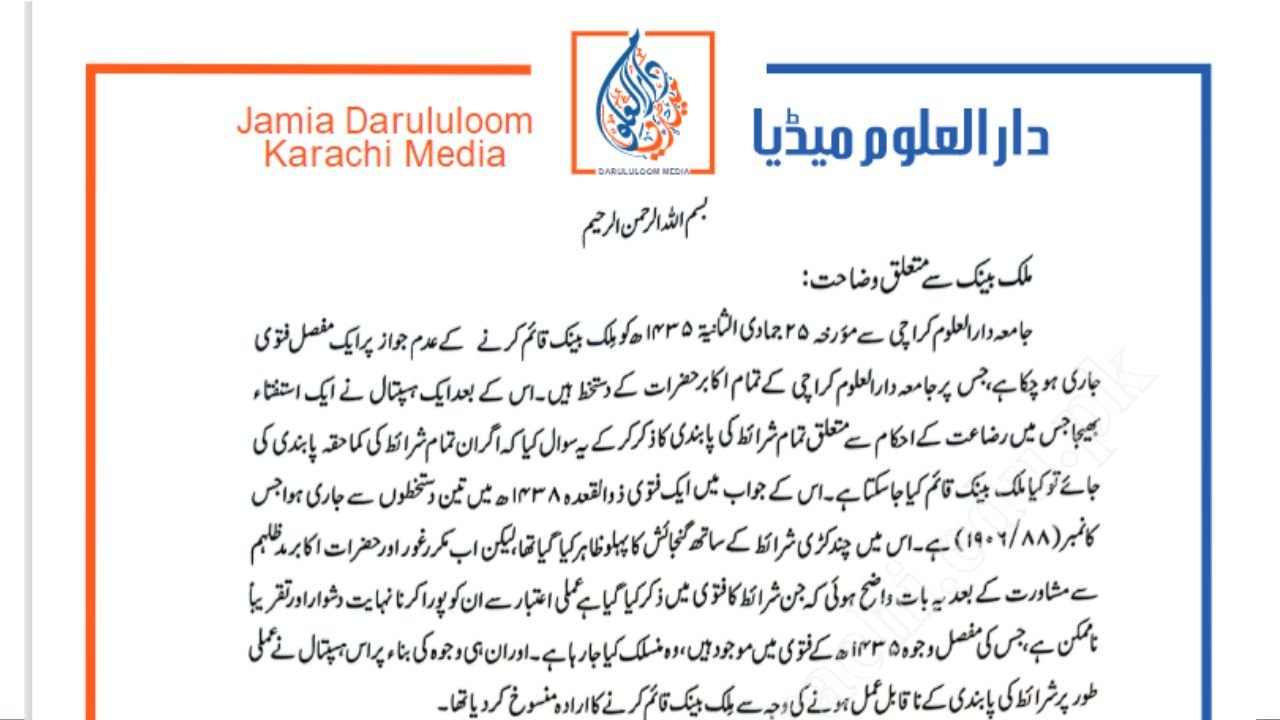
    However, a recently revised fatwa issued by Darul Uloom Karachi dated June 16, 2024, has prompted SICHN to discontinue the functionality of the Human Milk Bank and seek further guidance from Dar ul Uloom.

    Pakistan’s first Shariah-compliant Human Milk Bank and Early Childhood Center at SICHN was inaugurated on June 10 by Sindh Health Minister Dr. Azra Pechuho, along with officials from UNICEF and the Pakistan Pediatric Association (PPA).

    It was intended to provide breast milk to babies “born before 34 weeks of gestation or less than 2 kg of weight” who could not receive the required nutrition from their mothers.

    The official statement also highlighted details of the fatwa, issued on December 25, 2023, that were made conditional for the endorsement of the milk bank, e.g., that Muslim children only be given Muslim women’s milk, ensuring kinship, hygiene, and that this service should be provided free of cost.

    However, the recent fatwa available on Dar ul Uloom Karachi’s official website includes a detailed analysis of the establishment of a milk bank that did not comply with Shariah laws because of the hard maintenance of the concept of kinship and other religious concerns.

  • Over 12 hours of electricity load shedding in Karachi

    Over 12 hours of electricity load shedding in Karachi

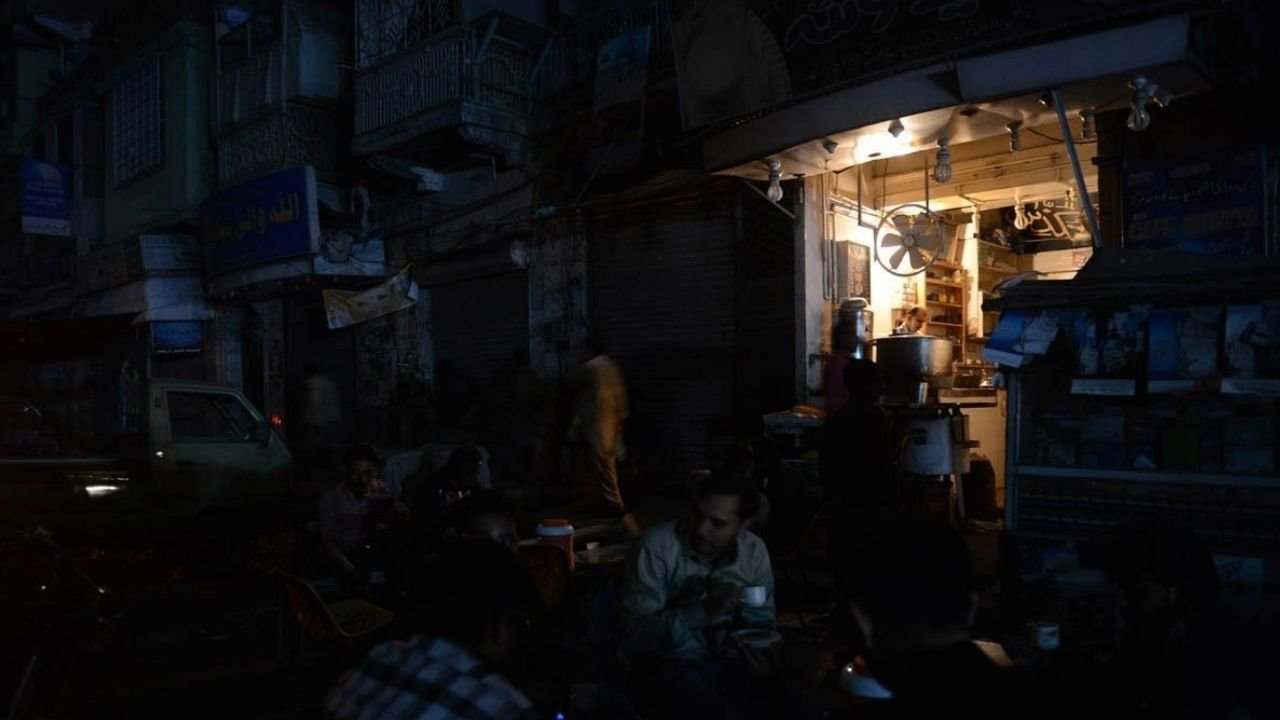
    Amid intense heat, Karachi continues to face severe electricity load shedding lasting between 12 and 14 hours. Despite the challenging weather, unannounced power cuts persist throughout the city, extending well past 2 am in many areas.

    Neighbourhoods such as Lyari, Kemari, Sarjani, Baldia Town, and Orangi endure prolonged load shedding, with interruptions lasting up to 14 hours. Similarly, Gizri, Korangi, Landhi, Liaquatabad, Qayyumabad, and Shadman experience more than 10 hours of power cuts. In Malir, Memongoth, North Karachi, and North Nazimabad, residents face load shedding exceeding 12 hours.

    In response to these challenges, a spokesperson for Karachi Electric maintains that power supply across the city remains normal, despite reports of extensive and prolonged interruptions in various neighbourhoods.

  • More than 1200 students illegally admitted to 15 medical, dental colleges

    More than 1200 students illegally admitted to 15 medical, dental colleges

    New reports reveal that 15 medical and dental colleges across Pakistan have illegally admitted students.

    According to officials from the federal health ministry, last year, the Pakistan Medical and Dental Council (PMDC) had barred admissions to 15 medical and dental colleges, where over 1200 students are currently enrolled.

    Officials reported that despite warnings from the PMDC, these colleges granted illegal admissions to students. Previously, 15 medical colleges had received partial approval from the former Pakistan Medical Commission, while charging students fees and other expenses totaling over one billion.

    The colleges in question are located in Karachi, Sanghar, Lahore, Islamabad, Rawalpindi, and Peshawar. The FIA (Federal Investigation Agency) is currently investigating 18 medical and dental colleges implicated in the admissions scandal.

  • NEPRA wants fixed charges on electricity bills from July

    NEPRA wants fixed charges on electricity bills from July

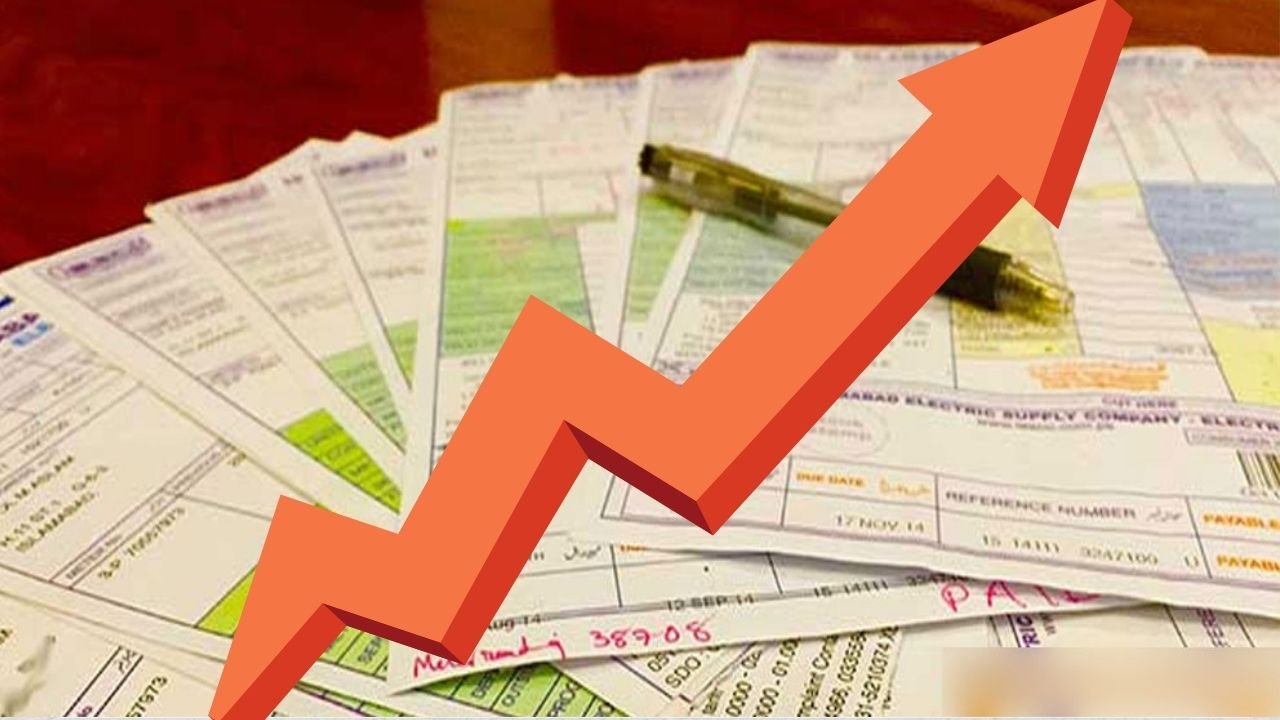
    The National Electric Power Regulatory Authority (NEPRA) has decided to impose a new electricity tariff by imposing monthly fixed charges for residential consumers from July 1, ARY News reported.

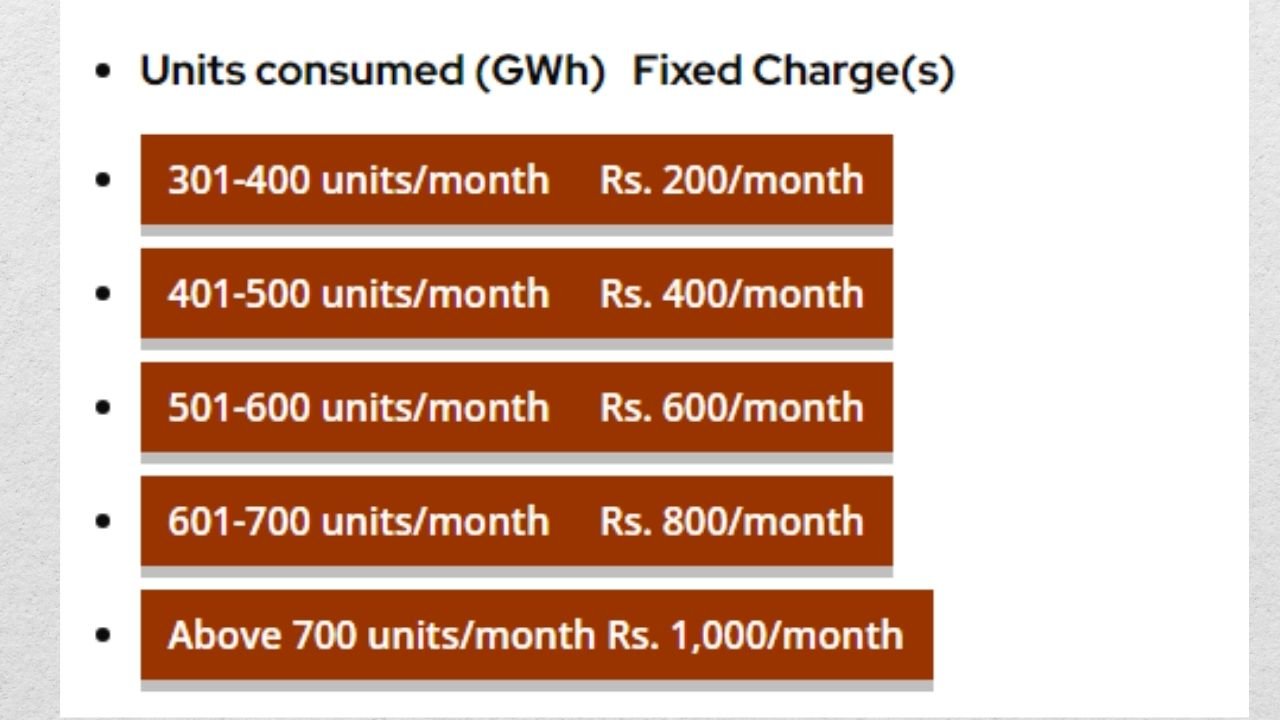
    NEPRA has proposed fixed charges of Rs200-1,000 a month in electricity bills, which the government has yet to approve.

    As per the proposal, domestic consumers using 301-400 units a month will pay Rs 200 per month from July 1, 2024, while those using 401-500 units will pay Rs400, and end electricity consumers consuming 501-600 are to pay Rs600.

    The residential consumers who use the 601-700 units will pay Rs800 a month, and those who use above 700 units will pay Rs1,000 a month.

    Residential consumers using the ToU (time of use) meter will also pay Rs1,000 fixed charges a month.

    Commercial consumers having load less than five kilowatt will also pay Rs1,000 a month as fixed charges. However, users consuming loads of five kilowatt and above will now pay Rs. 2,000 from the existing Rs500, an increase of 300 percent.

    Currently, the total cost of electricity unit comprises 72 percent fixed charges and 28 percent variable charges, according to ARY News.

    After Budget 2024-25, the federal government added Rs. 5.72 per unit in power tariff.

    NEPRA had already announced that the average electricity tariff would rise to Rs. 35.50 per unit from the current Rs. 29.78.

  • Forced activation of feeders backfires on PTI, Rehman Baba grid station not restored

    Forced activation of feeders backfires on PTI, Rehman Baba grid station not restored

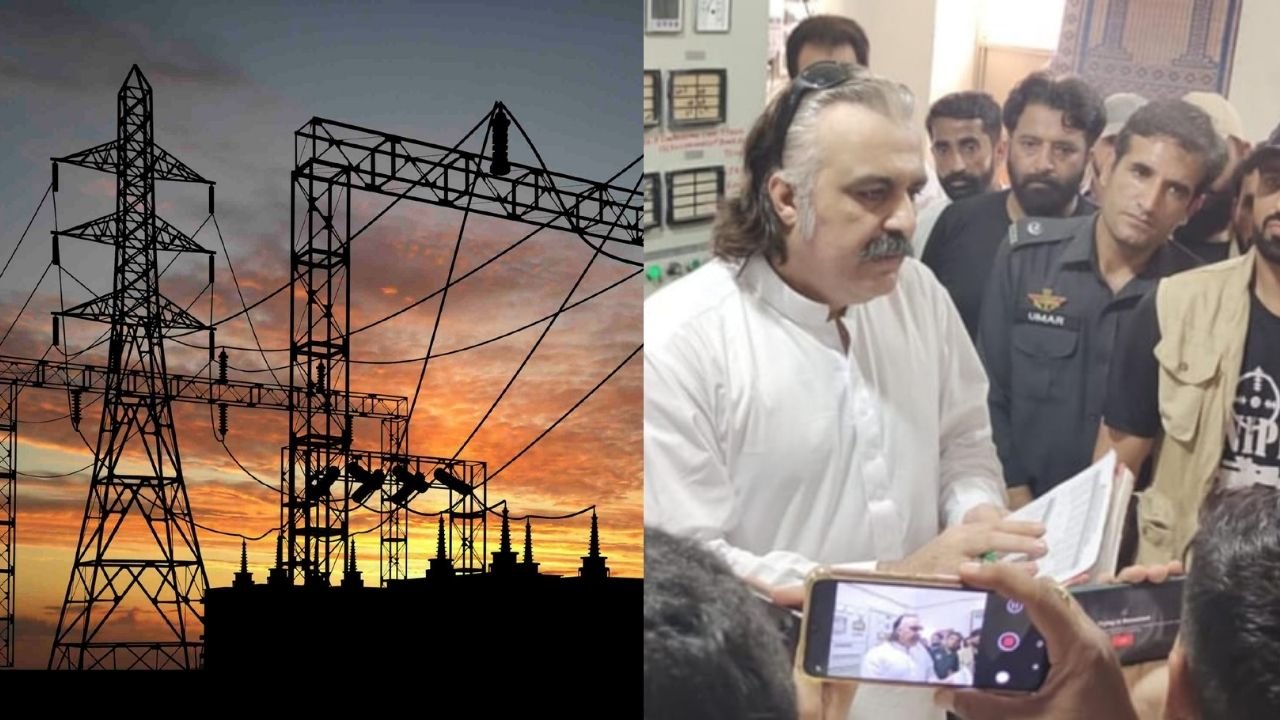
    The Rehman Baba grid station in Peshawar experienced a major technical fault after feeders were forced to remain operational by PTI leaders and their supporters, Geo News reported.

    According to the Peshawar Electric Supply Company (PESCO), power supply to 32 feeders from the grid station was disconnected after they were forced to continue.

    The spokesperson stated that at 2 o’clock that day, protesters forcibly entered the grid station and switched on the feeders.

    The angry protesters reportedly verbally abused the PESCO staff and confiscated their mobile phones.

    A PESCO team is currently engaged in repair work. Restoring electricity may take hours, and consumer issues are escalating due to ongoing protests.

    Previously, Fazal Elahi, PTI Member of the Provincial Assembly, entered the Rehman Baba Grid Station and restored power to 10 feeders.

    While earlier this week, Chief Minister Ali Amin Gandapur visited the Dera Ismail Khan grid station following unannounced load shedding of electricity in Khyber Pakhtunkhwa. He issued a clear threat to the federal government, stating that if power supply to the National Grid from the province is reduced, he will halt it. Gandapur further criticised WAPDA for mistreating the province, accused government officials of holding positions through electoral fraud, and asserted that the federal government is neglecting its responsibilities.

  • 10 easiest European citizenships

    10 easiest European citizenships

    Many people from developing countries aspire to acquire citizenship in European states. Some countries offer relatively straightforward paths to citizenship, while others present significant challenges. Sweden stands out as the easiest country in Europe for obtaining citizenship, whereas Estonia and Latvia are the most challenging.

    A recent study by CIS analysed Eurostat immigration data from 2009 to 2021 to identify which countries have the highest and lowest rates of non-EU residents acquiring citizenship.

    The analysis revealed that the nine most challenging countries to obtain citizenship are located in Central Europe. Estonia ranks as the most difficult country for non-EU citizens to naturalise, with the lowest average acquisition rate—approximately one in 200 residents. Additionally, the acquisition rate for men in Estonia is lower at 0.58 percent compared to 0.69 percent for women.

    Latvia, the Czech Republic, and Lithuania also have acquisition rates of less than 1 percent for non-Europeans, contrasting sharply with the average of 3.56 percent across European countries. Austria, Liechtenstein, Slovakia, Slovenia, and Germany follow, granting citizenship to about one in fifty non-EU residents. Denmark, outside Central Europe, presents the next highest hurdle with an acquisition rate of 2 percent.

    Over the past decade, six of the ten most challenging countries have seen an increase in citizenship grants year-on-year, particularly Denmark, which experienced a notable rise. Germany’s acquisition rate remained stable, while Latvia, Lithuania, and Slovenia saw declines.

    Many countries implement various programs aimed at attracting foreigners, including opportunities for investment, as well as citizenship and tax benefits.

    Individuals seeking migration often favour Golden Visa and Golden Passport routes, terms that are sometimes used interchangeably despite minor distinctions.

    10 Easiest European Countries to Get Citizenship

    According to the report, Sweden ranks as the easiest country, with nearly one in ten (9.3 Perce) non-EU residents obtaining citizenship—more than double the EU average.

    Sweden boasts the highest acceptance rates for both genders, with women experiencing a slightly higher acceptance rate of 10.02 percent compared to 8.66 percent for men.

    Norway, the Netherlands, Portugal, and Iceland follow as the second to fifth easiest countries to acquire citizenship, with an acquisition rate of one in 25 (4 percent).

    Data shows that northern European countries generally have the highest citizenship acquisition rates, with Sweden, Norway, Iceland, and Finland leading the pack.

    In southern Europe, Portugal emerges as the easiest, while the Netherlands, Ireland, and the United Kingdom are the most accessible Western European states for citizenship. The UK ranks eighth, with nearly three in 50 (3.2 percent) residents granted citizenship.

    Poland and Croatia are the easiest countries in Central Europe for changing nationality, with acquisition rates of 4 percent and 3.9 percent respectively. Northern and Western Europe present the most accessible regions for nationality changes, with an acquisition rate of 5.9 percent compared to 1.9 percent in Central Europe and 3.6 percent in the South.

  • What is special about today?

    What is special about today?

    Today, June 21, will be the longest day and shortest night of the year.

    The duration of the day today will be about 14 hours, while the duration of the night will be 10 hours.

    After July 1, the length of day will begin to decrease gradually, and on September 22, the length of day and night will be almost equal.

    Chief Meteorologist Sardar Sarfraz told Samaa, that today in Islamabad, the day will be 14 hours 32 minutes, and the night will be 9 hours 28 minutes, while in Karachi, the day will be 13 hours 41 minutes and the night will be 10 hours 19 minutes.

  • Modi leads yoga day event in Indian-occupied Kashmir

    Modi leads yoga day event in Indian-occupied Kashmir

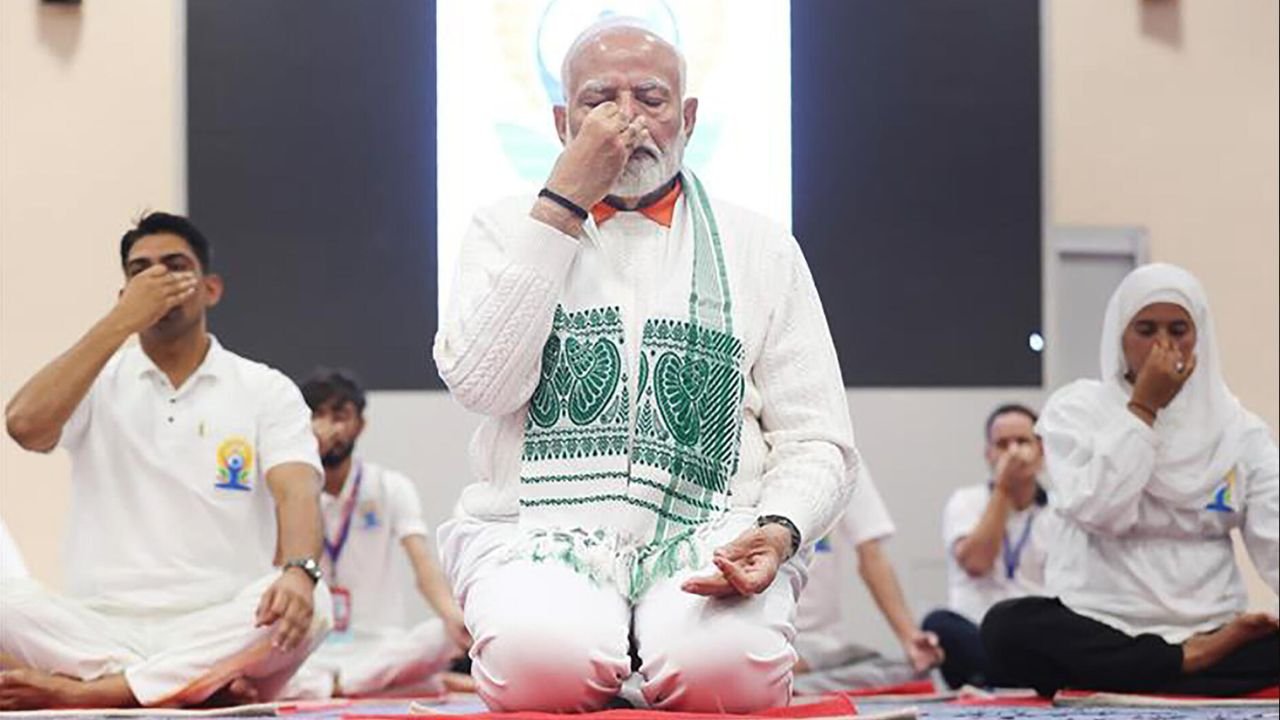
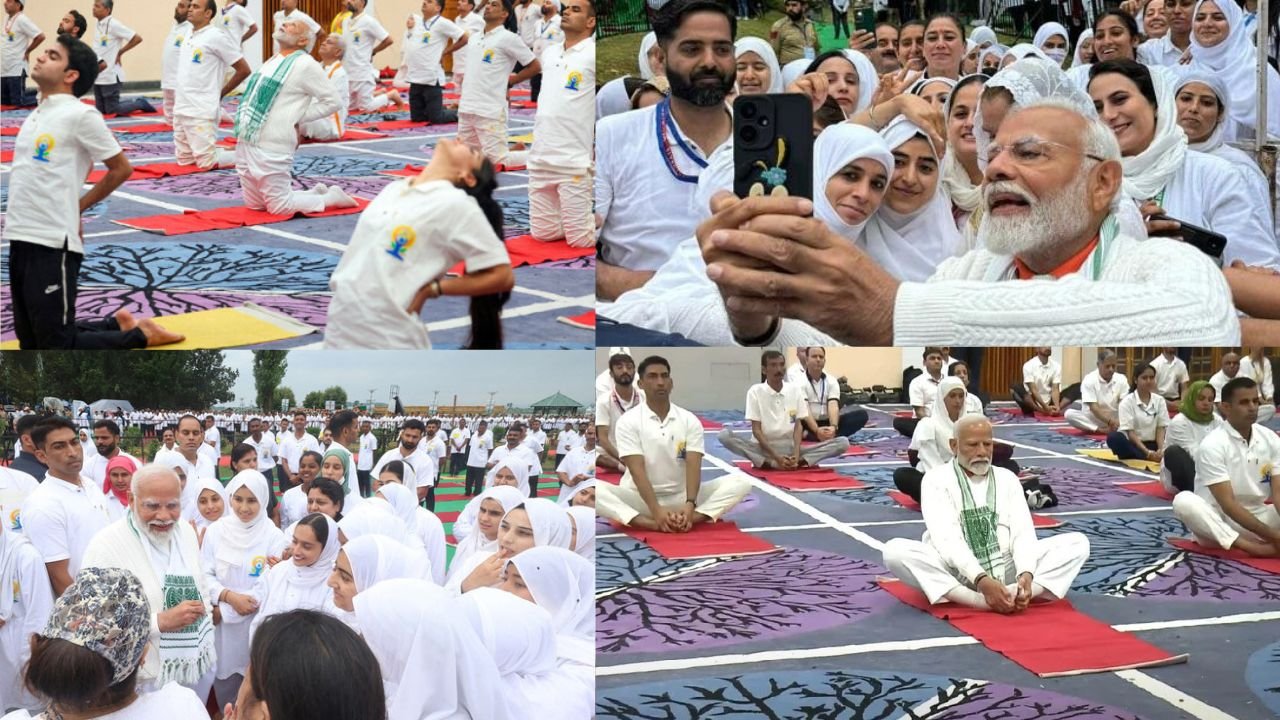
    Stretching, arching his back and kneeling on a mat, India’s Hindu nationalist Prime Minister Narendra Modi led hundreds of people performing yoga in India-held Kashmir on Friday.

    The exercises in Srinagar marked the 10th International Yoga Day, Modi’s own brainchild.

    But while yoga is not itself a religious practice, it has its origins in Hindu philosophy — the god Shiva is said to have been the first yogi — and many Kashmiris are indifferent to the discipline.

    Thousands of government employees, schoolteachers and students from all over the region were brought in for the event, although rain forced Modi’s performance indoors.

    Afterwards, he urged hundreds of people including many police and armed forces personnel on the shores of Dal Lake to make yoga “a part of their daily lives”.

    “Yoga fosters strength, good health and wellness,” he said.

    But one Srinagar resident saw the event as a cultural intrusion.

    “This yoga is being imposed on our children to culturally change the next generations and control their minds,” they told AFP, declining to be identified for fear of reprisal.

    “It’s an imposition on us.”

    Modi’s visit comes after a series of attacks, including one where nine people were killed and 33 injured when a bus carrying Hindu pilgrims plunged into a deep gorge after a suspected attack.

    June 21 was declared International Yoga Day a decade ago and Modi has since led events at emblematic locations across India, and last year at the UN headquarters in New York.

  • Singaporean woman posed as goddess to cheat followers out of seven million dollars

    Singaporean woman posed as goddess to cheat followers out of seven million dollars

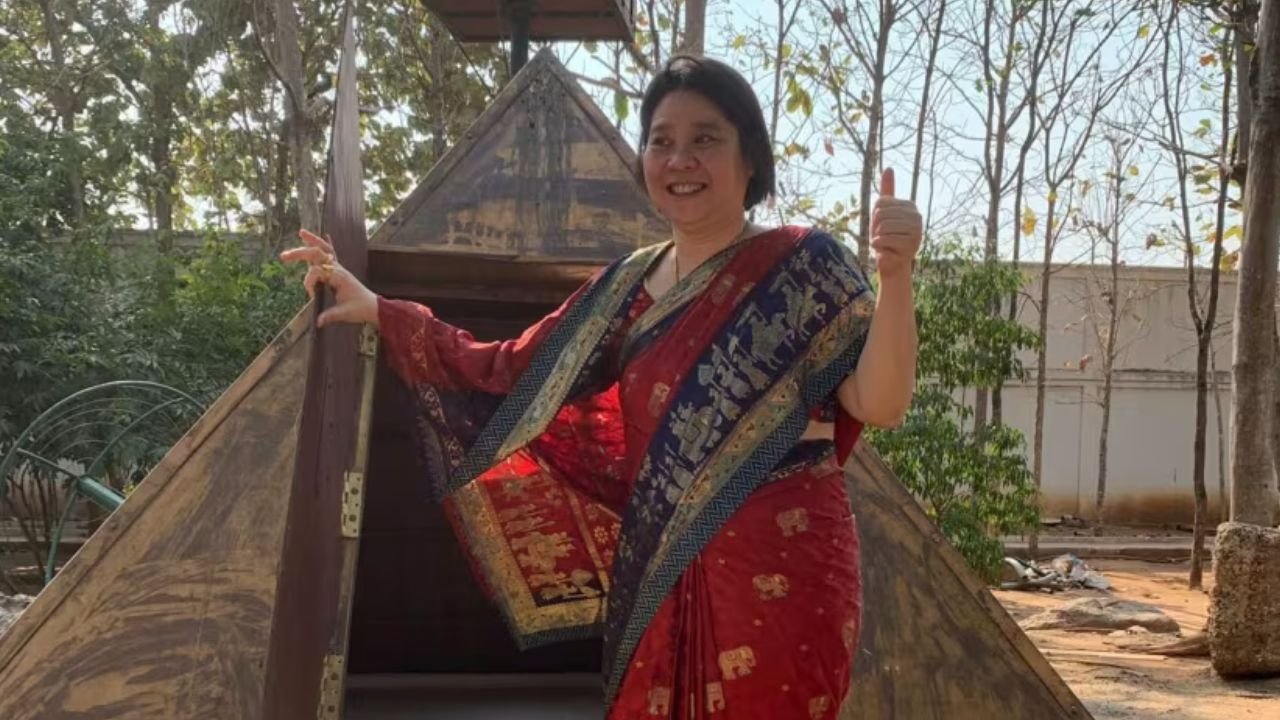
    A Singaporean woman, Woo May Hoe, claiming to be a deity, cheated her followers into handing her more than $7 million and made them take loans totalling another $6.6 million from different financial institutions, reported The Strait Times.

    The 53-year-old ‘goddess’ had about 30 followers, and she severely punished the ones who displeased her, pulling their teeth out from pliers and forcing some of them to eat human faeces.

    On one occasion, she even forced a victim to jump off the second storey and threatened to push another if they did not comply.

    Woo is now in remand after she pocketed the funds from 2012 to 2020.

    She was arrested in 2020 after followers lodged police reports against her.

    The prosecution said that many of Woo’s followers were suffering from or had relatives suffering from serious medical conditions at the time. They approached her, desperate for healing.

    Woo would guide them that it was crucial for her followers to clear their “bad karma”, and increase their “good karma” to improve their health and that of their loved ones.

    She also told them that asking for receipts or proof of payment was “offensive” for any of them. Besides money, she also ordered them to buy houses, condominium units and cars as a form of “worship” – which she used for her own benefit.

    Some beguiled followers left their full-time jobs and moved in to serve her as helpers.

    On May 8, Woo pleaded guilty to three counts of assault and two cheating charges.

    Forty-five other charges will be considered during sentencing.

    Woo was sentenced to 10 and a half years in jail, and she has made a $675,500 restitution.